
Friends and Families,
There is no Lone Pine before or after it. The world needs more Lone Pines.
I still remember my first meeting with Steve Mandel in 2006. I was 25, freshly joined Cook Pine, and it was one of my very first manager meetings. We were not even scheduled to see Steve that day, but due to a last-minute change he showed up — and we ended up spending an hour together.
Steve emphasized simplicity, transparency, and humility. Lone Pine kept its structure unusually flat because he believed layers of junior analysts could make people intellectually lazy. An investment thesis, he said, must be distilled into three points — otherwise the analyst hadn’t really thought it through. Investors received an unusually high level of portfolio transparency.
The conversation was then focused on alignment of interests. At that time, the hedge fund industry was still young, opaque, and secretive. Few managers spoke openly about something so simple yet so fundamental.
Because Lone Pine trusted its investors, investors trusted Lone Pine. In a world where many chased short-term gains, Steve and his team focused on building long-term mutual benefit.
When I later started Star Magnolia, I wrote our Principles with Lone Pine’s model in mind. They became my manifesto — a blueprint for building something enduring and principled.
Star Magnolia Capital endeavors to discover the truth a result of which, we aim not only to survive but also to thrive.
The interests of our clients come first in everything we do.
The employees of Star Magnolia Capital are collectively one of the largest clients for our investment program. Substantially all of the liquid net worth of the employees is invested alongside with that of the clients, placing our financial interests squarely in line with those of the clients.
Star Magnolia Capital will be ethical, fair, honorable, and straightforward in all our business relationships. If there is ever a conflict between the right way and the potentially more profitable but vaguely questionable way, we will not hesitate to choose the right way. Our reputation is our most valuable asset.
Star Magnolia Capital strives to be transparent in our dealings with our major constituencies: our clients, employees, outside advisors and vendors, and the brokerage community. We believe that an open discussion of our investment and business objectives and opinions is in the best interest of Star Magnolia Capital’s investment performance.
Read our Principles:
Trust is often cited as the most important requirement in hiring for family offices, but trust cannot be built in a few hours of interviews. This narrows the pool of candidates, often leading to hires within the family itself — convenient, but rarely optimal. Is there a better solution? The answer is alignment of interests.
During nearly a decade in New York City, I developed close relationships within the Jewish community. Naturally, I was curious why so many had been successful in finance. An old Jewish banker once told me: “We don’t rely on blood — it’s too fragile. The solution is alignment of interests. Money is the most effective way to align people from different backgrounds.” At first, I thought this sounded cold-blooded. But over time, I realized it was one of the most powerful mechanisms for producing better returns: you make money when I make money; you lose money when I lose money.
There are three essential conditions for true alignment:
We invest a substantial portion of our own net worth alongside clients.
Incentives are based on long-term success, measured over multiple years.
The majority of income comes from return on capital and performance fees — not from salaries or fixed charges.
This philosophy shapes how we operate at Star Magnolia today. Our quarterly fee (0.3% p.a., subject to a minimum) covers day-to-day operations. Incentive bonuses are distributed to the team, 50% split between the partnership and staff across Research and Business & Operations. Base salaries remain modest, but bonuses — paid partly in cash and partly deferred over 4 years into our investment program — ensure our people’s fortunes rise and fall with those of our Families.
My dream is that one day, every member of the House of Mulans will have their own family office as a result of working at Star Magnolia — and will continue to invest their own capital alongside our Families for decades to come.
We are equally deliberate about fairness and transparency. We charge no transaction or brokerage fees, and provide investor education and family governance services free of charge. We pay our share of meals with managers whenever possible, decline seasonal gifts, and ensure our investment decisions are never clouded by perks or favors. The only alignment that matters is the one tied to performance.
Our mission remains simple: to build a principled organization where alignment of interests is not a slogan but a lived reality — the foundation of enduring returns.
Steve Mandel podcasts
https://joincolossus.com/episode/lessons-from-steve-mandel/
https://joincolossus.com/episode/mandel-investing-behind-change/
The House of Mulans had another busy and productive quarter, continuing our commitment to deep, thoughtful research and long-term relationship building.
Over the first three quarters of 2025, we conducted 628 due diligence activities, including 513 meetings and calls, alongside numerous reference checks.
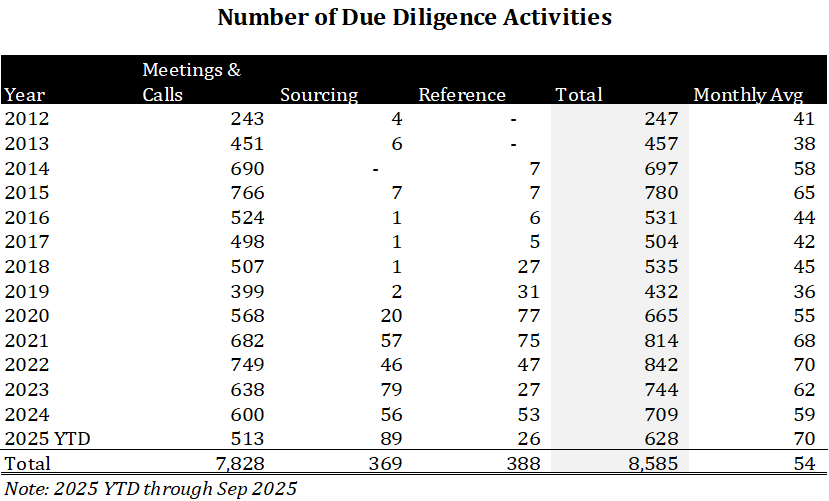
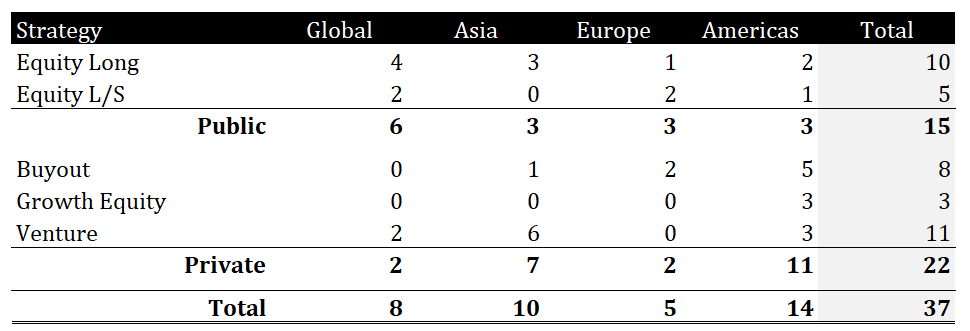
In 2025, we approved four new investment managers. While that number might seem modest, it is very meaningful for us. Historically, we have approved just 3.2 managers per year. As a result, we now have 37 approved managers, including 15 public market managers and 22 private market managers.
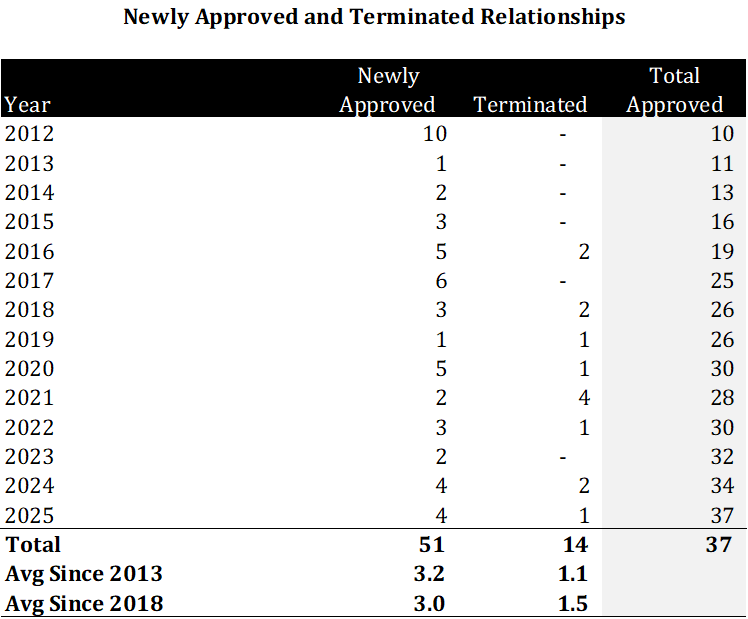
Maintaining globally diversified relationships are critical for us. The number of the investment managers focusing on Asia and Europe has been increasing thanks to our conscious efforts to diversify our geographic exposures away from Americas where we believe the market valuation is frothy. We believe that this trend will continue for awhile.
This past quarter, our investment team travelled across Asia, visiting Bangkok, Guangzhou, Hong Kong, Kuala Lumpur, Seoul, Singapore, Shanghai, and Shenzhen, as well as New York, San Francisco, and Austin.
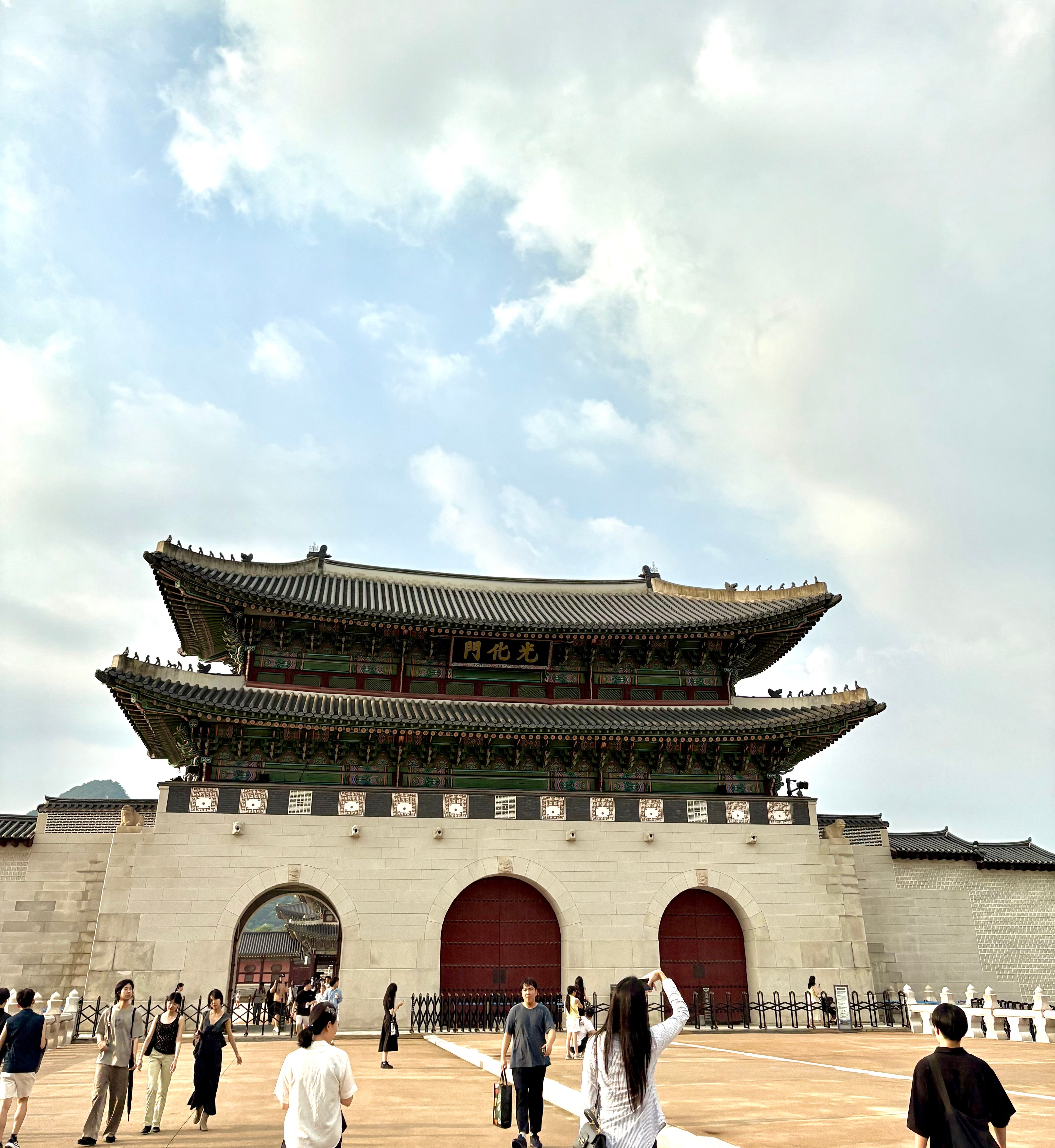
In August, Tiffany and I traveled to Seoul. On our last day, I finished a meeting near Gwanghwamun Gate—the main southern entrance to Gyeongbokgung, the principal palace of the Joseon Dynasty, whose construction began in 1395. The gate’s name, “Gate of the Light of Enlightenment,” felt like an apt symbol for what we were seeing in Korea’s markets.
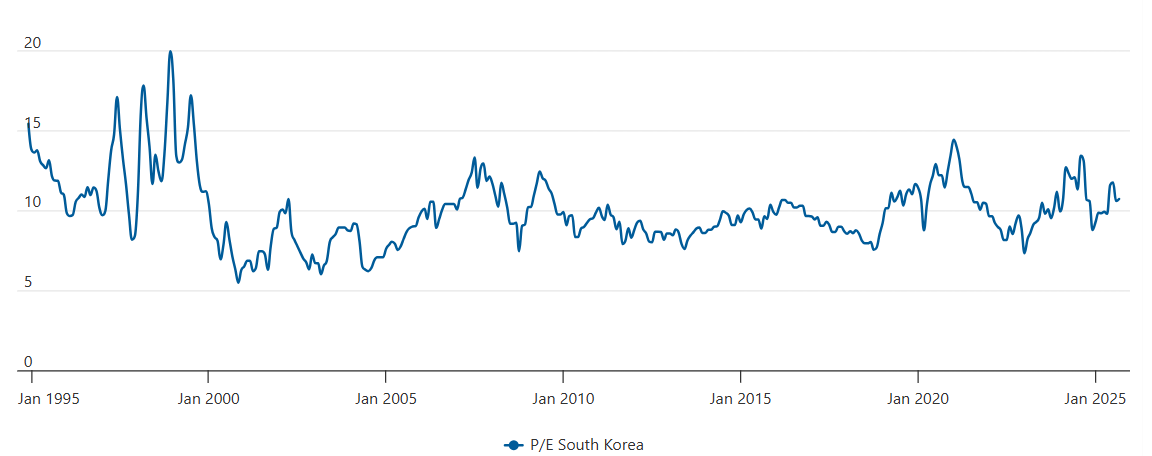
For decades, South Korea has been one of the cheapest equity markets in the world. Since I joined the industry in 2003, I cannot recall anyone speaking with sustained excitement about Korean stocks. Despite the rise and fall of corporate champions like Hyundai and Samsung, and most recently SK hynix, the market as a whole has remained confined to a valuation band of 5–15x P/E. The culprit, many argued, was the dominance of the chaebols—family-controlled conglomerates that shaped both the economy and the stock exchange. According to the Korea Fair Trade Commission, the top five groups (Samsung, Hyundai, SK, LG, and Lotte) account for 50–60% of GDP; extending to the next tier pushes the figure close to 70%.
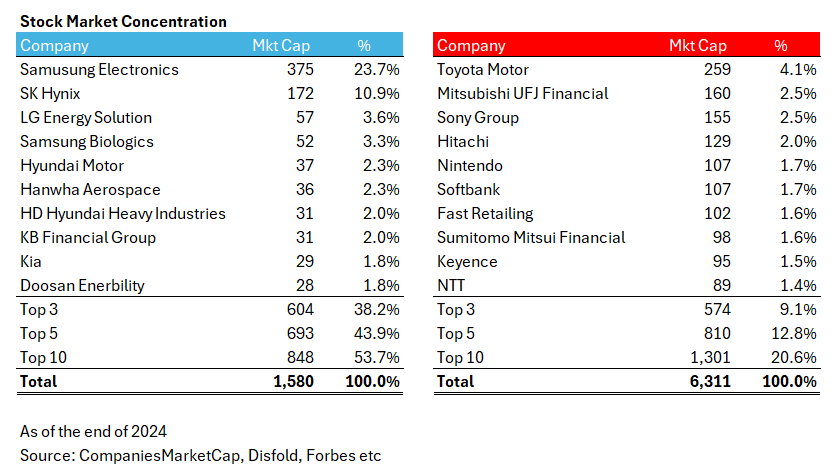
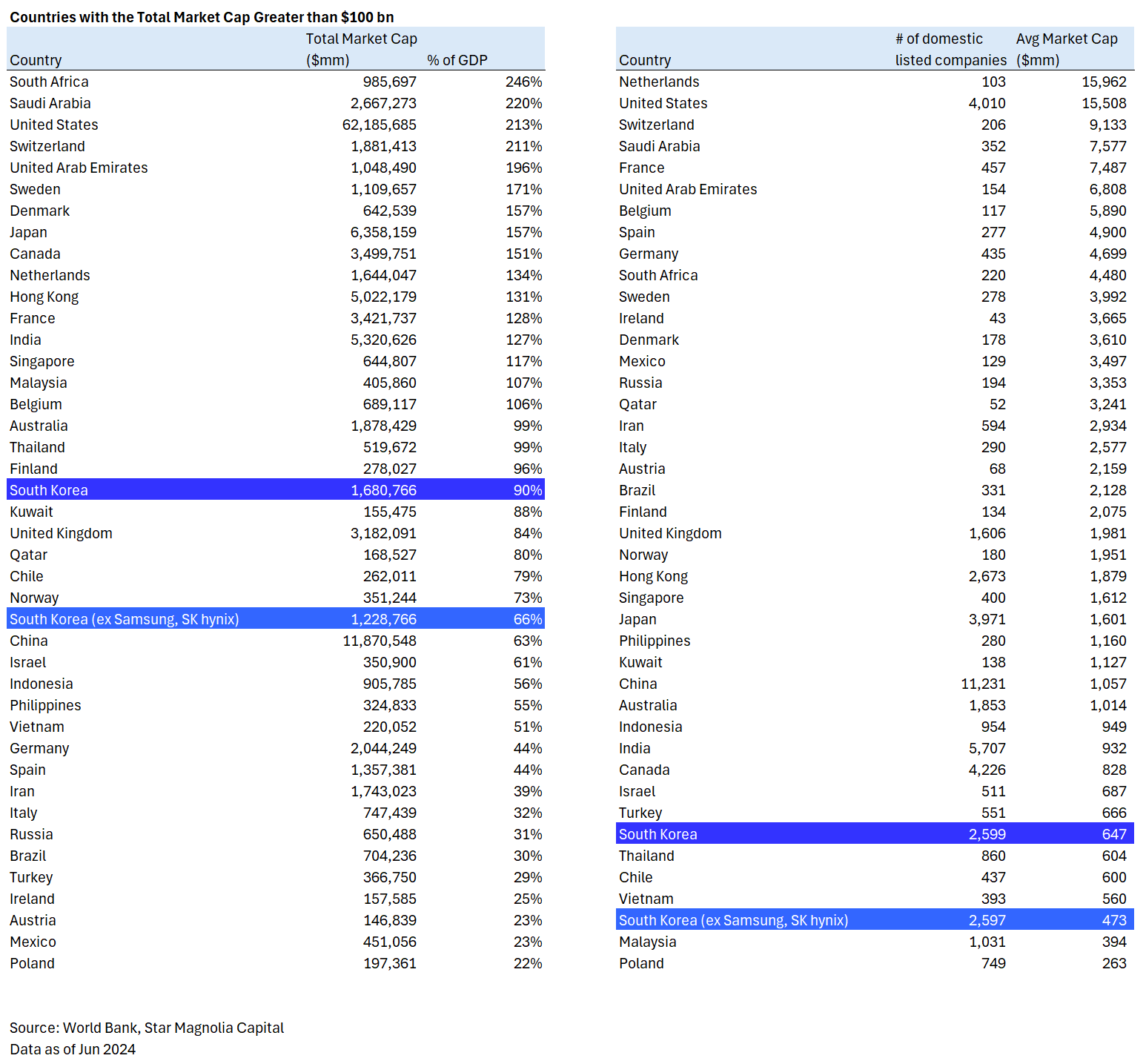
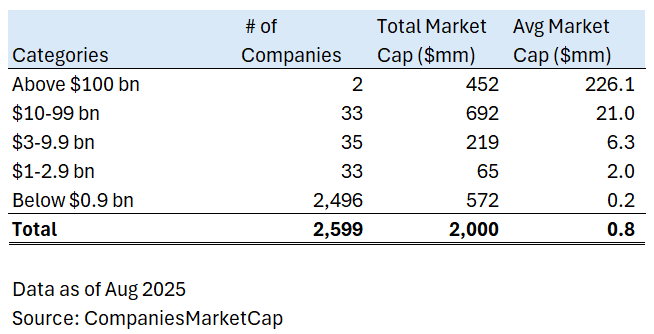
This concentration is reflected in the equity market. The top 10 listed companies represent over half of total market capitalization, compared with just 20% in Japan. Yet Korea’s equity market remains modest in absolute size. As of mid-2024, its capitalization was USD 1.7 trillion (rising above USD 2 trillion after the recent rally), only about 90% of GDP—one of the lowest ratios among developed economies. Despite nearly 2,600 listed companies, only two exceed USD 100 billion, and just 100 are above USD 1 billion. The rest are small, illiquid, and in many cases functionally stagnant. This has long undermined the practice of traditional value investing: cheap companies stayed cheap because investors stayed away.
But that same inefficiency creates fertile ground for activism. To succeed, activists need three conditions: capital, a supportive investor base, and a sound legal framework. For years, Korea lacked the last two. Today, both are in place—the investor base is more sophisticated, and governance reforms are steadily strengthening. What remains missing is capital, which makes this one of the most compelling environments for contrarian allocators.
During our three days in Seoul, we conducted extensive due diligence with five investment managers and several industry experts. Sentiment was unsurprisingly buoyant after a 40% rally, but what mattered more to us were the structural shifts underway. We saw genuine progress on shareholder value, regulatory frameworks, and board accountability. We came away convinced that the government is serious about creating a more investor-friendly market.
In earlier years, we were often impressed by Korea’s cheap valuations but discouraged by the entrenched status quo. This time feels different. Samsung still dominates the index, but our opportunity set need not include Samsung. We met a handful—though not many—of long-term fundamental stock pickers whose philosophy aligns with ours. At just USD 2 trillion, Korea remains a small and often overlooked market, about half the size of Microsoft alone. That very neglect is its opportunity: it is a pond where few are casting lines.
Standing before Gwanghwamun, the Gate of the Light of Enlightenment, I felt it was the perfect metaphor for what may be opening for Korea’s investors—a path out of a long value trap toward a brighter, more balanced future.
In September, I was invited by Graham Rhodes to his annual Longriver Gathering in Shenzhen. Over the course of two days, Graham brought together more than thirty investors—some managing billions, others just a few millions—and made us “happy prisoners” of learning and sharing.
What made the gathering unique was not the scale of capital, but the spirit of the people. Famous and emerging investors sat side by side. There was no self-promotion or signaling games—the only promotion was intelligence and insight, freely exchanged. Everyone gave generously, knowing they would receive the same in return.
Many sacrificed their weekend and time with family in pursuit of learning. That spirit of curiosity and commitment is what makes this community so powerful.
Bravo to Graham—for creating not just an event, but a genuine platform of trust and learning. Doing this in Asia, with participants flying in from as far as Serbia, is no easy task. It was a reminder of what becomes possible when great people come together with openness and humility.
In January 2020, I had my very first conversation about investing with my nephews, then just 9 and 8 years old. At the time, they could barely grasp the concept of investing, but they understood the simple idea of a company and a CEO. When I explained that as Nintendo shareholders the CEO, in a sense, “worked for them,” their faces lit up.
Five years later, that lesson has become tangible. Nintendo’s shares have since grown 3.5x as the Switch revitalized the company, with the next generation of consoles on the horizon. Under our little arrangement, my nephews may take 10% of profits as “annual allowance,” though I encourage them to reinvest and compound—saving for education and travel, which I still consider the best long-term investments. Alongside their portfolios, they are also learning through Investoon.
This summer, they visited Shanghai for the first time. Like many Japanese children, their prior image of China was “noisy, dirty, and scary.” But walking through today’s Shanghai gave them a different perspective: a city of remarkable development with a mobile ecosystem far more sophisticated than they imagined. My niece (8) joined as well, and all three were captivated by Pop Mart’s Labubu craze. We found little in stock, but plenty of energy from consumers hunting for these figures. For years, China hadn’t produced anything Japanese kids desperately wanted. Now, they adore Labubu without even realizing it is Chinese. To me, that marks the arrival of China’s consumer ecosystem.
Perhaps the most satisfying moment came when one nephew declared: “I would never buy Pop Mart shares at this valuation.” At 14, he was already speaking like a value investor.
On the final day, we stopped by Nike, Anta, and Li-Ning. My eldest nephew, a basketball player, had always been loyal to Nike—his second stock pick after Nintendo. Yet after a steep decline in Nike’s shares, his loyalty was shaken. In Shanghai, Nike no longer excited him. Neither did Anta. But when he walked into Li-Ning and saw the Wade collection—a collaboration with Dwyane Wade—he paused. The attraction wasn’t just the celebrity tie-up; it was the design, the style, the identity. He told me: “I found the next company I want to buy: Li-Ning.”
China is now producing brands that Japanese kids genuinely love. My nephews and niece showed me that shift in real time. Their investor journeys are just beginning, but already guided by curiosity, skepticism, and personal conviction.
We believe in starting that journey early. Our affiliate, Gen Z Group, recently launched the Investors Academy in Singapore, a weekly program for teenagers (14–18) guided by experienced mentors from the Next Gen Investors Endowment’s Z Club. The aim is simple: to help students discover the joy of investing as early as Warren Buffett did.
Gen Z Group has also published the e-book version of INVEST! on Amazon. The volume 1 (10 chapters) is available for $9.99, and every purchase includes enrollment in a one-month virtual stock trading campaign, with a $1,000 prize for the winner—an introduction to the thrill of a “100-bagger” trade.

Purchase INVEST! ttps://www.amazon.com/dp/B0FM9HWBGW
We hope this will be the spark for many more young investors to begin their journeys, just as my nephews have.
Thank you very much for your continuous support. If you have plans to visit Singapore or Shanghai, please don’t hesitate to send us an email anytime. We would be delighted to take you to our favorite local spots to enjoy delicious (and affordable) cuisines while sharing great food and conversation.
Thanks for reading Present Value of the Future! This post is public, so feel free to share it.
Comments
Nothing yet. Say the first thing.
Sign in to join the conversation.