
A small circle of financiers quietly became some of the most influential backers of institutionalized exploitation. Meet the men funding the future and profiting from its consequences.
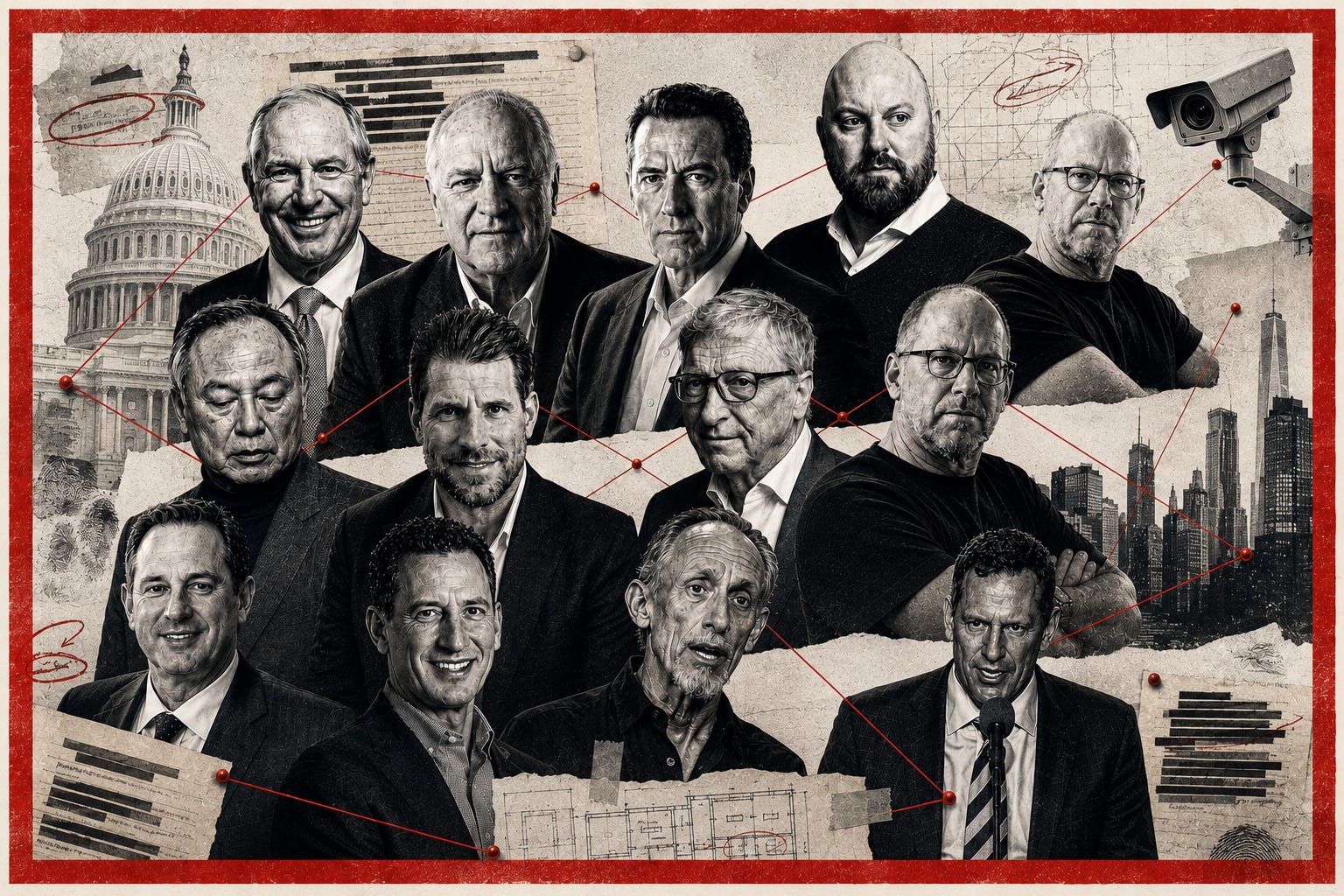
We live in an age of permanent crisis.
Housing is increasingly unaffordable, healthcare has become a billing nightmare, we’re entering wars we never chose, and it seems that only big corporations persist in our neighborhoods. Governments around the world are pouring unprecedented amounts into defense technology, while surveillance systems are becoming ordinary features of daily life. Yet the deeper you dig into each issue, the harder it becomes to treat them as independent phenomena.
For decades, venture capitalists and private equity executives have cultivated an image of themselves as builders of the future. Their firms are celebrated for identifying talented founders and accelerating technological progress. But capital does not merely fund innovation. It determines which innovations receive resources and which do not. Every investment is a decision about what kind of world deserves to exist.
In recent years, a striking pattern has emerged across some of the most influential investors in America. The largest checks are increasingly flowing toward systems of extraction and control. A small number of extraordinarily wealthy people have gained enormous influence over the institutions shaping modern life. Their investments help determine where people live, how much they pay for healthcare, which technologies police departments deploy, and what kinds of weapons governments purchase. The consequences of those decisions are often experienced as disconnected frustrations.
But viewed together, they reveal a network of investors whose influence extends far beyond Silicon Valley and into nearly every major institution shaping modern life.
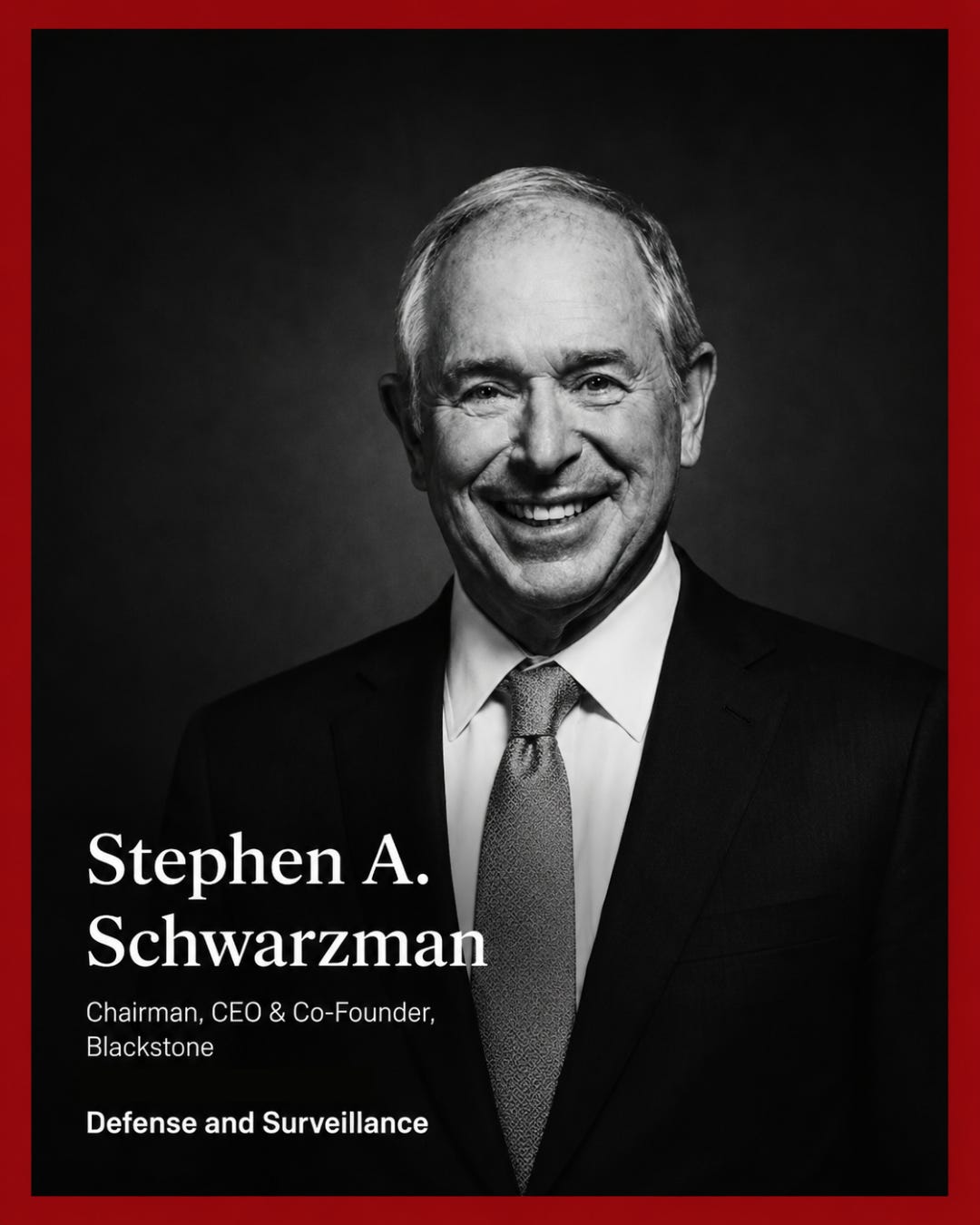
If there is a single figure who embodies the transformation of everyday life into an asset class, it is Stephen Schwarzman. Through Blackstone, the private equity giant he co-founded, Schwarzman helped build one of the most powerful investment firms in modern history. Following the 2008 housing crisis, Blackstone began buying thousands of single-family homes across the United States, eventually creating Invitation Homes, now the country’s largest owner of single-family rental properties. What was once a cornerstone of middle-class wealth became, in part, another institutional investment strategy.
Housing was only one opportunity. In 2016, Blackstone acquired TeamHealth for roughly $6.1 billion, placing the firm at the center of the American healthcare system. In the years that followed, TeamHealth became a frequent target of scrutiny from lawmakers investigating surprise medical billing and the growing influence of private equity in healthcare. Housing and healthcare are typically discussed as separate crises, but Blackstone’s portfolio illustrates how closely intertwined they have become.
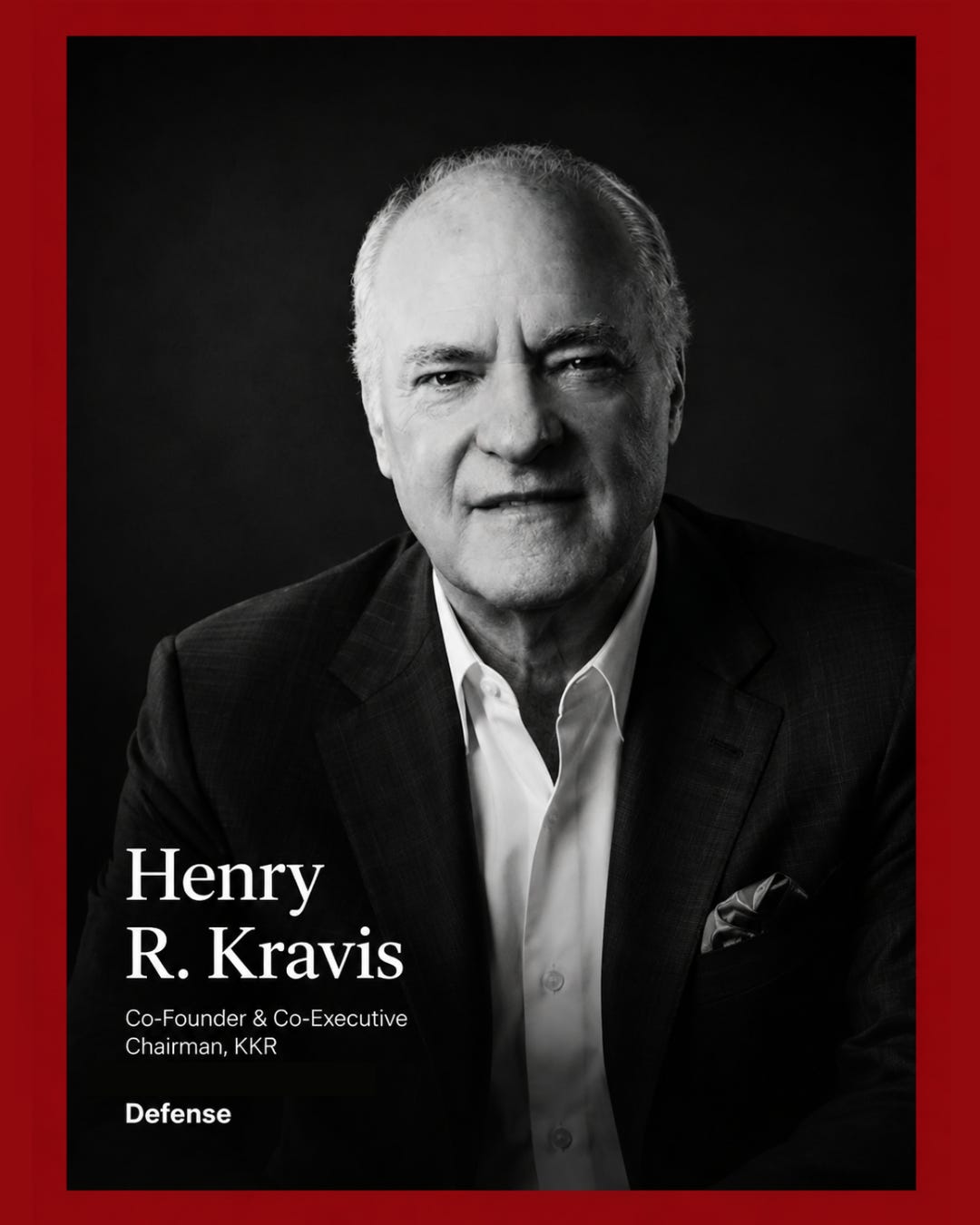
Stephen Schwarzman was not alone in recognizing the investment potential of life’s necessities. As the co-founder of KKR, Henry Kravis helped pioneer the modern private equity industry, transforming leveraged buyouts from a niche financial strategy into one of the dominant forces in the global economy. Over the decades, KKR acquired companies across virtually every sector imaginable, but some of its most controversial investments shared a common characteristic: they operated in markets where consumers had little choice but to participate.
One of the clearest examples was Envision Healthcare. In 2018, KKR took the physician staffing giant private in a deal valued at roughly $9.9 billion. At the time, Envision was deeply embedded in the American healthcare system, providing doctors and staffing services to hospitals and emergency rooms across the country. The company would later become a focal point in congressional investigations into surprise medical billing, a practice that left patients facing enormous charges from out-of-network providers despite having little or no ability to choose who treated them during a medical emergency. Lawmakers repeatedly scrutinized Envision’s business model and KKR’s ownership of the company as concerns mounted over the role private equity was playing in healthcare.
Healthcare was not the only sector where KKR’s ambitions collided with public concerns. In 2024, a group of U.S. senators publicly questioned the firm’s acquisition of a massive apartment portfolio, warning that further consolidation of housing under large investment firms could place additional pressure on renters already struggling with affordability. While the circumstances differed from Envision, the underlying dynamic felt familiar. Once again, private capital was flowing toward an essential need with a captive customer base. People can delay buying a new car. They can postpone a vacation. They cannot simply stop needing housing or medical care.
What makes Kravis significant is not any single acquisition. It is the worldview reflected across them. The modern private equity industry has often justified itself as a source of efficiency, arguing that sophisticated investors can improve operations and create value. Yet KKR’s most controversial investments reveal another reality. Some of the safest returns in the economy come from industries where demand is effectively guaranteed. Housing, healthcare, and other necessities offer something every investor desires: customers who cannot walk away.
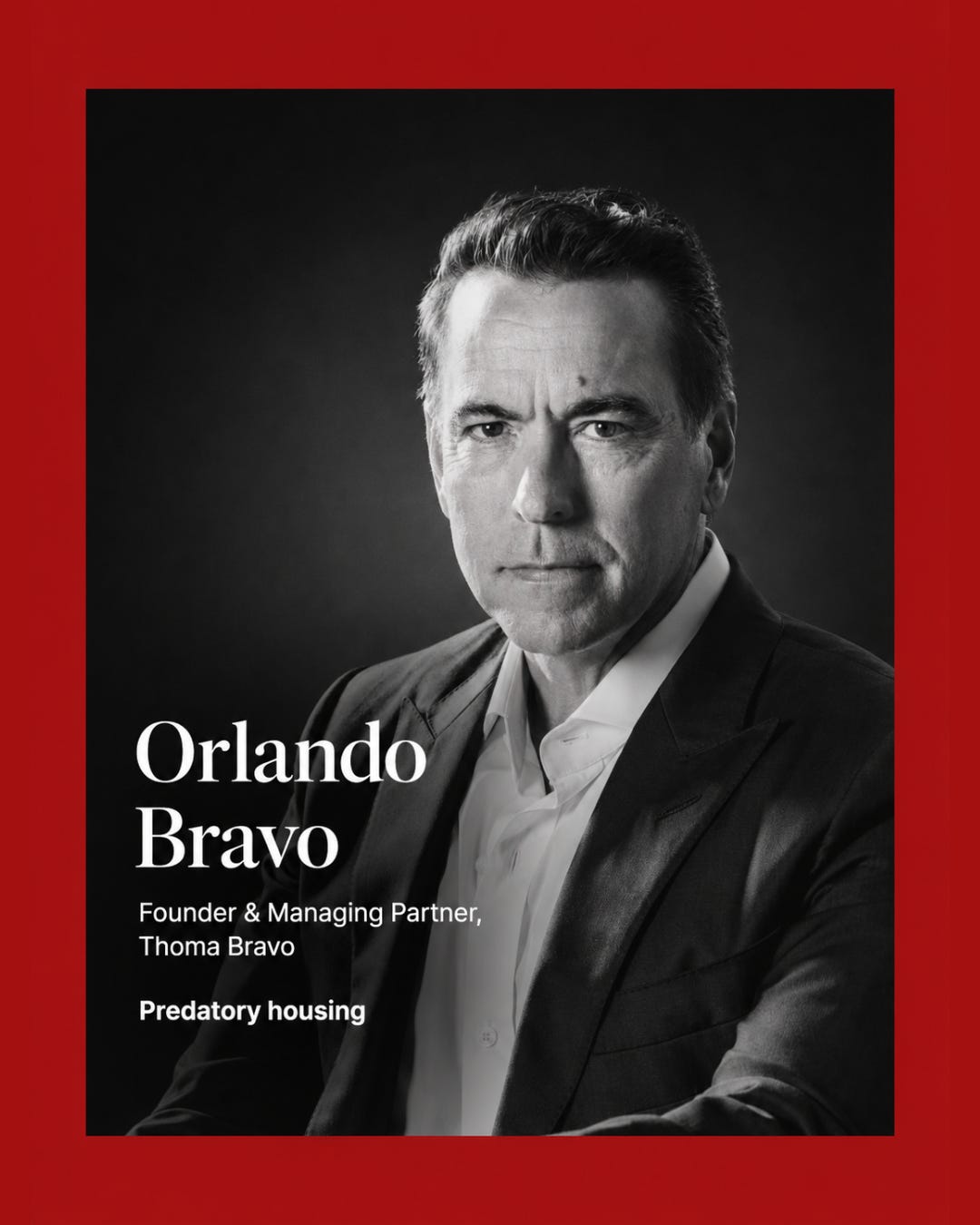
As the founder and managing partner of Thoma Bravo, one of the world’s largest software-focused private equity firms, Bravo built his fortune by acquiring technology companies rather than apartment buildings or hospitals. On paper, RealPage looked like another software investment. In practice, it became one of the most controversial companies in the American housing market.
In 2021, Thoma Bravo acquired RealPage in a deal valued at roughly $10.2 billion. RealPage provides software used by landlords and property managers across the country, helping them manage everything from leases to pricing decisions. For years, it operated largely outside public attention. That changed when critics, journalists, and eventually federal regulators began scrutinizing the company’s rent-setting products, which allegedly allowed landlords to use shared market data and algorithmic recommendations to determine rental prices. The Department of Justice later took action against RealPage, arguing that aspects of its business facilitated anti-competitive behavior in housing markets. RealPage denied wrongdoing, but the case transformed the company into a national symbol of a growing fear: that software was quietly reshaping the cost of living for millions of renters.
What makes Bravo’s story distinct is that it represents a newer form of power. The company did not need to own housing to influence housing. It only needed to become the infrastructure through which housing was managed. If Schwarzman helped financialize the home and Kravis helped monetize essential services, Bravo’s legacy may be demonstrating how software itself can become a mechanism for shaping markets, extracting value, and influencing the price of everyday life without ever appearing on a lease or mortgage.
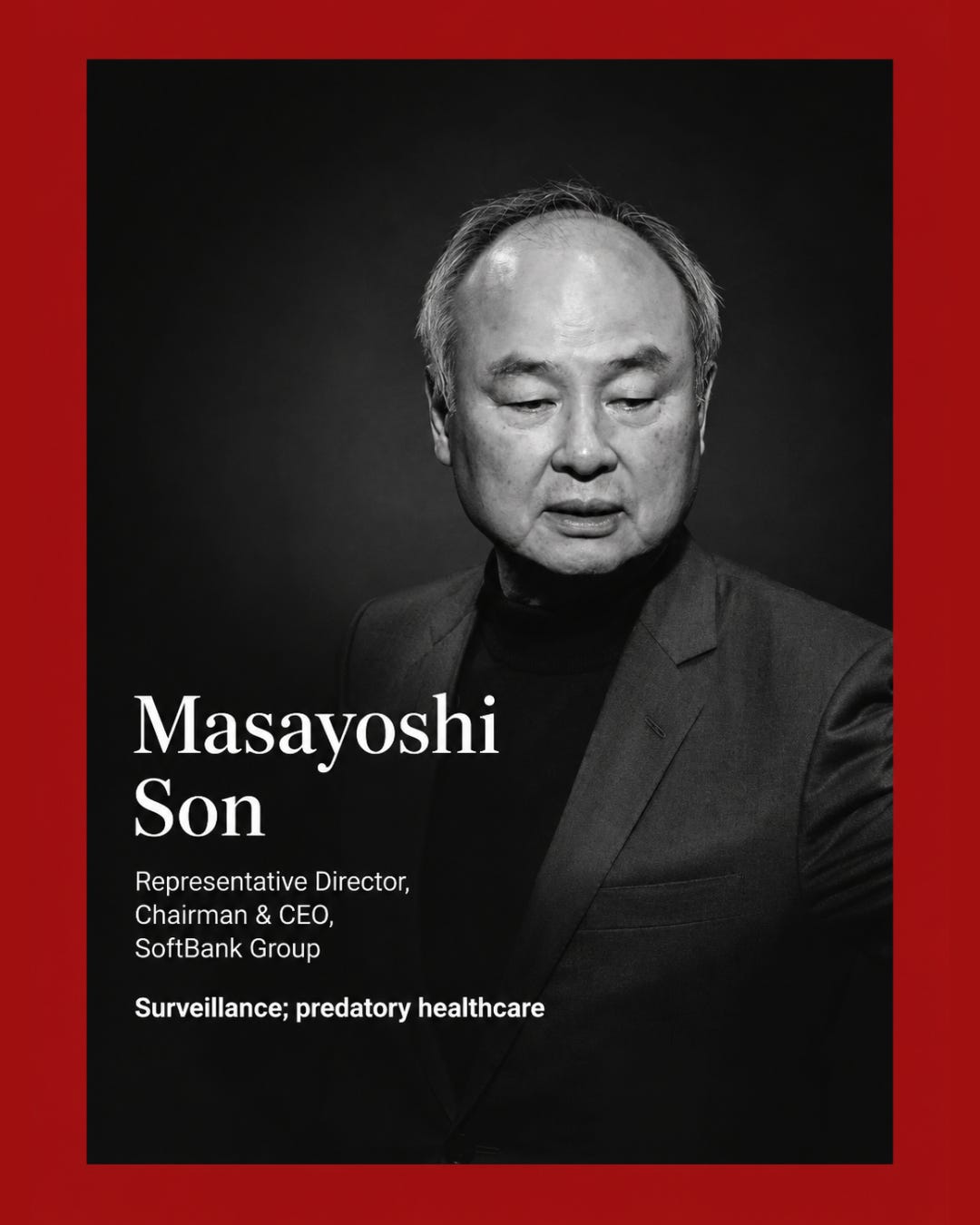
Unlike Schwarzman or Kravis, Masayoshi Son did not build his reputation through private equity. As the founder and CEO of SoftBank, Son became famous for deploying unprecedented amounts of capital through the Vision Fund.
Among the fund’s investments was Forward Health, a healthcare startup criticized for prioritizing technology-driven growth over sustainable patient care, and several data-intensive technology companies operating at the intersection of artificial intelligence, surveillance, and consumer information. While SoftBank often framed these investments as bets on the future, critics have argued that the firm’s approach frequently rewarded scale over social impact.
Son’s significance lies less in any individual company than in his willingness to flood capital into sectors before society has fully reckoned with their consequences. When investors can write billion-dollar checks, they don’t just participate in markets. They shape them.

Nigel Morris became one of the prominent backers of EasyKnock, a company that promised homeowners access to their home equity without taking on traditional debt.
The pitch was homeowners facing financial pressure could sell their property to EasyKnock, remain in the home as renters, and potentially buy it back later. Supporters viewed the model as a creative alternative to conventional lending. Consumer advocates accused the company of targeting financially vulnerable homeowners with complex agreements that frequently left them worse off than before. Several lawsuits and regulatory complaints questioned whether customers fully understood the consequences of the transactions they were entering.
EasyKnock emerged during a period when housing was increasingly being treated less as shelter and more as a financial product. Homes became collateral and sources of liquidity to be engineered and monetized. The search for profit increasingly extends beyond owning homes and into creating entirely new financial mechanisms around them.
Modern finance continually searches for ways to extract value from assets people depend on most. For millions of Americans, a home represents stability. For investors, it increasingly represents opportunity.
Today’s defense ecosystem increasingly runs through venture capital firms who move seamlessly between Silicon Valley and Washington. Investors speak about innovation, disruption, autonomy, artificial intelligence, and national competitiveness. Yet the result is private capital flowing into technologies designed for surveillance, security, and war.
The transformation has happened remarkably quickly. A decade ago, many Silicon Valley founders viewed defense contracting as an industry to avoid. Today, some of the most prestigious venture firms in the world openly compete to fund the next generation of military and surveillance technology. The industry’s moral center has shifted alongside its capital. And Silicon Valley is no longer the only place where this ecosystem operates.
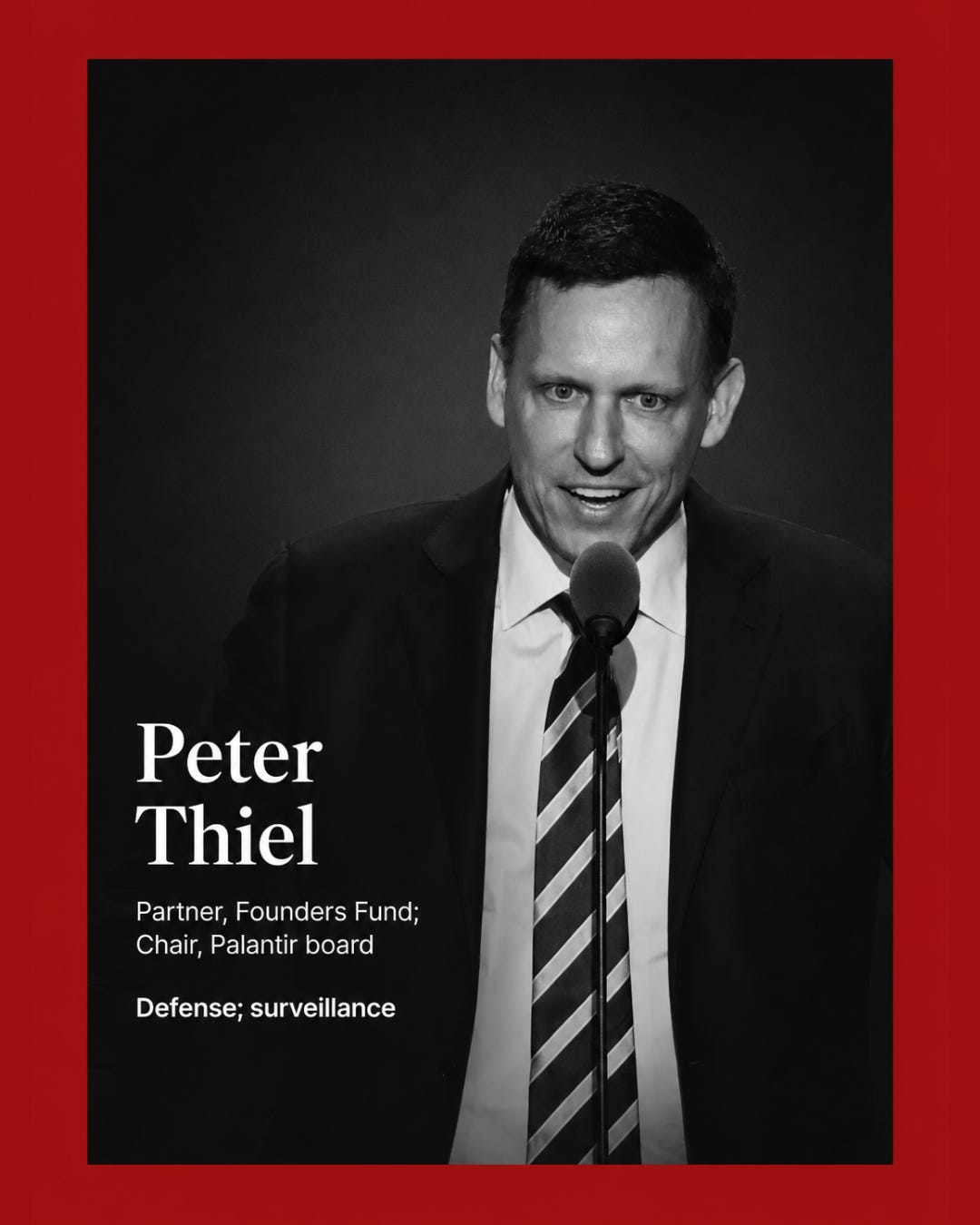
Peter Thiel helped create a different vision built around surveillance, intelligence gathering, and state power. As a co-founder and chairman of Palantir, Thiel became one of the earliest and most influential advocates for technologies designed to analyze enormous quantities of data on behalf of governments, intelligence agencies, law enforcement, and military organizations. Palantir’s software has been used by institutions ranging from the CIA to the Department of Defense, placing the company at the center of debates about privacy, civil liberties, immigration enforcement, and modern warfare. For critics, Palantir represented a future in which surveillance was no longer a government function alone, but a highly profitable private industry.
Palantir was only the beginning. Through Founders Fund, Thiel’s venture capital firm, he helped finance a new generation of companies operating at the intersection of surveillance, defense, and security. Among them were Anduril, a defense contractor building autonomous military systems and border surveillance technologies, and Clearview AI, the facial recognition company that became notorious for scraping billions of images from the internet to create one of the world’s largest facial recognition databases. While previous generations of venture capitalists chased social networks and consumer apps, Thiel increasingly directed capital toward technologies designed to monitor, identify, and secure.
Across Palantir, Anduril, Clearview AI, and dozens of related companies, a consistent pattern emerges: the belief that society’s most important problems are best solved through more data, more surveillance, and stronger security infrastructure. In the process, Thiel helped transform technologies that once sat at the fringes of Silicon Valley into one of the venture industry’s fastest-growing and most influential sectors.
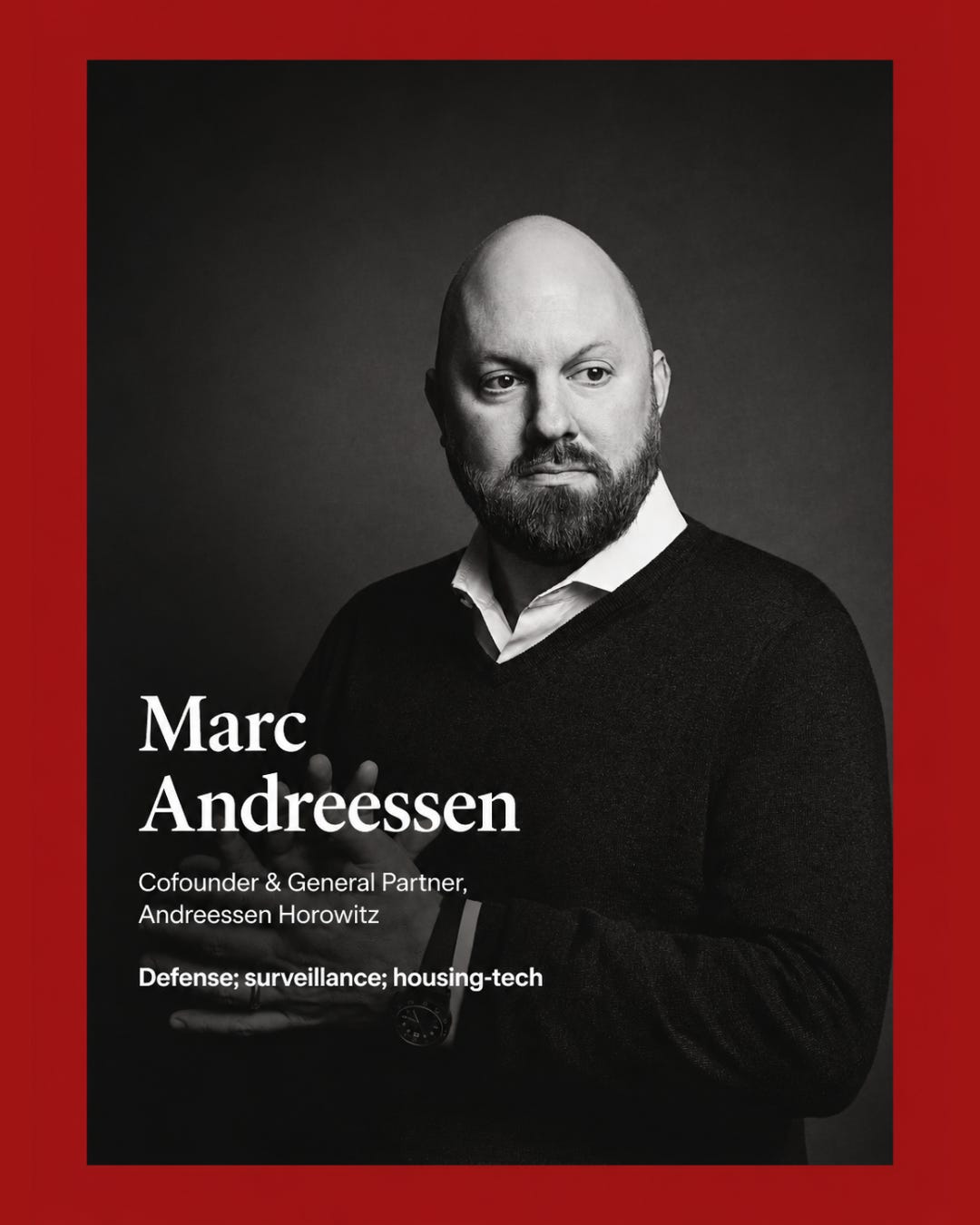
For years, venture capital preferred to invest in software that promised convenience. Social networks, productivity tools, food delivery apps, and consumer platforms dominated the industry’s imagination. Defense contractors were viewed as relics of an older economy, far removed from the culture of Silicon Valley. That attitude began to change as Andreessen Horowitz emerged as one of the most influential firms in technology investing.
Under Andreessen’s leadership, the firm aggressively expanded into defense, security, and public-sector technology. Andreessen Horowitz backed companies such as Anduril, Shield AI, and Flock Safety, while launching its American Dynamism strategy, an investment thesis built around national security, manufacturing, infrastructure, and government technology. Defense startups became symbols of innovation.
The significance of Andreessen’s role extends beyond any individual company. Unlike Thiel, whose investments often reflected a distinct ideological vision, Andreessen helped institutionalize defense technology across Silicon Valley’s mainstream establishment. His firm did not merely fund companies building military systems or surveillance infrastructure. It helped convince an entire generation of founders and investors that these businesses represented the future of technology itself. As billions of dollars flowed into autonomous weapons systems, predictive surveillance tools, and security platforms, the question was no longer whether Silicon Valley would participate in the defense industry. The question became how deeply it would embed itself within it.
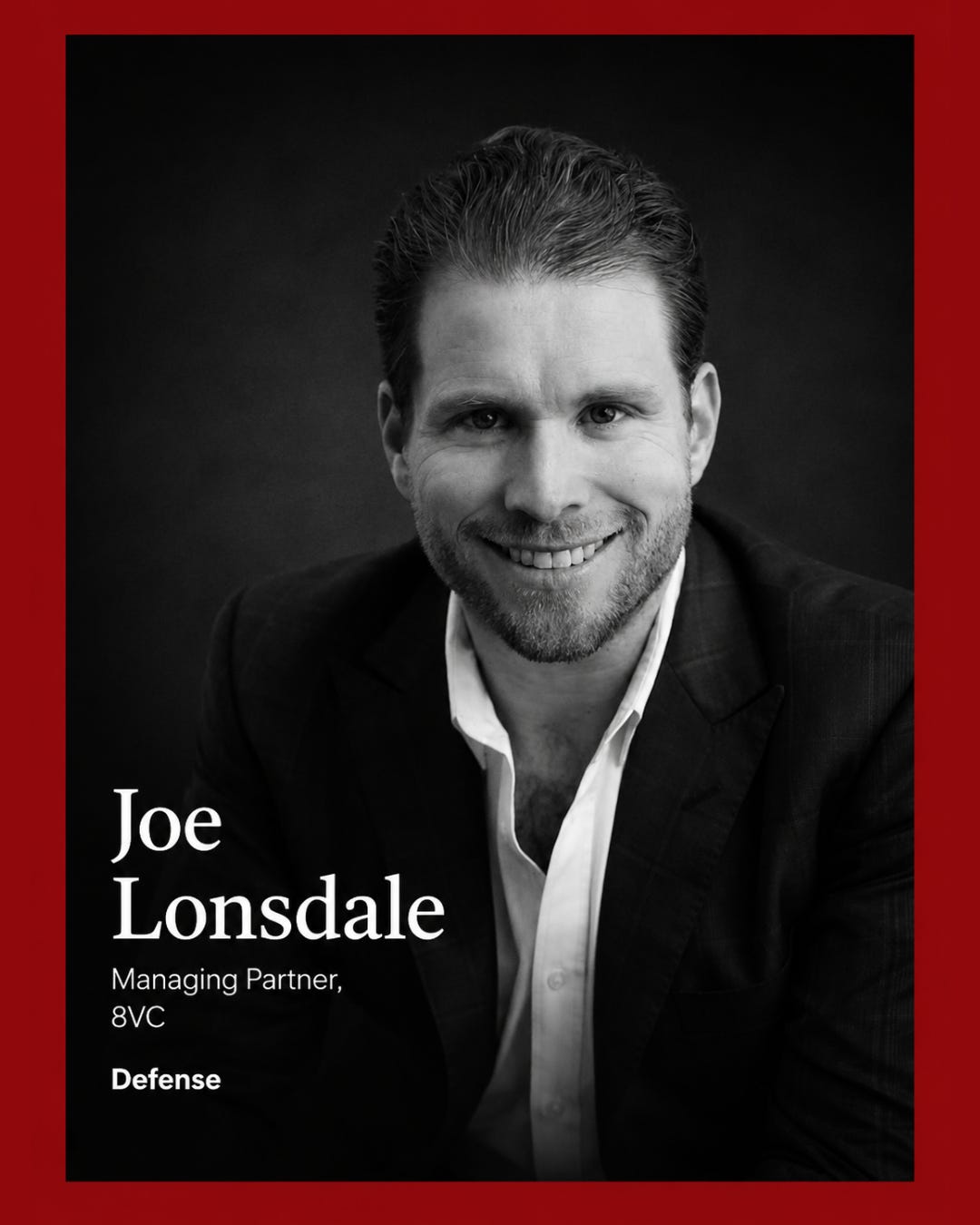
As co-founder of Palantir and managing partner of 8VC, Joe Lonsdale occupies a central position within Silicon Valley’s defense technology network. Through 8VC, he has invested heavily in military, logistics, border security, and government technology companies, helping build an ecosystem where venture capital and national security increasingly overlap.
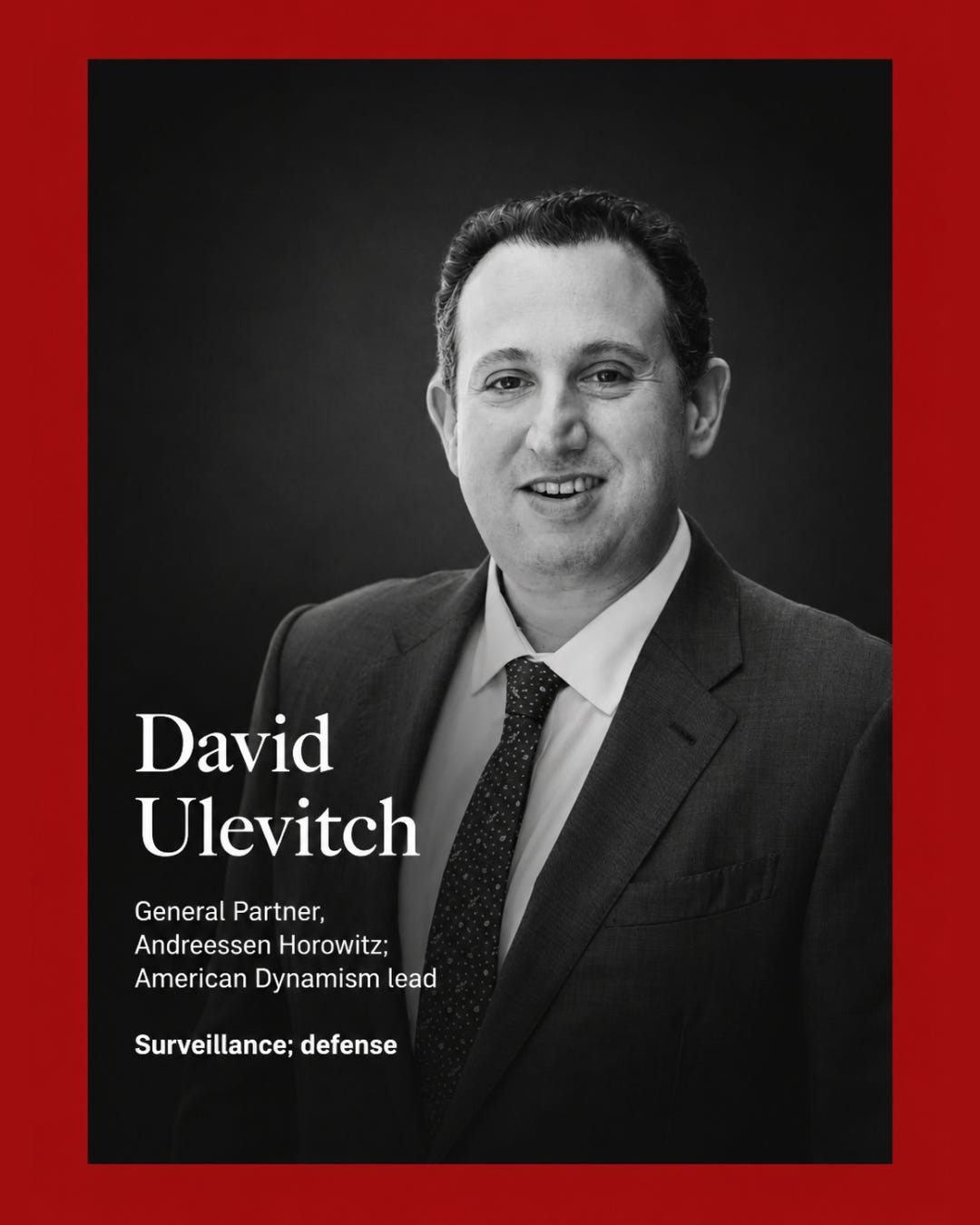
As a partner at Andreessen Horowitz and one of the architects of its American Dynamism strategy, David Ulevitch has helped direct capital toward companies focused on defense, law enforcement, and surveillance infrastructure.
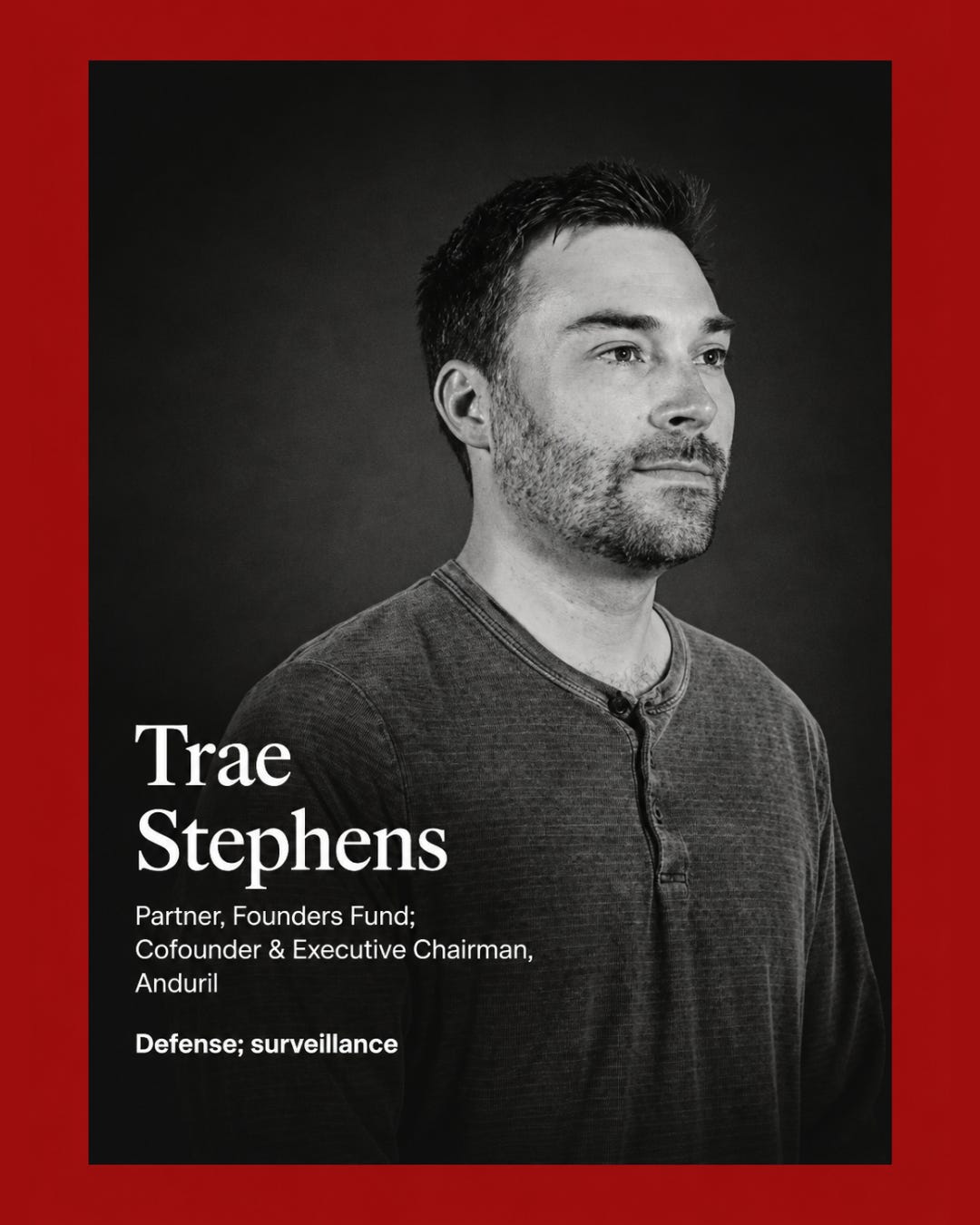
As a partner at Peter Thiel’s Founders Fund and co-founder of Anduril Industries, Stephens built autonomous surveillance towers, military drones, border monitoring systems, and AI-powered defense platforms. His company has secured billions in government contracts and rapidly become one of the most valuable defense startups in the world.
Stephens’ significance lies in how effectively he helped rebrand the defense industry for a new generation of investors. For decades, venture capital largely avoided military technology. Under Stephens and his peers, defense became fashionable again. The result is a venture ecosystem increasingly comfortable treating war, border enforcement, and surveillance not as exceptional government functions, but as growth markets capable of generating venture-scale returns.
If Silicon Valley helped normalize defense and surveillance investing, Israel became one of its most productive talent pipelines.
Over the last two decades, Israel has built one of the world’s most influential cybersecurity ecosystems, producing startups focused on intelligence, threat detection, surveillance, defense, and security infrastructure. Many of these companies were founded by veterans of military and intelligence units, creating an unusually direct relationship between national security institutions and venture-backed technology.
Investors quickly recognized the opportunity. Firms such as Insight Partners, Cyberstarts, Team8, Sequoia Capital, Lightspeed, and Accel poured billions into Israeli-founded cybersecurity companies, helping transform a local startup ecosystem into a global industry. Companies such as Wiz, Cyera, Armis, Checkmarx, Aqua Security, Island, and Recorded Future became some of the most valuable security businesses in the world, attracting enormous amounts of venture capital along the way.
Investors increasingly viewed geopolitical instability as growth opportunities. Entire portfolios were built around the assumption that the world would become more insecure, more monitored, and more dependent on security technologies. In many ways, this represents the logical endpoint of the trends reshaping the broader economy. The same financial system that learned how to monetize housing and healthcare eventually learned how to monetize fear itself.
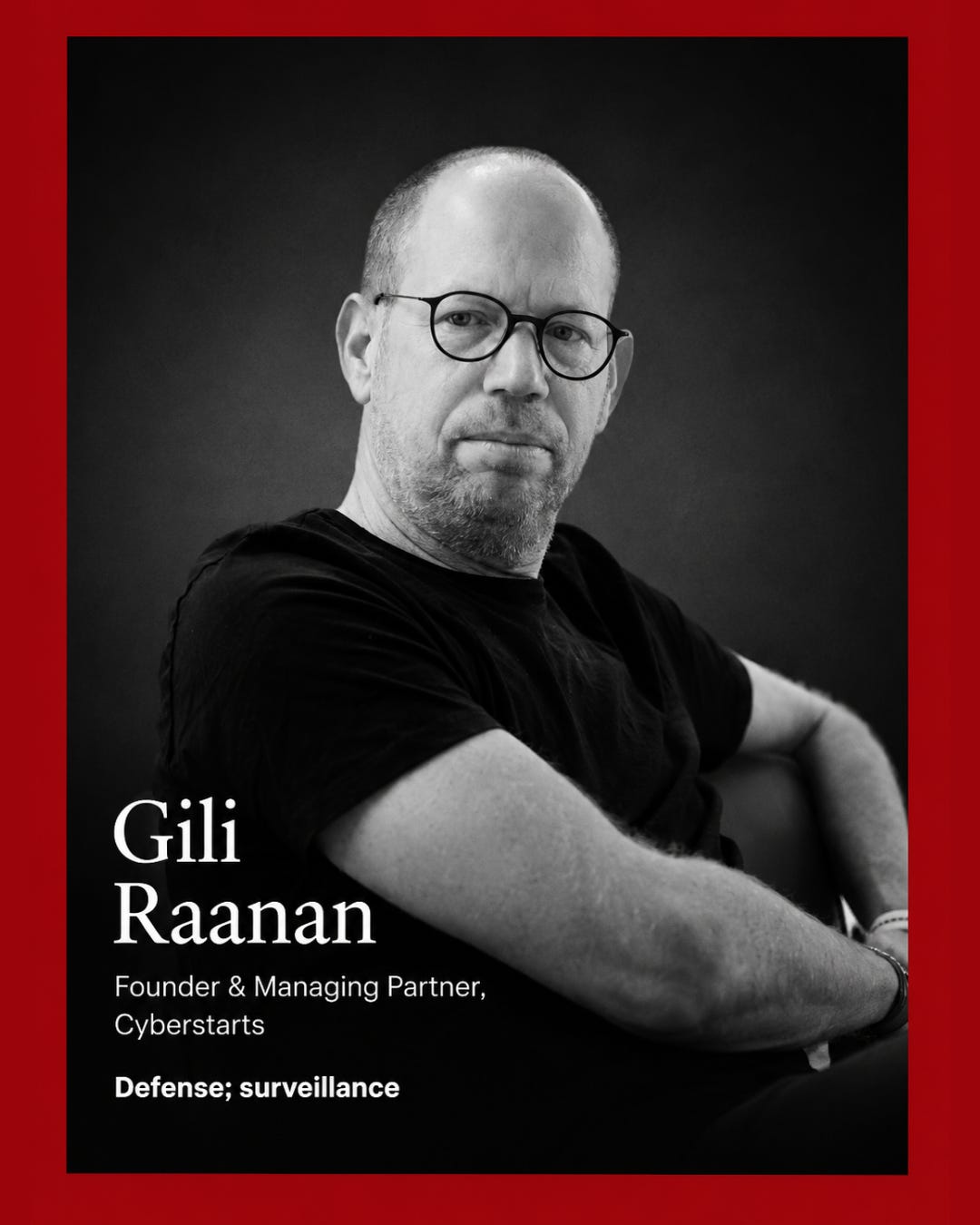
Few investors have played a larger role in Israel’s cybersecurity boom than Gili Raanan. Through Cyberstarts, he has backed many of the most valuable security startups of the past decade, helping transform cybersecurity from a specialized industry into one of venture capital’s most lucrative sectors. The more organizations fear cyber threats, the larger the market for companies promising protection. Raanan's portfolio illustrates a broader shift explored throughout this article: security has become not only a public necessity, but a highly profitable investment category.
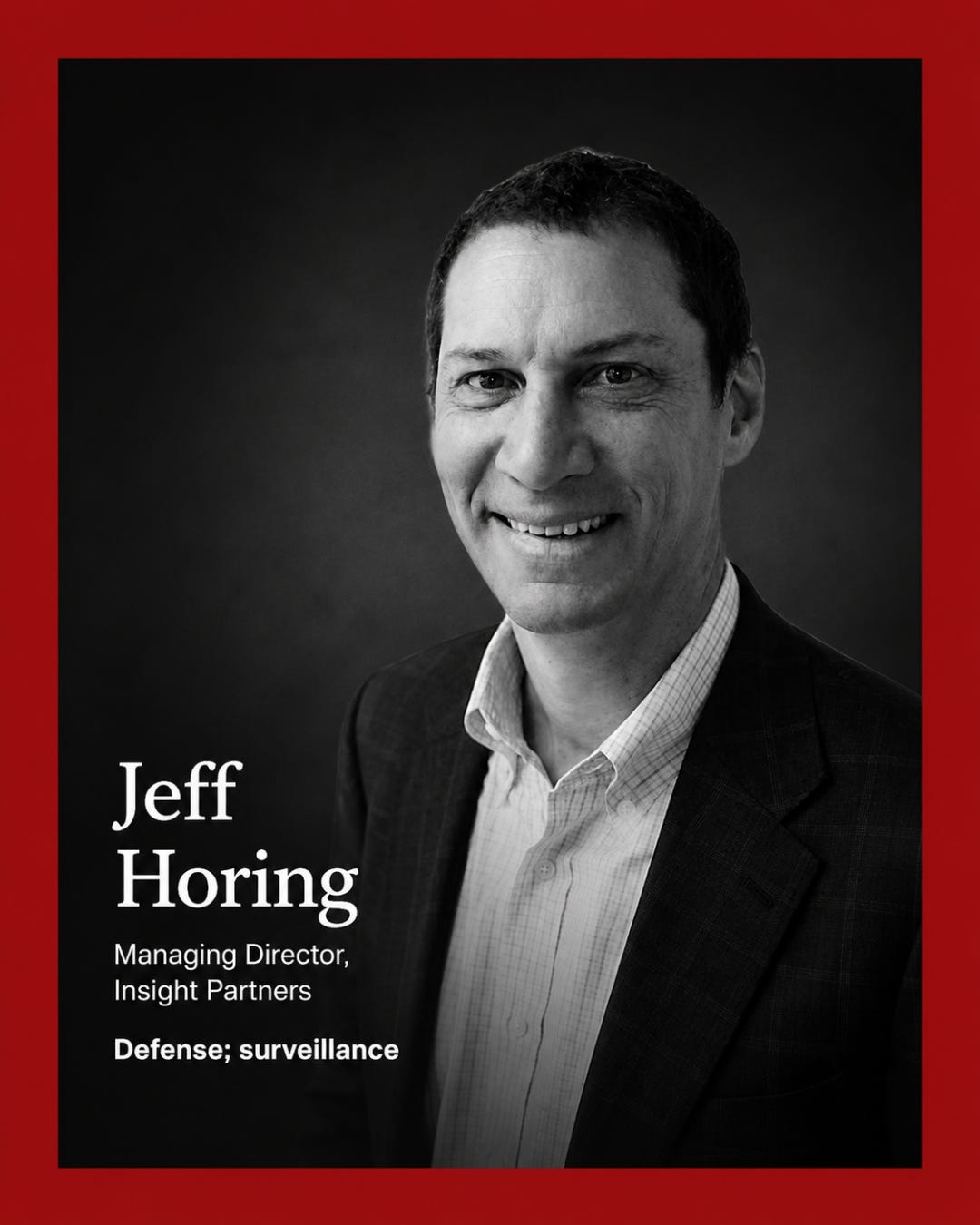
As a managing director at Insight Partners, Jeff Horing helped oversee investments in some of the most valuable Israeli cybersecurity companies in the world. Insight became one of the dominant financial forces behind the modern cyber-defense industry, backing firms that benefited from rising concerns about cyber warfare, digital espionage, and infrastructure attacks. The success of these companies reflects a reality that appears throughout this investigation: instability can be extraordinarily profitable when your business is selling protection. As cyber conflict becomes a permanent feature of modern life, the market for security continues to expand alongside it.
What makes this ecosystem particularly significant is that some of the largest American venture capital firms have increasingly directed capital toward Israeli cybersecurity and defense-adjacent startups, viewing them as among the most attractive opportunities in technology. Insight Partners, Sequoia Capital, Andreessen Horowitz, Lightspeed, Accel, and others have collectively poured billions into companies founded by veterans of Israeli military and intelligence units.
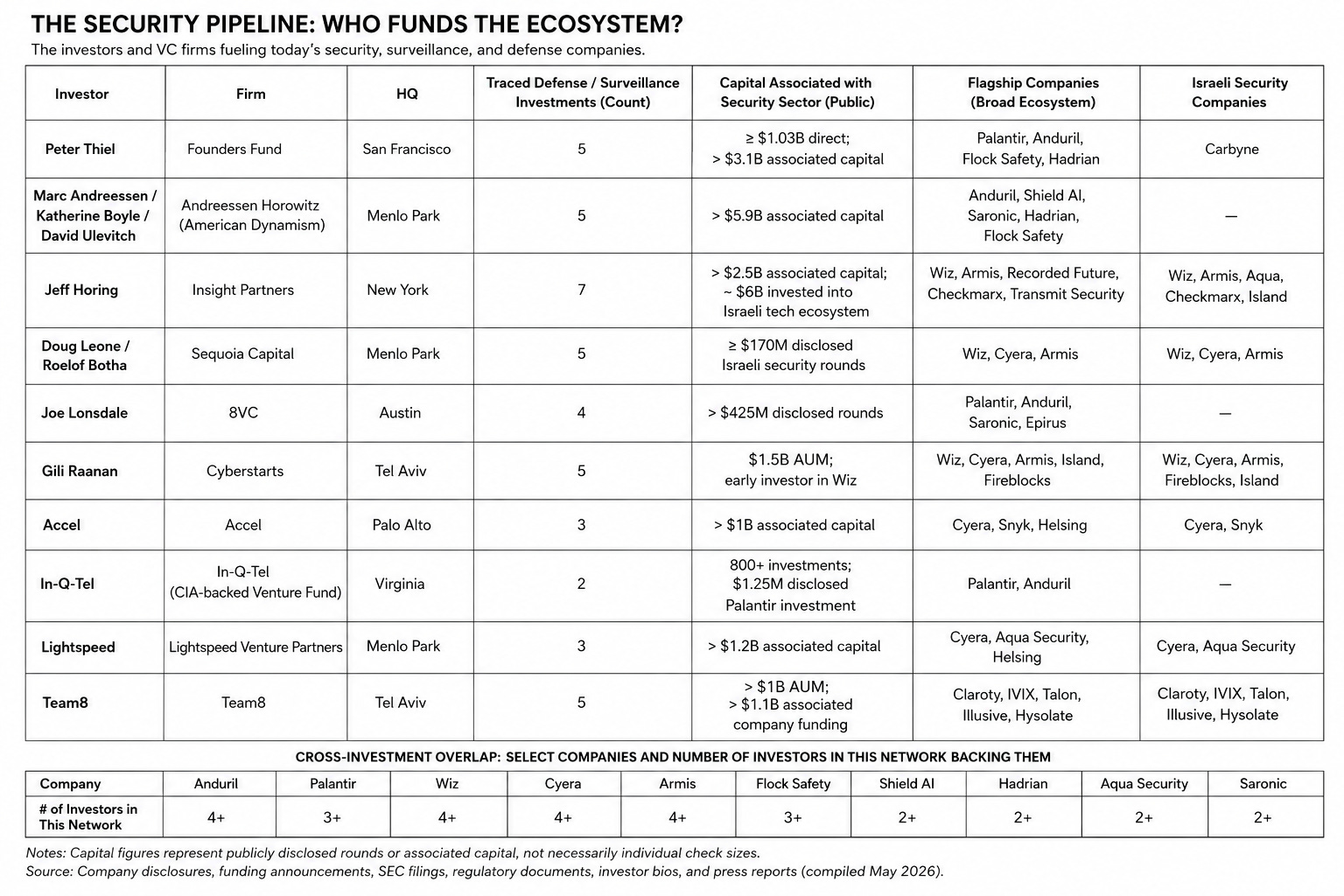
The relationship is mutually reinforcing. Israeli startups gain access to American capital, customers, and public markets. American investors gain access to technologies developed in one of the world’s most sophisticated security environments. The result is a transnational network connecting venture capital, cybersecurity, intelligence expertise, and defense technology in ways that would have been difficult to imagine a generation ago.
The same financial system that learned how to profit from people’s need for shelter and medical care has discovered another dependable market: foreign relations. As geopolitical tensions rise and digital threats become more pervasive, security itself has become one of venture capital’s most valuable products.
Over time this capital concentration has produced a shift in how power operates. Increasingly, some of the most important decisions shaping daily life are not being made by voters or public institutions. They are being made through capital allocation. Which companies receive funding. Which technologies scale. Which industries attract billions of dollars.
And when enough money flows in the same direction for long enough, it begins to shape the future itself. Perhaps that is the clearest reflection of our current moment. The future is still being funded. The question is what kind of future investors believe is worth betting on.
No posts
Comments
Nothing yet. Say the first thing.
Sign in to join the conversation.