
The headline rippled across LinkedIn: “Duolingo dials back its ‘unhinged’ strategy.”
The company’s CMO told Business Insider it was time for the big green owl to give it a rest. They would be pivoting away from absurdist marketing in favor of the brand “growing up” and embodying a more wholesome persona.
As social and content marketers, we felt the collective shockwave. Duolingo defined unhinged marketing in the early 2020s. They were the brand leaders told us to be like. If the wonderkid walked away, industry commentators deduced, it must mean chaotic brand personas as we know them were indubitably over.
But, candidly, something didn’t sit right about that with us at Sprout. It seemed unlikely that chaotic brands would button up their presences overnight. And, even if they did, is that really what consumers would respond to?
Here’s a sneak peek of what our Q2 Pulse Survey of over 2,000 consumers found:
Half of social users like an unhinged approach for fun brands, but find it unprofessional for serious brands.
Nearly one-third dislike it or think it’s overplayed.

But even this survey didn’t tell the full story. To dig into this sentiment further and really understand what it means to be “unhinged,” we went back to the beginning.
Unhinged marketing isn’t new. Even though Duolingo eventually became synonymous with it, the language learning app didn’t break the glass ceiling.
Long before social, brands were using unhinged tactics to differentiate themselves from the competition and grab attention. Like Quizno’s 2004 “We Love the Subs” TV ad (which became a new hyperfixation for our team while researching this post). It continued existing off social too. Who could forget Mountain Dew’s 2016 “Puppy Monkey Baby?”
Throughout the history of print and digital advertising, brands invested in wildly bizarre creative to earn an—often temporary—spot in the zeitgeist.
Social media culture and the nature of algorithms presented brands with new opportunities to do this work.
While the first truly unhinged brand social post is disputed, this era has had a decade-long arc. Moon Pie tweeted “Okay baby” in 2018. Wendy’s was celebrated for their “savage Tweets” in a 2017 Buzzfeed listicle. And all the way back in 2013, Denny’s started posting pure chaos on Tumblr. The text-first nature of these networks was ripe for pithy brand voices.
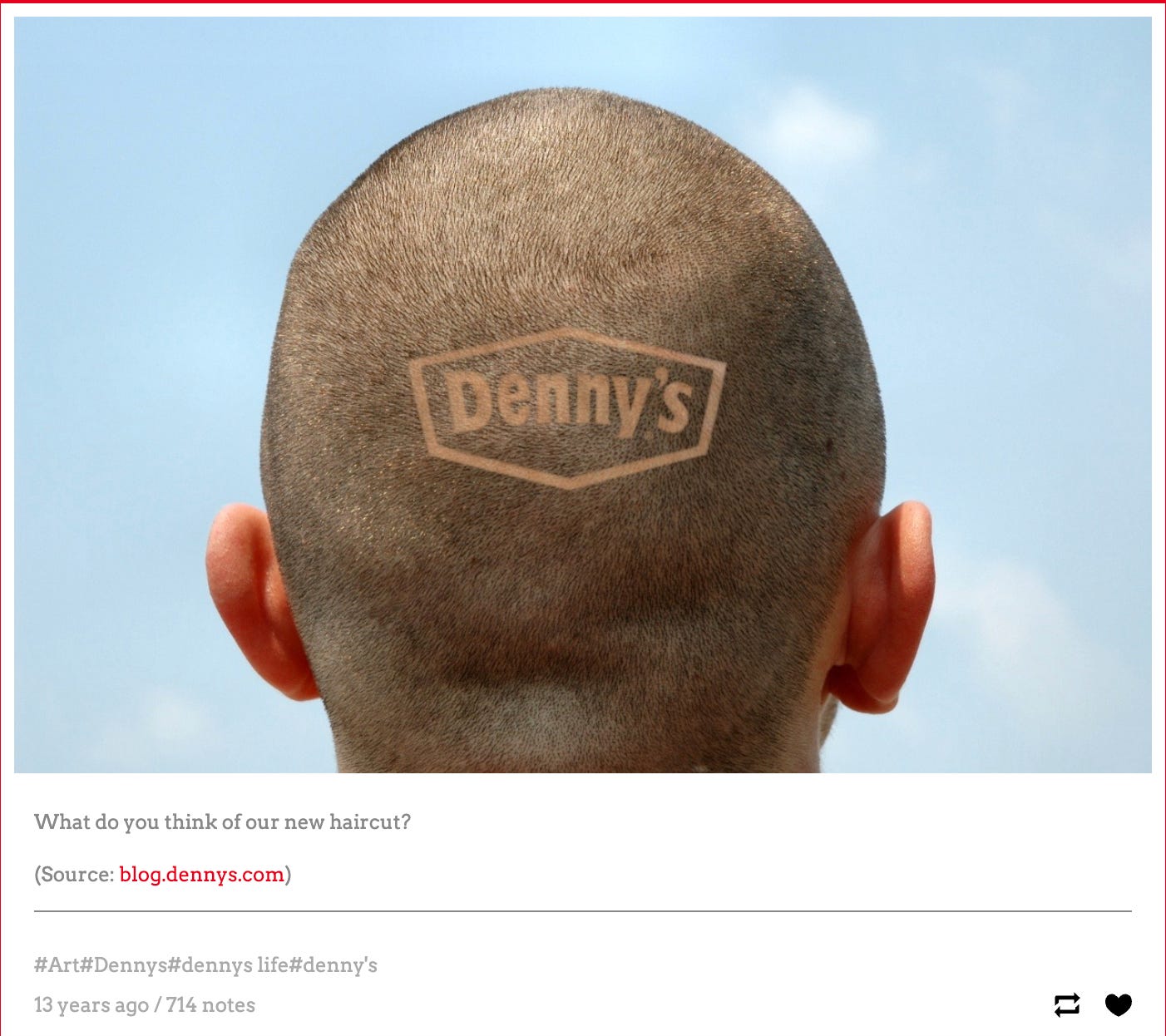
In the years that followed, X (formerly Twitter) was inundated with would-be copy cats trying to emulate the irreverent humor these brands had been perfecting for ten years. In the network’s 2022 #RealTalk Report, users said “playful and funny” brand voices were becoming indistinguishable. Brands had been swept up in the sea of same, and consumers were hungry for something different.
Enter: The parallel rise of TikTok and Duolingo.
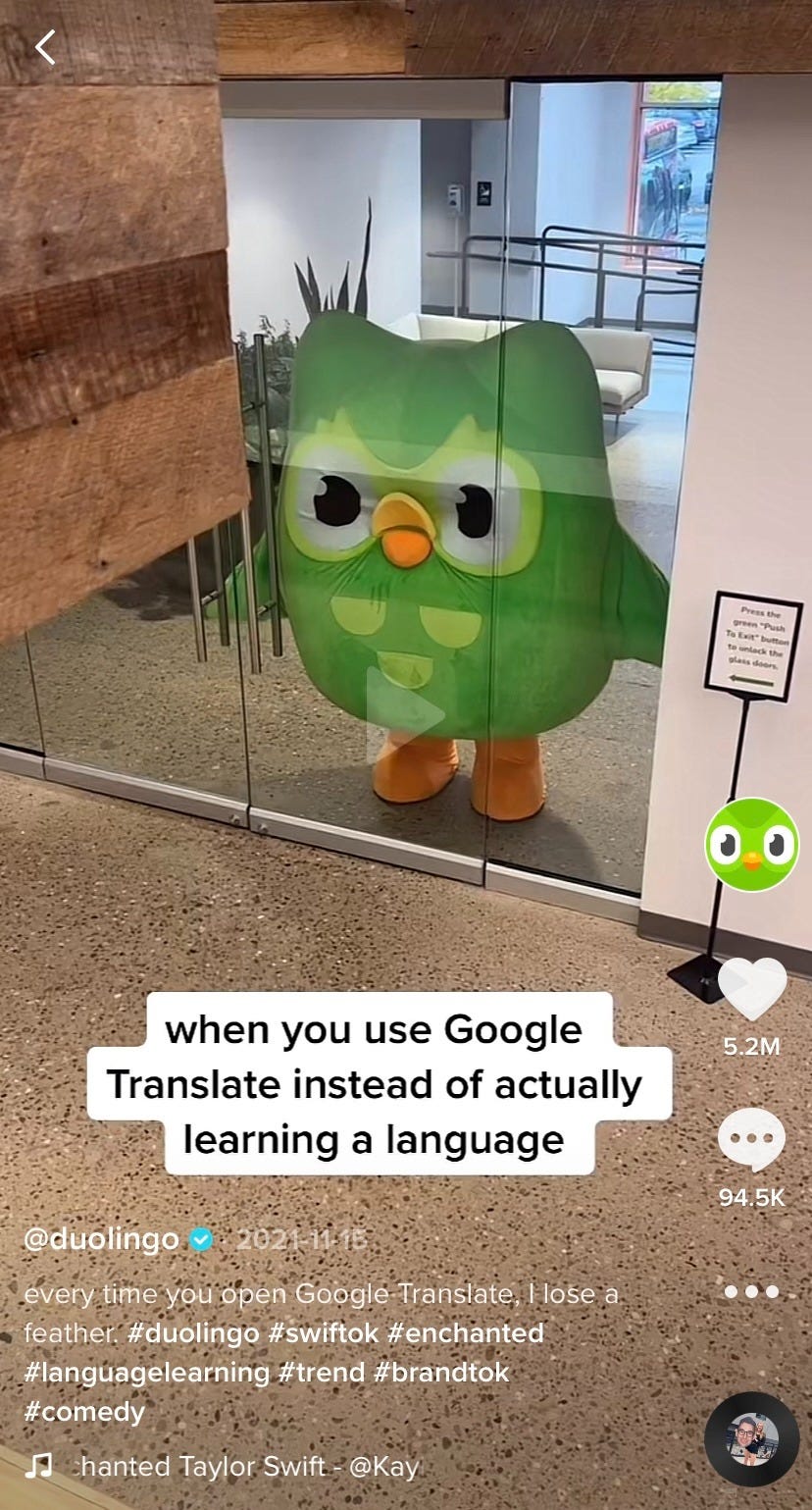
Duolingo heralded the era of unhinged video when they joined TikTok in 2021. Other brands like Nutter Butter, Ryanair and Liquid Death followed suit, and became jewels in the unhinged crown. TikTok’s video-forward algorithim made way for skits, character and series development, and shocking mascot arcs (who can forget when the green owl got the attention of popstar Dua Lipa?)
But history repeats itself. As more brands copy-and-pasted the exact unhinged playbook these brands were using, the impact was lost. As Byron Stewart wrote for his newsletter Tapped In, “I’m noticing consumer sentiment shift negatively toward brand actions that seem unhinged. And while I understand the thinking behind this behavior from brands, it appears consumers are reaching a point of fatigue with unhinged social.”
Worse, brands started jumping on the unhinged bandwagon at the direction of their leaders. Last year, Kara Redman, CEO and founder of Backroom, told us, “Unhinged social has become mainstream. Just because you can do it, doesn’t mean you should. And definitely don’t do it just because your boss wants you to.”
If all that’s interesting about what you’re doing is that it’s “unhinged,” it will go stale. Duolingo was successful because their strategy was wrapped up in the backstory for their mascot and how people used their app. Ryanair’s approach landed because they had an existing reputation as a challenger brand.
If the only thing that stands out about your brand is unhinged marketing, you won’t be able to differentiate when the inevitable copycats rip off your work.
Frankly, it isn’t easy to pull off an effective long-term unhinged strategy. It requires a special skillset and the exactly right conditions. You need a high level of cultural literacy and fast approval workflows that can keep up with the online trend cycle. Plus, it needs to make sense for your brand values and story, or you risk being roasted in the comments section or quickly forgotten.
Equally important, there has to be no (or very little) precedent for your content. For example, there is minimal space for another unhinged D2C brand on TikTok. But a network like LinkedIn is full of opportunity and, in our opinion, is the new frontier in the unhinged saga.
Take brands like SURREAL, Monzo Bank, Slate or Passionfruit. Their content is disruptive and highly unhinged in comparison to other posts from brands and other LinkedIn users. It’s wildly unexpected to scroll upon a flirtatious carousel from a cereal brand—especially when it’s sandwiched between AI-generated posts stuffed with jargon. Yet, this content still feels true to their challenger identities.

If we had to give marketers waffling over whether or not they should create their own unhinged strategy advice, it would be: Do it only if it feels true to your brand and you have a strategic vision. Don’t do it for virality alone. What’s most important is creating a brand that is actually memorable and distinct.
No posts
Comments
Nothing yet. Say the first thing.
Sign in to join the conversation.