
The turnoff at Bitter Springs always feels like the beginning of an adventure. I left Highway 89 and headed north on 89A, the Echo Cliffs sliding past my passenger-side window while the Vermilion Cliffs rose higher with every mile. This corner of Arizona occupies a special place in my memory. It is the road to Grand Canyon river trips, the road to field seasons, and the road my father and I bicycled together in 2012.
That ride came at a pivotal moment in my life. After dropping out of college following my freshman year, I decided to spend a year riding my bicycle around the American West. The journey eventually carried me from Arizona to Seattle, down the Continental Divide, and later from New York to Los Angeles. Of all the places I traveled, few left an impression like the Vermilion Cliffs. Even now, driving beneath them evokes the same feeling I had then: the joy of movement, the wind on my face, and the sense that there is still so much of the world left to explore.
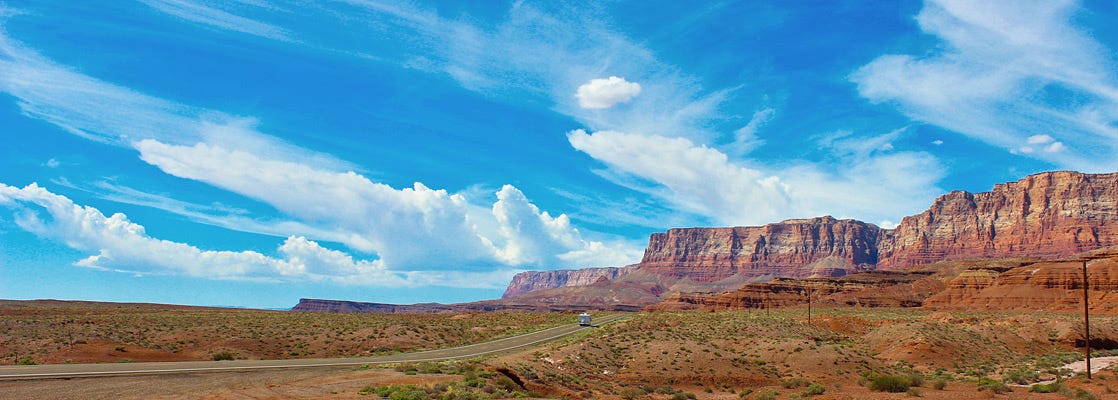
Today, the SSI Crew was bound for North Canyon on the North Rim of Grand Canyon, a landscape that had spent the previous summer engulfed in flames. Somewhere beyond the burned forests and ash-covered hillsides were a handful of springs that once harbored an extraordinary community of life, including the Kaibab stonefly (Gaufinia kaibabensis), a species found nowhere else on Earth. We did not know whether it had survived. Every mile north brought us closer to an answer.
As we climbed onto the Kaibab Plateau, the first signs of the Dragon Bravo Fire began to appear. Small patches of burned forest interrupted the green. Yet much of the landscape still appeared intact. Giant ponderosa pines towered overhead. Spruce and fir still lined the road. That first evening we made camp beneath living trees and allowed ourselves a measure of cautious optimism. Perhaps the fire had not been as destructive as we feared.
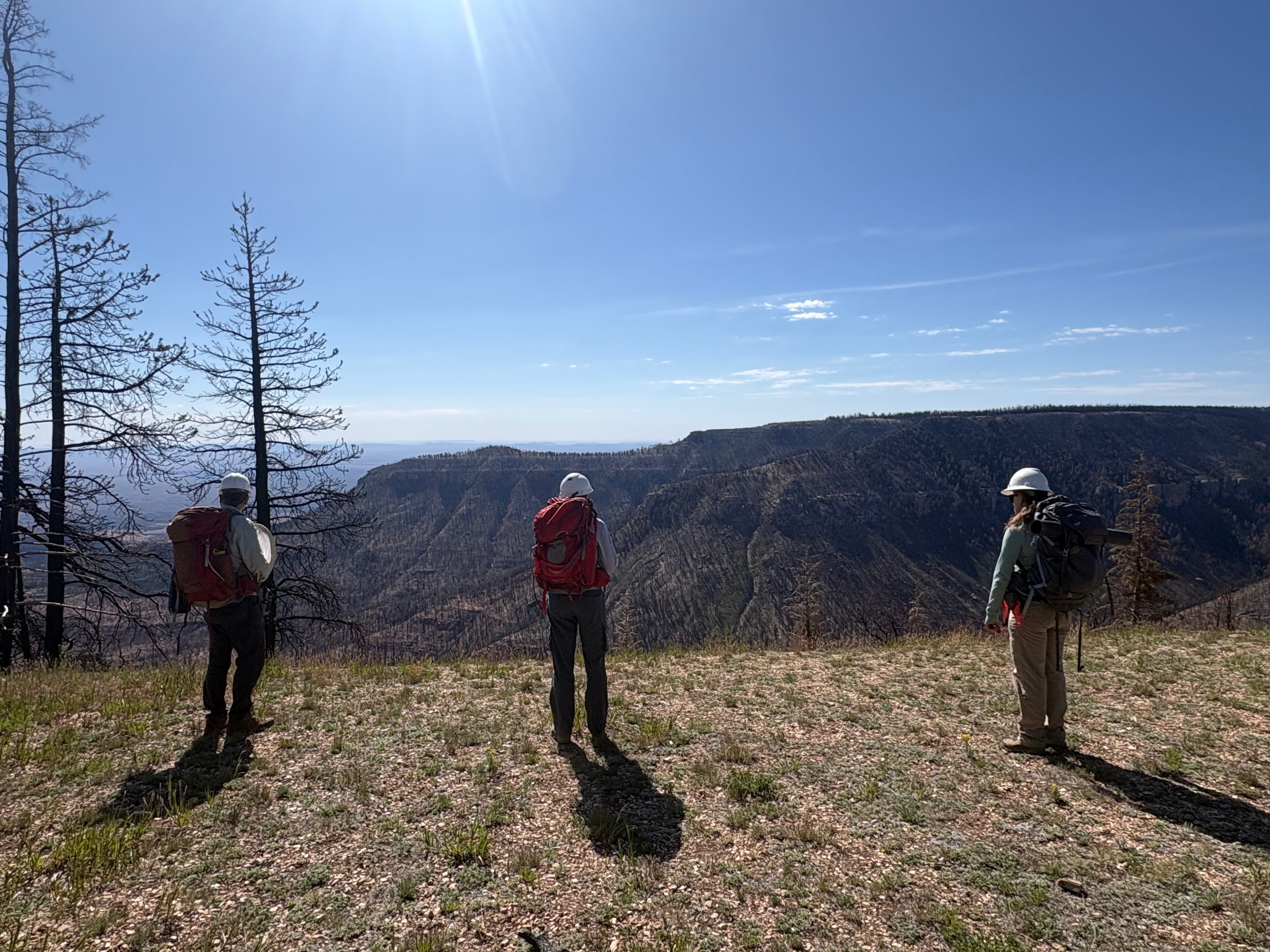
The illusion lasted until the following morning. The moment we turned onto the forest road leading toward the North Canyon trailhead, the scale of the disaster came into view. The forest disappeared. In its place stood mile after mile of blackened trunks. Hillsides that once held dense conifer forest had become open expanses of ash. The fire had not simply passed through this landscape; it had fundamentally altered it. Everything felt exposed. The smell of charred wood lingered in the air as each step stirred up ash. The sun beat down on slopes where shade had vanished. Barely a year into a recovery that would take centuries, the canyon was still raw with the catastrophe.
North Canyon is known for its springs. Emerging from the sedimentary rocks of the Kaibab Plateau, these small waters sustain an outsized amount of life. Historically, they supported a genetically pure population of Apache trout introduced in 1963, along with a remarkable assemblage of aquatic insects and other spring-dependent species. Most notable among them is the Kaibab stonefly. Found nowhere else on Earth, this small insect spends nearly its entire life in the cold waters of a handful of springs. If those springs disappear or are severely altered, the species will go extinct.
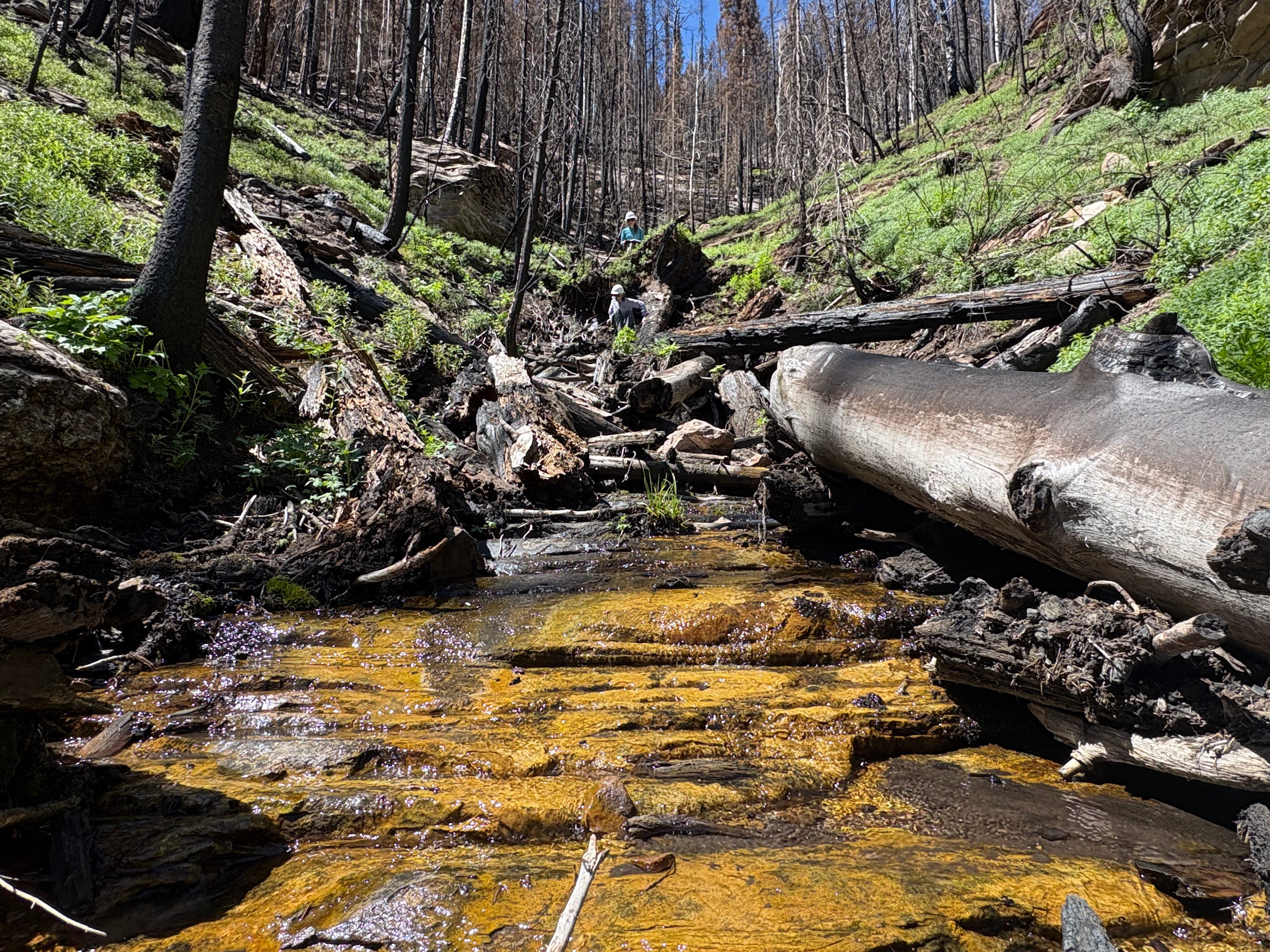
On our first day, we surveyed a cluster of springs in a side canyon to the northwest of North Canyon. The contrast between the springs and the surrounding landscape was striking. Beyond the water’s edge lay blackened hillsides and fallen trees. But at the springs themselves, life was already beginning to return. Vegetation was regenerating. Aquatic insects drifted through the current. We found mayflies, caddisflies, and predaceous diving beetle larvae occupying habitats that had been buried in ash only months before. The springs appeared remarkably resilient. But despite hours of searching, we found no sign of the stonefly.
As the day wore on, ash worked its way into every crease of our clothes and every line on our faces and hands. By evening we looked as though we had spent the day underground in a coal mine. We returned to camp exhausted and uncertain. The springs had survived and were beginning the long journey of recovery. But had the stonefly?
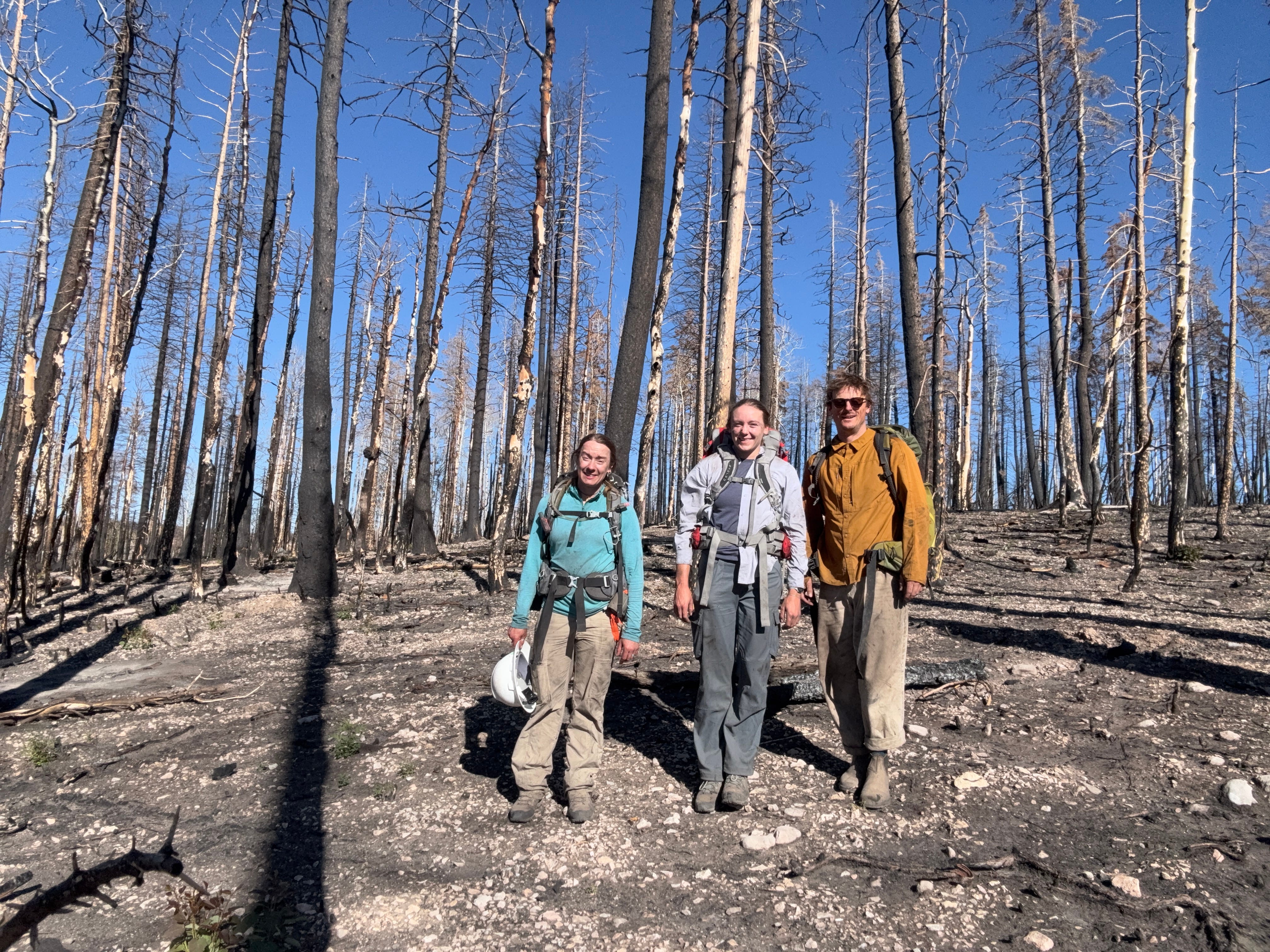
The next morning we headed toward a cluster of springs near the headwaters of North Canyon Creek. Reaching them was an ordeal. The slopes were steep, approaching forty degrees in places, and blanketed in inches of loose ash. Every step uphill seemed to slide backward. The effort felt less like hiking and more like climbing a sand dune that refused to end. The heat was relentless and shade was nearly nonexistent. Every tree that might once have provided relief had been consumed by the fire. Slowly, we worked our way upward. When we finally reached the spring source, we knelt beside the water and began searching. And there it was. The Kaibab stonefly had survived. Not just at one spring, but at several. A species we feared might have vanished after the fire was still present, clinging to existence in the places where water continued to emerge from the earth.
The discovery brought relief, but not certainty. The fire may be over, but the challenges facing these springs are not. Burned watersheds are prone to debris flows, erosion, and massive pulses of sediment. With the monsoon season approaching, those threats loom large. The stoneflies survived the flames. Whether they can survive what comes next remains to be seen.
What I will remember most about the trip to North Canyon is not the destruction, though there was plenty of it. It was the resilience. At several springs, aspen shoots were already emerging from the blackened earth. Columbian monkshood preparing to bloom beside flowing water. Aquatic insects moved through the current as they had for centuries. And hidden within a few small patches of cold water, the Kaibab stonefly endured.
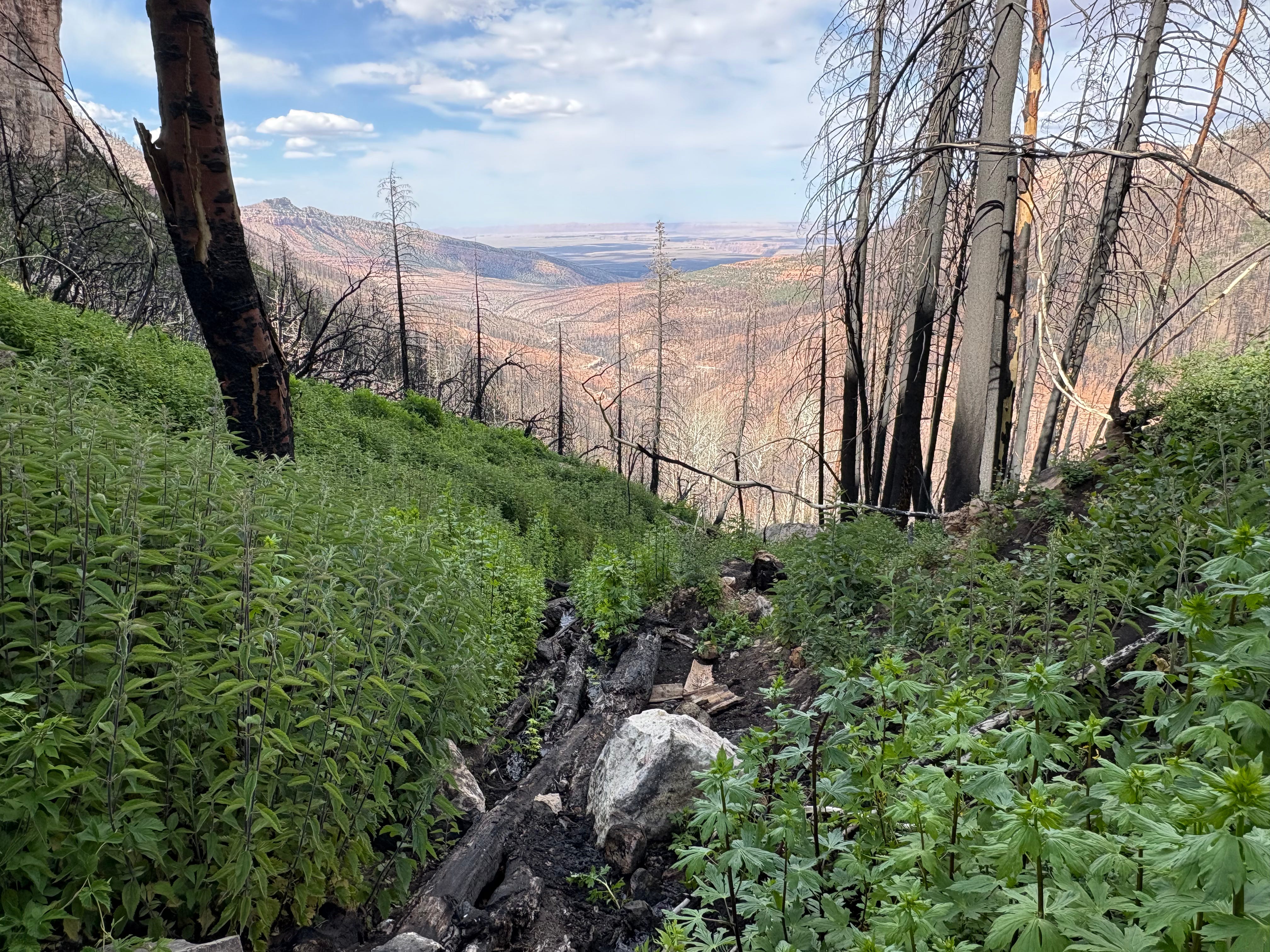
We often describe springs as biodiversity hotspots. While true, that description only tells part of the story after walking through a burned landscape like North Canyon. Springs are refuges. When the forest burns, they are among the last places where life persists. They shelter species through droughts, floods, and fires. They become reservoirs of survival in landscapes that have lost almost everything else. And when recovery begins, it often begins there. What we found here is what springs do everywhere: hold the line when everything around them collapses.
The forests of North Canyon may take centuries to return. Some never will. But at the springs, life remains. And from those small pockets of water, life is beginning again.
SSI will be presenting on Thursday, June 11, at the online event Rivers of Life: Turning the Tide on Freshwater Biodiversity Loss, hosted by the International River Foundation, Wetlands International, and SHOAL. If you are interested in attending, we encourage you to register and join the conversation.
No posts
Comments
Nothing yet. Say the first thing.
Sign in to join the conversation.