
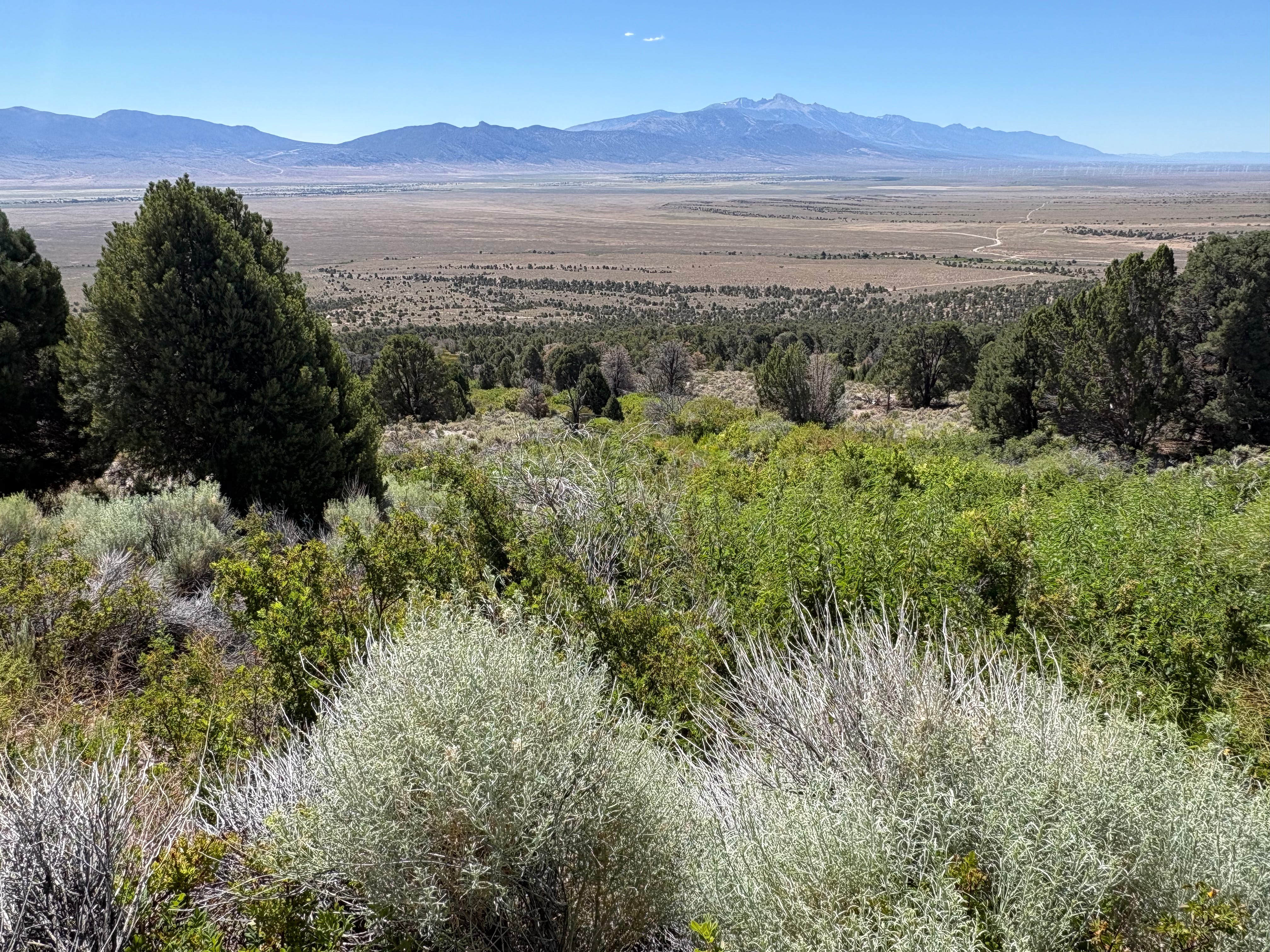
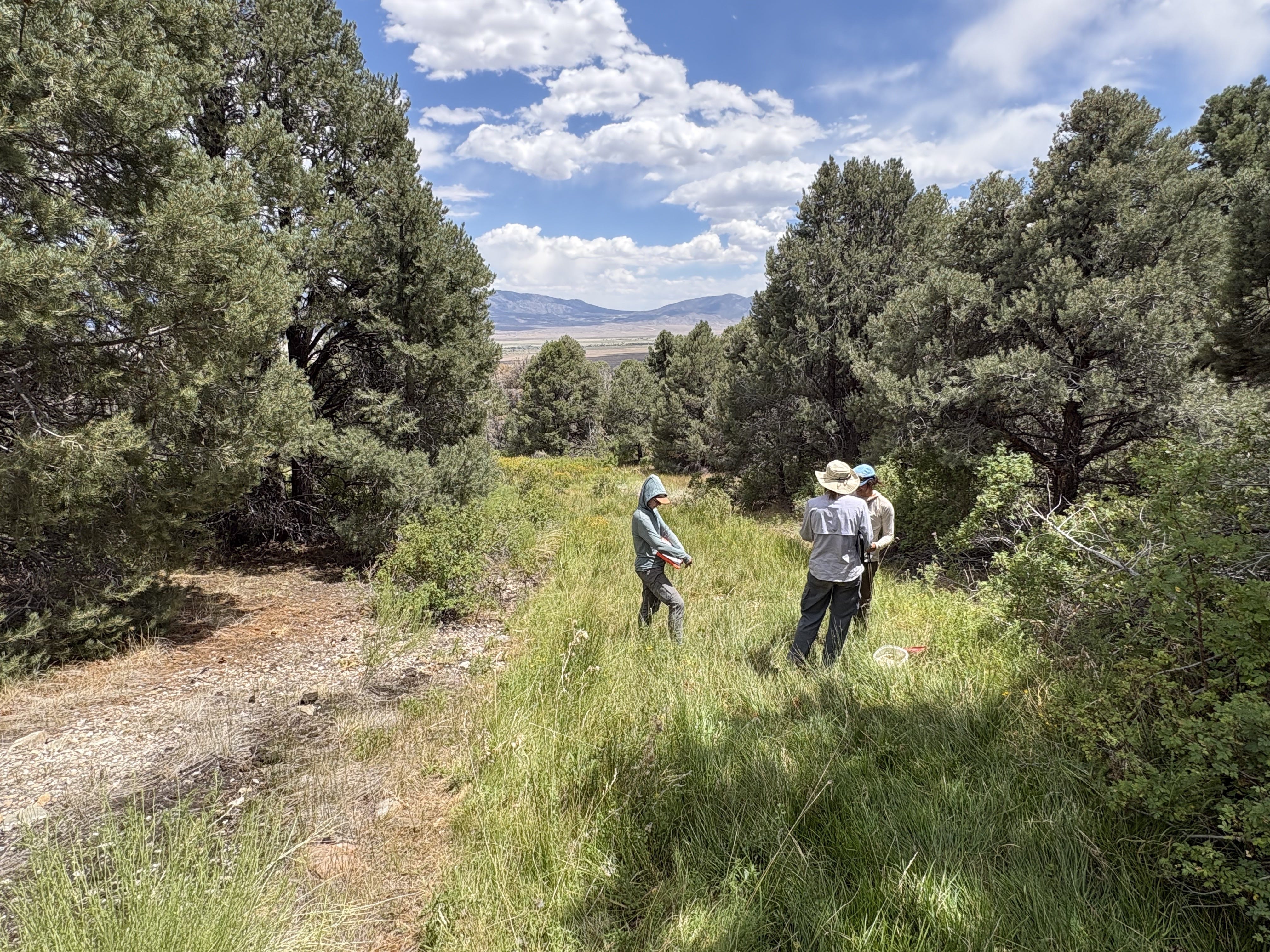
This past week, the SSI team spent seven days conducting fieldwork outside Ely, Nevada. We had a wonderful crew of seven, including three SSI interns: Helen, Shelby, and Calvin. For me, the opportunity to work alongside them was particularly meaningful. As many of our regular readers know, SSI is in the midst of a major leadership transition. After decades of building the organization, SSI’s founders, Larry and Jeri, are preparing to pass responsibility to the next generation. Transitions like this are exciting, but they can also be difficult, complicated, and stressful for everyone involved.
At the same time, SSI is working to expand and diversify its business model in response to changes in federal spending and the broader funding landscape. That means developing new partnerships, pursuing new sources of support, and thinking carefully about how to build an organization capable of sustaining this work far into the future. Lately, much of my time has been consumed by that effort. There are budgets to review, contracts to manage, emails to answer, organizational systems to improve, and funding proposals to write. At times, the proposals feel nearly nonstop. All of those tasks are necessary. They allow SSI to employ scientists, train interns, support field crews, manage ecological data, and continue working with partners across the country and around the world. Still, administrative work and grant writing are not exactly what draw most of us to field science.
This trip came at a much-needed time. Spending a week in the field with Helen, Shelby, and Calvin reminded me of what first made this work so exciting. The natural world is alive with questions, and their curiosity was evident in their voices, their observations, and their excitement at each new spring. There is something specific and irreplaceable about the presence of a beginner. I do not mean “beginner” in a pejorative sense, but in the most useful one: someone whose mind has not yet closed around what a thing is supposed to be. To an experienced practitioner, a spring can become a Level 2 inventory site with a familiar set of variables to measure. To a beginner, it is a mystery they have been invited into. Both perspectives are true. The challenge is not to lose the second beneath the weight of the first.
Springs are especially good places for cultivating that kind of curiosity. From a distance, a spring may look like little more than a patch of green vegetation or a bit of water emerging from the ground. Once you begin paying close attention, however, it becomes an entire world. Where is the water coming from? How consistent is its flow? Why are certain plants growing here but not a few meters away? What aquatic invertebrates are living beneath the rocks or within the vegetation? How have grazing, groundwater use, fire, drought, or climate change shaped the site? What can this one spring tell us about the surrounding landscape? Every answer seems to produce several more questions.
That process of discovery was visible in our interns throughout the week. Their questions encouraged all of us to look more carefully, explain our assumptions, and reconsider details that can become familiar after years of conducting spring inventories. Their enthusiasm was contagious. They brought fresh eyes to the work, and fresh eyes are invaluable in science. There is something powerful about watching someone begin to recognize the complexity of a spring ecosystem. What initially appears to be a small and isolated water source gradually reveals itself as a meeting place between groundwater and the surface world, between geology and biology, and between human decisions and ecological consequences. That realization is at the heart of SSI’s work. Springs may occupy very little space on the landscape, but they can support extraordinary concentrations of life. They provide water, habitat, refuges, and ecological connections in places where those resources are often scarce. Learning how to observe, document, and understand them is the first step toward becoming a better steward.
Working for a small nonprofit has its own ebbs and flows. Some weeks are spent in remarkable landscapes, collecting data and learning directly from the places we are trying to understand. Other weeks are spent behind a computer, assembling budgets, navigating administrative challenges, and trying to convince funders that the work deserves support. The two sides can sometimes feel disconnected, but they are inseparable. The administrative work makes the fieldwork possible, and the fieldwork gives the administrative work its purpose. When the balance shifts too far toward deadlines, budgets, and uncertainty, it becomes easy to lose sight of that purpose. This week helped restore it for me.
Helen, Shelby, and Calvin reminded me that SSI is not only transitioning between generations of organizational leadership. We are also helping introduce a new generation of scientists and conservationists to springs. We are sharing methods, experience, and knowledge, but we are also benefiting from their energy, ideas, and ability to see the work anew. That exchange is one of the most hopeful parts of field science. The future of SSI will depend on our ability to adapt to new financial and organizational realities. It will require difficult conversations, creative partnerships, and a great deal of work that most people will never see. But it will also depend on something much simpler: people remaining curious about the world around them and caring enough to understand and protect it.
After a week in Nevada with this field crew, I returned tired, dusty, and encouraged. The challenges facing SSI have not disappeared. There are still proposals to write, decisions to make, and administrative tasks waiting for attention. But the reason for doing them feels clearer again. Sometimes, a week in the field is exactly the reminder we need.
No posts
Comments
Nothing yet. Say the first thing.
Sign in to join the conversation.