
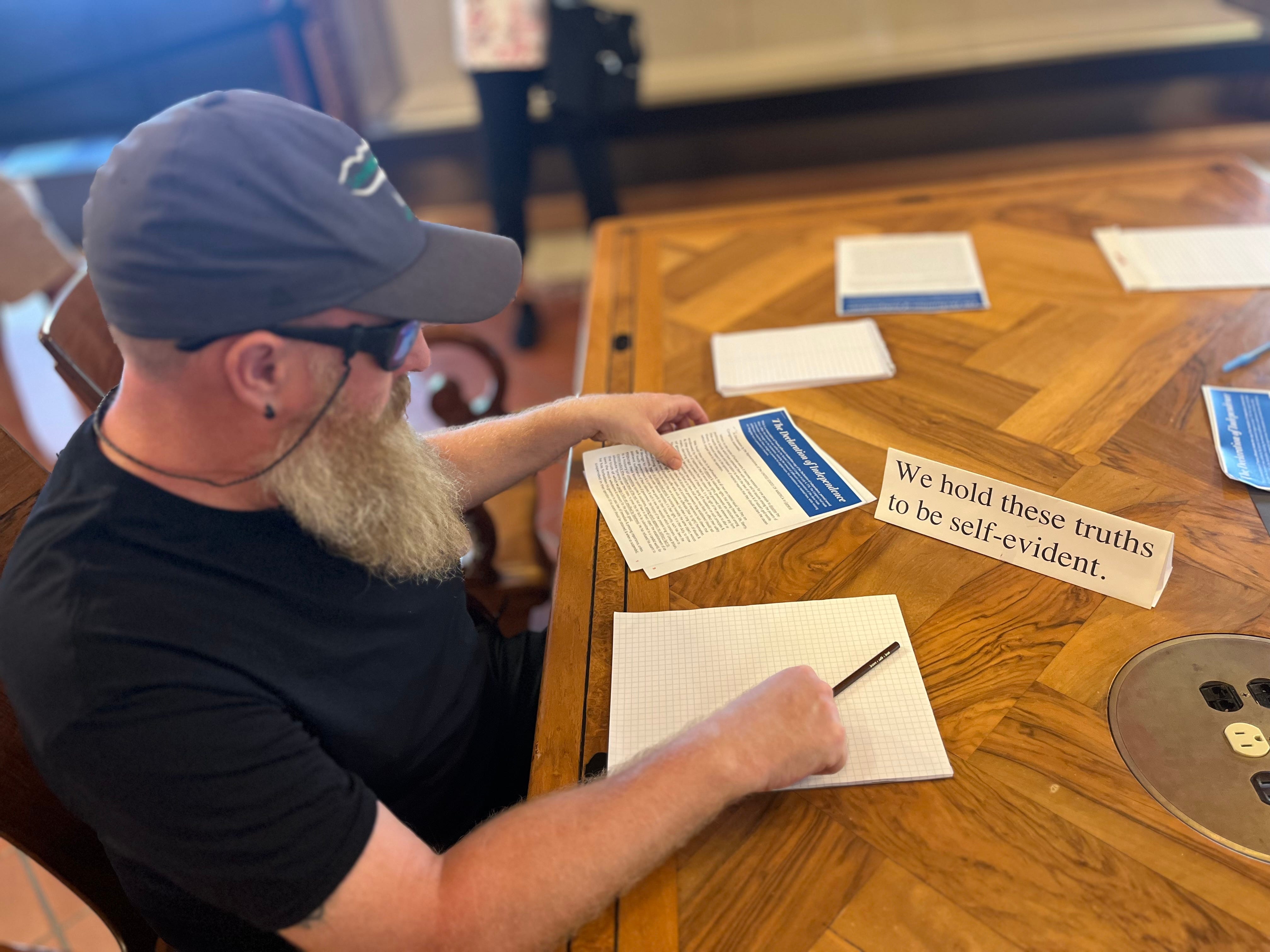
We hold these truths to be self-evident.
New York city is at 100 degrees on the day before its 250th birthday.
Befuddled, arguing tourists dive into puddles of shade between buildings all up 8th Avenue and even Times Square’s neon is anaemic in the sun.
100 Fahrenheit is 38 Celsius.
“The boids are meltin’, I tell ya,” a deli-worker in Fairway supermarket on Broadway declared to laughing co-workers. “I seen ‘em, I tell ya. Falling outta the sky.”
Outside the Public Library, the boids aren’t melting, but they are slouched next to a fountain, loitering, snoozing head on wing, waiting for a merciful passerby to splash some water in their direction.
We have come to see Thomas Jefferson’s handwritten draft of the Declaration of Independence at New York Public Library. It’s ticketed, but we figured that some ticket holders may have opted not to brave the heat, and so we join the queue of walk-ups, which takes over an hour.
We hold these truths to be self-evident, that all men are created equal, that they are endowed by their Creator with certain unalienable Rights, that among these are Life, Liberty and the pursuit of Happiness.—That to secure these rights, Governments are instituted among Men, deriving their just powers from the consent of the governed,—That whenever any Form of Government becomes destructive of these ends, it is the Right of the People to alter or to abolish it, and to institute new Government, laying its foundation on such principles and organizing its powers in such form, as to them shall seem most likely to effect their Safety and Happiness.
In the queue I am pondering the bizarre wording of man’s inalienable rights in the anticipated document.
Not life nor liberty, denied by colonial rule the world over. They seem evident and attainable.
But the pursuit of happiness?! What a bizarre inalienable right that is.
I ask the woman ahead of us in the queue if she thinks we have a right to pursue happiness, given that most of us don’t know what happiness actually is, and will frequently confuse it with the euphoria of love or drugs or consumerist excess.
She says several things about happiness that make me think instead of terms like autonomy or self-determination, and maybe I push a little too hard.
“Well, I’m not happy when I’m paying my taxes,” she says eventually with a laugh.
I have been happy so frequently in the past 18 months. On the bike, there is of course the endorphin-driven giddiness and laughter, but that’s not what I mean.
I mean that there is a moment of utter contentment and calm and optimism that comes sometime late in the day on the bike, when you find your forever legs and think to yourself, I could do this forever. This is my purpose.
But this happiness is based on an illusion: we have removed ourselves temporarily from the circumstances of our lives. The answering of emails, the mopping of kitchen floors. It’s easy to be happy when you simply turn your back on every day-to-day inconvenience, minor irritation or major stressor.
“Meditate in the marketplace,” some yogi guru whose name I can’t remember once said. And what he meant was, don’t believe you are enlightened because you can maintain your focus in rarified silence. Go to the busiest, smelliest, noisiest place and find enlightenment there.
Maybe happiness is the same. Maybe being happy while answering emails and mopping floors should be the goal.
Or maybe happiness isn’t a goal at all, but something we can occasionally enjoy, incidental to life’s journey.
The queue to see Thomas Jefferson’s document is impressive because it seems to be equal parts visitors to New York and locals, and there’s a very large number of young people waiting to see the artefact that Jefferson produced at 33, and presented to the rest of the committee of five (Franklin, Adams, Sherman and Livingstone) on June 28, 1776.
We are ushered up to Jefferson’s four handwritten pages.
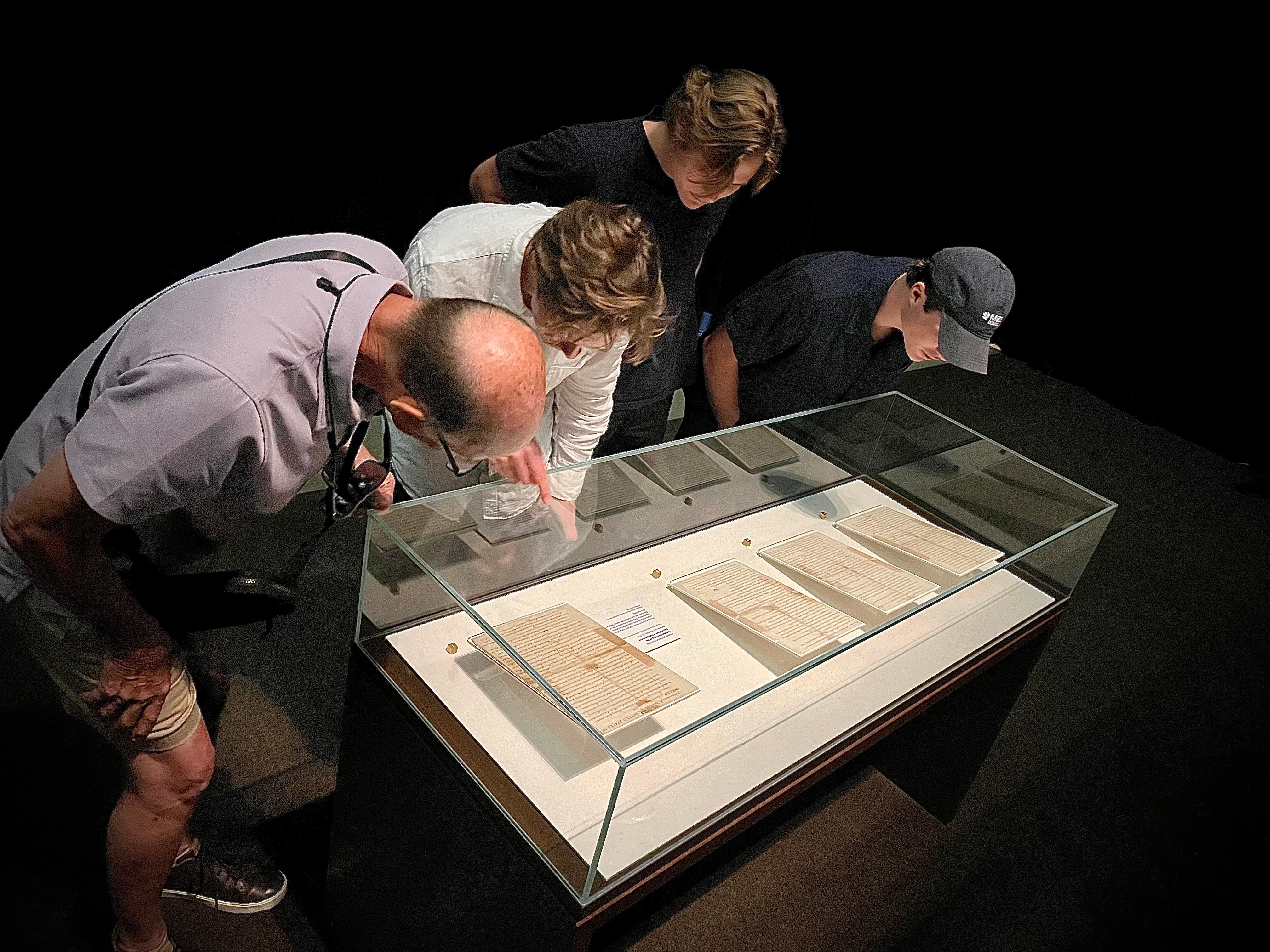
The 56 men who later signed a revised version of the Declaration of Independence believed they were signing their own excruciating death warrants. The punishment for treason against the British crown in the 1700s was to be hung, drawn and quartered.
Pennsylvania delegate Benjamin Rush later described a moving moment of humour that briefly broke up the “pensive and awful silence” that had fallen over the queue to sign the declaration.
The portly Virginian Benjamin Harrison turned to his neighbour in the queue, the slender Elbridge Gerry from Massachusetts.
“I shall have a great advantage over you, Mr Gerry, when we are all hung for what we are now doing,” he said. “From the size and weight of my body I shall die in a few minutes, but from the lightness of your body you will dance in the air an hour or two before you are dead.” The queue indulged in a quick smile before silence descended once again.
I think that for Irish people, this really strikes a chord. We grew up knowing how lethal it was to try to extricate your country from the colonial yoke of the British Empire.
On my walk to school in Cork as a child, I used to pass City Hall. Cork City Hall has the statues of two men in front of it.
Tomás Mac Curtain was the first republican Lord Mayor of Cork in 1920. After he was sworn in, the Royal Irish Constabulary battered his door down at night and shot him dead in front of his wife and children.
His successor Terence Mac Suibhne is the other statue: he was arrested and taken to Brixton Prison in England, where he died after 74 days of hunger strike that shocked the world. Brutal attempts at force-feeding preceded his death.
I always spare a thought for the person who stepped up to assume the role next.
So there’s something very moving to me about Harrison’s attempt at jocularity, and the principles of those people who did such a very brave thing 250 years ago and altered the course of human life on the entire planet, sometimes for better, sometimes for so much worse.
We had been expecting the Hudson valley part of the Empire State Trail to get progressively more industrialised before we arrived in New York City.
After a blissful week alongside the Erie Canal between Buffalo and Albany, we thought the best was probably behind us as we struck out from Albany towards the town of Hudson.
We couldn’t have been more wrong.
Leaving Albany the Catskills started coming into view and within two days we hit the home of the artist Tarryl Gabel and her husband Cameron, near Poughkeepsie.
Tarryl is a plein air painter of some renown: actor Keifer Sutherland owns one of her landscapes, and she has decorated a bauble for the White House Christmas tree.
Remember that when we were in North Dakota we were put up by Cody and Andrea Igoe, and treated like absolute royalty and taken up in a plane and to see behind the scenes at the museum?
Well, the Igoes’ welcome ended up extending several thousand kilometres: Tarryl is Cody’s cousin, and we can say that epic hospitality and kindness to strangers is a family trait.
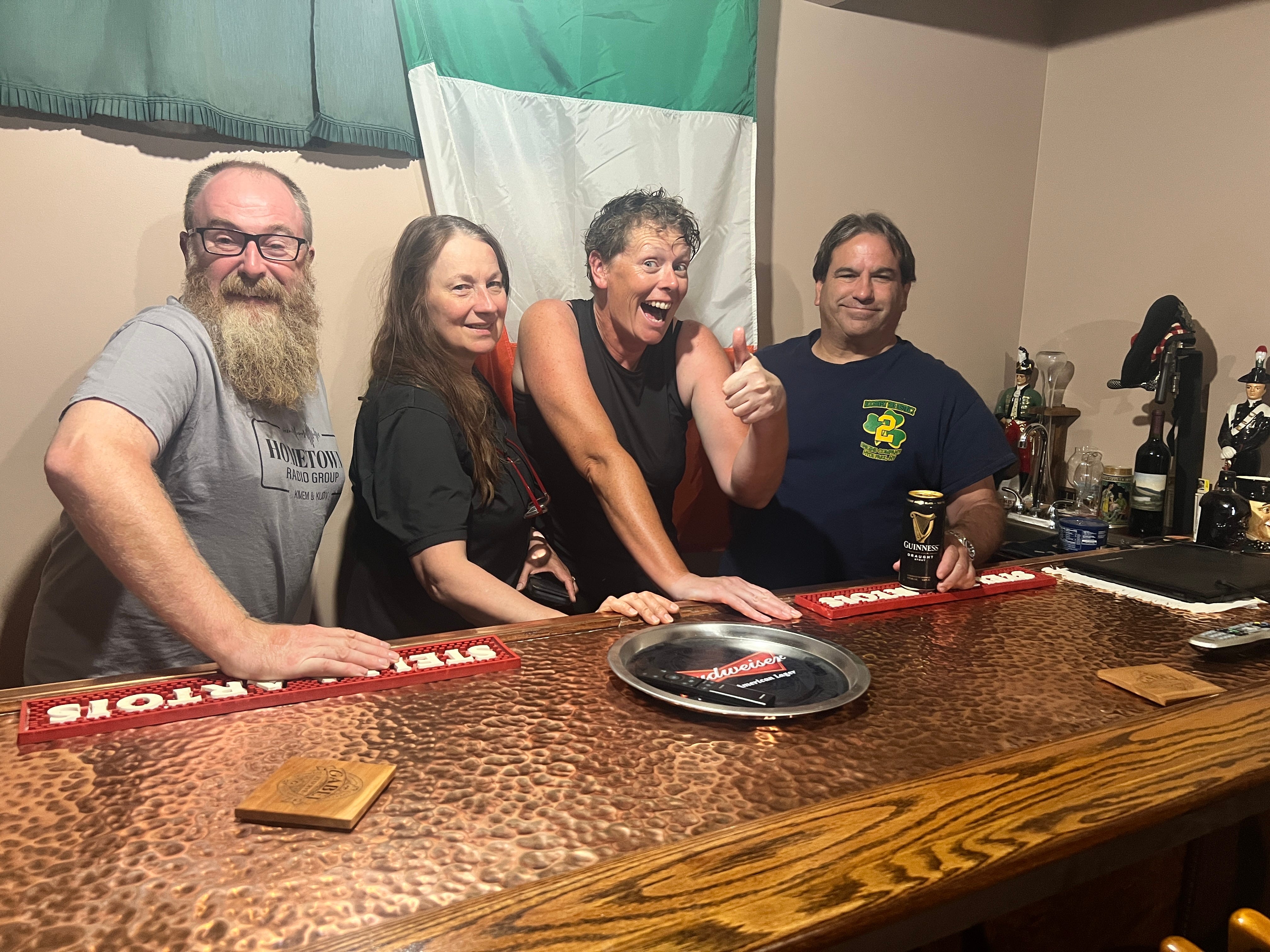
Cameron had converted his basement mancave into cosy quarters for us, complete with Irish flag and mints on the pillows of the pull-out bed.
Even though Tarryl was very busy, she made the time to take us to Olana, one of the many grand mansions up the Hudson River where the affluent or opportune built retreats in the latter half of the 19th century.
Olana was built in the 1870s by Hudson River School painter Frederic Church, and it’s often said that the beautiful house, heavily influenced by Moorish architecture, and landscaped gardens are his greatest masterpiece.
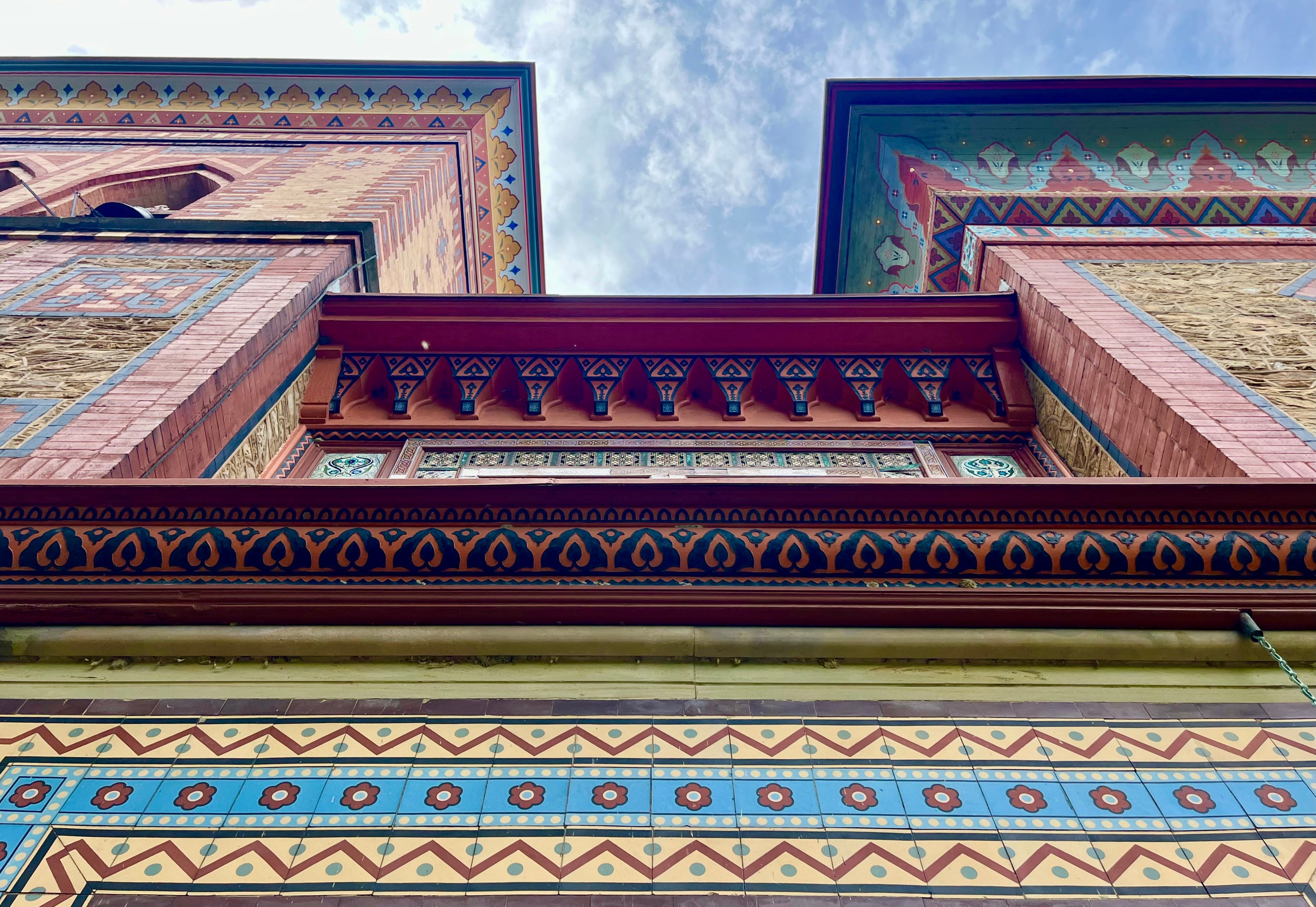
The tentacles of New York money and celebrity coil with blind intent up the Hudson River.
We also stopped by the jaw-dropping Vanderbilt mansion nearby, and wound up going for lunch in the oldest continually run inn in America, in the extremely wealthy and twee Rhinebeck, a town so bougee that the local olde sweet shoppe is a pet project of actor Paul Rudd and his partner.
Possibly the highlight of our action-packed day with the Gabels was being invited to “Thirsty Thursdays,” a weekly get-together of neighbours that is normally only men, but for which I got an honorary dispensation to attend.
Thirsty Thursdays is basically a few beers for hard-working people toward the end of their week: a world away from moneyed Rhinebeck, Tarryl and Cameron’s neighbourhood is home to a lot of Irish firemen, and people who work in construction.
Thirsty Thursdays was started decades ago by a neighbour who used to host it in his house. Now he is older and with limited mobility, so each week at 4.30 on the dot, Cameron collects his neighbour and drives him 200m to the home of Sean, who has inherited the role of Thirsty Thursdays host.
The get-together is in Sean‘s shed full of tools, with sports on a TV in the corner and beers in a fridge in the corner. As I said, it’s generally a boys-only thing.
Well, we laughed ourselves silly. It was really a wonderful time. Best of all was to see the elder neighbour laugh so hard he nearly fell of his chair with a Shane McGowan-like wheeze, at one of his own jokes in response to Mark’s potato suppository story.
I’ve been thinking a lot about the lessons we can learn about happiness from the ordinary people we’ve been meeting on this journey. And it’s fair to say that a lot of these lessons end up being about family and friends: community, essentially.
And a lot of that is actually about showing up. Just consistently doing a thing and being there for people in small ways. There’s no substitute. Cameron’s neighbour hosted Thirsty Thursdays for years, and now, wordlessly and without fuss in the way that men often do, his neighbours are there for him.
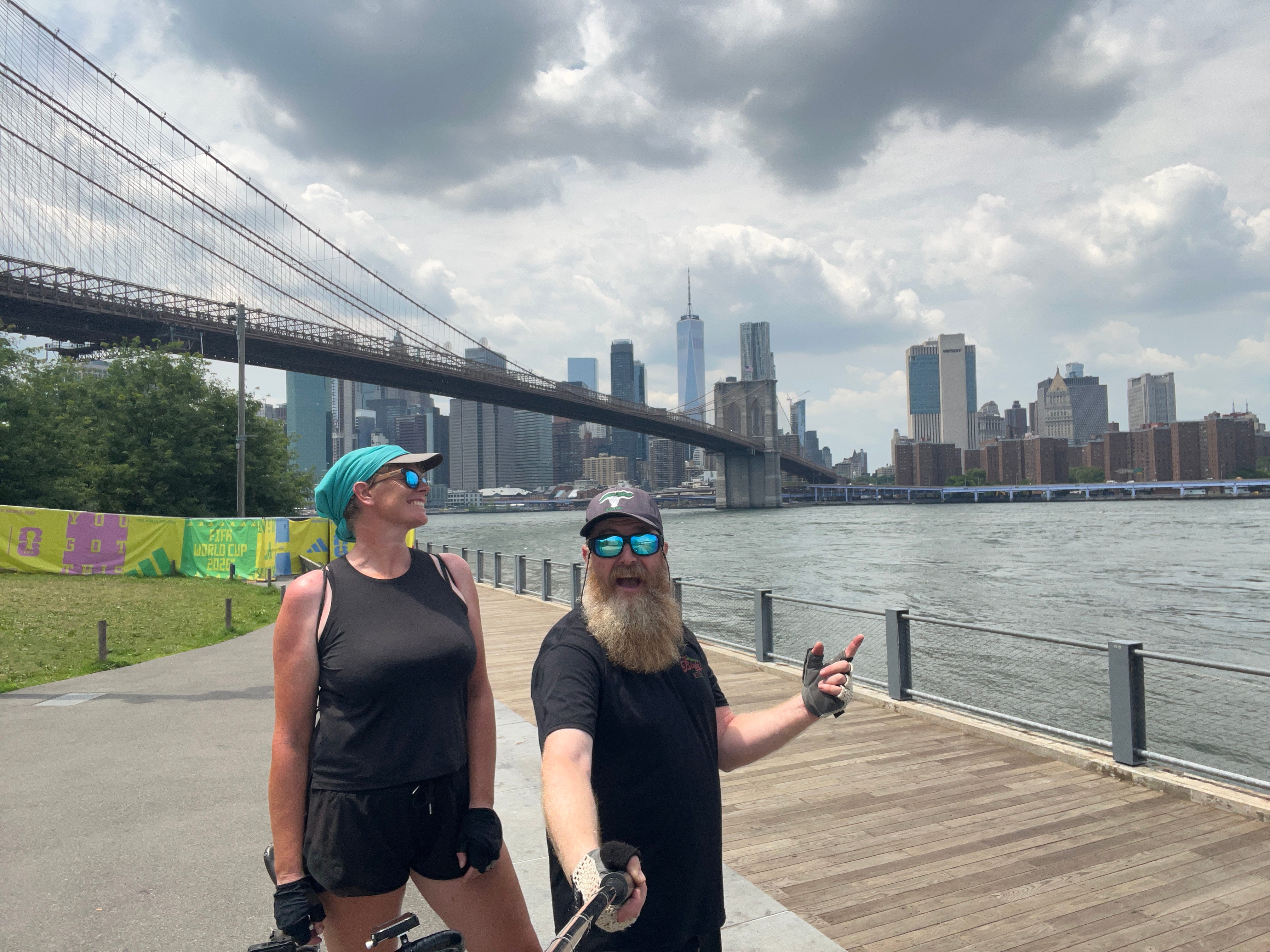
After leaving the Gabels, we cycled through a kind of paradise lakeland of reeds and waterlilies, through Westchester County to Ossining, home of Sing Sing prison.
Sing Sing is perched on a rocky bluff above the Hudson: we cycled up alongside it. Sing Sing used to be home to Old Sparky, the infamous electric chair that spelled the end for 614 death row inmates up until 1963, when robber Eddie Lee Mays became the man with the dubious honour of being the last criminal executed in New York State.
Mays grew up poor and black in the Carolinas, and his last statement regarding his sentencing for shooting a woman in the head during a robbery in Harlem was that he would “rather fry” than serve a life sentence for her murder. He went “up the river” - slang for up the Hudson to Sing Sing - and was executed on August 15, 1963. It took three minutes for him to die.
New York State is one of 23 US states to have abolished capital punishment, but some states still apply the death sentence regularly.
17 prisoners have been executed in the US so far in 2026; 10 of these have been in Florida.
We’ve probably already sung its praises, but the Empire State Trail is truly phenomenal.
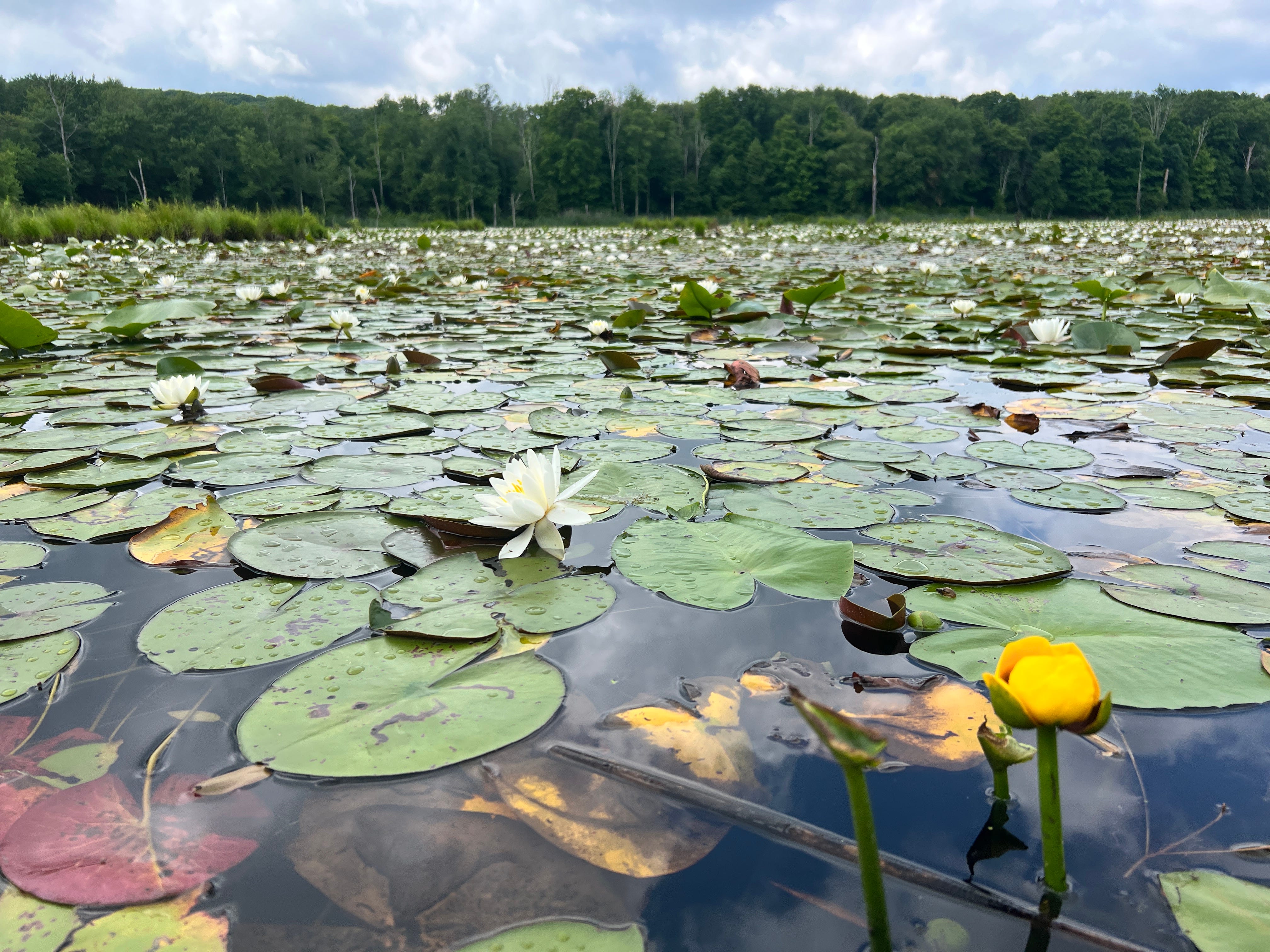
As you progress towards the Big Apple, you’re conscious of more people on the entirely paved, off-road bike trail. There are joggers, and cyclists in Lycra.
Yet you continue on a serene, wooded trail right until you reach the Henry Hudson bridge and suddenly it occurs to you that you are cycling onto Manhattan Island.
Shortly after that, the incredible thrill of the first sight of that world famous skyline.
All that bright morning that we pedalled our last 40km into the city, we were singing “concrete jungle, wet dream, tomaaaytoooo” to each other: it’s a popular misreading of the first line of the chorus of Alicia Keys’ epic, soaring, grandiose Empire State of Mind Part II. So it really had to be the theme tune for this week’s video.
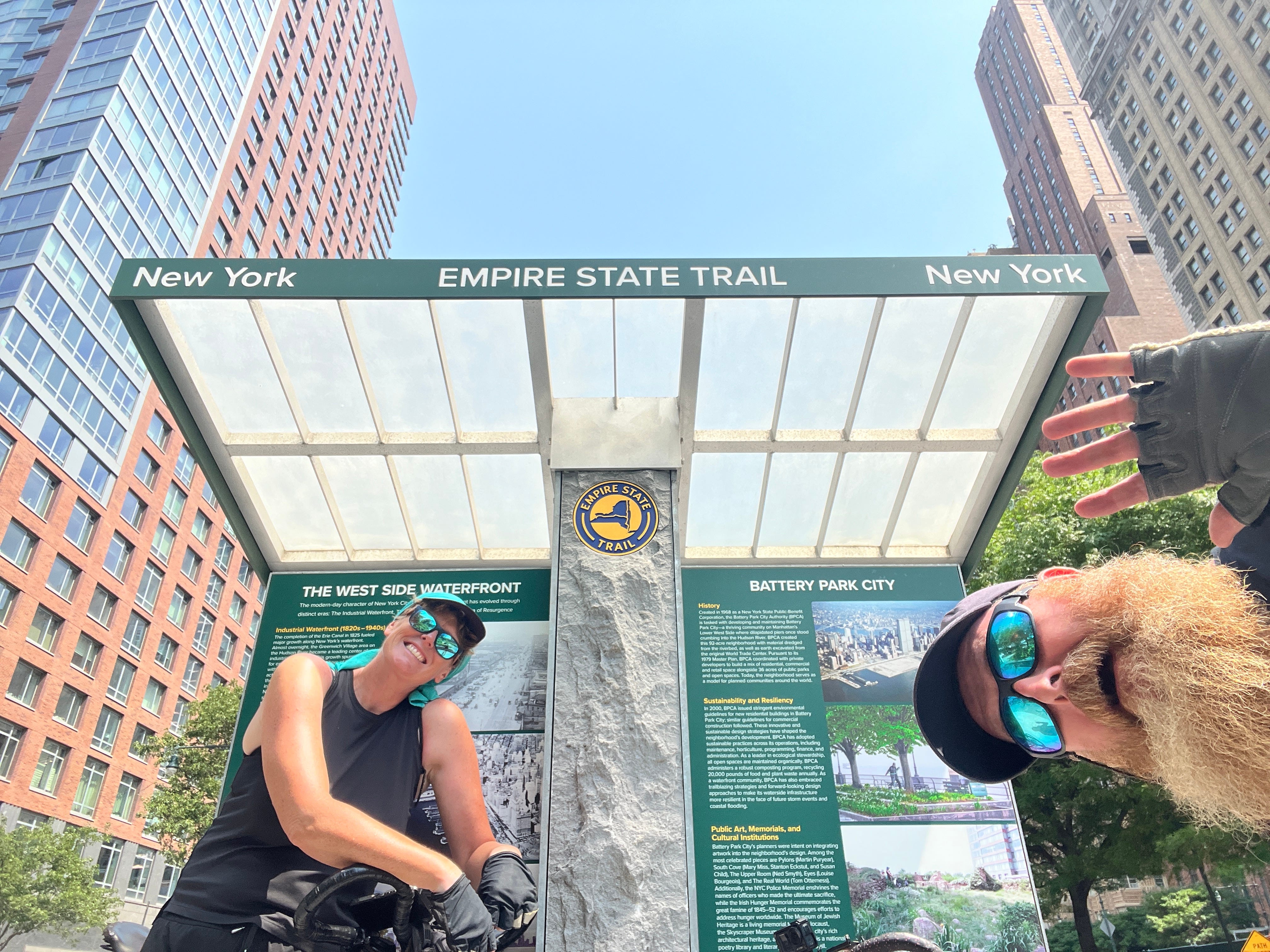
Cycling into New York is something I hope to never forget.
We stopped to pay homage to the first marker of the Empire State Trail, and then continued right down to The Battery for our first glimpse of the Statue of Liberty.
“Ah! ‘Tis herself,” Mark said. “She’s looking well, in fairness to her.”
“She’s further away than I thought,” I said. And then a man in lycra who cycles on weekends, and has definitely never cycled around the world, came up to us and told us all about cycling.
We had certainly arrived in New York.
I am in that happy state of drifting consciousness that comes when there’s no alarm going off and nothing to get up for.
But I am dragged into abrupt alertness by the realisation that my sleeping left hand has come to rest on an unmistakable hard mass in the side of my right breast.
There’s a lump. I prod at it, try to feel its margins. “Goddamn it,” I mutter and Mark rolls over: “what’s wrong?” I tell him.
I’ve had two procedures for breast lumps in the past and both have turned out to be benign, but both were in my left breast. This is on the right.
I don’t want this, whatever it is. But now I have it.
It feels nice and discrete, moving around obligingly to my prodding and poking. My first response is that I will wait until I get home and go to see my own doctor. It’s only a couple of months now.
And then I wake up the next night in a cold sweat, thinking, “this is the kind of thing that gets you.”
Despite all this mortality, New York is a place to pursue happiness, and we do.
I’m lucky enough to have lovely family in Manhattan, who were good enough to put us up for five days, so we had an amazing break that combined family time with some sightseeing, but not too much, because of the heat.
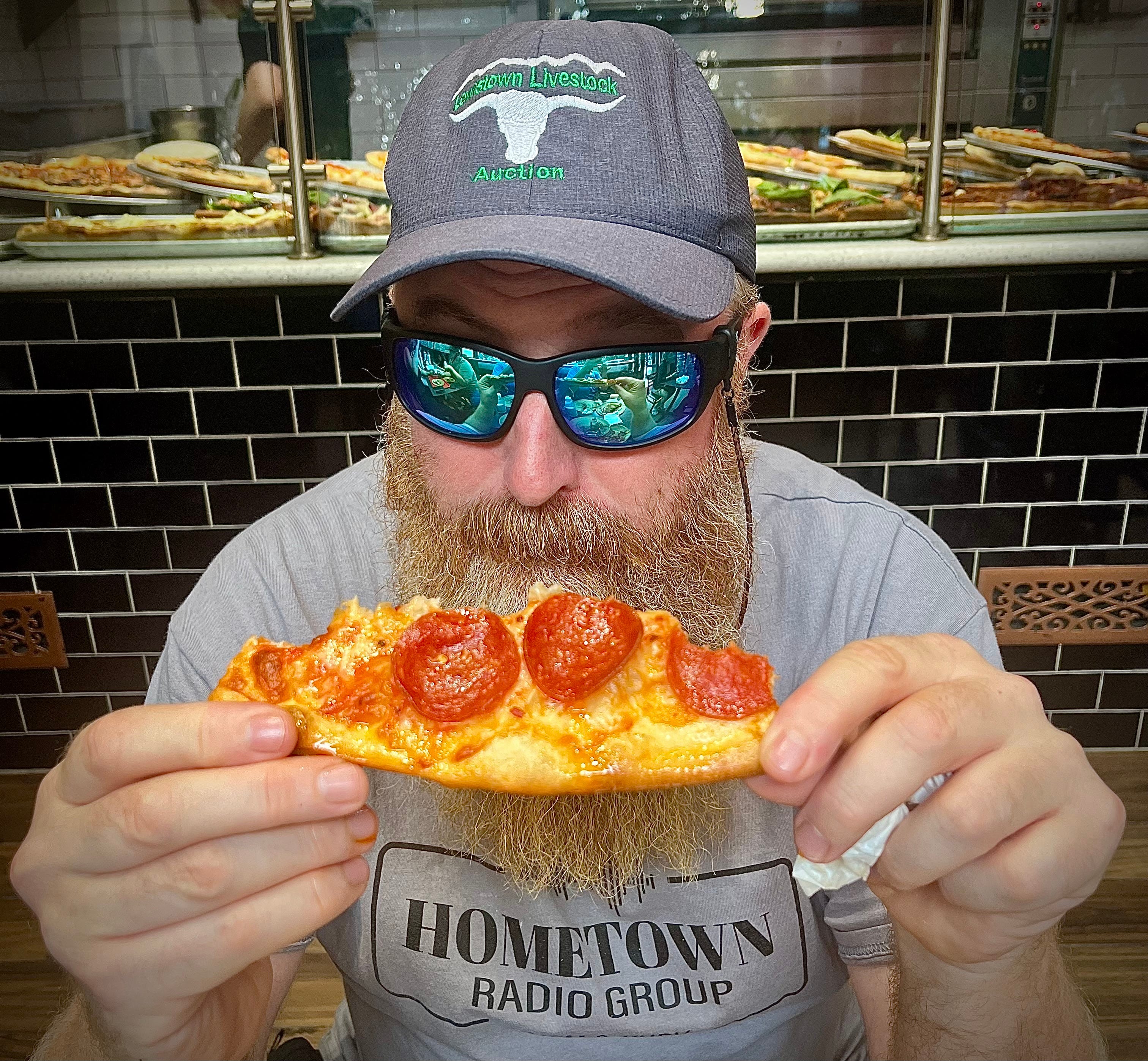
We went to the Guggenheim, where we were impressed almost as much with the building as we were with the phenomenal collection and seasonal shows.
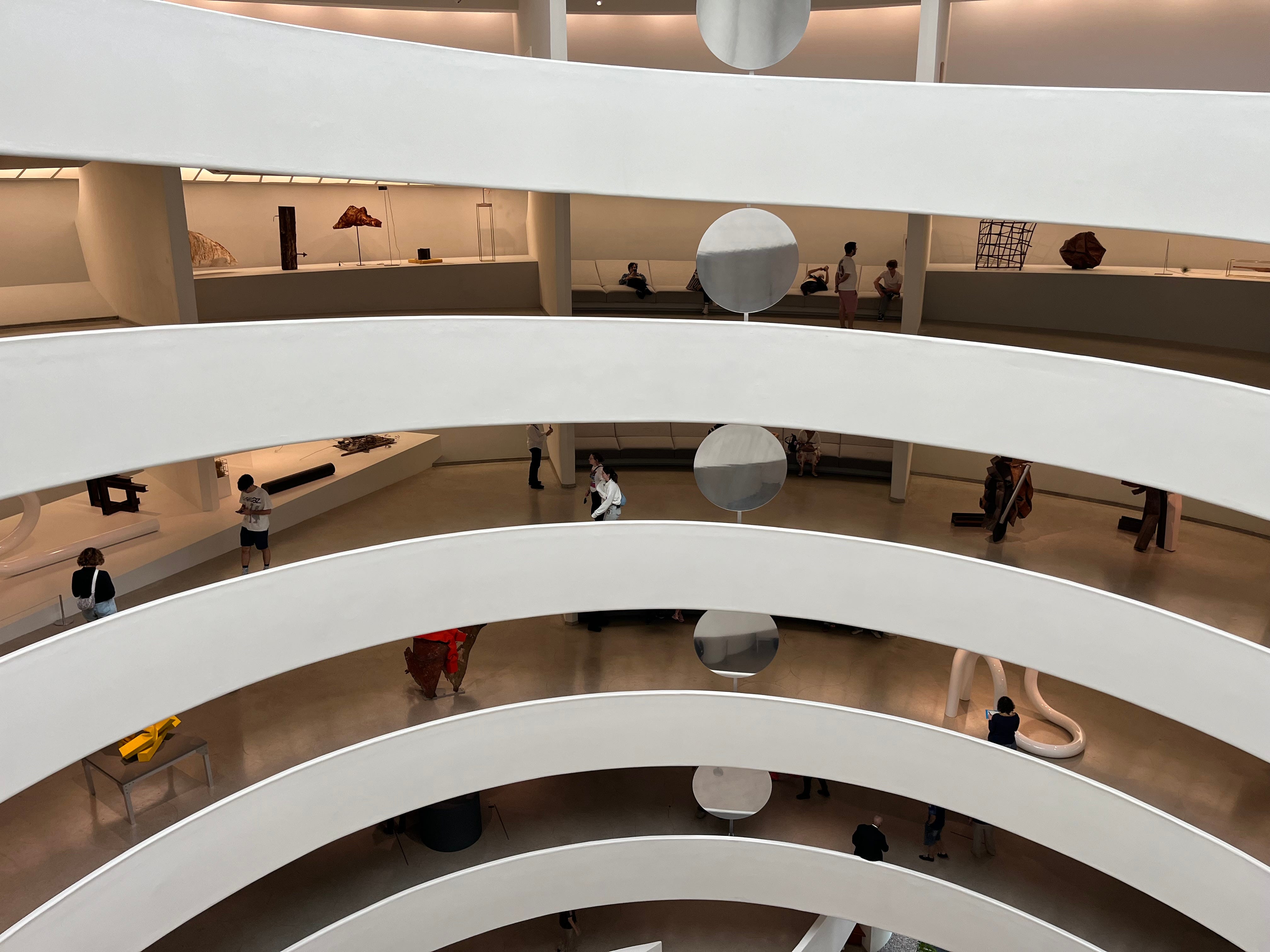
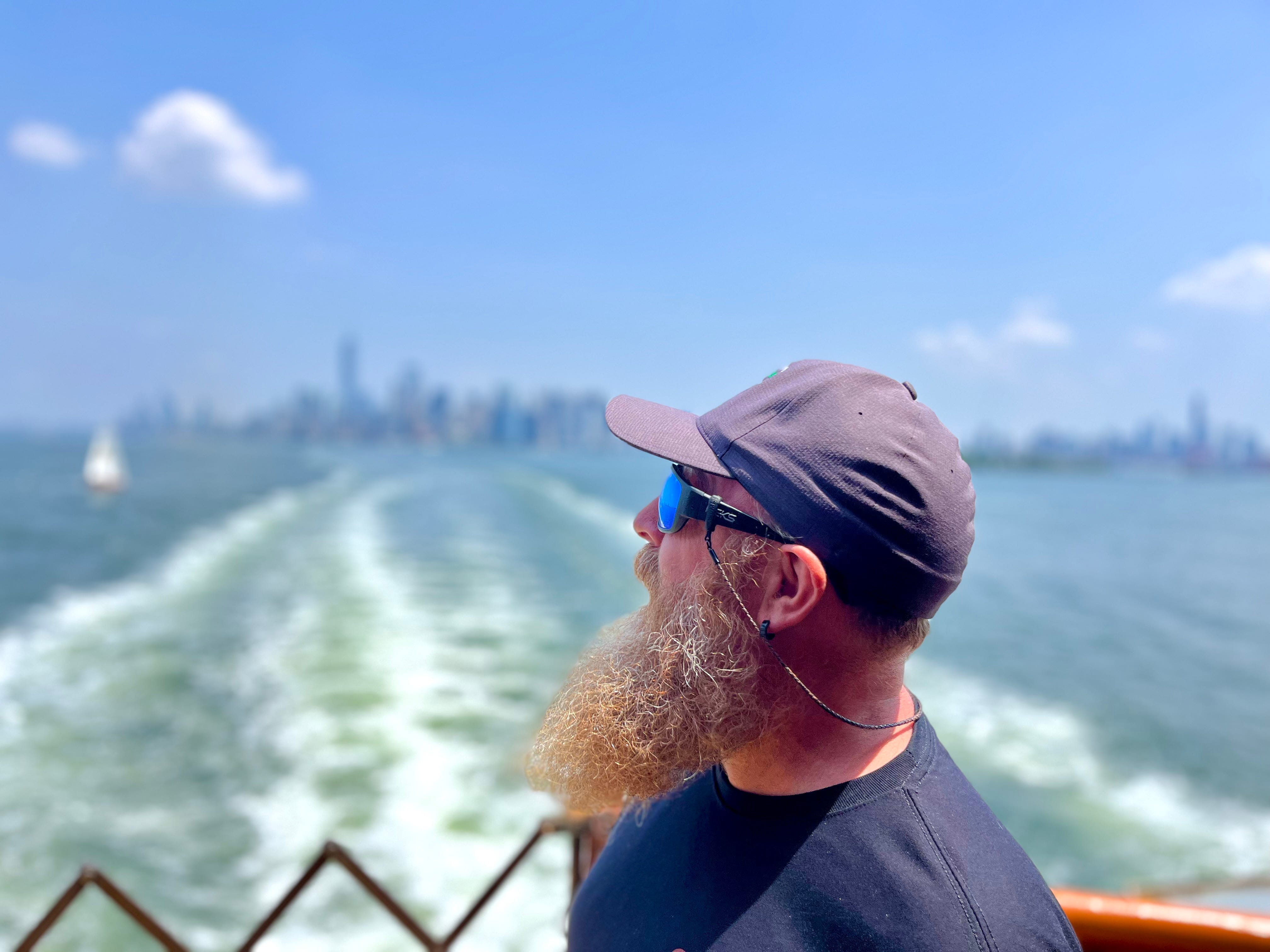
We cycled across the Brooklyn Bridge. We had pizza slices. We went to the Comedy Cellar for some epic stand-up. We took the Staten Island ferry.
We cycled through Central Park, and we went to a gig at the Summer Stage there: hundreds of incredibly beautiful and hip people sweltered through an evening of soul and jazz, and the organisers set up some areas where you could stand under water misters if you needed to cool down.
We went to a classic New York deli: Barney Greengrass, also known as the Sturgeon King for their incredible cured fish. I had an Everything Bagel with cream cheese and sturgeon and all the trimmings and it was out of this world, and something I’ve wanted to do ever since I read Claudia Roden’s brilliant The Book of Jewish Food: An Odyssey from Samarkand to New York.
It’s nice to realise our own Odyssey has also taken us from Samarkand to New York.
In the Sturgeon King, there’s no standing on ceremony and you get shouted at by an abrupt older Jewish man in a white deli coat when you get in the door, and he hustles you to a table in their crowded café, and it’s all bustle and orders called across and plates of pure sophisticated deliciousness plonked unceremoniously at your place.
“Are you happy?” Mark said to me as we left the Sturgeon King replete with fishy goodness. “Oh, yes,” I said.
And I was.
There are challenges ahead. But in the heady heat of the greatest city in the world, we briefly immersed ourselves in an escapist realm of giddying possibility. Everything happens in New York.
By the evening of July 4, the heat of the city was sick of itself. All afternoon it had produced a series of impatient rumblings, rolling black clouds around above Manhattan’s dizzying skyline.
But it wasn’t going out without a bang: there was a storm forecast to coincide with the epic firework display planned for the city’s 250 celebrations.
When we had cycled the Brooklyn bridge, pyrotechnicians had been rigging it for the show. Access to the waterfront along FDR for the best view of the Big Shebang was ticketed.
But with a storm on the way in, and with it being the last night in the city, we opted for a family barbecue and an early night.
We were in bed in time to hear the distant pop of fireworks, and wind buffeting the window panes.
New York celebrated 250 years of pursuing happiness. And it made quite the racket.
No posts
Comments
Nothing yet. Say the first thing.
Sign in to join the conversation.