
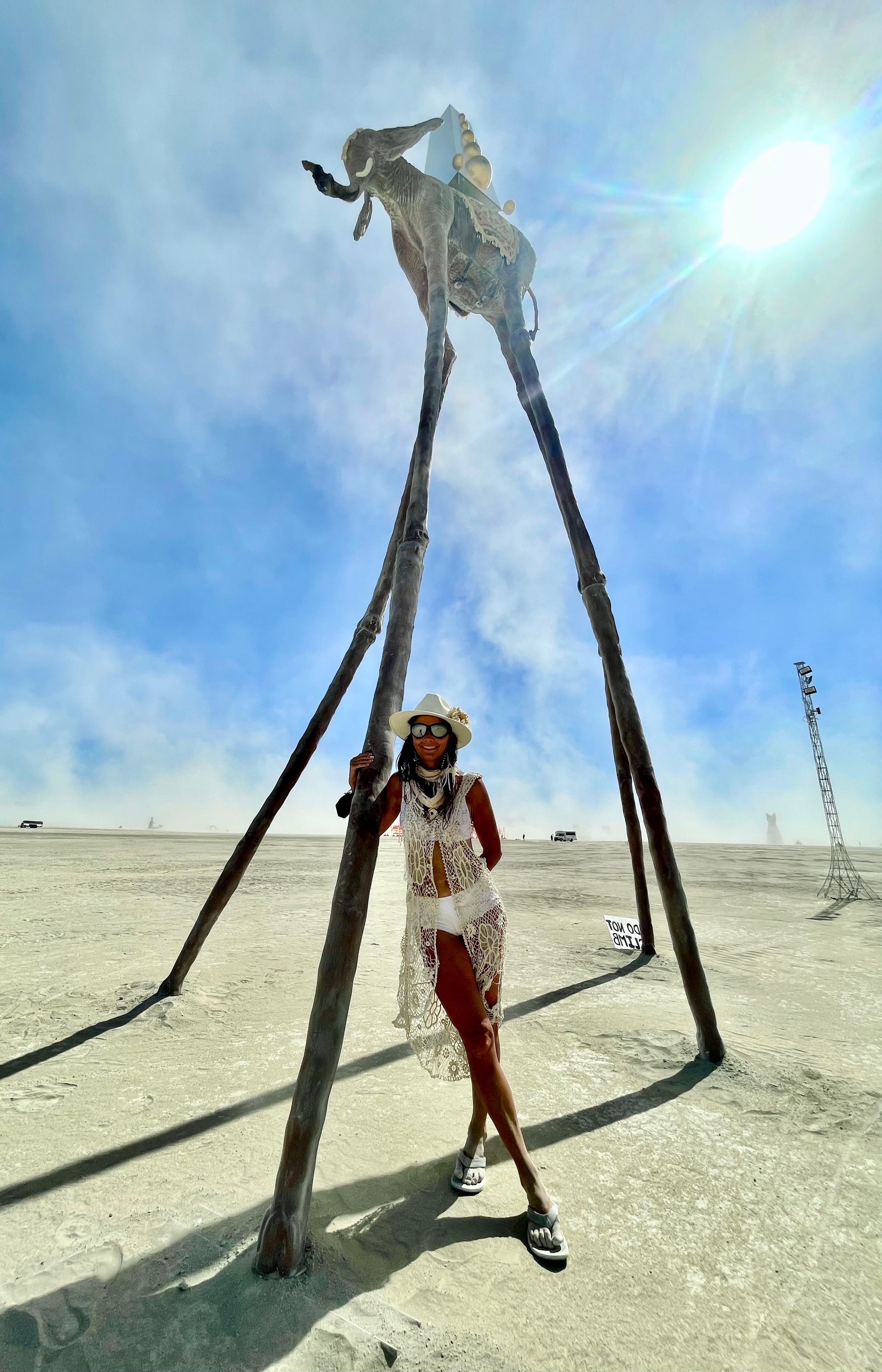
There are so many selves in me. I never feel that I am one person, but a whole colony of people.
~Anaïs Nin
Recent conversations about the complexity of being human—how we are so many more things than society embraces—has me thinking about the concept of edges—edges between various identities (including race, ethnicity, gender, sexuality, age, socioeconomic status, and disability status); between multiple talents, predilections, professional and creative roles (magic mama, animal whisperer, earth guardian, artist, mystical healers // scientist, teacher, lawyer, engineer, technologists); between the parts of us we show the world and the parts we keep private. In a culture that doesn’t reward full expression, most of us are navigating between various identities most of the time. It’s exhausting.
We code-switch between personas for myriad reasons. Often it’s to navigate social expectations or gain professional or social acceptance. Sometimes it’s to ensure our physical or psychological safety. Other times it’s to better convey nuanced emotions or precise meanings across different cultural environments. We all do it. Sometimes it helps—bringing societal reward or fostering social connection—and sometimes it hurts—as when we hold back from embracing important parts of ourselves, from broadcasting our true frequencies. And in a world that doesn’t reward full expression, often it’s both.
When I think about edges, I can’t help but consider natural systems. Ecotones—edges or transition zones where ecological systems meet and mingle, sometimes forming a new and different community1—are widespread on the landscape: parklands where forests meet grasslands, estuaries where rivers meet the sea, marshes and wetlands where waters meet land. These transition zones are fundamentally important to maintaining biodiversity, driving evolution, and providing ecological buffers. Because they blend resources from adjacent habitats to create unique, highly productive living spaces, ecotones tend to display high species richness, diversity, and abundances, often having species from both community and unique organisms not found in either.
The cases most familiar to me are the biogeochemical hot spots found at terrestrial-aquatic interfaces: riparian areas, hyporheic zones beneath streambeds (where upwelling groundwater mixes with stream water), and wetland margins—both freshwater and marine. These spots are formed where discrete water masses (upwelling groundwater, river water, seawater) of different chemical makeup (including oxygen, carbon, nutrient concentrations and redox state) collide. This produces steep gradients in conditions and fosters disproportionately high biogeochemical reaction rates, setting the stage for high biological productivity—and fueling the base of aquatic and terrestrial food chains.
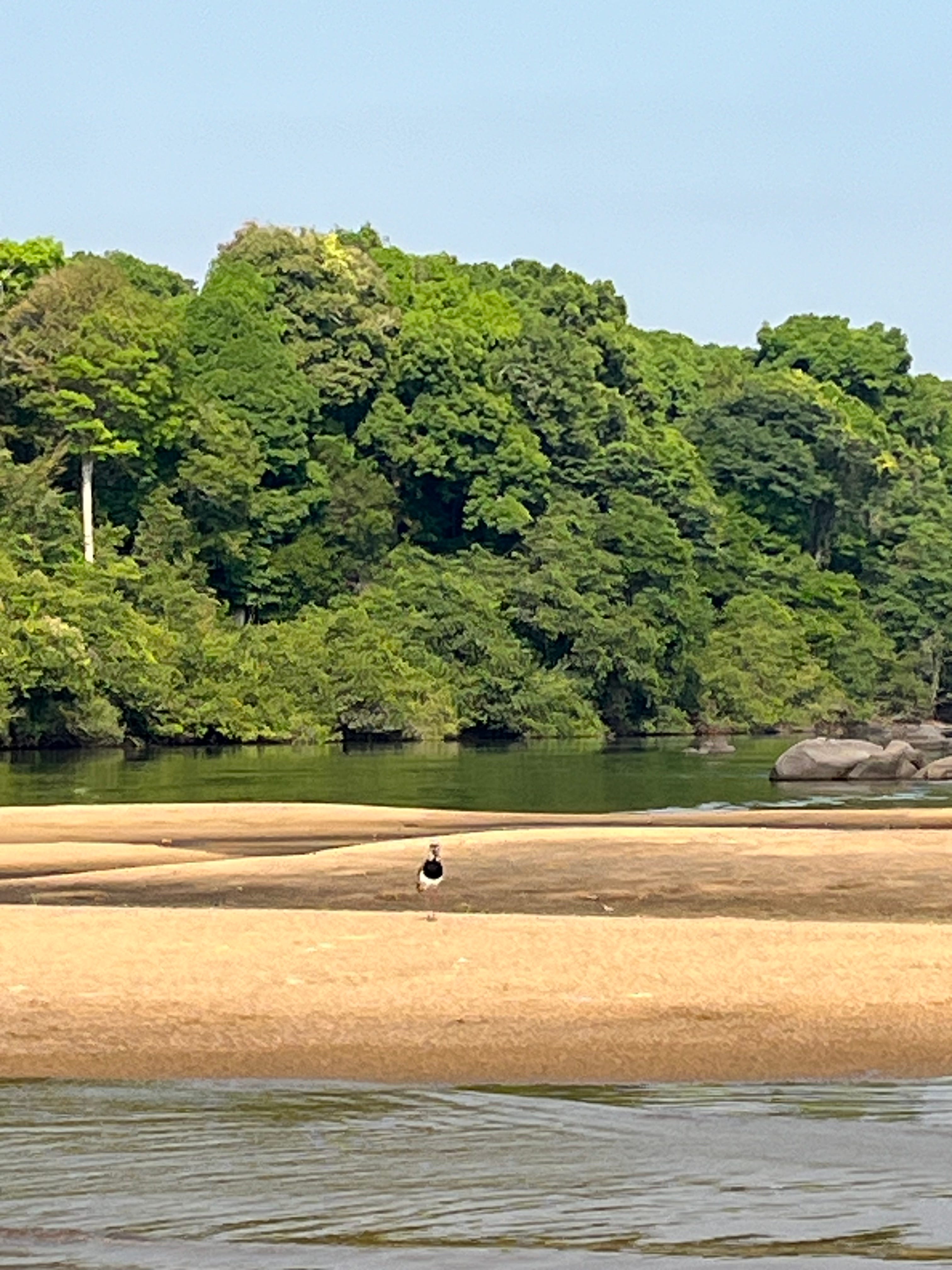
Not only are these zones critically important, but they also tend to be overwhelmingly beautiful. Two summers ago, I stood on the sand bars of the Iriri River of Brazil, a major tributary to the Xingu River—and ultimately, the Amazon River—soaking it all in. The air felt full with moisture and birds—macaws and toucans, kingfishers and eagles; the waters were alive with peacock bass, payara (vampire fish), wolf-fish (trairão), pacu, matrinxã, bicuda, and piranha. Dense, lush tropical forest—dominated by ancient mora trees and wild cacao—draped to the edge, as if cradling the river. It all felt still, full; so did I.
These edges—where forest meets water, where groundwater wells up beneath the river—nourish the whole system. The trees drop fruits, seeds, and blossoms into the water and feed the fish. Seasonal flood pulses bring nutrients and sediments from upland forests, weaving together the river and its watershed. Upwelling groundwater contributes baseflow (which is incredibly important during low flow), helps stabilize water temperatures, and brings dissolved minerals to the river. Without these edges, the world would be a far less abundant, dynamic, diverse place.
This applies to us too. We know that diverse human societies with strong communication, inclusivity, and social cohesion are highly resilient, benefiting from a wide range of ideas and problem-solving skills. And that cross-disciplinary thinking sparks innovation by revealing connections that single-discipline thinking misses.
The same is true for us as individuals. Not only is code-switching between our identities exhausting, it also diminishes personal power—the edges between our identities are where the juice is: it’s where creativity and wholeness reside, where we are most likely to flourish. Research shows that integrating our various identities brings major psychological benefits: it fosters cognitive flexibility, builds psychological resilience, deepens empathy, lowers stress and internal conflict, and enhances life satisfaction. In short, when people are able to hold all of themselves, all at once, they feel a deeper sense of authenticity and personal wholeness.
In an earlier essay (below), I shared my personal journey with integration, providing several examples of the way in which my worlds felt split, including: The level of self-expression and self-adornment I relished at Burning Man wouldn’t hold up when I was presenting as an expert in a public hearing. In the decade since the recognition that I was feeling as if I belonged everywhere and nowhere, I’ve made huge strides in being able to claim all of me, all at once.
Much of this has to do with my life-long but still ever-deepening relationship with the natural world. Mother Nature teaches us of reciprocity and generosity, about duality and balance, about the strength in diversity. And, most poignantly, she shows us that each of us is a magically unique being with our own special gifts—and that not only do we belong here, we contribute most when we are fully expressed. If that’s not a reminder that it’s okay to be all of us, all at once, I don’t know what is. As far as Burning Man goes, I will never show up at a public hearing dressed in festival attire (because it simply won’t serve me), but I no longer hesitate to admit I go to Burning Man—even with my professional colleagues. Because, guess what? I kick ass at my professional water work and most people couldn’t care less. And, if they do, that’s their loss.
xo Wendy
P.S. Where are you standing up for you?
If you’re enjoying these weekly unTamed missives, please consider becoming a paid subscriber. Your support allows me to keep reading the natural world deeply enough to illuminate everything else—and report back to you.
Comments
Nothing yet. Say the first thing.
Sign in to join the conversation.