
Before I dive in, I’d like to acknowledge the many new people who’ve recently subscribed. After writing each week for nearly two years, momentum is building and enough of you have joined in the last few weeks—or days even—that this morning I hit #26 in Rising in Climate and Environment. Those of you who are familiar with Substack know this is a fraught and fickle metric—and I’m sure I’ll plummet off the list momentarily—but it’s fun nonetheless. I’m excited you’re here and invite you to share your ideas. In addition, I’d love to hear from you what resonates most and what you’d like to know more about. Thank you, all.
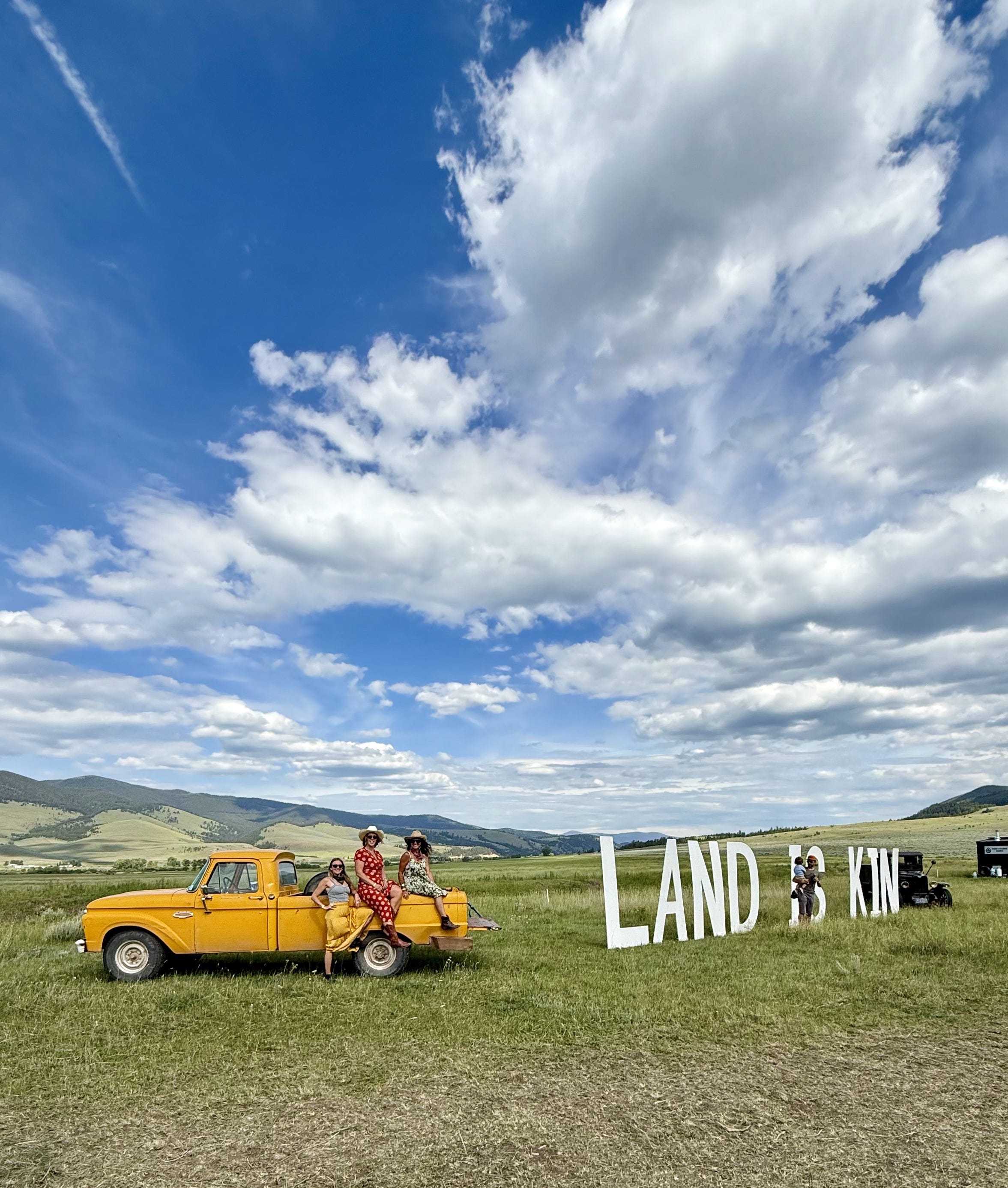
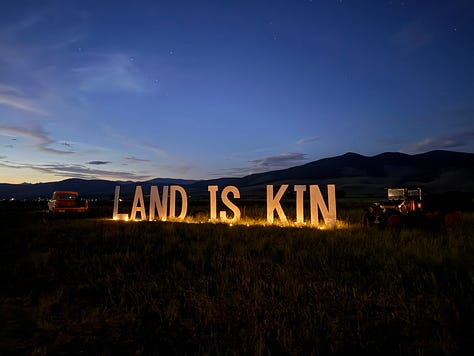
I’ve just returned home after a fully immersive week, first at the Sun Valley Forum in Idaho (where I shared a short spoken word piece entitled You are the Place of Your Food), and next at the Old Salt Festival, a celebration of sustainable agriculture, land stewardship, and Western culture at the historic Mannix Family Ranch in Helmville, Montana. My time has been chock full of community, laughter, food, mission, learning, music, camping, and more. I’m full (and a bit tired).
There’s so much to process it’s hard to even begin distilling it all. We talked stewardship economies, missing middle infrastructure, land as kin, Indigenous ways, regenerative practices, mental and physical wellness, the power of nature to restore everything, culture and community. We camped, hiked, ate, danced, saunaed and cold plunged (the ole cow patty cold plunge). We celebrated the incredible works of makers of all sorts—handcrafted textiles and leather boots, naturally dyed silks, rock-hounded jewelry. And, best of all, we gathered around fires and tents, sharing stories, humor, hearts, and dreams for healing the world and ourselves.
[My best personal moment was my first ever unTamed Science fangirl experience: while sitting around a camp circle, one friend commented that she loved a particular unTamed Science piece and another woman I’d just met said, Wait, I’m following you. She’s the ED of Edible Schoolyard (yes, Alice Waters’ organization). My reaction: You are?!? OMG, that’s amazing! (I may have also jumped up and clicked my heels.)]
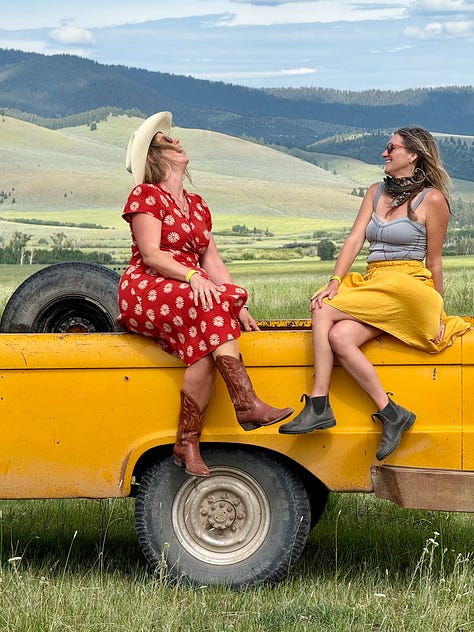

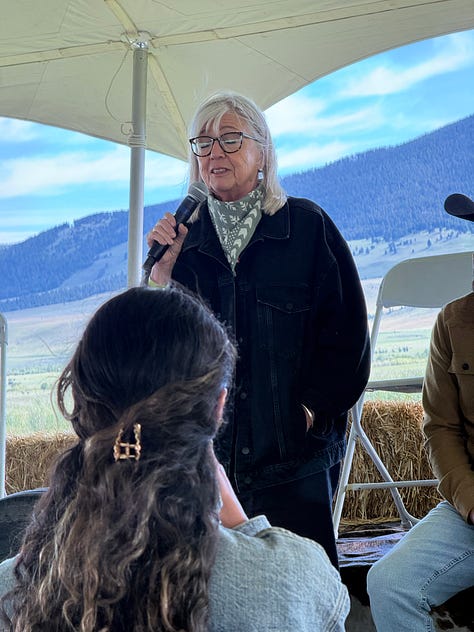
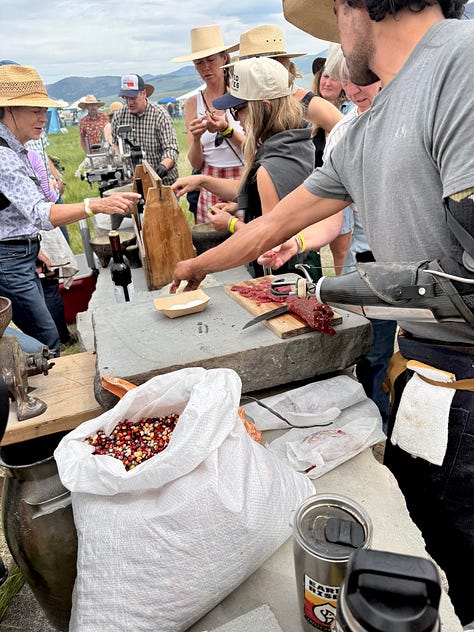
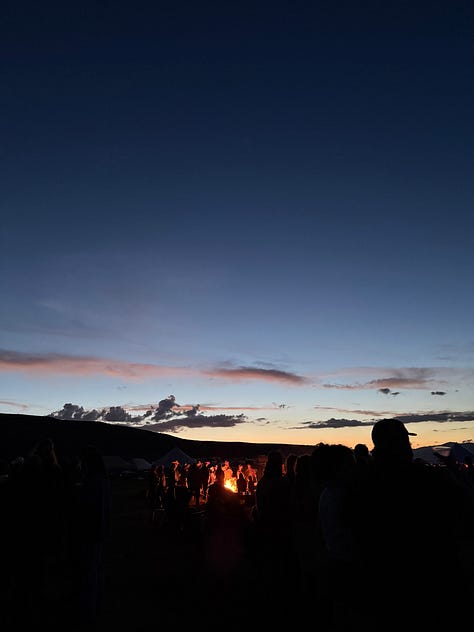
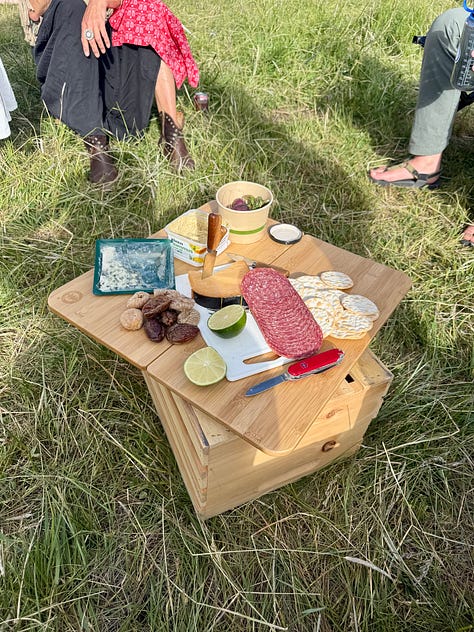

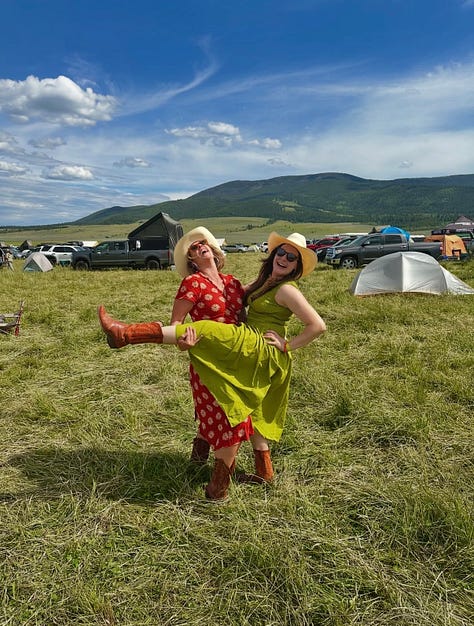
I could speak to so many things about this week, but what feels most alive just now is the role of women—grandmothers, mothers, daughters, sisters, aunties, midwives, friends—in weaving community, holding space, tending, and leading in the regenerative ag movement. I felt this powerfully in my personal sisterhood convened at these gatherings—women who are grounded and connected and creative; women who are carrying so much knowledge—about wild foraging and wild medicine, about regenerating soils and educating and the ways of the ancestors; women who are making art and singing and dancing, who have their hands in the soil, who know who they are.
And, it’s not just at gatherings like these, but out there in the world: women are central to the shift from extractive farming to ecosystem restoration and are reimagining how farming itself works. This is occurring, in part, because women have long been left out of the power structures of conventional ag, and instead, have built their own systems. These models are informal, non-hierarchical, and story-based—with women teaching women. They’re showing up both in the field and in more formal programs. For instance, the Women, Food and Agriculture Network’s Women Caring for the Land program has now held more than 200 meetings, with over 3,200 women attending its peer-to-peer gatherings. American Farmland Trust’s Women for the Land Learning Circles have reached more than 2,080 producers and landowners in over sixteen states. Given that women now own or co-own close to half the farmland in the United States, this matters.
And, guess what? Women are changing the center of gravity in these conversations. They’re inherently beginning with the links between food production and care for families, communities, and ecosystems, viewing these systems through a lens that is more about connection than conquest—a knowingness Indigenous peoples have held all along. Kim Paul of Piikani Lodge Health Institute spoke of this: in her way, land is tended as kin rather than property—a reciprocal stewardship born of deep reverence. Mary Berry of The Berry Center (and Wendell Berry’s daughter) advocated for small farmers, their communities, and their role in stewarding lands in harmony with the laws of nature. Women are bringing a focus on diversity, long-term tending, and soil health, and on the practices—including cover cropping, reduced tillage, crop diversification, and lower chemical inputs—that reorient land away from extraction and toward regeneration. These approaches, over time, are shown to lead to greater profitability, which then furthers opportunities for women. And, it’s no mistake that the intellectual scaffolding of this work is itself largely female: many of the foundational voices in regenerative soil science—Dr. Elaine Ingham, Dr. Christine Jones, Dr. Kris Nichols among them—are women.
So, to the question of Should women run the world? I think the answer is obvious. And, regardless of any discrete outcome that might arise from these gatherings, I had a fucking amazing time with my witchy women.
Thank you for being here.
xo Wendy
P.S. What would you like to know more about?
If you enjoy reading these posts each week, consider upgrading to a paid subscription.
Comments
Nothing yet. Say the first thing.
Sign in to join the conversation.