
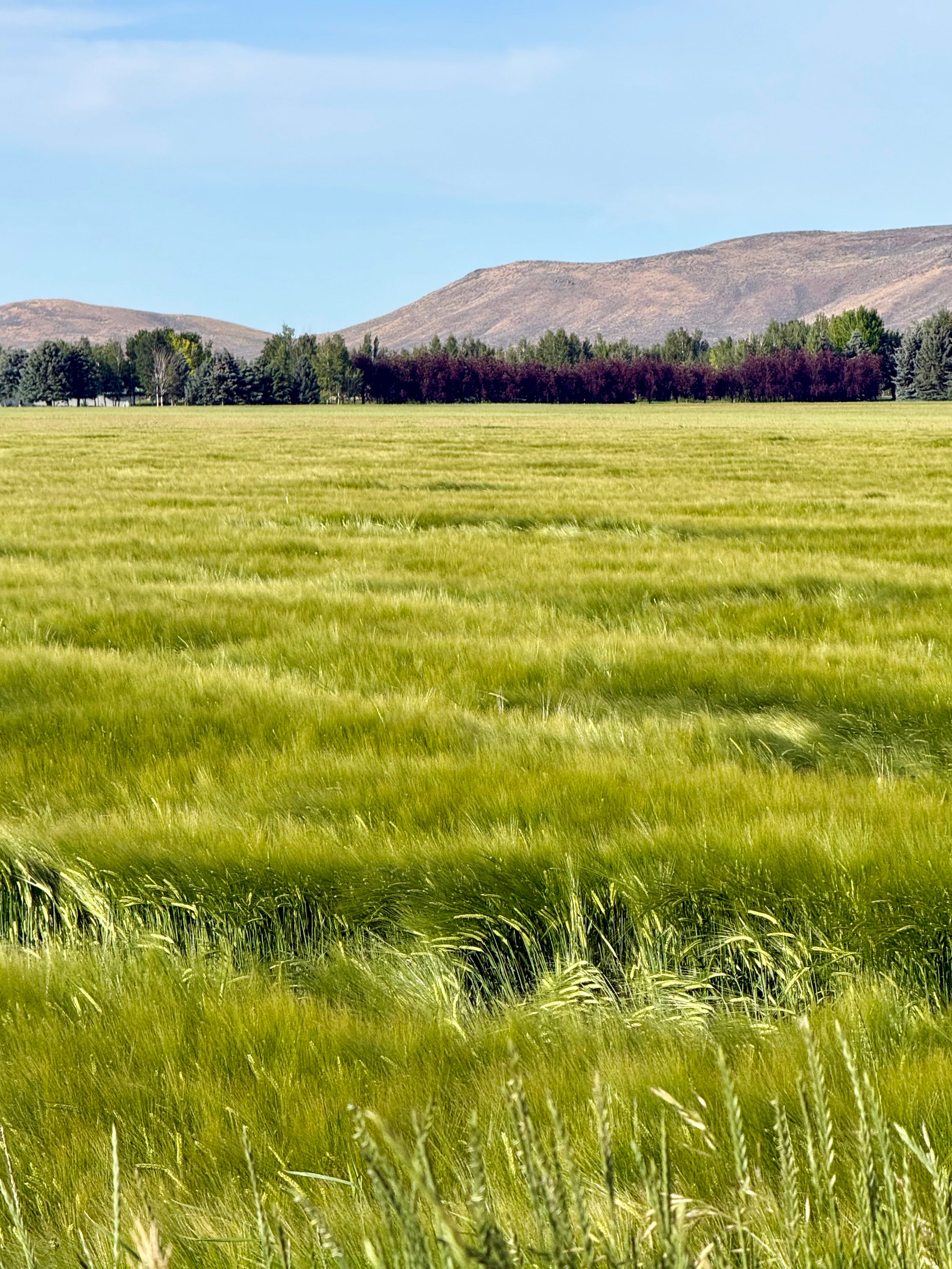
When we try to pick out anything by itself, we find it hitched to everything else in the universe.
~John Muir
Over the weekend, I skipped town and headed for the mountains—as much to avoid the Independence Day celebrations (yup, a parade and everything) as to honor something different: our interdependence. Like many of us, I’m struggling mightily with what it means to be an American. The ideals that set the foundation for my youth—civic responsibility, a belief in the rule of law, individual freedoms, equal opportunity for all, inclusion for all cultures—seem as if they’re no longer considered self-evident. This has left me struggling with an ongoing sense of cognitive dissonance—that which I’ve held as self-evident is just not so. Except. Except…
We—individually and as a culture—may behave as if these tenets no longer hold, as if freedom and individuality are to be chased at all cost; material goods, power, and access are the holy grail; hierarchy by sex, race, class is a sacred mandate. But, guess what? The rules of nature say something entirely different. As I wrote in Radical Love and Reciprocity: Nature’s Blueprint for Thriving in a Chaotic World:
Quiet observation of almost any natural system will provide glimpses of cooperation, reciprocity, mutualism, interdependence: Bees live in complex societies dividing labor, sharing information, and building alliances to construct complex nests, defend against predators, and control their environment. Similarly, ants cooperate with non-kin to build enormous colonies, use their bodies to build rafts or bridges, sew leaves together, and “farm” (caretake) aphids in exchange for nectar and fungi that convert plant lipids into more bioavailable lipids that the ants, in turn, eat. All this activity benefits the surrounding ecosystem by aerating the soil and allowing oxygen and water to reach plant roots, delivering organic matter and nutrients via feces to feed other organisms, dispersing plant seeds to new locations, pollinating flowers, controlling pests, and more. Elephants live in complex communities, demonstrate cooperative behaviors, and exhibit self-recognition in front of a mirror, which suggests a capacity for self-awareness, empathy, and altruism. In a forest, fungi build webs between trees of all species, allowing plants to talk to each other. Through this internet of fungus, trees help each other by sharing nutrients and carbon and by warning of impending threats, including pathogens and pests, using chemical signals.
In our arrogance, we’ve somehow lost our way, descending into a hell that’s not only confusing, painful, and destructive, but one that directly contravenes the rules of nature. This is not hyperbole. In addition to harming our own society and wellbeing, our voracious consumption is threatening the very planetary systems that make this all possible. The polycrisis is upon us.1
It's a lot to hold—all of it, all at once, threatening to overwhelm everything. So rather than dwell in what feels impossible to fix, I choose to focus on what's within reach: honoring interdependence, being interdependent. So, instead of choosing parades last weekend, I chose to break bread with friends in the great outdoors, honoring how we're inextricably linked to every other living being on this planet, the water, the soils, the stars, all of it.
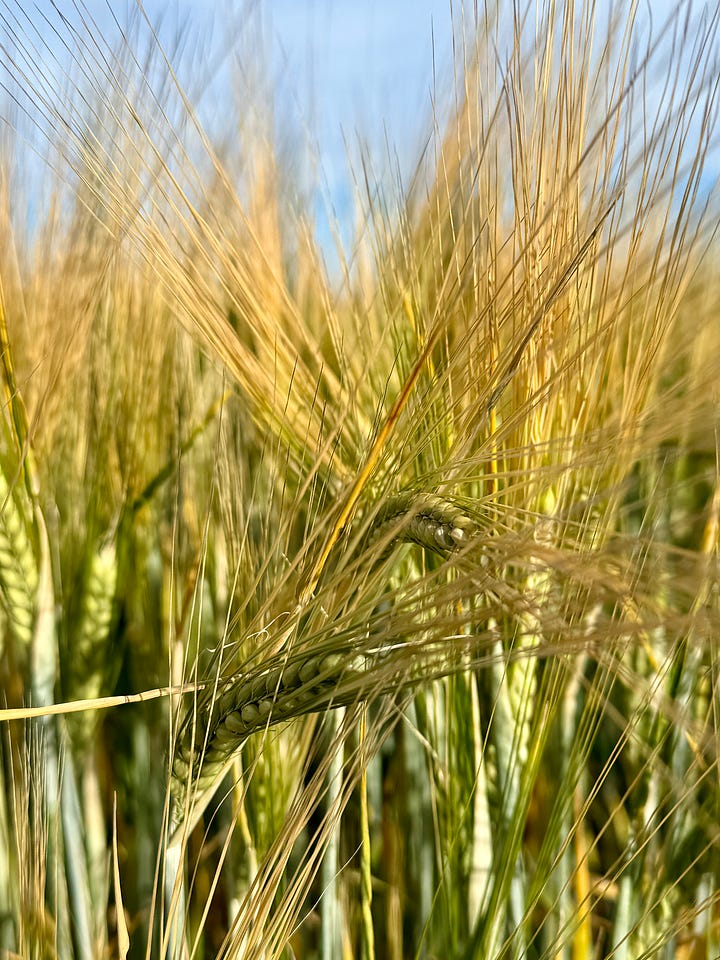
Earlier that week I’d had dinner at my friend’s home—a farmhouse surrounded by vast organic wheat fields and ringed by mountains. The group of us has been friends and colleagues for decades—land, water, food, policy, the great wide open—and the wealth of knowledge and experience at that table was remarkable (smart ladies make for smart (and hilarious) conversation).
We sat outside, shared a wonderful meal, and witnessed a pair of owls landing in the field to chase mice. My friends had been watching them since they were fledglings. We watched the sun go down.
My friend and her family are showcasing what it means to work with the land. They grow several varieties of wheat using organic and regenerative practices. They’re continually exploring different varieties in search of what’s best for the land and their product, specifically: low water needs, higher carbon sequestering, and great flavor profiles and nutritional value.
They’ve built a flour mill—with both stone and roller mills—and produce high extraction flour that retains as much of the wheat bran and germ as possible, thus preserving nutritional value and flavor. (Most flour is heavily sifted to produce white flour stripped of both.) This is striking on its own as a move to rebuild the missing middle in agricultural systems (where small mills were once abundant and woven into local economies, today’s centralization of agriculture and food systems has weakened these economies and communities, poisoned our food supply, and harmed our health). Rebuilding the missing middle requires intent, capital, and incredible commitment in an era of corporate takeover of government and economy.
They’ve built a bakery and now sell both flour field-to-bag and bread locally and regionally. They work with family. All of this is extraordinary for its attention to and honoring of land, water, heritage, wildlife, kin, and local systems.
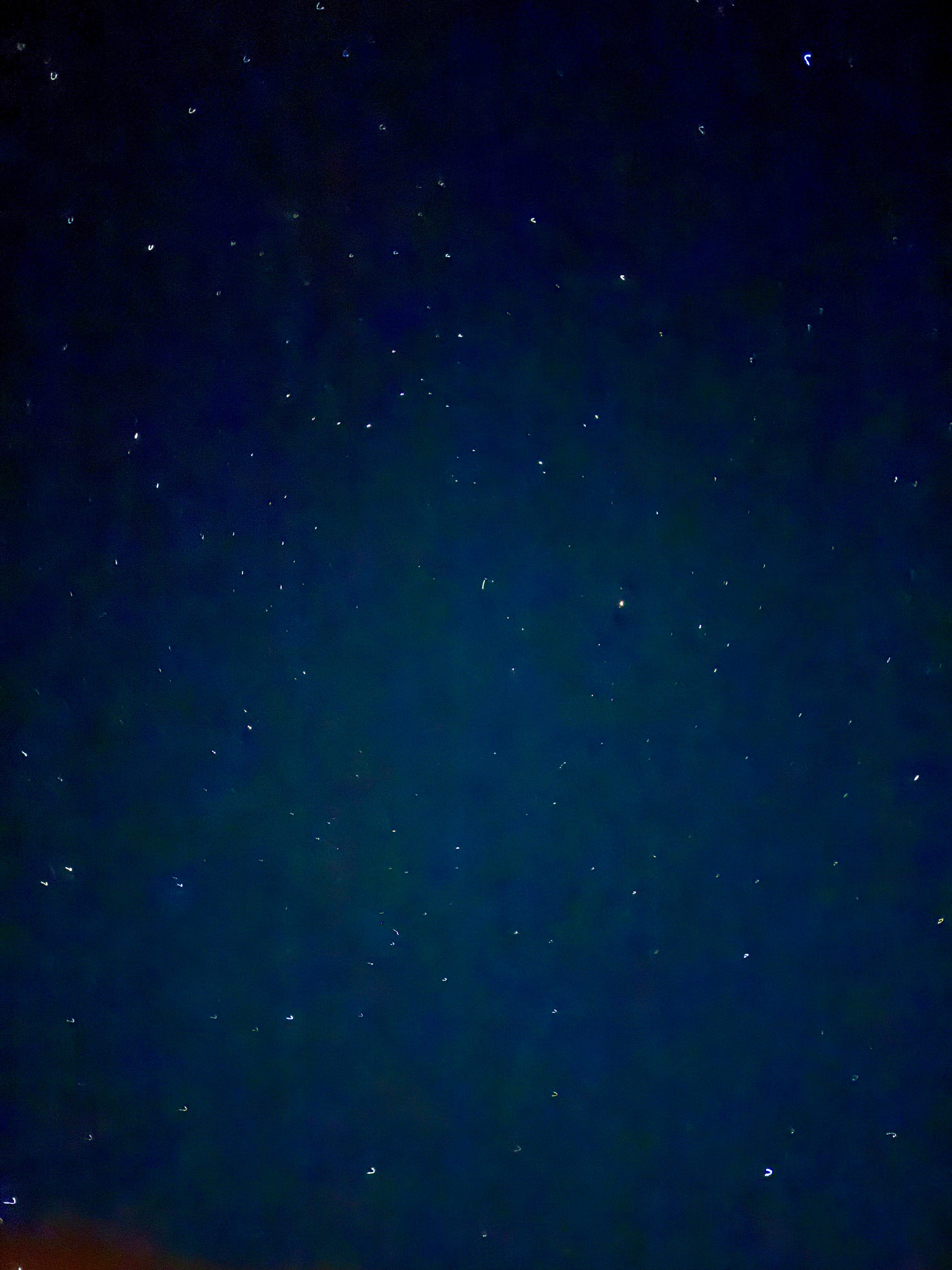
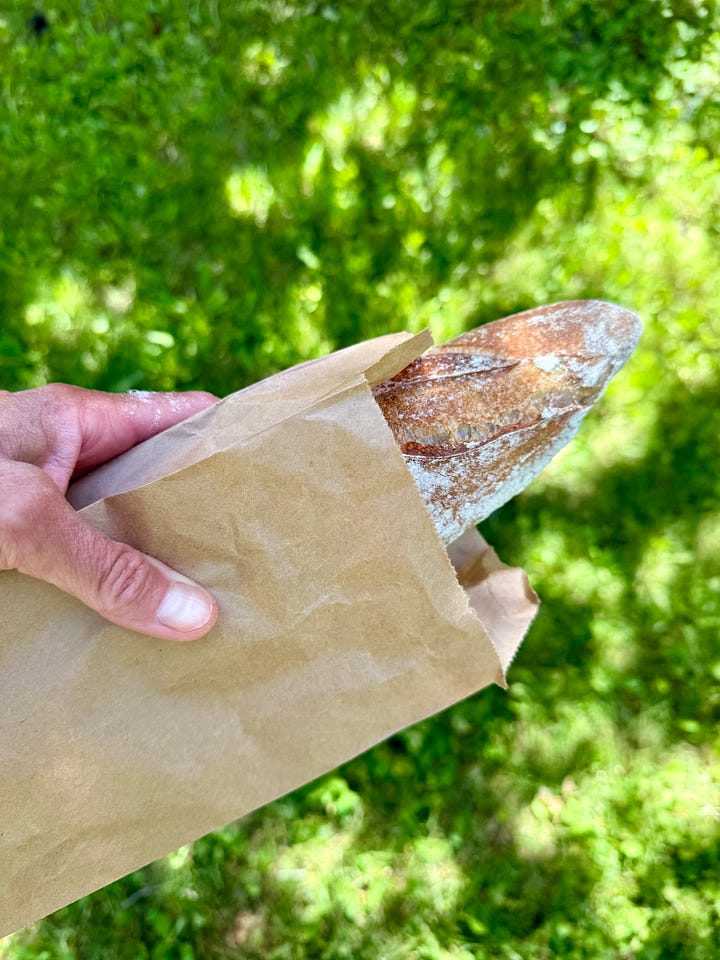
I stayed the night on her field, sleeping in the Gypsy Wagon beneath the stars. In the morning, I brewed a cup of coffee and took a long walk on a dirt road that meandered through wheat fields. When I returned to the Gypsy, I found a baguette of fresh bread perched on the windshield—a gift from my friend—baked on her land, with organic wheat grown by her family, nourished by the soils, watered by the heavens. That same bread traveled with me to the wilds last weekend, in honor of our interdependence.
xo Wendy
If you enjoy reading these posts each week, consider upgrading to a paid subscription.
In Welcome to the Great Unraveling: Navigating the Polycrisis of Environmental and Social Breakdown, Asher Miller and Richard Heinberg define polycrisis as ‘“the tangles of global environmental and social dilemmas that are accumulating, mutually interacting, and worsening and argue that the present polycrisis indicates humanity is entering the Great Unravelling in which compounding crises threaten the vital systems of human civilization. Unravelling environmental threads include global warming, biodiversity and habitat loss, soil loss and degradation, water scarcity, chemical pollution, and resource depletion. Unravelling social threads include poverty, inequality, racism and other forms of discrimination, antisocial (fractious) responses to scarcity, authoritarianism, and the impacts of technological change.” [https://polycrisis.org/resource/welcome-to-the-great-unravelling-navigating-the-polycrisis-of-environmental-and-social-breakdown/]
Comments
Nothing yet. Say the first thing.
Sign in to join the conversation.