
US journalists visas and VOA update
Press Freedom News Reports from Around the World
SPJ26 National Conference
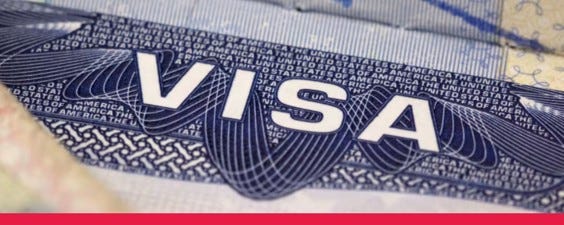
Proposed Trump Administration rule changes for journalism visas remain a high priority for journalism organizations.
Last week, the SPJ International Community and the Foreign Press Association held a brainstorming session with members of journalism and press freedom organizations. To encourage a candid discussion, the session was not recorded, and participants could decide whether to disclose their involvement.
Some of the people attending were members or leaders in journalism groups but could not speak for those organizations. Some were foreign journalists who were concerned the discussion could be construed as political action, thus possibly affecting their status in the US.
In the end, this loose-knit coalition of press freedom advocates decided to draft a statement to serve as a joint statement from journalism groups to register their opposition to the visa rules changes for journalism and to call on Congress to use its Constitutional authority to review and reject the new standards.
The final document should be ready for circulation this week.
Summary of the proposed changes:
The valid duration of an I visa for foreign journalists will change from the duration of the journalist’s assignment in the United States to 240 days.
While renewal of the visa is allowed, the cost will be about $400 for each renewal and will be reviewed by an office already understaffed.
Even when a renewal is filed, there is no guarantee it will be approved, leading some to fear that the administration could use the renewal process to remove journalists it views as hostile.
Foreign journalists could also face possible deportation orders if the renewal is not approved before their visas expire. The US Department of Homeland Security has detained and deported several foreign nationals in the US in that same situation, claiming renewal of legal status is not protection from deportation.
International students will receive visas for only four years. At the end of the four years the student must leave the United States.
New restrictions were also placed on foreign specialists invited to the United States under cultural/academic exchange programs.
There is also further discussion of this issue in previous newsletters.
The discussion then turned from the proposed changes themselves to the limited ways they could be stopped.
The Administration itself withdraws them.
Litigation delays or blocks implementation.
Congress exercises its Constitutional powers to review and stop the rules from taking effect.
There are some legal advocates discussing litigating the posted rules changes. However, as of last week, there was no progress to report in this area.
That leaves Congress.
People noted in the meeting that sending letters to Senators and members of Congress as individuals in opposition to the proposed changes could help draw attention to this issue and provide an incentive for Congressional action.
Another way to draw the attention of the legislators is to show the economic impact of the rules changes in their states and districts. A portion of the proposed changes affect international students. There was discussion about promoting stories in the local press about how “gown and town” communities will be impacted with fewer international students attending universities.
On a larger scale, but vital to the US economy, world financial centers pay close attention to the US stock market. Many foreign reporters are assigned to cover Wall Street and the US financial markets. Limiting the amount of time these reporters can work in the US will impact their ability to accurately report on those markets, thereby affecting the flow of information to foreign markets, which will eventually impact the US economy.
Another appeal is for the protection of US journalists working abroad. The proposed changes raise the threat of a response from other countries. American reporters looking to work abroad may find that they will face similar limiting visa validity times. Already, China has announced that it would reciprocate against US journalists. The proposed changes in the US visas for Chinese journalists would codify an earlier interim decision to limit the visa validity to 90 days.
Finally, as shown by China and Hong Kong, the visa renewal process can be used to remove reporters seen as “unfriendly” to the government. The renewal process is not transparent. No explanation for a denial is required.
Stay tuned.
Two great stories came out last week that look at the situation at Voice of America.
As we have noted previously, the journalists at Voice of America are by law supposed to be protected from editorial influences from management. Unfortunately, the Trump Administration has been violating that law.
Back in March 2025, the Administration shut down VOA in a manner a judge later declared illegal.
Once the Administration decided to adhere to the letter of the law, it maintained a handful of language service operations. Unfortunately, again in violation of the law that established the editorial firewall, the Administration dictated how and what will be covered in those services.
In The New Yorker Marc Fischer took a deep dive into how the Trump Administration dismantled VOA and what its impact has been.
Kari Lake, Trump’s initial executioner of VOA, was recently nominated as ambassador to Jamaica. Trump then named Sarah Rogers, currently the undersecretary of state for public diplomacy, as the new head of the VOA parent organization, the US Agency for Global Media. Rogers is expected to maintain her position at State if the USAGM confirmation goes through.
The USAGM and Voice of America are to be distinct from policy making agencies such as the State Department. The role of VOA and its sister news outlets under the USAGM umbrella are required by law to fully report stories without bias. Having a CEO whose job is also to manipulate information to show the best side of US policy is not what the law expects.
Clayton Weimers, executive director of Reporters Without Borders in the US, has an excellent look at what turning VOA into a propaganda operation would mean.
The former commander of the US Army in Europe, Lt. Gen. Ben Hodges (retd.), said last year, “People trusted Voice of America because of the quality of the journalists that are there and also the sense that it was real, solid information, not propaganda.”
As Weimers points out, people who have lived under regimes that control their media know the difference between propaganda and factual, fair reporting. What they are hearing now from VOA is now more the former than the latter.
Reporters Without Borders: New Russian law expands the Kremlin’s legal persecution of exiled journalists
Committee to Protect Journalists: Israel’s Channel 12 attacked for second time, journalists receive death threat
Global Investigative Journalism Network: Reporter’s Guide to Investigating Cryptocurrency
Reuters Institute: How street papers navigate a post-print world
Latin America Journalism Review: Guatemalan appeals court overturns conviction of journalist José Rubén Zamora for second time
Latin America Journalism Review: A new force in Brazilian journalism reaches five-year milestone
International Federation of Journalists: Russian Journalist sentenced to 12 years in prison
Brian Stelter, chief media analyst for CNN Worldwide and the lead author of the Reliable Sources newsletter will share his perspective on a unique moment in journalism history, in conversation with journalist, media analyst and ethics professor Eric Deggans.
The International Community is hosting a session on Press Freedom as a Beat. The list of programs and panel discussions at the conference keep growing. You can see the current list HERE.
Thank you for reading SPJ International Community’s latest newsletter. If you know some one who would also like to see this, please use the SHARE button below.
Comments
Nothing yet. Say the first thing.
Sign in to join the conversation.