
The purpose of all the disciplines is to make it possible for that which is the ground of life to become a part of the conscious awareness of the individual. And this is perhaps one of the great roles of silence, of stripping, of centering down, as the friends say, to get the debris out of the way so that there is no impediment against the free upward thrust of that in which the life is grounded. - Howard Thurman
I’ve recently been on a kind of world tour, participating in various conversations and retreats focused on contemplation and meditation. These experiences have been deeply enriching, offering a view of how contemplation manifests across diverse contexts. Yet, despite being literally worldwide, a common pattern became clear: many individuals feel excluded or unwelcome in contemplative spaces. This raised a challenging question for me: If I fundamentally believe contemplation is a pathway to liberation, then how do I ensure this ‘liberative contemplation’ is made truly accessible and diverse, inviting a wider spectrum of people into this way of life?
Those of us committed to contemplation are well aware of the critical need for greater ethnic and cultural diversity in these spaces. That is the reason why the project I lead, Black Lives & Contemplation, exists and how it joins efforts done by spaces like Contemplative Outreach’s weekly BIPOC Centering Prayer calls, Awakenings, the Black Contemplative Society, Made for PAX, and the impactful work of Wonder Aloud and Spiritual Wanderlust. These spaces have become indispensable in centering diverse contemplative voices and experiences. Not to mention all of the individuals like Dr. Lerita Coleman Brown and Felicia Murrell, and others who continue this work. These and similar initiatives are essential to actively dismantle barriers and cultivate spaces that are truly representative and welcoming to all communities.
But maybe of equal importance, and maybe as a way to address this issue what I’ve noticed is how we need to embrace a diversity of practice. We need to broaden the scope of what is considered “contemplative,” acknowledging and valuing practices that may not fit a narrow, conventional mold.
I think being more expansive and inclusive in contemplation is not merely a ‘cool thing to do’;I feel that it touches directly upon the long-term health, relevance, and transformative power of the Christian contemplative tradition itself. Any tradition that fails to evolve and embrace the full breadth of human experience risks becoming marginalized and ineffective.
Let me expound on what I mean.
One of the many conversations took place with an Anglican priest in South London, who spoke of the urgent need to introduce contemplative practice to the majority Black youth in his parish. He was particularly excited by the suggestion that Hip Hop could be a tool that could be an effective way to facilitate contemplation. While the youth currently make occasional retreats to Iona, the parish is now looking for a consistent, accessible rhythm. They plan to explore how this innovative approach can create a permanent, engaging contemplative life for young people in South London.
For me this conversation was important because the priest, who was actively thinking of integrating a Hip Hop contemplative practice for his youth, wanted to make sure there was a pathway for entry into regular practice. We know that we need to share the Christian contemplative tradition with younger people; but in order to do so we must create genuine entry points. I feel that too often, we default to quasi rigid, pre-defined notions of contemplation, rather than opening truly welcoming paths. This, I think, is what forces young people onto a somewhat circuitous spiritual journey. Young people, yearning to nurture their spiritual inner lives and connect with the divine, often find that the ‘institutional church’ simply isn’t speaking their language. While they yearn to connect with the divine through meditation and contemplation, they are often unaware of a Christian path. As a result, they may first explore Buddhist or Hindu practices, often because those spaces are more immediately welcoming and offer a more accessible entry point. The discovery of Christian contemplation, through figures like Thomas Merton or Richard Rohr, then comes much later.
To be clear, I am not suggesting that Buddhist or Hindu spaces are not good options; if someone is drawn to the divine through those traditions, they are following their calling. My point is solely this: the Christian contemplative tradition must do the work of creating entry points that are just as welcoming, accessible, and engaging as those offered elsewhere.
Another important step towards inclusion involves accurately situating the origins of the Christian contemplative tradition. Too often it is mistakenly asserted that the tradition originated in medieval Europe, completely overlooking its true birthplace in the deserts of Northern Africa, Syria, and Palestine. Contemplative Christianity and monasticism began not in Europe, but with the Desert Fathers and Mothers, figures from Alexandria and the Palestinian desert who would today be racialized as people of color. How can we express a spiritual reverence for ‘the desert’ while erasing the racial and cultural roots of our contemplative life. Restoring this history is crucial not only to fully honor the tradition but also to foster genuine belonging. The more we see ourselves accurately reflected in the very foundations of these practices, the more we will feel that contemplative life is truly ours.
The goal is nothing less than liberative contemplation: a practice for achieving true freedom by cultivating a deep inner life. This practice connects us to ourselves, others, the divine, and the natural world, empowering us to serve the world more effectively. To make this transformative path universally accessible, we are called to three essential actions: actively invite younger people, restore the full, diverse history of contemplation, and broaden our understanding of what contemplative practice encompasses, embracing diverse entry points.
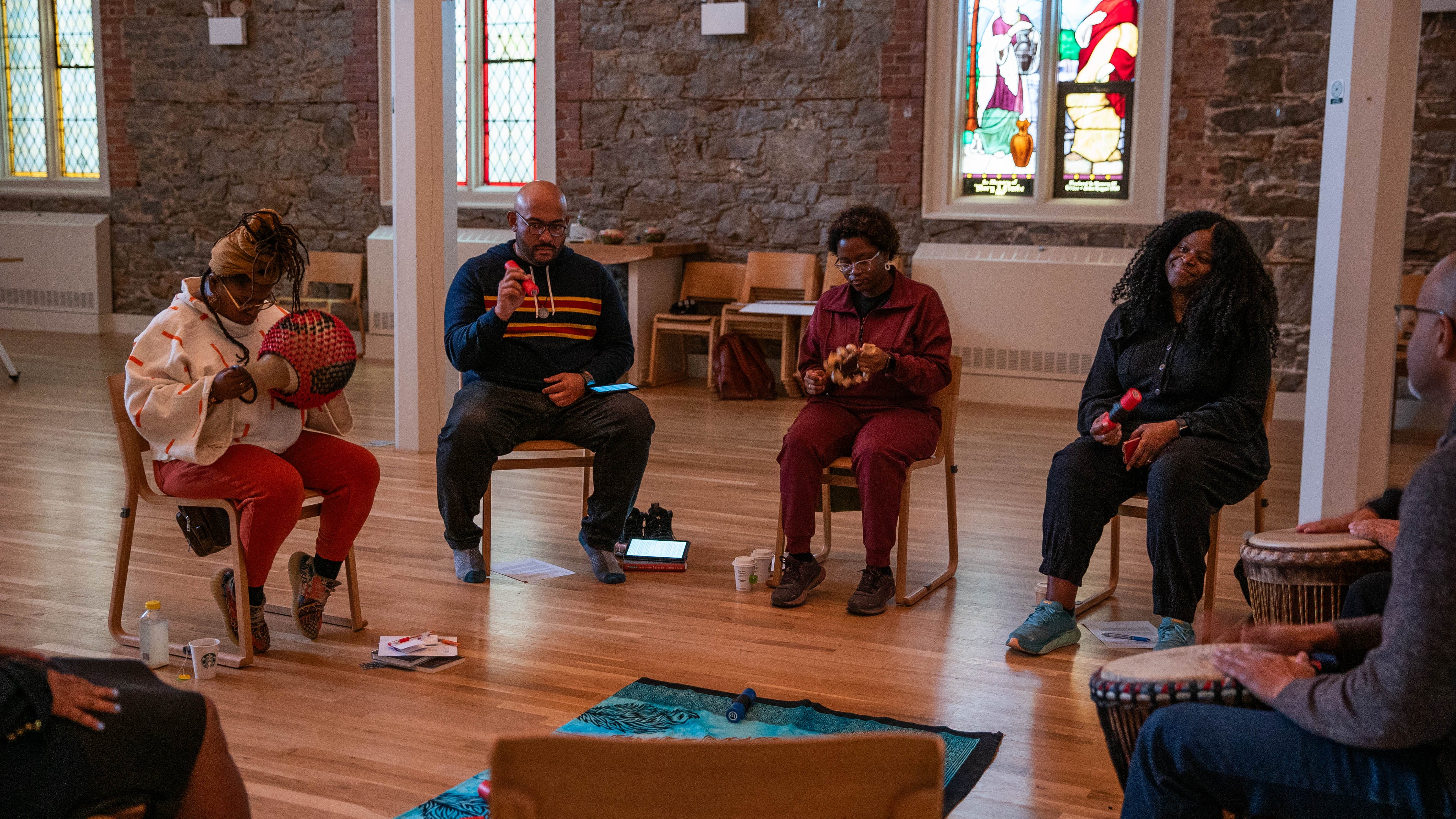
Liberative contemplation must be imaginative and expansive, it should not be confined to a single mold. What if the doorway into a contemplative life began not with mandated silence, but with a stimulating conversation, or a thoughtful analysis of a film or a piece of art? Perhaps the entry point is the silence shared after a profound reading. The challenge for all of us in contemplative spaces is to move beyond our personal preferences and established methods. We must prioritize invitation and discovery over simple adherence to form, constantly seeking what best helps the curious newcomer genuinely engage with the contemplative life.
This need for broader entry points is, remarkably, not new at all. One of the great spiritual masters of desert contemplation, St. Evagrius Ponticus, taught a similar principle. Evagrius recognized that the contemplative journey requires accessible starting points. He considered nature and reading scripture (what we now call lectio) as a necessary first level of contemplation. He explicitly recommended that the Desert Monks begin with these more accessible practices to eventually be led to what he described as the higher, or more advanced, level of contemplation.1
This demonstrates that seeking imaginative, entry-level practices is deeply rooted in the Christian tradition, providing a powerful historical reference to broaden our methods.
Sister Thea Bowman, OFM, once beautifully stated, “We are not all alike in every way... Praise the Lord, we are not alike. If I begin to believe that we are all alike, look at what I’m going to miss: the richness, beauty, wholeness, and harmony of what God created.” Her words serve as a vital call to action: our diverse ways of being should lead us to diverse ways of engaging with contemplative life.
This is why I invite you to join the experiment, to join us in creating a liberative vision of contemplation. Maybe think of what draws you in and what may draw someone else in, maybe join one of our upcoming imaginative practices, our Advent Lectio Divina practice, maybe join us for our upcoming jazz meditation, or expand your definition of contemplation by joining us for our Hip Hop meditations. Whatever that may be, let us be bold to imagine: as Howard Thurman said, “Imagination is one of the great gifts of God.” The goal is to cultivate the freedom to experiment and to find the unique, personal contemplative path that leads to this liberative experience of deepening our inner lives and strengthening our capacity to serve the world.
Guesnerth Josué Perea serves as Executive Director of the afrolatin@ forum, Director of Black Lives and Contemplation for the Community of the Incarnation, and Associate Pastor at Metro Hope Church.
‘As for those who are far from God ... God has made it possible for them to come near to the knowledge of him and his love for them through the medium of nature’ (Evagrius, letter to Melania).
No posts
Comments
Nothing yet. Say the first thing.
Sign in to join the conversation.