
This contribution is written in Spanish, followed by its English translation
“En el corazón de cada persona hay como una pequeña celda íntima, donde Dios baja a platicar a solas con nosotros… Si cada persona de las que estamos tan emproblemadas, en este momento entraríamos en esta pequeña celda, y desde allí, escucharíamos la voz de Dios, que nos habla en nuestra propia conciencia, cuánto podríamos hacer cada uno de nosotros por mejorar el ambiente, la sociedad, la familia en que vivimos.” - San Óscar Romero
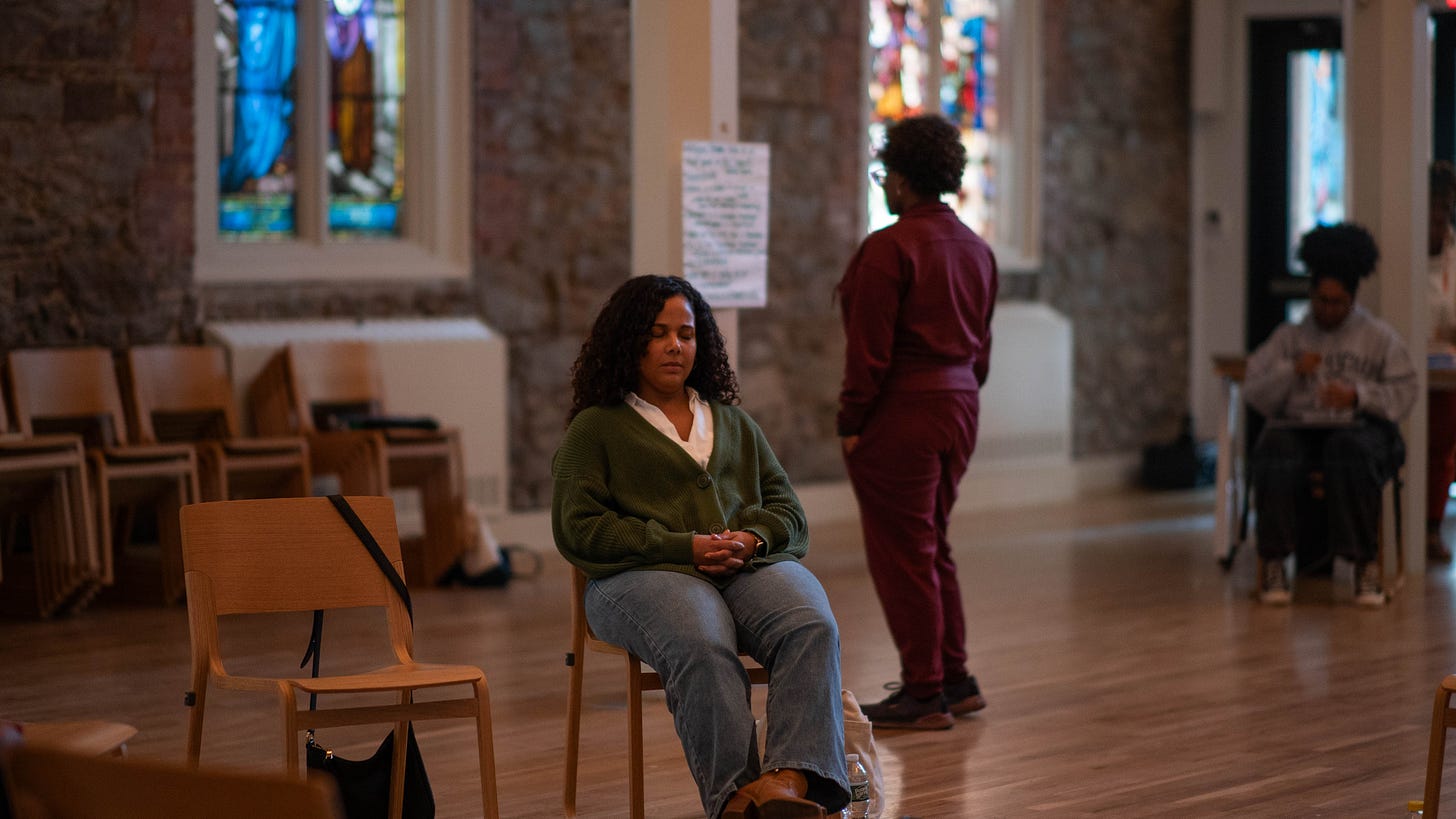
Comenzando esta Cuaresma, nuestra comunidad contemplativa ecuménica, La Comunidad de la Encarnación, dará un paso significativo en nuestro camino contemplativo. Nos enorgullece comenzar a ofrecer, completamente en español, este método de oración meditativa/contemplativa, la práctica primordial de nuestra comunidad.
Participa en nuestra oración meditativa
Para muchos, esta es una noticia muy esperada. Al ofrecer este método de oración en español, no solo estamos diversificando las personas que nos acompañan; estamos expandiendo las dimensiones lingüísticas y culturales del espacio contemplativo mismo.
Este cambio no debería ser una sorpresa. Cuando miramos a los grandes místicos contemplativos que tanto amamos, Santa Teresa de Ávila, San Juan de la Cruz, San Óscar Romero y San Martín de Porres, vemos a personas que pudieran ser definidas como latinas o hispanas, y que se comunicaban primordialmente en español.
Tal vez te preguntes: ¿acaso el silencio no trasciende el lenguaje? Tal vez. Pero la manera en que enseñamos las prácticas de silencio y la forma en que invitamos a otros a la oración meditativa tiene, definitivamente, un lenguaje, y por mucho tiempo, en mi experiencia, ese lenguaje no ha sido el español
A pesar de la rica historia de místicos hispanohablantes, las ofertas contemplativas modernas en este país a veces parecen dejar a la población hispanohablante como una “segunda opción”. Aunque existen organizaciones con ramas en español, gran parte del mundo contemplativo cristiano actual se ha desarrollado en inglés. Esto crea una barrera. Si la puerta no está abierta lingüísticamente, la práctica puede sentirse ajena.
Como colombiano afrodescendiente, el español es mi primer lenguaje. Mis identidades, ser latino, ser negro, ser colombiano y ser cristiano, se convergen en mí de maneras únicas; no son piezas separadas, sino una totalidad. Esta intersección me permite experimentar el don de la contemplación bajo una luz distinta, una que abraza todo lo que soy. Recientemente, he estado reflexionando sobre la pregunta del gran místico afroamericano Howard Thurman: ¿Qué es lo que nos corresponde hacer en la obra de la justicia? y ofrecer esta práctica en español a nuestra comunidad latina hispanohablante es una manera de responder a esta pregunta.
En medio de estos tiempos tan difíciles, la oración meditativa, ha sido una fuente de resiliencia y esperanza. Hoy en día, nuestras comunidades hispanohablantes están siendo asediadas. No es una hipérbole decir que cualquier persona que hable español en este país está a sólo uno o dos grados de distancia de las dificultades que aquejan a la comunidad inmigrante. Ya sea directamente o a través de alguien conocido, nos enfrentamos a estos desafíos cara a cara todos los días.
Ofrecer esta práctica, entonces, es un acto de justicia. Es una forma de abrir esa ‘Celda Interior de silencio’ de la que hablaba San Óscar Romero; ese espacio donde Dios nos brinda lo necesario para resistir, sanar y movilizarnos hacia una acción que transforme nuestras comunidades.
La oración meditativa es, sencillamente, un contacto consciente con Dios. Nos permite traer todo lo que somos, nuestros problemas, nuestras alegrías y nuestras identidades culturales, ante Dios.
Sabemos que, para nuestra comunidad hispanohablante, la palabra 'meditación' puede sonar a veces como algo ajeno a nuestra fe. Sin embargo, queremos ser claros: la práctica contemplativa, es decir, la oración meditativa, es una disciplina con un profundo legado en nuestra propia tradición cristiana. Es una herramienta espiritual que nos ayuda a escuchar hacia dónde quiere movernos el Espíritu de Dios, especialmente mientras servimos a nuestros prójimos.
Entonces, para nuestra comunidad latina hispanohablante, les invitamos a que nos acompañen. Si quieren saber más de lo que es la oración meditativa, o si alguna vez sintieron que los espacios contemplativos no eran para nosotros, sepan que este espacio se está construyendo específicamente pensando en nuestra comunidad latina hispanohablante.
Y a nuestra comunidad que domina el inglés, ayúdennos a compartir sobre esta práctica. Es probable que conozcan a alguien, un amigo, un vecino o una congregación local, que hable principalmente español y esté buscando una forma diferente que nos ayudará a profundizar nuestras prácticas de oración.
Como dijo el Padre Bede Griffiths, el don de la contemplación es universal. Habla muchos idiomas y pertenece a todas las etnias y culturas. A partir de esta Cuaresma, comenzamos esta nueva dimensión en nuestra comunidad. Esperamos que esta ofrenda sirva al Reino de Dios y contribuya al bienestar, la paz y la justicia de todos, sin importar el idioma que hablemos.
Participa en nuestra oración meditativa
“At the heart of every person there is like a small, intimate cell, where God comes down to converse alone with us… If each of us, who are so overwhelmed by problems, were to enter this small cell at this moment and listen from there to the voice of God, who speaks to us in our own conscience, how much would each of us be able to do to improve our environment, our society, and our families in which we live.” - St. Oscar Romero
Beginning this Lent, our community, the Community of the Incarnation, is taking a significant step in our contemplative journey. We are proud to begin offering the Incarnation Method of Prayer, the core contemplative practice of our community, entirely in Spanish.
For many, this is welcome news. By offering this prayer method in Spanish, we aren’t just diversifying the people who join contemplative practices; we are hoping that we are expanding the linguistic and cultural dimensions of the contemplative space itself.
And, it is a change that shouldn’t actually come as a surprise. When we look at some of the great contemplative mystics we revere, St. Teresa of Avila, St. John of the Cross, St. Oscar Romero, St. Martin de Porres, and many others, we are learning from individuals who today would be identified as Latino or Hispanic and who communicated primarily in Spanish.
Maybe you’re wondering, ‘well, doesn’t silence transcend language? Isn’t silence unique in its wordlessness?’ Perhaps. But the way we teach silence and the way we invite others into contemplative practice absolutely has a language, and for too long, at least in my experience, that language has not been Spanish.
Despite the rich history of Spanish-speaking mystics, modern contemplative offerings in the U.S. can sometimes feel like an afterthought for Spanish-speaking populations. While organizations, like Contemplative Outreach, have wonderful Spanish-speaking arms, much of the “contemplative world” remains centered on English-developed frameworks. This creates a barrier. If the door isn’t open linguistically, the practices can feel inaccessible.
As a native Spanish speaker and a Black Colombian, these identities intersect within me in unique ways. They allow me to experience the gift of contemplation through a distinct light. Recently, I’ve been reflecting on Howard Thurman’s daunting question: “What is ours to do” in the work of justice? and offering this practice in Spanish to our Spanish-speaking Latino community is a way of responding to this question.
In the midst of difficult times, contemplative practice has been my source of resilience and hope. Today, our Spanish-speaking communities are being besieged. In this country, it is no hyperbole to say that most Spanish speakers are only one or two degrees removed from the troubles facing the immigrant community. Whether directly or through someone we know, we are facing these trials head-on every day.
Offering this practice, therefore, is an act of justice. It is a way to provide that ‘inner cell of silence’ that St. Oscar Romero spoke of, where God provides everything we need to endure and thrive and that moves us into action in the world to improve our society.
Contemplation, as we continue to define it, is simply conscious contact with God. It allows us to bring our whole selves, our troubles, our joys, and our cultural identities, to the Divine.
We know that for some in our Spanish-speaking sibling communities, “meditation” can sometimes feel too foreign or disconnected from Christian roots. But we want to be clear: Contemplative practice is a grounded Christian tradition. It is a spiritual tool that helps us listen to where the Spirit of God is moving, especially as we serve our neighbors.
So, to our Spanish-speaking siblings, we invite you to join us. If you have wondered how contemplative practice in Spanish might feel or maybe you have felt that contemplative spaces didn’t have us in mind in the past, know that this space is being carved out specifically with you in mind.
And to our English-speaking siblings, help us spread the word. You likely know someone, a friend, a neighbor, or a local congregation, who is Spanish-dominant and seeking a different form of deep prayer.
As Father Bede Griffiths said, the gift of contemplation is universal. It speaks many languages and belongs to all ethnicities and cultures. Starting this Lent, we begin this new dimension of our community. We hope this offering serves the greater kin-dom of God, adding a much needed dimension to the commonwealth of peace and justice of God, for everyone, regardless of the language they speak.
No posts
Comments
Nothing yet. Say the first thing.
Sign in to join the conversation.