
DISCLAIMER
Any questions you may have about legal information within this article should be discussed with your attorney or legal counsel at your institution. SPIRIT is an educational resource ONLY and is not meant to substitute research ethics oversight or approval.
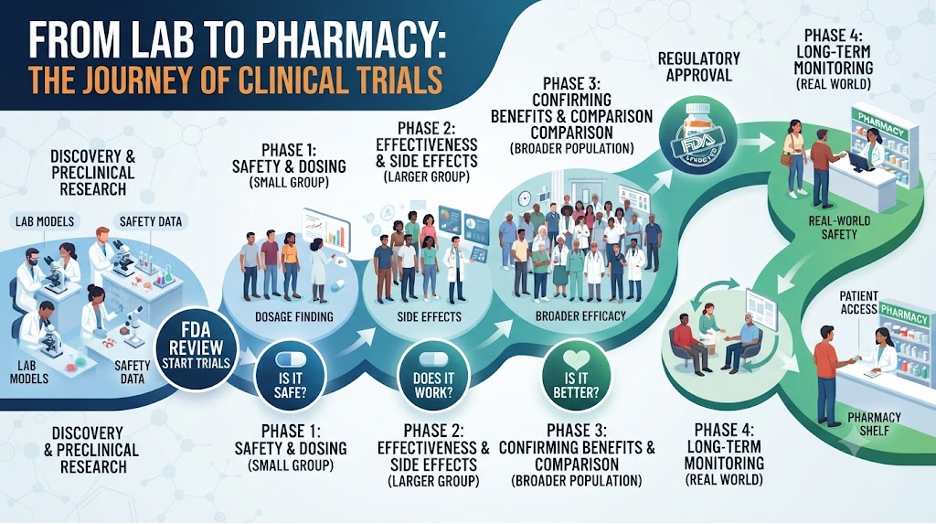
Every medicine available today has a story behind it. Before a treatment reaches a pharmacy, shelf or becomes a standard option for patients, it must go through years of scientific research, testing, and careful evaluation. However, when people read health news headlines mentioning terms like “Phase 1,” “Phase 2,” or “Phase 3 clinical trials,” these terms are often unfamiliar. What do these phases mean? Does a Phase 2 study mean a drug is almost ready? Does a Phase 3 trial guarantee approval?
This article aims to help patients and the public understand the clinical trial journey and what each phase reveals about a potential treatment. Rather than viewing trial phases as simple numbers, readers will learn that each phase represents a different question researcher are trying to answer about a medicine’s safety, effectiveness, and potential role in patient care.
Before medicine can be tested in humans, it begins with extensive laboratory research. Scientists study diseases, identify possible treatment targets, and develop potential drug candidates. Researchers then conduct pre-clinical studies using laboratory models to evaluate how the treatment works and whether there are any early safety concerns.
Only treatments with enough evidence of potential benefit and acceptable safety profiles move forward to human clinical trials. This process is carefully reviewed to ensure that studies are designed ethically and that participant safety remains a priority.
Phase 1 clinical trials represent the first time a new treatment has been tested in humans. At this stage, the primary goal is not to determine whether the medicine can treat a disease effectively, but to understand how the human body responds to it.
Researchers focus on important questions such as:
Is the treatment safe for people?
What can be given safely?
How does the body absorb, process, and eliminate the medicine?
What side effects should researchers monitor?
These studies typically involve a smaller number of participants, and researchers closely monitor their health throughout the trial. A treatment moving into Phase 1 does not mean it is proven or ready for patients, it means scientists are beginning to collect essential safety information.
If a treatment demonstrates acceptable safety in Phase 1, it may move into Phase 2 clinical trials. At this stage, researchers begin asking a new question: Does the treatment show signs of helping patients with a specific disease or condition?
Phase 2 studies usually involve more participants who have the disease being studied. Researchers evaluate whether the treatment produces meaningful improvements while continuing to monitor side effects and safety concerns.
For example, researchers may examine:
Whether symptoms improve
How patients respond to different doses
How long may benefit last
Whether side effects remain manageable
Although Phase 2 results can be encouraging, they do not guarantee that medicine will eventually become available. Some treatments fail at this stage because they may not provide enough benefit or because safety concerns become more apparent with additional testing.
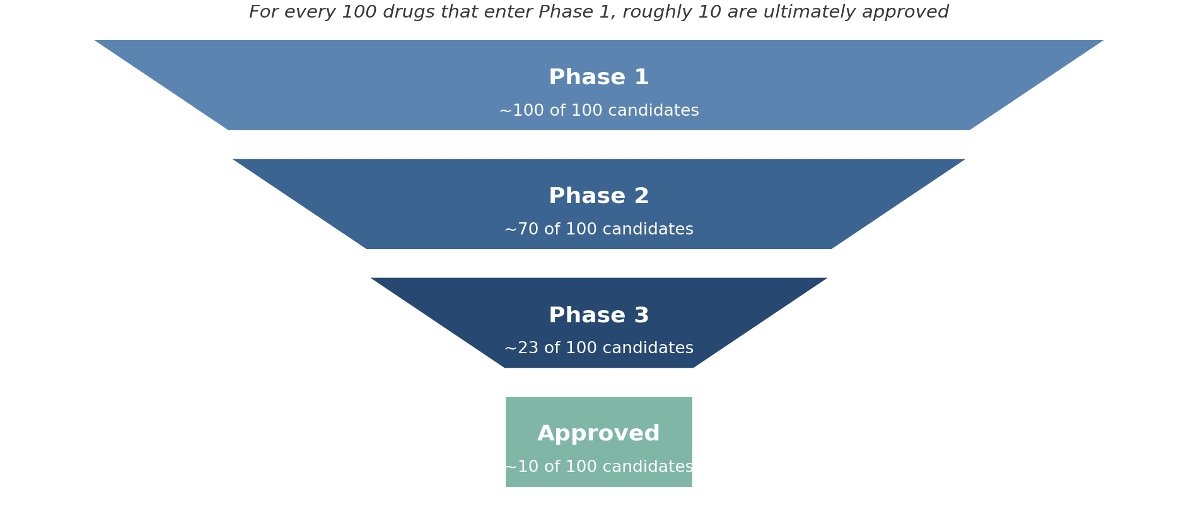
Phase 3 clinical trials are usually the largest and most comprehensive studies before regulatory review. These trials often include hundreds or thousands of participants and are designed to confirm whether treatment is effective and safe for a broader patient population.
Researchers may compare the new treatment with:
Existing approved treatments
Standard-of-care therapies
Placebos, when appropriate
The information collected during Phase 3 trials helps regulatory agencies, such as the U.S. Food and Drug Administration (FDA), evaluate whether the benefits of a medicine outweigh its risks.
However, even after approval, monitoring does not stop.
Once a medicine reaches patients, researchers continue learning about its safety and effectiveness through Phase 4 studies and pharmacovigilance activities.
Clinical trials are carefully designed, but they cannot always identify every possible safety concern because they involve limited numbers of participants over a specific period. Real-world use allows researchers to collect additional information from a much larger and more diverse patient population.
Post-marketing monitoring helps identify:
Rare side effects
Long-term safety concerns
Differences in how patients respond to treatment
Additional benefits or limitations of the medicine
This ongoing monitoring helps ensure that medicines remain safe throughout their lifecycle.
Understanding clinical trial phases can help patients become more informed when reading about new treatments in the news or considering participation in research studies.
A headline stating that a drug is “promising in Phase 2” means researchers have observed encouraging results, but more studies are needed before the treatment can become widely available.
A Phase 3 trial represents a significant step forward because researchers are gathering stronger evidence, but regulatory review and safety evaluation are still required.
The journey from laboratory discovery to pharmacy shelves is not a straight path—it is a careful process designed to protect patients while advancing medical innovation.
The next time you see a headline about a new treatment, consider asking:
What phase is the clinical trial in?
How many participants were involved?
What question are researchers trying to answer?
Has the treatment been reviewed and approved by regulatory authorities?
Behind every medicine is a long journey involving scientists, healthcare professionals, regulatory experts, and most importantly, patients who participate in research.
Understanding that journey helps us appreciate the science, responsibility, and collaboration required to bring safe and effective treatments to the people who need them.
Share Science Policy Insights in Research & Technology (SPIRIT)
Comments
Nothing yet. Say the first thing.
Sign in to join the conversation.