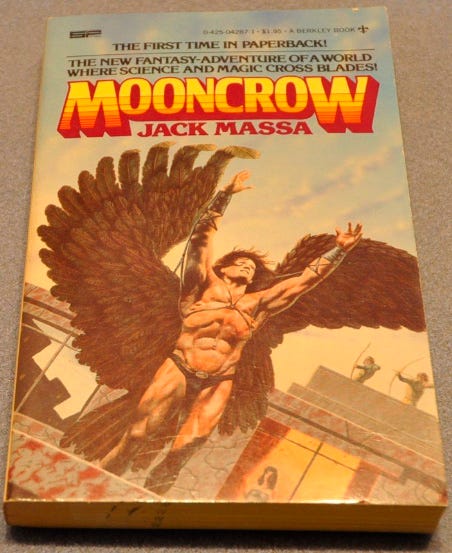
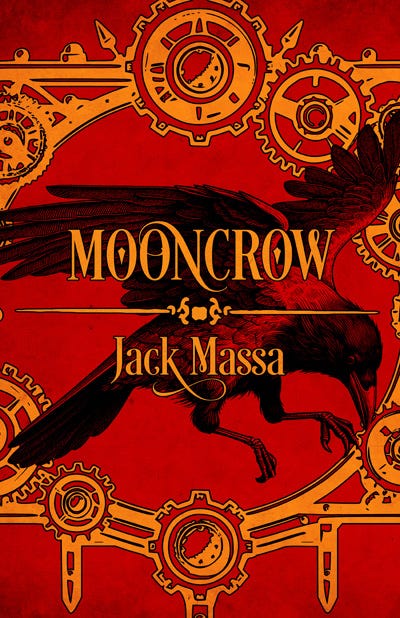
I recently republished my first novel, a sword and sorcery adventure called Mooncrow. The book was originally published as a paperback by Berkley Publishing Group in 1979.
Over the years, a few readers have found Mooncrow in used-book venues and reviewed it online. A couple even contacted me and asked if it might be republished, or if I might write a sequel. Happy to say, both of those things have now happened!
Now for the academic part. I wrote Mooncrow while studying in the Creative Writing MFA Program at the University of Massachusetts. Mooncrow served as my Master’s Thesis.
While preparing to republish the book, I hunted through my old files (to find the letter in which the rights to publish were reverted to me). In the same file, I found the following paper, which I wrote as an introduction for the Master’s Thesis Committee.
Now, I haven’t done any literary scholarship for a long time. But I was struck by some of the points made in this essay. One is the idea that all fiction exists on a spectrum from naturalism to idealization, or from the representational to the decorative. Another is the recognition that what we think of today as “genre” or “popular” fiction has just as much of a valid place in the body of literature as the more “serious” intellectual stuff.
Note: You will notice in the essay that the term “romance” is used in a broader sense than is typical today. Romance here refers to a class of stories that present idealized pictures of life (decorative art) and whose primary purpose is to please the reader. In this sense, the stories that we call “romances” today are one type of a much larger group.
Essentially, Mooncrow is a romance.
Someone once wrote that the logical home of romance is the future (1) Since no one knows what the future will be, the idealizing factor in romance can be given full rein. From this point of view, romance only comes into its own in modern science fiction tales of the future—beginning with H.G. Wells and Jules Verne.
But of course romances were written much earlier than this. Historically, in fact, they predate the opposite tradition in prose fiction, which for our purposes we may tag “realism.”
Source: Amazon
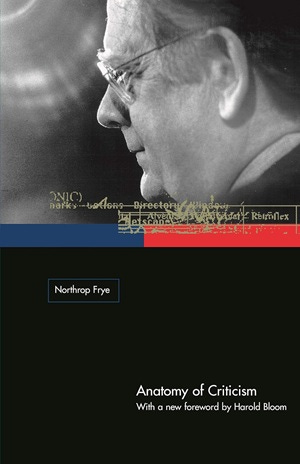
In discussing this point, Northrop Frye describes a continuum of realism and romance, with naturalism at one extreme and myth at the other.(2)
· Naturalism strives to represent the world as it is, with no artistic intervention or imaginative shaping at all.
· Myth, on the other hand, represents what can only be imagined—the limits of human desire and dread—and therefore relies completely on the imagination to create, to cast, and to pattern the experience.
Two theoretical points need to be developed here. The first has to do with the function of the work of art—representation vs. ornament. Just as a painting can be viewed as a 3-D picture of some thing or as a 2-D abstract design, so a narrative can be read (and written) with primary emphasis on the events it represents, or on the shaping and patterning of those events. This distinction is closely related to the dictum that literature’s purpose is double: “to instruct and delight.” Because instruction (or moral pleasure) depends on the verisimi1itude of what is portrayed, while delight (aesthetic pleasure) derives mainly from the portrayal’s artistic form.
In terms of function then, realistic fiction tends to be representational, while romance leans more toward ornament. Hence the importance in romance of plot, complication, and suspense, all of which are elements of design. These were primary considerations in the writing of Mooncrow.
The second theoretical point has to do with the fact that even the most ornamental art always in some sense represents something. An abstract expressionist painting, for instance, in which the emphasis is all on the surface pattern, nevertheless represents a particular process or mood within the artist. How much more this rule must be true of fiction, which, by its nature, involves events, situations, and forces which, at least to some degree, must be personified.
But what is represented by romance is not the external world. Rather it is the internal world—the psyche, or more specifically the unconscious, the world of dream, wish-fulfillment, and nightmare. The people in romance are not “characters” in the realistic sense of that term but, as Frye puts it, stylized figures. which expand into psychological archetypes. (3)
This concern with the unexamined and unacknowledged parts of the psyche may be one reason why romance is often considered inferior to realistic fiction. A more obvious, though perhaps related reason is that Western culture, at least since the Eighteenth Century, has insisted on realistic and moral content in fiction. The bourgeois reading public has always considered instruction the proper aim of literature, while scorning delight as frivolous at best and sinful at worst.
With the rise of realism, of the middle class, and of the novel in our modern sense, the tendency toward romance was driven underground. It reemerged quickly however in the form of the gothic novel.
Source: Amazon
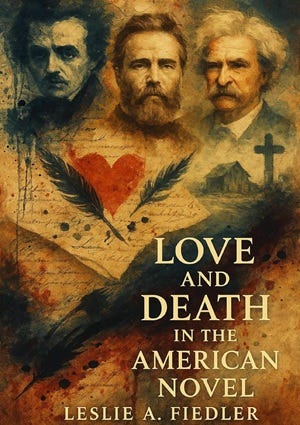
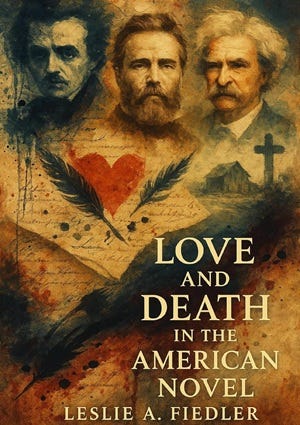
As described by Leslie Fiedler in Love and Death in the American Novel, the typical gothic involves the triad of hero, heroine, and villain (Jung’s libido, anima, and shadow) though often the hero and villain are combined, thus emphasizing further their psychological identity. The subject matter of the gothic is the fantastic and the marvelous; the prevailing mood is one of terror. The plot involves chase, captivity, and menaces, all taking place in a dreamlike landscape at the center of which is, very importantly, a haunted castle.
All of these elements are visible in Mooncrow. Of particular note is the fact that the castle of the Eighteenth-Century gothic—which symbolizes, according to Fiedler, the structures of authority and civilization—has grown into a citadel of appalling size and complexity.
Yet the hero triumphs. And to understand why, we must look beyond the typical gothic form.
Being the first breakthrough of the romance tendency into modern novels, the gothic can be viewed as the ancestor of the many romantic strains that have developed since.
The tale of terror, for instance, continues through Poe into the Twentieth Century to such writers as Lovecraft and Bloch.
The Brontes, on the other hand, helped fashion a specifically female form of gothic, which often has much of the terror removed and which flourishes today in “Romance” books and movies.
More important in the present discussion is a third, more masculine strain of romance that begins with Sir Walter Scott and James Fenimore Cooper, and which includes the more or less “realistic” adventure stories of writers like Jack London and Rudyard Kipling, as well as the outright fantasies of William Morris, Edgar Rice Burroughs, and J.R.R. Tolkien.
Fiedler terms writers of the last type “white romantics” and regards them with undisguised scorn. Calling them philistines and “merchant authors,” he accuses them of pandering to the mass audience’s taste for “vicarious tourism” (of time as well as place!) and for an artificial happy ending. His problem with the happy ending is that life is not so simple. Fiedler distains the romantic adventure tale because he cannot bring himself to approve a type of literature that is basically ornamental instead of representational. In his view, literature should primarily be a moral, not an aesthetic experience. Yet even Fiedler recognizes the mythic (psychological) validity of the white romance, and is eventually driven to admit that “The so-called literature of escape is always at its depth religious, a ritual statement of what its audience prays the world might be…” (5)
The reason, then, that the Mooncrow triumphs is that the story, while it contains the gothic theme (the body of the book taking place in PonnTherion) is, in the final analysis, a romantic adventure. Its unifying pattern is that of the universal hero-myth, which as joseph Campbell has shown (6), includes a separation from common experience, leading to an initiation into some sort of higher power, and finally a return that brings the boon of that power back to the hero’s society. In the present case, the separation takes place at the fall of Telyrra, after which the hero journeys to the source of higher power, which is in fact his original home. The initiation takes place in Chapter 4, and the main complications of the story have to do with the return stage: the hero’s struggle to bring his supernal power into manifestation in the human world.
When all the complications of plot have finally unwound and the hero has vanquished both the monster from within (the manhead, id) and the villain from without (Altazar, super-ego), a new society comes into being, symbolized by the marriage of hero and princess. The new order still contains technology, authority, and structure, but these have been brought down to human scale. Science (intellect) and magic (imagination) co-exist and complement each other. This is one writer’ s idealized vision of what the world might be.
But really, the conclusion of romance is not the most important thing. To the writer and reader of this sort of fiction what matters most is absorption, pure aesthetic pleasure, the story.
Notes
(1) Checking through an old notebook, I find the remark attributed to Scholes ancd Kellogg in The Nature of Narrative.
(2) Anatomy of Criticism, Princeton UniversityPress, 1957, p. 138.
(3) Frye, p. 103.
(4) Love and Death in the American Novel, New York, Stein and Day, 1960, Chapter 6.
(5) Fiedler, p. 202.
(6) The Hero with a Thousand Faces, Princeton University Press, 1949.
If you’ve read this far, I hope you enjoyed my little scholarly reminiscence. If you happen to be an author of genre fiction, I also hope it might have given you a better appreciation of the historical validity of your work.

Comments
Nothing yet. Say the first thing.
Sign in to join the conversation.