
For information about how to obtain $5 PDF copies of my books, see this link.
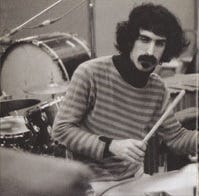
Folks, for this week, I am on vacation, but I hope that you do not mind if I share an excerpt from my forthcoming book, Hungry Freaks Daddy Re-imagined. In this excerpt, we look at the second day of sessions for the Freak Out! album as part of our 60th Anniversary celebration of that album. We will wrap this up next week. Please bear in mind that these excerpts are in rough form, and not necessarily how they will appear in the finished book. Happy July!March 9, 1966
TTG Studios, Los Angeles, CA
37 minutes, A
I’m Not Satisfied (2nd Vocal Overdub Master, Take 2 (Rough Mix)) (2:38)
I’m Not Satisfied (1966 Stereo Mix) (2:41)
I’m Not Satisfied (1966 Mono Mix) (2:43)
You Didn’t Try To Call Me (Basic Tracks) (3:00)
You Didn’t Try To Call Me (1966 Stereo Mix) (3:22)
You Didn’t Try To Call Me (1966 Mono Mix) (3:21)
I Ain’t Got No Heart (Basic Tracks) (2:36)
I Ain’t Got No Heart (Vocal Overdub Master Take) (2:37)
I Ain’t Got No Heart (1966 Stereo Mix) (2:34)
I Ain’t Got No Heart (1966 Mono Mix) (2:35)
How Could I Be Such A Fool (Basic Tracks) (2:24)
How Could I Be Such A Fool (1966 Stereo Mix) (2:16)
How Could I Be Such A Fool (1966 Mono Mix) (2:14)
The second day of sessions for Freak Out! was another session spent producing backing tracks, with Ray Collins taking the night off. The remaining Mothers, accompanied by an expanded group of studio musicians, including cellists Raymond Kelley, Paul Bergstrom, Emmet Sergeant, Joseph Saxon, Kurt Reher and Edwin Beach. Johnny Rotella, who would work with Frank on other studio projects, played three unspecified doubles, possibly including bass saxophone. Arthur Maeve and George Price played French horn, and the brass/wind section was rounded out with John Johnson on tuba, Virgil Evans on trumpet, David Wells on trombone and Plas Johnson on flute. Dividing the percussion duties were Gene Estes on tuned percussion, and Kenneth Watson on tympani. Eugene DiNovi returned from the previous session to take his place at the piano. Carol Kaye, one of the greatest session bass guitarists of all time, joined the ensemble playing acoustic 12-string guitar.
This ensemble tracked four songs, all of which would appear on the album. “I’m Not Satisfied” had been written the previous year, seemingly as a rather introspective look at Frank’s mindset in the wake of the Cucamonga bust. “You Didn’t Try To Call Me” was a recently written tune, and while it is tempting to speculate that it may be another song written about Frank’s divorce from Kay Sherman, this rather sincere song may be less personal than it seems (this is exactly the kind of lyric that Frank would step away from writing in the near future). “I Ain’t Got No Heart” had been demoed the previous fall and revealed the extent of Frank’s cynicism about matters of the heart, a cynicism that would stick with him for the remainder of his life. The final track to be recorded on this date was “How Could I Be Such A Fool”, a tearjerker ballad that was definitely written in the week of Frank’s divorce.
Unfortunately, the multitrack session tapes for this session appear to no longer exist. As a result, we do not know how many takes of each song were recorded, but we do know that all four were tracked and completed speedily within four hours, in a session that ran from 2 to 6 PM. Incidentally, the master tapes for this session were most likely missing at least since the 1980s, as Frank was forced to use the original mixes for the CD version of Freak Out!, treating them mainly with EQ to give them a more modern sonic sheen. It is worth mentioning that the CD version of “You Didn’t Try To Call Me” is inexplicably slightly shorter than the original, fading out where the original album versions have a complete ending. The basic tracks for “You Didn’t Try To Call Me”, “I Ain’t Got No Heart” and “How Could I Be Such A Fool” can be heard on the 4-CD MoFO. This set also includes the raw overdub master takes of “I’m Not Satisfied” and “I Ain’t Got No Heart”.
March 10, 1966 was the third day of sessions for the album. This was what was known as a “sweetening session”, or a session of overdubs. Judging by the list of musicians submitted to the Musicians’ Union, this was a session of instrumental overdubs onto the existing backing tracks recorded in the previous two days (for that reason, there is no separate entry for this session in this book). Joining the four instrument-playing Mothers on this afternoon (which incidentally ran from 2 to 5 PM) was percussionist Gene Estes and Benjamin Barrett, who appears to have worked primarily as a contractor for these sessions although he is reported to have possibly contributed violin or cello parts. According to Musicians Union records, the tracks subject to ‘sweetening” at this session were “Any Way The Wind Blows”, “I’m Not Satisfied”, “I Ain’t Got No Heart” and “How Could I Be Such A Fool”.
It is worth mentioning at this point that there is a mystery involving these sessions that may never be solved. Essentially, there is a discrepancy between what has been long thought of as the standard dates of the sessions for this album, and the dates that are given on the multitrack tape boxes. The date filed for the first session with the Musicians’ Union is March 9th, 1966, but the actual tape box lists the date as the 8th. This odd discrepancy continues through the remainder of the sessions. Complicating things somewhat is the fact that a fair amount of material recorded during these sessions was actually discarded after edits were made by Frank and Tom Wilson. So it’s probable that we will never know what the actual date of the first session was.
In order to make this post worth your time, here are a couple more excerpts from the book, detailing the earliest known recordings of the Mothers Of Invention:May 1965 (exact date unknown)
The Broadside, Pomona, CA
10 minutes, A
Louisiana Blues (a.k.a Original Mothers At The Broadside) (1:17)
My Babe (3:47)
Wedding Dress Song/Handsome Cabin Boy (1:02)
Hitch Hike (2:54)
Following Frank’s humiliating bust in Cucamonga, he might have been forgiven for thinking that he was now out of options, and that his future looked bleak. For the first time in his life, he was truly adrift, with no clear plan for the future. Enter his old buddy Ray Collins, who offered Frank a gig playing guitar with a local R&B group, The Soul Giants, with whom Ray was the lead vocalist. Knowledgeable Zappa fans will be quite well familiar with this story; Frank came in to replace the Soul Giants’ guitarist, Ray Hunt, who was ousted from the group after coming out on the less fortunate end of a fist fight with Ray.
By the standards of local R&B, bands, the Soul Giants had their act together pretty well. The rhythm section tag team of bassist Roy Estrada and drummer Jimmy Carl Black had a nicely pulsating groove to it, and the group boasted the melted butter vocal stylings of Ray Collins. When Frank joined, a sax player named Dave Coronado was also with the group. But Frank being Frank, it did not take long for him to start cajoling the band into allowing him to make the group a vehicle for his own musical ambitions, insisting that if the group were to play his music, he would bring them fame and fortune, taking what he knew would be a unique sound out to Los Angeles, one of the biggest entertainment markets in the country. To make it easier for the group, Frank rehearsed the band at Studio Z, the last musical work that would be done at the studio before it finally folded.
The band decided to throw their lot in behind Frank, with the exception of Dave Coronado, who stuck to his assertion that a bar band playing original music would not be able to get a gig. Coronado left the group, and as Frank subsequently pointed out, his assertion was correct, at least in the short term. Recognizing that the Soul Giants might be seen as a bit passé in terms of a name for a rock ‘n’ roll combo in 1965, Frank experimented with different names for the group, which briefly played shows under the names The Blackouts (the name stolen from Frank’s early R&B combo), The Batmen and Captain Glasspack and His Magic Mufflers. Finally, on May 9th, 1965 - Mother’s Day in the United States - the group was officially renamed The Mothers.
Strangely enough, as far as is known, Frank did not run tape on the early Mothers rehearsals at Studio Z. The earliest known recording of the Mothers appears to be a tape made sometime in May at the Broadside, a popular bar in Pomona. In charge of running the tape was the ever-faithful Motorhead Sherwood. Apparently at least one full set was recorded; bits and pieces of this have appeared on official releases and more exists in the Zappa Vault. The earliest excerpt from this tape is a version of Muddy Waters’ classic “Louisiana Blues”, which Frank issued on the 1985 album Mystery Disc under the title “Original Mothers At The Broadside”. It’s obviously just an excerpt, but it gives you an idea of the kind of danceable groove that the original band had, which certainly would have at least attracted some attention from the music lovers in the area. A slightly longer version of this was played by Frank in the 1975 radio show on KWST-FM, over which Frank and his buddy Captain Beefheart sing a verse over the tape (it is very difficult to hear whether there is a Frank and/or Ray Collins vocal on the original).
More excerpts were released on the 2004 album Joe’s Corsage, plucked from the original tape by Zappa Vaultmeister Joe Travers. These excerpts kick off with a performance of the recent Righteous Brothers hit “My Babe”, giving the hard-core Zappa historian one of the very few glimpses of the nascent Mothers as a top 40 cover band. Another example of this can also be heard on the album, this being an excellent cover of Marvin Gaye’s “Hitch Hike”. Frank and Ray share most of the lead vocals, a practice that would continue into their first couple of studio albums. As an intro to “Hitch Hike”, we are also treated to the first recorded performance of a medley that the band would continue to perform for the next few years, consisting of two traditional pieces, “The Wedding Dress Song” and “The Handsome Cabin Boy”, the latter of which was first head by Frank on an album by legendary folk artists Ewan MacColl and A.J. Lloyd, Blow Boys Blow. The arrangement of this is embryonic, but enough can be heard in it to know that this was a very different band than pretty much anybody else on the scene at that time. There would definitely be challenging times ahead, but The Mothers were a band that was destined to draw attention.
Summer 1965 (approximate date)
Location unknown, Franklin Street, Hollywood, CA
2 minutes, B+
Party Scene From Mondo Hollywood (1:54)
When Frank Zappa assumed stewardship of The Soul Giants, he promised the other members of the band that if they were to play his music, he would lead them to fame and fortune. For an ambitious bar band from the greater Pomona area, the obvious place to go was a half hour west by car to Los Angeles, and specifically to Hollywood. Prior to 1965, the “rock scene” in Hollywood consisted mostly of surf bands, who were following the lead of local-boys-who-made-good The Beach Boys. But by the summer of 1965, several new Los Angeles area bands were making noise nationally. Most notable among these would be The Byrds, who catapulted folk rock into the mainstream. The music scene in Los Angeles in the summer of 1965 was awash in this sound, the result of The Byrds taking their cover of Bob Dylan’s “Mr. Tambourine Man” to the top of the charts in America and the UK. Suddenly, Los Angeles was the place to be, as new bands sprung up virtually overnight all over town.
Into this fray came The Mothers. The band’s sound was bluesier than the currently in vogue folky jangle of The Byrds, as the band was still making the transition from its early bar band repertoire to a more original approach. One thing that the Mothers specialized in was long improvisational jams with a throbbing teenage rhythm and lengthy guitar solos, and as it turned out, this was something that was unique enough to capture the attention of some very hip people in Los Angeles. Sometime in the summer or perhaps early fall of 1965, the Mothers somehow got a most interesting gig, playing music for a crowd of hipster L.A. revelers which was being filmed for a movie about the Los Angeles underground scene called Mondo Hollywood.
This film, directed by Robert Carl Cohen, was intended to showcase the outré side of the Los Angeles hip scene, as it was moving away from the clean-cut surf image into something significantly weirder. Whether Cohen knew it or not, The Mothers were the perfect band to play for this group of what would soon become known as the Freaks, even though the band themselves were in no way shape or form particularly freaky themselves at this time. Drummer Jimmy Carl Black would later remember that the band was still wearing uniforms at this point, complete with homburg hats. Even in their relative straightness, they must have looked incredibly bizarre to the Freak contingent, who included the middle-aged former beatnik who would become the center of the Freak scene Vito Paulekas, and his second in command Carl Franzoni, who danced like a madman and boasted the longest tongue in town. Their following consisted mostly of disaffected kids who otherwise would have been on the streets, and although they were still relatively small in number, the Freaks would become incredibly influential in town.
Jimmy Carl Black remembered the party is having taken place on Franklin Street in North Hollywood, though the owner of the house and his connection to film director Cohen remains lost in the mists of time. In any event, about an hour of Mothers music was recorded on audiotape that day. This tape was from an offline source, recorded with what was probably a single microphone in the room. Frank would pluck out a two-minute excerpt from this tape and release it on the 1985 album Mystery Disc. Although the finer details in the playing are difficult to hear with all the crowd reverie going on, this is obviously an excerpt from a longer jam, with that lewd, pulsating teen rhythm that was guaranteed to get the Freaks all hot and bothered. It was easy to see why they would latch onto the band, which opened some very notable doors for the Mothers, who were instantly accepted into the hip Hollywood underground scene. The remaining audio material recorded for the film still exists in the Zappa Vault, though much of it is somewhat marred by the sound of people, either drunk or stoned or both, screaming into the recorder’s microphone.
As great as this opportunity was, the film itself only features a few seconds of precious Mothers footage, in which extremely brief glimpses of Jimmy Carl Black, Ray Collins and Frank Zappa can be seen. The movie was released in 1967 but didn’t have the opportunity to make much noise before it found itself banned as a supposed pornographic film (which it is absolutely not). It would take decades for the film to reach a larger audience. It remains an obscure but interesting little time capsule. Interestingly, a young woman can be seen in the background of a sequence featuring a performance by her boyfriend Bobby Goldsboro. This woman was Gail Sloatman, later known to the world as Gail Zappa.
No posts
Comments
Nothing yet. Say the first thing.
Sign in to join the conversation.