
Good news, everyone!

Our event at NYTechweek was a resounding success. We gave ourselves precisely enough time to prepare for the debut of the Spartacus.app MVP, and the reception was overwhelmingly positive.
Between our last update and 6/4, the date of the event, here’s what we accomplished:
Finished UX/UI and QA testing of:
Create Campaign
Join Campaign
Edit/Update Campaign
User settings
Notifications and Messagess
New Login / Sign-up flow
Website refresh:
How it Works
Use Cases
About
Blog
Contact
Donate
Most importantly, Spartacus.app is fully functional and available for public use!
We humbly ask that you communicate your feedback with us (HERE) or at Jordan @ Spartacus dot app, and if you have specific use cases, let me know so we can collaborate and learn.
If usage increases significantly, we may switch to closed beta to track relevant data points better.
We hosted a presentation and live demo in Midtown Manhattan entitled Tech-Enabled Activism: Solving Collective Action Problems.
Here’s a copy of the slides which served as a basis for the presentation, and some images:
View Spartacus MVP Preso 6/1/24 on Beautiful.ai
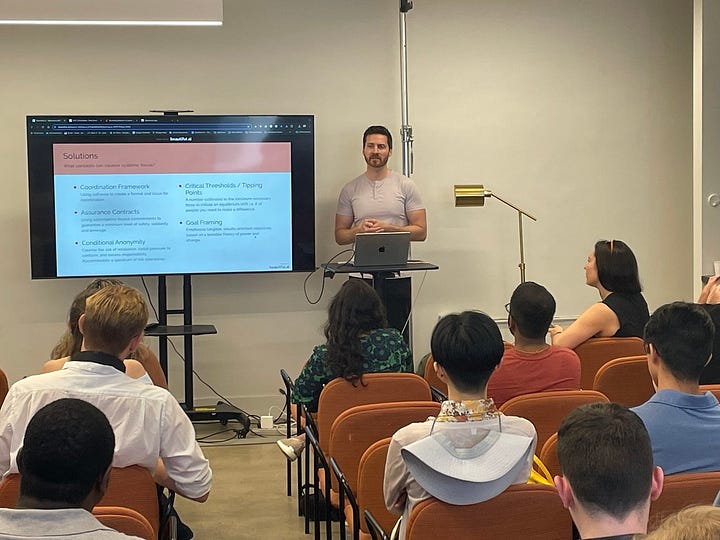
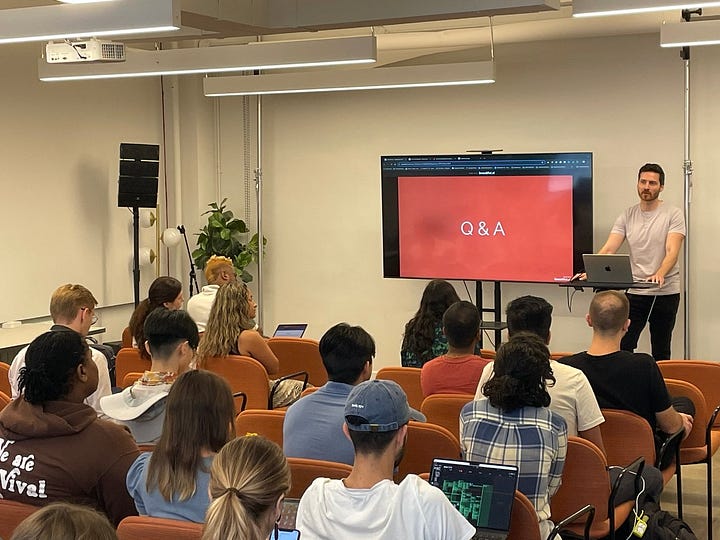
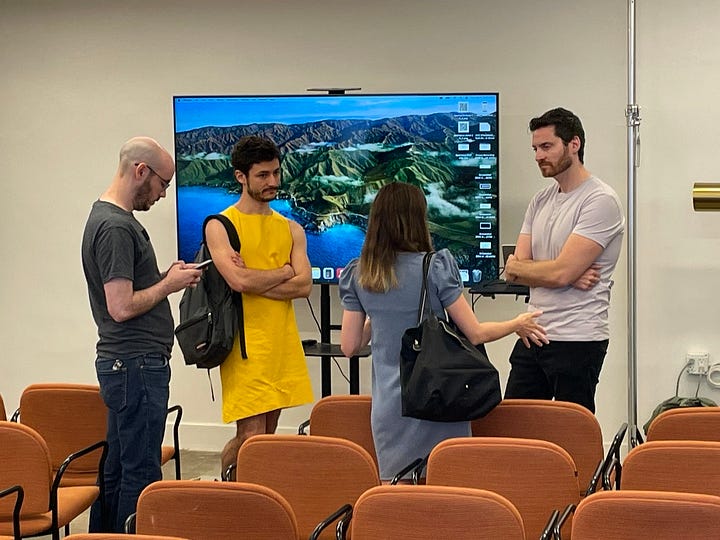
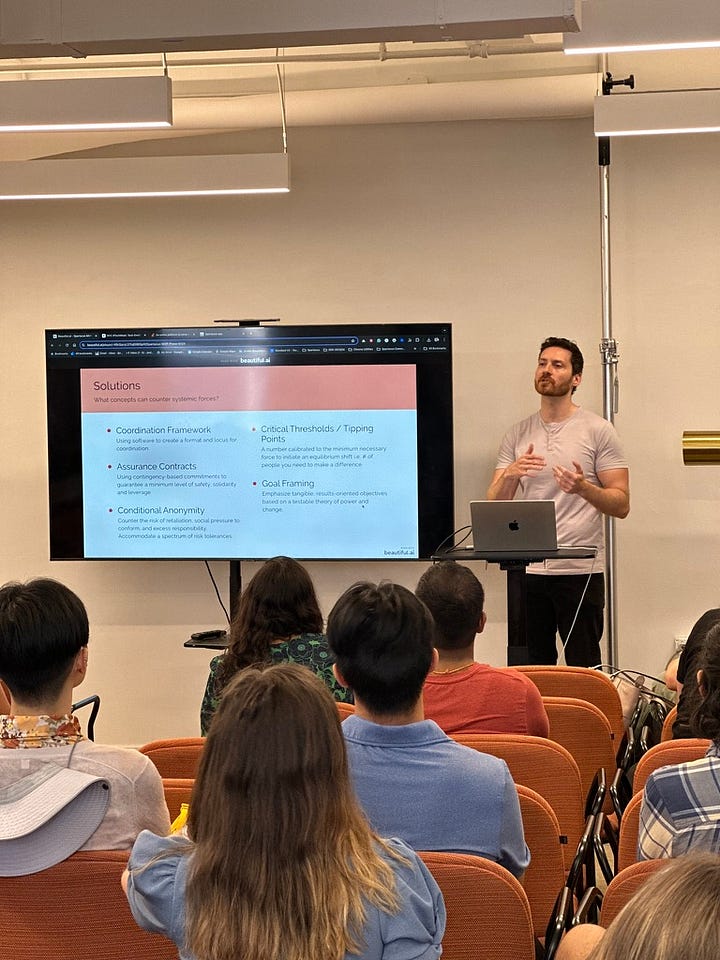
We also recorded a video of the full talk. It requires some editing and cleanup but will be posted shortly.
Outcomes:
185 total RSVPs
40-50 Attendees
2 summer intern prospects
3 VC/funding prospects
5-6 pilot user prospects
I'm still buzzing from the engagement and positive feedback we received from the audience. During the Q&A section, in particular, there was a robust exchange and discussion of high-level ideas concerning the mechanisms of social change and the power of incentives.
Granted, everyone was inclined to be friendly and supportive of the mission, but there was less skepticism of the dangers or feasibility of Spartacus itself, probably because I preemptively addressed certain FAQs during the presentation. I’ve heard the same objections and concerns often enough that it makes sense to tackle them up-front.
The most powerful moment was undoubtedly the live demo, the first time we’ve attempted a real-time demonstration from beginning to end for more than 3 people. I had prepared a campaign QR code in advance with a goal of 20 participants and asked everyone to scan it at the end of the presentation.
With minimal further instruction, everyone did so and proceeded to join the campaign. In relative silence, the proper sequences were triggered, and the participants received their call to action prompt via text message:
Stand up from your chair:
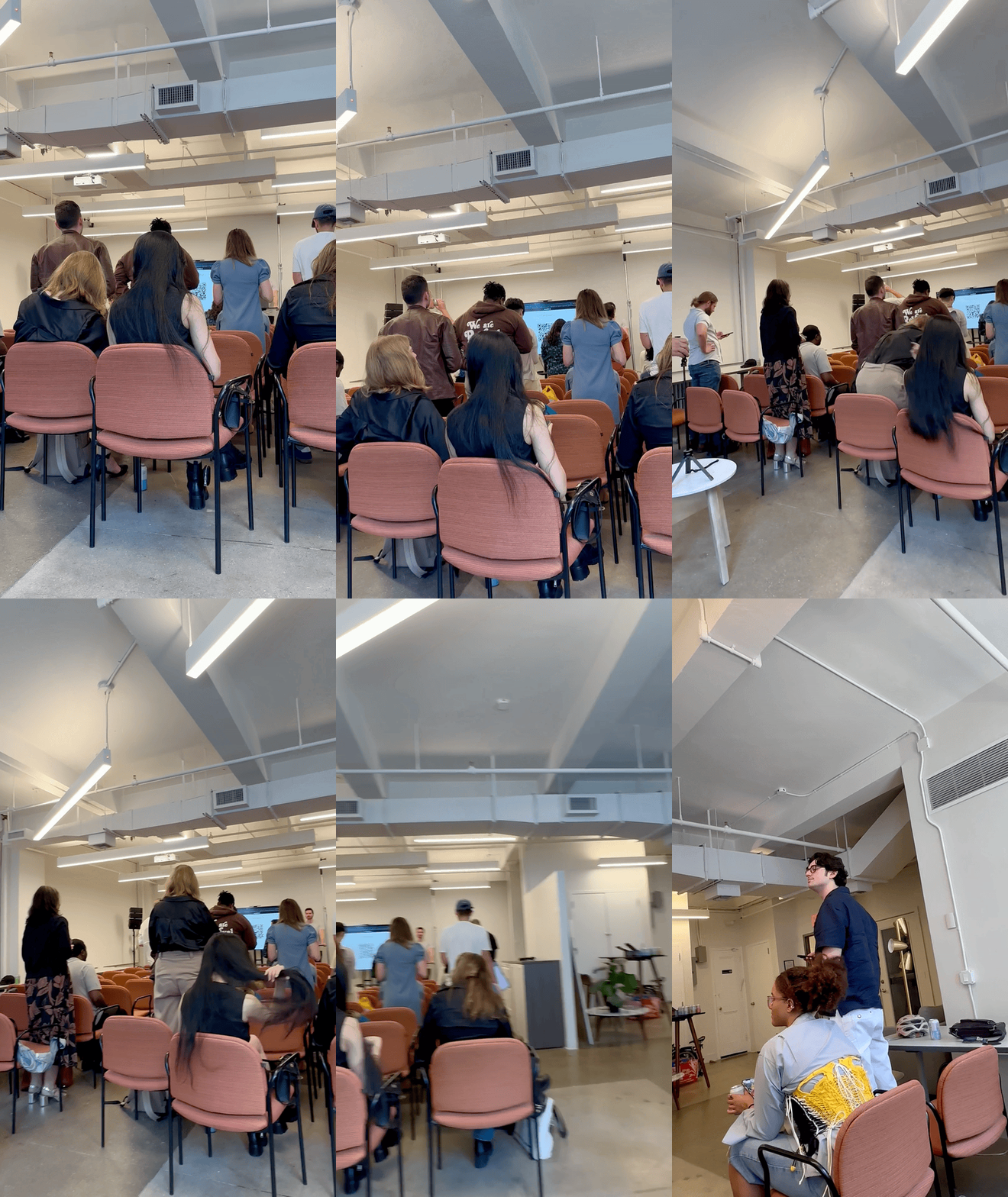
As they say, show, don’t tell. The visceral impact of Spartacus delivering a coordinated collective action from a group of strangers in about 30 seconds, despite its simplicity, created a powerful effect. We’ll utilize this technique more often and creatively in the future.
Thank you to everyone who attended. The insightful questions and comments made for a great discussion. I was especially thankful for the feedback, which is already helping refine and improve future presentations and demos.
Reflecting on Tuesday’s experience, I’m more excited than ever about what we can achieve next. Presenting in a large group format is exactly appropriate for us, and having a dialogue with an engaged audience was immensely rewarding.
Thanks, Tetra, for all your help
Thanks, Matt, for your help with testing and feedback.
The MVP is fully functional for demos and an array of in-person, small-group use cases. However, we still need to incorporate some additional security and privacy elements to meet the requirements of institutional users. We’ll also assess the roadmap from a high level and adjust our prioritization matrix accordingly.
Going forward, I’ll allocate a much larger portion of my time to outreach, interviews, marketing, demos, fundraising, and applications to accelerators. Improvements to the MVP will be more gradual and iterative over the next few weeks.
Stay Tuned!
Comments
Nothing yet. Say the first thing.
Sign in to join the conversation.