
June is here, and so is the (men’s) FIFA World Cup and summer. We both come from countries (Brazil and Spain) where football not only runs deep, but feels pretty much like a religion. Now we’re in Germany, where the sport is no different.
When the Wall went up and Berlin was divided, so were the city’s teams. BFC Dynamo was the GDR’s club, closely tied to the Stasi, dominating the fields in East Berlin. Hertha played for the West. And out of a working-class neighborhood in the East, another team was quietly taking shape: FC Union.
Founded in 1966, with roots tracing back to 1906, Union Berlin was born in Köpenick - working-class corner in the southeast of the city - and has never really left that identity behind, even when it historically joined the Bundesliga in 2019.
What kept Union alive through the lean years was its fans. When the stadium needed rebuilding in 2009 and the club couldn’t afford it, 2,500 fans donated 140,000 hours of labor to get it done. Others gave blood (literally) through a campaign where the financial incentives for blood donation in Germany were redirected to the club.
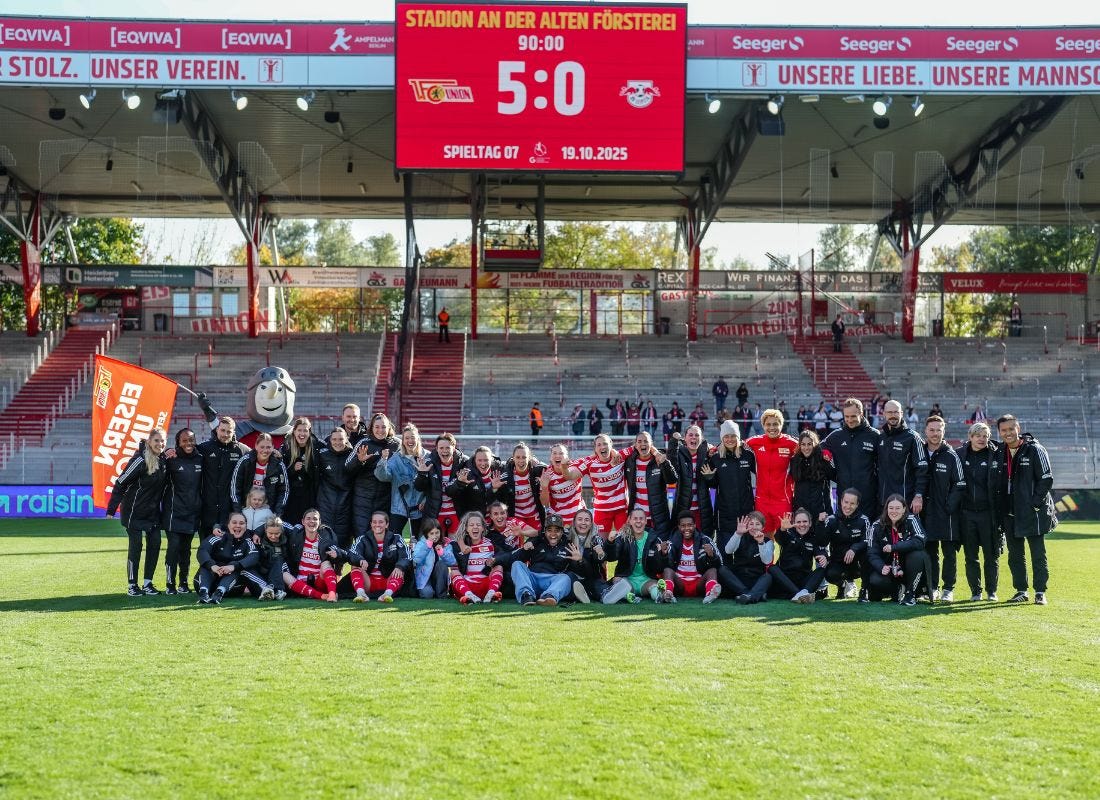
The women’s team, founded in 1969 and among the first in East Germany, turned professional in 2023 and joined the Frauen-Bundesliga in 2025, right when our guest for today’s episode stepped in to join the squad. Grab your coffee or a draft beer, and meet Ida Heikkinen, playing defense for FC Union Frauen in Berlin.
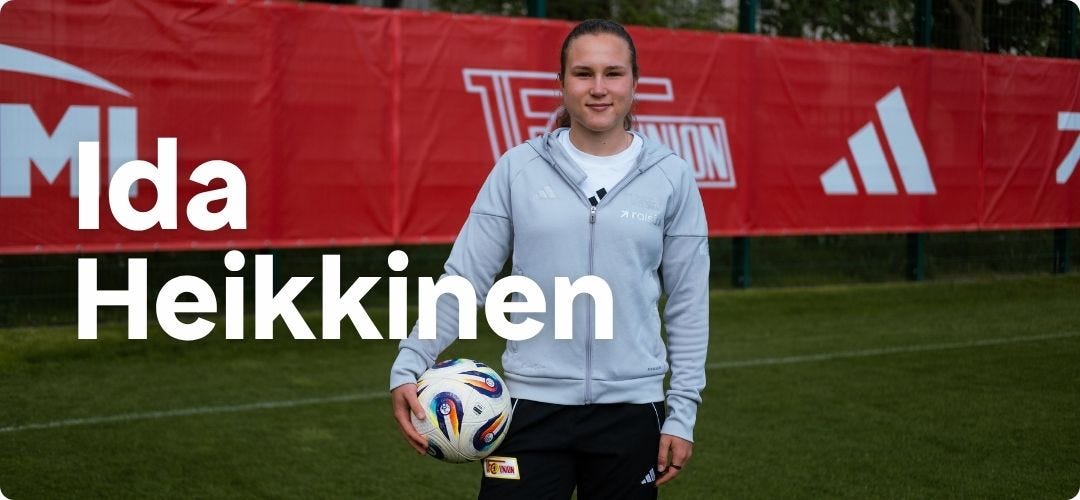
Ida Heikkinen is Finnish and a professional footballer for FC Union Frauen. Growing up, she moved between alpine skiing, the pitch, and climbing until she committed fully to the sport, eventually becoming captain of FC Honka in Finland before making the move to Berlin.
Ever since we learned that Union fans literally donated blood to help finance the team’s stadium, we couldn’t get the club out of our heads. Sports, whether you practice or just cheer from the stands, should bring people together. So we were over the moon to interview a player from this team.
We met Ida at Union’s women’s training center in Oberspree, Köpenick. We were warmly greeted by Leonie, Communications Manager at the club, who led us to Ida, already waiting in a sports casual outfit, her daily uniform. We sat down in the living room, coffees in hand, in bright red FC Union mugs kindly brought to us by Leonie, and settled in. Ida had about 40 minutes before she had to be back on the pitch.
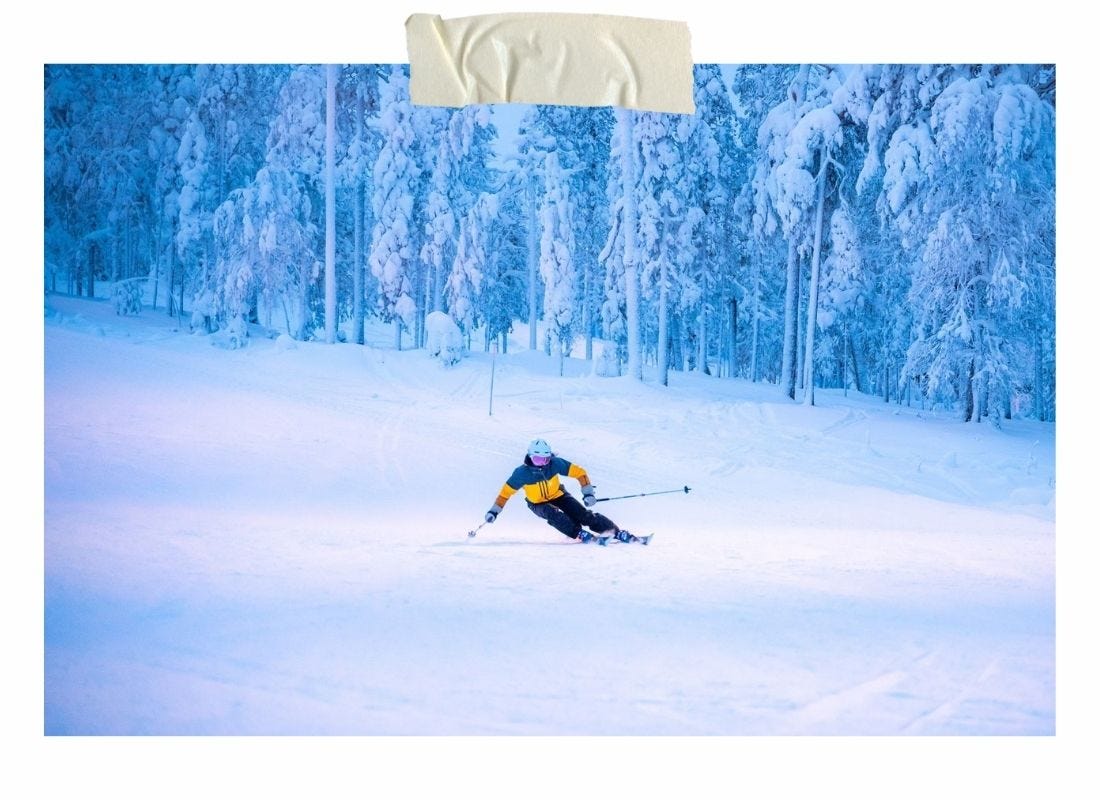
She’s young, but already a professional in a high-performing team. How does one become an elite athlete, anyway? “My family is very athletic. My mom did professional alpine skiing, and my dad never played professionally, but he does climbing and he used to play football. I grew up surrounded by skiing, climbing, tennis, football, gymnastics, everything. It was just very natural to me.”
She almost became an alpine skier, but fell into football almost by accident.
“I don’t really know why I chose football. I just remember one day being like, I just want to try it out again. And then I realized I’m pretty good at it. With skiing, it’s a winter sport, really expensive, not easy to get into. My grandma was really sad that I didn’t continue. But football was just more accessible. And I had a bit more passion for it, I guess.” Her contract doesn’t allow skiing now due to injury risk, but she hopes to come back to it once her career is done.
Back in Finland, Ida was captain at FC Honka before the offer to come to Germany came through. “I always wanted to play in Germany. That was a long goal for me. After that season in Honka, I knew I wanted to go abroad. I looked into Germany, my agent told me about this possibility, and I think it was the right choice. We played second Bundesliga last year and then got promoted. It was the perfect continuum.”
When we asked why Germany specifically, she smiled: “In Finland, we have this view of Germany as a very efficient country. And the football is very different from the Finnish style, or the Spanish style. There’s always a structure. It’s very physical and tactical.” All of us in the room exchanged knowing looks at “very efficient” — it doesn’t quite feel that way these days, but we understood what she meant. German football, unlike the more artistic, free-flowing game you find in Brazil or Spain, is built on discipline and structure. And that, for Ida, was exactly the point.
But it wasn’t just Germany that drew her. It was Union specifically. “I think the history of the club definitely affected the decision. It’s not something that’s common in football. Even though football fans are known to be a bit fanatical, here it’s on a different level. You can really feel it during home games. The fans are there, really supporting you. It’s like having a 12th player on the team.”
Union Berlin’s stadium, the Stadion An der Alten Försterei, is famous for how close the stands sit to the pitch — no running track, a traditional English-style design, with supporters just meters from the field. “Even the physical distance between us and the fans is so much closer than at other clubs. It helps us feel like a real community with them.” Union Berlin is about people, community, and quite literally, union.
Ida plays defense, and says it reflects who she is right now.
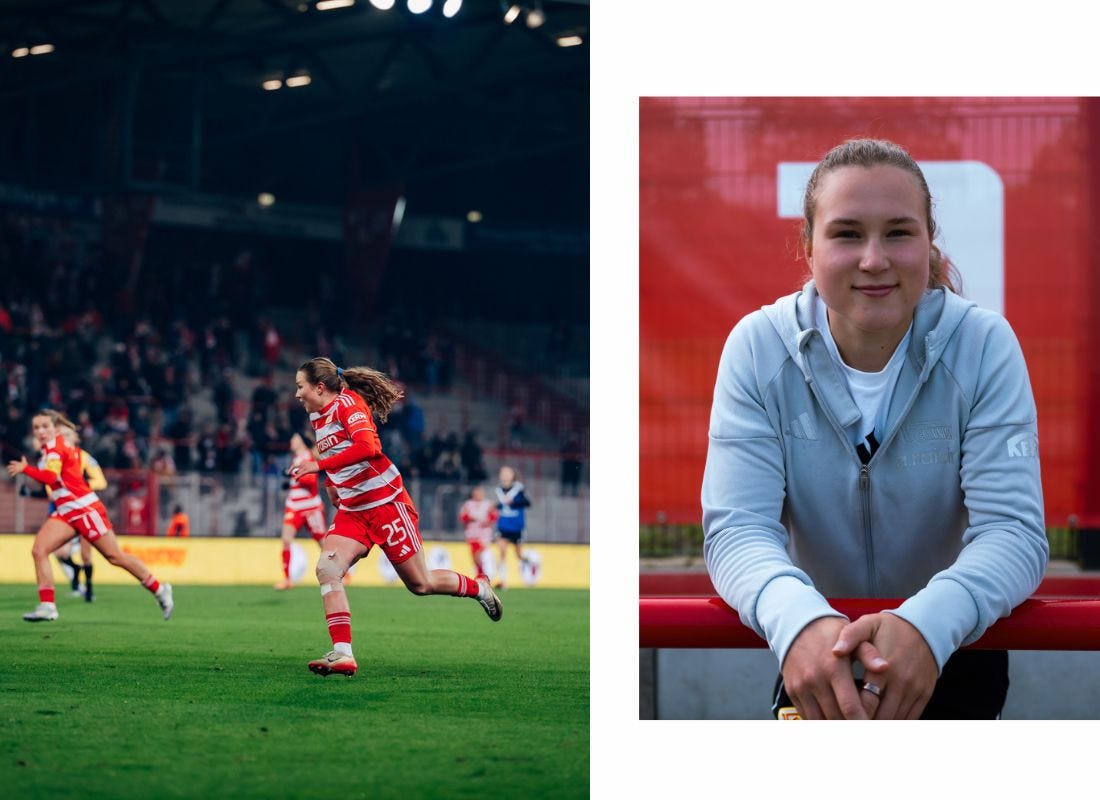
If you’re curious what the life of a professional footballer actually looks like day to day, it’s less glamorous than you’d think. “We meet in the morning, have a team meeting, gym, training, maybe gym again, then food, another meeting, and home. I joked with my friends back home that it’s basically a 9-to-5. It just happens to involve playing football.” And when it gets hard? “We’ve done this since we were six years old. The load has gotten bigger, but it’s still the thing we love. We chose this ourselves. That pushes you through.”
On women’s football, Ida has one clear thing she’d want people to understand: stop comparing it to the men’s game.
No drama, no big reveal. Just something they deal with, practically and openly.
A lot of people move to Berlin for the parties, the culture, the art scene. Ida came for football. She can’t really enjoy the long city nights, but she loves exploring during the day. “Our favorite spot is really touristy, but — Hackescher Markt. A small authentic restaurant, not a chain. Then grab something and sit by the river, sun shining, other people around. Go to the movies — the theaters here are really cool. Then dinner somewhere with a rooftop. And home early to sleep.”
Asked to describe Berlin in one word, she doesn’t hesitate, and says it as she has thought about it many times before: “Diverse.”
On January 27, 1990, just 79 days after the Wall fell, Hertha played Union for the first time, a friendly at the Olympiastadion. There was no hatred, no violence. Instead, fans paid their entrance fees in different currencies and sang songs of a reunified city.
We hope the spirit of Ida and FC Union puts you in the right mood for the World Cup: a time to cheer, unite, and appreciate the sport together. And maybe it made you curious to catch a game in the city yourself.Cheers from Berlin,
Isabelle and Lua
Want Berlin to feel like home? Join the Inner Circle.*
Making real friends in Berlin is hard — especially as an international. You meet people, put in the effort, and somehow the relationships still fade.
Inner Circle is a curated community for expats in their 20s to 40s looking for deeper, lasting connections. You’re placed in a hand-selected group of 8 people who meet regularly, plus access to spontaneous hangouts and community events.
The next cohort launches end of June. 3 spots left.
→ [Apply now and make new friends]
*Sponsored.
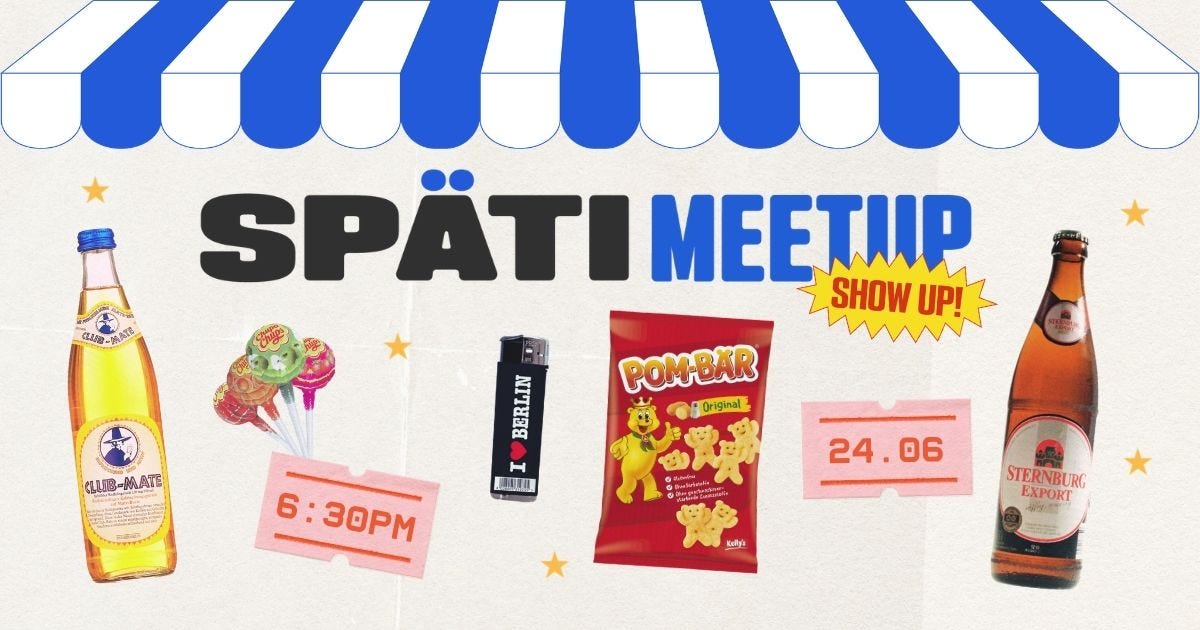
Späti Meet-up #4 — our first of 2026
June 24 | KiezKiosk Spätkauf, Akazienstraße 18, Schöneberg
No agenda, no dress code - just good people and a great Späti. Come say hi.
→ [RSVP on Luma]
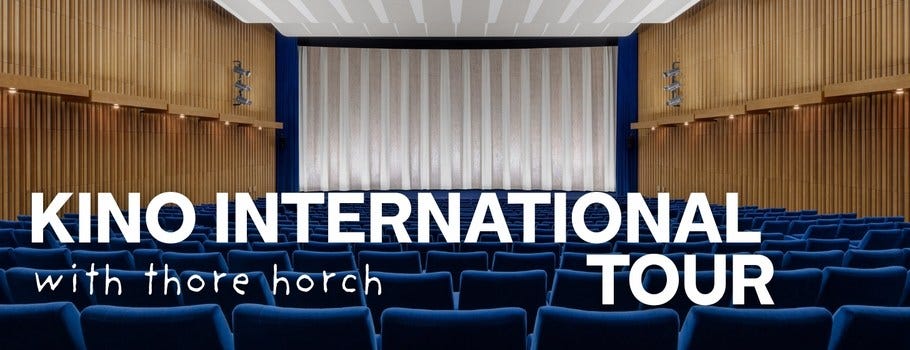
An Afternoon at Kino International with Thore
June 27 | Kino International, Karl-Marx-Allee | Free, limited tickets
Thore, manager of the iconic Kino International and our guest in episode 12, is opening the cinema’s doors early, just for our community. An exclusive tour of the building, its history, and its place in Berlin’s cultural life. Free to attend, and if you want to stay for a film after, there’s a special discount for Späti Stories readers.
→ [RSVP on Luma]
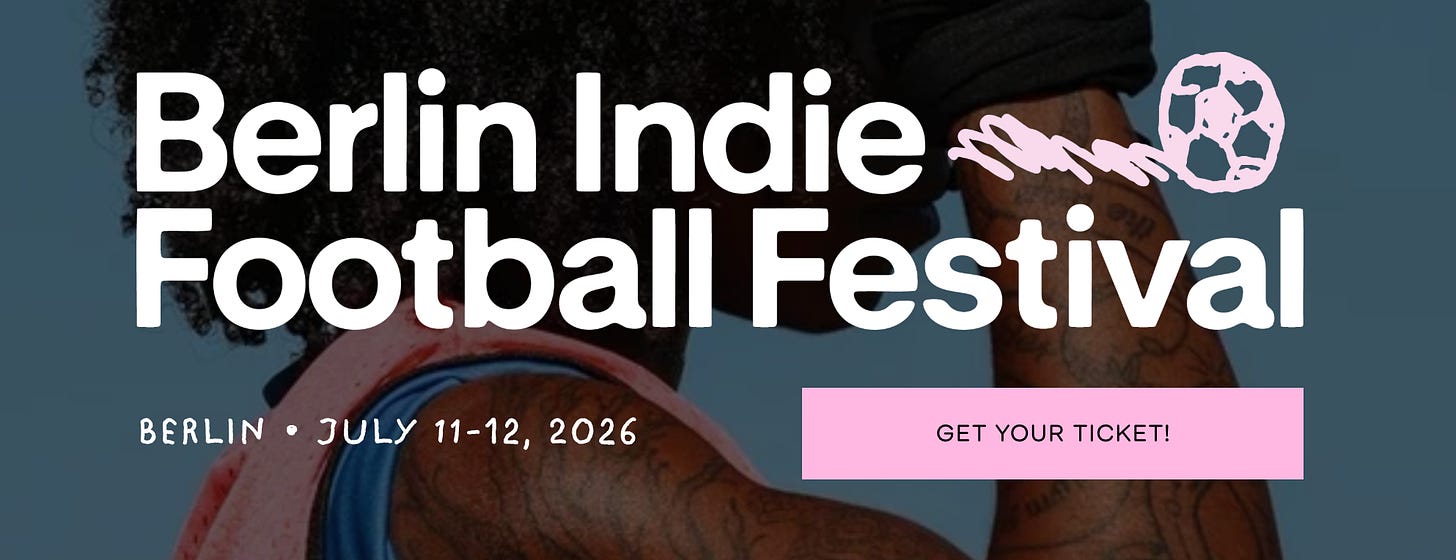
Berlin Indie Football Festival 2026
July 11–12 | Berlin
Founded by Andrew Weber, also the founder of SFC Unicorns Friedrichshain, the Berlin Indie Football Festival is two days of DIY football culture with zero corporate bullshit. 20+ speakers, workshops, and an expo of design, photography, and art. On day two, a mixed-gender Indie World Cup in full carnival atmosphere — teams are mixed between speakers and attendees, so you might just find yourself on the pitch with your indie football heroes.
→ [Get tickets]
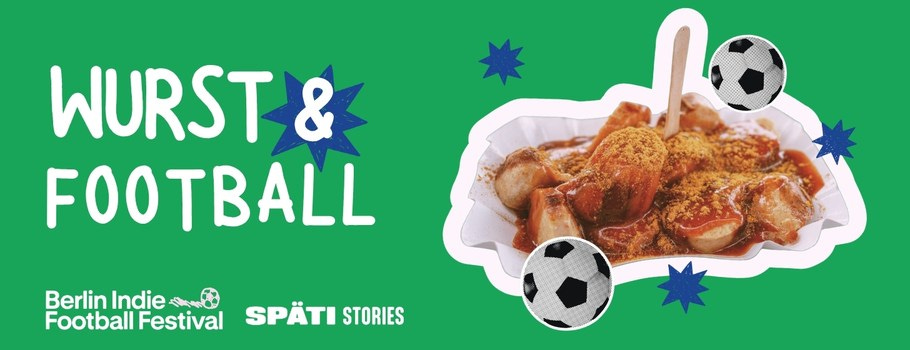
Wurst and Football — Späti Stories x Indie Football
July 15 | Curry 66, Friedrichshain
We’re partnering with the Indie Football community for an evening at Curry 66, Benny’s Currywurst shop in Friedrichshain — football talk, wurst, and World Cup energy.
→ [RSVP on Luma]
All our events and partner recommendations live in one place. Follow our Luma calendar and never miss one.
Comments
Nothing yet. Say the first thing.
Sign in to join the conversation.