
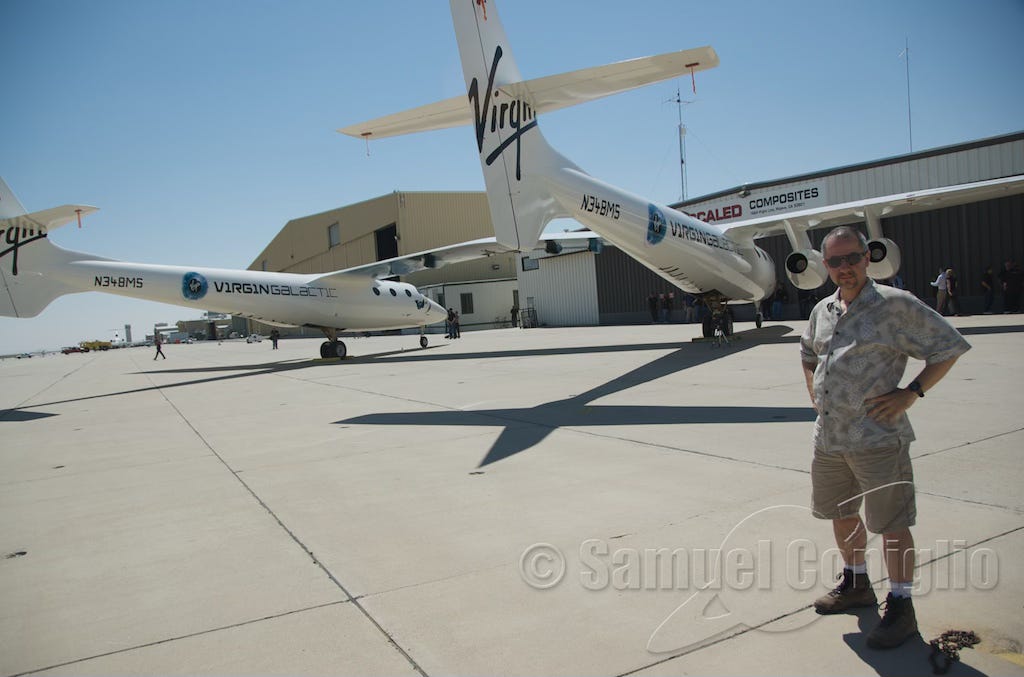
Starting a Space business is quite a bit more complicated than any other type of business venture. When you’re looking for investment in a software company, it is a relative piece of cake. Investors like known quantities. They would rather invest in a “sure thing,” because they know they will get some kind of return on investment within a five year timeframe.
But for space related businesses, it is different. In my previous post about infrastructure, I explained the catch:22 situation where more people cannot live off-world if there is no pre-existing infrastructure to support them. So you’re starting off with an expensive business proposition. On top of that, there are psychological and political barriers. The biggest one is perception. For decades, investors and the general public believed that only NASA had the qualifications to build space rockets. NASA believed it as well, and several of their actions blocked future growth.

There was a brief moment in the 1990’s, where even NASA considered the idea of low cost rocket projects, outside of the inner circle of Boeing, McDonnell Douglas, Lockheed Martin, Northrup Grumman, Rocketdyne, and Rockwell. This was due to both NASA’s declining budget and to NASA administrator Dan Golden's mantra of promoting “faster, better, cheaper” projects.
So during the 1990s, a number of Space rocket startup companies came out of the woodwork. None of them had enough money to keep their programs going, except for one. Beal Aerospace, founded in 1997 by billionaire banker and math genius Andrew Beal, aimed to develop cost-effective orbital launch vehicles, notably the BA-2 rocket powered by hydrogen peroxide and kerosene. The company achieved a significant milestone on March 4, 2000, by successfully testing the BA-810 Stage 2 engine, the largest liquid-fueled rocket engine since NASA's Apollo program. What was cool about the rocket was that it used hydrogen peroxide as an oxidizer. This eliminated the need for cryogenic cooling. One less thing to worry about in storing fuel.
And then, they stopped. Beal Aerospace ceased operations on October 23, 2000, only a few months after their successful test firing. Why? Beal’s worst fear was having to compete with government subsidized launcher programs “No one can compete with an endeavor subsidized by the U.S. government,” he said. Mr. Beal cited the challenges of competing with NASA's subsidized Space Launch Initiative, which allocated substantial funding to government-backed launch systems, thereby undermining private sector efforts.
So they just wrapped it up and called it a day. The only legacy left behind is that the McGregor, Texas (near Waco) rocket testing facility was sold to SPACEX in 2002.
There are many space startups today that would not have existed if it wasn’t for the efforts of certain Space activists such as former NASA Deputy Director Lori Garver, who struggled to educate the entrenched bureaucracy that we need to allow fresh blood into the industry. Also the Space Frontier Foundation fought for legislative change to allow rocket companies do certain fundamentals, such as landing a rocket back on the ground. I am not joking. Look up the Commercial Space Launch Amendments Act of 2004. The passage of this bill was spurred on by the flights of Burt Rutan’s SpaceShip One for the Ansari XPRIZE competition, which took place in June, September, and October 2004. Mojave Airport needed to get a special waiver from the FAA. I was at the airport when we heard the announcement on the control tower radio: “We are now conducting spaceport operations!” The crowd cheered! What an amazing moment for us space peeps!
Many people cheer the “recent” emergence of the billionaire space companies, such as Blue Origin, Space X, and Virgin Galactic. What they don't realize is these companies spent about 20 years in development before they became operational. I don't know of any venture capitalist that has the patience to invest in such a long-term project.
As one space activist friend (who shall remain anonymous) told me recently: “The fundamental issue behind this (the barriers to space businesses) is that the VAST majority of Federal workers have absolutely no idea how the commercial sector works. I mean zero, zilch, nada. The higher up you go the more likely it is that the person has climbed their way up in public service. Then they interface with political appointees who may, or may not, know how the commercial sector works.”
I then asked him about the current situation in 2025, where Elon Musk and his Department of Government Efficiency (DOGE) has been depopulating government agencies, including NASA. “Even with 50% of the workforce being depleted, you still have to deal with the contractors. You also have no changes to ITAR or EAR regulations,” I countered.
My friend responded: “The general consensus across NASA leadership is that NASA should have done a 33% to 50% RIF several years ago. Remember, Congress gives money to NASA CENTERS so that center will employ people in specific districts regardless of whether they do work or not.”
As I picked up my jaw from the ground, I realized the hard truth. The barrier to expansion of the human race into the high frontier of space, may well be…NASA itself.
So far, I have two events lined up:
April 4th: Chabot Space & Science Center First Friday Event: “Art and Science” Theme. Presentation + book signing. Time: 6:00pm-10:00pm, I will be speaking at 7pm.
April 12th: Moffett Field Historical Society Museum has a monthly speaker series. I will be speaking from 1pm-2pm. This museum is located INSIDE Moffett Field/NASA Ames! It is right next to historic Hangar One!
If you have any suggestions where I should do presentations and/or sell my book, please send me a line at contact@retro-futurist.com.
This is a popular science book about the challenges of living in space and using them as design constraints for better off-world living.

ISBN & PRICE
Paperback: 979-8-218-24640-2 | $33.00
Ebook: 979-8-218-24639-6 | $9.99
https://retro-futurist.com
*Don’t forget to write a review! Thanks!
Thanks for reading Samuel’s Substack! This post is public so feel free to share it.
No posts
Comments
Nothing yet. Say the first thing.
Sign in to join the conversation.