
Hey Streets of Your Towners!
And now to the first exciting episode of the special Streets of Your Town series—The Outback Project.
I recorded this intro for this podcast at the beautiful outback town of Barcaldine—hopefully you can hear those sounds of birds, outback winds, and road train trucks in the background as I gather everything into Mildred the cantankerous kombi for the travels ahead.
But firstly for this launch episode of The Outback Project, we head back to where the journey began for an outback interview from Brisbane.
Remote outback Queensland is providing the perfect backdrop to a hilarious character-driven mockumentary following four female cabaret performers, as they risk everything for their big break.
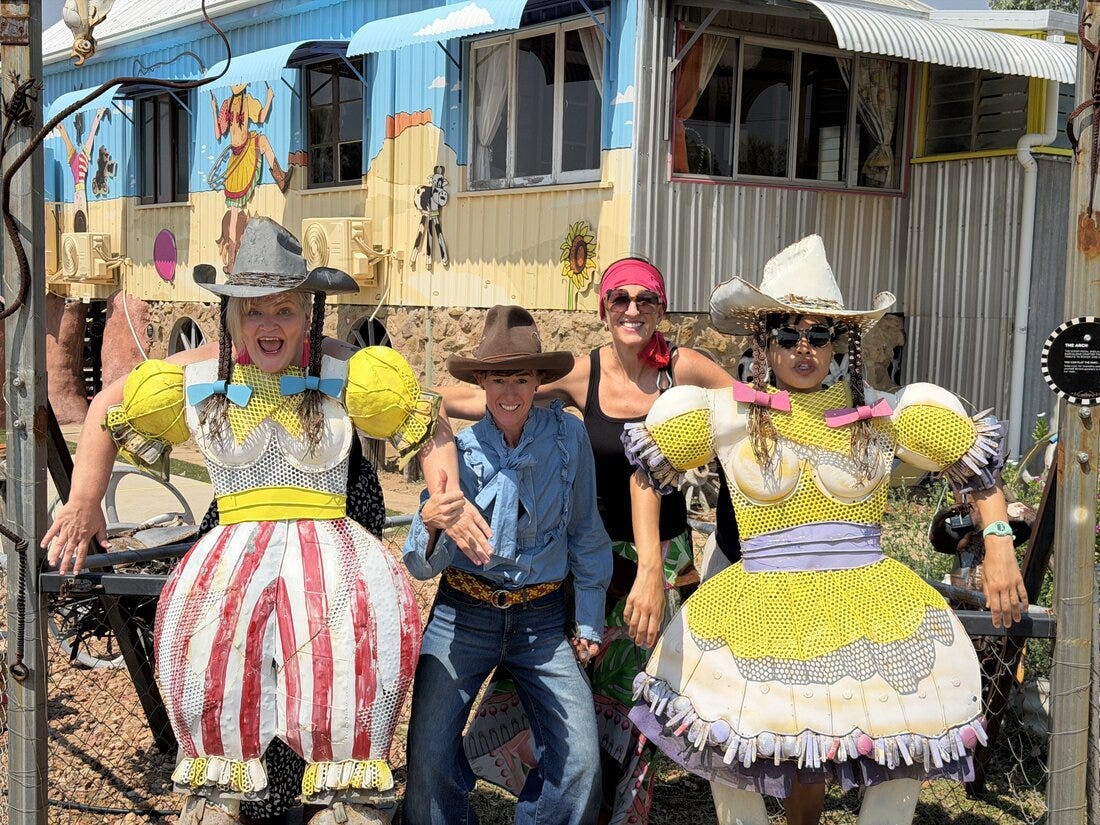
Mother Funkers Go Outback evolved out of the real life adventures of comedian Jenny Wynter and her ‘Funny Mummies’ tours through towns in regional and remote Queensland.
“I’ve been doing these comedy gigs and tours out on the road in country Queensland for a few years now,” Jenny says.
“And I just thought, gosh, this is such a great idea for a film. There needs to be a film made about this. And over the past few years, I’ve been working on it.
“I’ve been thinking about this idea for so long because I think mums in comedy are very underrepresented. And so the idea was that we do some sort of feature film about mums in comedy on the road trying to make it happen, but trying to get a feature film made is such a massive undertaking.
“The idea of it being a mockumentary kind of just, it did kind of come out organically.”
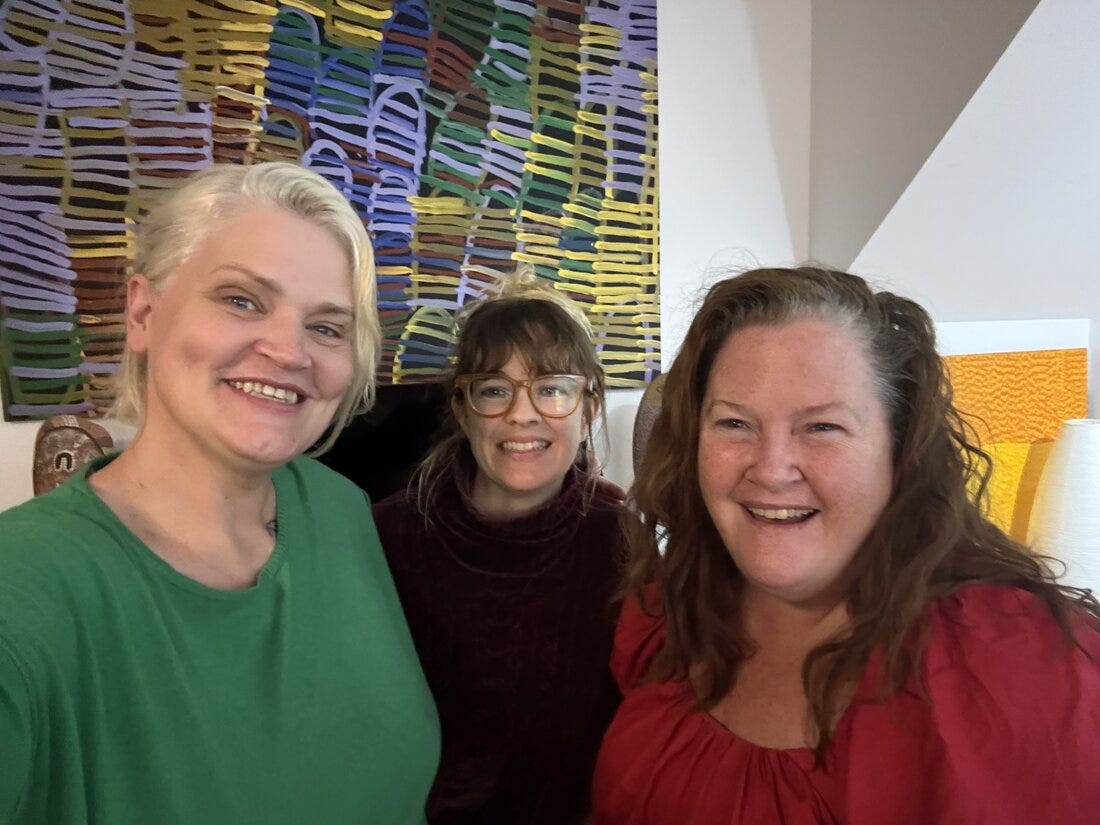
Director Katrina Channells says the way this mockumentary evolved shows how sometimes the best ideas can evolve organically from friendship, and even the tiniest of tiny budgets can’t stop them.
“When Jenny said, “We’ve got these women, we’re all going on tour, come along.” I was like, “Fuck yeah.” Awesome,” Katrina says.
“It was definitely a no-brainer, but we needed a camera.
“So very grateful to Flying Arts because even though it was a small grant, that little bit of money helped push us along and it is really important that there are these grants out there for this kind of creative experiment.
“There was something about just having very little expectation of what we deliver that actually pushed us to create something great because we took the pressure off and then we went, “But you know, if we do come back with a feature film, then that would be an amazing achievement.” And yeah, we were able to do that, which I’m like so proud of us for that.”
Katrina and Jenny brought the story arc to life when they envisioned the storyline of a desperate performer being scammed by her charismatic manager.
From there, as they learnt on the road, anything can happen.
“So the conceit was these real life shows that we were doing while we were on the actual tour become part of the landmark and the landscape of the whole film itself. So yeah, it was very fun,” Jenny says.
“There were twists that we found in the film that we didn’t know were going to happen, that we found as it evolved and the locations we were able to get, we could never have planned it.
“It was such a really rad process that this film honestly could never have been made any other way. What was really cool about it was just embracing the fact that it was guerrilla filmmaking.”
Katrina agrees, saying crucial to film’s success was to make the process fun.
“The key were these women, incredible performers that were on the Funny Mummies tour. We didn’t want it to be a serious documentary where we were kind of like, `Oh, poor mums on the road. They suffer for their art.’
“We really wanted it to be fun. So then we just gave them... For me, I was like, “Okay, well let’s just give these women the chance to play.” So they sort of played heightened versions of themselves and I think once we had that, once we realised that that was a good way to tackle the film, then everyone just jumped into it.
“I think there’s a real beauty in Outback Queensland as well, which I think people can be forgotten out there and it feels like a different world.
“When we left Brisbane and we drove five hours west, you already feel like yeah, you’re just in another time zone.
“I think it’s really important that the city and Outback folk crossover and connect with each other and I think this film does that. We’re really excited and we have deepest respect for everyone in Outback Queensland and thanks for hosting us.”
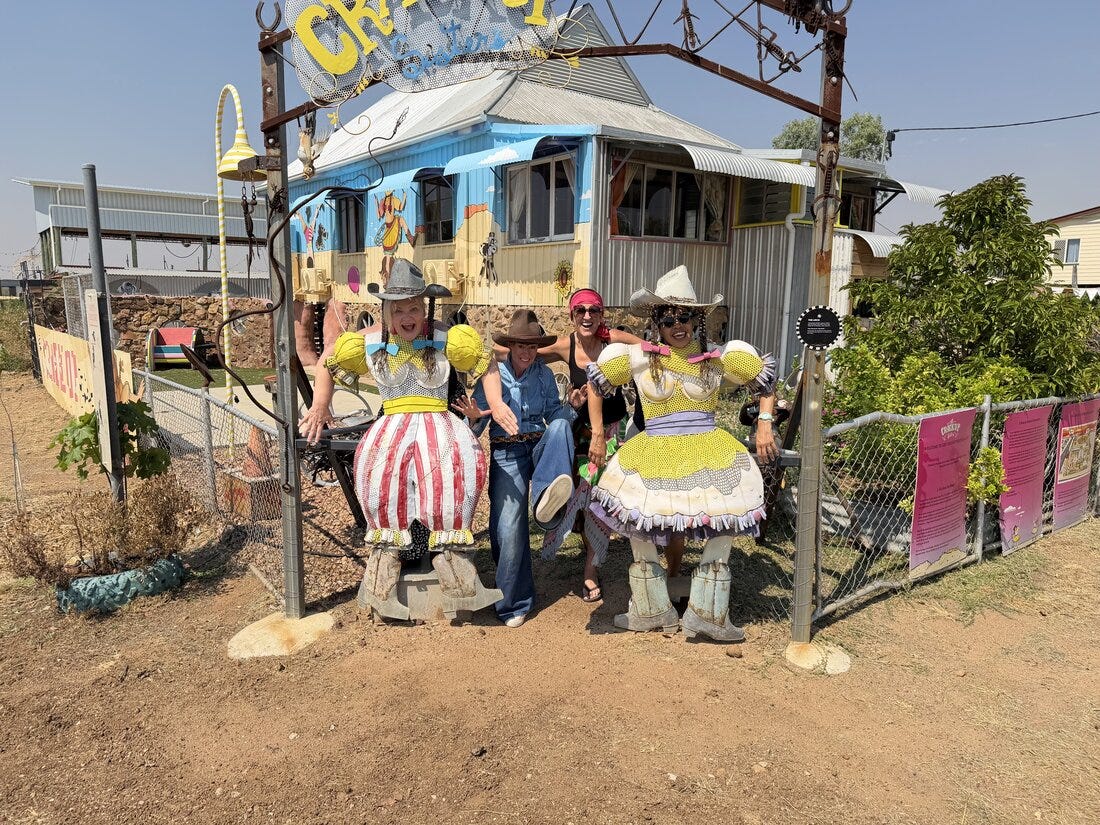
Jenny took the trailer for their dream mockumentary to Winton for the Vision Splendid Outback Film Festival—just a casual 15 hour drive from Brisbane—to raise support for the next stage of production.
“I really feel like as well as all the comedy and the chaos and the hilarious things that happen in this film, it is also a real love letter to touring and the open road and the country,” she says.
“I really do wish more people would go out and visit these places because I think it’s what breaks down barriers, I think you can have an idea in your head of what people from any given place are like.
“But until you actually go out and hang out there, I think it’s just such a gift to get to connect with people from all different parts of this country.”
It’s a dilemma faced by many people—where to go for justice when all your legal avenues are exhausted—mainly because of your financial situation.
In Australia, there is a broad grassroots social movement that responds to this enduring problem out of the belief that the legal system is inaccessible to many people, and that too often it operates without challenge or scrutiny.
Caxton Community Legal Centre is celebrating its 50th year, evolving from somewhat tenuous beginnings to now becoming Queensland’s oldest and largest community legal centre.
But what fascinates me about the way that Caxton operates, is its reliance on a highly skilled volunteer base.
Some of the biggest legal names in the state have given their time at Caxton over the years—often on top of their own casework—to ensure that the law is accessible to everyone, particularly those excluded from power.
When it first started, Caxton operated for just two hours every Monday night. Today there are more than 80 employed staff, supported by more than 200 volunteers, assisting about 30 thousand people each year with free legal help and social support.
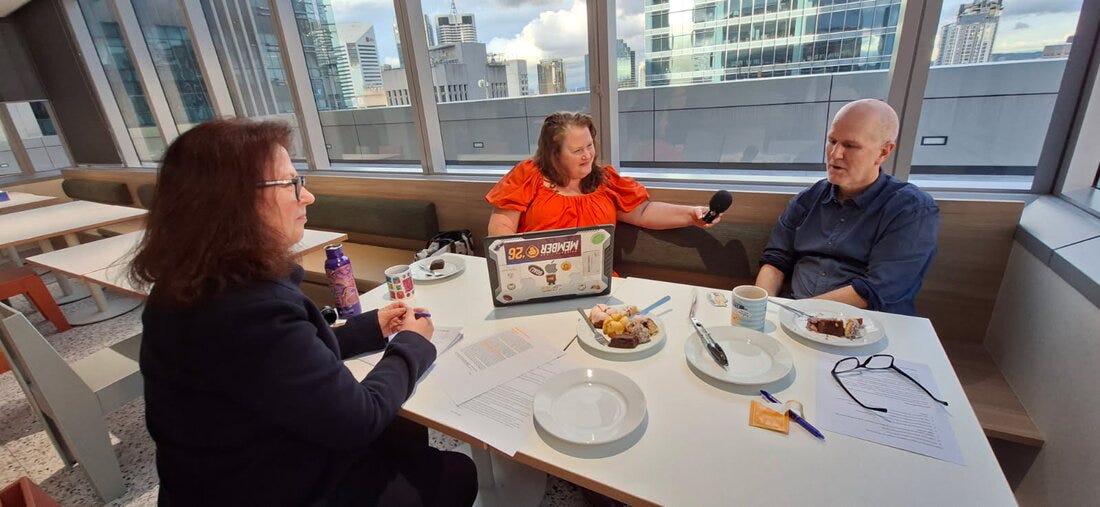
Two veterans of the service are joining us on Streets of Your Town today, Ros Williams who has worked for 30 years as part of Caxton’s General Law Team, and Phil Hall, who has recently risen from regular volunteer to becoming one of three Legal Practice Director.
Ros Williams said it’s the social justice elements of working at Caxton that are key.
“There’s a lot of work happening in our various teams to do with workers rights, financial protections, human rights, discrimination, vilification,” Ros says.
“It’s the worthiness of the work that has kept me here and also the camaraderie working with amazing people for three decades.
“I’ve never been bored. I’ve always felt the work was worthy and important and I felt proud of the work. I’m really committed to notions of service.”
She said she’s proud to be part of a legal firm that upholds the great tradition of pro bono service.
“The tradition of pro bono service actually goes back centuries and it’s been a key part of legal practice forever,” she says.
“Even now the Australian pro bono centre sets a target of 35 hours per lawyer per year is the ideal minimum pro bono contribution that people would make. And most of the lawyers that I know do that and so much more.
“In our annual report from last year, we assessed that our volunteers contributed 11,000 hours of their time and expertise to the value of $2.2 million and provided 2111 legal services. And that was using an extremely modest amount for legal advice of $200 an hour.
“I can tell you right now that some of our volunteers are extremely senior lawyers and they would be charging a lot more than that in their normal practices. So the work that our volunteers do is amazing and the volunteers are amazing. I think the legal profession should be proud of the work that’s done by the volunteers because it’s so valuable.”
She said the casework has definitely evolved in the time she’s been at Caxton.
“We’ve developed a very big practice focused on elder law and in particular dealing with the scourge that is elder abuse and increasingly we’ve done more and more human rights focused work,” she said.
“The government recognises that we are a safety net between the private profession and legal aid and a lot of people fall through the cracks.
“Really poor people who don’t have the sorts of matters that are covered by legal aid will be left without help, without community legal centres. And there are so many matters that are just not commercially viable, but people really need help to address the problems.”
She said that focus is what keeps her motivated.
“I think there’d be a lot of suffering without us and we’re increasingly seeing more and more distressed and marginalised clients and more and more vulnerable clients, and that’s a very difficult thing to see,” she says.
“It’s really important work that needs to be done. That is so important for people to understand because it’s about literacy issues, it’s about social isolation, people not having the confidence to get help.”
Both Phil and Ros have fascinating insights into the importance of the role of community legal centres in Queensland around the country, where Human Rights guide decision making on everyday realities.
Phil Hall says he always enjoyed volunteering for the evening legal advice sessions.
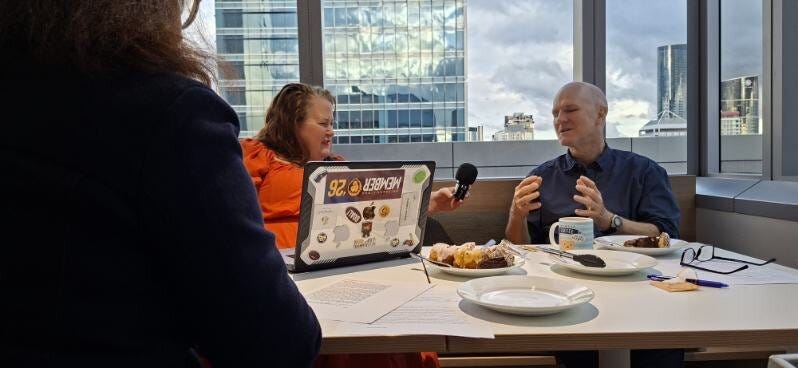
“So collectively, not just me, I was able to participate in helping countless people who were able to walk out the door with a bit of an understanding of what was going on for them and some clear advice about what their next steps might be,” Phil says.
“So even though I didn’t often have the opportunity to see what happened at the end, I know that people left feeling like they’d been listened to when no one else had listened to them.
“They’d got some legal advice when there’s absolutely no way they could have afforded to get it if they’d had to find it somewhere else and they knew what their steps were. So they didn’t necessarily know that they were going to have a win or what the outcome might be, but they knew where they stood and what to do. And that was always very satisfying.
“Interestingly, it’s not always about getting a legal win. It’s about having been supported, having felt that there was someone in their corner who was going into bat for them when they weren’t able to do it themselves.”
He says they are always open to extending the range of matters they give advice on.
“We’re constantly conscious that First Nations people in Australia have particular historical intergenerational disadvantage and we’re often thinking that our client base perhaps doesn’t reflect the needs that are out there in the community,” he says.
“We know there are greater needs that we’re not reaching with our services and we’re constantly looking for ways to address that asking the question why that is, is the way we communicate our services, does that need to improve?
“Are we providing culturally appropriate and culturally safe services so that those clients feel safe coming to us? That is really important and a constant focus for us.”
Thank you my ever supportive Streets of Your Towners for keeping me and Mildred the Cantankerous Kombi on the road and getting these stories that will now be kept in the State Library of Queensland collection for generations to come. As one of the librarians so kindly told me when I asked her why they bought the rights, she said that I had captured stories of Queenslanders that in a hundred years no-one would remember—what it was like to be a refugee, to be a struggling actor, or to trek into the Woodford Folk Festival. You can see how to access the State Library collection at the bottom of this previous newsletter!
So thank you all for making this possible!

Please consider taking a paid subscription to Streets of Your Town if you are as passionate about telling these stories in this age of AI as I am.
In an era when we are all craving human connection and it seems to be harder to find, you know you can listen to humans talking to humans—right here.
Love yas!
Nance
Comments
Nothing yet. Say the first thing.
Sign in to join the conversation.