
The following is a short interview of the painter Hermès Mazlo. It is part of a collaboration with our good friends at Mimosaa, a curated network for independent professionals in Paris.
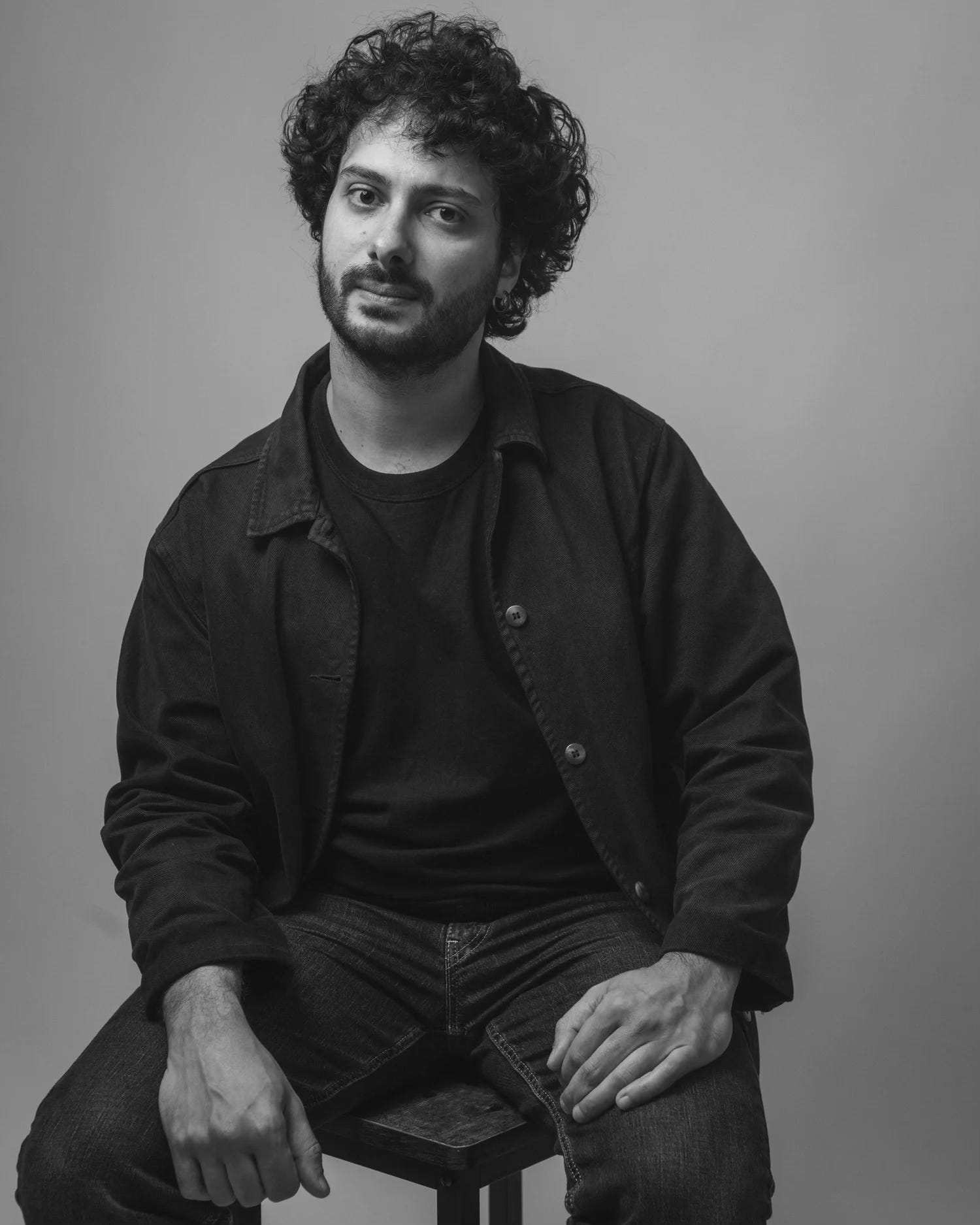
1. How did you find and develop your practice?
I developed my practice in many different ways, at the beginning I was interested in the automatic drawing of the Surrealists more than anything, and in the ‘telephone’ drawings of Jean Dubuffet, but in the end I wound up chasing my own tail. When I enrolled at L’École des Beaux-Arts I specialized in black and white drawings. I wanted to develop drawings which would be impactful at a glance despite their economy, like something between political cartoons and cave art. I developed an interest in the dual relationship between drawing and text.
2. What are your main sources of inspiration?
It depends on the series I am working on, but I would say that mainly I am interested in the absurdity of anthropocentrism and in the work of memory. There is often some reference to human incoherence in my work. For example, you can look at my series of animals on canvas. They are all animals which are on the path to extinction, or which have already disappeared. What I am questioning in representing these animals is the ambiguity of the act of preserving these species in a human environment which is itself a condition for the disappearance of animals.
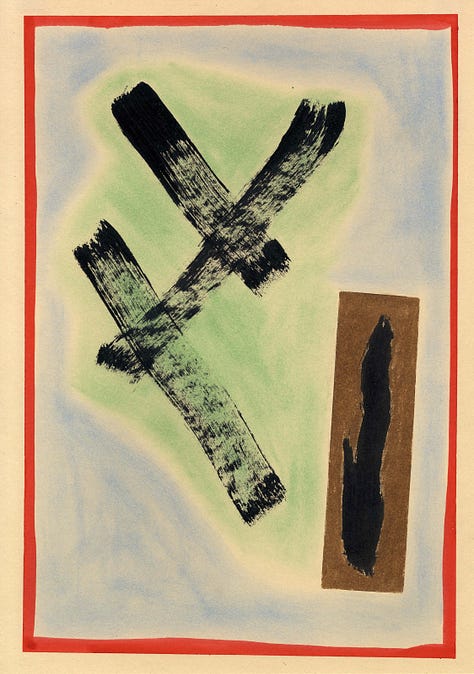
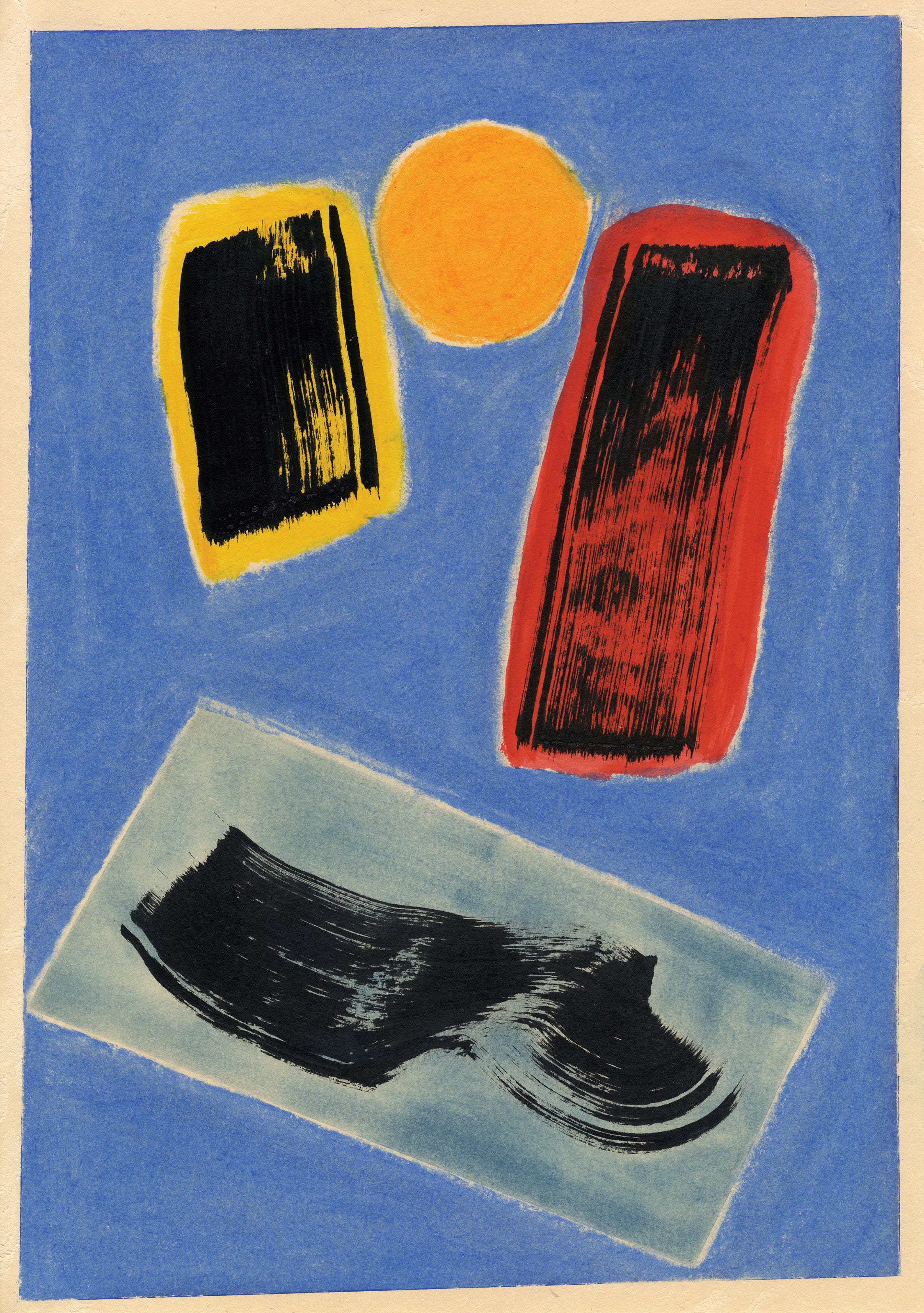
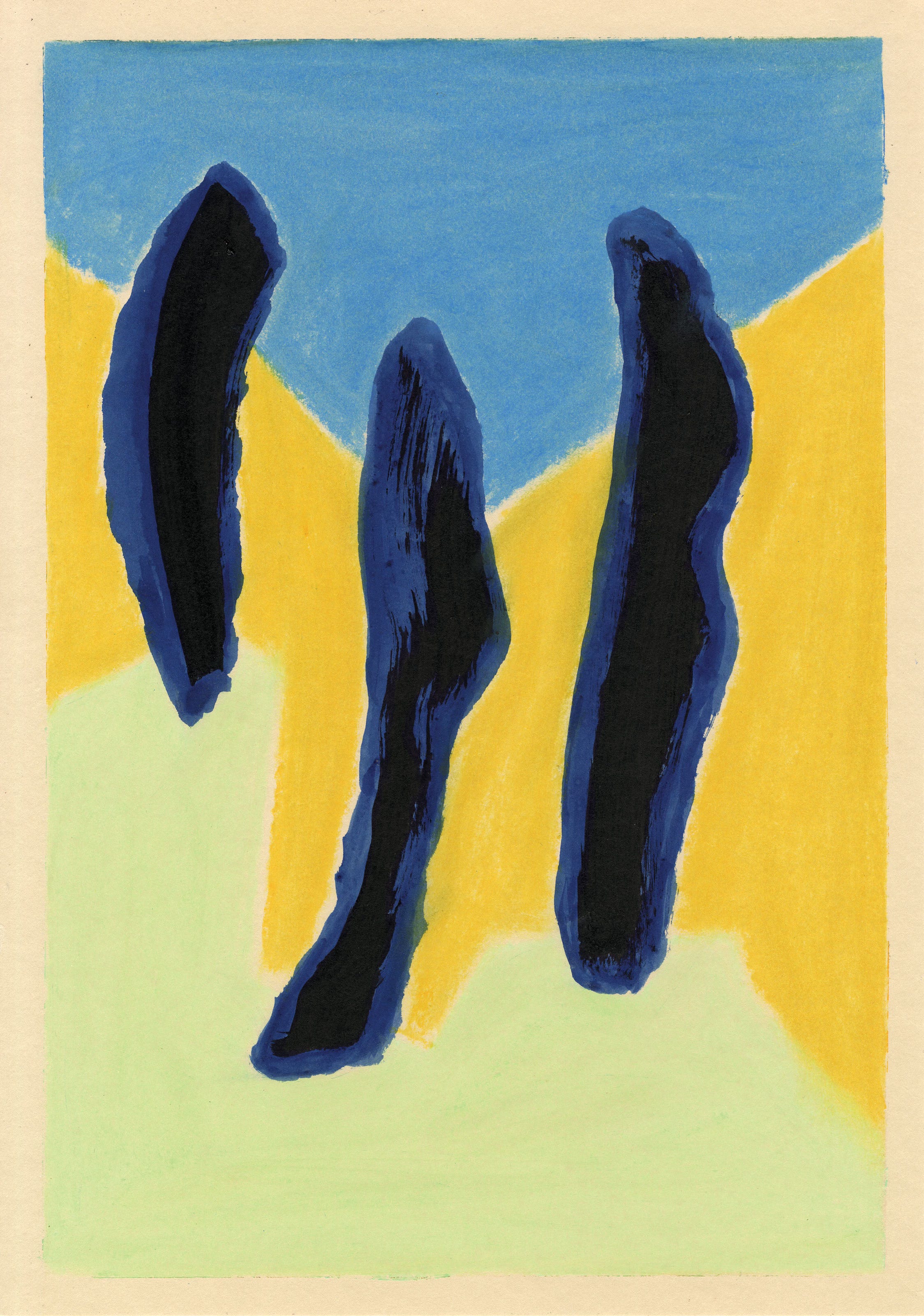
I also work in a more instinctive manner, for example with my calligraphy brushes. A single stroke of the brush will give me a base upon which I can compose what follows. I can see a figure in it, or an object, or a concept, and that gives me the desire to create a space in which it can grow. One shape brings on another, and with color it’s the same, but as you keep making decisions the story changes. With only two solid colors the story can change a great deal, and I quite like that. I also work with words. For example, sometimes I choose a title before I even begin to draw, and that gives me a path to follow during the creative process.


3. What is your advice for people who don’t like abstraction?
It’s funny to think of a world where people would have to love abstraction and where I could offer them advice. Frankly I think that it’s no different from a child who doesn’t like mushrooms. It’s possible that the adults who cook for the child aren’t great cooks, that they season the food improperly. One could say that the child doesn’t like the texture or the taste. And yes, one can also say that he hasn’t developed his palate, that he isn’t ready to appreciate the mushrooms, that he’ll understand when he’s older.
In art it is the same and, without being condescending, we need to experience things before we know if we like them or not. I was already interested in painting at the time, but one of the real hooks for me was an exposition, and a quote, by the painter Serge Poliakoff: “There are people who see nothing in abstract art, but as for me, it would take three lifetimes to tell you everything I see.” If you like to watch clouds and find things in them, then you already love the abstract.
4. The titles of your works are pretty original. In a scene which can sometimes be quite austere, what role does humor play in your visual work?
Something that always got to me about certain expositions was seeing works with a card that said “untitled” or “composition no. 7”. As if we were finally faced with someone who didn’t want to tell us everything, or who was guarding part of some mystery. That can render the work incomplete for the person looking at it, or it can give the impression that we’re missing some final hint.
When I was little my sister took me to the museum and I remember coming up to a canvas on which was titled “art is my ass”. I thought it was incredible, seeing something like that in such a serious environment, and I left with a little mischievous grin as though I’d understood something incredible about art. With time, I understood that I wanted to provoke this same mischievousness in the people who looked at my work, making something laughable and at the same time filled with meaning.
5. And how would you define success, as opposed to failure?
It’s one hell of a coincidence, but I actually composed a piece about success for my first university degree. It was six trophies, posed against a white wall. When you touched it, the voice of a person from my family was activated and they spoke about what success was to them. It was an opportunity to question this idea of ‘success’, but also to bring out some things we talk about less often: daily life, family . . . I say that because I have taken to heart those videos by Joel Bartolomeo, where he films his son eating green beans, or his wife preparing a tarte au citron. I had never before realized how someone, with such simplicity, could show something so intimate and fascinating at the same time. In short, a success is a form of accomplishment with so many variables, and recognition which can be anything from receiving a great prize to putting up a piece of IKEA furniture.
Discover more of Hermès’ work on his instagram and get in touch with him via his profile on MIMOSAA
No posts
Comments
Nothing yet. Say the first thing.
Sign in to join the conversation.