
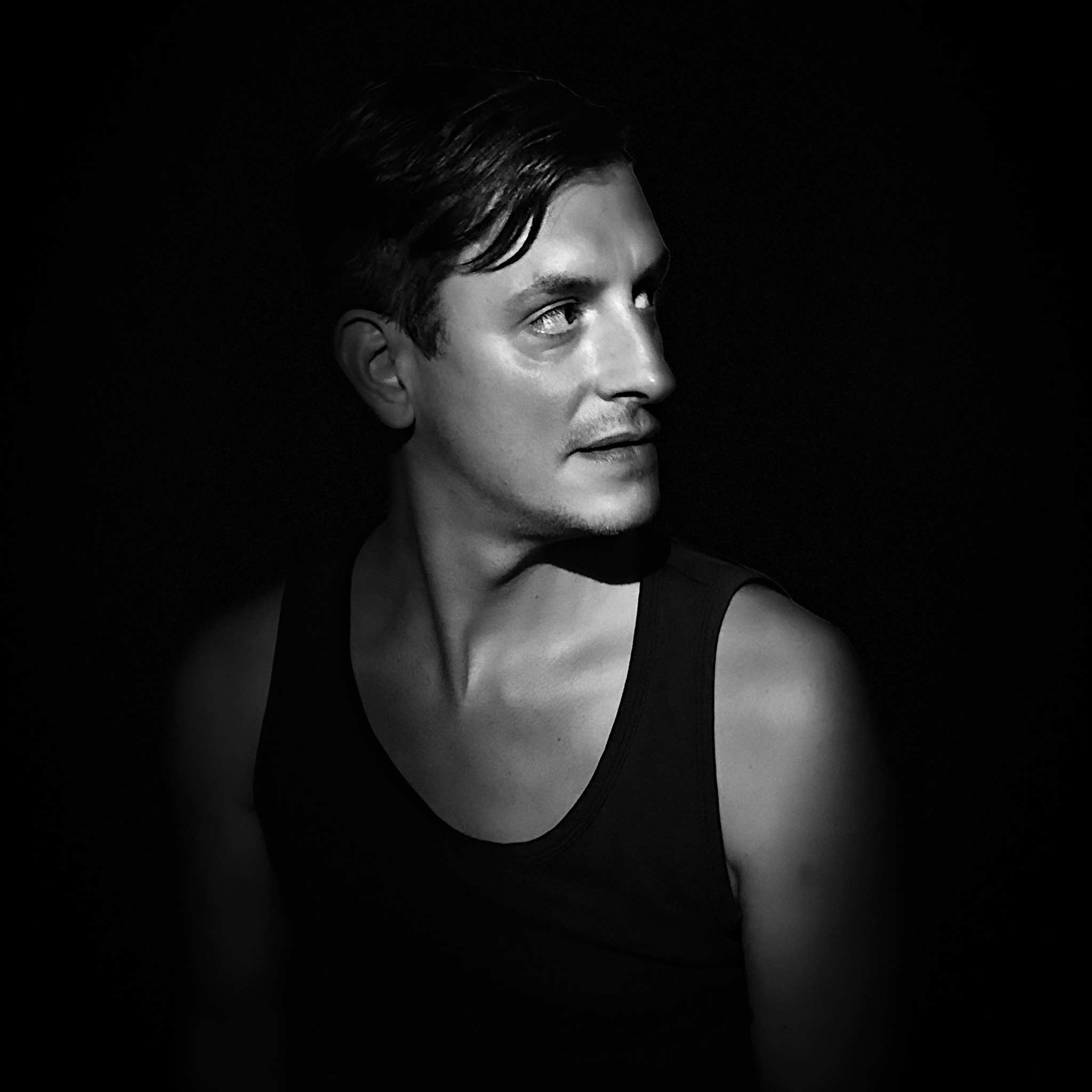
Hello Pedro, how are you today, and what have you been up to lately, both musically and personally?
Hello guys! I’m feeling good. I came back to Barcelona in December and finally feel like being back home after 14 years in Norway. That’s what I have been doing lately, moving and reorganizing my life, and of course doing some music when I can. Apart from the EP at SA with Vusal, I also released one with Nick Newman on Manual Deep and a remix for Dovim on Seven Villas since this year started.
Can you take us back to the beginning, when did you first start making music, and what was your very first setup or instrument?
Making music, I started quite early, around when I was 15, first playing guitar and bass. Then, when I was around 18, I started doing electronic music on Music 2000 and got Fruity Loops 3 quite fast after that.
You originally studied Fine Arts before fully diving into music. How did your visual and artistic background influence the way you approach sound and composition today?
I have always seen making music as painting. In painting, you fill up a canvas, in music, time and space. In both, it is really important to know when to leave blank spaces. And in general, I find that any type of art form is connected to the next one.
You also spent time immersed in the German club scene, where your DJ career began around 2005. What are your strongest memories from that period, and how did it shape you as an artist?
My strongest memories are with my friends Christoph and Vio. They showed me the scene there, from Robert Johnson to Frankfurt Cocoon, U63 to more underground parties. There, I was really influenced by artists like Roman Flügel, Anthony Rother, Ricardo Villalobos or Sven Väth, who were playing in the area quite often, or label parties at Robert Johnson from Kill The DJ and Kompakt Records, which was normally my main option to go out. I remember a night when I finished at Heiko’s MSO (R.I.P.) birthday party at the Ongaku/Playhouse headquarters. That night will always stick with me.
Did you have any mentors, key influences, or artists who played an important role in your early development?
In my early development, Daft Punk and their Homework album were crucial. I used to play bass and guitar with a friend and dreamed of making a band, but we really had no place to practice properly. So when we heard that album and someone told us it was made at home, we were like, wait, how? And we got Fruity Loops 3 and later Reason, and started making music as Uninstalls. We never released anything.
Later on, my friend from the neighborhood, Paulino (Clase Sencilla), and owner of Sin Hilo Records, showed me the first hardware-based setup in his studio and introduced me to Guillem (Bombjack/TBFH), who at the time was working as a musical software teacher at a known school in Barcelona, who offered me free lessons after a while.
If we speak in terms of popular artists, my biggest inspiration is Laurent Garnier. He is the DJ of DJs to me. Jeff Mills, when it comes to techno, is an eminence, unique and has created school. When it comes to deep stuff, without a doubt, Pablo Bolívar, also a big part of why I am here today as an artist. I admire Ángel Molina a lot too because he is a pioneer in my city. I have seen him maybe even more times than Laurent, and he has never, ever disappointed me. He is a really forward-thinking DJ and well respected in the techno scene. I even saw him play once in Germany at an official event/ceremony celebrating Catalan culture there in Germany.
Over the years, your music has found its way onto labels like Seven Villas, Everything Will Be Ok, Loot Recordings and Univack, gaining support from artists such as Hernan Cattaneo, Pablo Bolivar and Christian Smith. What did that recognition mean to you at the time?
For me, being practically a self-taught artist, coming from Fine Arts and from painting my whole life, which made me feel like an intruder for years and also have some sort of internal conflict, as I wasn’t sure what to do, only make music, only art or do both, it meant a lot. It was not only the confirmation that I did well prioritizing music over art, even though I never stopped, but also that I was at a professional level. That meant all the sacrifices I made for this, and all the time, effort and money spent on my music career, were not wasted. And it gave me a lot more confidence in what I do.
When starting a new track, what does your creative process usually look like? Do ideas come from DJ sets, emotions, or experimentation in the studio?
If I have to be honest, I barely listen to dance music. In fact, I don’t listen to much music lately just for pleasure or inspiration, and if I do, it is mostly quite random stuff. I listen to punctual sets from other people, to mine, because not gonna lie, I play the music I like, and I see what I have to do better, apart from memorizing the transitions I would like to take to a club.
My ideas come from my environment, and my soul and mind state, from music I have heard before and the feeling of nostalgia it gives me to remember the first time I heard it, and from silence lately and self-reflection.
How I start a track changes depending on what I want to do. For deep stuff, I normally start with some dubby chord and a kick, or a linear pad with some small noises to create space and depth.
Where do you typically spend most of your time when producing, sound design, arrangement, or refining the final mix?
It depends on what I do, but by experience, I can tell you if the sound design is not good, you will suffer mixing the track and probably won’t have a professional outcome. Listening to the conversation between elements before moving forward with polishing anything is really important.
What is your main DAW, and can you share a few go-to tools, plugins, or techniques that are essential to your workflow?
I have been working with Ableton since 2015. Before, I used other DAWs, but I wanted to do live music at some point, so this was a no-brainer. My go-to bass lines or sub tool is the Crave from Behringer, which I also use for some crazy semi-modular sequences or drone stuff, MAM MB33 for acid lines, Elektron Analog Rytm and some samplers I have had for ages for drums. Normally, I use software for all atmospheric stuff and field or studio recordings.
I like to create my own percussion with stuff I find at home, or just record static noise from reality and add it to a pad to create motion, and skip using white noise OSC from synths, or some vocal weird noise which people won’t even notice is me.
The music industry has changed a lot over the past years, especially with streaming and digital distribution. How do you experience this evolution as an artist?
Well, taking the risk of being called boomer or any other name, I’m gonna say that I don’t know if it was the excitement and innocence I had as a younger self, that electronic music was not a massive industry but a niche for weird and different people, and sounded truly new and fresh, or the streaming, phones and socials thing, but it was definitely better before from an artist point of view. There was a real option to make a hit, there were real options to sell physical formats and make money making music, and there was for sure more respect for the scene, the music and everyone involved. Today, it feels like you have to spend more time doing online marketing than actually making music. The streaming system is amazing as a user, cheap and easy to use, but it is detrimental to musicians’ economy and to a diversified music catalogue when it is based on what an algorithm pushes on you instead of your own curiosity to learn. Socials are detrimental to the perception of the art, which becomes a soulless show for money, and phones to the dancefloor vibe.
Yes, I love the internet. I can reach people all around the world with my music, I have made an incredible network with people I have never met in person, and there are many good things, but the established capitalist systems that run today, the internet and the industry, are killing it slowly but steadily in benefit of the future, AI music-generated crap.
Twenty years ago, I think with all I have accomplished today, working with top professionals, playing for radios in Ibiza, releasing two albums and having music on vinyl, I would have been touring the world probably. Today, that’s a marketing and PR game, not about hard work, talent or artistic creativity. I mean, how can music or DJs be getting gigs or arriving to people through visual apps when they are auditive and sensorial arts? Because who has the most rock star look wins the game, the music has no weight on that.
You have been part of the Sound Avenue journey for several years now, from your first appearance on Correlation, Vol. 2 to your Immersive Experience EP and now your recent return. What does the label represent to you?
Well, counting that it was Dominique who connected with me through SoundCloud around 14 or 15 years ago, when I had only released on local labels and netlabels, and gave me the opportunity to release my first track internationally on Crossfade Sounds, a sublabel of the family, and that now I have several works on the main label, which has become a global reference for deep progressive and beautiful electronica, releasing well-respected producers, the label, together with Seven Villas, are some of the main responsibles of my motivation and success, if you want to call it like that, behind my career. So I’m thankful to Dom for the opportunity and trust, and happy and proud to keep working with you after all these years.
As Sound Avenue celebrates its 15-year anniversary, are there any releases from the label that stand out to you as personal favorites?
Oh, you guys have such a big and good catalogue that it is difficult, but Joe Miller, The Last of the Great Days, Nopi, Where To Go, or anything from Ercos, who has an incredible sensibility printed in his music.
Your latest release sees you collaborating again with Vusall Insun on the Reaching EP. How did this collaboration come about, and what makes your creative connection work so well?
Well, I discovered his music on Sound Avenue and he liked mine, so we connected. We have hypnotism and deepness as similarities in our sound. He asked me if I was interested in collaborating, and I had some material I was working on to send him and start working on an EP.
Can you tell us a bit more about the idea or feeling behind the tracks Reaching and Playful? What kind of story or atmosphere were you aiming to create?
I wanted something deep for sure, and after talking to Vusall, we decided to add some groove and hypnotism to it.
When collaborating with another artist, how do you usually approach the process? Is it more structured or intuitive?
Normally, one of us works on a simple sketch and some sound design, sends it to the other artist, who freely develops the idea. It’s about having a bit of both in it, so after that, there is always some reflection time and discussion about what works, what does not, where to go next and who is the best suited for the task, always trying to keep a balance on the identity of the track.
Looking back at your journey so far, what would you consider the highlight of your career up to this point?
Without a doubt, my album debut at Seven Villas in 2022, the presentation of it at Nitsa Club and Ibiza Sonica on live format, and the release on vinyl of the track “Vesania” from the album, two years after. And as a DJ, playing with Guy J in Oslo, or my two years at A.D.E. with Tanzgemeinschaft and Chrom Records.
If you could give advice to your younger self, what would it be? And what would you say to emerging artists trying to find their path today?
Less party, more hard work, hahaha, and always listen to your gut, not to people. Life is a competition with yourself, not with others, about becoming better, in this case as an artist, than you were yesterday. With others, we learn, grow or share.
Outside of music, what are your main passions or ways to disconnect and recharge?
I have many. I also tattoo, draw and sometimes paint watercolor normally. I like to read all types of stuff, listen to podcasts, meditate and exercise to feel well, and swim, if it is in nature even better. And of course, I like to spend time with the people I love.
Are there any books, films, documentaries, or other forms of art that have inspired you deeply and that you would recommend?
Many of them. Books: Dance, Music Culture and the Politics of the Sound from Ewan Pearson, a pretty good producer from the UK, and Jeremy Gilbert, Loops: A Story About Electronic Music, Neuromancer, Energy Flash, Do Androids Dream of Electric Sheep?, 1984, A Happy World. Movies: Interstellar and its amazing OST, The Matrix, Ghost in the Shell, Akira, Limitless, Dark City and anything from Hayao Miyazaki.
I like classic art, like the Renaissance. I think those artists were geniuses. They learned many different techniques, they knew how to paint, draw, sculpt, architecture and even physics, and had a great observation capacity and patience. Also Van Gogh, he was a misunderstood genius, not a crazy man like people present him.
Could you share a few tracks or artists that have had a lasting impact on your musical journey?
Yes, as mentioned before, Laurent Garnier and Jeff Mills, but also the sound of different labels, like DJ Hell and Gigolo Records, or Kompakt with releases like the first ones from Rex the Dog, Kaito, Brutalga Square from Koze, Sino Records from Delaze, where old Technasia and Christian Smith stuff was released among other gems of deep, loopy and mental techno. Future Mix from Technasia, Aril Brikha and his Departure In Time, some Plastikman, and lately artists like Luigi Tozzi, Edit Select, Joachim Spieth. I really enjoy atmospheric and repetitive techno.
Finally, what can we expect from you in the near future, any upcoming releases, collaborations, or projects you are excited about?
To be honest, after some crazy years producing, I have decided to take a small lapsus and focus on my private life. I am not taking requests at the moment from labels or artists. I have a remix on Manual Deep for a Swedish artist and a collaborative single with Egil W., a cinematic musician from Norway, which we did while working on a theater show a while ago, on your Correlation series. Apart from that, I am working on my own material slowly, probably to send to Seven Villas, and I will focus on learning my new hardware setup and developing my live with my other project focused on techno and electro, Basic Shape, with which I released an album last December, while working on more material of my own as Pedro. The plan is to release less music, but more personal and, if possible, of more quality.
Stream/download his latest release: click here
Follow Pedro Sanmartin here: Instagram | SoundCloud
No posts
Comments
Nothing yet. Say the first thing.
Sign in to join the conversation.