
There’s *a lot* of information here so if this email appears truncated, click to open on the site or in the app for a better reading experience.
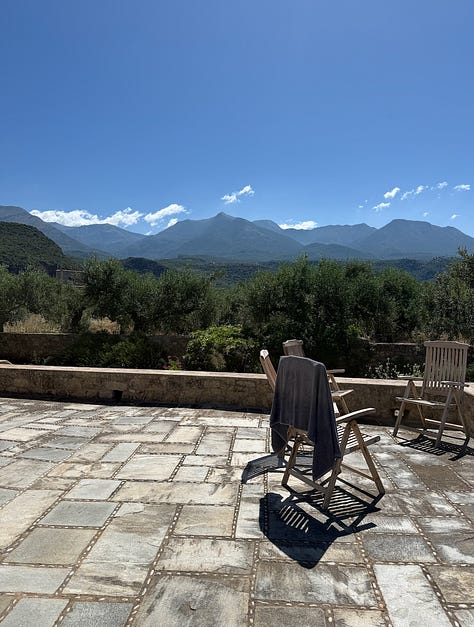
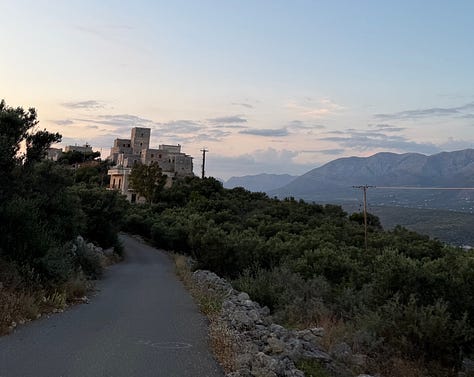
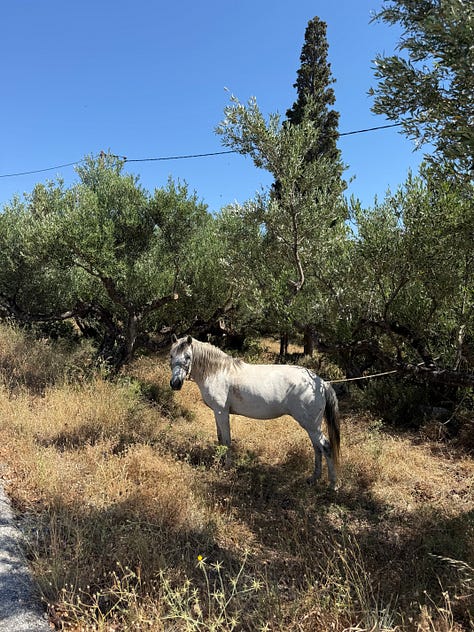
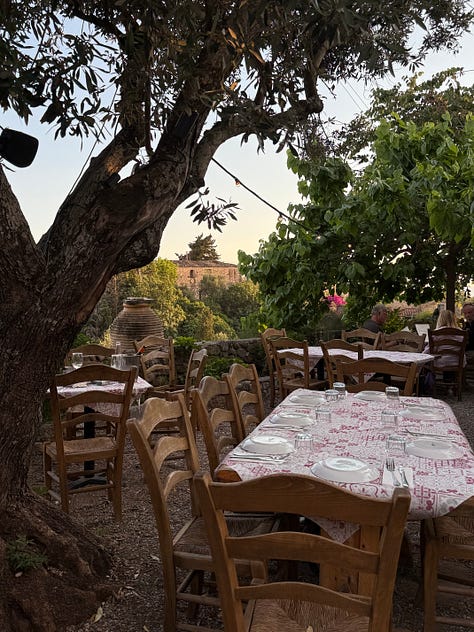
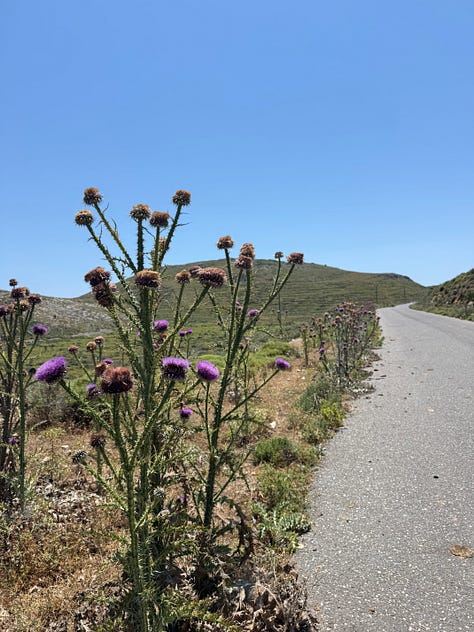

I’ve been wanting to explore the Peloponnese for a while, the large peninsula in southern Greece, given the incredible variety the region seems to offer. You have rugged mountains and villages in the interior, olive groves and rolling countryside, and a beautiful, varied coastline on a quieter slice of the Mediterranean. Most importantly, it’s one of the most historically significant parts of Greece, home to ancient Olympia, where the Olympic Games began, as well as Sparta, one of the most famous city-states of ancient Greece.
Earlier this summer, after spending a few weeks island hopping, I decided to venture to the Peloponnese, beginning my exploration in Mani, a rugged peninsula that forms the middle “finger” of Greece’s southern mainland. As I write that, I realize how fitting it is that Mani is the middle finger... I’ll explain.
Mani is one of my favorite places I’ve ever been. But it’s not for everyone. In fact, I have a very small percentage of friends I’d actually recommend it to.
If you read my latest story for Prior, which offers a glimpse of the two-week road trip I took across the wild Mani, you probably have a sense of whether it would appeal to you.

Many of you have already (!) written to tell me that my Prior story inspired you to book a trip there this summer. You have no idea how happy that makes me. I always want to hear from you if something I’ve written prompts you to book a trip, and then, of course, I want to hear from you afterward: what you loved or what surprised you. It’s one of my favorite things about sharing these places with you. (And to those of you who have already shared photos from your trip to Mani with me, please keep them coming!)
Because a few of you are now actually planning your own trips there, I wanted to make that process a little easier with a deeper dive into the details, or the footnotes, if you will.
So, if you’re seriously considering going, I’d read my Prior story first. If it leaves you wanting more, come back here for the footnotes.

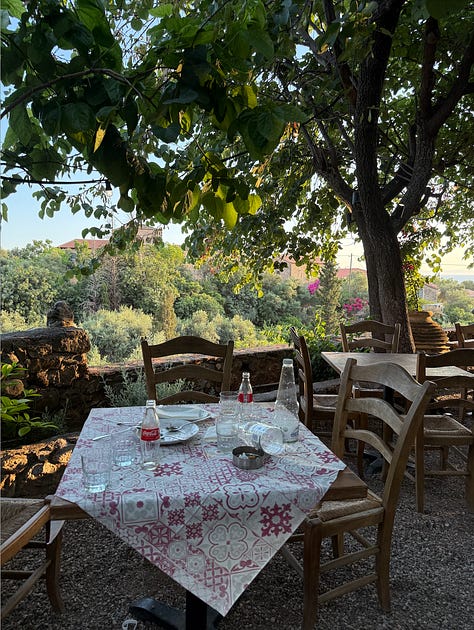
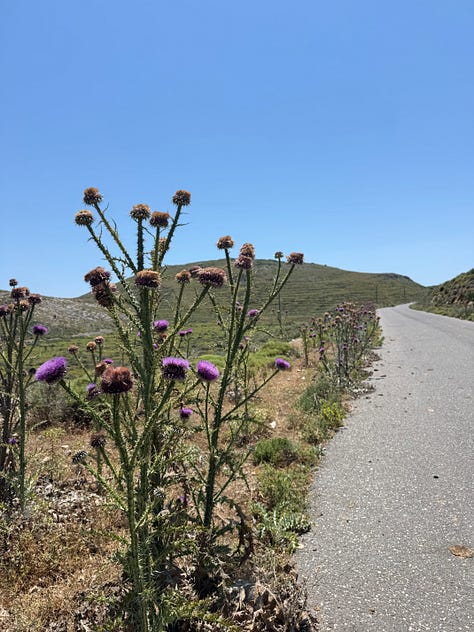
Before my visit, many Greeks had described Mani to me as the Sicily of Greece. Maybe there are parts of Sicily that feel similar, but I see more similarities in the people than the landscape. Mani has a long history of fiercely resisting outside rule, and that independent spirit runs through its people, past and present. There’s an intensity, a pride, and a rugged, clan-based Mediterranean identity that never fully submitted to anyone outside it. (Hence the fitting symbolism of the middle finger…) In that way, the comparison to Sicily makes sense, but still, its oversimplified.
Mani is too singular to compare to anywhere.
And unlike Sicily, with glamorous Taormina and scenic, charming Cefalù, there’s no part of Mani that will fulfill that classic Euro-summer fantasy in the traditional sense. It’s rough around the edges everywhere you look. There are no polished seaside villages, no beach clubs, no cool or bougie hotels. Very little here feels built for tourism.
In fact, when describing my trip to a friend, they said Mani sounded like “Greece with its sleeves rolled up,” and I thought that was brilliant. To be sure, its beauty is rougher, tucked into the valleys and mountain roads of the Taygetos. And if you’re looking for a holiday with a little more action, you definitely won’t find much of a “scene” here. At the risk of sounding glib, Mani isn’t exactly the place for extroverts.
The best of Mani is quiet. It’s raw, evocative, untouched. My Prior story goes into more detail about why this is. Hopefully you’ve read it by now.
So, what can you expect?
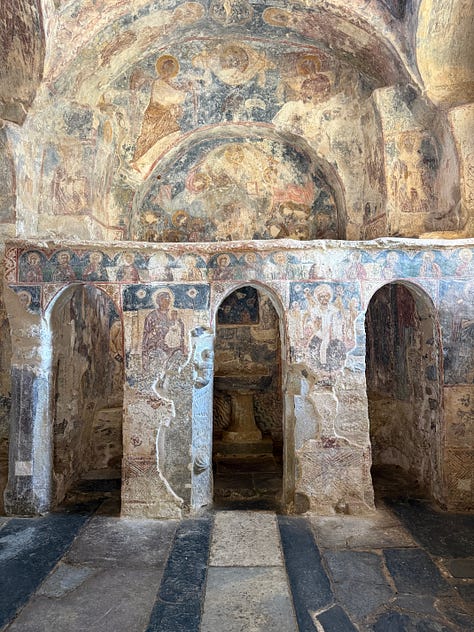
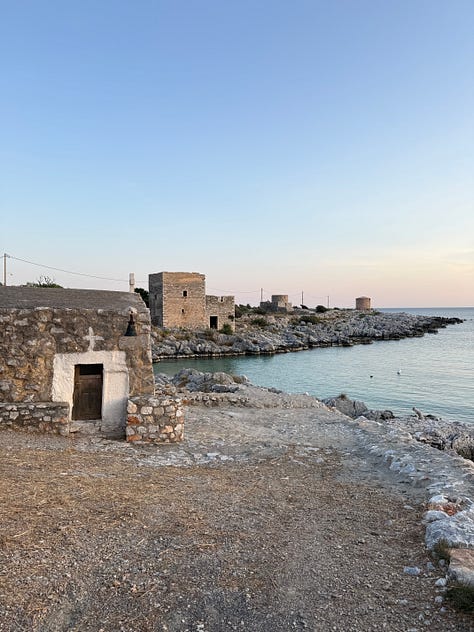
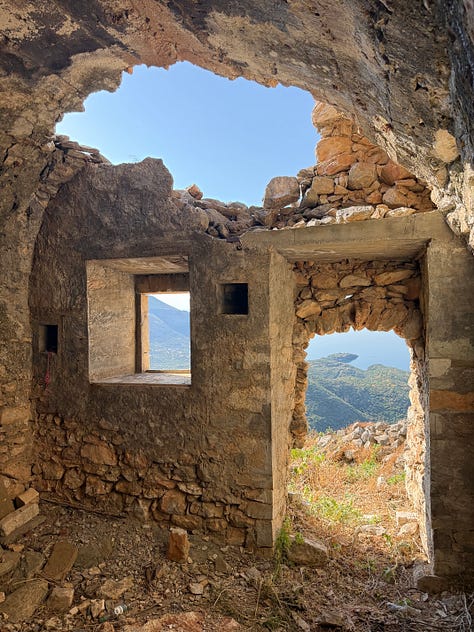
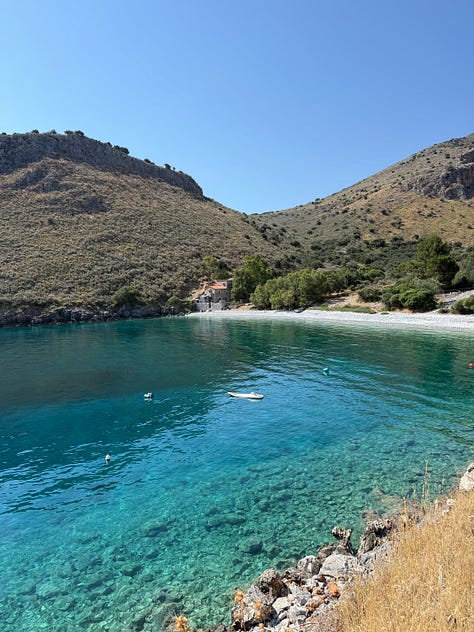
For one thing, long drives. From Kardamyli to the deepest point of Mani, about two hours; anywhere in between, 20 to 40 minutes. But the drives yield a high reward: empty beaches with crystal-clear water set against the backdrop of a dry, mountainous, almost severe terrain with a primal quality; Byzantine churches with centuries-old frescoes; and abandoned stone villages scattered across the landscape.
If you’re still reading, I think you might like it there.
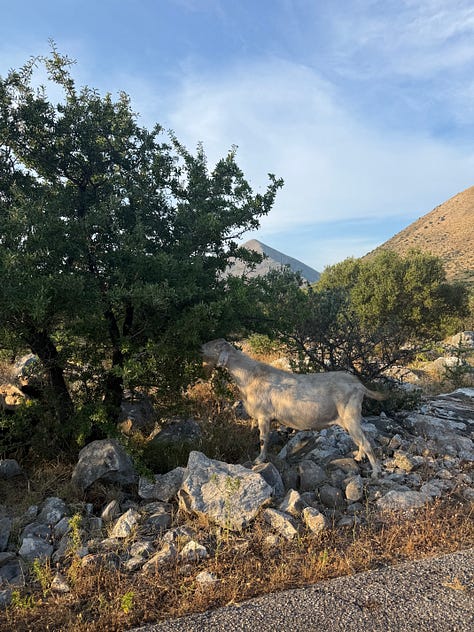
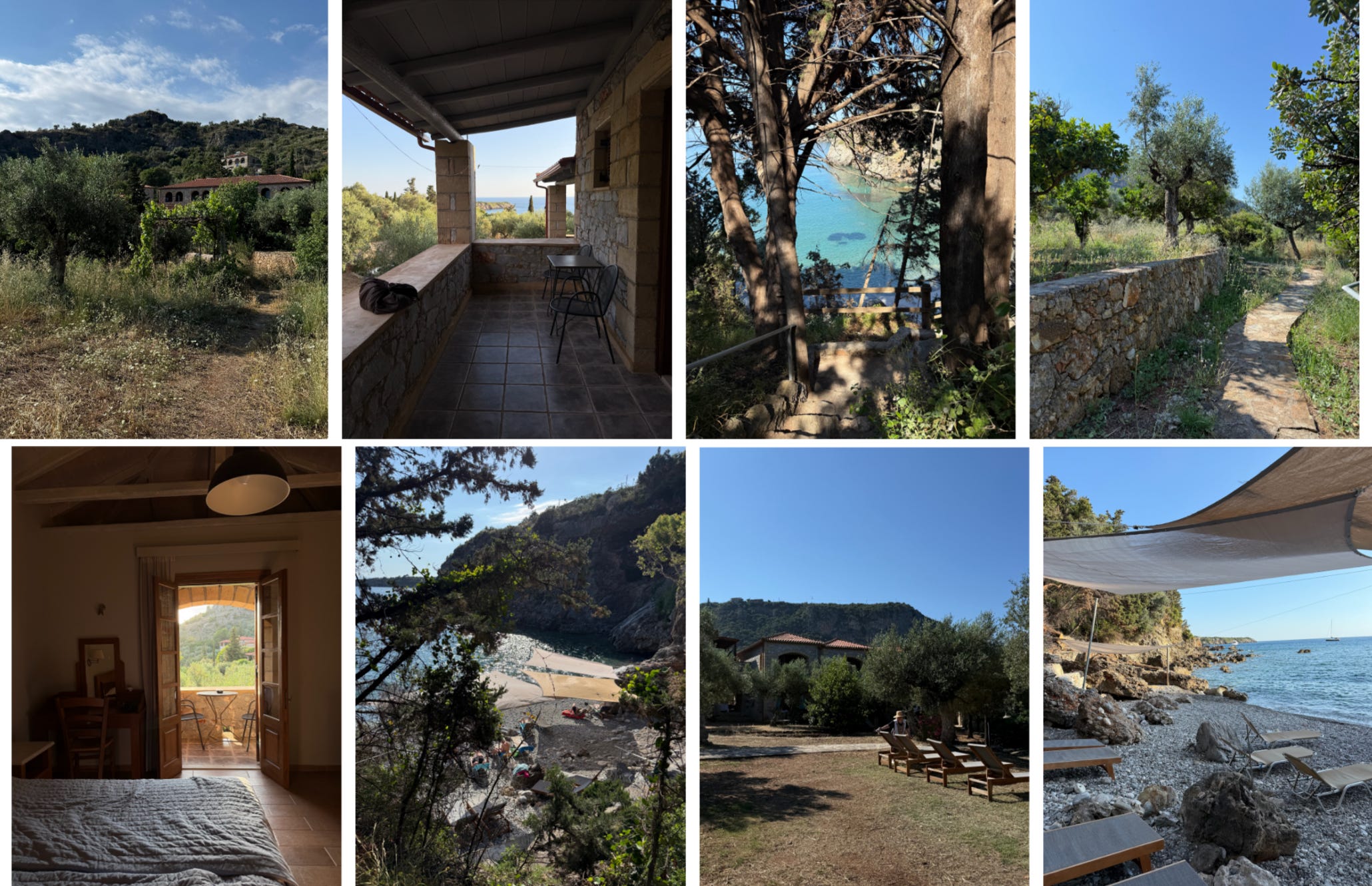
Below, I’m detailing how I’d actually break up the trip, plus where I’d stay (like the hotel I found for €90 a night with its own private beach), where I’d eat, and the places I’d make time for.
I’m deliberately not going to give you a checklist of every hike, church, village, swimming spot, and roadside attraction. No Diros caves or Cape Tainaron rundown. I’ll give you many places I loved. Beyond that, I want you to explore for yourself!
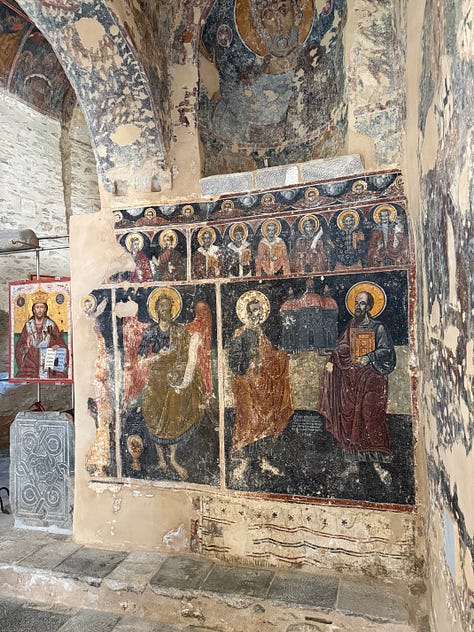
There are something like 1,500 Byzantine-era churches scattered across Mani. You will inevitably stumble across many along your drives. Some are little more than ruins; others are completely intact. If you see one, stop. If the door is unlocked, go inside.
You’ll pass old stone villages with towers crumbling into the hillside. There are over 150 of them! Turn in and walk around.
You might spot a glimmer of azure signaling another swimming cove across the bay from a beach you read about here. Follow it.
That element of surprise, more than any particular restaurant, hotel, or beach taverna I mention here, is the experience you should go to Mani for.
How to get there: You can reach Mani by ferry. A car is essential for exploring the area. You can rent one at Athens Airport and drive about 3.5 hours to the start of the peninsula. Alternatively, do what I did and fly into Kalamata Airport and drive approximately one hour to reach the peninsula.

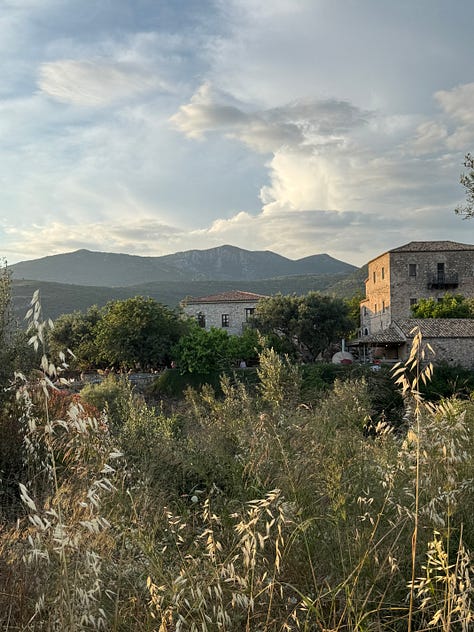

The drive through Messinian Mani, around Kardamyli, is lush, with cypress trees punctuating the hillsides, pink oleander and Queen Anne’s lace crowding the verges, olive groves pressing close to the road, where the sea is still visible. There’s enough of a town to walk around, stop for coffee, or have a proper dinner before disappearing into deeper Mani. Basically, it’s a good place to get your bearings before heading south into what Maniots consider the “real” Mani: the drier, more remote, more rugged Laconian part of the peninsula.
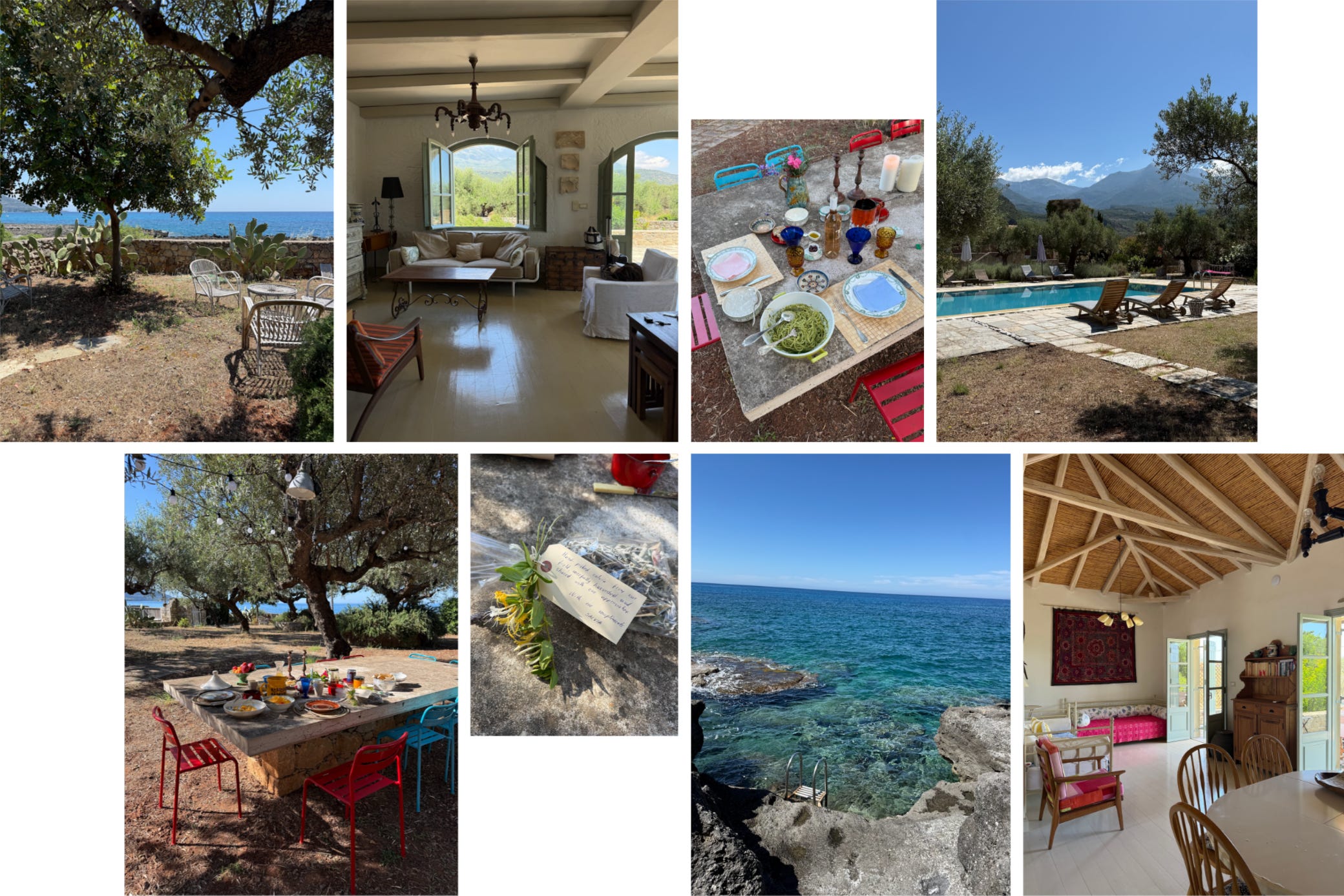
Villa Salvia: There is no warmer, more intimate stay in Kardamyli than Villa Salvia. Comprising four stone houses, more apartment-style, each with its own kitchen, scattered across a property with a shared pool, it sits at the end of Ritsa Beach, just below Kardamyli’s main street, and is the perfect base for your first few days exploring Kardamyli and the northern part of Mani.
The property is hosted by the lovely Aristea, who grew up in Kalamata and has been coming to Mani with her family since she was young. She is an invaluable local resource, always happy to share her favorite spots in the area and make you feel right at home.
The villas are filled with eclectic vintage furniture, rare collectibles, and books, which you can take outside and read on one of the mattresses tucked beneath the shade of the trees. Just across the street, a ladder descends through the rocks into the open sea, ideal for a morning or late afternoon swim.
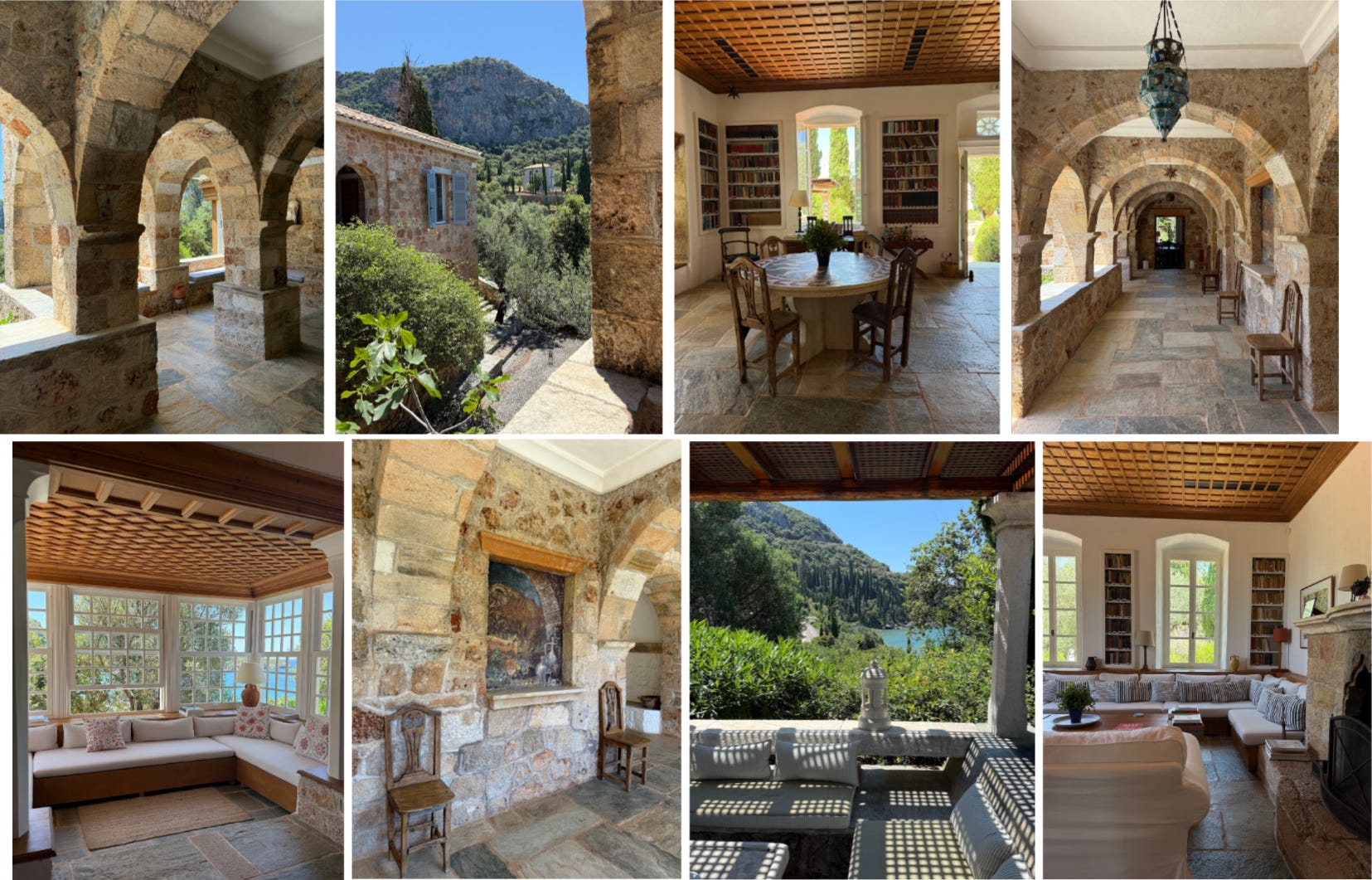
Patrick Leigh Fermor House: Absolutely incredible private rental home that was thef ormer home of the legendary travel writer. Stay here if you’re willing to spend a pretty penny or are traveling with family or a larger group. The home is owned by the Benaki Museum and is also open to the public for tours of its communal spaces on Mondays from June through September, which you must book here. I’d make sure you time your visit to Kardamyli/Mani on a Monday so you can visit the house. Book ahead because it fills up fast!
Comments
Nothing yet. Say the first thing.
Sign in to join the conversation.