
I've never been the biggest fan of the Amalfi Coast, and two weeks there this summer didn’t change that.
The thing I struggle with most is how confined I feel there. I like trips where I can wake up and wander into a different town with ease, discover a new beach or swimming spot, drive somewhere unexpected, or spend a few hours exploring before deciding where to go next. On the Amalfi Coast, none of that is available to you. Every movement is an expedition. Getting to the next town over can mean an hour of traffic on a winding cliffside road, or a taxi fare that makes you wince; the ferries are a decent workaround, but they hand your day over to a timetable instead of your own instincts.
There are some genuinely incredible hotels, don’t get me wrong. If your idea of a dream trip is a five-star property you rarely leave (with the occasional pricey boat day thrown in), you won’t be disappointed. But generally speaking, I find the sea, the food, and the overall experience better elsewhere in Italy. Quickly on the topic of the sea: the Amalfi Coast has always been more about the scenery than the beaches. Worth knowing before you book.
The towns themselves, beautiful as they are, don't do enough to offset the rigidity of it all (in my opinion, anyway). Ravello has its gardens, Positano has its views, but walk the very crowded streets for a while and you start to feel kind of suffocated. Plus, everything is so built up for tourism that you almost forget you’re in Italy; reservations are required for any restaurant that doesn’t have pictures on the menu, and nothing feels especially Italian. And no, decamping to the “quieter” towns of Praiano, Atrani, or Minori, isn’t a meaningful solution.
That being said, I’m not going to dedicate an entire newsletter to a well-packaged guide featuring the Amalfi Coast’s greatest hits: meals at Lo Scoglio, La Tonnarella, Conca del Mar, and Da Adolfo. Plenty of guides already cover that ground. And if you're the type to plant yourself at the hotel for the week, I imagine you’ll be thoroughly satisfied by the icons you’ve already heard so much about: Il San Pietro di Positano, Le Sirenuse, Tre Ville, Santa Caterina, or Borgo Santandrea.
Instead, I want to focus on the things you might not read elsewhere: a smarter way to approach the region, a couple of lesser-known hotels, and hot takes on some old and new places worth seeking out if you’re headed to the Amalfi Coast this summer despite this cynical preamble (ugh, sorry!)
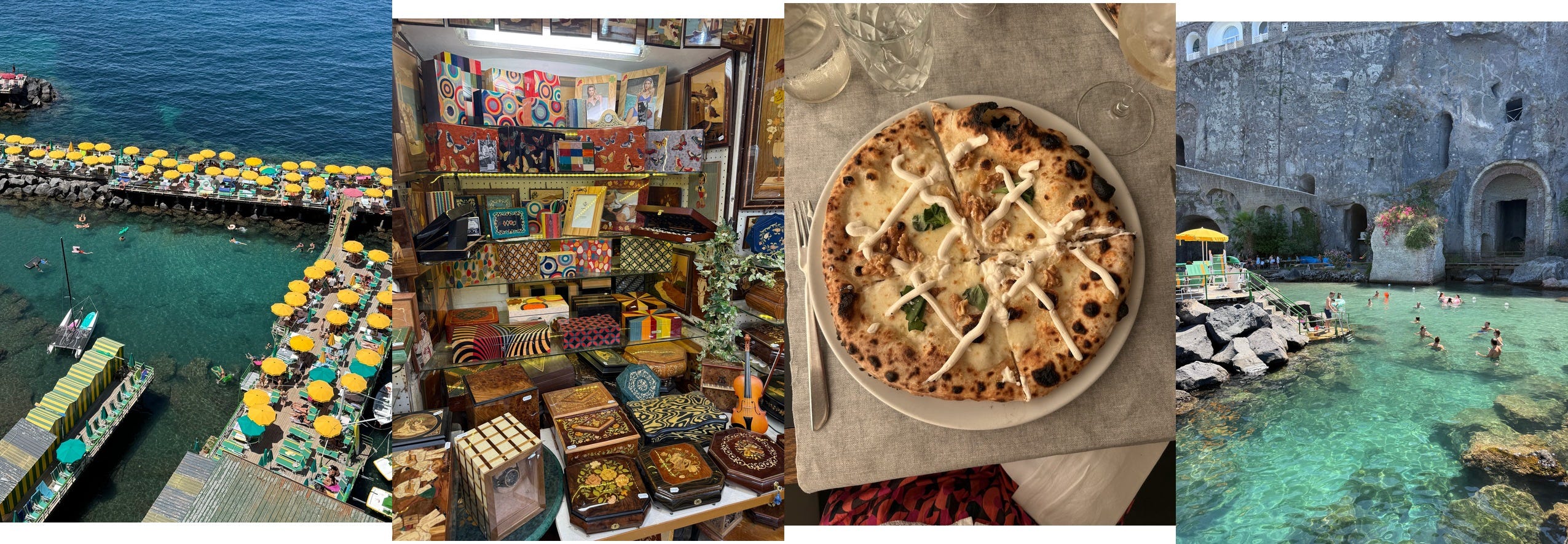
...like me, you prefer moving around when you travel rather than parking yourself at a hotel every day.
Technically Sorrento sits outside the Amalfi Coast proper — it's on the northern side of the Sorrentine Peninsula, with the coast running along the southern side — but it turns up in the same itineraries anyway, largely because its ferry connections make the coastal towns so easy to reach.
I genuinely like Sorrento and think it’s one of the best bases for exploring the region. It’s a real working town, not just a collection of cliffside resort villages, with more year-round residents, shops, and everyday Italian life. It’s also significantly better connected: you can take the Circumvesuviana railway to Naples or Pompeii, ferries to Capri, and to many of the Amalfi Coast towns.
The Amalfi Coast's beauty is inseparable from its geography, and that same geography is what makes it restrictive. The towns are built into cliffs, crowded onto a handful of roads, and getting anywhere takes a patience I don't have. Sorrento, by contrast, is relatively flat in the center, built around a main piazza with smaller cobbled streets branching off in every direction, lined with shops, cafés, and restaurants. You’re not constantly climbing stairs or navigating narrow cliffside roads here. It's simply easier as a base, and cheaper, with hotels across a wider range of budgets.
So if I were visiting for the first time, I’d anchor at least half of my trip in Sorrento and use it as a launch pad for day trips to the Amalfi towns, or the island of Capri (I did Capri in a day, and was back in Sorrento for sunset) — then finish with a few nights at one of the iconic Amalfi Coast hotels, where the hotel becomes the destination.
It’s not that one place is objectively better than the other. It just depends entirely on how you like to travel. But if your travel style is about exploring, changing plans, and having the freedom to move at your own pace, Sorrento gives you a lot more flexibility for that.
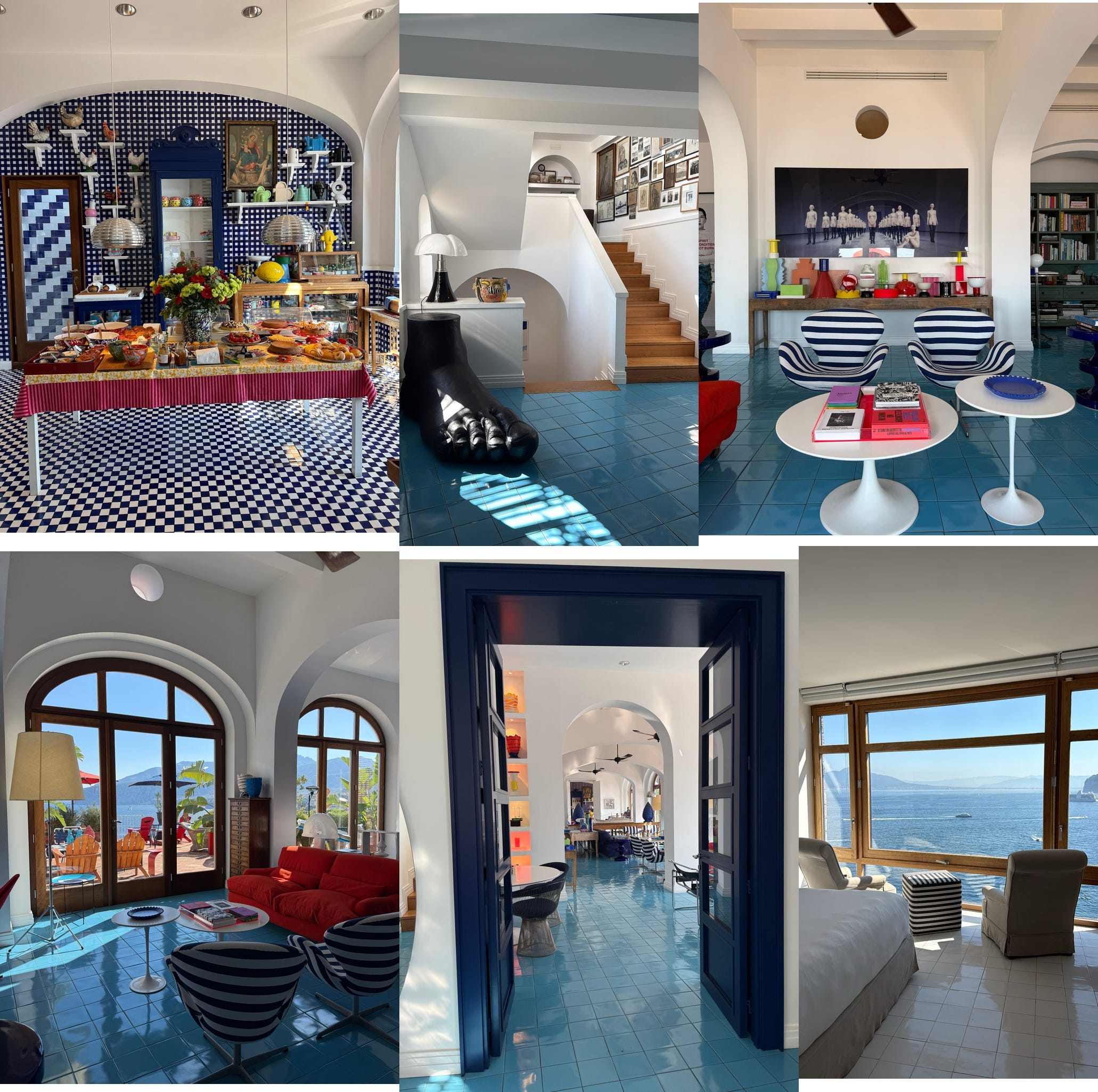
THE SORRENTO HOTEL: I first stayed at La Minervetta five years ago and completely fell in love with it, which is why I was thrilled to return on my recent trip. I have a weakness for hotels that read as private homes, with the warmth of a residence, married to the attentiveness of a proper hotel.
La Minervetta isn't just any private home, though. Marco, the owner, is a collector with genuinely impeccable taste, and every corner delivers its own small explosion of color, texture, personality: pieces by Italian design legends like Gio Ponti and Gaetano Pesce, deliberately chosen, shaping a place that feels both joyful and intensely personal. (If it sends you into a redecorating spiral, there's an outlet for that too: La Minervetta Bazaar, Marco’s shop just down the road.)
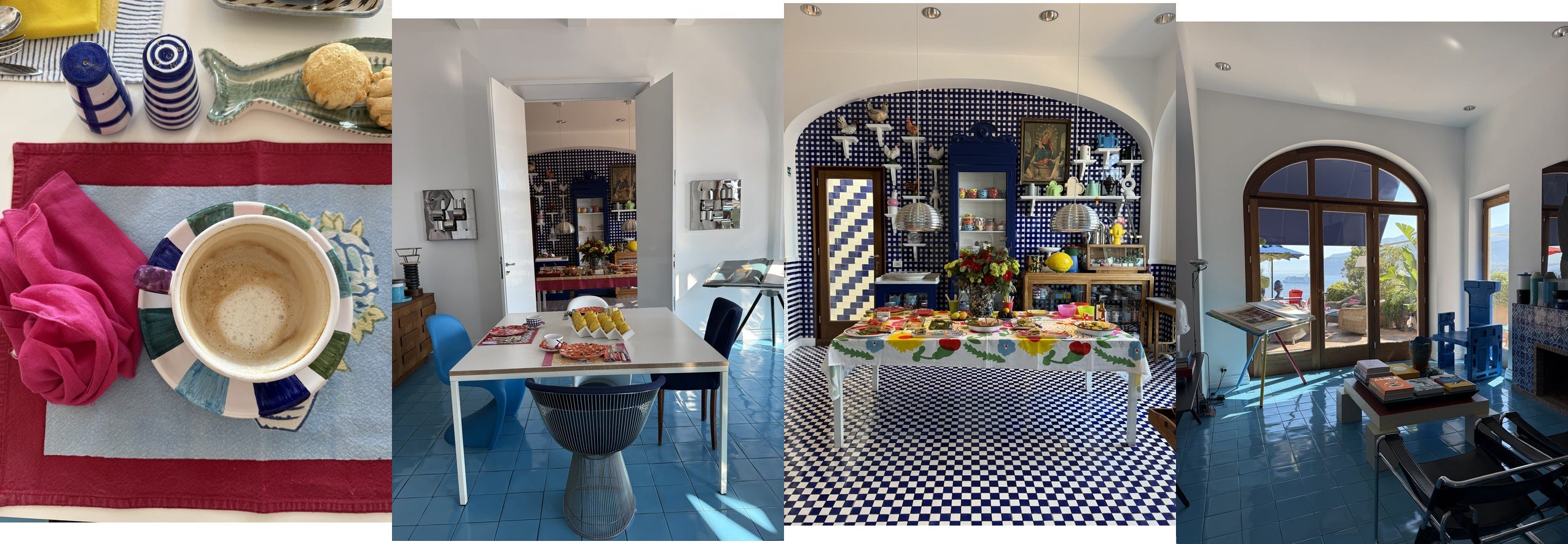
Breakfast is included, served in the home’s festive kitchen: a buffet heaped with pastries, cakes, local cheeses, fruit, yogurt and savory specialties, all in the hotel’s playful signature style, laid over a different Lisa Corti tablecloth each morning, with mismatched tableware from Vietri sul Mare and Puglian ceramicists Marco has picked up on his travels. The hotel also offers a light lunch and sunset aperitivo, both available to enjoy on the terrace overlooking the water. There’s no dinner service, but Marco and his team will happily sort you a table at the best restaurants in Sorrento and along the Amalfi Coast.
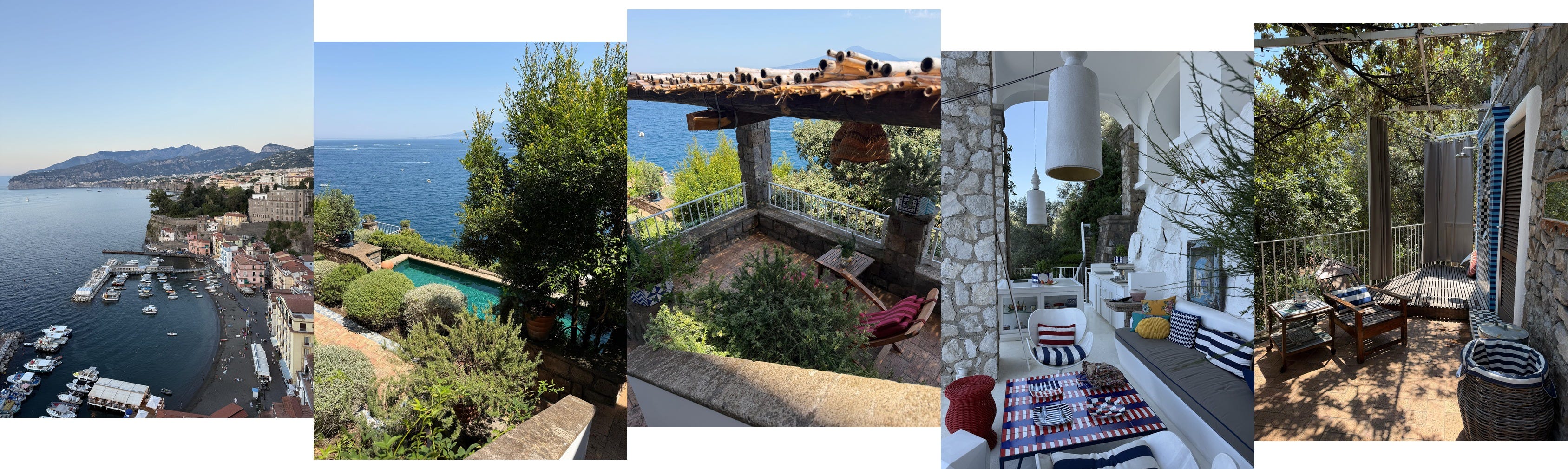
Every room has its own personality, and the shared spaces are no less memorable: several lounging terraces carrying Marco’s curatorial touch, a small shaded pool, and a winding staircase down to a local marina with a beach ringed by excellent little seafood restaurants. Walk into central Sorrento from the hotel and you’re in the heart of it inside 10 minutes.
It remains one of my ten favorite hotels, full stop. And, honestly, it’s the reason I keep coming back to Sorrento at all.
THE SORRENTO MEAL: Antonino Esposito is one of Italy's most celebrated pizzaioli and a longtime champion of the Slow Food movement, with an obsessive focus on local ingredients and preserving Campanian culinary traditions. Don't let the casual setting by the port fool you. If it's on the menu, order the Sorrentina, his signature folded pizza that combines the crispness of a traditional pizza with the rich, molten center of a calzone. (It was invented here in Sorrento and has since been imitated around the world.) And don't miss the Sorrento pizza, topped with an unlikely combination of mozzarella, walnuts, lemon zest, and aged provolone. It sounds strange, but it's so. damn. good. (Very casual place by the port!)
THE SORRENTO SOUVENIR: Sorrento has a rich woodworking craft scene, called intarsio sorrentino. It’s a technique in which tiny pieces of different woods are cut by hand and fitted together like a tiny puzzle to create detailed images and geometric patterns. The tradition began in the mid 1800s when cabinetmakers in Sorrento started decorating furniture with contrasting local woods, and as tourism boomed during the Grand Tour, wealthy European and American travelers wanted souvenirs that were easier to transport than furniture. Craftsmen responded by creating elegant small boxes, pencil/pen holders, picture frames, chessboards, and music boxes. One of the pioneers of Sorrento’s marquetry tradition was Luigi Gargiulo. The Gargiulo family workshop, Gargiulo Inlaid, continues that legacy through three generations, making their pieces by hand in their small workshop on Via Fuoro, one of the few remaining workshops still producing entirely in Sorrento rather than outsourcing production. Buy yourself a jewelry box or your daughter, niece, friend’s kid a music box! Such a special gift.
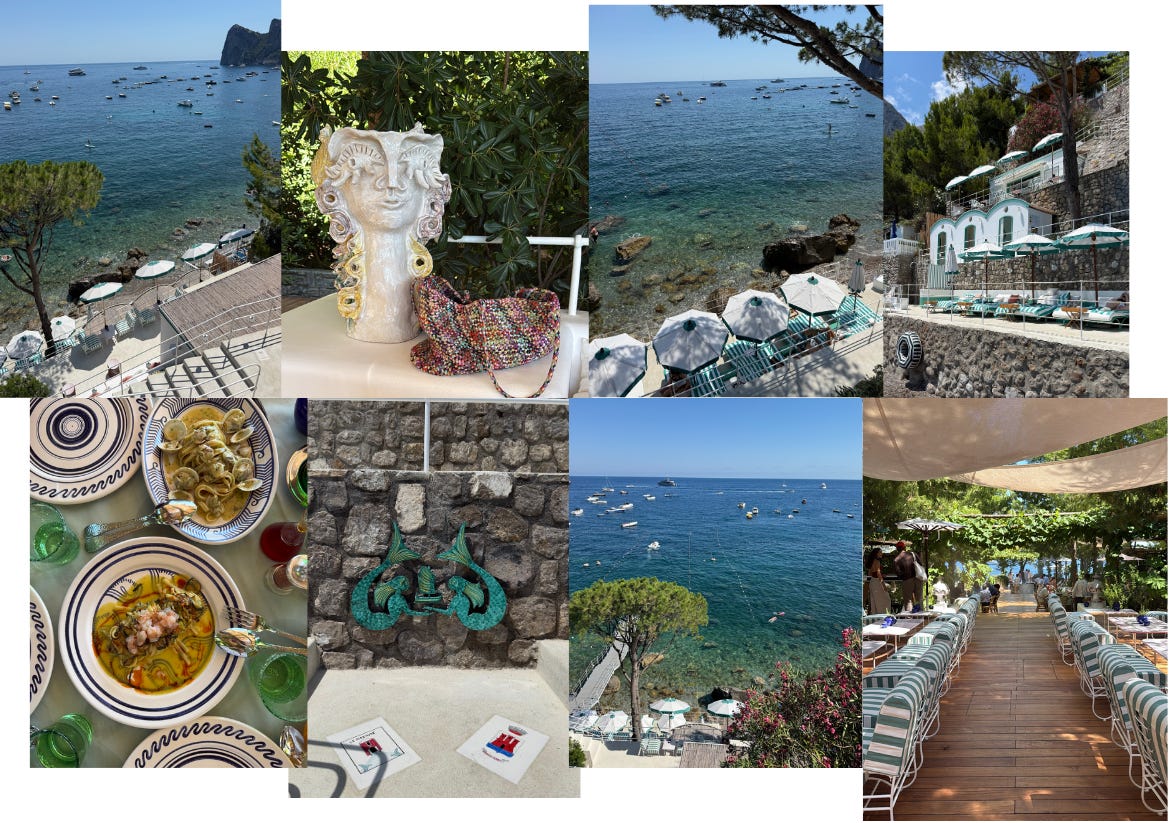
For 75 years, no hotel has shaped the image of the Amalfi Coast quite like Le Sirenuse. The legendary Positano property has become an enduring symbol of Italian glamour, with its Pompeian-red façade perched above the beach; an evolving art program that keeps the legacy address feeling unexpectedly current; a whimsical breakfast scene; cocktails at Aldo’s Bar that capture the spirit of a classic Italian aperitivo; vibey DJ nights at Don’t Worry Bar; and a guest list that returns year after year because nowhere else feels quite like it. But beyond the beauty and the mythology, what actually makes Le Sirenuse special is how familiar it feels. Generations of guests come back not just for the view, but for the warmth of a longtime team — many of them decades into the job. Add in the little gestures, delivered with genuine care, that make a stay here feel deeply personal.
Though for all its magic, Le Sirenuse had one notable omission: a beach club of its own. This year, the Sersale family finally changed that, opening its first extension beyond Positano with Le Sirenuse Mare, a beach club in Nerano, 25 minutes by boat. It unfolds down terraces to a pebble beach: a 180-seat restaurant, three bars, a run of sunbeds and cabanas, and an art collection woven through the landscape — Giuseppe Ducrot’s monumental ceramic fountain, ceramic work by Alba Clemente set into the stairs. A fabulous shop completes the experience (more on that in a minute). Hotel guests receive priority booking, discounted rates on sunbeds and cabanas, and complimentary boat shuttle service, though the club is open to anyone willing to make the journey. Le Sirenuse loyalists won’t be surprised to hear that the food is exceptional (their take on spaghetti alla nerano was among the best I’ve ever had). It’s a stylish new entrant into the coast’s already-stacked seaside restaurant circuit, joining icons like Lo Scoglio and La Tonnarella, just down the water.
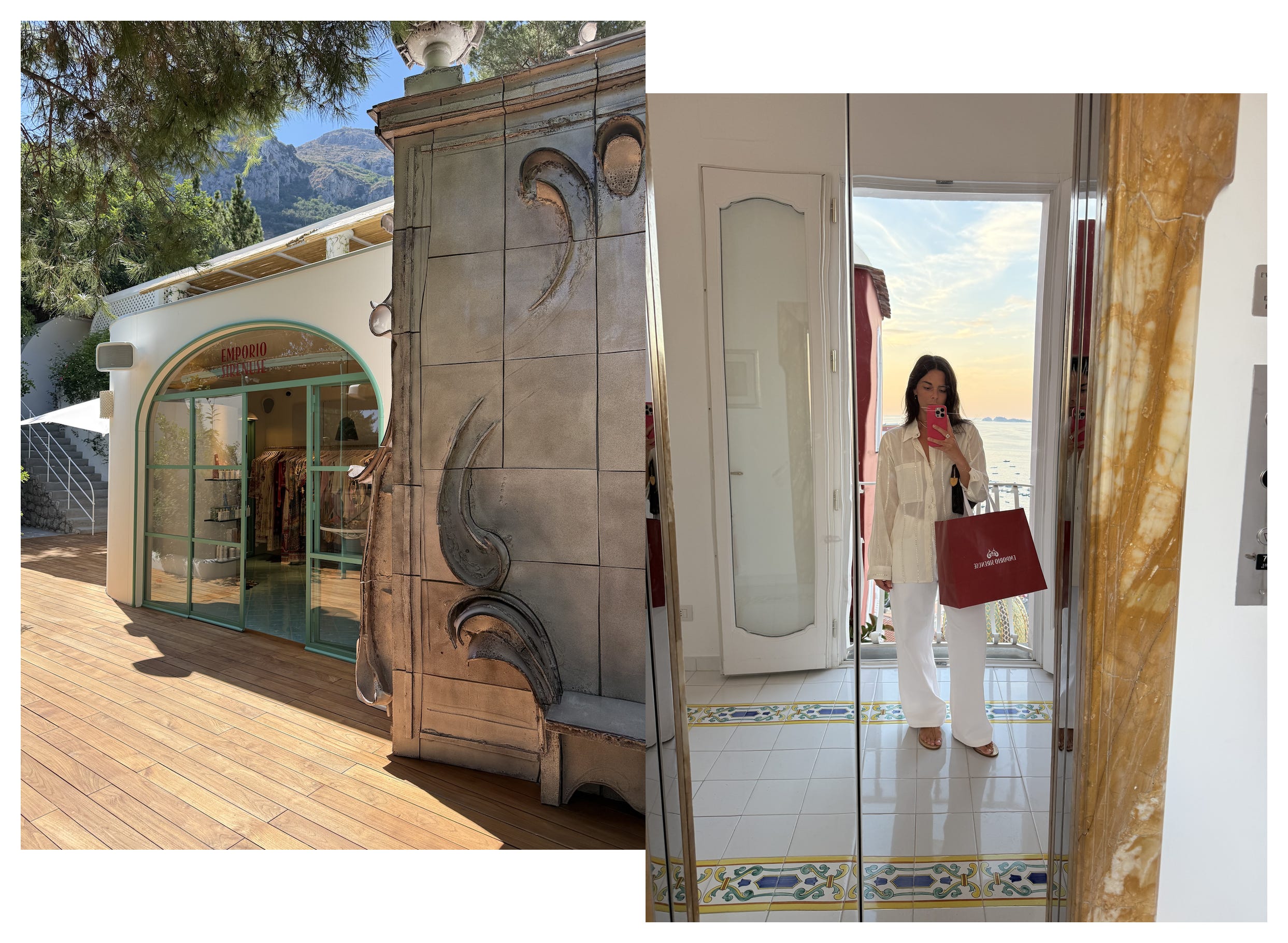
Let me stop myself there because calling Emporio Sirenuse a “hotel shop” undersells it entirely. Emporio Sirenuse is the name of the hotel’s resort wear line, but also the name of its wider boutique, one of the best-curated retail spaces I’ve come across at any hotel, anywhere, courtesy of Le Sirenuse’s uber-chic Italian matriarch, Carla. With outposts in Positano (directly across from the hotel) and now at Le Sirenuse Mare in Nerano, it stocks its own namesake line of gorgeous resort wear, alongside hotel merch that’s genuinely good (caps, key chains, ashtrays, and, not to be missed, their annual Tombolo collaboration, which can be ordered online here), plus an exceptional edit of hard-to-find brands I love: Verdi, Dragon Diffusion, So-Le, and Adrian Cashmere.
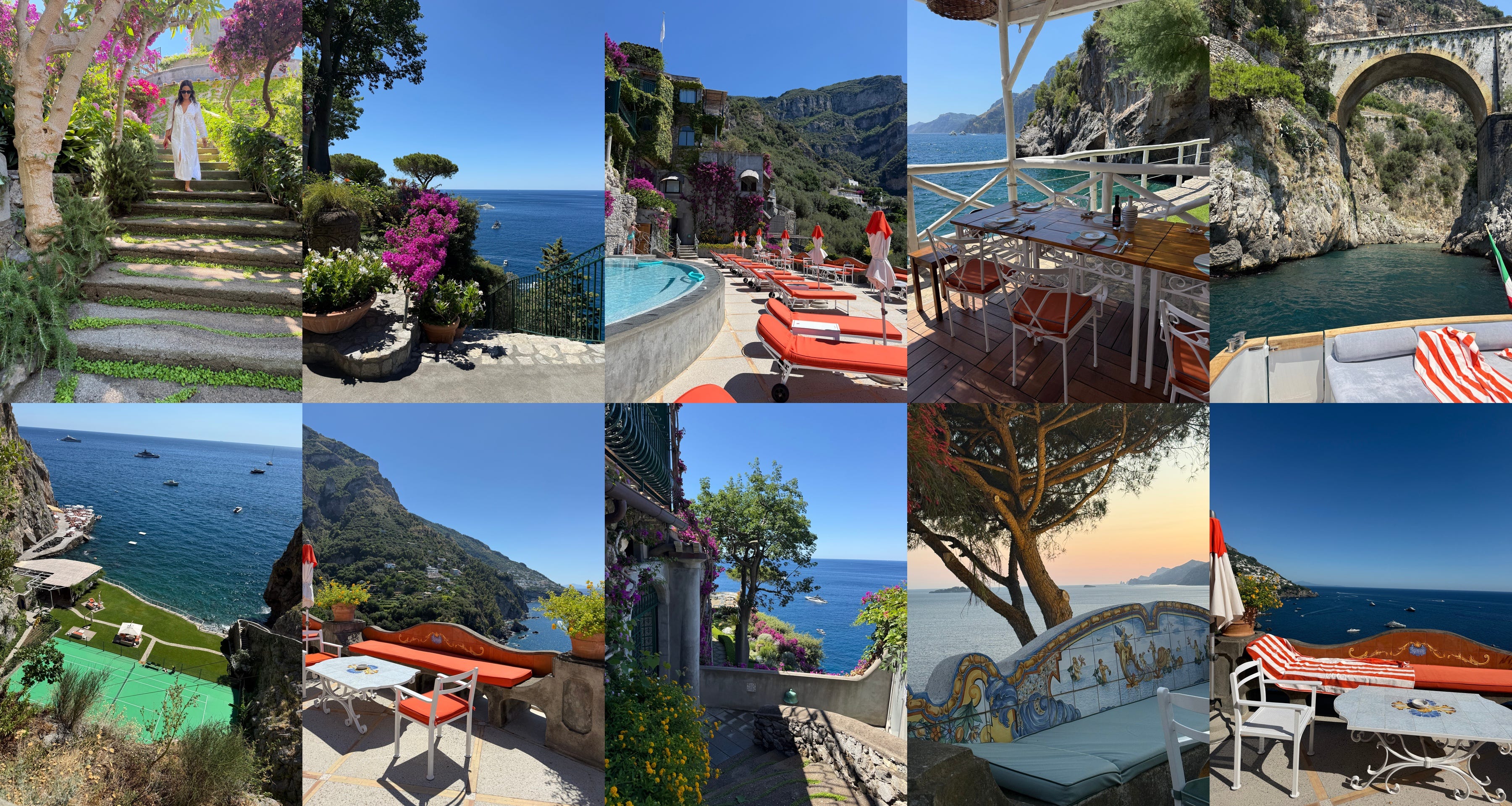
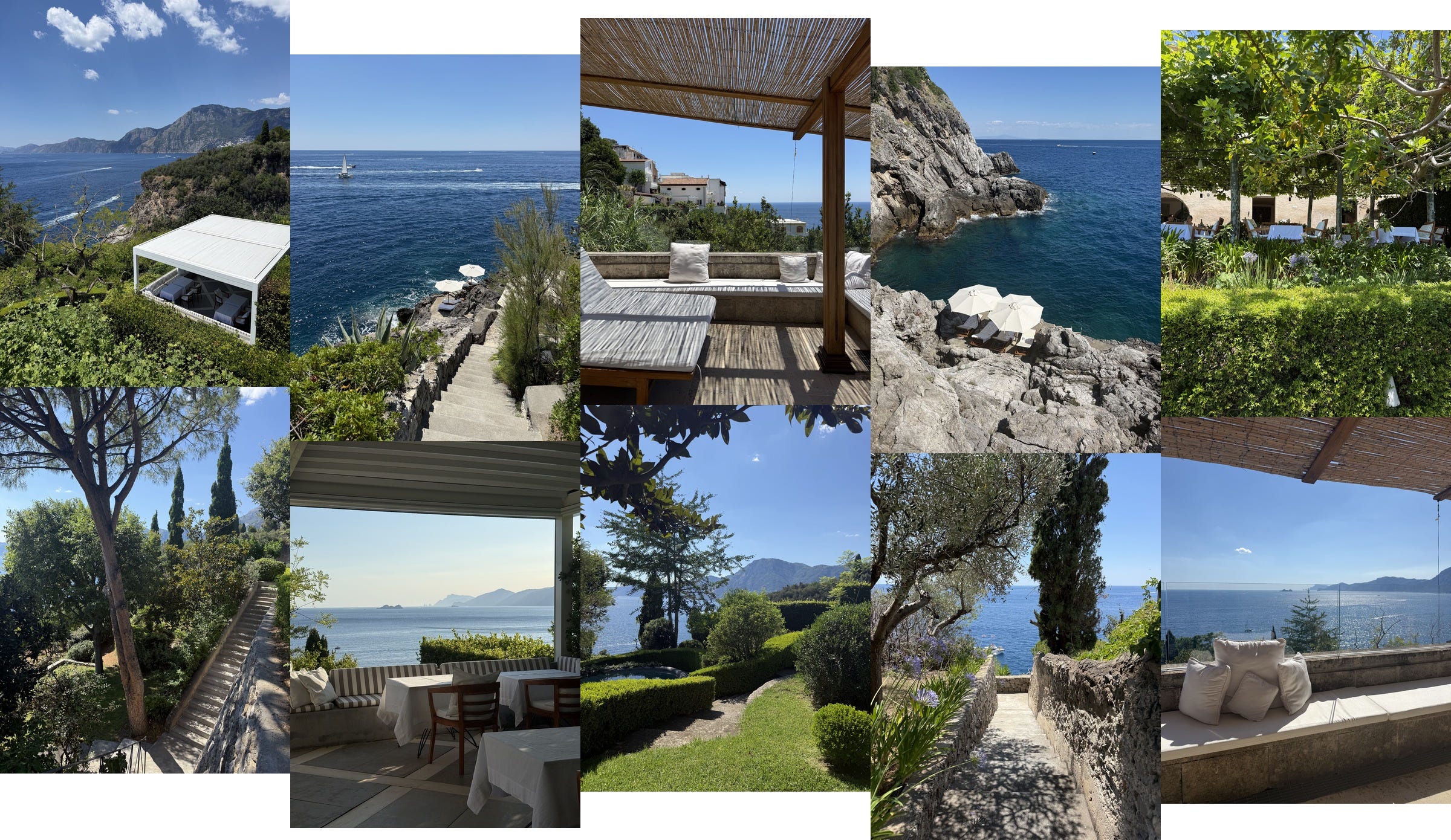
Believe everything you hear about Il San Pietro di Positano being a pretty perfect hotel. If you’re staying there, you already know to take aperitivo on the iconic terrace (probably the best sunset terrace on the Amalfi Coast), spend your days at the cliffside beach club — rows of signature orange loungers tucked along the water’s edge beneath the hotel’s dramatic cliffs — followed by lunch at the shaded seaside restaurant. You’ve probably also heard about the tennis court carved into the cliff. None of that needs repeating here; it’s likely why you booked in the first place. But there are a handful of surprise-and-delights that don’t get advertised nearly as much, and they’re what push the stay from great to genuinely special...
Take advantage of their complimentary boat cruise every morning
Beyond the two private boats available for a full day out (at extra cost), there’s a smaller pleasure worth building your morning around: a complimentary two-hour cruise along the coast, departing most days around 11 or 11:30am, with a swim stop and refreshments on board. It’s a fine way to see the Amalfi Coast from the water without committing to a whole day of it. You’re already paying a premium to stay here, so I appreciate when luxury hotels add thoughtful touches like this without a surcharge. Reserve a spot with the concierge the day before.
Even if you’re not a pool person, don’t skip the rooftop pool
On vacation, I’m not, as a rule, a pool person. Choosing a pool over the sea feels like a small betrayal when you’re on the Mediterranean. But I’ll make an exception for this one. The views alone would justify it, and the atmosphere does the rest, most of it owed to Pasquale, who has presided over the rooftop for more than twenty years and is, at this point, as much a fixture of Il San Pietro as the terracotta itself. Warm, funny, and exactly the kind of person who makes a great hotel feel unforgettable.
Ask to see their iconic kitchen
Il San Pietro’s kitchen is famed for its unique blend of culinary tradition, sustainability, and innovation. Behind the scenes, cutting-edge technology and thoughtful environmental practices work alongside the chefs’ craftsmanship. Worth checking out.
My friend, Enrico Costantini, who’s built an impressive career photographing some of the most extraordinary hotels around the world, had been telling me about this small hotel named Casa Angelina in Praiano. It doesn’t carry the same global recognition, or the over-the-top glamour of some of the bigger Amalfi Coast names, but he told me to trust him. That I’d love it. And he knows me well, because he was right.
If you care about the things that actually characterize a great five-star hotel, Casa Angelina gets it right.
What struck me most was the service: attentive without ever tipping into rigid. Example: the hotel runs scheduled transfers into Positano, but if a car happens to be free outside those hours, they’ll take you anyway. That kind of flexibility only exists when a small hotel is run by people with real hospitality instincts, and the confidence to use common sense instead of hiding behind policy.
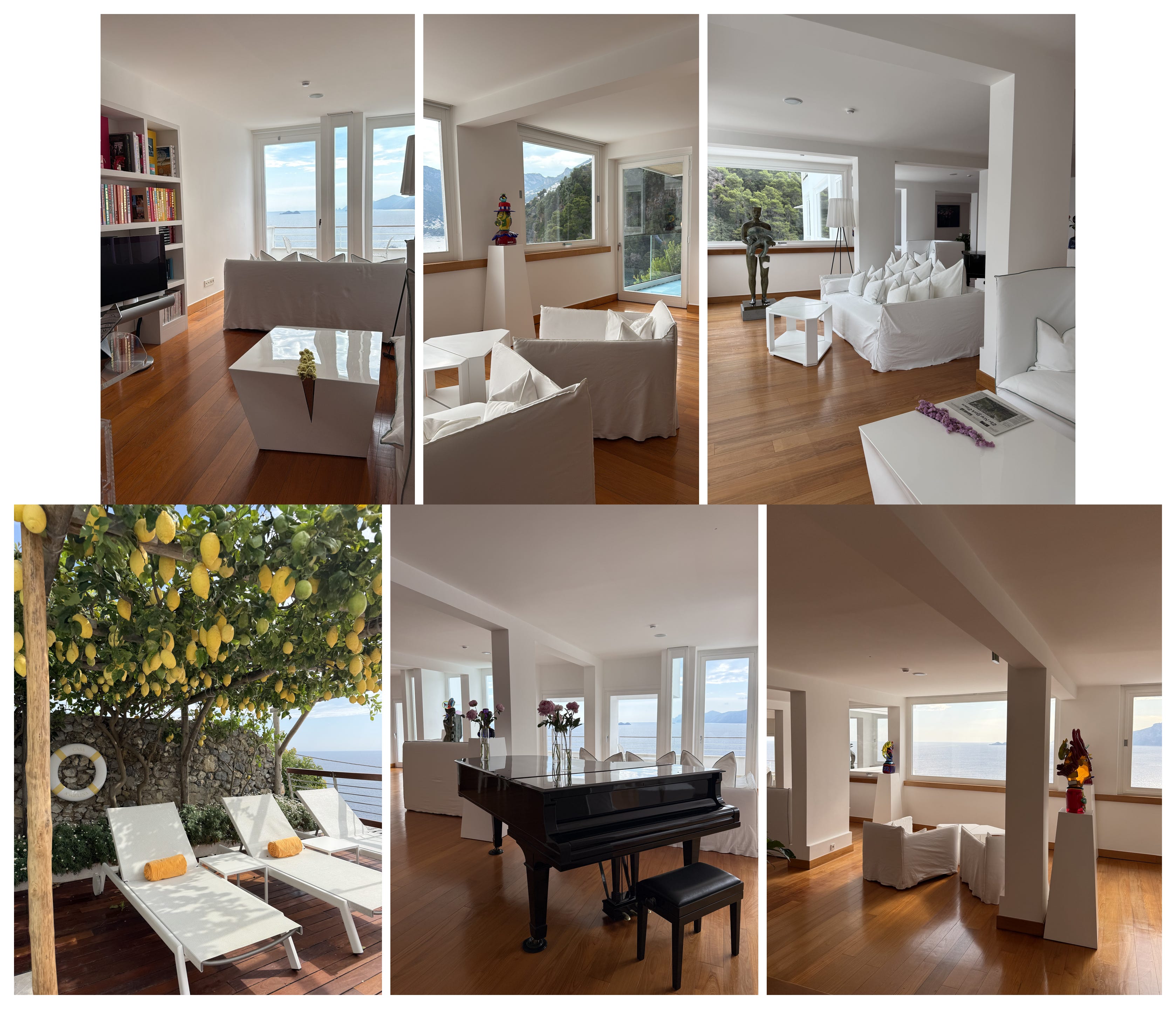
Then there's the food. Casa Angelina serves my favorite breakfast on the Amalfi Coast… not just because it's beautifully presented, but because the selection is genuinely excellent. There are fresh, healthy options alongside the Italian classics, rather than a buffet dominated by pastries and cakes simply because that’s the expected image of an indulgent Italian breakfast. Some hotels lean into that Amalfi Coast fantasy a little too heavily, relying on the setting alone to do the work. But hey, Casa Angelina still gives you lemon trees beneath a shady pool veranda and uninterrupted sunset views toward Positano… so if you’re looking for a little Amalfi Coast bravado, I’d say it’s covered.
The design is just as deliberate. Walk into the sunlit living room and it feels less like a hotel lobby than a chic private home: an eclectic mix of art, design and thoughtful detail that reads as effortless, and distinctly Italian. Nothing about it resembles a traditional lobby. Oversized white sofas piled with an almost humorous abundance of pillows invite you to sink in; newspapers sit casually on the coffee tables; books line the shelf at the far end of the room; a piano sits beside the bar at its center — making it, genuinely, the best spot on the property to order a Negroni and watch the sun go down.
Contemporary art brings the room to life, including playful, colorful glass face sculptures by the Cuban artist Alfredo Sosabravo, turning up throughout the hotel: peeking from a balcony, tucked into a hallway, appearing in unexpected corners like little whimsical surprises. (I mentioned the design felt reminiscent of La Minervetta, and it turns out that wasn’t a coincidence: Marco helped shape the direction here too.)
What sets Casa Angelina apart, for me, is that it isn’t trying to impress you with excess. It’s simply excellent in the ways that actually matter.
The one caveat: Casa Angelina doesn’t have its own beach club. But guests do get access to the nearby One Fire Beach, a lively beach club a short walk down from the hotel, with the option to visit a quieter beach spot next door when you want something more relaxed.
Comments
Nothing yet. Say the first thing.
Sign in to join the conversation.