
Hi there!
As a reader of Sidenotes, you’re invited to have a listen to Missing Pieces: The Lesbian Mothers Scandal. It’s a documentary I’ve presented and co-produced with the brilliant Emily Uchida Finch at Whistledown Studios.
Now, itt’s not like an exclusive invitation, you don’t get any Popchips or vouchers or signed merch or anything, I just want as many people as possible to spend their Sunday afternoon (1.30pm-2pm Sunday 8th, to be precise, or Monday 9th December 4-4.30pm) listening to this documentary and to the women I’ve heard from.
You see, I know a lot about LGBT history, but if you’d asked me a few months ago what lesbians had to deal with in the 70s, 80s or 90s, I might have said there was a big women’s lib movement, and maybe they didn’t always feel part of its central aims. And that there was a gay rights movement, consolidated in response to sex between men having once been illegal and to the age of consent being unequal, and that lesbians maybe didn’t feel too much part of that.
I had no idea that lesbians across the UK had custody of their own children taken off of them. The state worked through many arms: legal-aid funded barristers, judges, welfare officers and social service workers, to deprive lesbian mums of their own kids. Taxpayers’ money went towards this.
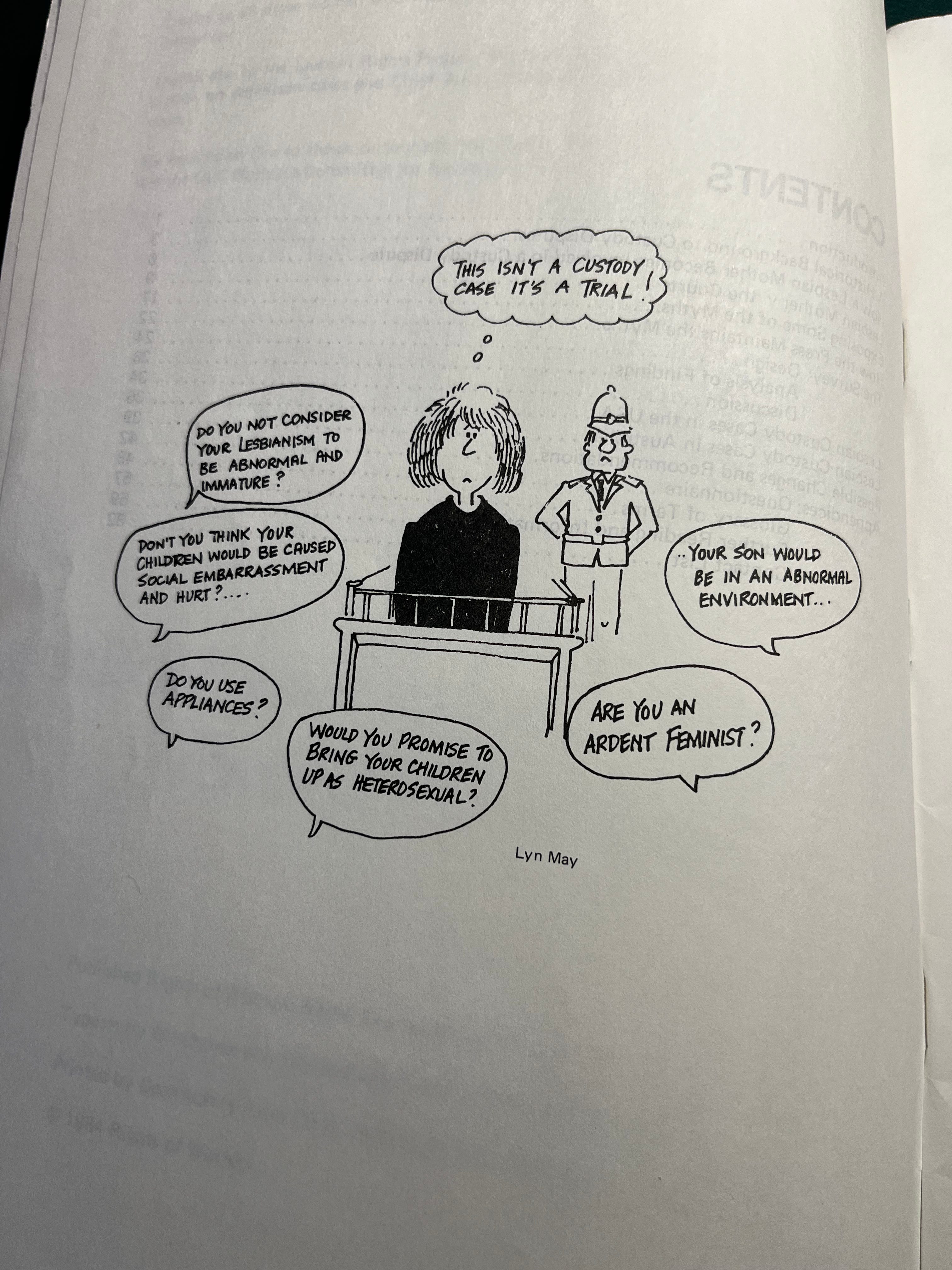
In many of the cases, the women had children with men before they realised their sexuality, or only realised their sexuality once they’d started to break up from their ex-husband. And in many of the cases, as long as the ex-husband took the mum to court, he’d get custody. How many of those men acted in revenge for being left for another woman, or just being left at all? Back then, marriage was there to make sure one person attended to the earning, another attended to the childrearing. Straying from those roles really was seen as going against the natural order.
There was never any specific law against lesbian mums having their own kids. So it really was up to the judges’ own attitudes, and the reasons they supplied for taking children as young as 18 months from their own mums are not always easy to find, because family court records are - sometimes necessarily - opaque. But in some we tracked down, they called lesbian relationships ‘unnatural’, ‘abnormal and immature’ and they asked intrusive questions about the women’s sex lives. The argument mainly boiled down to; lesbians are dangerous and cannot be trusted around their own kids. It’s an attitude later weaponised against LGBT people during Section 28.
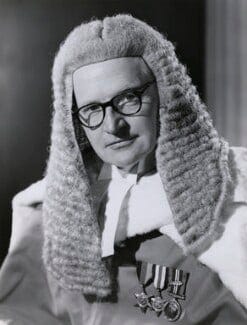
(That’s Sir Roger Ormrod, you’ll hear about him in the doc…imagine this judge and his ilk in your face when you just want to live your life and see your own kids?)
Faced with such bigoted logic, women responded by doing whatever they could; years of court battles, attempts at ridding themselves of their sexuality, or at least hiding it - to hold onto their kids.
It seems absurd and dystopian, and in the documentary I speak to experts who can talk more about the legal and social circumstances governing that time. I spoke to activists who tried to help lesbians get through that time of hostility. I also, most importantly, hear from the women who, years later, still feel the impacts of having lost their children. And one of the now-adult children who has long been reunited with her mum but still feels the harms of being taken from her.
Some of these women have asked for an apology for how the state treated them, so we contacted the Government…and you’ll have to listen to the documentary to hear what they said.
Please do take some time to listen to the doc in full and share it wide and let me know your thoughts. It’s got me thinking so much about how far lesbians have come, and about what family means to us, and about how, growing up, I really had no idea that lesbians could ever be mums. I thought you could just be one thing or another. Maybe that could have been different, maybe a lot more could have been different.
Comments
Nothing yet. Say the first thing.
Sign in to join the conversation.