
🇬🇧 Full English version belowNous chantons avant de parler.
Ce n’est pas une image. C’est un fait. Avant que le nourrisson ne forme ses premiers mots, avant même que le langage existe comme tel, il vocalise. Il module. Il babille. Il joue avec les hauteurs, les intensités, les timbres. Il chante, au sens le plus simple du mot.
Ce babillage porte un nom : la lallation. De longues sonorités, faites surtout de voyelles, que le tout-petit émet pour entrer en relation avec les grand·es dont dépend sa survie. Bien avant le premier mot, la voix est déjà là — non pas pour dire, mais pour relier. Sans voix, pas de besoin comblé. Sans voix, pas de lien.
D’ailleurs, l’oreille est le premier de nos organes des sens à être entièrement formé, bien avant la naissance, déjà tendue vers la voix de la mère. Au commencement, il n’y a pas le verbe. Il y a l’écoute.
Et pourtant, c’est elle que la plupart des adultes ont laissée derrière eux. Comment passe-t-on de l’enfant qui chante sans y penser à l’adulte qui dit moi, je ne sais pas chanter ?
À peu près au moment où l’enfant se met debout, où sa tête vient se poser en équilibre au sommet de la colonne, autre chose se joue dans le corps, plus discrètement. Le larynx descend dans la gorge. Le conduit vocal, qui formait jusque-là une pente douce, se plie peu à peu en angle droit : l’espace qui résonne se sépare de l’espace qui articule. Le souffle qui sonne d’un côté ; la langue, les lèvres et les dents qui découpent le son de l’autre. C’est cette nouvelle architecture qui ouvre l’accès aux consonnes, celles qu’il faut pour « sonner avec » les voyelles. Et c’est elle qui permet à l’enfant de commencer à parler. À l’échelle de l’humanité, c’est le même mouvement : la parole est née avec la verticalité. Le verbe n’était pas au commencement. Il est arrivé bien plus tard.
Alors, naturellement, les parents l’accompagnent. Ils corrigent, ils modèlent, ils guident vers une articulation plus nette, vers les sons reconnaissables de leur langue. C’est beau, et c’est nécessaire : c’est comme ça qu’on apprend à parler.
Mais personne, ou presque, n’accompagne l’autre versant. Celui du chant. Qui était pourtant là avant le langage.
Avec les années, les cordes vocales se transforment. Elles passent d’une élasticité presque sans limite à une structure qui se ligamente peu à peu. La voix cherche de nouveaux équilibres. Et si personne n’apprend à l’enfant à continuer de chanter avec un minimum d’effort pour un maximum de confort, il perd, doucement, l’accès à ce qu’il savait faire d’instinct avant ses deux ans.
Pensez à un enfant qui apprend à marcher.
Il tombe. Il se relève maladroitement, trouve un premier pas, puis deux, puis chancelle encore. Et autour de lui, on encourage. On applaudit. On tend les bras. On célèbre la chute autant que la réussite. Vas-y. Encore. Tu y es presque. Saviez-vous que les enfants âgés de 12 à 19 mois font en moyenne 2 368 pas… et 17 chutes par heure ?
On les laisse tomber. Parce qu’on sait que la chute fait partie de la marche.
Personne ne songerait à dire à un enfant qui trébuche : laisse tomber, tu n’es pas fait pour marcher. Et pourtant, c’est exactement ce qu’on dit, un jour, à l’enfant qui chante.
Quelques années plus tard, à l’adolescence, la voix vit sa propre chute. La mue. Sous l’effet des hormones, le larynx grandit vite : les cartilages s’épaississent, le plus grand, le cartilage thyroïde, bascule (chez les garçons, c’est la pomme d’Adam qui apparaît), les cordes vocales s’allongent et s’épaississent. L’instrument se transforme plus vite que les gestes qui le pilotent. Alors la voix déraille, part dans tous les sens, ne répond plus comme avant. Chez les garçons, elle descend en moyenne d’une octave ; chez les filles, d’une tierce. Ce n’est pas une fausse note. C’est un instrument qu’on est en train de reconstruire pendant qu’on joue dessus. Il devrait donc être accompagné, encouragé -comme le bébé qui se lève et tombe- le temps de trouver un nouvel équilibre dans ce corps qui grandit.
Mais ça arrive rarement, hélas. Le plus souvent, on sourit, un peu gêné. On dit chut. On laisse l’adolescent·e comprendre que sa voix, dans cet état-là, est mieux gardée pour soi. Et alors il·elle la retient. Parfois pour très longtemps.
Ce n’est pas une question de talent, ni d’oreille défaillante. Dans l’immense majorité des cas -sauf pathologie évidente- c’est une question de gestes vocaux qu’on n’a pas appris. De coordinations qu’on ne nous a jamais transmises. Et le plus souvent, ce n’est même pas l’oreille qui est en cause, mais la proprioception : savoir quelle sensation musculaire associer à quelle hauteur de son.
L’oreille, elle, entend très bien. Ce qui manque, c’est la carte intérieure — le lien entre ce qu’on perçoit et ce que le corps fait pour le produire.
Estill® Voice Training le montre avec précision : chaque qualité vocale correspond à des configurations physiques spécifiques, et reproductibles. Ce n’est pas du don. C’est de l’organisation. Et ça s’apprend. Ou plutôt, ça se ré-apprend… puisque nous chantions, bébé (bon d’accord, avec un instrument qui a un peu changé ;-)).
À un moment, donc, quelque chose se passe. Une remarque d’un·e enseignant·e. Un fou rire dans la cour de récréation. Une audition ratée. Une voix, dans la famille, qui tranche : toi, tu n’as pas l’oreille. Un chut de trop. Le choix, implicite, de se taire pour ne pas prendre de risque.
Et voilà. La décision est prise. Souvent sans même qu’on en ait conscience.
Je ne sais pas chanter. Je n’ai pas de voix. La musique, c’est pour les autres.
Ce n’est pas un manque. C’est une porte qu’on a fermée — et dont on a fini par oublier qu’on tenait la clé.
Ce que j’ai appris, à force de travailler avec des personnes très différentes, c’est que cette décision n’est presque jamais définitive. Elle peut être re-prise. Elle est réversible.
Et ce retour n’est pas un ajout. On ne colle pas une compétence par-dessus quelqu’un. On ne le dé-nature pas pour en faire un·e chanteur·se. On le re-nature : on le ramène vers ce qui était déjà là, avant les chut, avant les remarques, avant la porte fermée.
Quelqu’un m’a écrit, un jour : Oser chanter est une sorte de réparation pour moi. Je m’arrête toujours sur ce mot. Réparation. Pas apprentissage. Pas performance. Comme si quelque chose avait été abîmé et pouvait être recousu, ré-assemblé, ré-accordé.
Je vous parle de cette décision. Mais je dois vous dire une chose : moi, je ne l’ai pas prise.
J’ai eu cette chance rare de grandir avec un amour de ma voix que je n’ai jamais eu à remettre en question. Je le dois sans doute à ma Bonne-Maman, cantatrice, qui m’a gardée bébé jusqu’à mes trois ans. La légende familiale raconte que seuls ses chants calmaient mes pleurs.
Alors non, je ne vous écris pas depuis une voix qui aurait toujours su. Je vous écris depuis la place de celle qui a découvert, en formation, que la plupart des gens n’aimaient pas -ou si peu- leur voix. Qu’ils ignoraient à quel point elle pouvait être une amie fidèle. Ce jour-là, j’ai décidé d’en faire ma singularité. Pas pour vous apprendre à chanter. Pour marcher à côté de vous, pendant que vous re-décidez.
Parce que la voix chantée exige ce que la voix parlée, elle, peut contourner : une exposition totale. On peut parler de façon contrôlée, calibrée, tenue à distance. Chanter, c’est autre chose. C’est laisser sortir quelque chose qui vient de plus loin, de plus profond. C’est s’exposer sans filet.
C’est exactement pour ça que c’est si puissant. Et exactement pour ça que tant de gens l’ont mis de côté.
Ce que je vois le plus souvent, dans ce travail, ce ne sont pas des progrès techniques, même s’ils viennent. Ce que je vois, ce sont des personnes qui décident. Qui reprennent une décision ancienne et la retournent. Qui passent de ce n’est pas pour moi à c’est à moi de décider si c’est pour moi.
Car une voix qu’on retient ne disparaît pas. Elle s’imprime ailleurs — dans la gorge qui se serre, dans le souffle qu’on retient, dans le je ne sais pas chanter qu’on transmet, sans le vouloir, à celles et ceux qui nous écoutent. Ce qui ne s’exprime pas s’imprime.
Reprendre la décision, ce n’est donc pas un caprice. C’est desserrer quelque chose. S’écouter, s’accorder, et laisser sortir… non pas pour bien faire, mais pour être un peu plus soi.
La voix n’est pas un talent qu’on a, ou qu’on n’a pas.
C’est un territoire que l’on choisit -ou non- d’habiter.
Et il n’est jamais trop tard pour décider d’y revenir.
S’il vous a plu ET que vous pensez qu’il peut en intéresser d’autres, il est public donc sentez-vous libre de le partager. Merci :-).
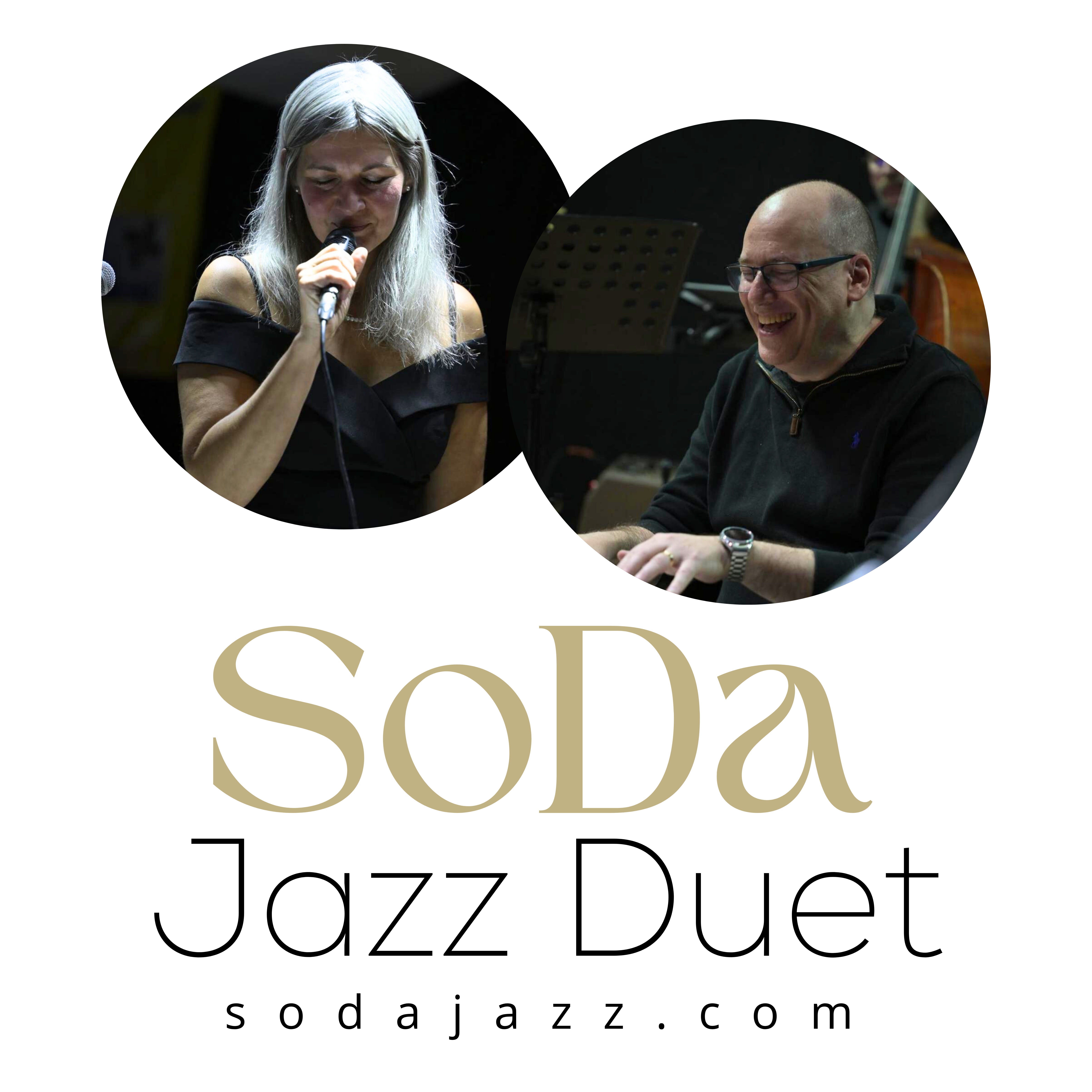
SoDa Jazz Duet sera en concert intimiste à Bruxelles le 23/08 - toutes les infos ici.
SoDa Jazz Duet will be performing an intimate concert in Brussels on 23 August – full details here.
🇬🇧 Full English version
We sing before we speak.
It’s not a figure of speech. It’s a fact. Before the infant forms their first words, before language even exists as such, they vocalise. They modulate. They babble. They play with pitch, with intensity, with timbre. They sing, in the simplest sense of the word.
This babbling has a name: lallation. Long sounds, mostly vowels, that the little one sends out to enter into relationship with the grown-ups their survival depends on. Long before the first word, the voice is already there — not to say something, but to connect. No voice, no need met. No voice, no bond.
The ear, in fact, is the first of our senses to be fully formed, well before birth, already turned toward the mother’s voice. In the beginning, there is no word. There is listening.
And yet it’s the one most adults have left behind. How do we get from the child who sings without thinking to the adult who says me, I can’t sing ?
Around the time the child stands up, when the head comes to balance at the top of the spine, something else is happening in the body, more quietly. The larynx descends in the throat. The vocal tract, until then a gentle slope, slowly bends into a right angle: the space that resonates separates from the space that articulates. The breath that sounds on one side; the tongue, lips and teeth that carve the sound on the other. It’s this new architecture that opens the door to consonants, the ones you need to “sound with” the vowels. And it’s what lets the child begin to speak. On the scale of humankind, it’s the same movement: speech was born with our uprightness. The word wasn’t there at the beginning. It came much later.
So, naturally, the parents step in. They correct, they model, they guide toward clearer articulation, toward the recognisable sounds of their language. It’s beautiful, and it’s necessary: that’s how we learn to speak.
But almost no one accompanies the other side. The singing one. The one that was there first, before language.
Over the years, the vocal folds change. They move from an almost limitless elasticity to a structure that gradually develops its ligament. The voice looks for new balances. And if no one teaches the child to keep singing with the least effort for the most comfort, they slowly lose access to what they could do instinctively at two.
Picture a child learning to walk.
They fall. They get back up clumsily, find one step, then two, then wobble again. And all around, people encourage. They applaud. They hold out their arms. They celebrate the fall as much as the success. Go on. Again. You’re almost there. Did you know that children between 12 and 19 months take an average of 2,368 steps… and have 17 falls per hour?
We let them fall. Because we know the fall is part of walking.
No one would dream of telling a stumbling child: give up, you’re not made for walking. And yet that’s exactly what we say, one day, to the child who sings.
A few years later, in adolescence, the voice has its own fall. The voice break. Under the effect of hormones, the larynx grows fast — the cartilages thicken, and the largest, the thyroid cartilage, tilts (in boys, this is when the Adam’s apple appears), the vocal folds lengthen and thicken. The instrument changes faster than the gestures that steer it. So the voice cracks, scatters, no longer responds the way it did. In boys it drops, on average, by an octave; in girls, by a third. It’s not a wrong note. It’s an instrument still being rebuilt while we’re playing it. And so it should be supported and encouraged -like the baby who stands and falls- as it finds a new balance in this growing body.
But sadly, that rarely happens. More often than not, we smile, a little sheepishly. We say shh. We let the teenager understand that their voice, in that state, is best kept to themselves. So they hold it back. Sometimes for a very long time.
It’s not a matter of talent, nor of a faulty ear. In the vast majority of cases -barring obvious pathology- it’s a matter of vocal gestures that were never learned. Of coordinations that were never passed on. And most often, it isn’t even the ear that’s at fault, but proprioception: knowing which muscular sensation to attach to which pitch.
The ear, in fact, hears perfectly well. What’s missing is the inner map — the link between what we perceive and what the body does to produce it.
Estill® Voice Training shows it precisely: each vocal quality corresponds to specific, reproducible physical configurations. It’s not a gift. It’s organisation. And it can be learned. Or rather, re-learned… since we used to sing as babies (well, OK, with an instrument that’s changed a bit ;-)).
So, at some point, something happens. A teacher’s remark. A fit of laughter in the schoolyard. A failed audition. A voice in the family that cuts in: you’ve got no ear. One shh too many. The implicit choice to stay quiet rather than take the risk.
And there it is. The decision is made. Often without our even being aware of it.
I can’t sing. I have no voice. Music is for other people.
It’s not a lack. It’s a door we closed and eventually forgot we were holding the key to.
What I’ve learned, from working with very different people, is that this decision is almost never final. It can be taken back. It is reversible.
And this return isn’t an addition. We don’t stick a skill on top of someone. We don’t de-nature them into a singer. We re-nature them: we bring them back toward what was already there, before the shh’s, before the remarks, before the closed door.
Someone once wrote to me: Daring to sing is a kind of repair for me. I always stop on that word. Repair. Not learning. Not performance. As if something had been damaged, and could be stitched back, reassembled, re-tuned.
I’m telling you about this decision. But I have to tell you something: I never made it.
I had the rare luck of growing up with a love for my voice that I never had to question. I owe it, no doubt, to my Bonne-Maman, an opera singer, who looked after me as a baby until I was three. Family legend has it that only her songs could calm my crying.
So no, I’m not writing to you from a voice that always knew. I’m writing from the place of someone who discovered, in training, that most people didn’t love -or barely loved- their voice. That they had no idea how faithful a friend it could be. That day, I decided to make it my singularity. Not to teach you to sing. To walk beside you, while you re-decide.
Because the singing voice asks for what the speaking voice can sidestep: total exposure. You can speak in a controlled, measured, held-at-arm’s-length way. Singing is something else. It’s letting out something that comes from further away, from deeper down. It’s exposing yourself without a net.
That’s exactly why it’s so powerful. And exactly why so many people have set it aside.
What I see most often, in this work, isn’t technical progress, though that comes too. What I see are people who decide. Who take an old decision and turn it over. Who move from it’s not for me to it’s mine to decide whether it’s for me.
Because a voice we hold back doesn’t disappear. It imprints itself elsewhere — in the throat that tightens, in the breath we hold, in the I can’t sing we pass on, without meaning to, to those who listen to us. What isn’t expressed gets imprinted.
Taking the decision back, then, isn’t a whim. It’s loosening something. Listening to yourself, tuning yourself, and letting it out — not to do it well, but to be a little more yourself.
Voice is not a talent you have, or don’t.
It’s a territory you choose — or not — to inhabit.
And it’s never too late to decide to return to it.
If you enjoyed it AND think others might find it interesting, it’s public, so please feel free to share it. Thank you :-).
Aucun post
Comments
Nothing yet. Say the first thing.
Sign in to join the conversation.