
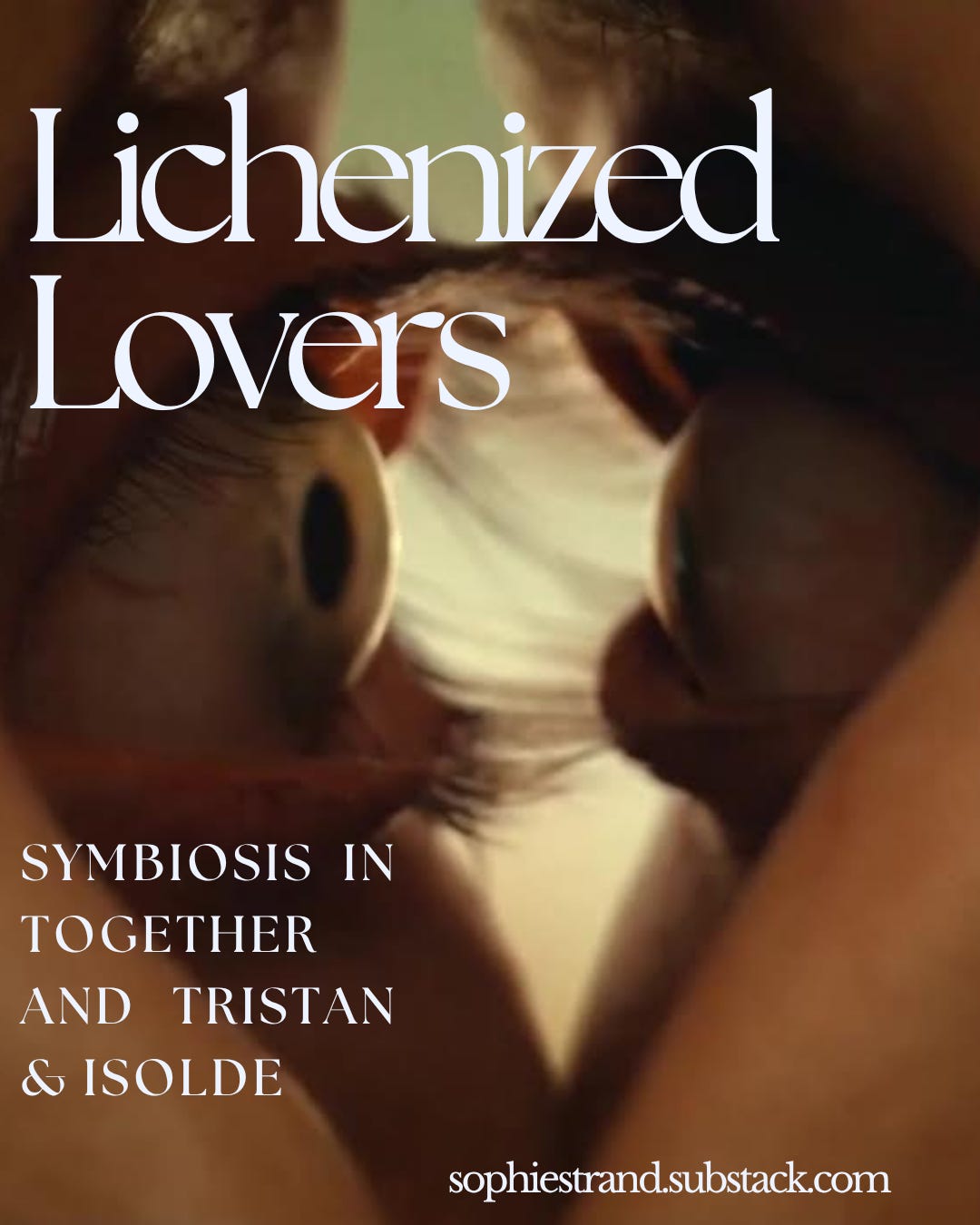
After falling into a cave and getting covered in a weird gooey substance, a young couple find themselves physically fusing together until in the final scene they completely merge, creating an androgynous holobiont. So goes the plot of Together, a 2025 body horror film that A.V. Club’s Brianna Zigler declared, “the greatest romance of the year, even if it’s also a film that happens to feature a motorized, saw-toothed blade slicing through mutated flesh. It takes more than gore to undermine the sensation of being so in love with someone that you want to get inside their skin”. The plot is intentionally campy and supernatural, featuring grotesque visuals and new age cults. But it’s themes of love as violent, symbiotic fusion while exaggerated are in no way novel or supernatural. Romance before it got its contemporary Hallmark makeover has always been dangerous enough that it should really be marketed with a black box warning: May cause bodily harm and dissolution of the self.
Watching Together’s couple contemplate suicide rather than undergoing the somehow even worse death of the self by complete bodily fusion, I was reminded of another romantic couple facing a similar substance-fueled compulsion to merge: Tristan and Isolde. “They who were two and divided became one and united. No longer were they at variance…They shared a single heart. The two were both one in joy and sorrow,” writes Gottfried von Strassburg in his 13th century version of the Tristan and Isolde romance. The two lovers, initially divided by the sea and by conflicting loyalties, suspended in a boat between their warring countries, are alchemically fused by accidentally ingesting a love-potion. Across different versions of the legend, the lovers are not portrayed as practicing courtship or as falling in love. Instead, they are fused. Chemically bonded. And, afterwards, they are something stranger than a couple, functioning more like a single being, that for the sake of narrative tension, gets stretched and twisted only so that it can violently, dramatically, snap back into its original cohesion. “A man, a woman; a woman, a man. Tristan, Isolde; Isolde, Tristan,” Gottfried writes, suggesting that what has been created is not a romantic union, but a single, poly-gendered, multi-named entity.
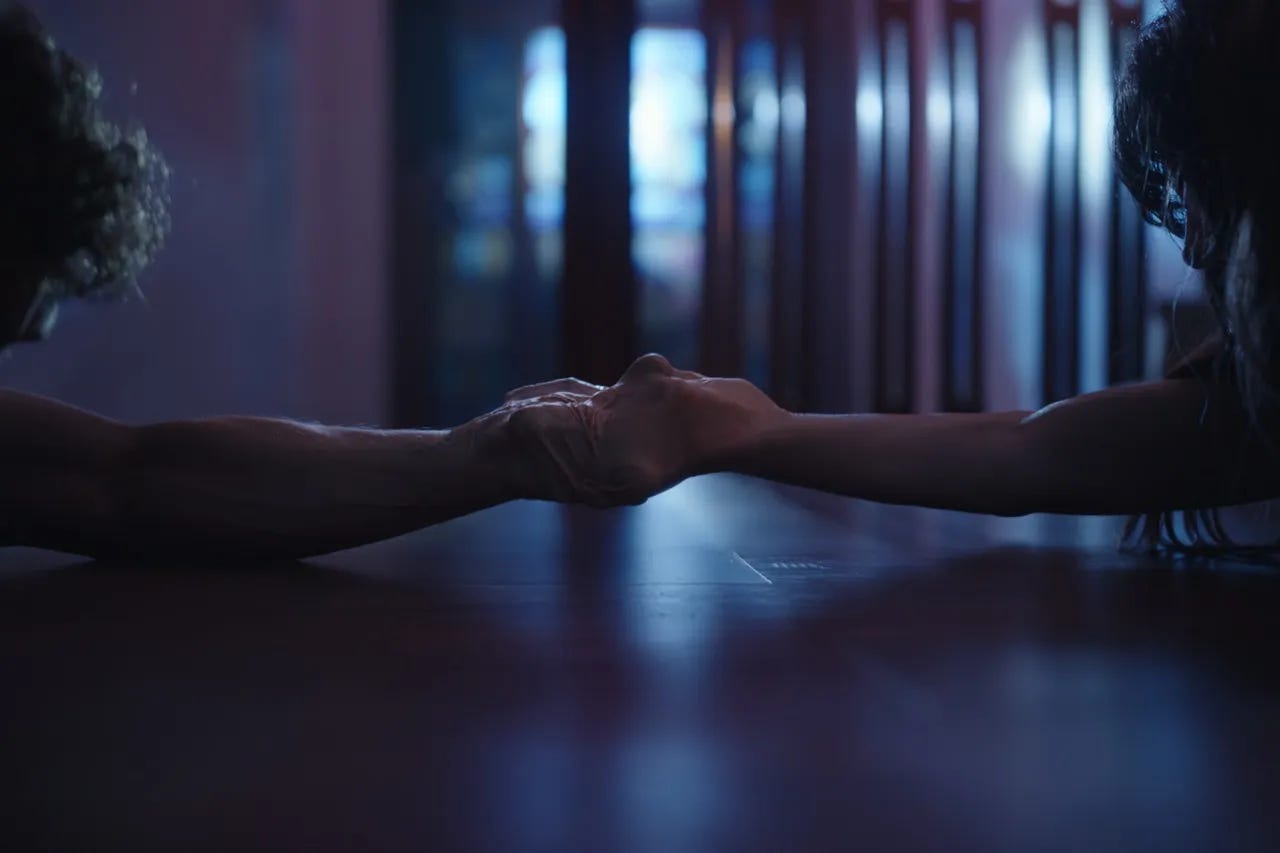
When I think of Tristan and Isolde, I think of lichen. Albert Bernhard Frank coined the word symbiosis to describe the mutualism of fungi and algae that compose lichen. The relationship was initially looked at with consternation. Modern science, in particular Neo-Darwinism, articulated through the social stratification of Victorian England, couldn’t understand two unlike organisms collaborating, and even more so, living “inside” each other. It must be a conflict. But I am reminded of the wonderful quote by Ursula K. Le Guin: “Modernist manuals of writing often conflate story with conflict. This reductionism reflects a culture that inflates aggression and competition while cultivating ignorance of other behavioral options. No narrative of any complexity can be built on or reduced to a single element. Conflict is one kind of behavior. There are others, equally important in any human life, such as relating, finding, losing, bearing, discovering, parting, changing. Change is the universal aspect of all these sources of story. Story is something moving, something happening, something or somebody changing.”
Even today, scientific narratives are troubled by commensalisms and parasitisms – both included on the spectrum of symbiosis. Who is winning and who is losing? Who benefits who? How can quantify and measure this relationship? Recent studies have uncovered that lichen is even stranger than initially thought. Yeasts and other bacteria have been identified as members of the union. This isn’t a monogamous partnership. Perhaps it can’t really be called a partnership at all. Symbiosis means “becoming with”. Becoming-with is not a positive or negative attribute. It is a metamorphosis. It simply means to change. For me, symbiosis is the ultimate symbol of narrative propulsion. We collaborate, we merge, and we fuse, in order to keep telling the story be evolutionary or romantic. And the story, like lichen, is always wider and weirder and queerer than any of the single parts, or characters, that constitute it.
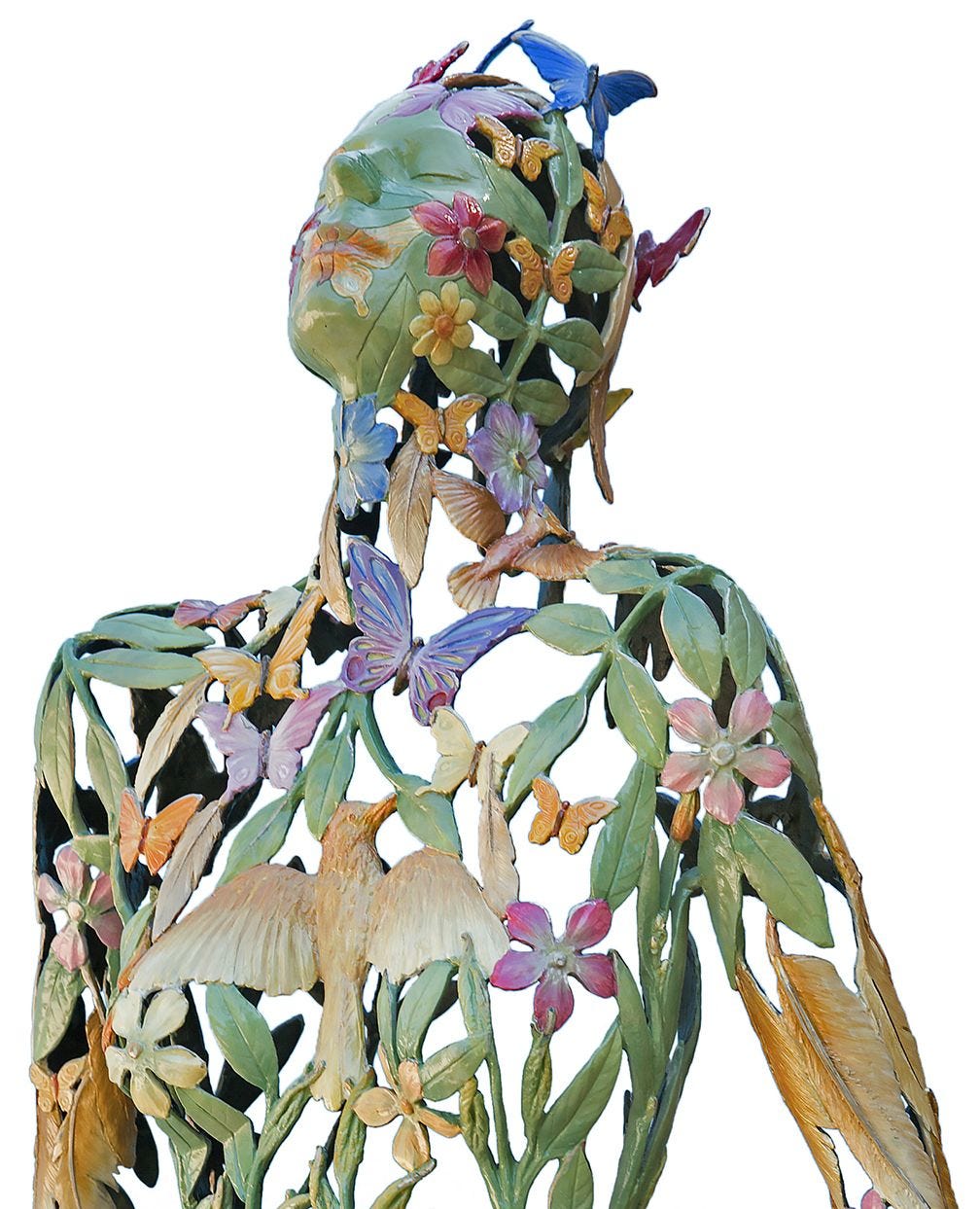
Gaia’s Garden by Linda Brunker
Recently I learned that certain compounds, including several of the life-saving antibiotics we depend upon today, can only be created and “learned” by lichenized algae and fungi. Lichenized partnerships aren’t permanent either. Fungi “learn” how to make these compounds and then later, separated from their symbiont, still remember how to produce them. Unruly collaborations create novel creative opportunities. When two narratives, seemingly opposed, interrupt each other, they can fuse into a new kind of story. One, that like lichen, can digest rock, liberate minerals, and create miraculous medicines. Or, like the romantic human lovers I began with, they fuse to create storytelling that intentionally confounds our expectations. Across retellings, Tristan “dies” multiple times. Tristan is Isolde, Isolde is Tristan. Isolde is impersonated by Bragnae. Tristan pretends to be a harpist called Tantrist. There are three different Isoldes in the earliest versions of the story. Love blurs and binds. It transforms. Everything is lichenized.
At the end of Tristan and Isolde the two lovers die and are buried side by side. Above their graves two plants intertwine. The fusion varies between versions but includes two willows, honeysuckle and hazel, vine and a rosebush, and two thorn bushes. Gottfried, writing in the 13thcentury chose as his source text, the earlier Tristan of Thomas. The two romances overlap. But in an act that even more closely mirrors symbiosis, Gottfried died when 5/6ths of the way through the text, and the only surviving versions of Thomas represent the final 1/6th of the story. Together, the two versions, like the plants above the lovers’ graves have fused and braided. In order to receive the full narrative, they must be read together.
As I studied the Tristan myth in college, I was simultaneously encountering Lyn Margulis’s theory of symbiogenetic cell evolution. Around 542 million years single eukaryotic mitochondria and plastids started to collaborate. They fused together to create the first complex eukaryotic cells that provide the building blocks for our bodies, for plants and animals and fungi. Symbiogenesis paints a decidedly nonlinear picture of evolution. Instead of a straight arrow, biological ingenuity is created through transversal intimacies and unexpected alliances: species-melting fusions that couldn’t neatly be slotted into romantic seduction and partnership.
Scientists agree that extreme environmental pressure often acts a a symbiotic pressure cooker, forcing desperate organisms to depend on body-sharing as a survival tactic. Starving microbes half digest each other and ultimately create multicellular life. Just like the union of the lovers creates narrative propulsion, so did the union of eukaryotes create evolutionary propulsion.
The biological novelty that drives the unfolding aliveness of the biosphere depends on types of fusion that lay well outside our human concepts of safety or well-being. Philosopher Andreas Weber asserts that “Life has a tendency to transform all available resources into a meshwork of bodies”. This meshwork of bodies’ goal is aliveness of the whole, and not aliveness of the individual. An aliveness that “in its innermost core carries the plea that there be more life, not that I am fine. Putting the desire that there be life first might even provoke my own destruction.” To be alive is to be “enmeshed” in a “mess that must be constantly negotiated”.
A question I often ask myself when contemplating deep history, evolutionary biology, and extinction events, is: to what lengths will nature go when it wants to create something new?
This question is the engine inside my own updated fantasy retelling of Tristan & Isolde. What if the most creative edge of evolution was also the most grotesque?
Let me place us on a seashore that shifts like viridescent snakeskin and summon a decidedly non-human couple. The tidal pool’s green liveliness signals sun hunger. Convula roscoffensis, otherwise known as mint-sauce worm, is a phototropic being, no longer dependent on oxygen to live. The worm eats the sun through the photosynthesizing algae Platymonas that has infiltrated and stained its sheer flesh permanently green. The fusion of worm body and plant hunger so confounded the Englishman J. Keeble, who first identified them, that he dubbed the worms “plant-animals”.
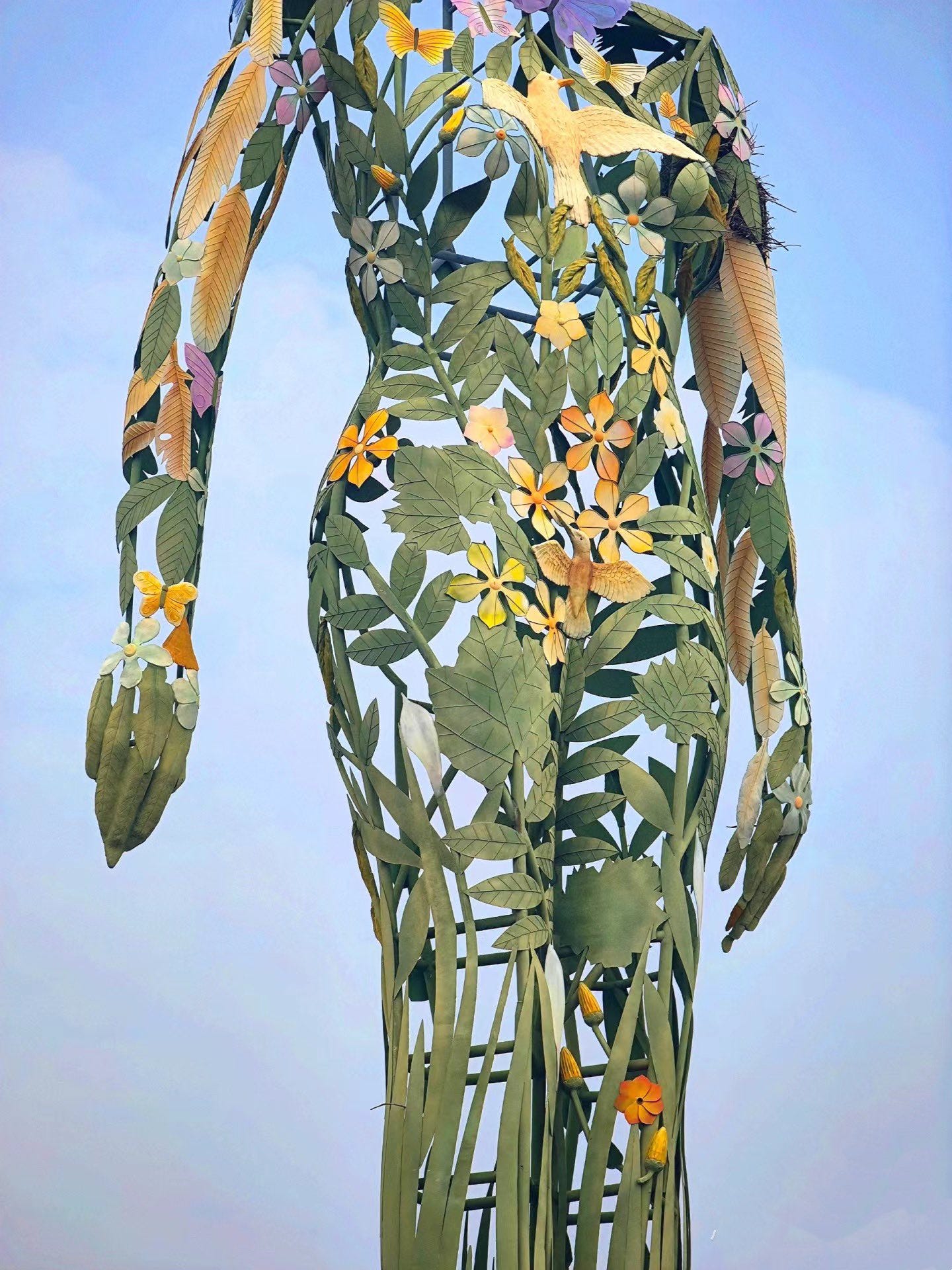
Linda Brunker
What is happening between the worm and the algae? The algae live in the worm like an ecosystem, repurposing the uric acid produced as waste by the worm into their own nourishment, dying and lovemaking and community building all within the bounds of another body. These algae, then, leak their own photosynthetic nourishment into the body of the worm, allowing the worm to subsist on translated sunlight. So tightly coupled is this relationship that the worm’s mouths have atrophied and are no longer used following the hatching of the worm larva. The mouth, then, is a symbol for a more desperate time. The time before union. The time when the worm was just a worm, nothing else.
When do you like your body? “i like my body when it is with your / body. It is so quite new a thing. Muscles better and nerves more,” writes the poet E. E. Cummings. Many of us like our bodies best as hybrid. Body plus lover. Body plus baby. Body plus huge body of water. We forget that it is not the wings of the bird that allow for flight, but the bird plus the lifting air. Where does flight live? In the wings or the air? Or interstitially – between the two? Our bodies become pleasurable, become livable and lovable, not alone but through material interaction. Isn’t it strange, then, that the thing we fear most medically and personally is physical trespass? We fear the infection, the parasite, the physical breach. Body-plus is the calculus that allows for pleasure and flight and birth and digestion but it is also the opening into more ambiguous communions. Those with long term illness and with a legacy of trauma understand that hybridity is not something you order off the menu. It arrives and makes a home in your body. Suddenly you are more than you ever thought you could be, in ways both terrifying and curious.
Tristan and Isolde drink the love potion and are chemically woven into tragic union. But from their graves grow willows and honeysuckle and roses. From the dissolution of a single self sprouts the possibility of more flowers, more species, more life. And from their tragic fusion grows a story that has persisted through different languages and paradigms, constantly being retold. Just as the longest persisting species are built from symbiotic mergers, so are the hardies, most evolutionarily agile narratives created from symbiotic romances that prize syncretism (fusions of different cultural beliefs into a new whole) and taboo romance that defies cultural norms.
As species die out by the hundred every day, it is to these risky collaborations that we should turn. Symbiosis is always a decent survival tactic: species impinged by climatological pressures and scant resources try to eat each other, fail, and at some point, along the way, begin to co-become. The narrative is neither neat nor heart-warming. It is fraught and it often fails. But the other option is starvation and extinction. The singular species is a shipwreck. Symbiosis is always a risk. And so is real love. It comes with a physical cost: the shape you recognize. The familiar boundaries of your own mind.
Life is a process of addition. A concatenation of matter. Even our solitary selves must inhale air. Where does life live? In the air or in our lungs? In a time when safety has become the goal of psychology and political discourse, paired with the talismanic abstraction of boundaries, I want to offer that becoming new is never safe. Survival is never safe. And love is always a risk. Love is always a breach. A break in the skin. It is a leap across the abyss. It is the moment you leap into another body.
I am interested in the love stories that are irreversible. That stain me green. That atrophy my mouth. That teach me how to eat sunlight. I want love stories that scare me but teach me how to survive at all costs. Here world, let me burn the bridge to my old body on my way into your body. I am ready to risk new shapes.
This is the third installment in my ongoing series Confessions of a Romantic Animist. The next post will be a Romantic Animist Recommended Reading list for paid subscribers.
I want to reclaim romance as a celebration that includes the entire earth. I want to throw another party. A love party. And I want to invite you along.
I’m going to take the same approach to love stories as I took to myths of the masculine in The Flowering Wand. I will reroot, rewild, and retell classical love stories within an ecological framework. I’m also going to write about my fascination with contemporary romance, animal courtship rituals, and fantasy. I have questions about how romance is a powerful tool in combatting and dismantling empire and I’m going to think and write through them in real time in conversation with you.
Most of the essays in this series will be offered for free. I want to think and love and dance with you. But alongside this series on courtship, ecology, fantasy, and eros, I’m also going to offer excerpts for of my upcoming fantasy series: one inspired by Joan of Arc and the other a queer retelling of Tristan & Isolde for my paid subscribers as well as occasional personal essays on romance.
No posts
Comments
Nothing yet. Say the first thing.
Sign in to join the conversation.