
Hello there, happy Sunday!
Having lived in Thailand for nine months, I saw many temples. Some were simple and humble, others were intricate and glittery. All were beautiful. But nothing compared to my experience visiting Wat Huay Pla Kang in Chiang Rai.
As I jumped out of the stuffy van at our final stop on a temple tour in the north of Thailand, I audibly gasped. Up a ways on the hill sat a large, magnificent Lady Buddha.
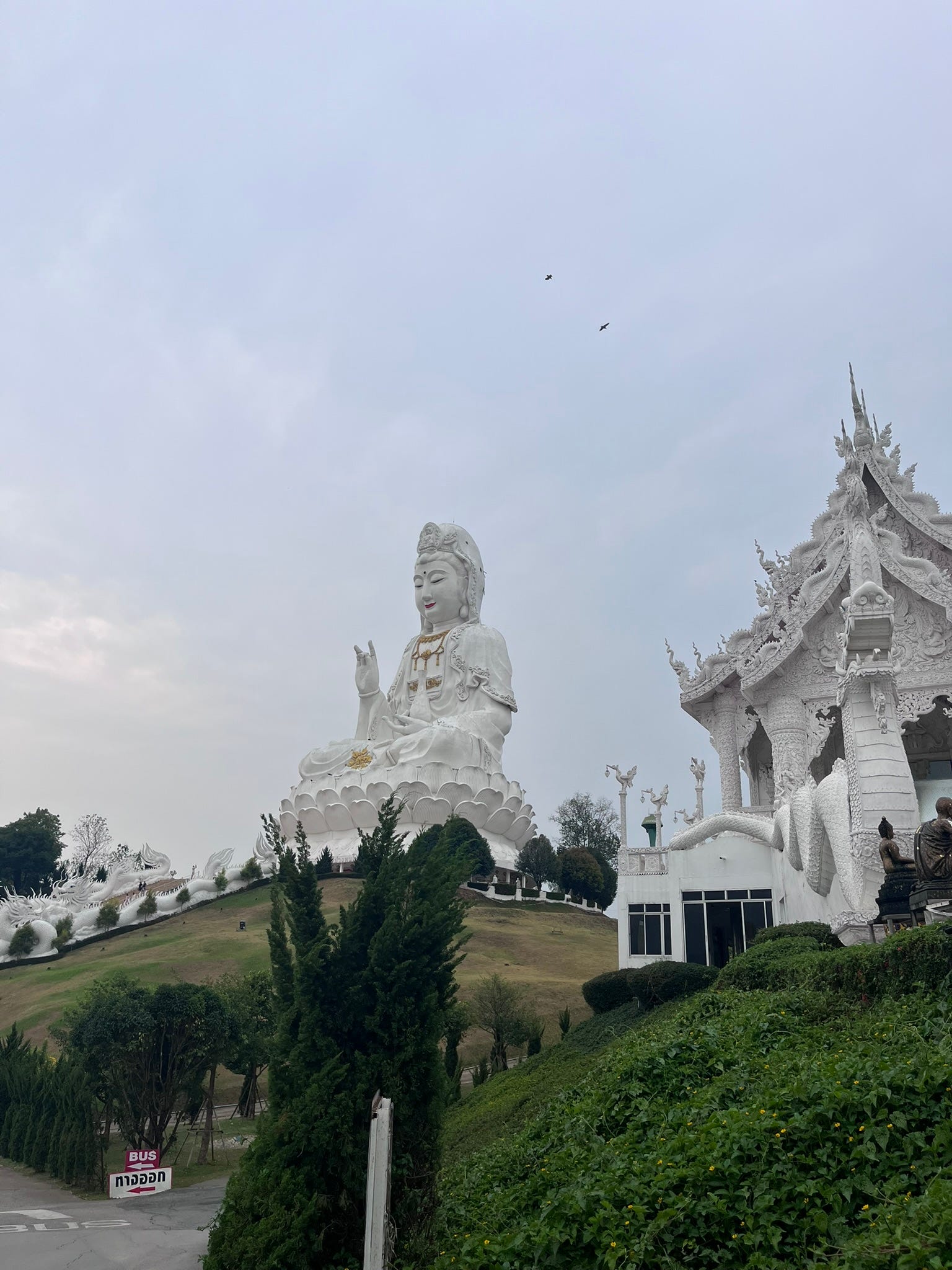
How do I even explain what seeing this statue did for me?
I guess I need to go back to my understanding of God.
I do think, for many LDS women (and I’m sure other religious women, too) — learning to make sense of growing up in a patriarchal system is interwoven into the threads of faith deconstruction.
Growing up in the church, nearly all my heroes were male. Peter walking on water, David and Goliath, Nephi, Alma… of course, Jesus Christ. The women in the scriptures, for the most part, were either adulterers or played such a minor role that the extent of their stories were not told fully. Women were talked about in extremes — Eve caused the fall of man. Mary was so pure that she had a virgin birth. There were not many regular, imperfect-but-trying, good women in scripture stories. Aside from the scriptures, while I had awesome leaders for my young women’s group who were women, the ones we all considered to hold the power of God and lead the church both locally and internationally were, and are, all male.
Although God is referred to exclusively as “Heavenly Father” — technically there is mention of a Heavenly Mother in one of the hymns and in the Church’s Gospel Essays. It is something that Joseph Smith is recorded to have taught, but it has never really been fleshed out and is certainly not one of the core tenets of the faith. There was always this hope that the leaders would “receive more revelation” about Her. They seem never to quite get there.
Even though it is said to be a “cherished doctrine”, there are no lessons in the manual about a “Heavenly Mother” and it isn’t a talking point in the missionary lessons. She is mostly mentioned in private conversations among women and wrapped up in messaging of “Heavenly Parents” from the pulpit.
BUT — even with all of this, there is hope that a Mother God exists. And that’s cool!
As I’ve explored more about mainstream Christianity, I’m learning how unique this belief really is. “Heavenly Parents” is a completely different framework from the Christian Trinity, and I feel grateful that I grew up having even a shard of hope that there is a feminine face of God.
It's also made it difficult for me as I explore other faith traditions and try to find a church community — I keep running into the same male-male-male version of God I've already let go of.
I’ve spent years disentangling this messaging that men were somehow more entitled to God’s authority and more trusted with God’s leadership. I’ve read books about “feminine energy”, went through a period of time exclusively praying to Heavenly Mother, took a class on references to a Mother God in scripture, and have contemplated the path of becoming a female priest in the Episcopalian.
But, honestly, even with all my research and intellectualizing of the Divine Feminine— nothing was more impactful than standing beneath the massive statue of Guanyin, nicknamed the Lady Buddha.
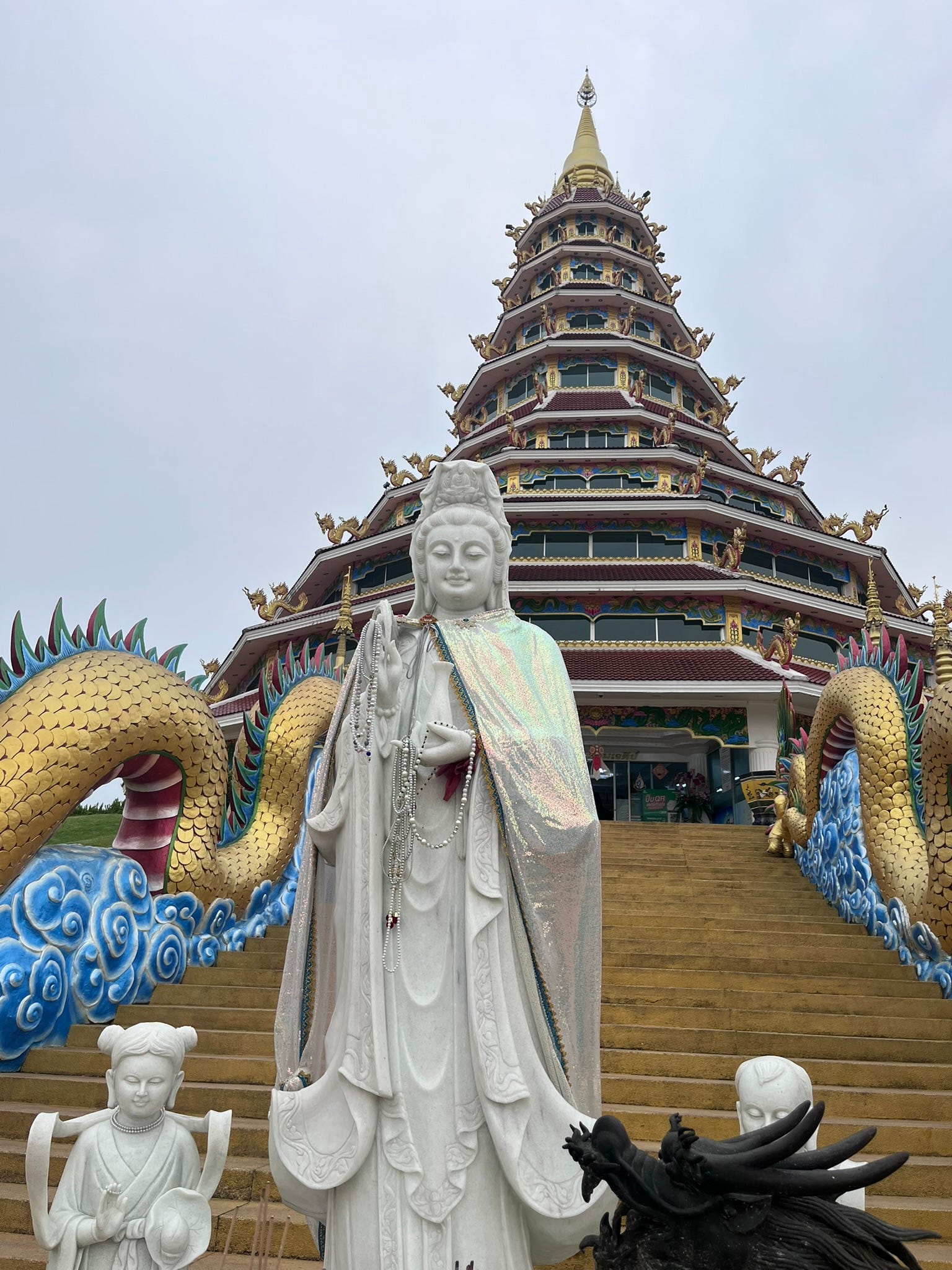
I was surprised at how foreign it all was to me, even still.
It made me realize I am so accustomed to seeing the male image represent God, or Enlightenment, or Love across all religions, and to see a female so large and grand and soft and beautiful and compassionate felt like coming home.
It got me thinking how it really matters — how we talk about God and represent God. I’ve seen the Christus dozens of times. I’ve seen hundreds of statues of the Buddha. But this was my first time taking in a woman regarded as a kind of deity — even though Buddhism, strictly speaking, doesn't have deities the way other traditions do.
To my surprise, visitors can actually climb up the mountain and inside of the Lady Buddha!
As I climbed up the stairs to peer out of her eyes, I saw the orphange that sits at the base of the mountain. I saw the hospital that helps 300+ people a day for free. I saw the hill tribe villages that this Lady Buddha serves. It’s a striking thing to witness: a female deity, carved in stone and grandeur, whose worship translates into shelter, education, and health care for the region’s most vulnerable.
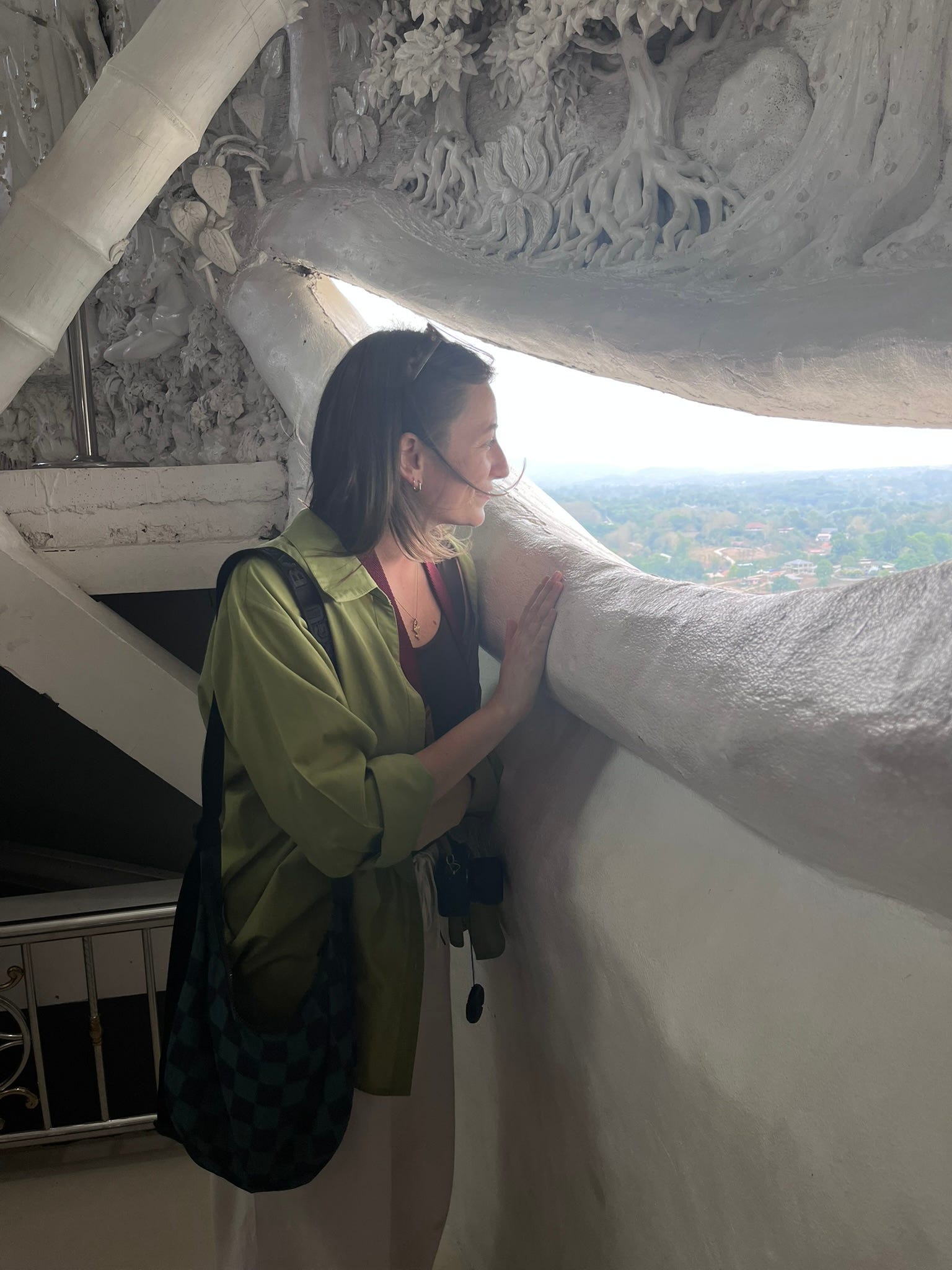
And for a moment, I felt one with Guanyin. She’s a figure in Chinese folklore known for unfathomable mercy and compassion, and it wasn’t so far of a jump to me to see myself in her. I love learning about Jesus, I am grateful for male spiritual teachers and the faith traditions born out of male ideas — but it takes a little more imagining for women when Jesus says to “be like him.” But when I learn about Guanyin, and I look out of her eyes, and I see the influence of her life on the vulnerable populations, it isn’t as far of a jump for me because… well… she is a woman and I am a woman. And she is full of mercy and I can be full of mercy too.
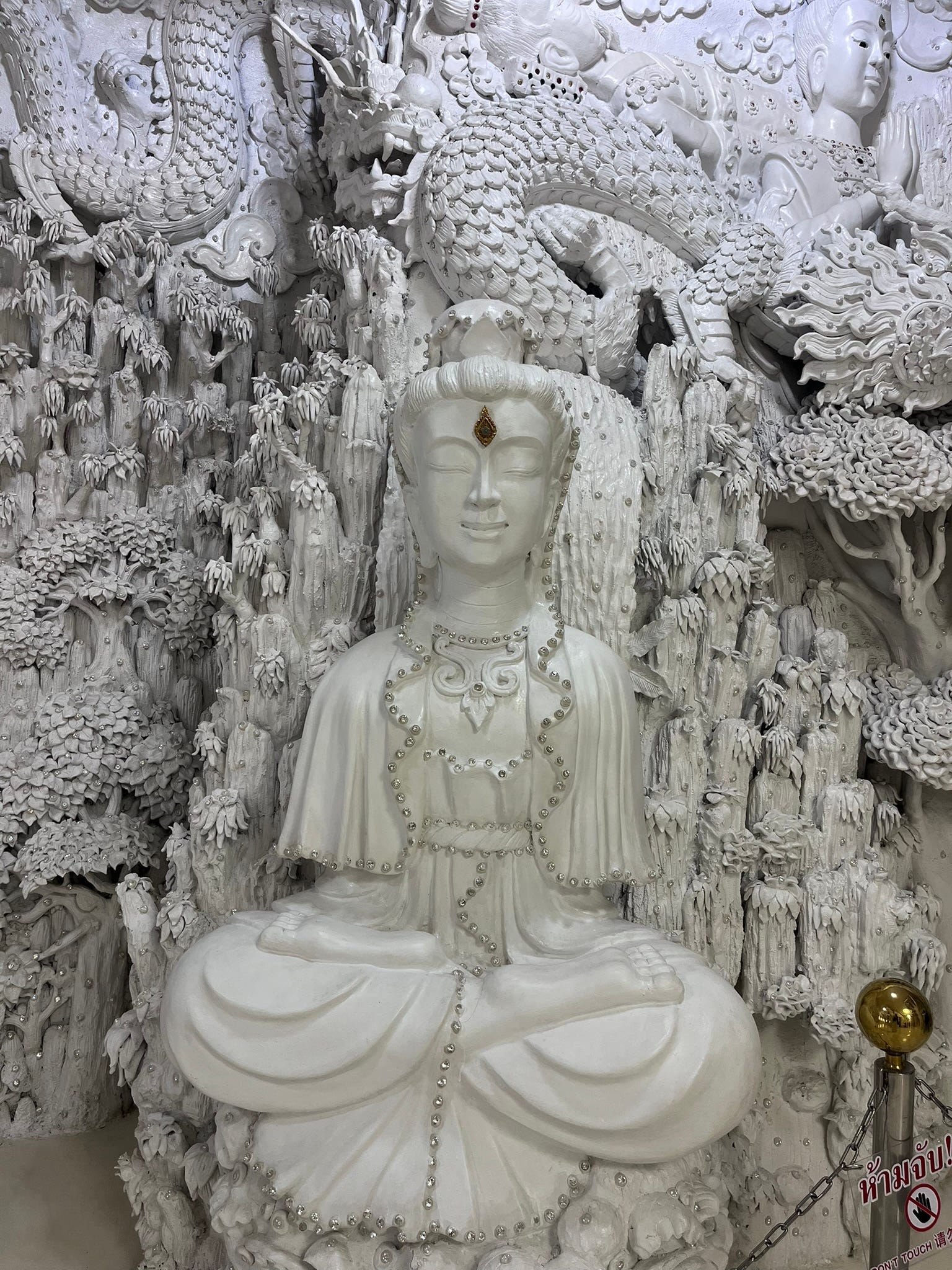
What seeing the Lady Buddha did for me was open my eyes to the Goddess within myself. She helped me see the divine in me and in others. She reminded me that how we conceptualize God matters.
May we see God in each other,

P.S. Today is the last day to sign up for my mail club! Here is the link if you’d like to get a pocket-sized, handwritten and hand illustrated zine made & shipped by yours truly. It is such a joy to create (and receive) something real in a digital world!

Below, you will find this week’s Sunday Somethings. This is where I share my recommendations, insights, and favorites for the week. Have something you’d like to share, too? I’d love to hear from you in the comments and in the community chat!


Another Carol Lynn Pearson poem from her poetry collection, Finding Mother God: Poems to Heal the World
Text within this block will maintain its original spacing when published
A Motherless House
by Carol Lynn Pearson
I live in a Motherless house,
A broken home.
How it happened I cannot learn.
When I had words enough to ask
“Where is my Mother?”
No one seemed to know,
And no one thought it strange
That no one else knew either.
I live in a Motherless house.
They are good to me here,
But I find that no kindly
Patriarchal care eases the pain.
I yearn for the day
Someone will look at me and say,
“You certainly do look like your Mother.”
I walk the rooms,
Search the closets,
Look for something that might
Have belonged to her—
A letter, a dress, a chair.
Would she not have left a note?
I close my eyes
And work to bring back her touch, her face.
Surely there must have been
A Motherly embrace
I can call back for comfort.
I live in a Motherless house,
Motherless and without a trace.
Who could have done this?
Who would tear an unweaned infant
From its Mother’s arms
And clear the place of every souvenir?
I live in a Motherless house.
I lie awake and listen always for the word
That never comes, but might.
I bury my face
In something soft as a breast.
I am a child—
Crying for my Mother in the night.

This is a podcast I came across this past week about creating your own luck! The podcast discusses the difference between fortune and luck and what to do with the opportunities you are given. Tina Seelig is such an engaging speaker and she has me thinking about how to create more luck in my own life:

This article written by Charlotte Wilson is a treasure for those shifting in the way they view their faith! I haven’t felt that Folwer’s Stages of Faith or Brian McLaren’s Stages of Faith were models that totally reflected my personal faith shifts. Charlotte Wilson’s way of articulating the spectrum of faith feels refreshing!

My friend Sarah has the cutest Instagram account posted this tutorial to make a paper quilt! Something fun to try this week:
Thank you, thank you for reading Something for Sundays! If you enjoyed this post, please share with someone you know who might enjoy it too! ♥
Talking to people who are different than you
An essay I wrote when I started to question my beliefs
My thoughts about cults
Different ways of praying
30 years worth of life lessons that nobody asked for
Seeing the sacred in the ordinary
Learning to trust (because what other choice do we have, really?)
Why some things will never be the same post faith deconstruction
No posts
Comments
Nothing yet. Say the first thing.
Sign in to join the conversation.