
Hello good people, happy Sunday!
It’s that one weekend out of the year that I lose a bit of my sanity… but end up being better off for it.
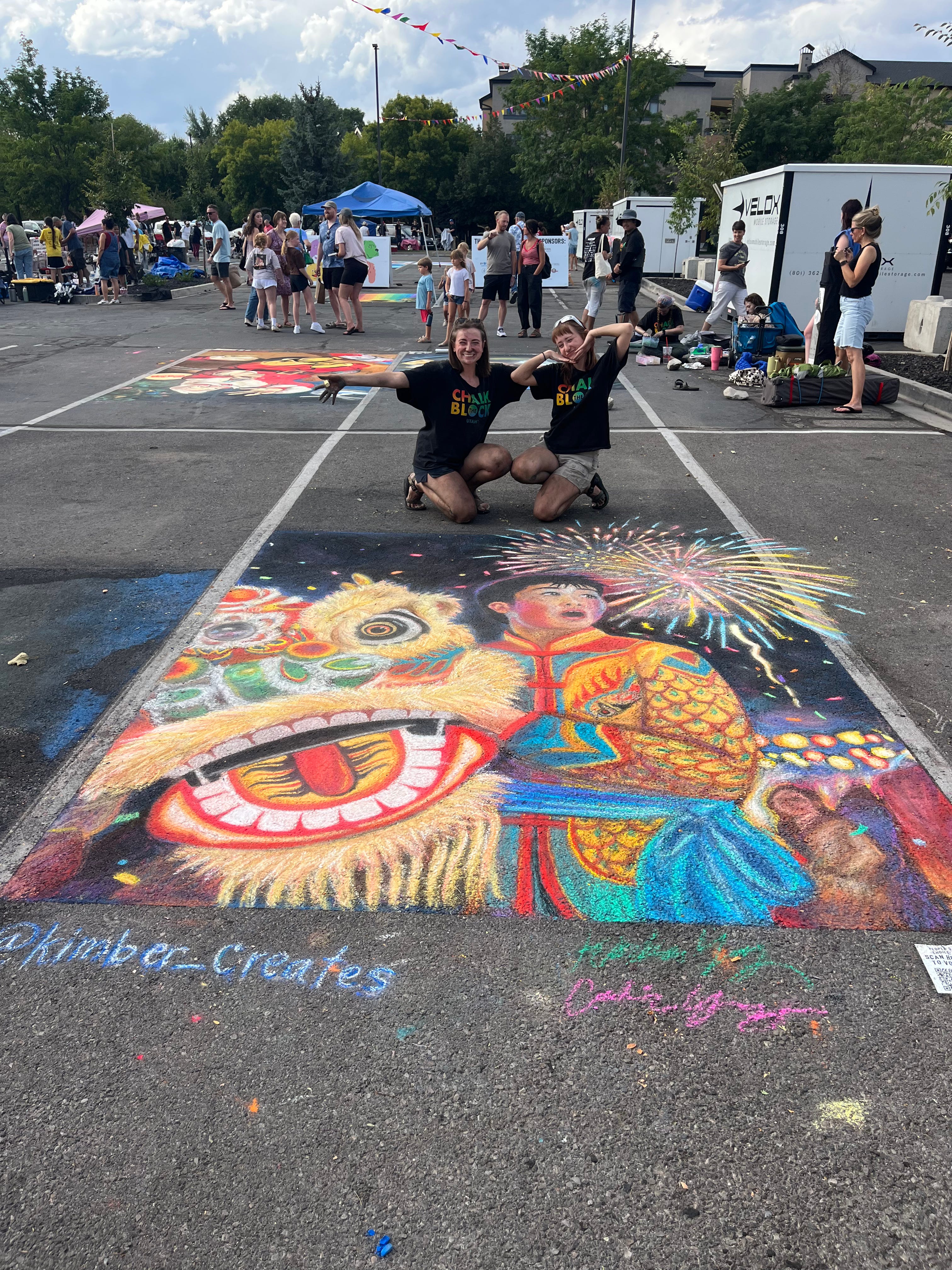
For the past five years, I have participated in an annual chalk festival. We get a parking square, some chalk pastels, three working days, a hazy vision of what’s to come… and create a large-scale art piece for the public!
Every year, at some point, I start questioning why I am doing this to myself again. I get smelly, cranky, and knee-achy while crouching on the hot asphalt hour after hour — not to mention, have chalk smeared and dusted on every visible inch of skin.
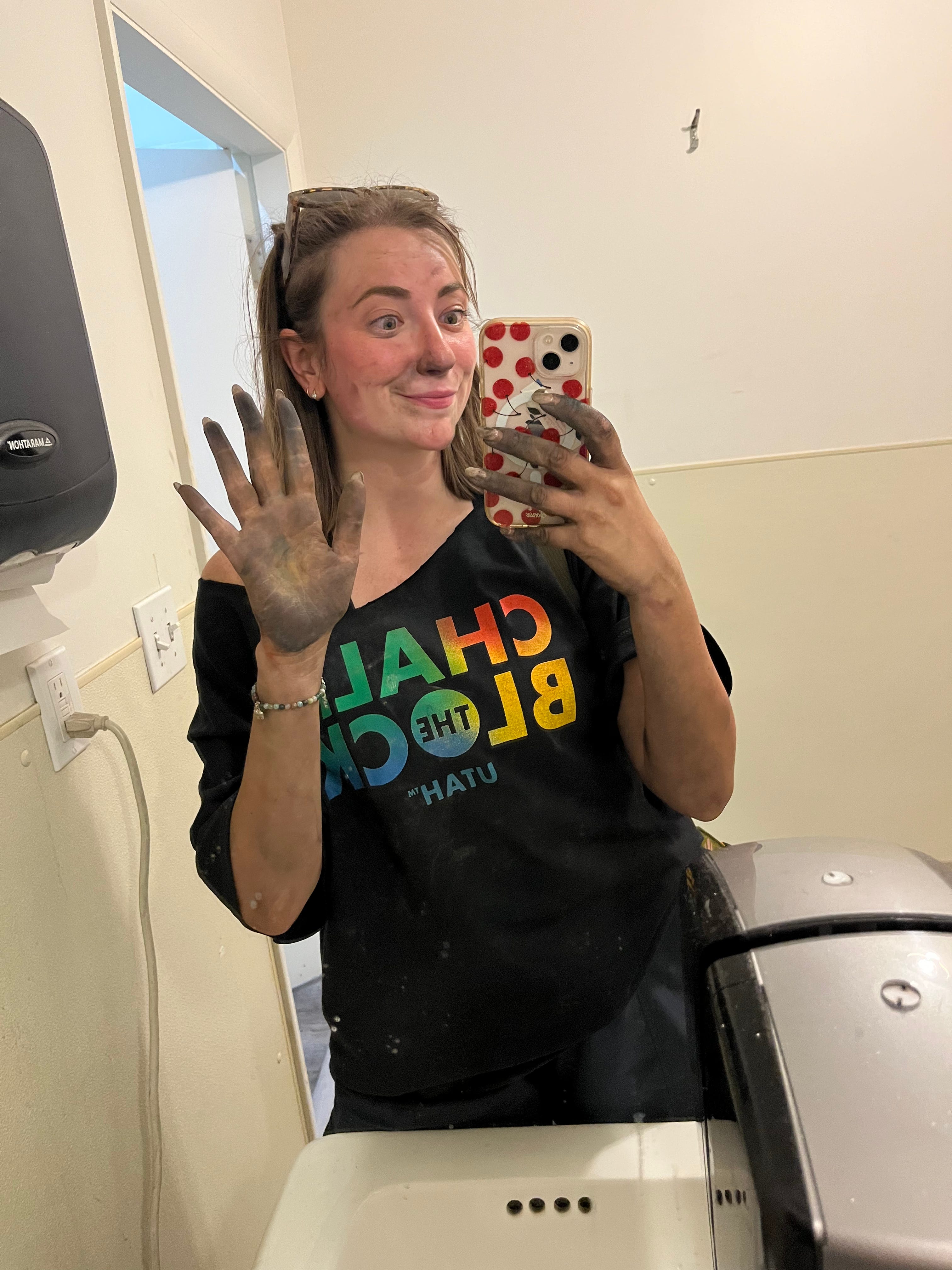
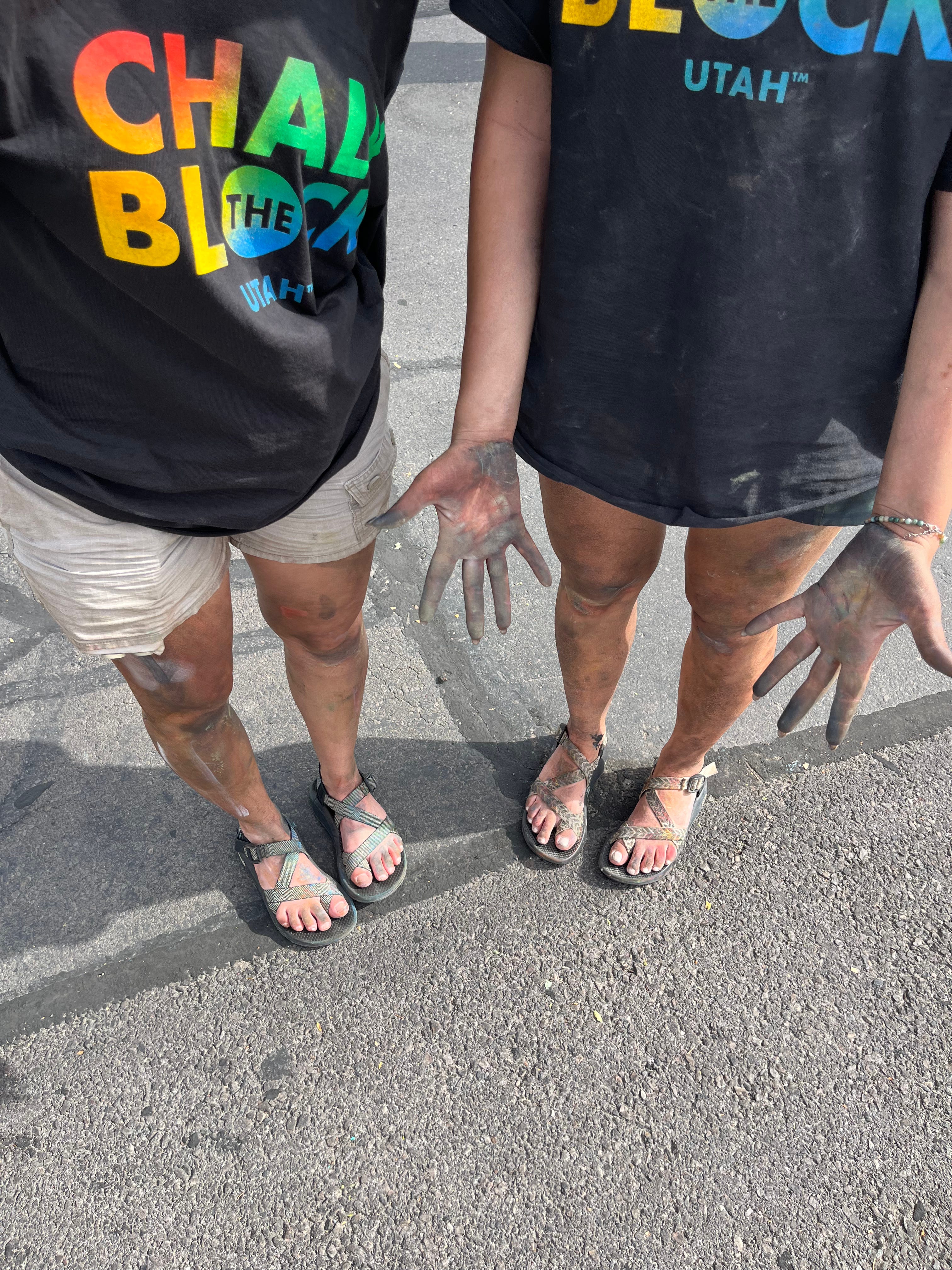
This year was especially arduous. On the second day, after a day and a half worth of work, the rains came down and the winds came up. Fellow chalkers helped cover each other’s artwork with tarps and heavy rocks.
Our beloved chalk piece became smeared and dusty, and when we removed the tarp on Day 3, we saw that water had pooled underneath and completely erased parts of our artwork.
I actually asked my chalk partner (who is also my sister): Is this even worth it? Should we try to finish? Orrrrrr should we just go home and take a bath and a nap?
And that’s when we decided to adopt a mantra for the remainder of the chalk festival: DONE, NOT PERFECT.
Can’t get the facial expression right? Done, not perfect.
Can’t figure out how to do the shadows correctly? Done, not perfect.
Don’t know where to start with the fur texture? Done, not perfect.
As we chalked that last day for 8 hours straight (!), “done, not perfect” became our attainable goal and guiding light.
And at some point during those eight hours, we began to talk about how easy it can be to not try at something because it seems unlikely to be perfect. That can be the case for career goals, fitness plans, and creative pursuits alike.
I suppose it can even be true for the less visible stuff — like conflict resolution, personal development, communication skills, and learning what you value and who you want to become. “Done, not perfect” means I am trying, I am showing up, and I am doing what I can today.
I am reminded of one of my favorite lines from one of my favorite (if not very favorite?) books, East of Eden by John Steinbeck:
And now that you don’t have to be perfect, you can be good.
This is a line a lot of post-religious/deconstruction-adjacent people resonate with. It feels like permission to be good when you’ve been taught to try to be perfect.
I love that line for its simplicity, and yet — it doesn’t feel so simple when you think about it. What’s the difference between being perfect and good? Steinbeck sets up these words in juxtaposition against each other. If you are perfect, are you no longer good? And, digging a little deeper — since humanity seems to generally agree that perfection is unattainable, is it more that striving for perfection is what draws people away from their own goodness?
Being good feels more than just a show — it’s more than skin deep; it’s what’s left of you when you strip away the facades, fears, and fads and reveal the naked honesty of the soul. It’s the childlike stuff, the parts of you that are good and true and lasting.
Now that you don’t have to be perfect, you can be good. What a line!

Going back to the chalk this weekend and our “done, not perfect” mantra — what happened was interesting. Because I wasn’t trying to be perfect, and I wasn’t even trying to be good, I was just trying to do it — I could rework an area as many times as I wanted to without it meaning anything about my talent or skill level. We tackled the parts of the piece that felt scary with a bit more ease, and a bit more of a willingness to be experimental. Like most things, with chalk, the learning happens in the doing.
And when we stepped back, and took in the countless hours of work, my sister turned to me and said, “It’s done — and you know what? It’s kind of perfect.”
May we show up and be good,

Below, you will find this week’s Sunday Somethings. This is where I share my recommendations, insights, and favorites for the week. Have something you’d like to share, too? I’d love to hear from you in the comments and in the community chat!


Text within this block will maintain its original spacing when published
O Me! O Life!
by Walt Whitman

Oh me! Oh life! of the questions of these recurring,
Of the endless trains of the faithless, of cities fill’d with the foolish,
Of myself forever reproaching myself, (for who more foolish than I, and who more faithless?)
Of eyes that vainly crave the light, of the objects mean, of the struggle ever renew’d,
Of the poor results of all, of the plodding and sordid crowds I see around me,
Of the empty and useless years of the rest, with the rest me intertwined,
The question, O me! so sad, recurring—What good amid these, O me, O life?
                                       Answer.
That you are here—that life exists and identity,
That the powerful play goes on, and you may contribute a verse.

An album I can listen to in its entirety over and over. I love the themes of changing, growing up, and finding home:

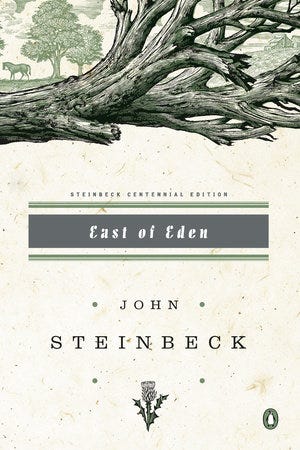
I know I have mentioned this book before, but East of Eden by John Steinbeck is a book that sticks with you. It’s a lengthy book, and the story spans generations — but somehow, even with its length, its a book I didn’t get bored of. The ideas about good and evil, moral agency, and human legacy feel universal.

I’ve recently been thinking about what I value, and wanted to put it into specific words that felt grounding for me. Here are some questions I journaled about that helped me realize what I value in life and in myself:
Write down 5–10 characteristics.
This is surprisingly useful because anger often points toward a violated value.
Think of situations where you’ve thought, “That’s not okay.” What was underneath it?
Not objects people have, but ways of living. Envy can be a surprisingly good map of unmet values.
Not on holiday or vacation, just an ordinary Tuesday.
Where are you?
Who are you with?
What are you doing?
What does your home feel like?
What are you creating?
How much are you working?
Notice your instinct and notice which choices were the hardest.
A. Freedom
B. Security
A. Achievement
B. Peace
A. Independence
B. Belonging
A. Adventure
B. Stability
A. Authenticity
B. Harmony
A. Creativity
B. Service
A. Being understood
B. Being accepted
Who are 3–5 people you admire, fictional or real? What specifically do you admire about each person?
There’s not a “correct 5” — just notice which five nudge you.
Love
Family
Freedom
Creativity
Adventure
Security
Independence
Faith/spirituality
Growth
Beauty
Knowledge
Kindness
Honesty
Courage
Peace
Community
Achievement
Financial independence
Play
Health
Authenticity
Loyalty
Stability
Contribution
Intimacy
Answer as honestly as you can. Take a look at what you’ve jotted down and write out 5-7 words or underlying themes that keep showing up. What did you learn about yourself and what you value?
Thank you, thank you for reading Something for Sundays! If you enjoyed this post, please share with someone you know who might enjoy it too! ♥
My thoughts about cults
Different ways of praying
Seeing the sacred in the ordinary
Why some things will never be the same post faith deconstruction
Why I’m not trying to change the church
No posts
Comments
Nothing yet. Say the first thing.
Sign in to join the conversation.