
Dear readers
Today’s article by James Garrett is one of our regular pieces provided as part of our free news service.
James tries to get to the source of the pollution and why it keeps on happening? And why, when there is a new designated bathing area on the River Frome, it is often not safe to bathe there.
The article is brought to you courtesy of our paying subscribers, without whom we simply wouldn’t exist. If you’d like to help us do more work and support our journalism, please consider subscribing.
You can subscribe here:
Thank you.
Andrew Lee - Editor
Two years ago Anna Sabine, then a newly-elected MP, asked the government about the state of the River Frome, whose entire length runs through her constituency.
Sabine (Lib Dem, Frome and East Somerset) was told by Emma Hardy, then-Minister of State at the Department of the Environment, that the Environment Agency (EA)’s assessment of water quality in the river ranged from poor to moderate.
“The results of the Agency’s monitoring work indicate that sources (of pollution) are a mixture of treated sewage discharges from water company assets and from agricultural and land management practices,” said Hardy.
Cleaning up our rivers, lakes and seas is a top government priority
She assured Sabine: “Cleaning up our rivers, lakes and seas is a top government priority.”
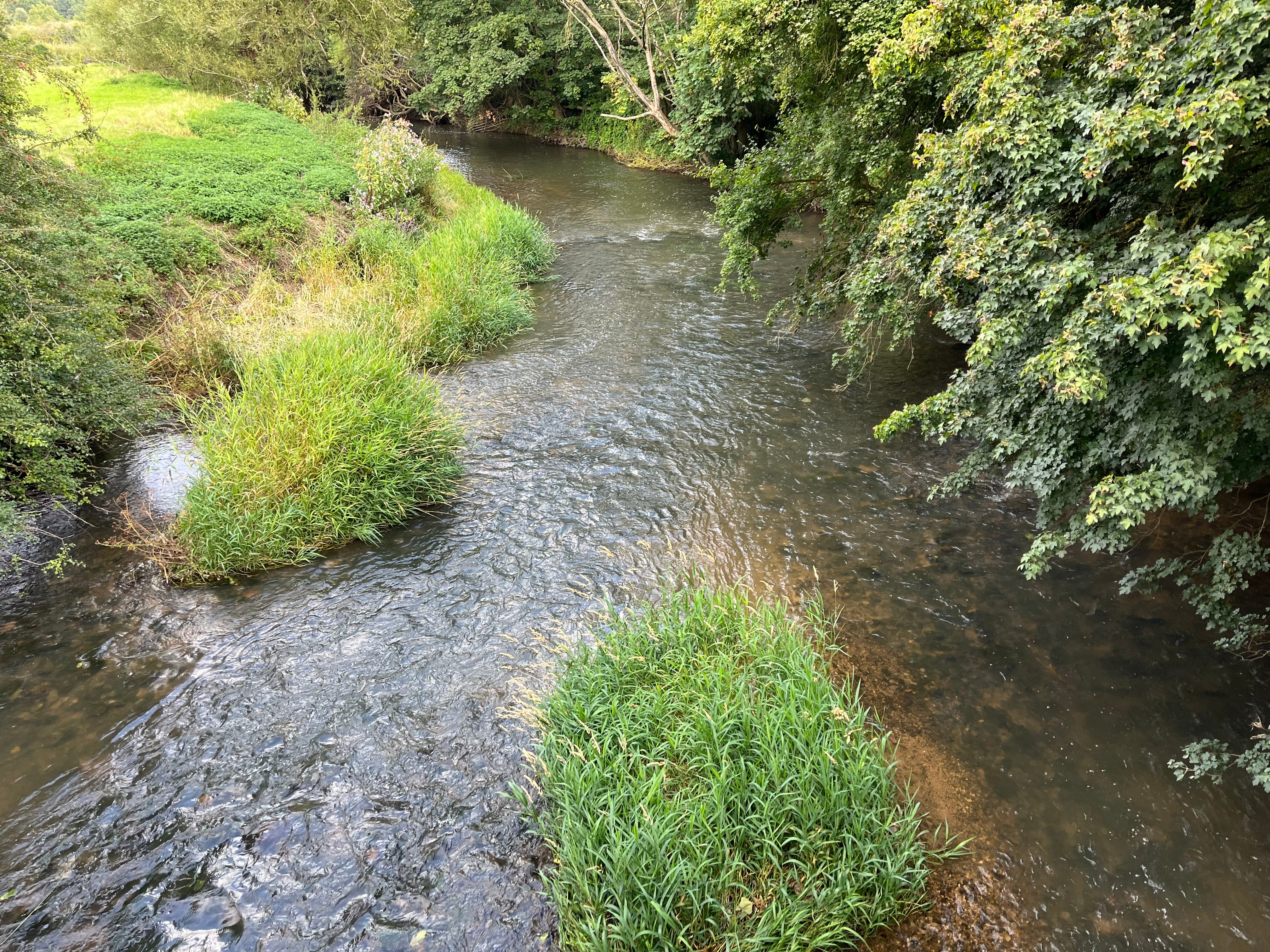
Two years on, however, a school report on the quality of the water at Farleigh Hungerford, situated on the river between Bath and Frome, might well say: ‘Must try harder!’
The health of the river is, of course, important along its entire 27-miles (43 kilometres) length - but no more so than at Farleigh Hungerford, home to one of the UK’s oldest wild swimming clubs.
Since May 2024 the spot has enjoyed the status of a designated bathing water between May and September. This means Farleigh and District Swimming Club, founded in 1933, can expect the EA regularly to test the water quality.
It does so but, two years on, the swimming club is still left to hope that its official designation: “will lead to an improvement in water quality in the long term. Certainly, the EA are now committed to testing our water weekly and monitoring water quality and pollution incidents.”
However, the quality of the bathing water is still regularly classified as “poor“ - see table below. The club is forced to warn on its website: “Please do not forget that (the designation) does not guarantee that on any given day the water is safe to swim in. This decision has to be at your own discretion.”
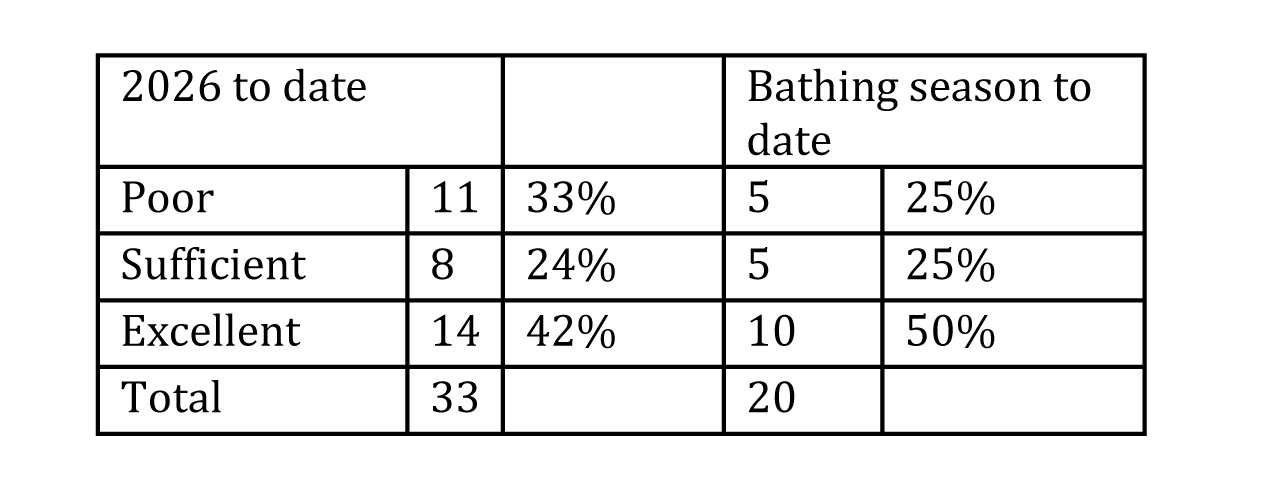
Some six weeks ago, the river was so polluted at Farleigh Hungerford that more than a dozen people reportedly became ill after swimming in it. “Fourteen people in our group fell ill, including my two teenage daughters, and they’ve been really bad. My youngest has been violently sick,” Eleanor Warrington told BBC West.
Another holidaymaker, Harriet Symon, who was staying at the nearby Stowford Manor Farm campsite, said her three children, aged eight, 12 and 15, had become sick after swimming in the Frome: “We’ve been going there for over 10 years, and the kids have been sick a few times before, but never like this.”
George Bryant, who runs the campsite, said the water quality is very important to his business. “The river is one of the reasons people come,” he said: “It would impact us for sure if people stopped coming.”
The local utility, Wessex Water, said after the poisoning incident that it was investigating: “a recent storm overflow upstream of Farleigh Hungerford.”
Storm overflows are designed to relieve the sewerage system during heavy downpours, allowing water companies to release waste water into rivers or seas.
Wessex added that in order to help would-be wild swimmers decide if it was safe to get into the Frome: “We’ve invested in delivering real-time water quality information using AI at Farleigh Hungerford and added the site to our Water Quality Live website.”
Somerset Confidential® dived into the debate over the health of the river in the company of Andrew Tyler, a scientist who lives in Beckington, located between Frome and Trowbridge.
He acknowledges he would prefer the village, which has increased in size by 40 per cent in the past 20 years, not to grow any larger. However, he insists on his website, Loveourruralvillage.com, there is more to his opposition to further development than simple nimbyism.
He says: “There have been no upgrades to the capacity of the sewage network in the village. The consequence has been that sewage pipes have been overwhelmed, resulting in sewage rising up on pavements, roads, and in gardens in the centre of the village during higher rainfall periods.
sewage pipes have been overwhelmed

“The sewage treatment plant is routinely being overwhelmed, resulting in raw sewage being discharged into our River Frome. In 2024, raw sewage was discharged into the river for 854 hours over the year.”
We spoke after Tyler had given evidence at an appeal into the refusal by Somerset Council to grant planning permission for 20 more houses in Beckington.
The development should not go ahead, he said, not least because of: “a lack of credible mitigation for the additional sewage that will add to the pollution from Beckington’s under-capacity sewage treatment works.”
He recommended that: “No approval for this or any development should be made until Wessex Water have completed these upgrades and confirmed that the waste water treatment works has capacity for future development.”
Tyler described the planning system as: “a nonsense,” adding he was: “astonished that while the water company are a consultee, all they have to agree is that the sewer pipes for a new development can be connected to the sewer main. They do not have to confirm whether the network overall can cope!
“The planning authorities then maintain that they have exercised their consultation responsibilities and everything is ok – they claim it is ‘not a material planning consideration’.”
For its part, Wessex Water insists: “In terms of our water recycling centres at Beckington and Rode, we can confirm that they both have ample capacity for new development. Beckington is at 65% of its dry weather flow permit and Rode is at 67%.
they both have ample capacity for new development
“Where they reach their capacity is when they take all the rainfall from the existing older properties in the area, which drains into the sewer network (new build homes are required to connect rainwater drainage to a separate system). It is the rain which causes our licensed storm overflows at the sites to discharge to prevent flooding.”
That said, a Wessex spokesperson acknowledged that both Beckington and Rode treatment works would be improved over the next few years: “These upgrades have nothing to do with population increases and expanding the capacity of the sites, as that is not currently needed.
“Both are water quality upgrades to add a further level of treatment, such as UV disinfection, to help us remove substances, such as phosphorus, from the flows coming into site and meet evolving environmental standards set by our regulators.”
The new housing proposed by Cotswold Homes for Beckington was recommended for approval by Somerset Council planners, although councillors decided to turn it down, prompting the inquiry.
The council also denied Tyler’s claim that it did not pay sufficiently close attention to the ability of the sewage treatment system to cope with new developments.
A council spokesperson said: “The recommendation presented to the committee was subject to a number of detailed planning conditions relating to both surface water and foul drainage, including requirements for a sustainable drainage scheme, ongoing maintenance arrangements, management of surface water during construction and approval of a detailed foul drainage strategy before development could commence.
“The officer report, which is publicly available, sets out the assessment and reasoning in full and we would encourage anyone interested in the case to read it. Ultimately, members of the planning committee considered all the evidence before them and made the decision to refuse the application.”
A decision on the appeal by the planning inspector is not expected until the autumn.
Back at Farleigh Hungerford, the swimming club and local parish council would love to be able to reassure villagers and visitors alike that the river is routinely safe to swim in.
According to Nikki Duke, clerk to Norton St Phillip PC, which covers Farleigh Hungerford: “So far, the EA has not identified any individual culprit who may be responsible for the ‘poor’ water quality rating which has been accorded to the Frome over the last two years.”
the EA has not identified any individual culprit
As we have seen, there is a range of factors influencing water quality, from overwhelmed sewage outflows to agricultural run-off. However, one local landowner has been brought to our attention.
Three years ago, with some fanfare, Bath Rugby Club announced that its headquarters and training base at Farleigh Hungerford was to be expanded, with weddings and conferences added to the club’s training and management facilities.
In June 2023, Somerset Council granted an events licence for Farleigh House - run since 2010 by the club’s joint owner, Bruce Craig, and controlled since March this year by Gotham Holdings, a joint venture between Craig and business partner, James Dyson.
The licence came with strict conditions. Limits were imposed on how many people could attend events and how many could be held in any one year at the 17th Century mansion.
The restrictions were a response to residents’ concerns, as reported by the BBC-funded Local Democracy Reporting Service, that the new business could: “change the character of the hamlet very significantly.“
One villager told the council’s Mendip area licensing sub-committee: “Normally it’s so quiet you can hear an owl hooting several fields away. Hearing the thud of a bass from a wedding several feet away would cause severe disturbance.“
The sub-committee approved a licence for up to 15 events in the second half of 2023, up to 50 in 2024 and 80 more in 2025. Only half the events held in 2025 could attract more than 100 people, while no events were to be hosted on Mondays, Tuesdays, Christmas Day or Boxing Day.
Fireworks were also banned year-round, although the club’s lawyer assured councillors: “We know that we need to be, if you’ll forgive the phrase, on our best behaviour. We are Bath Rugby Club. We have to conduct ourselves properly - we’re not some cowboy nightclub owner.”
Three years on from the decision, one might have expected Farleigh House to be very busy. After all, its website extols: “Champagne, canapés and jazz - just some elements you can add to the romance of the rose garden and dancing hand-in-hand on the lawn.
“Receptions, ceremonies and breakfasts under a sailcloth marquee with panoramic views. We can’t wait to see what you do with the place.”
Social media is full of pictures and commentary about those who have got married at the venue on the banks of the River Frome. Couples like Becca and Cameron, who reportedly: “travelled from the United States to celebrate in Bath, UK, (sic).”
It was, said the commentary: “A sentimental place as the home of Cameron’s beloved grandma, Mary. Over 150 people travelled to help them celebrate from Chicago and elsewhere in the States.“
But before future wedding couples and their entourages think of boarding a plane from the Mid-West - or even nipping over in a taxi from Norton St Phillip - they should consult the (very) small print on the website.
Farleigh House still invites brides- and grooms-to-be to: “Sweep down the grand staircase as you enter your wedding ceremony with a string quartet on the balcony and a tinkling on the grand piano.”
However, when one clicks to see if the preferred date for one’s nuptials is available, the same website warns: “As a venue we are no longer accepting new wedding or corporate event enquiries.”
no longer accepting new wedding or corporate event enquiries
The business adds, with not a word of explanation for the change of policy: “We are fully honouring all existing confirmed bookings scheduled for 2026.”
Asked if it had been responsible for the decision to shut down the events business and, if so, why, Somerset Council said: “This must have been a club decision.”
The licensing team had not received complaints from villagers about excessive noise or traffic, confirmed a spokesperson.
So, we asked the club, why had it closed the events business? And why had it done so with absolutely no publicity?
A club spokesperson responded: “It has been agreed that we will not be running weddings after 5 September 2026 to bring the facility’s focus back to rugby training.”
She added: “Weddings were set up during a period of no income stream following the pandemic.”
We also asked if there was any connection between the decision to cease staging events at Farleigh House and pollution of the River Frome. The club responded with a statement attributed to Paul Hutton of Farleigh Properties Ltd.
This said: “We don’t recognise the claims around ‘special events’ causing pollution and haven’t seen any evidence that that is the case.”
We…. haven’t seen any evidence that that is the case
In which case, we asked, why was the company applying to the Environment Agency (EA) for a licence to discharge waste water into the river?
The statement by Hutton, the company’s property manager, continued: “When we purchased the site, a discharge permit was not necessary but, since the regulation has changed, we have applied for a licence and are in regular conversation with the Environment Agency.”
The statement sounds straightforward enough - except it is at odds with one we received from the EA itself. This stated: “We monitor water quality during bathing water season at Farleigh Hungerford where there is a designated bathing water.
“As part of our monitoring, we detected slightly elevated ammonia readings. We traced this back to Farleigh House and advised the operator to acquire a permit. The permit application has since been submitted and is being reviewed.”
To be fair, the additional ammonia had: “minimal impact on the environment,“ said the EA, while the club’s statement sought to be equally reassuring: “Ammonia is found in treated sewage that is considered safe for discharge and there is typically a permitted level depending on the treatment process and standards.”
As part of its licence application, said the club: “We have applied for a discharge licence and are awaiting an outcome on water volumes used. Water volume readings have been taken daily to substantiate this application at the EA’s request.”
Andy Case and his company, Case Environmental, were employed by Bath Rugby to produce the report submitted to the EA to support its licence application. He said he was happy the existing on-site treatment facility was up to the task - even before the events business was wound up.
“I have spoken to the engineers who supply the type of treatment plant installed at Farleigh House and they commented that the existing system is likely oversized. If a new system was being specified for the site now, a smaller unit might be considered.”
He added: “Until the permit is issued, I do not know what effluent standards the Environment Agency will set for the Farleigh House discharge.”
No one knows that at the moment, not least because Somerset Council has yet to determine an application by Bath Rugby to make lawful its holding of events at Farleigh House beyond rugby training and its headquarters function!
A letter from chief executive Tarquin McDonald confirmed that weddings, product launches and conferences had been held at the property since 2015 - eight years before the club applied for an events licence and even longer before it applied for a change of use.
The club’s announcement that it intends to stop holding events might be an acknowledgement that its application, made in March and opposed by the parish council, might fail - or that Dyson’s injection of capital into the club meant the events are no longer so important to the club’s bottom line.
Whatever, it seems fair to say, no one has any idea when water in the dirty old Frome will routinely be safe to swim in.
If you found this news release interesting, please share it with others so they can read it too:
Why not gift a subscription as a present for a friend or family member? You can do that here:
Somerset Confidential® is a reader-supported publication. To receive new posts and support our work, consider becoming a free or paid subscriber.
Comments
Nothing yet. Say the first thing.
Sign in to join the conversation.