
When I’m on holiday, I love not to read poetry: it’s prose all the way, and the less florid the better. This summer, during a week in Wales, I read John Buchan’s The Thirty-Nine Steps and a popular history of a mythical illusion, Peter Lamont’s The Rise of the Indian Rope Trick, which featured this enjoyably double-edged academic dedication:

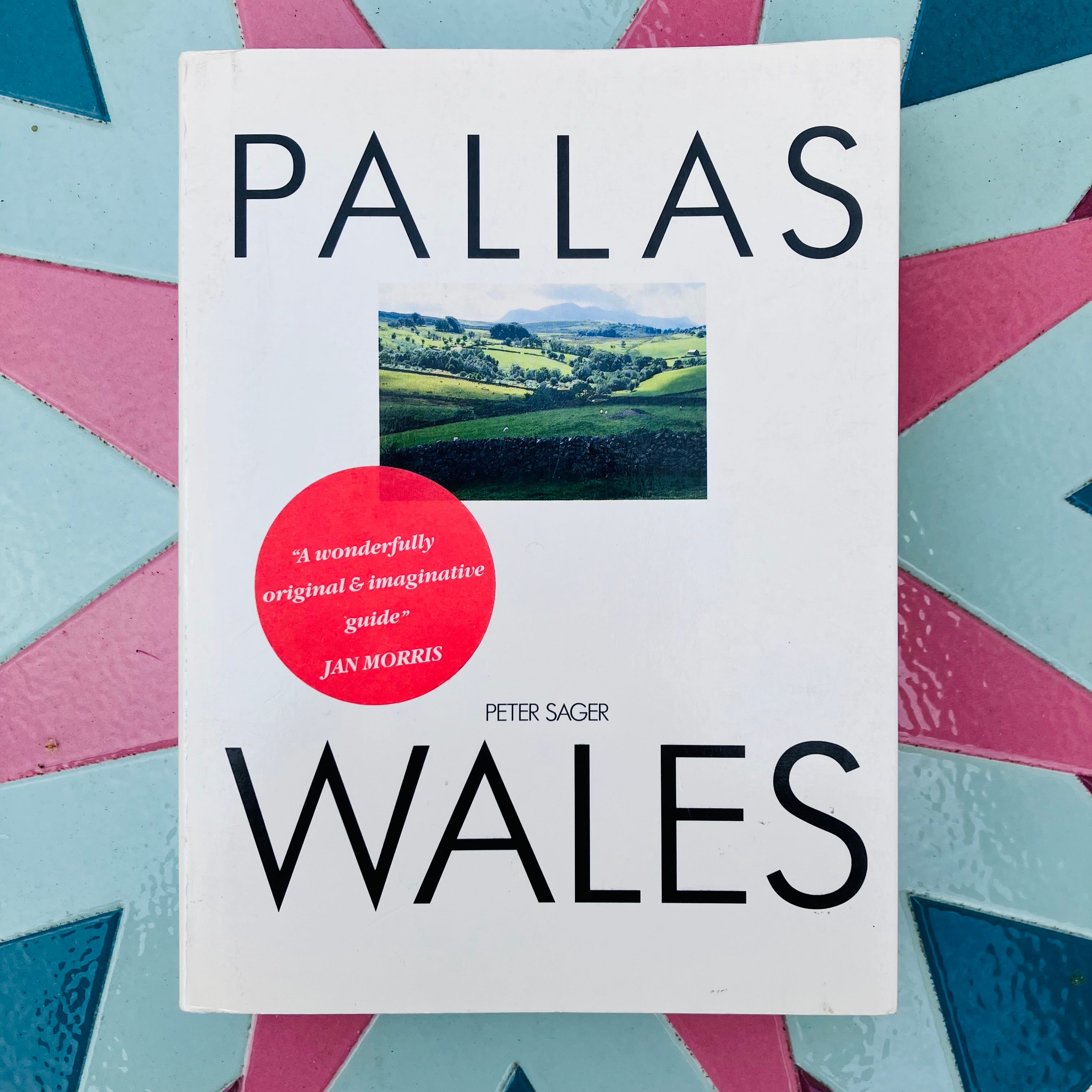
I also read a large, lavishly produced travel book that I’ve been looking forward to ever since I bought one of the many copies available online for less than £5: Peter Sager’s Wales. And, despite my best intentions to holiday in prose, it led me back to poetry.
I know very little about Sager, except that he was a German arts writer and reporter for Die Zeit (I’m not even sure if he is still alive: he would be 81). On the strength of Wales (1991), though, along with his indispensable volume on East Anglia (1990), I would say he was the author of the best British travel guide series of the twentieth century. But as far as I can tell, all four Sager titles — he also covered South-East England and The West Country — have been out of print in English since the early 2000s, and a fifth, on Scotland, was never translated at all (the others are beautifully done by David Henry Wilson; Sager himself calls it “a fine mixture of flair and care”).
One strength of Sager’s guides is his quiet yet quick-to-notice manner. I’ve learned almost nothing about the author from reading them, yet he is always there, walking through places and talking to the people who live there. His self-effacement even manifests itself in the making of the books themselves: a different author, I feel, would never have agreed to the vast difference in point size on the front cover between his own name and that of the publisher, London-based Pallas Athene. He also takes most of his own photos, such as this on the inside back flap of Wales:
But what for me makes Sager’s Pallas guides so indispensable, 35 years on, is the meticulous quality of their research. Working in the last few years of the pre-internet era, Sager really knew how to find things out for himself, and to work the details into the texture of his prose. In this, he is something like the happy doppelgänger of his German contemporary, W.G. Sebald (1944—2001), who was roaming the UK at the same time, taking photos and musing upon buried facts about the landscape. Sebald, however, is famously melancholy when writing up his wanderings, whereas Sager never tires of his exhaustive travels: his sentences are always brisk, as if just breakfasted (“With no less than three bays, the sea comes courting Aberystwyth”).
I wouldn’t call Sager something vague like “a poet of travel writing” — he is too professional a writer of topographical reportage to deserve the blurring. But he is remarkably knowledgeable about poetry, and as at ease with writing about it as he is with painting, architecture, contemporary politics or medieval history. And so it turned out that my prose-only holiday reading contained much more poetry than I intended, because Sager’s Wales manages to mention so much of it.
There is just a hint of the author breaking a sweat in the Foreword, which explains that what was intended as “a small book about a small country […] to my surprise (and to the anguish of my publisher) turned into this weighty tome”. Sager clearly keeps crammed notebooks, and what I enjoy most about his feeling for poetry is how he sneaks in so many snippets where none was obviously called for. So, discussing the Welsh love of rugby, he quotes verses from Harri Webb’s “Sing a song of rugby”:
When the match is over
They’re at the bar in throngs,
If you think the game is filthy,
Then you should hear the songs.
He also loves to quote folk rhymes, such as this one about Swansea when it was the smelting capital of the world at the end of the nineteenth century (he goes on to link it to the sardonic quotation of Dante’s Inferno — “Abandon Hope All Ye Who Enter Here” — in an 1877 English travel guide to the Lower Swansea Valley):
It came to pass in days of yore
The Devil chance upon Landore
Quoth he: “By all this fume and stink
I can’t be far from home, I think.”
Such squibs are readily gathered by the travel writer looking for colour. But Sager goes further, also quoting modern Welsh poetry on the despoliation of the landscape, such as these lines from Gwenallt Jones’ “Rhydcymerau”, which lament the “conveyor belt plantations” of spruce that covered his grandparents’ farm in Carmarthenshire:
And by this time there’s nothing left but trees.
Impertinent roots suck dry the old soil:
Trees where neighbourhood once was,
And a forest that once was farmland.
Where was verse-writing and scripture is the South’s bastardized English.
This, I assume, is an uncredited translation, but elsewhere Sager includes verse written in Welsh, appreciatively offering the following “virtuoso piece on Snowdon, consisting only of vowels, apart from the one, frosty-sounding consonant ‘r’”:
O Ri y’Ryri yw’r oera, -o’r ar,
Ar oror wir arwa;
O’r awyr a yr Eira
O’i ryw i roi rew a’r ia
Finding these lines in the work of his predecessor as a literary tourist of Wales, George Borrow, Sager then quotes — but is not much impressed by — Borrow’s translation, which he feels “lags far behind” (“A hill most chill is Snowdon’s hill…”)
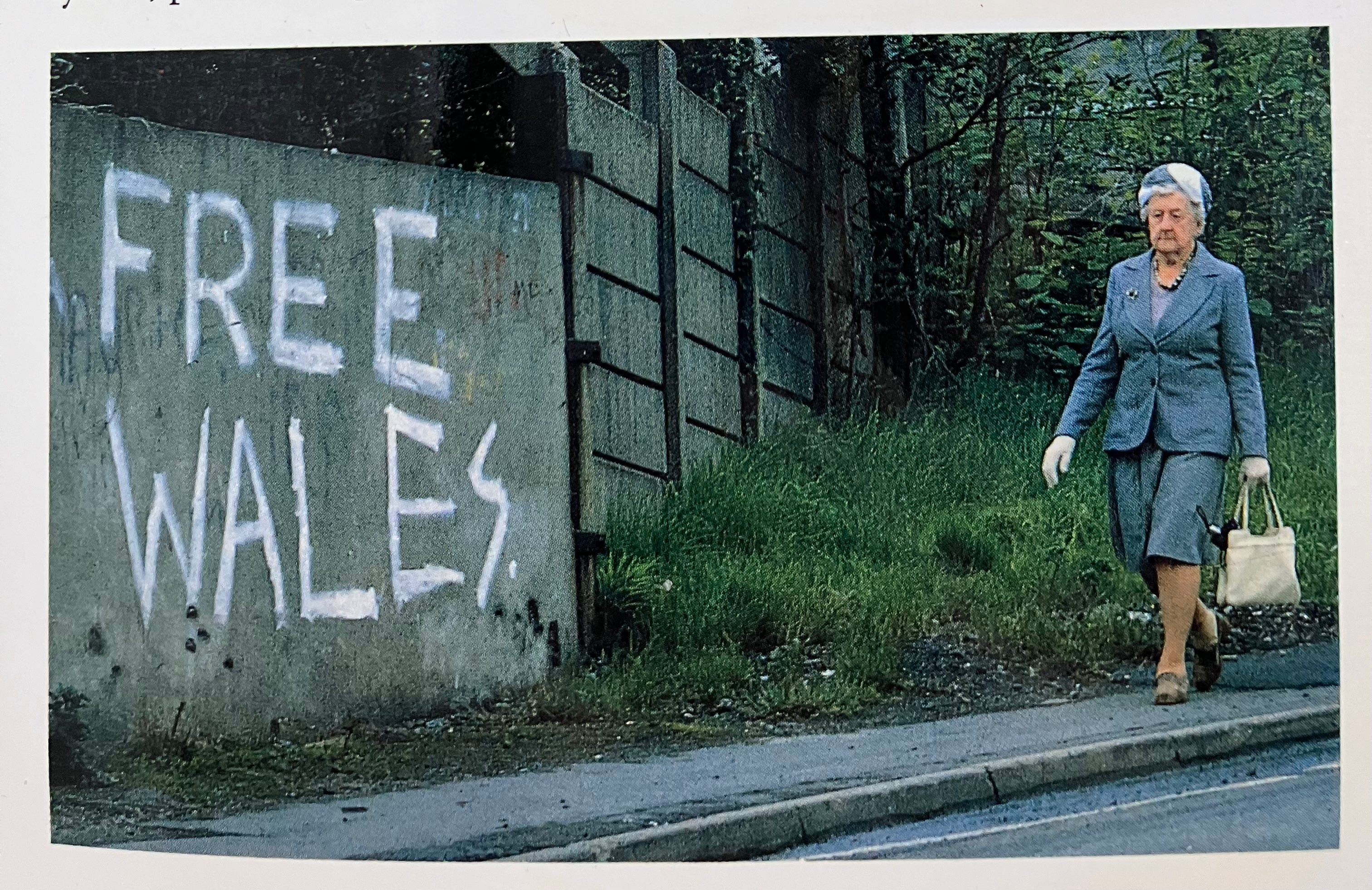
Sager also uses poetry as a way into an informed discussion of Welsh political resistance to England, devoting a whole section to R.S. Thomas, whom he goes to meet:
Comments
Nothing yet. Say the first thing.
Sign in to join the conversation.