
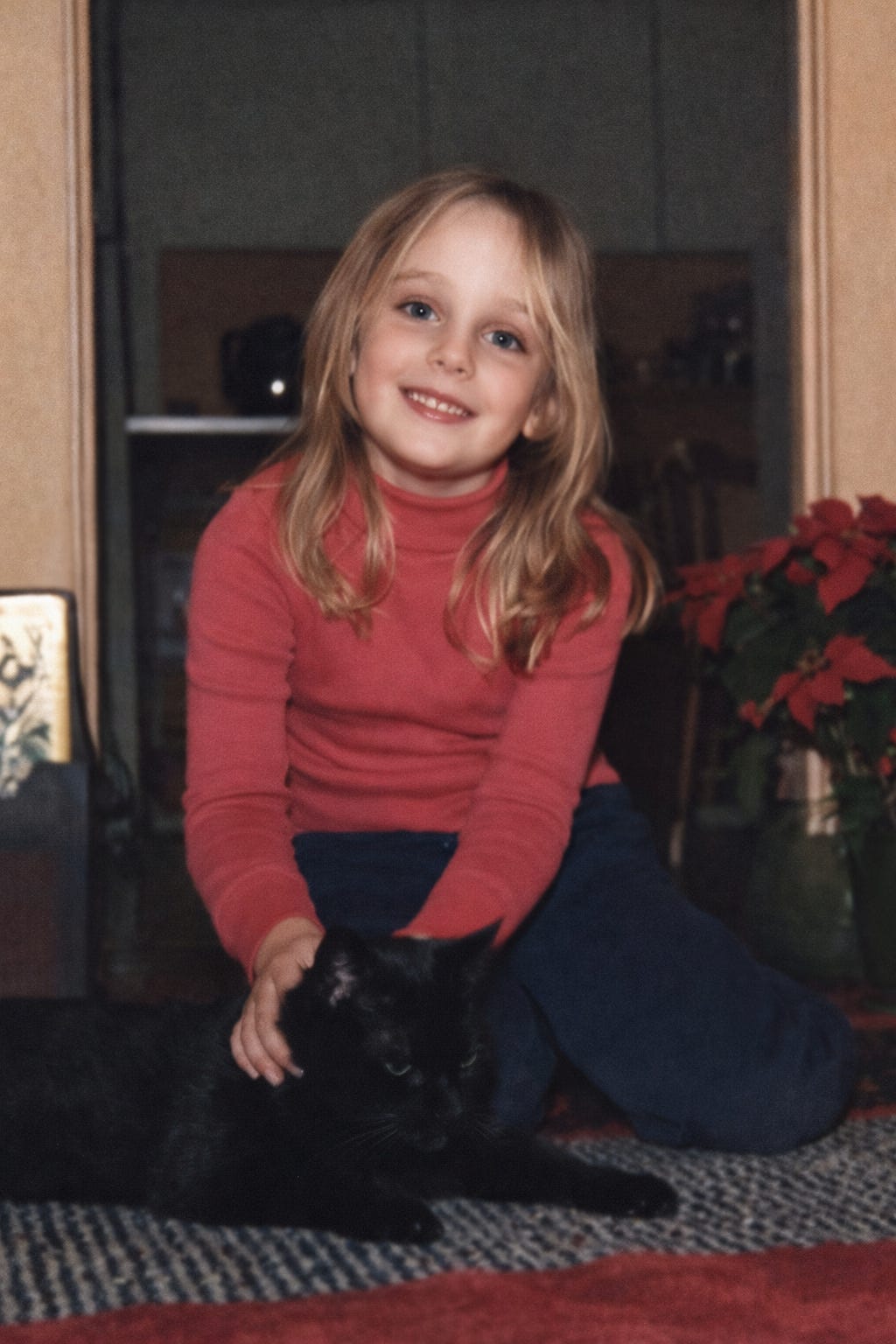
I grew up as an only child born to two teenage hippies, my parents were just out of high school when I was born. Who else would name a kid Solitaire, right? They were intelligent and creative young people who were still trying to find themselves, in college and embracing the free-spirited culture of the early 1970s. Their lives revolved around friends, parties, drugs, alcohol, and late nights. Looking back now I don’t think they ever intended to neglect me, they were simply too young and too consumed by their own lives to understand what a child truly needed.
Fortunately, God surrounded me with people who did.
When I was born it wasn’t my parents who became my primary caregivers, it was my extended family… my maternal grandmother Connie and her mother, my great-grandmother Katarzyna. For the first five years of my life I practically lived in their little house. They were the women who changed my diapers, potty-trained me, taught me to take my first steps and tucked me into bed each night. They kissed scraped knees, comforted childhood fears and filled my days with routines that made me feel secure. They also taught me faith and took me to our local Catholic church. As I grew older they taught me the simple skills that become the foundation of adulthood. Standing on a chair beside them in the kitchen, I learned how to scramble eggs, make soup, wash dishes, sweep floors, and clean a home. I helped with the daily chores because in their generation, children were expected to contribute. Those ordinary afternoons spent talking while we cooked and cleaned together became some of the happiest memories of my childhood. My great grandmother was a Polish immigrant so I also learned a lot about Polish culture.
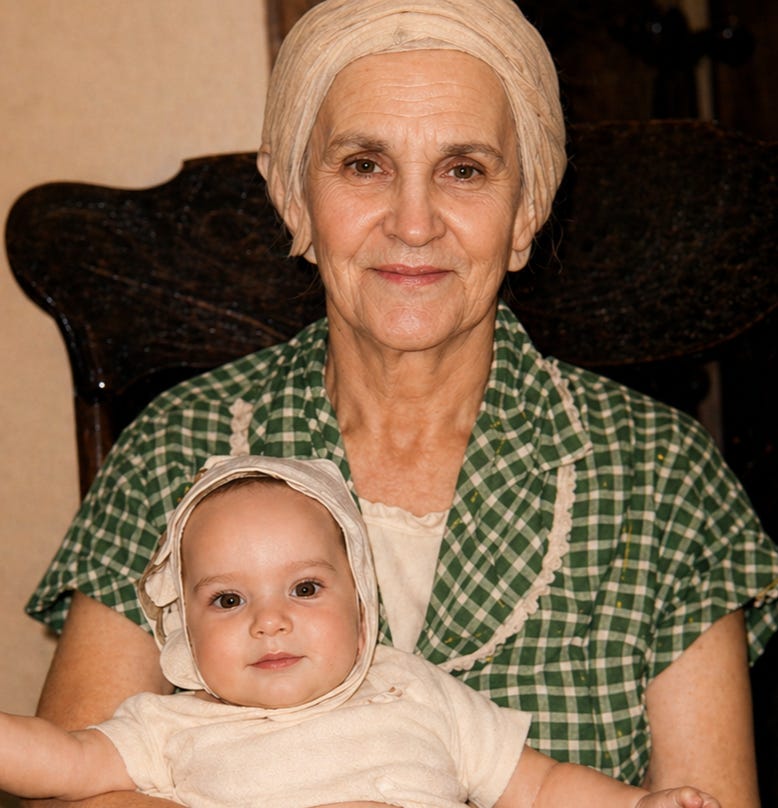
My great grandmother Katarzyna holding me as a baby
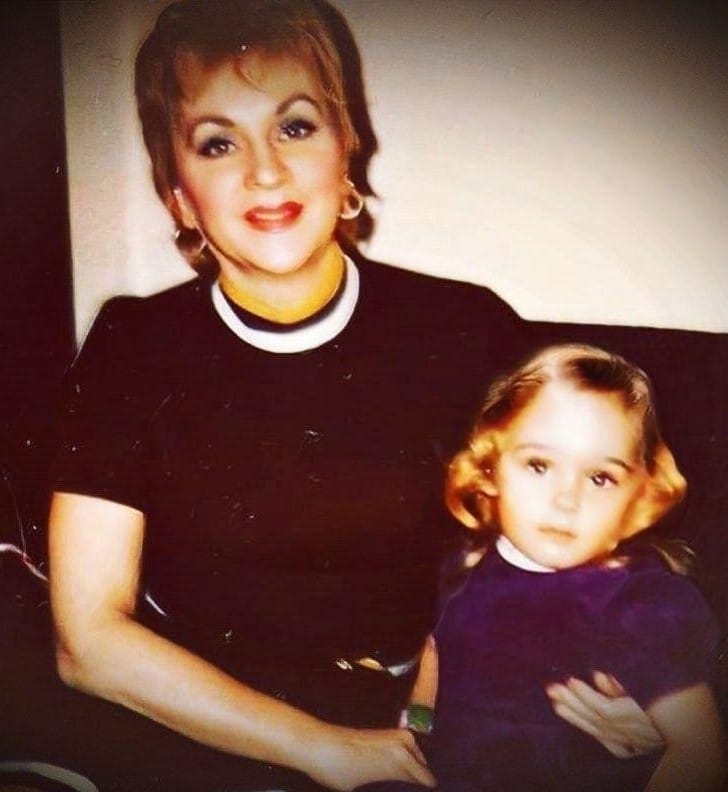
With my grandmother Connie in 1971, we were wearing matching dresses for Xmas day
I was equally blessed by my other grandparents, my big hearted paternal grandmother Sybil was a jazz singer and musician who recognized something in me very early. She put a guitar in my hands and also sat me down at the piano and encouraged me to sing before I was even old enough to understand what music would eventually mean in my life. She played a lot of jazz records while I was having sleep overs at her house, especially my favorite, Billie Holiday’s “Guess Who” became a song that we would sing to each other as we fell asleep in her double bed and we would trade verses -
“Somebody thrills to the skies
When they look in your eyes
Guess who? guess who?
Somebody longs to be part
Of the song in your heart
Guess who? guess who?”
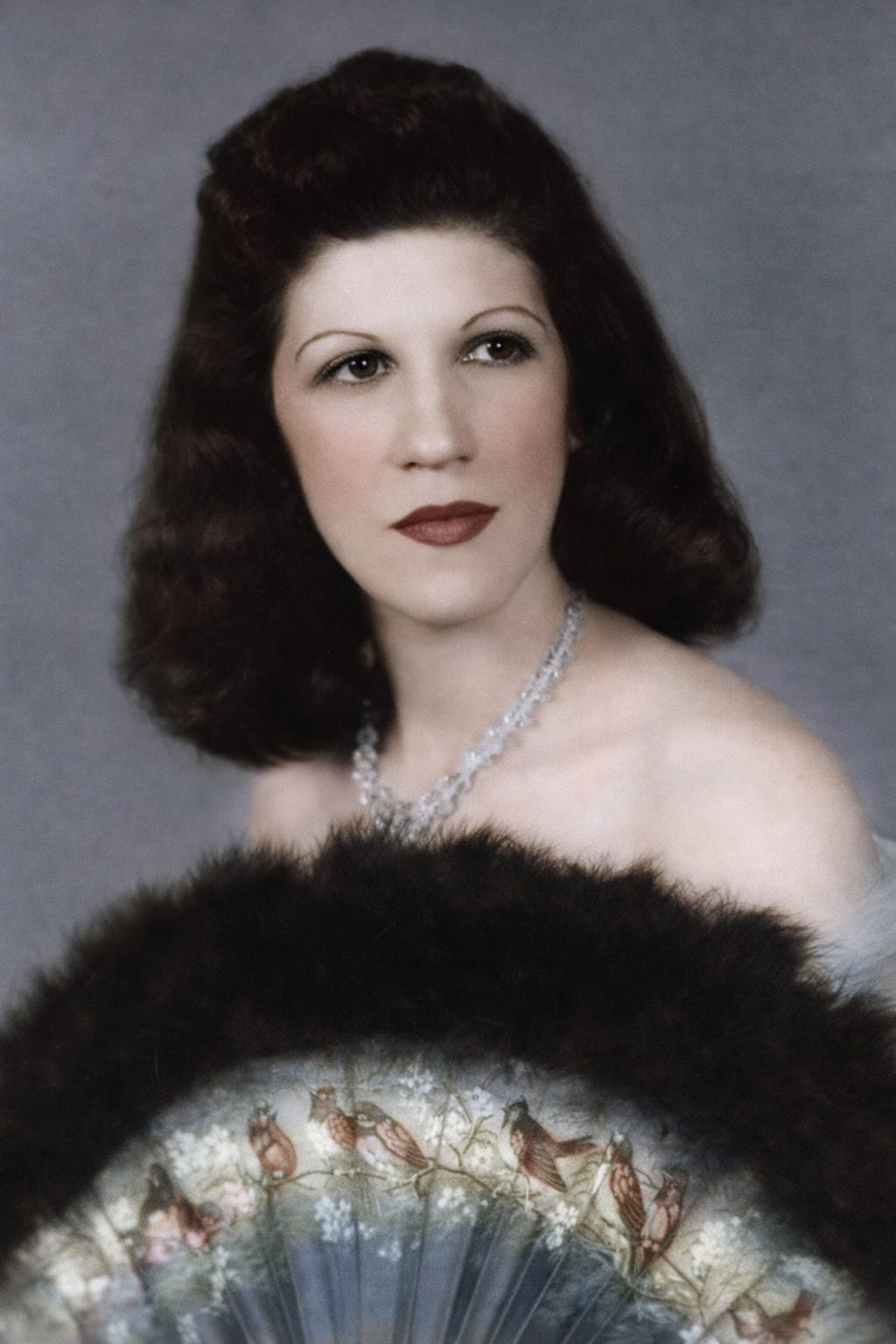
my jazz singer grandmother Sybil
Everything I have accomplished as a musician traces back to the love and patience she poured into a little girl who adored her. Between my four grandparents, my two great-grandmothers, my aunts, uncles, family, friends, teachers, priests, and nuns, I grew up surrounded by people who loved me deeply. I never had a moment when I felt unwanted because there was always another loving adult willing to step in and care for me. And they all stepped up often, sometimes even arguing about who would get to keep me for the weekend. I never felt unwanted or unloved. I was also the first grandchild, and that meant a lot.
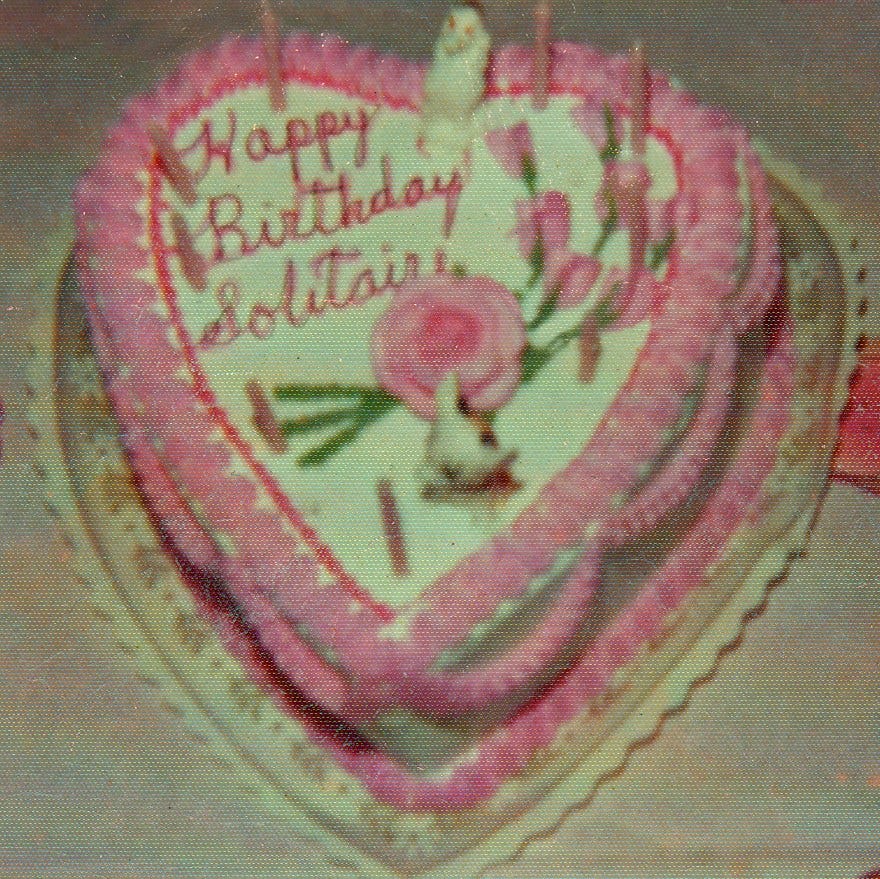
A birthday cake that my Aunt Karen had ordered especially for my birthday which is a few days before Valentine’s Day
That beautiful foundation changed almost overnight when I was nine years old. Within a single year I lost both of my great-grandmothers and my beloved jazz-singer grandmother. Within months they had all died. My maternal grandmother survived, but she had remarried and began a new chapter of her life, which meant I was no longer spending every day in the home where I had essentially been raised. So for the first time in my life, I moved in with my parents full time.
The adjustment was scary and heartbreaking. I had spent my childhood in quiet homes filled with elderly relatives, daily routines, prayer, music, and stability. Suddenly three of my beloved grandmothers were gone and my grief was very deep, and totally ignored. I was forced to move out of the school where I had been for several years, and to a new neighborhood and a new school and I found myself living in a house where there were drugs, alcohol, loud parties, and strangers coming and going late into the night. I didn’t know how to fit into that world, so I retreated into the back bedroom of the upstairs flat we rented and stayed there as much as I could. I retreated into the music that had been given to me by my recently deceased jazz singer Grandmother, listening to jazz records and strumming the little guitar she had bought me. I missed her and the loss was a constant pain. I tried to bury my grief in the music, she was only 64 when she had suddenly passed from a brain aneurysm.
Fortunately her daughter, my Aunt Karen was there, and bought me a little stereo so I could play the records, and she took me for long rides in her car to state parks where we could go in the summer to have picnics, while she sang and played her guitar and taught me how to harmonize and phrase lyrics. She took me roller skating and let me sleep over at her little apartment on weekends… those were blissful times, when I could escape my grief and feel loved again.
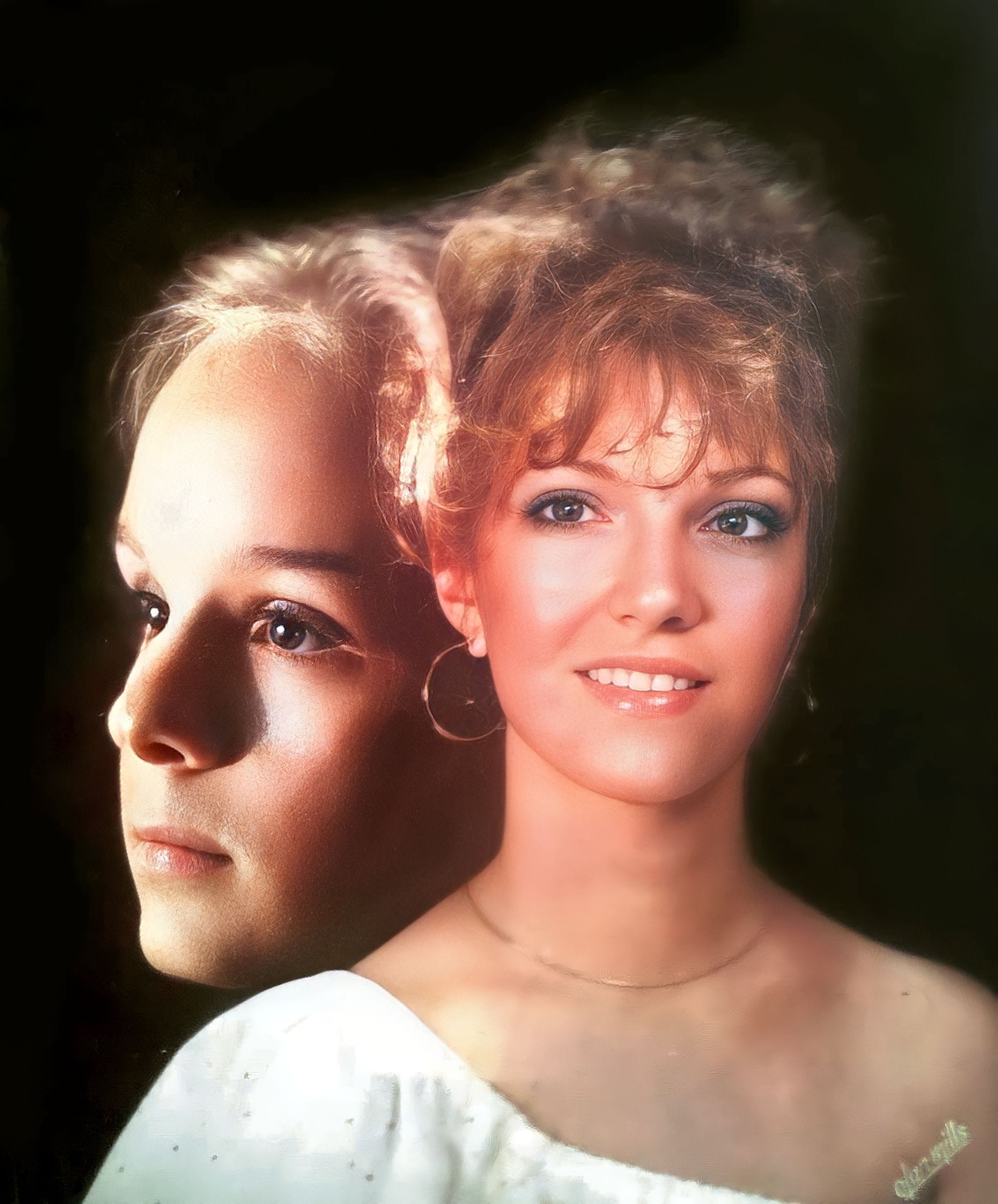
a studio portrait my Aunt Karen had ordered of us in the mid seventies
As I became older, I found reasons to be almost anywhere except home. I spent nights with friends, weekends with my aunt, attended Bible school and church activities with relatives, and immersed myself in school. I was that overly helpful kid who stayed after school to help the teachers clean erasers and take out trash cans, just so I had someone nice to be with, before I was forced to go home to my back bedroom dungeon. The Monsignor at my Catholic school noticed this and quietly arranged for a wonderful parish family, who happened to be licensed foster parents, to welcome me into their home whenever I needed a safe place. Although I was never officially placed in foster care, they became my unofficial family. They opened their home, shared meals with me, and made me feel like I belonged. I am still very close to them today, and I still call them Mum and Dad.
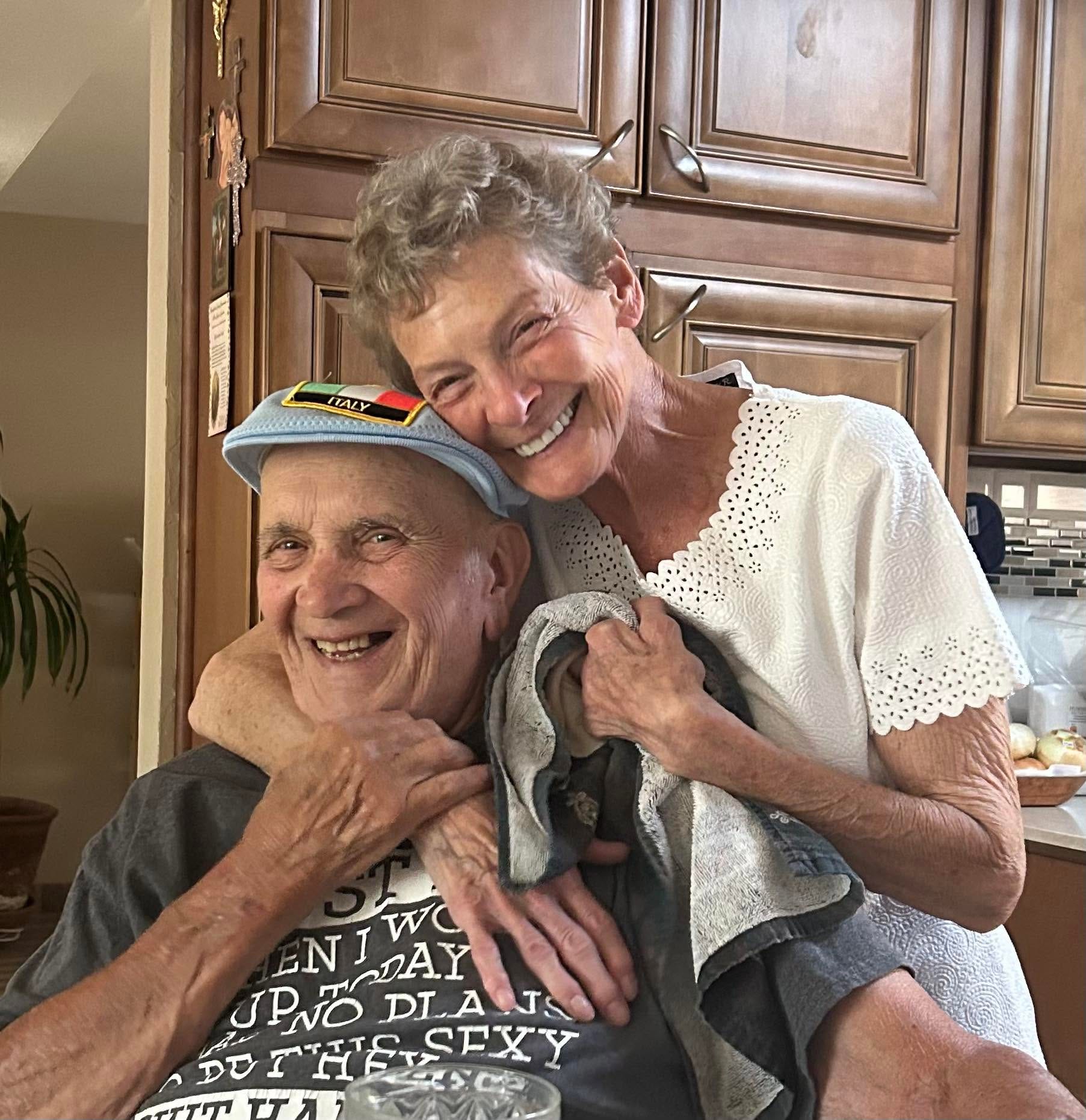
My “foster parents” Mike and Pam Gordon 2025
Life at home, when I had to be there, became increasingly difficult. My parents’ addictions often took priority over everyday responsibilities. There was very little food in the house, so I ate breakfast and lunch at school and often had dinner at friends’ homes whenever I could. Several of my friends parents were very generous, and some had larger families so an extra mouth at the table was not so hard to handle. I stayed overnights with them on weekends too, and did chores for my keep, and even went on summer vacations with them a few times. One family of seven was very generous and even gave me some hand me down clothes from their older daughter. I eventually began buying my own clothes tho, at the Salvation Army, because I knew my parents simply were not going to provide them. My mother was a seamstress and sometimes she created clothing for me on a whim, but I rarely got anything new from a store. I don’t remember feeling angry, there wasn’t time for that, but I remember adapting. I had already learned from my grandparents that when life becomes difficult, you work, you pray, and you find good people. Those lessons probably saved my life. My Babcia always told me “Don’t be afraid to ask for help Susie”. Susie was my Polish family nickname, because my Polish speaking great grandmother did not like the name Solitaire. Everyone on that side of the family called me Susie and I still answer to it today.
But when I was thirteen years old, something happened that I rarely spoke about for decades and I never told anyone.
Ironically, I was one of the student crossing guards at my Catholic school, so I understood traffic safety better than most children my age. One afternoon after school, I was crossing the street legally with the walk signal when a black Pontiac Trans Am came speeding around the corner. The driver made an illegal right turn on red without ever seeing me. The car struck me with tremendous force as I hit the hood, rolled over the roof, and landed on the pavement behind the car.
The driver never stopped, he left me lying in the road, barely conscious.
My best friend Fred was standing across the street waiting to cross, and had he stepped into the crosswalk beside me, he likely would have been hit as well. Instead, he witnessed the entire accident. He ran to my side, helped me sit up carefully, and asked if he should call an ambulance. This was 1980, before our town even had a 911 system.
I slowly stood up and tested my body. Years of gymnastics and rollerskating had made me strong and flexible. I was seeing double, my entire body hurt, and I was badly shaken, but I could still stand. After a few minutes I could walk. Fred stayed beside me until my vision cleared, and then I slowly walked the four blocks home. I took a couple aspirin, climbed into bed, and never told anyone what had happened. As an active kid I had fallen out of trees when climbing them, and had many falls and scrapes so I didn’t understand the seriousness of what had just happened, and how the spine could sustain injury without obvious gore. I could still stand, sit and walk, I would get through it, I was a tough kid.
People sometimes ask me why I kept something so serious a secret. The answer is complicated… I wasn’t afraid of my injuries, I was more afraid of telling my mother.
She had a terrible temper, especially when alcohol was involved, and she had always harped on about how someday I would be hit by a car. It was like she was obsessed with the idea, because we lived near busy streets. I had purposefully become a crossing guard to prove to her that I knew the rules of the road and could be responsible, but nothing saved me that day the Trans Am illegally turned on that corner and hit me. I was following the rules, but he was not. I knew that if I told my mother what had happened I wasn’t going to receive comfort or reassurance. I would suffer relentless screaming, berating, melodramatics and terrible punishment, with weeks of being grounded. Being grounded was the worst punishment imaginable because I spent my childhood trying to stay away from home. Home wasn’t where I felt safest, my grandparents’ homes, church, school, my aunt’s house, and my friends’ families were my refuge. To be locked away in that back bedroom dungeon and kept from the people who cared about me was not an option.
So I kept my mouth shut and I never told anyone, because I didn’t want to get into horrifying trouble and I didn’t want to be stuck at home. I never told a teacher because I was afraid my parents would get into trouble. Besides, we didn’t have health insurance anyhow, and I honestly doubted I would have received medical care. So I did what children in difficult homes often do, I convinced myself that if I could still walk everything would somehow be alright.
Eventually the pain eased enough that I returned to normal life, although it never completely disappeared. I got through middle and high school almost normally, nobody noticed when I stopped doing cartwheels. Decades later, doctors would discover that I had suffered a small hip fracture and serious injuries to my spine that day. Several discs had been damaged, injuries I unknowingly carried into adulthood. And then in 2018, when I fell down a flight of concrete stairs, those old injuries that had been holding together by faith and a prayer… they finally failed, and I am still recovering today as I approach my sixtieth birthday.
As I look back over my life, I think I didn’t tell this story because I wasn’t looking for people to feel sorry for me. It was my private choice as a 13 year old to keep the accident quiet, and so I never fessed up, except to my doctors as I got older. But I want tell it now because there are children living this same reality today. Many are growing up in homes where addiction has become even more devastating than it was when I was a child. Some might be afraid to tell anyone when they are hurt because they fear the reaction waiting for them at home like I did. Others believe they simply have to endure whatever happens to them because there is no one they can trust.
If you are one of those children, I want you to know something that took me years to fully understand…. there are good people in this world, please believe me. There are teachers, clergy, grandparents, aunts, uncles, neighbors, friends’ parents, and complete strangers who will step into your life simply because they care. Those people carried me through my childhood until I was old enough to stand on my own. They taught me music, faith, responsibility, compassion, and resilience. They also taught me that I did not have to become what I saw at home. You are not alone. Someone cares and they will step up to help you.
As an adult I never followed my parents into addiction. Even after living with chronic pain for decades, I have never depended on drugs or alcohol because my grandparents showed me another way to live. Their faith driven example became stronger in my mind than my parents’ weaker example, and for that I will be grateful for the rest of my life.
When I think back to the thirteen-year-old girl who was struck by a car, who stood up, walked four blocks home, swallowed two aspirin, and quietly went to bed… my heart breaks for her. She deserved parents she could tell instead of parents who she feared and doubted. It was a terrible and dangerous decision for a 13 year old child to make. But she also had grandparents, teachers, priests, friends, and loving families who quietly carried her through the hardest years of her life.
Sometimes the family that saves a child isn’t the family they were born into Sometimes it is simply the family that chooses to love them.
If you are a child or teenager growing up in a home where drugs or alcohol have become more important than you are, please don't believe that you have to carry those burdens alone. There are good people in this world who will listen and help you. Talk to a trusted teacher, a school counselor, a priest, pastor, rabbi, or other faith leader, a coach, a friend's parent, a grandparent, an aunt or uncle, or another adult who has earned your trust.
If you are frightened, overwhelmed, or feel like there is no one else to turn to, you can also reach out to the 988 Suicide & Crisis Lifeline by calling or texting 988, or visit your local church to chat with someone who cares. Asking for help is not a sign of weakness, it’s an act of courage. I know, because as a little girl I survived only because loving adults stepped forward when my parents could not. Please don't stop looking for people who will help. They are out there, and you are worth finding.
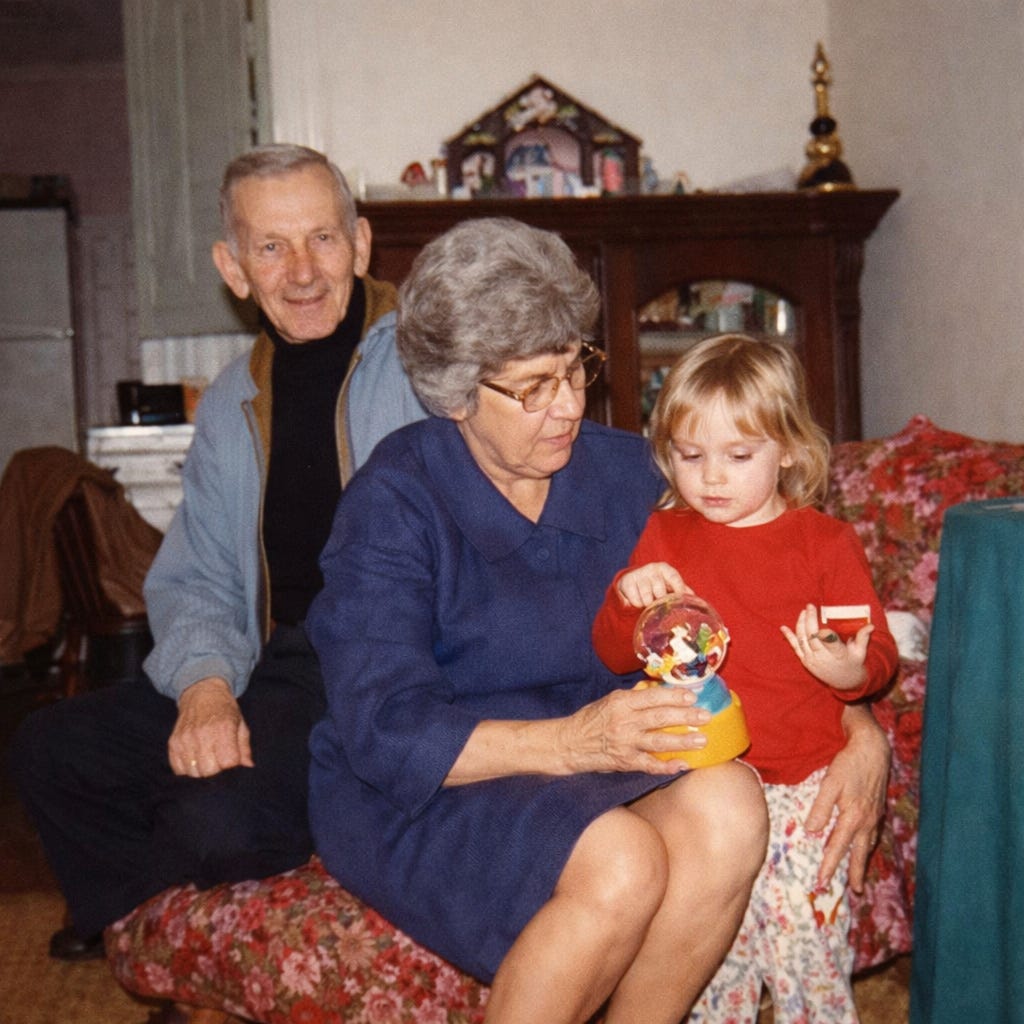
This essay is dedicated to every grandparent, teacher, member of the clergy, foster parent, neighbor, and family friend who quietly becomes the safe place for a child who needs one. You may never know how much your kindness matters, but sometimes it changes the course of an entire life.
No posts
Comments
Nothing yet. Say the first thing.
Sign in to join the conversation.