

Instead of following the same development path of Europe and North America, parts of Africa are charting a different course. One built around grassroots clean energy generation, ecological restoration and community empowerment. Could Africa leapfrog the West by skipping its legacy infrastructure and mindsets that might make it harder to build a more solarpunk society? Could this continent lead us all into a deliciously sustainable future?
SolarPunk Pro argues that at least Uganda might be doing just that. In this recent video he explains how rural areas waiting for decades for centralised electric infrastructure to arrive have taken matters into their own hands. They’ve been building out their own local solar power.
As we have already shared in Skander Garroum’s excellent post about similar developments in South Africa, this holds the promise of localised, clean-energy systems that can enrich communities in a way that the more centralised electricity grids of the West just aren’t designed to do.
It’s not only the African countryside that’s been embracing green energy generation. As the African Youtuber Gano Did It explains in this video, manufacturing businesses in Zimbabwe have been investing in solar power for their factories. This is primarily because generating their own electricity from the sun combined with battery storage is much more reliable than Harare’s sketchy power grid.
Factory owners in the video also explain other benefits of investing in their own solar power. It’s cheaper and also means they are helping the local and global environment by not using electricity derived from dirty coal or diesel-powered backup generators for when the grid regularly goes down.
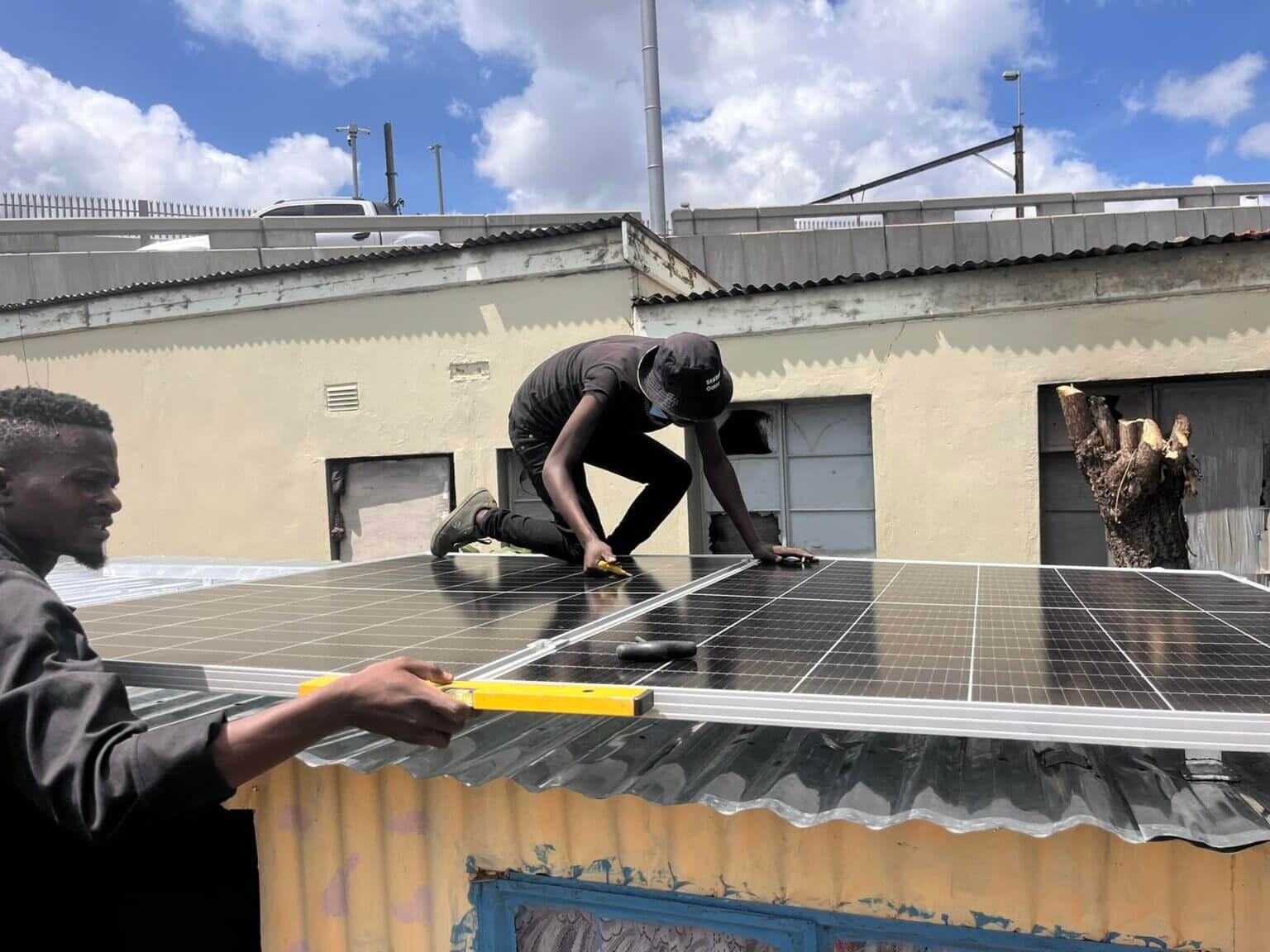
Zooming in to the hyper local, we can see places like The Bekezela Solarpunk Community Hub in South Africa. This was created by a community activist and professional solar installer, with the brilliant name of Sunny Morgan as well as the Buckland brothers, Luke and Daniel.
According to this this Afrika Burn piece, they have installed solar panels and batteries to power a solarpunk community centre in Johannesburg. The hub can charge people’s electronic devices for free, has a Raspberry Pi computer, hard drive and WiFi router. This kit is supposed to, “provide an open-access digital commons, including a neighbourhood chat server for communication and collaboration”.
This solarpunk community hub also provides rechargeable lamps, a recharging station for them, as well as a book and video library. Sunny and the Buckland boys have been directly inspired by the solarpunk movement to create this community resource. They hope to scale it in the future across South Africa and beyond.
Help us champion solarpunk by taking out a paid subscription to this newsletter. It costs less than the price of a coffee a month and means a huge amount to us.
As a paid subscriber you will get a free copy of SolarPunk Detective #1 and other bonuses as well as a warm, fuzzy feeling inside knowing you are helping bring a deliciously sustainable world closer to reality.
Or if you prefer to make a one-off donation of any amount to SolarPunk Stories you can do so using this link.
Support solarpunk by upgrading to paid
Africa is showing how the rest of the world might solarpunk in other ways than getting power from the sun.
In this recent Substack, Sam Matey-Coste makes the case for why he thinks Rwanda’s capital is an example of solarpunk urbanism. He mentions things such as how it’s been illegal to register fossil-fuel motorbikes since 2025, digital government making it easier for people to build housing but most of all an urban wetland park in the middle of the city.
Sam waxes lyrical about how lush, verdant and full of wildlife the Nyandungu park in Kigali is. As well as providing an urban ‘nature bath’ this space is an example of sponge-city design. The wetlands can absorb flood water stopping the surrounding urban areas from being deluged.
Sam also writes about Rwanda’s massive strides in terms of human development, child education, electrification and more leading to it being called ‘the Singapore of Africa’. He’s right to point out this is especially impressive considering the country suffered one of the worst genocides of the 20th Century.
Having said all that, Sam doesn’t shy away from raising questions about how democratic the Rwandan government is. Paul Kagame has been Rwandan president for 26 years and won his last election with 99% of the vote. Sam’s also critical of its military interventions in its neighbours, especially the Democratic Republic of Congo. All in all it’s a really interesting perspective and worth checking out.
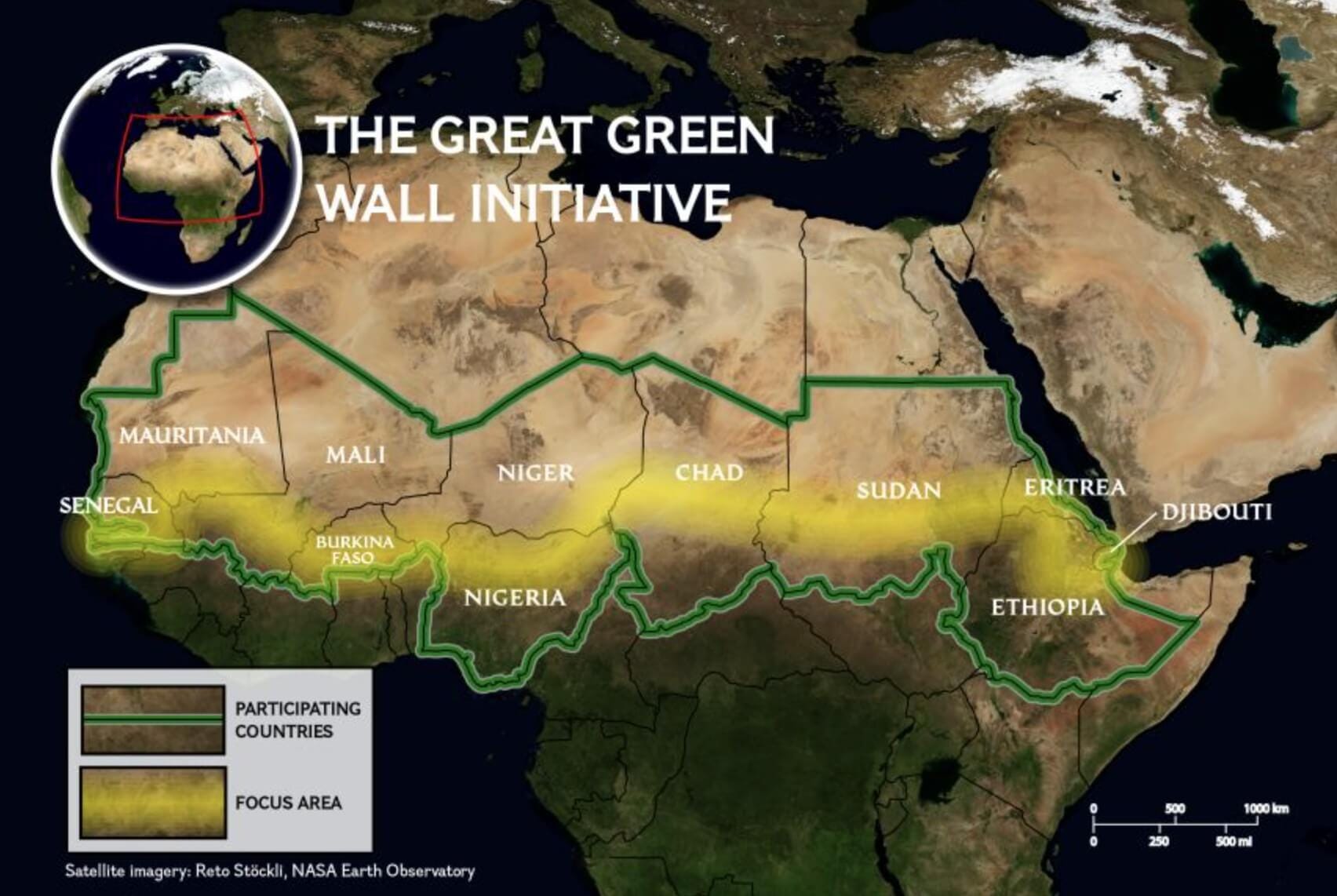
The ever excellent Andrew Millison has done a nice video about how the Great Green Wall of Africa is not only trying to turn the desert green, it may also be helping solve conflicts between farmers and herders.
Andrew explains how the growth of the Sahara had led to violent disputes between nomads and more settled peoples as arable land shrank due to climate change. Using low tech half-moon water harvesting structures, a combination of the government, NGOs and local communities are restoring the land and building peace at the same time.
So is Africa leapfrogging the West to become a solarpunk continent? Only time will tell. What we know for sure is that these examples help us feel a deliciously sustainable future for us all is that much more possible.

What do you think? Which of these are your favourite projects? Which have inspired you the most? Which do you think countries in the rest of the world can learn from? What solarpunky style things in Africa have we missed? Let us know in the comments below.
The main way this newsletter grows is people like you sharing it. Let’s bring a deliciously sustainable future a little closer by passing this onto anyone you think might enjoy a dose of inspiration.
See you in the sunshine,
Alex Holland
Founder, SolarPunk Stories
Comments
Nothing yet. Say the first thing.
Sign in to join the conversation.