
The brain is the last organ we’ve been allowed to ignore. That era is over.
The Problem: Cognitive enhancement is a $140 billion market still being served by caffeine, meditation apps, and pharmaceutical sledgehammers. None of them are precise. None of them are real-time. None of them are personal.
The Solution: Neural wearables — non-invasive EEG headsets, photobiomodulation devices, and closed-loop neurofeedback systems — are turning the brain into a programmable interface.
The Opportunity: The global brain-computer interface market1 grows from $3.2 billion in 2025 to $15 billion by 2035 at a 16.7% CAGR. Non-invasive wearables capture 70%+ of that growth. The broader brain health market? $140 billion and structurally underserved.
The Thesis: BULLISH on companies with proprietary AI-driven neurofeedback algorithms and defensible IP. BEARISH on legacy pharma cognitive plays being disrupted from below. WATCH the AI infrastructure layer and the critical materials supply chain — both are unsexy, both are where the money is.

For most of human history, we’ve managed the brain the way a Victorian physician managed infection: with hope, guesswork, and substances of dubious provenance.
Caffeine. Adderall. Meditation. Therapy. These are not precision tools.
They’re sledgehammers applied to a supercomputer with 100 billion neurons and 100 trillion synaptic connections.
The fact that they work at all is a testament to the brain’s resilience, not our sophistication.
The $140 billion brain health market3 reflects this bluntness. It’s a market built on imprecision - dietary supplements with shaky clinical evidence, wellness apps that measure nothing, pharmaceuticals with side-effect profiles longer than their benefit lists.
The global neurofeedback systems market4 alone, the segment specifically dedicated to measuring and training brain function, was valued at just $1.2 billion in 2024, a rounding error against the scale of the problem it’s trying to solve.
Consider what we’re dealing with. Cognitive decline costs the U.S. economy an estimated $290 billion annually5 in lost productivity, healthcare costs, and caregiver burden.
Burnout - a clinical state of chronic cognitive overload - affects an estimated 77% of the workforce6 at some point in their careers.
Anxiety disorders, the most prevalent mental health condition globally, affect 284 million people worldwide and are treated primarily with SSRIs that take six weeks to work and carry significant side-effect profiles.
The gap between what the brain is capable of and what we can actually measure and influence in real-time is the investment thesis.
That gap is closing. Fast.
Neural wearables work by reading the brain’s electrical output — the constant, low-voltage chatter of neurons firing in patterns that correspond to mental states.
The core technology stack has four distinct layers, each with its own maturity curve and investment implications:
EEG sensors (electroencephalography) — detect brainwave frequencies: delta (0.5–4 Hz, deep sleep), theta (4–8 Hz, creativity and memory consolidation), alpha (8–13 Hz, relaxed focus), beta (13–30 Hz, active thinking), gamma (30–100 Hz, peak cognition and information binding). The clinical utility of these frequency bands is well-established; the consumer application is what’s new.
fNIRS (functional near-infrared spectroscopy) — measures blood oxygenation in the prefrontal cortex, a proxy for cognitive load. Kernel9‘s Flow device uses a hybrid fNIRS/MEG approach that produces spatial resolution previously requiring a $3 million hospital scanner.
Photobiomodulation (tPBM) — uses specific near-infrared light wavelengths (typically 810–1064 nm) to stimulate mitochondrial activity in neurons, improving cellular energy production. A 2025 randomized controlled trial published in BMC Psychiatry found significant reductions in anxiety symptoms after four weeks of transcranial photobiomodulation10, with no adverse effects.
tDCS/tACS — transcranial direct/alternating current stimulation, applying micro-currents (typically 1–2 mA) to modulate neural excitability. The evidence base is mixed for healthy adults but robust for specific clinical populations.
The magic happens in the software layer.
Raw brainwave data is noise.
Proprietary AI algorithms trained on millions of sessions convert that noise into signal - identifying your personal baseline, detecting deviations, and delivering targeted neurofeedback in real-time.
This is the closed-loop system.
Read the brain. Interpret the signal. Deliver a response. Measure the effect.
Repeat.
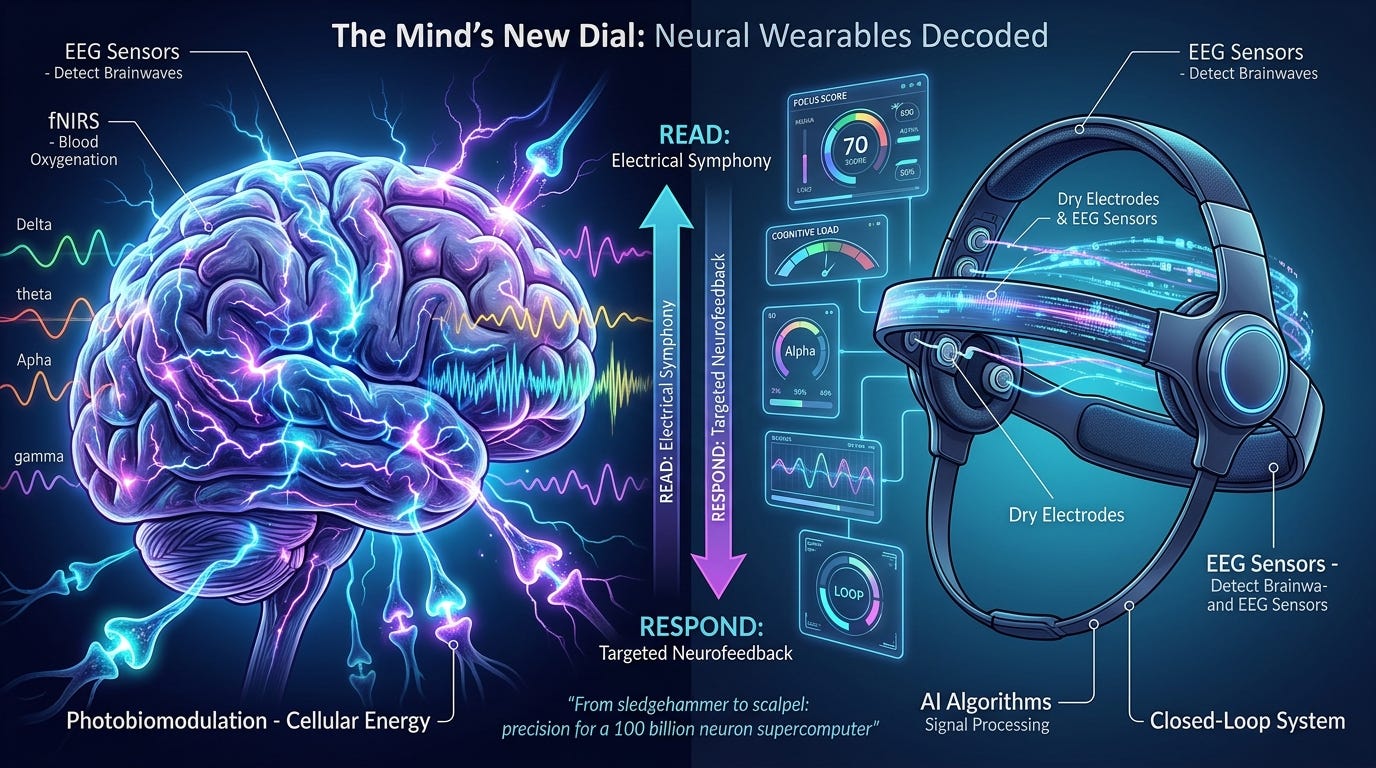
Figure 1. Neural wearables decoded: EEG sensors, photobiomodulation, AI algorithms, and closed-loop feedback turn raw brain signals into a programmable interface.
The difference between a consumer EEG headset and a clinical neurofeedback system used to be a lab coat and $50,000. That gap is now $200 and a smartphone app.
Dry electrode technology12 was the unlock.
Traditional wet electrodes required conductive gel, clinical setup, and a trained technician.
Dry electrodes - now manufactured using carbon nanotube composites and silver-coated textile substrates - work through hair, require no preparation, and maintain signal quality across thousands of sessions.
A 2024 study published in PMC validated flexible PDMS/carbon-nanotube composite electrodes as equivalent to clinical-grade wet systems for EEG signal acquisition - a milestone that effectively removes the last technical barrier to consumer-grade neurofeedback.
The miniaturization curve is steepening. MEMS (micro-electromechanical systems) sensors have shrunk the signal processing hardware from a desktop unit to a chip smaller than a fingernail.
The next generation of neural wearables will be indistinguishable from standard consumer headphones - which is precisely what Neurable13 and Master & Dynamic shipped in September 2024 with the MW75 Neuro13.
The numbers are not subtle.
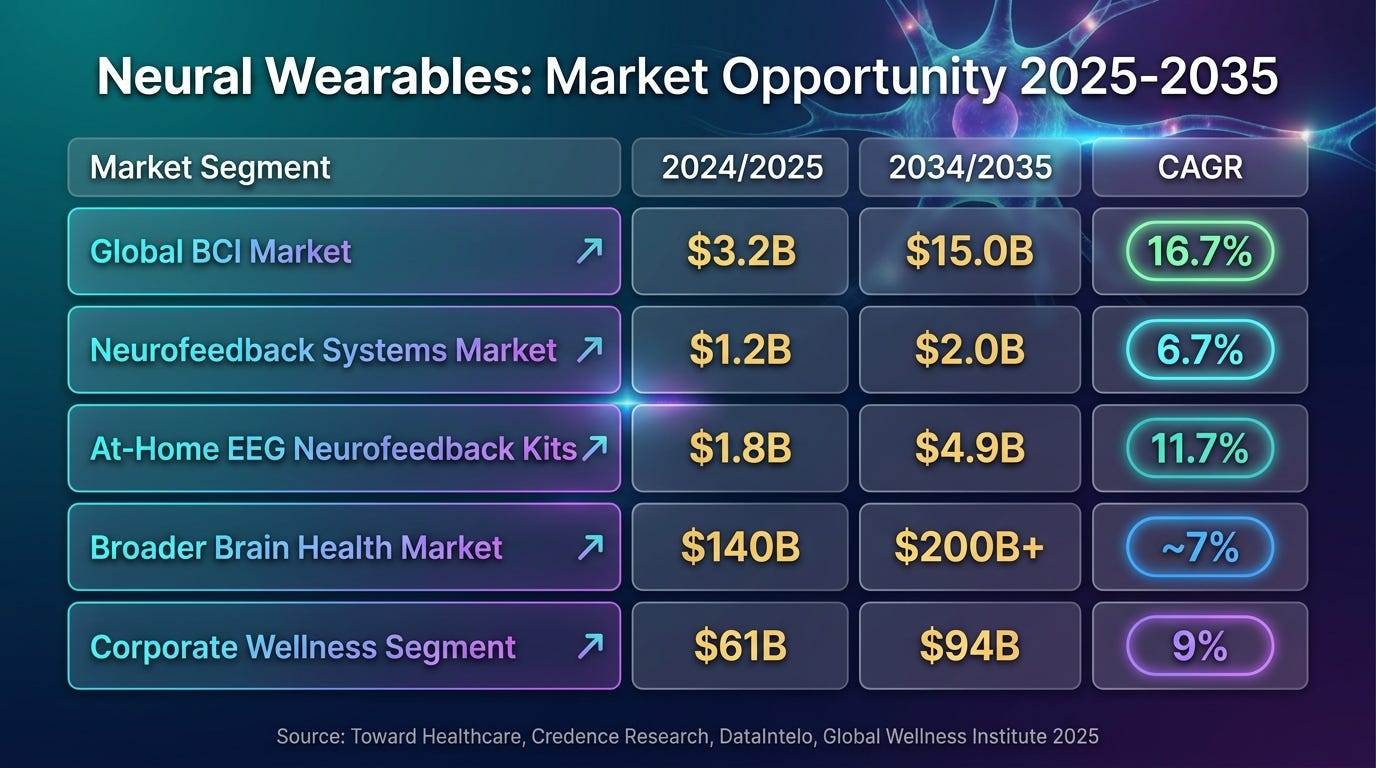
Source: Toward Healthcare, Credence Research, DataIntelo, Global Wellness Institute
The COVID-19 pandemic was an inadvertent accelerant. Mental health awareness went from a clinical conversation to a dinner-table one.
Burnout, anxiety, and cognitive fatigue became mainstream concerns, not fringe ones.
The demand for accessible, at-home cognitive tools followed.
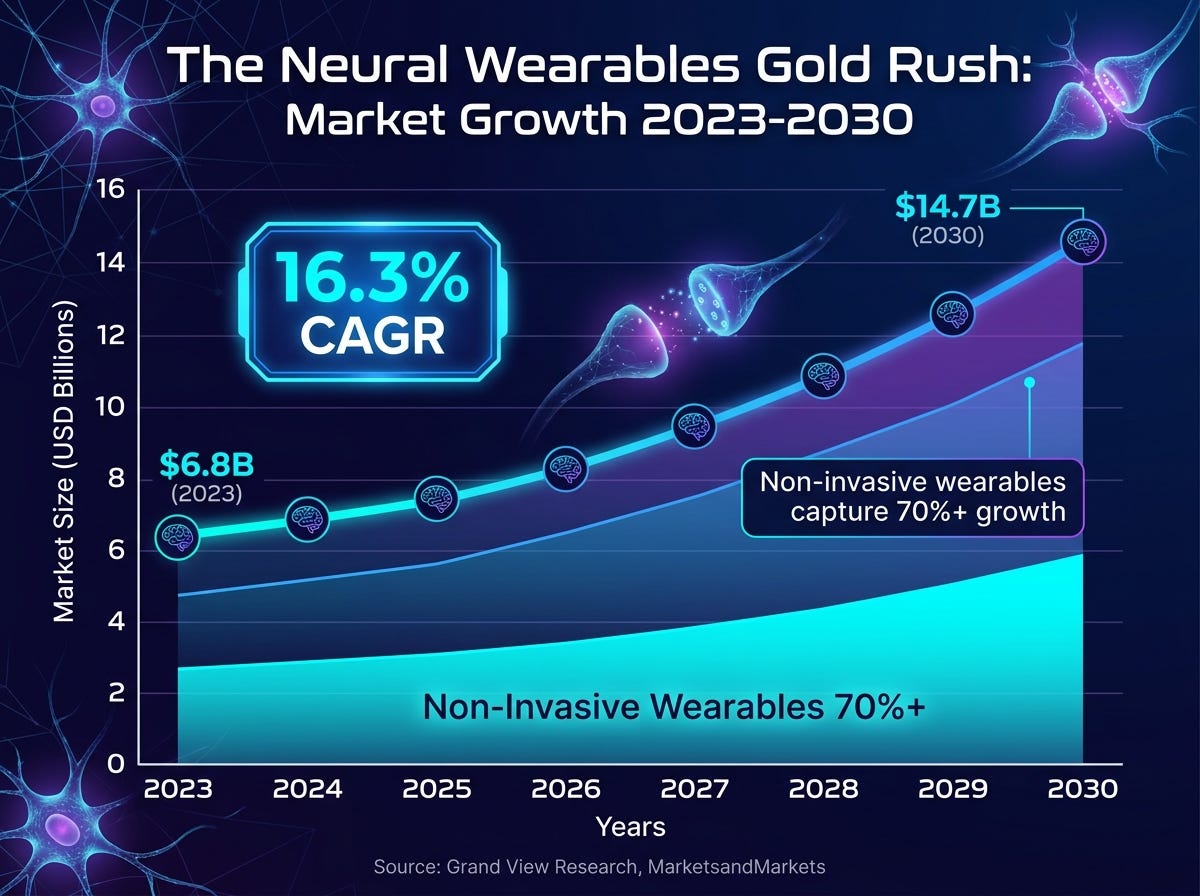
Figure 2. Neural wearables gold rush: non-invasive wearables capture the majority of growth as the cognitive-tech market scales.
Three structural tailwinds are compounding:
Miniaturization — dry electrode technology, flexible circuits, and MEMS sensors have shrunk clinical-grade hardware into consumer-grade form factors.
The Neurable13 MW75 Neuro13 — a standard-looking pair of headphones with embedded EEG sensors — is the proof of concept that the form factor problem is solved.
AI democratization — cloud-based signal processing makes personalized neurofeedback economically viable at scale.
What required a dedicated neurofeedback therapist and a $50,000 clinical system in 2015 now runs on a smartphone app trained on millions of sessions.
Regulatory clarity — the FDA’s De Novo pathway15 for general wellness devices has opened a lane for consumer neural wearables that don’t require clinical trials.
The key distinction: general wellness claims (improve focus, reduce stress) versus therapeutic claims (treat ADHD, cure anxiety). Companies that stay on the right side of that line can move fast.
The corporate wellness channel is the sleeper opportunity.
With $61 billion in annual spend and growing at 9% annually, enterprise buyers are actively seeking measurable cognitive performance tools.
Emotiv16‘s B2B contracts with NASA, DARPA, and Fortune 500 wellness programs represent the leading edge of a much larger institutional adoption curve.
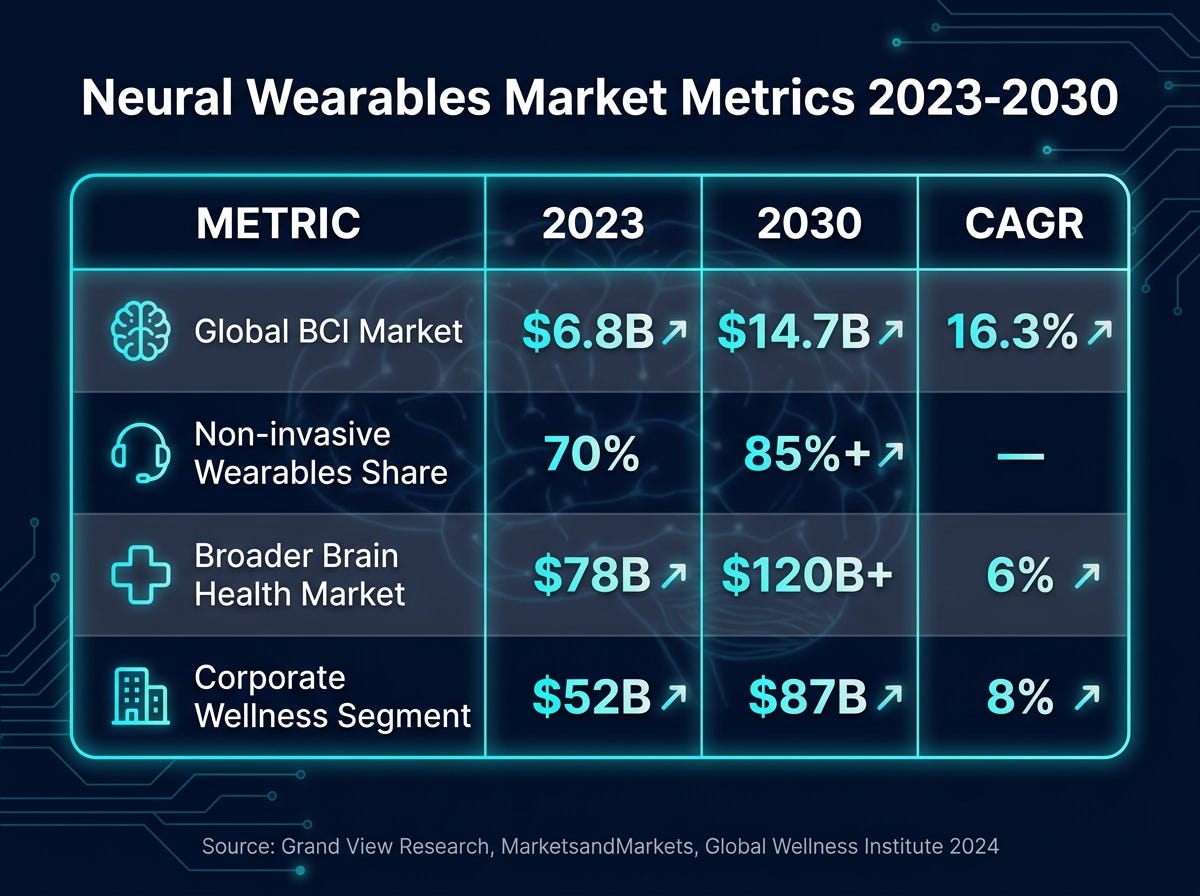
Figure 3. Market metrics: BCI, non-invasive wearables, brain health, and corporate wellness form the demand stack behind neural interfaces.
The market is not waiting for a single killer app.
It’s evolving through continuous platform expansion - from focus optimization to sleep architecture, from stress management to memory consolidation, from individual wellness to enterprise productivity measurement.
Here’s where it gets interesting for investors who like to look under the hood.
Neural wearables are not just a software story. They’re a materials story.
The sensors that make dry-electrode EEG possible require specialized conductive materials - silver-coated textiles, carbon nanotube composites, and increasingly, niobium-based alloys for the flexible circuit substrates that allow headsets to conform to skull geometry without rigid housings.
These aren’t commodity materials.
They’re precision-engineered, supply-constrained, and geopolitically sensitive.
Niobium. The metal 77% of the world’s supply of which flows from a single operation: CBMM’s Araxá mine in Minas Gerais, Brazil — controlled by the Moreira Salles family and producing 150,000 tonnes per year, exceeding current global demand.
The metal that China’s state-owned enterprises spent $2.3 billion to secure access to. The metal the Pentagon has quietly been stockpiling.
The metal that Legal 50018 described in August 2025 as “a geostrategic pillar of the 21st century.”
The AI economy needs chips. The chip economy needs power. The power economy needs critical metals. The neural wearable economy is downstream of all three.
Most investors are looking at the headset companies. The smart money is looking at the supply chain.
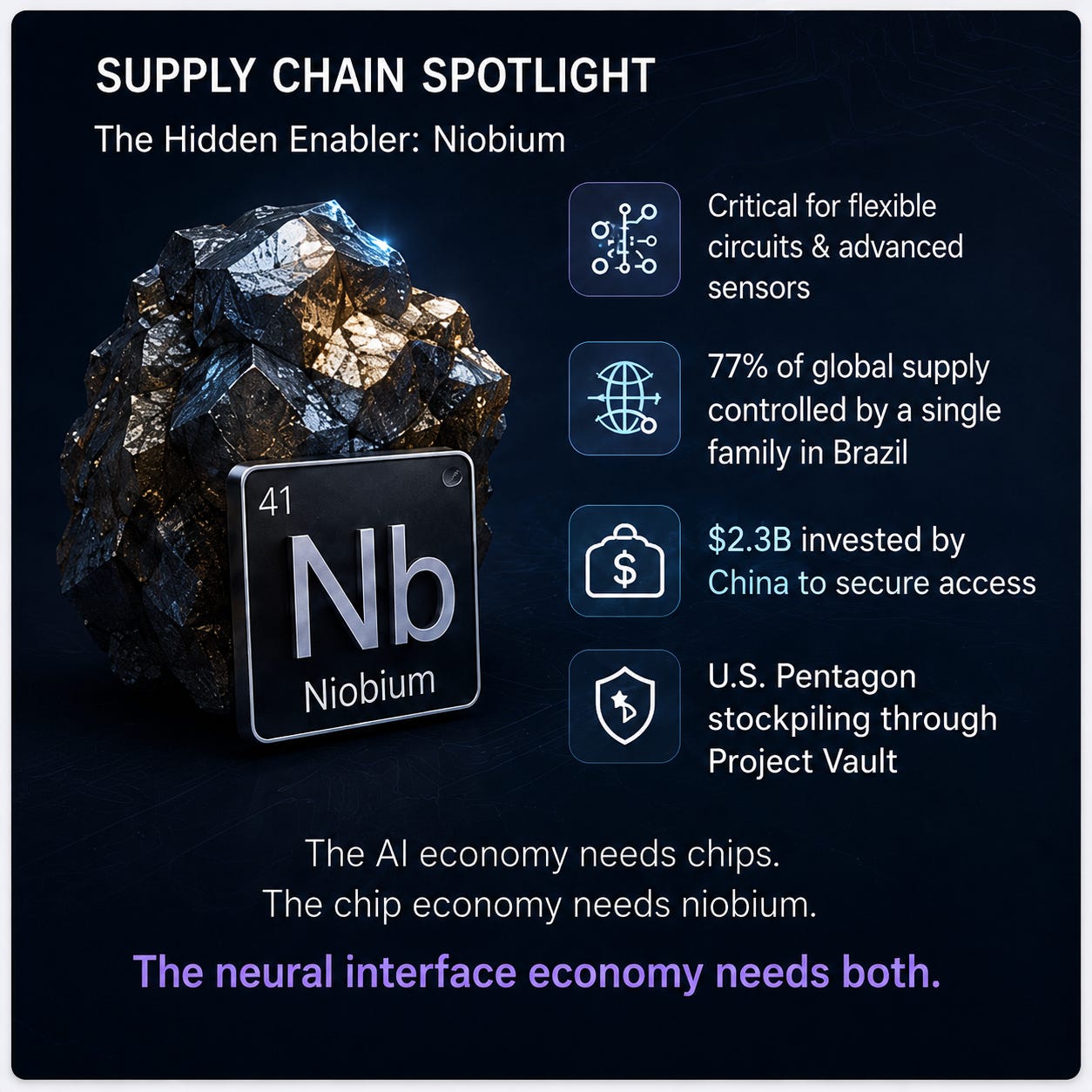
Figure 4. Supply-chain spotlight: niobium and other precision materials sit beneath the neural-interface economy.
Related Briefing · Supply Chain
The niobium story is one of those supply-chain threads that keeps unraveling. If you want to understand why a single family in Brazil may be sitting on one of the most important industrial assets in the AI economy, this briefing is worth ten minutes. The Invisible Empire →
The economics at the device level are equally compelling.
The at-home EEG neurofeedback kit market was valued at $1.8 billion in 2025 and is projected to reach $4.9 billion by 2034 at an 11.7% CAGR.
Consumer hardware ASPs range from $199 (Muse S) to $849 (Emotiv16 EPOC X), with software subscriptions adding $10–$30/month in recurring revenue.
The unit economics are favorable: hardware margins of 40–60%, software margins of 70–80%, and customer lifetime values that extend across years of habitual use.
The enterprise channel carries even better economics.
Emotiv16‘s B2B contracts typically run $2,000–$10,000 per unit for research-grade systems, with multi-year software licenses.
The stickiness is structural: once a corporate wellness program or research institution builds workflows around a specific EEG platform’s data format and API, switching costs are high.
The competitive landscape splits cleanly into three tiers, each with distinct risk/reward profiles.
Tier 1 — Pure-Play Neural Wearable Companies
Muse (InteraXon) — The consumer EEG pioneer. The Muse S headband targets sleep and meditation with a reported 500,000+ user base.
Strong brand recognition, but limited clinical validation for performance claims beyond sleep staging. Revenue model: hardware + subscription app. The risk: consumer brand loyalty in wellness is notoriously shallow.
Emotiv16 — The enterprise and research anchor. The EPOC X (14-channel EEG, $849) and Insight (5-channel, $299) serve NASA, DARPA, academic institutions, and Fortune 500 wellness programs.
A 2020 peer-reviewed validation study confirmed the Emotiv EPOC Flex captures data “similar to that of a research-grade EEG system.” This clinical credibility is the moat. Higher ASP, lower volume, but stickier B2B relationships and a defensible data advantage.
Neurable13 — The stealth play that shipped. In September 2024, Neurable and Master & Dynamic launched the MW75 Neuro13 — standard-looking premium headphones with embedded EEG sensors and Neurable’s AI-powered attention and focus tracking.
No visible hardware change. No social stigma. This is the consumer adoption thesis in its purest form: neural sensing that disappears into existing behavior.
BrainCo — Focus tracking with dual-market access. Strong in education (attention monitoring for students) and corporate wellness.
Chinese-American founding team with manufacturing relationships in both markets. The regulatory risk in the education vertical is real — monitoring children’s brain activity is a different conversation than adult wellness.
Kernel9 — Jeff Stibel’s $100 million moonshot. The Kernel Flow device uses a hybrid fNIRS/MEG approach that produces spatial resolution previously requiring hospital-grade equipment.
Not consumer yet, but the normative brain database they’re building — mapping healthy cognition across age, gender, and cognitive state — will be the training set for the next generation of AI-driven neurofeedback algorithms. The hardware is the data collection mechanism. The database is the product.
Tier 2 — Adjacent Plays
NVIDIA (NVDA) — The AI infrastructure backbone. Every neural wearable company running real-time signal processing is running it on NVIDIA’s compute stack, directly or through cloud providers.
NVIDIA’s healthcare and life sciences division is explicitly targeting neurotechnology as a growth vertical. This is not a neural wearable company. It is the picks-and-shovels play for every AI application, including cognitive tech.
Garmin (GRMN) — Quietly building the most comprehensive biometric dataset in consumer wearables. HRV, sleep staging, stress scoring, body battery. One acquisition away from being a neural wearable company. The distribution moat - 17 million active users - is underappreciated.
Philips (PHG) — Clinical-grade EEG with a consumer ambition. The regulatory moat is real. The consumer execution has been slow. Watch for a strategic acquisition rather than organic development.
Tier 3 — The Wildcards
Apple, Google, and Meta are all filing neural interface patents at an accelerating pace. None have shipped a dedicated neural sensing product.
All are watching the market develop before committing.
When they move - and they will move - they will move with distribution that no startup can match.
Every pure-play neural wearable company is simultaneously a potential acquisition target and a potential casualty.
The neural wearable market is currently in the “before iPhone” phase of smartphone evolution. The technology works. The use cases are proven. The mass-market form factor is arriving.
The AI infrastructure layer is where the durable alpha lives. The headset companies will consolidate, pivot, or get acquired. The AI compute companies that process the data will compound.
Related Briefing · AI Infrastructure
One more thing while we’re on the subject of AI infrastructure: the same compute layer powering real-time neurofeedback is also powering dozens of other AI verticals at once. Weiss Ratings says its system is flagging three under-the-radar AI infrastructure stocks for 2026. See AI’s Second Wind →
The factor screen below maps the six key players across five dimensions: sensor technology quality, AI/software IP depth, clinical validation, consumer readiness, and overall moat score.
The pattern is consistent and instructive: consumer readiness and moat strength are inversely correlated.
The companies easiest to buy today - Muse, BrainCo - have the weakest defensibility. The companies with the strongest IP and clinical validation - Kernel9, Emotiv16 - are either private or harder to access as pure plays.
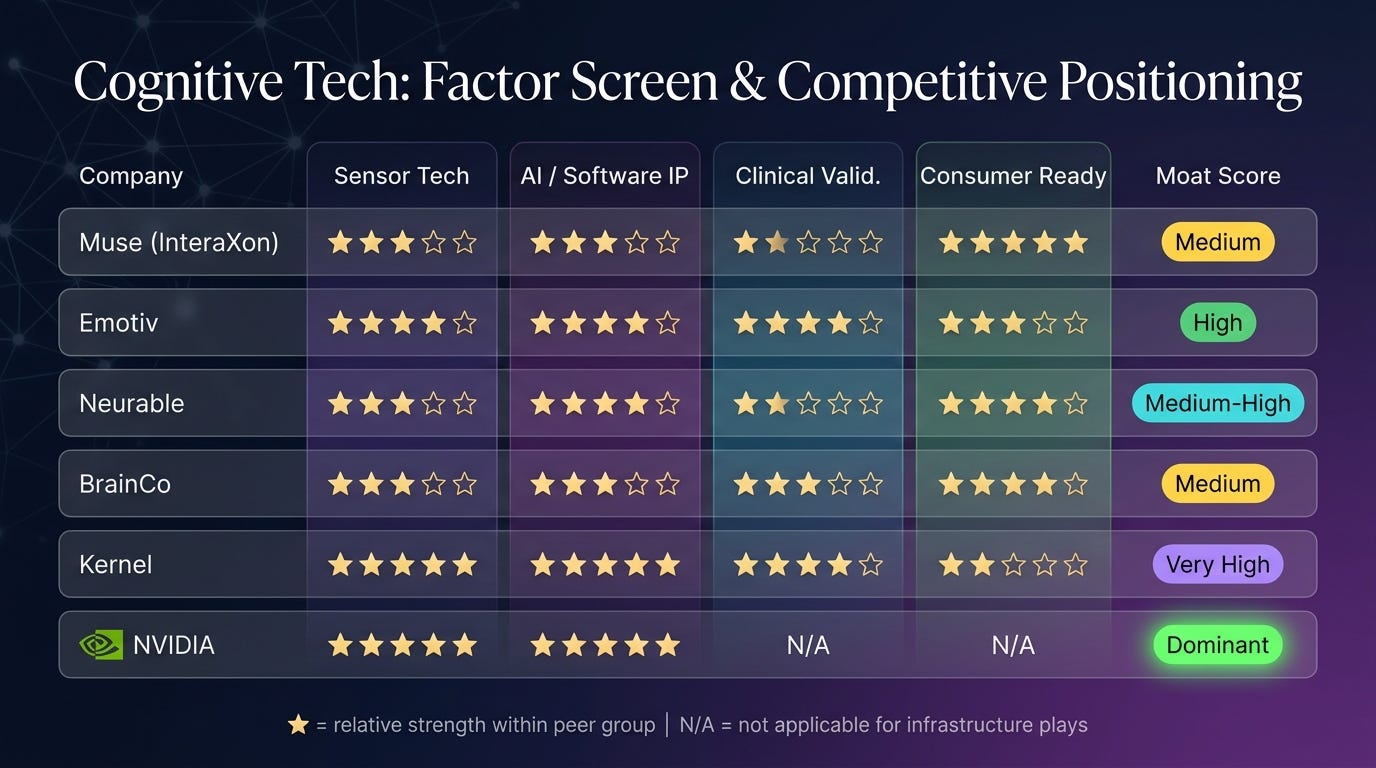
Figure 5. Competitive positioning: sensor quality, AI/software IP, clinical validation, consumer readiness, and moat strength separate the durable platforms from the early consumer brands.
This is not unusual in emerging technology markets.
The early consumer brands rarely become the dominant platforms.
The companies building the data infrastructure, the AI training sets, and the clinical validation frameworks are the ones that compound over decades…
Now that you’ve read the thesis. You understand the technology. You know why this market is about to explode.
Now here’s the part that matters.
For $7, you unlock the complete package — everything that turns a great read into an actionable investment plan.
1). The Full Investment Arsenal — 9 Plays Across 3 Risk Tiers
Built directly from the research you just read. Not vague “watch this sector” advice. Actual structures. Actual strikes. Actual numbers.
• Tier 1 — Conservative (3 plays): High-probability premium collection on large caps. Defined risk. Target: 15–25% return on risk per trade.
• Tier 2 — Moderate (3 plays): LEAPS, diagonal spreads, and a ratio spread targeting 400–515% on debit. Asymmetric payoffs most retail investors never learn exist.
• Tier 3 — Aggressive (3 plays): Three speculative equity positions with 100–370% upside targets. Small position sizes. Eyes open on the risk.
2). The Small-Cap Deep Dive Report
Seven under-the-radar neurotech stocks - market caps between $25M and $500M - that the research points to as the highest-leverage plays in the entire thesis.
Full breakdown: thesis, key catalyst, risk rating, and entry framework for each name. These are the companies institutional money hasn’t found yet.
3). The Full Source Library
Every claim in this article, sourced and linked. 27 references across peer-reviewed journals, market research firms, and clinical trial databases — organized so you can go deeper on any thread that caught your attention.
4). Free Subscription to Alpha Growth Newsletter
Your $7 also unlocks a complimentary subscription to Alpha Growth - Vetta Investments’ flagship research The V-Rank Alpha model has returned +2,575% since February 2005.
A Monthly letter covering systematic investing, emerging technology, and under-the-radar market opportunities. No predictions. No opinions.
Just a rules-based algorithm that selects 20 stocks from the S&P 500 and S&P 400, rebalances monthly, and has compounded wealth for 21 years straight — through two recessions, a pandemic, and every market panic in between.
5). The Audio Deep Dive — Next Day Podcast Episode
A deeper dive full audio walkthrough of the concepts in this article — every section, every play, every small-cap name expanded — narrated and expanded with additional context that didn’t make it into the written piece.
Listen on your commute. Replay the investment plays section as many times as you need.
That’s less than a coffee. Less than the commission on a single options trade.
And if even one of these plays works, you made your money back on the first trade.
Comments
Nothing yet. Say the first thing.
Sign in to join the conversation.