
Lately the news of IndianOil offering indoor solar cooking systems has popped up in my alerts. Strange bedfellows may be the first phrase that comes to mind. A big petroleum interest—promoting solar cooking
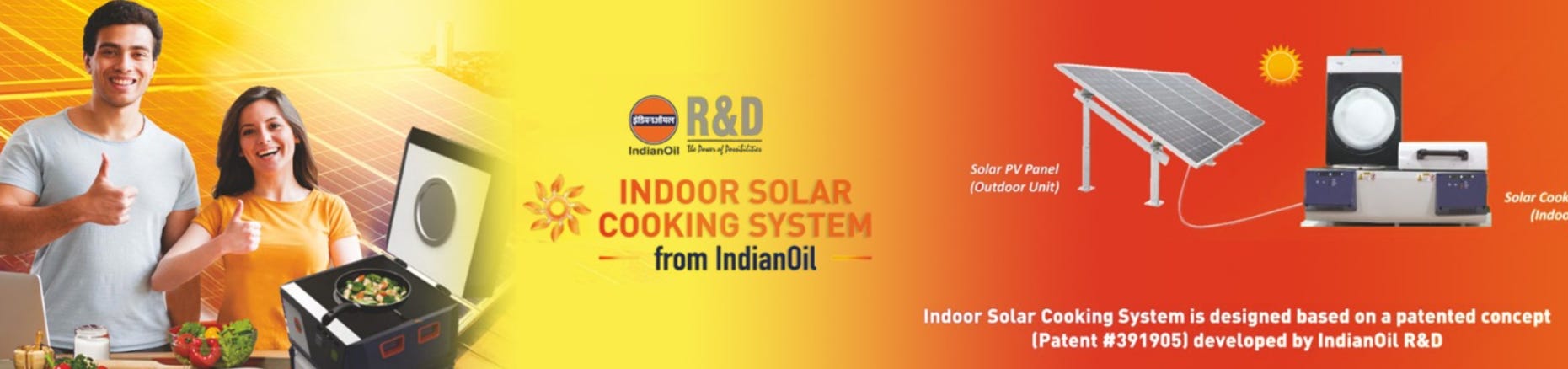
Photo: IndianOil
I have been mildly irked when updates about their beneficence would show up in my daily news alerts about all things solar cooking. But lately it’s been more than irritation.
For years, many solar thermal and PV proponents have uttered words to the effect: “No one can put a meter between the sun and our home.”
But I’ve come to the conclusion that IndianOil has found a way to do exactly that. These systems are often roof-mounted for multi-story dwellings and discounts are given families who install induction or other electric cookers. These cookers plug into a wall outlet. The outlet is tied to the grid. The grid has a meter—actually a lot of them. Thus no one escapes the dependence that the masters of the grid have imposed on “energy consumers.”
So—grid electricity is metered, as are most solar PV systems—rooftop with or without net metering, community and utility-scale solar farms, and even balcony solar power, which plugs into an outlet—are part of the grid.
This is a conundrum for the solar thermal cooking community. The vast majority of us enthusiastically embraces photovoltaic power generation. Until recently there’s been little recourse but to acquiesce to the net-metering services that have reached most of the United States and countless nations. We want solar power—thermal is cleanest, PV is darn close—but we’d like to cook independently from the power brokers.
One thin edge of the wedge toward such independence: States are rushing to allow balcony solar systems that don’t unplug a home from the grid, but in a twisted way, makes The Grid more dependent on the individual power producer.
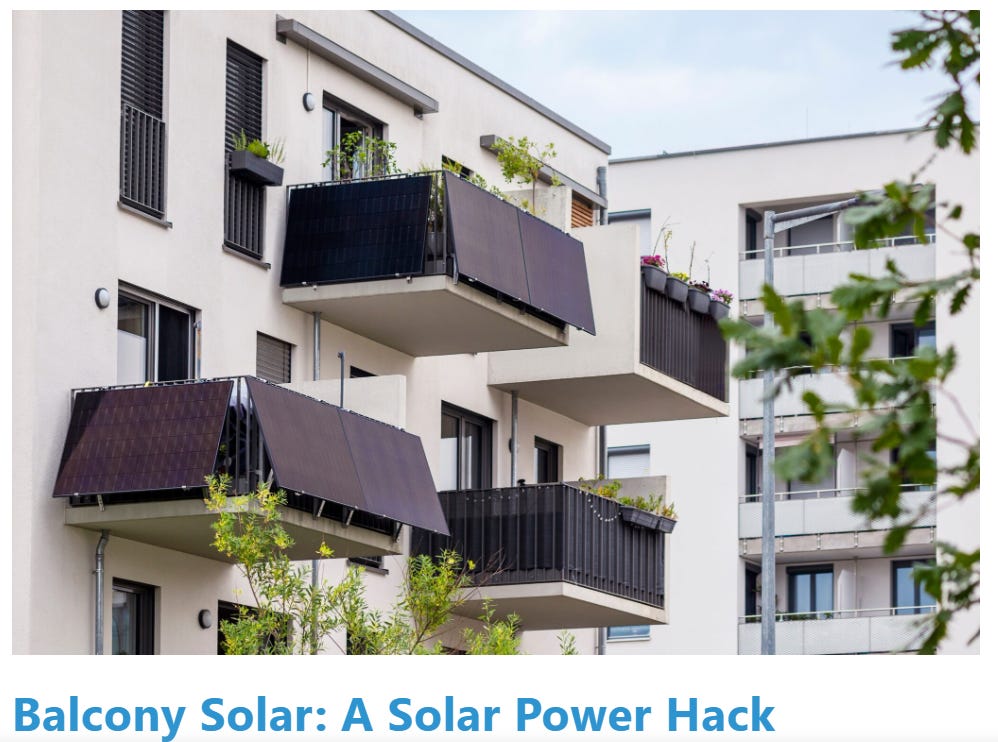
Photo: SolarMuseum.org
We who installed multiple kilowatts worth of panels on our roofs often say “when the sun shines, the meter runs backwards.” Actually there are two meters, and the system does the math to generate refunds for overgeneration, or bills for over use of the grid electricity.
It makes me think we might want to develop a solar thermal inverter, some kind of meter that can do the math regarding the kilowatts we’ve harvested from sunlight—a meter that can challenge the spaghetti wire junction boxes that make homemade solar electricity possible. Maybe we could pay our grid bills, minus what we spared their grid from the ware and tear that our washing machines, blenders, big screen TVs, and alarm clock radios for our household needs?
Steve Baer, revered in architects’ circles even without the usual credentials of an advanced degree, and inventor of the Sun Flash solar cooker, once said “I’m just an old farmer, farming the sky, worrying about the weather.” There’s no simpler plow or combine that can make it happen, than a solar thermal cooker. No meter required, no trip to the diesel tanker to fill up before setting out to reap what one has sown. Jennifer in Oregon hangs up her plow—er, Sun Oven—on a ledge of her homestead at the end of a solar cooking day. No wires, no fuses, no junction boxes.
Maybe we could rebrand our movement as the Sun Farmer’s Cooperative.
Thoughts?
More of these, please.
As the market for PV electricity skyrockets more imaginative minds will think of ways to use panels apart from providing a general localized contribution to the grid.
From Sri Lanka comes a bakery-in-a-box that can run on PV while the sun shines, but and biogas when it doesn’t. This is an appliance that gives equal weight to sustainable energy, rather than plug into a the dominant and aging grid by co-opting a solar PV array. Plentiful un-grid-tied solar by daylight and renewable reclaimed waste biomass in the shadows.
What’s not to like? Well, with a little ingenuity, this could be a triple-threat: Add some way to funnel pure sunlight into the cookbox, perhaps like the LyteFire? and the PV panels could be put to use for needs that can only be met with electricity…?
It’s about the food, stupid.
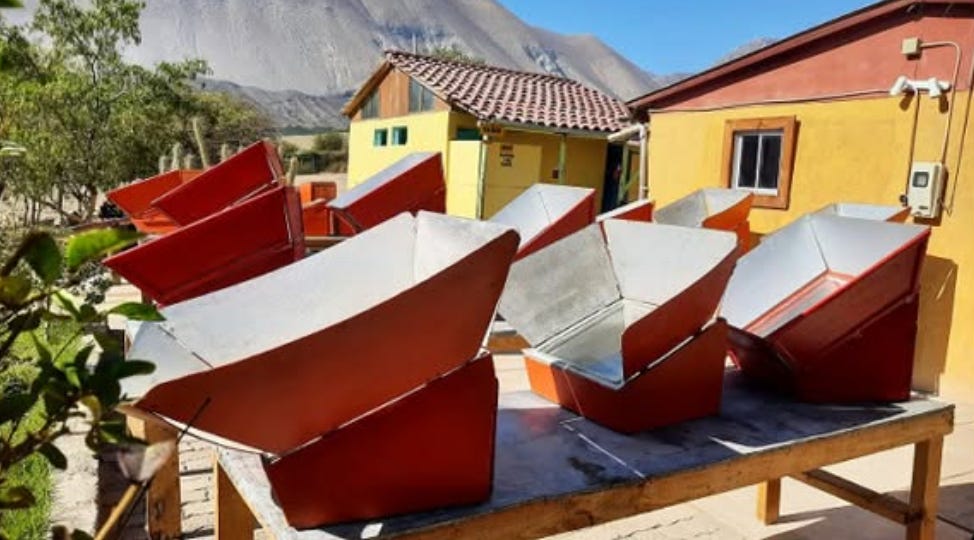
Photo: Delicias del Sol, Villaseca, Chile
Last week I spun the bottle to select some breakout sessions with the American Alliance of Museums’ Expo in Philadelphia. While most topics seemed geared toward already up-and-running museums, a few helped clarify my thinking about the beginnings of my hoped-for Solar Cooking Museum.
Among the many features of our dreamworld facility, a solar cafe now seems to be a non-negotiable Must. And not as an added thrill ride after a half hour of viewing displays of cookers, with food cooking or at least water boiling. But from the get-go, as a culmination of all the energy flowing down on visitors.
At the first solar cooking conference I attended, CONSOLFOOD 2020 in Faro, Portugal, Pedro Serrano Rodrigo made his plea that we not forget: It’s all about the food! Don’t let all the tinkering and marketing and testing get in the way of serving up meals as a matter of routine.
“…We should understand that what matters is the transfer of the heat to the food, culturally appropriate cooking times and the intensity and LOVE with which the cooking is done.”
Which is why the Museum must have a cafe, at least, perhaps even a Western Hemisphere franchise of the mind-blowing solar restaurants, Le Presage and Delicias del Sol?
Well if any of you know chefs who’d like to escape the LP fumes or the induction cooktops in their culinary career, toward the pure food-centered activity of solar cooking—send them my way.
We have lots of time to plan. I’ll even undergo the torture of filling out the paperwork to get a food license.
—Luther
No posts
Comments
Nothing yet. Say the first thing.
Sign in to join the conversation.