
People held in U.S. immigration detention are not serving criminal sentences. Immigration detention is considered a form of civil confinement, meaning those inside are being held while their immigration cases proceed, not as punishment for a crime.
Yet tens of thousands of people being held in immigration detention are forced to labor inside detention facilities, often for as little as $1 per day, if anything at all.
"Neither slavery nor involuntary servitude ... shall exist within the United States, except as a punishment for crime whereof the party shall have been duly convicted."
Passed in 1865, the 13th Amendment to the U.S. Constitution is celebrated for abolishing slavery and involuntary servitude.
However, the 13th Amendment includes an exception clause that has historically been used to justify forced labor in prisons for people convicted of crimes.
Even though those being held in immigration detention have not been convicted or sentenced, the structure of forced labor in immigration detention mirrors the systems of prison labor: people deprived of their rights being forced to perform labor for extremely low wages (if anything at all) while corporations and governments benefit financially.
→ ICE detention facilities run what they call “Voluntary Work Programs.”
Similar to in prisons and jails, those being detained are forced to clean housing units, work in kitchens, do laundry, or perform other jobs considered necessary to keep the facilities running.
On Monday, Immigration and Customs Enforcement released revised detention guidelines, explicitly stating that the rules were changed with operator input “to reduce the burden on our detention operators.”
At the request of private prison giant GEO Group, which is the second-largest recipient of contracts from ICE and oversees more than a dozen ICE detention facilities, the new rules have been updated to benefit for-profit contractors.
The revised rules no longer say that those being detained must be paid at least $1 per day, facilities are, however, banned from paying more than $1 per day for labor performed by those detained
Lines saying that contractors must follow state and local laws around the treatment of detainees were removed
New language was added to make it clear that “detainees who participate in voluntary work programs are not employees and therefore not entitled to wages and benefits”
GEO Group has faced lawsuits in three states alleging it violates minimum wage laws by paying those being detained $1 per day to work, many under threat of punishment for refusing.
By framing the forced labor as “voluntary work programs,” the federal government has argued in courts that those being detained are willingly working, omitting the fact that those who refuse to labor are often thrown into solitary confinement, are not allowed to see their loved ones during visiting hours, and more as forms of punishment.
For years, those being detained have accused private prison corporations of profiting from their labor.
Those currently and formerly detained in immigration detention facilities have filed lawsuits over forced labor practices.
One of the most prominent cases involved a facility in Aurora, Colorado, run by one of the largest private prison corporations in the United States: GEO Group. Plaintiffs said that they were forced to perform cleaning and maintenance work for little or no pay and under threats of punishment.
In February 2026, the Supreme Court refused to shield GEO Group from the lawsuit, allowing the case to proceed.
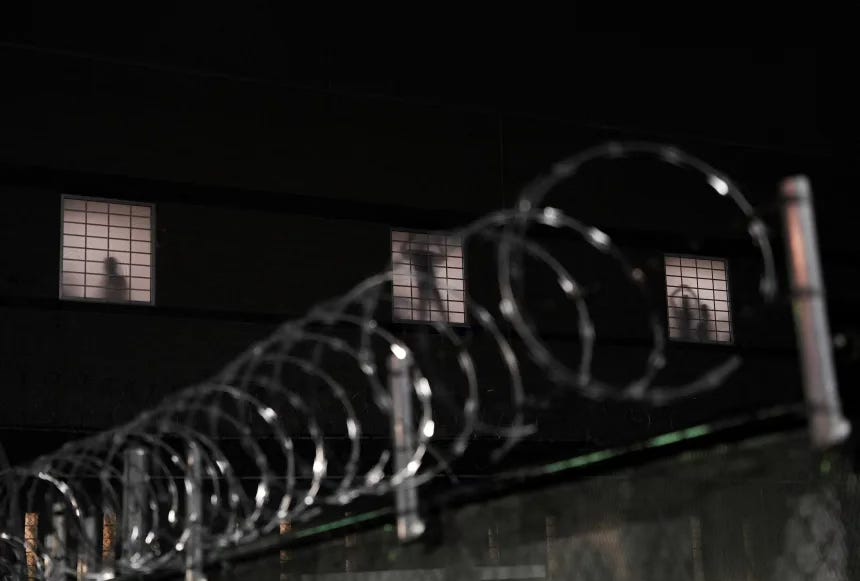
Those being detained at several facilities across the U.S. have recently launched hunger and labor strikes to protest conditions, medical neglect, prolonged detention, and exploitation.
At Delaney Hall in Newark, New Jersey, hundreds of those being detained began a hunger and labor strike in May, with GEO Group and ICE almost immediately retaliating against them. Despite the retaliation, the protests expanded, with dozens of detained women joining to demand improved medical care, faster case processing, and the immediate release of medically vulnerable detainees.
What these strikes highlighted, beyond conditions within the facilities, is the extent to which these detention facilities rely on the forced labor of those being held inside. Without that labor, these facilities struggle to operate.
So long as the exception in the 13th Amendment exists, slavery will persist in the United States.
The exception in the 13th Amendment allowing slavery as punishment for a crime in prisons across the country will continue to act as the blueprint for the ways in which those who are held in immigration detention are treated – for as long as we allow it to.
The Abolition Amendment would end this exception, finally actually ending slavery in the United States.
Visit EndTheException.com to learn more and to take action.
Stay updated on everything immigration-related in one place:
Get a 40% discount to the Ground News unlimited Vantage plan (the same one that I use to stay informed!) by going to groundnews.com/informed. (Just $5 per month - less than a good cup of coffee.)
This allows you to:
Compare headline coverage for sources reporting on a story.
See the political leaning of news outlets with bias ratings.
See a summary of how different media outlets with varying political biases are covering the same news story.
See who’s funding a publication - government, independent, media conglomerate, wealthy individuals, etc.
The easier it is for us to consume the news, the more likely it is that we’re able to stay as updated as possible. That’s important in these times.
No posts
Comments
Nothing yet. Say the first thing.
Sign in to join the conversation.