
A few months ago, I shared the backstory of our property and how we had kicked off a big landscaping project but I’ve yet to ‘reveal’ anything. Should I do that today?
If I’m being perfectly honest, I want to share it with others once it’s poppin’ off in spring, ha! Petty, I know. I’m also tempted to give you a dozen disclaimers before sharing photos (I’ll resist).
It’s truly taken me a while to process the end-result. Landscaping remodels are not like interior remodels, they’re not at all in a finished state when the crew leaves. The new plantings can look sparse and awkward, the soil raw, not yet cloaked in a blanket of groundcover.
While I am enjoying it in its current state, I’ve had to constantly remind myself that the intention and design vision will only be realized through growth and the art of tending over time. Nevertheless, what we have now is a huge step forward in our journey as sub/urban land stewards. The earthworks have been such a gift: we’re able to better access the sloped land, create zones for more diverse flora (and hopefully fauna) and manage water more responsibly.
Please enjoy this story of photos, I plan to expand on the soil amendments next post.

While our development is innovative in many ways, especially when it comes to energy and efficiency, it is unfortunately not pushing the envelope in the outdoor department. Our lot started out, like every other, as a builder-grade yard — bermuda grass sod, a couple of shumard red oaks and a crape myrtle tree. Oh and the saddest landscaped bed with boxwoods, dwarf nandina and loriope. I don’t have many photos of this time, probably due to the landscape’s total lack of inspiration. But, I do have many records of what the lot looked like after we gave it over to the weeds (more on that story here).
2021 (Before):
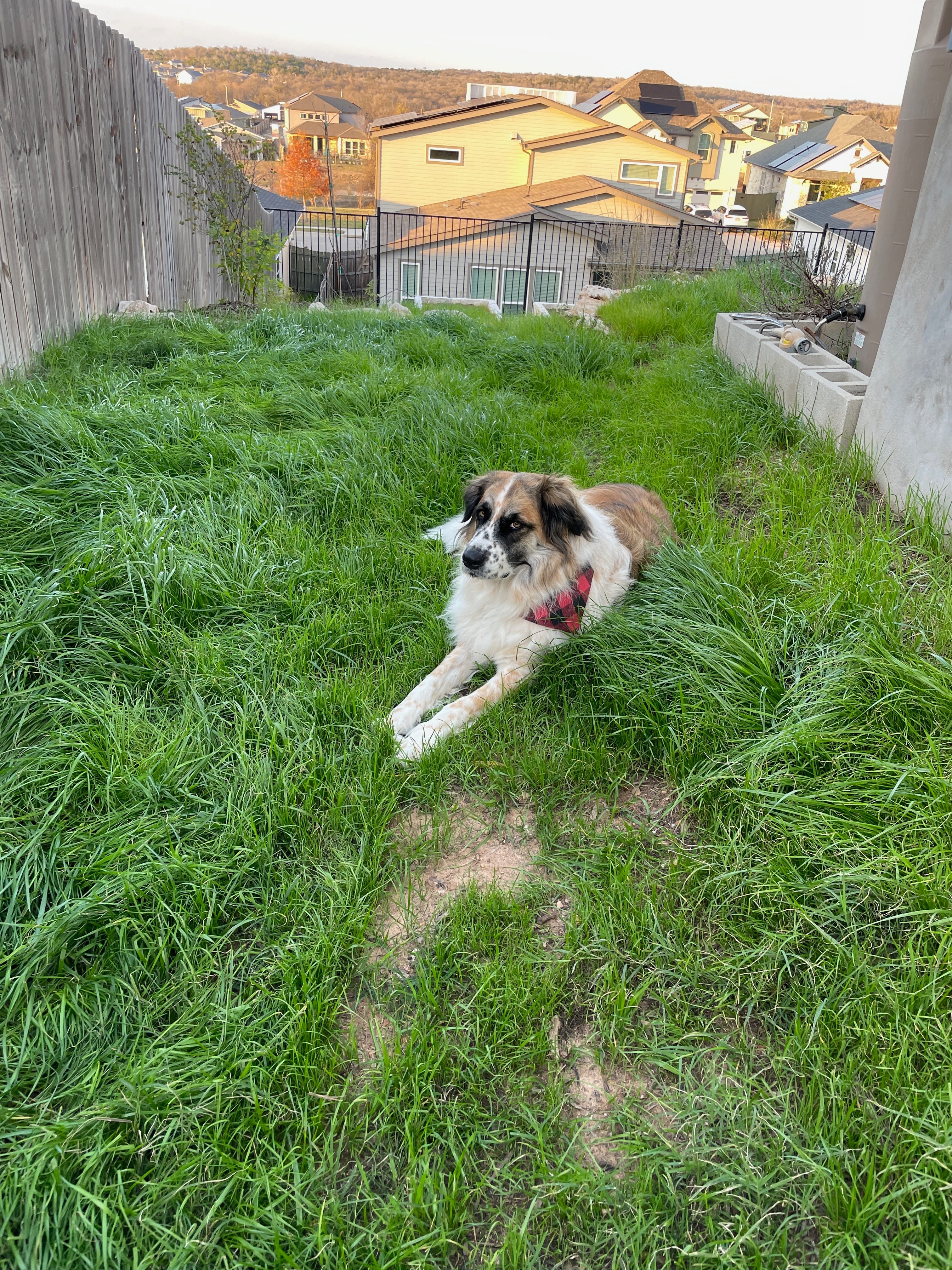
This is one of the few records I have of our turf days. I would occasionally spread granular humates from MicroLife on the lawn, but otherwise we just kept it mowed.
2025 (Before):
Somewhere along the way, as an experiment, I gave the land back to the weeds. Per my photo record, I’d say 2023 is when we really pulled back on mowing and all sorts of things started growing in earnest. This was what our yard looked like as we were entering the design phase last year:
Most landscape companies are in the business of outdoor carpentry, not environmental stewardship or habitat-building. It was challenging to find the right collaborator who shared our values, was capable of reading land / mindful of water movement, all while balancing their creativity and technical skills with the constraints of our site and budget!
Ultimately, we found our fit in Earthwise Industries and with great excitement, the design started to form. The part of a project where I get to live in my imagination and the imaginations of others, is often the funnest part :)
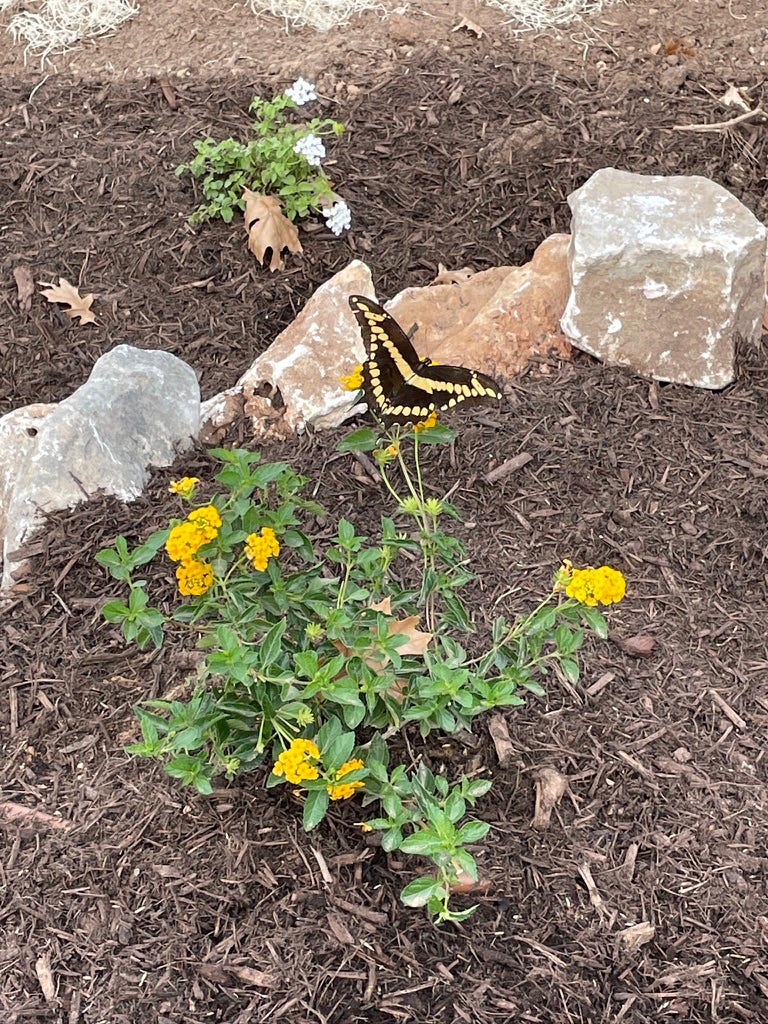
The plant list is not represented here, but we aimed for diversity among native plant species and emphasized edible varieties to add an interactive element for visitors (nothing sparks curiosity in plants like “did you know turk’s cap is edible? Here, try one!”) Additionally, lots of seed was spread using Native American Seed mixes.
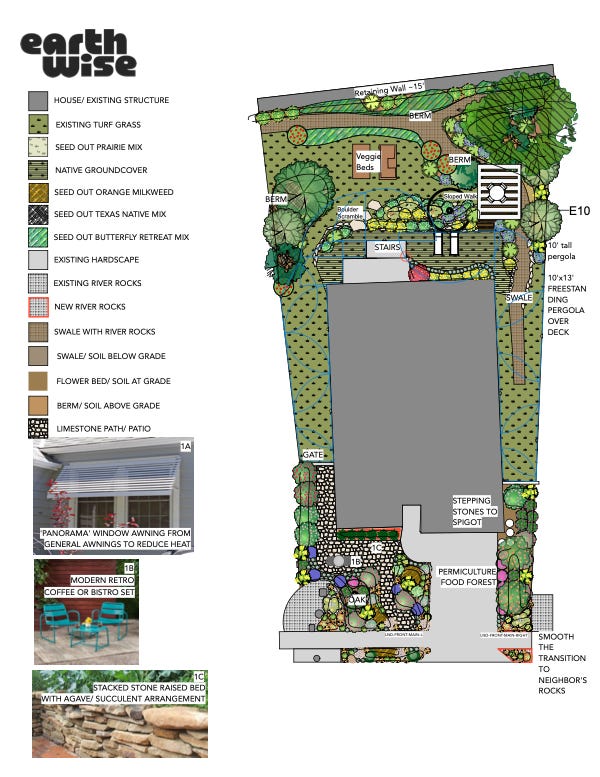
A note on water management: I had already dug a swale on the side yard with my friend and talented landscape designer, Laura Brusson, to help retain water during storm surges — it was very effective! Our designers from Earthwise built upon that, removing our berm and adding a dry creek bed to slow and spread the flow of water as it moves down hill.
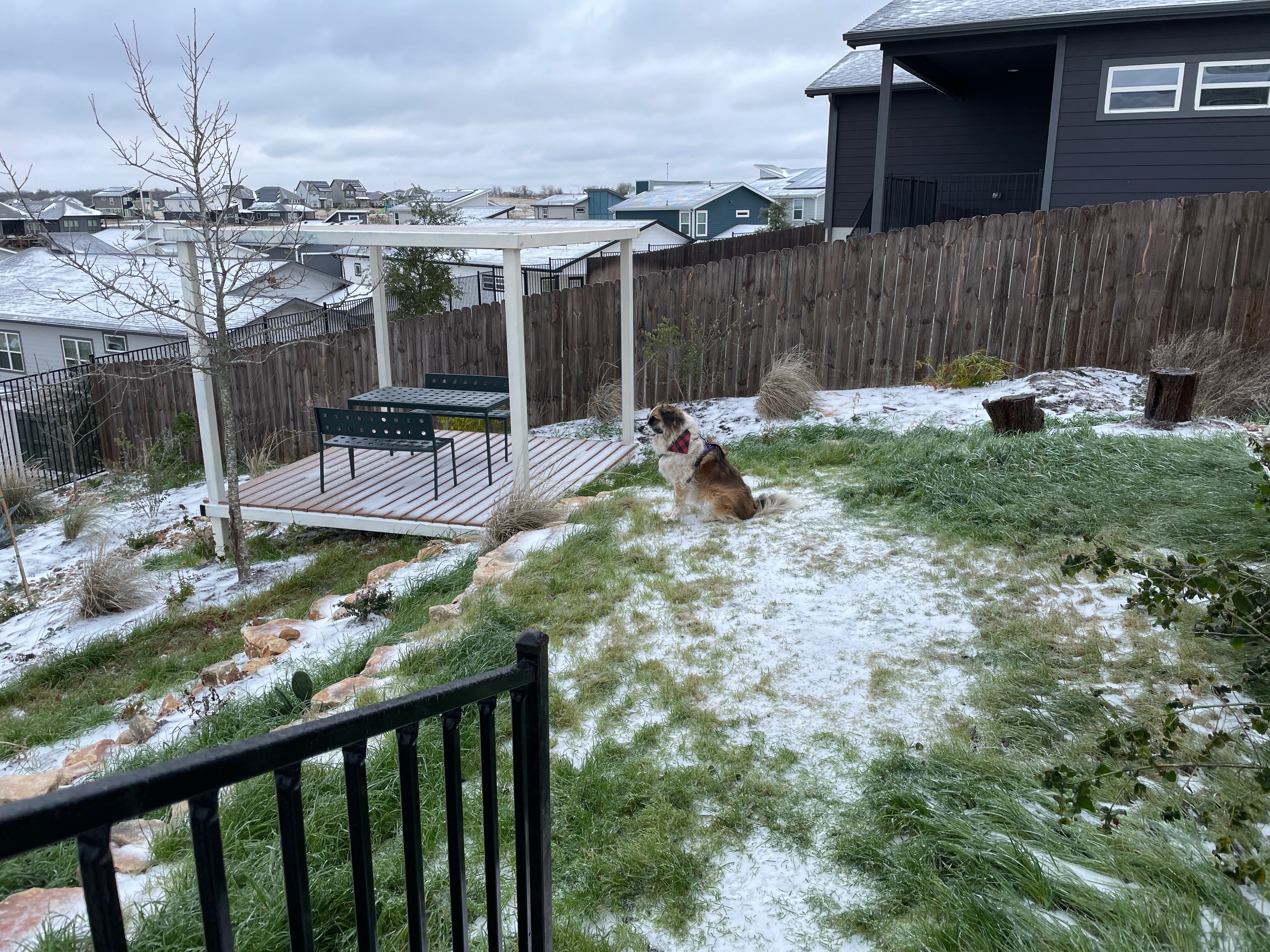
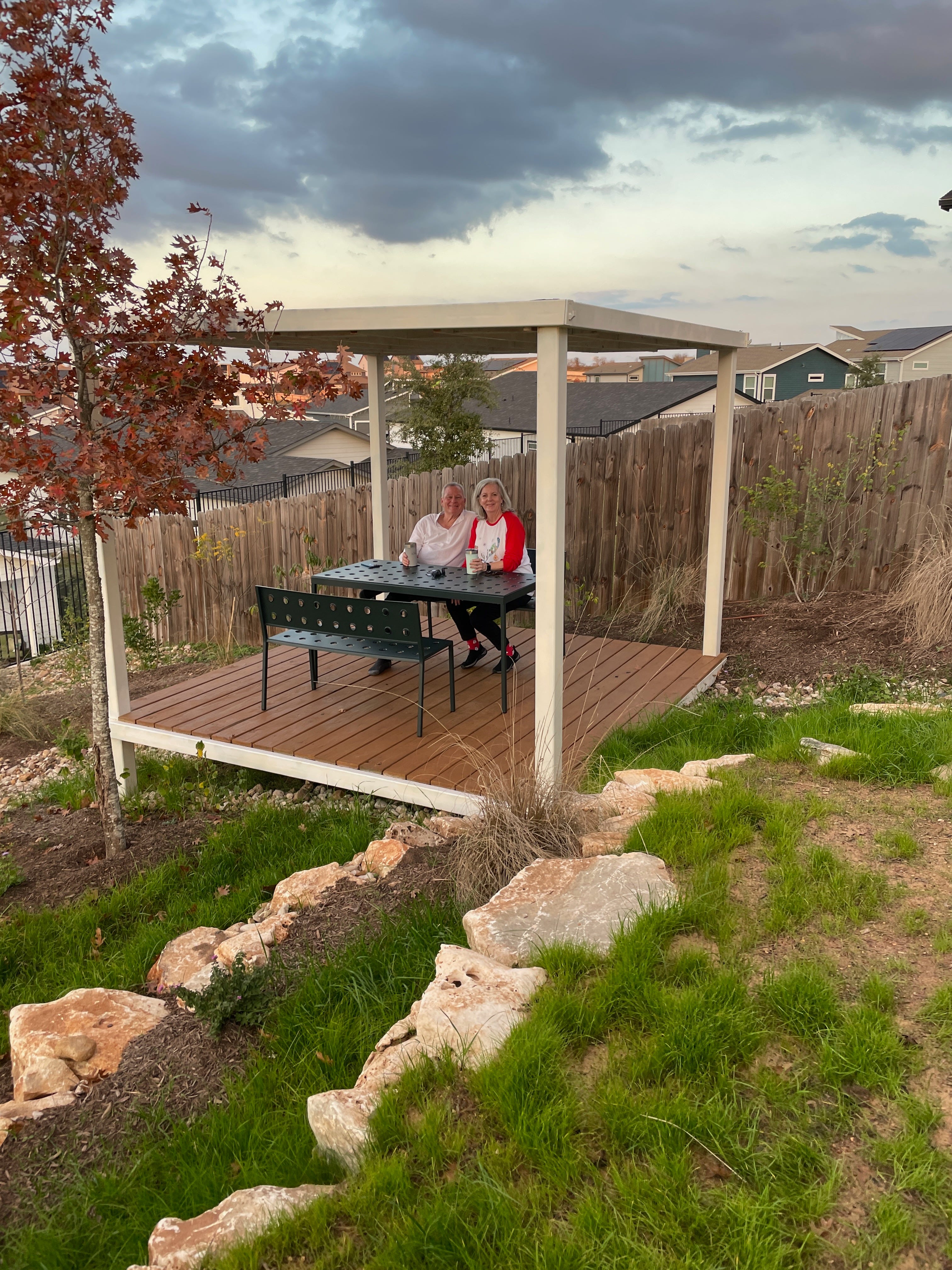
During the construction, every day after the crew left, James and I would scramble around the yard and say things like “this is going to change our life”. As in, how we live, where and how we spend time. I’m actually writing this in the warm winter sun on the south edge of the pergola listening to the birds while our dog, Clover, takes a nap in the shade 🤎. Speaking of, no one seems more pleased with our new yard than Clover. After all, her love language is spending time together outside.
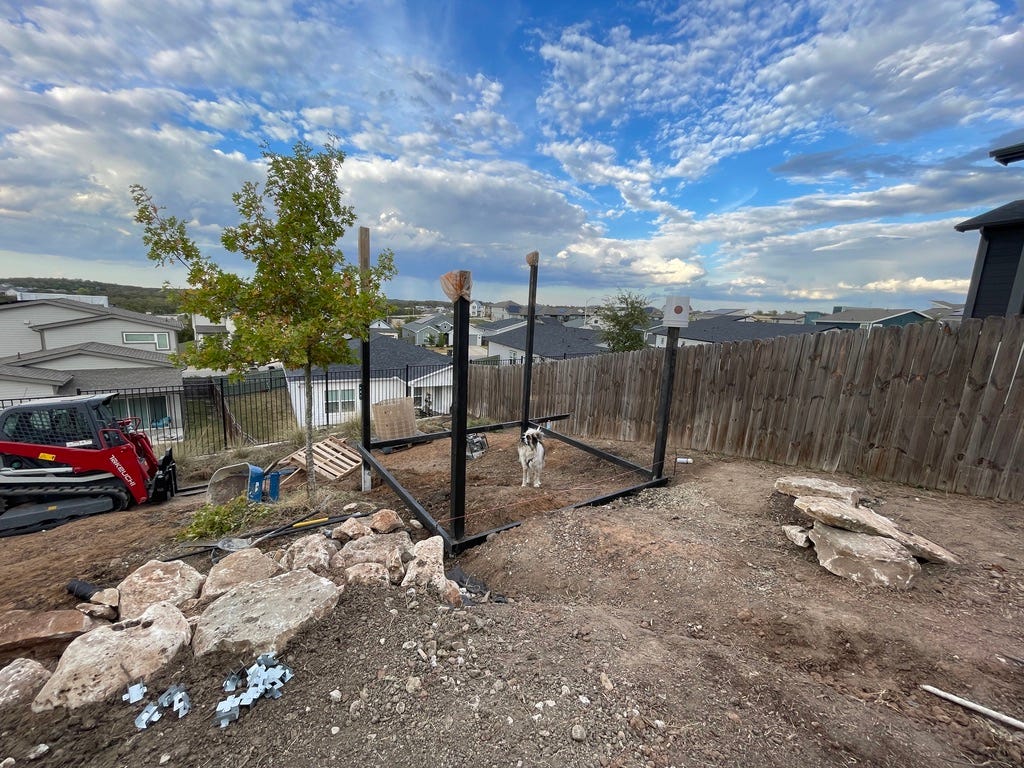
October 2025 (Progress):
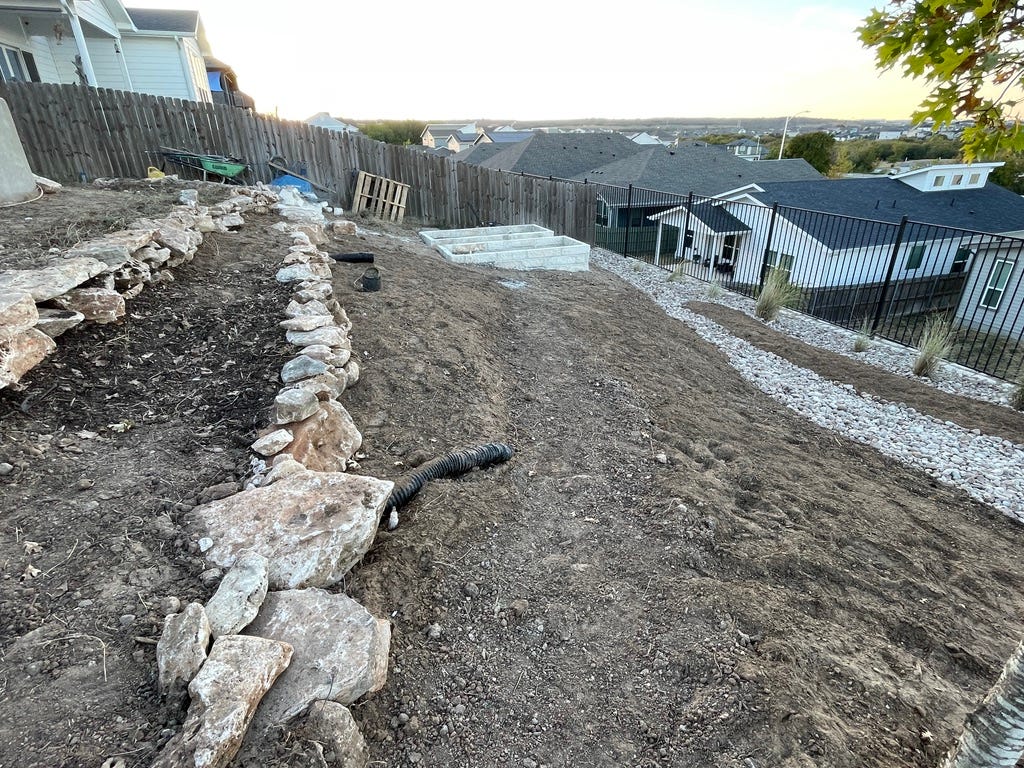
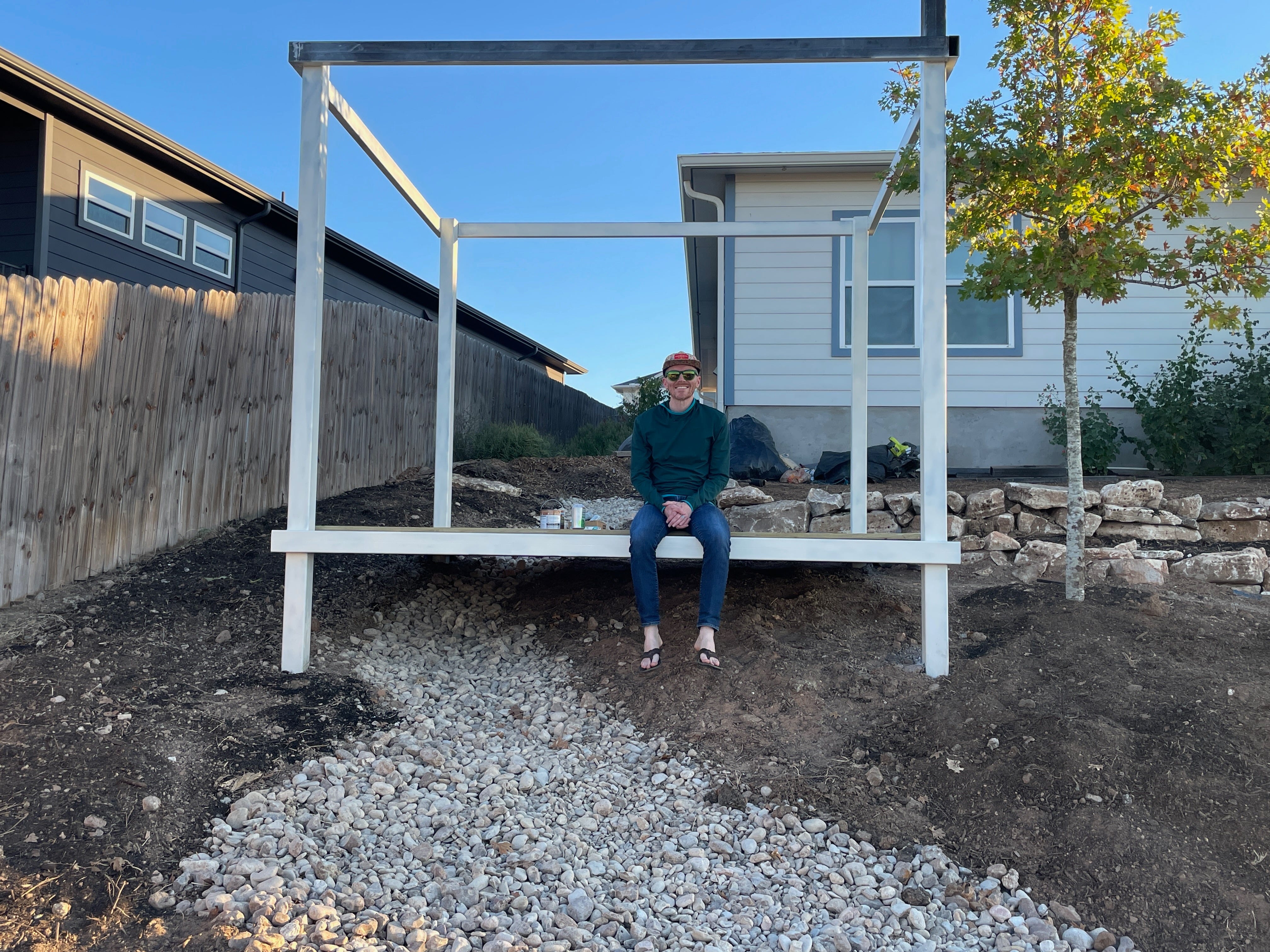
November 2025 (Completion):
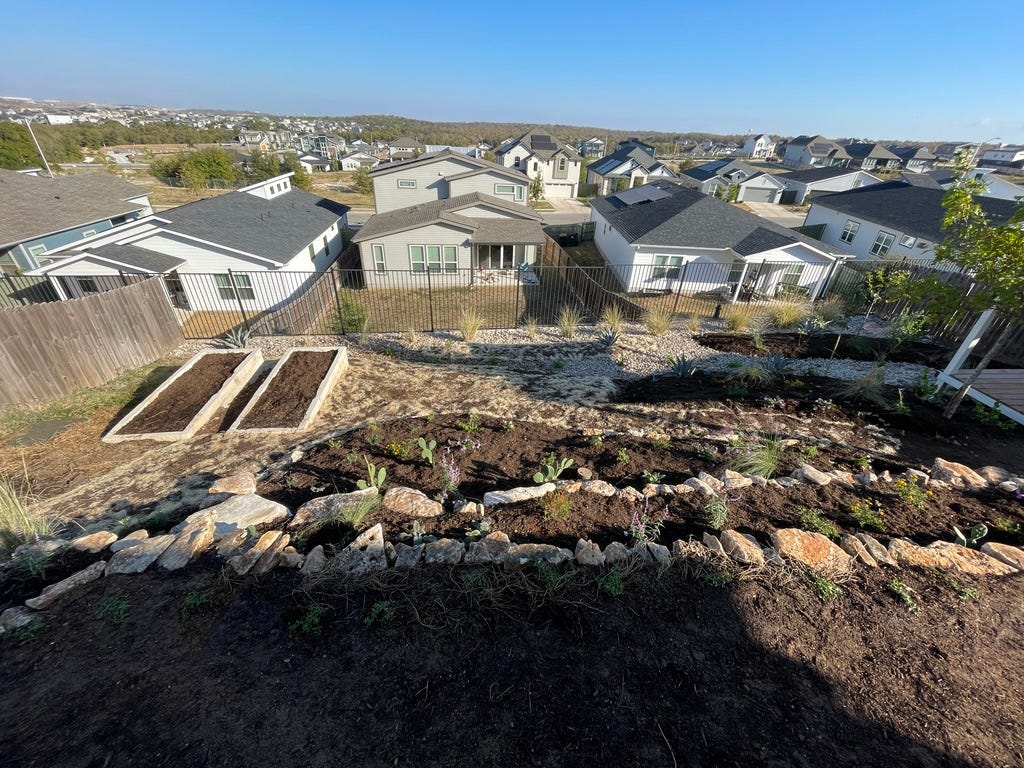
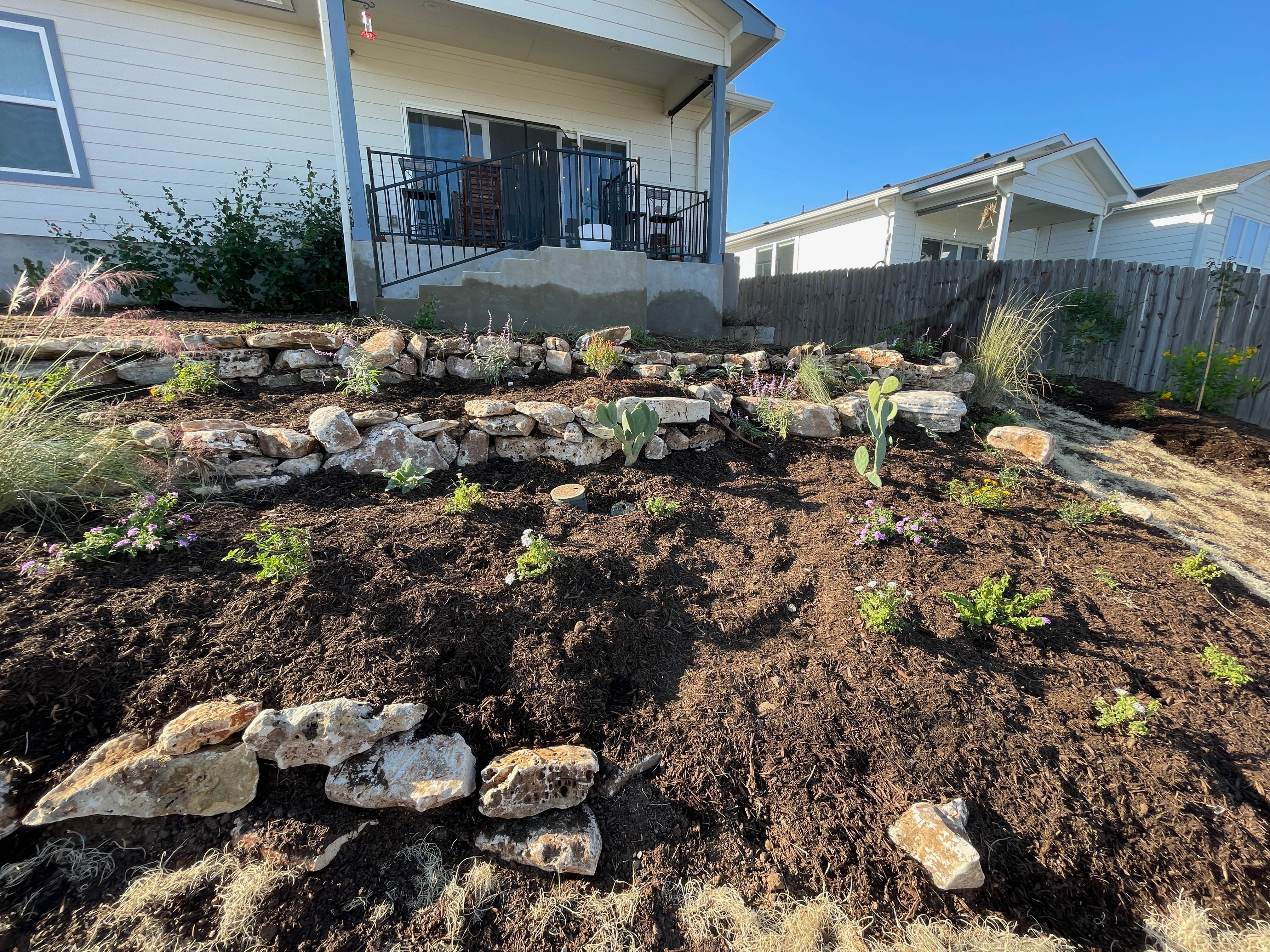
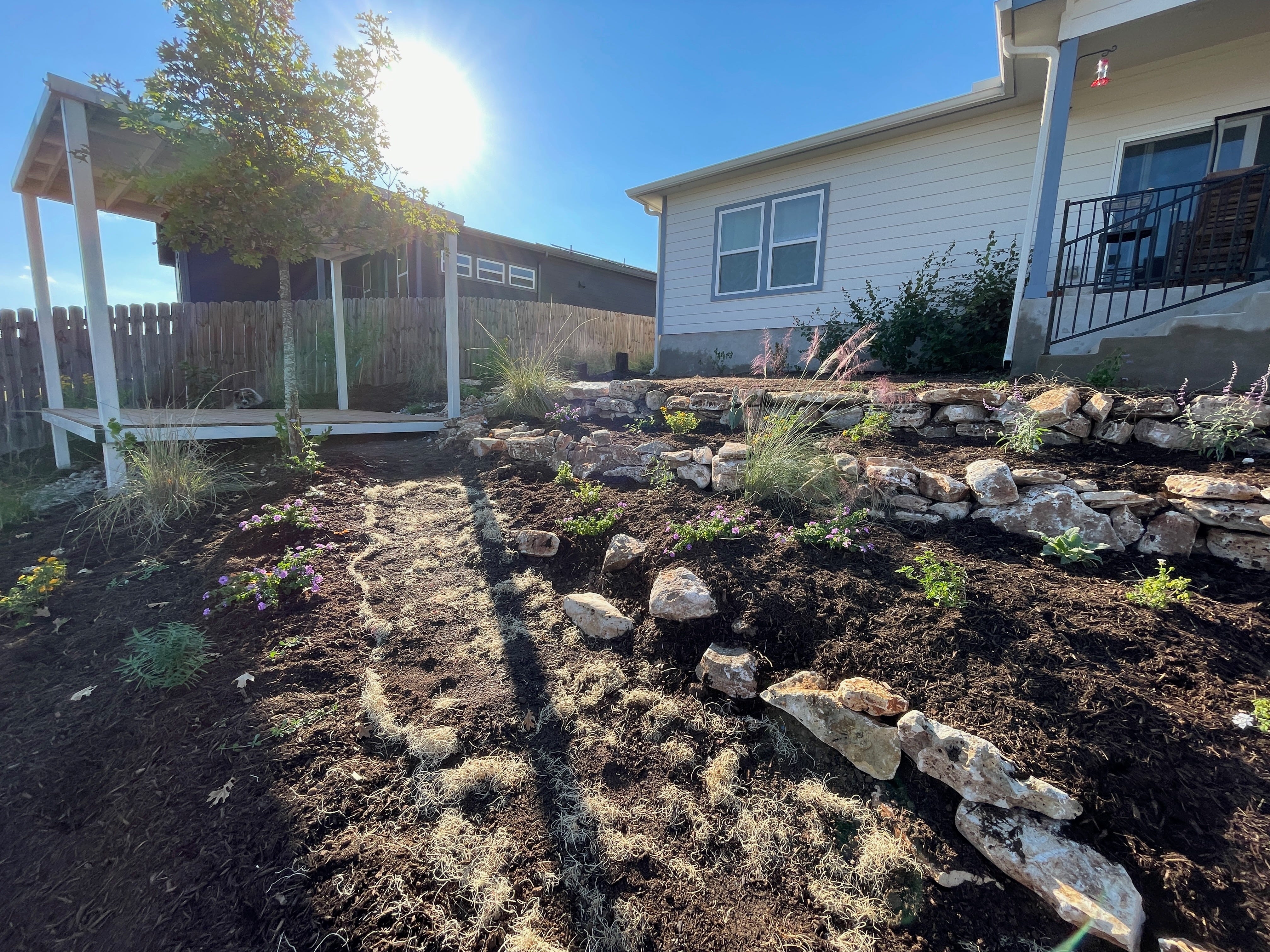
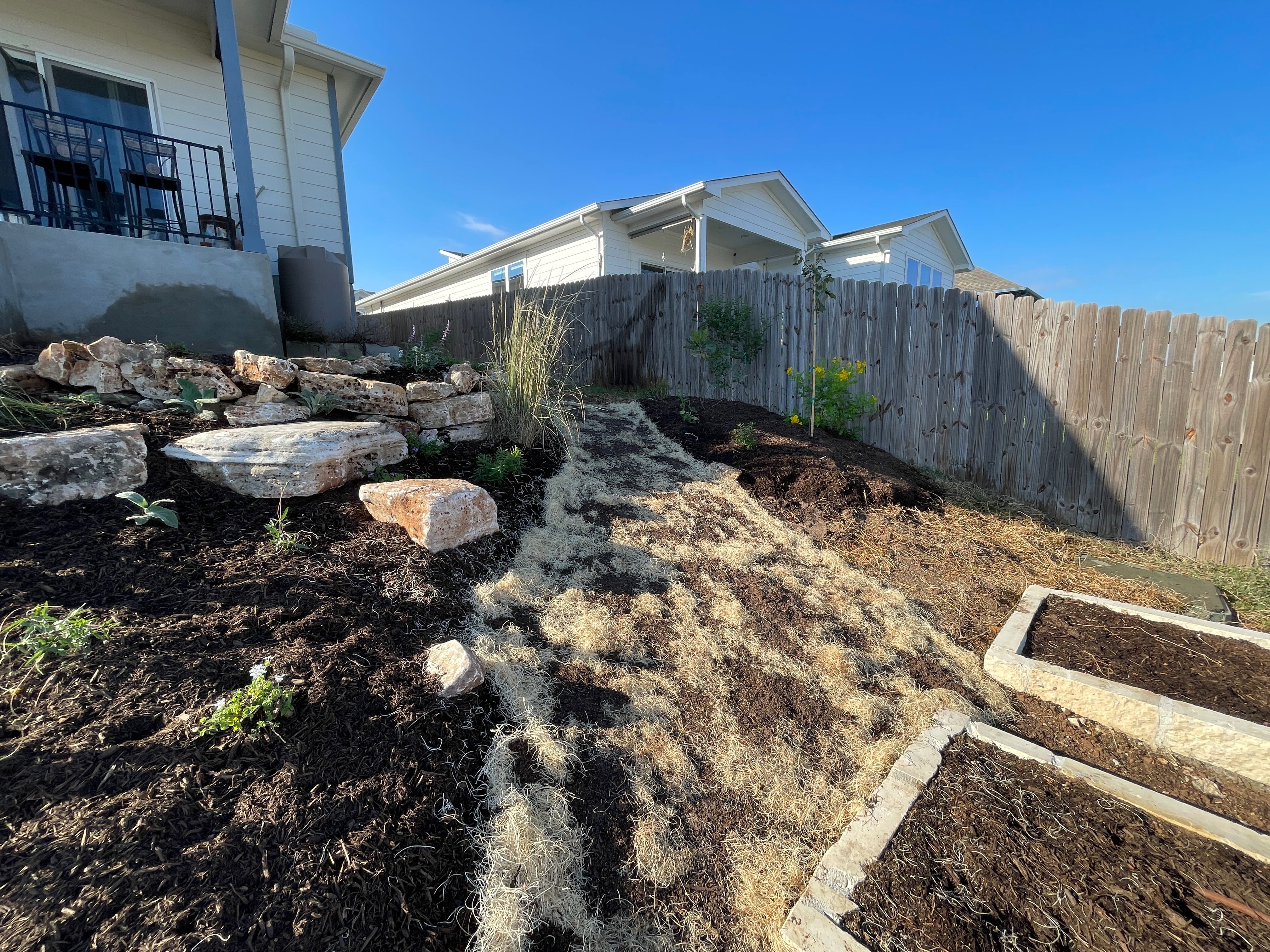
Winter 2025 / 2026:
I want to acknowledge a few things:
We did not have to make such a big investment to spend more time outdoors or to be good environmental stewards — we could have kept tackling bite-size projects ourselves over time (don’t underestimate the impact of a small area of native plants). But the assist from a crew has provided a very helpful foundation that we can continue to create upon over time. It’s like we had molding clay in our hands, and the landscaping crew gave us a pottery wheel and basic tools to start shaping it into something not only more beautiful, but useful to all living beings who interact with it. (I hope this analogy is landing, I’ve never thrown pottery…)
No installation is ever perfect, there will be flaws. At first, the flaws of our install distracted me from the big picture. The less than stellar paint job, the cracking mortar as things settled, the plants available at the nursery vs the plants selected, the errors in how the irrigation zones were set up… It’s so easy to get worked up over these things when you’re paying good money for a professional service, and yet I’ve been around enough construction projects to know that’s just how things go. So much is out of anyone’s control, and contractors are humans that make mistakes. The important thing is the big stuff: are structures stable and safe? is it a good foundation for us to build upon? Most definitely. The expectation wasn’t that we’d never work on our yard again! It was that we’d have a new and improved yard to continue observing and tending to.
While visiting cobblestoned cities in Europe recently I realized just how special it is to have access to greenspace right out our back door. There may be a lot “wrong” with urban sprawl and suburban development, but what if we lived in a world where sub/urbanites viewed themselves as land stewards? I wonder what that could do for the biodiversity crisis, the small water cycle, emissions and other environmental issues of our time…
Next week, I’ll share what kind of soil amendments we used during the installation and how I plan to manage things going forward 🤓. Until then, I hope you enjoy a patch of sun (or shade, for our southern hemisphere friends) wherever you are on this beautiful planet.

No posts
Comments
Nothing yet. Say the first thing.
Sign in to join the conversation.