
“I have a friend in L.A. who is really getting into compost lately - I’ll connect y’all” — this is what my friend Lewis said to me while catching up on a nature walk in 2021. He was talking about Cass Marketos who I immediately started loyally following online.
I was attracted to Cass’s no-frills posting on all things decomposition. While I was thoughtfully curating science communication content (read: overthinking) with the aim of making soil science accessible, interesting and ‘sexy’, Cass was impulsively sharing photos of all the strange and squirmy things in her compost pile (interesting!) and noting how that was impacting her life — from her physical strength to her community and worldview (sexy!).
Over the years we’ve formed a supportive long-distance friendship and witnessing her journey has delighted and inspired me. Her composting curiosities have grown into a life-long practice, her online sharing has evolved into The Rot, and from her community engagement a scrappy field guide has matured into a proper book!
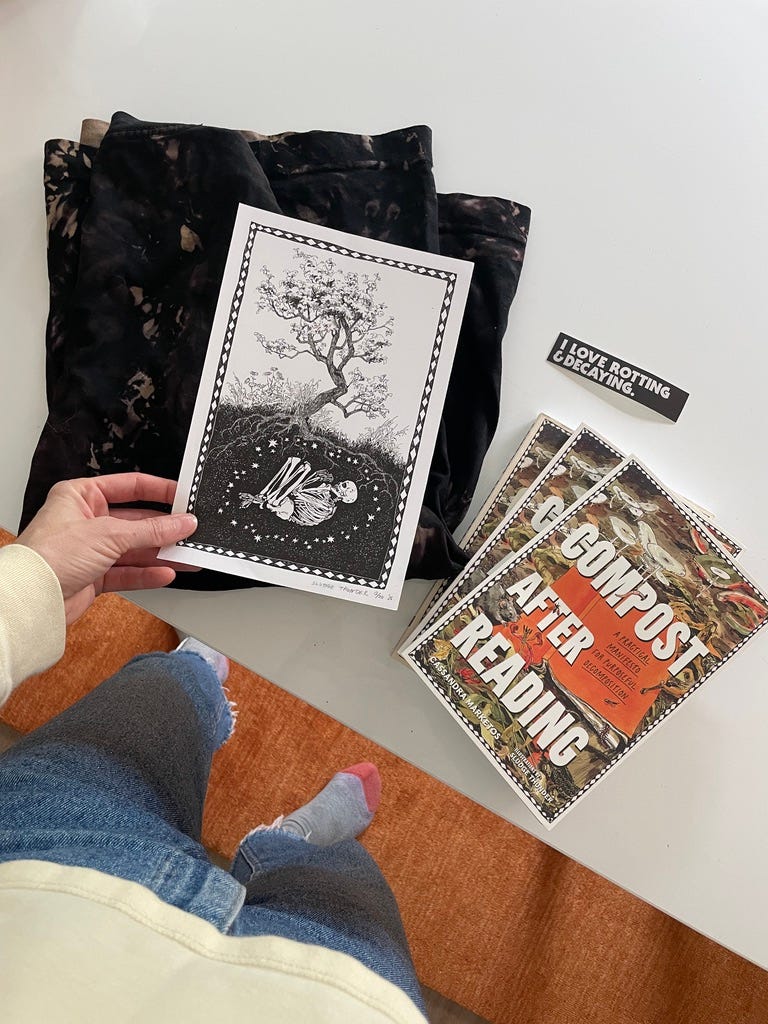
Compost After Reading: A Practical Manifesto for Purposeful Decomposition by Cass Marketos is both a pragmatic field guide and work of art (one that I’m honored to have taken a small part in by editing a couple chapters!)
Today I’m sharing an interview with the author herself. I hope you enjoy this rich conversation about decomposition and beyond :)
I guess it was many things at once, a perfect storm of factors.
It was… exposure to really inspiring people working on climate change at an old job, it was getting to a place of real burnout-borderline-self-destructiveness in my life and needing to make some big changes, it was going back to school, it was simply starting a compost pile in my front yard and using that as a vector to get to know people and learn things when I moved to a new city.
Slowly, slowly working with soil just started to become this great, big thing that helped in every way. It was fascinating, physical, fun, and felt like it actually mattered.
Previously, I’d had a succession of pretty standard desk-computer jobs, and I was not fit for that work. I got depressed. I ultimately loved working with soil because it was a way to be outside.
It definitely felt, initially, very intimidating to me.
I had grown up with a Mom who was a composting enthusiast, but for whatever reason I never connected with that pile and I never learned anything about how it “worked.” It wasn’t until I got to LA and started volunteering at a native plant nursery here, that I met people who composted seriously, and started getting involved with it more deeply.
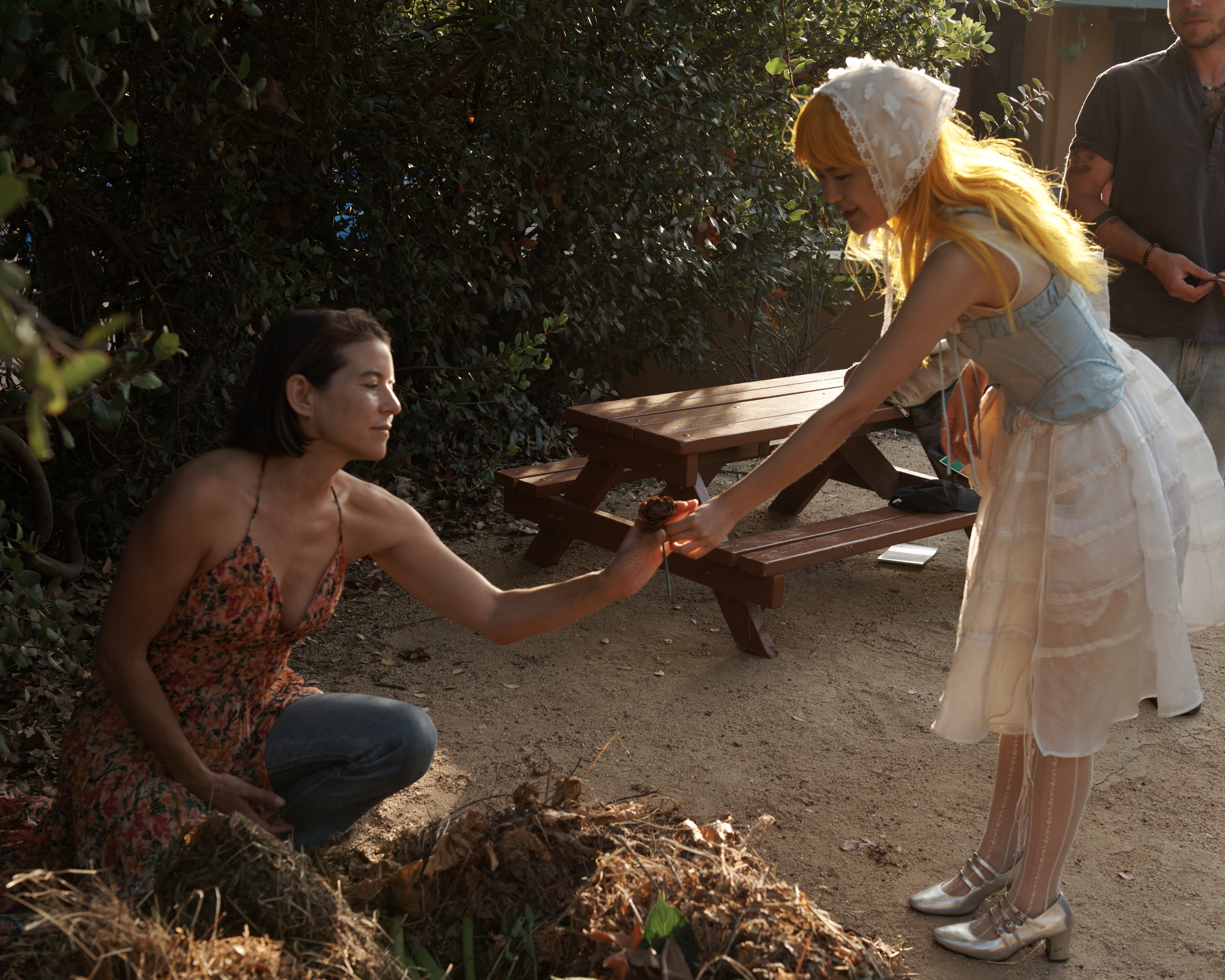
I started a “neighborhood pile” in my front yard and invited people to bring their food scraps to me, which sparked a very surprising amount of interest. That was a thread I just kept pulling.
I had a hard time finding straight answers about compost stuff. The information online was overwhelming and even people I spoke to directly were sometimes confusing. (Now, as a person who understands a lot more about compost, I understand the challenge of attempting to explain it to beginners.)
I ultimately let the pile itself be my teacher, which was the best. That was when compost went from intimidating to extremely fun and playful, for me. It was a great way in, and now that is how I try to help people learn.
I was a writer way before I was a composter. Writing was the thing I wanted to do since practically birth. (My Mom still has “stories” I wrote before I knew how to spell, that I think were mostly about giraffes.)
After I started my neighborhood pile, I started getting tons of phone calls and DMs about compost. I couldn’t believe how many people were interested and had questions, and most of those questions covered the same basic topics. Eventually, I realized if I wrote things down somewhere, I could more easily handle all the incoming queries. That’s when I started a newsletter.
I didn’t initially intend to have any kind of “audience”, it was just meant to be a place to store information, or something. But then some friends with larger audiences linked to me, and suddenly I had a following. It was incredibly fun and I started writing all the time and quite enthusiastically after that.
Finding your niche topic will certainly unlock your creativity. I had a blast writing about compost, and figuring out how to create these explainers really honed and deepened my own knowledge, which was its own kind of pleasure.
It’s changed my entire life. I am so happy and love my life so much these days! In the larger sense, I have just made so many friends, have such a deep sense of loving community, and it’s all thanks to compost.
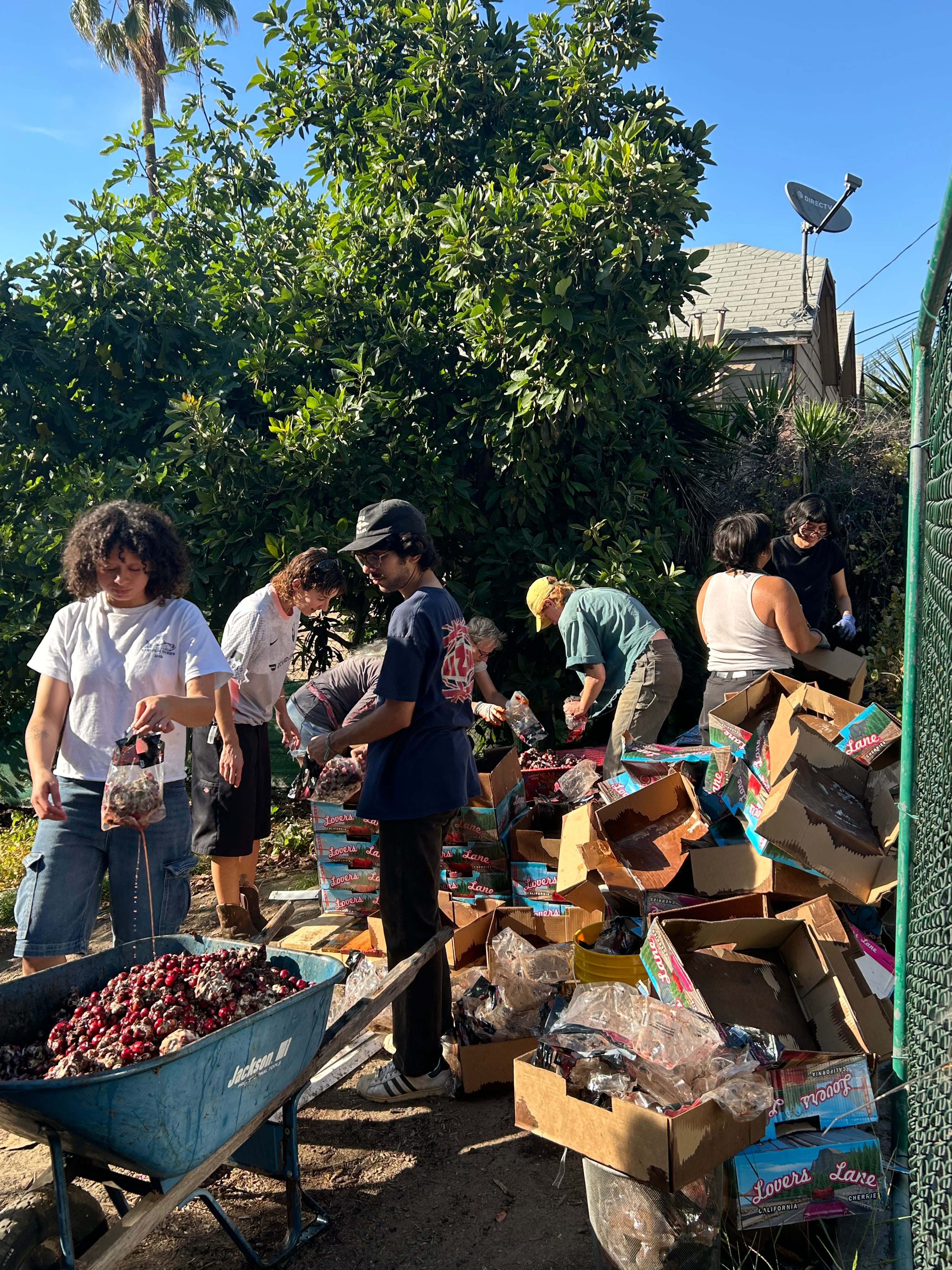
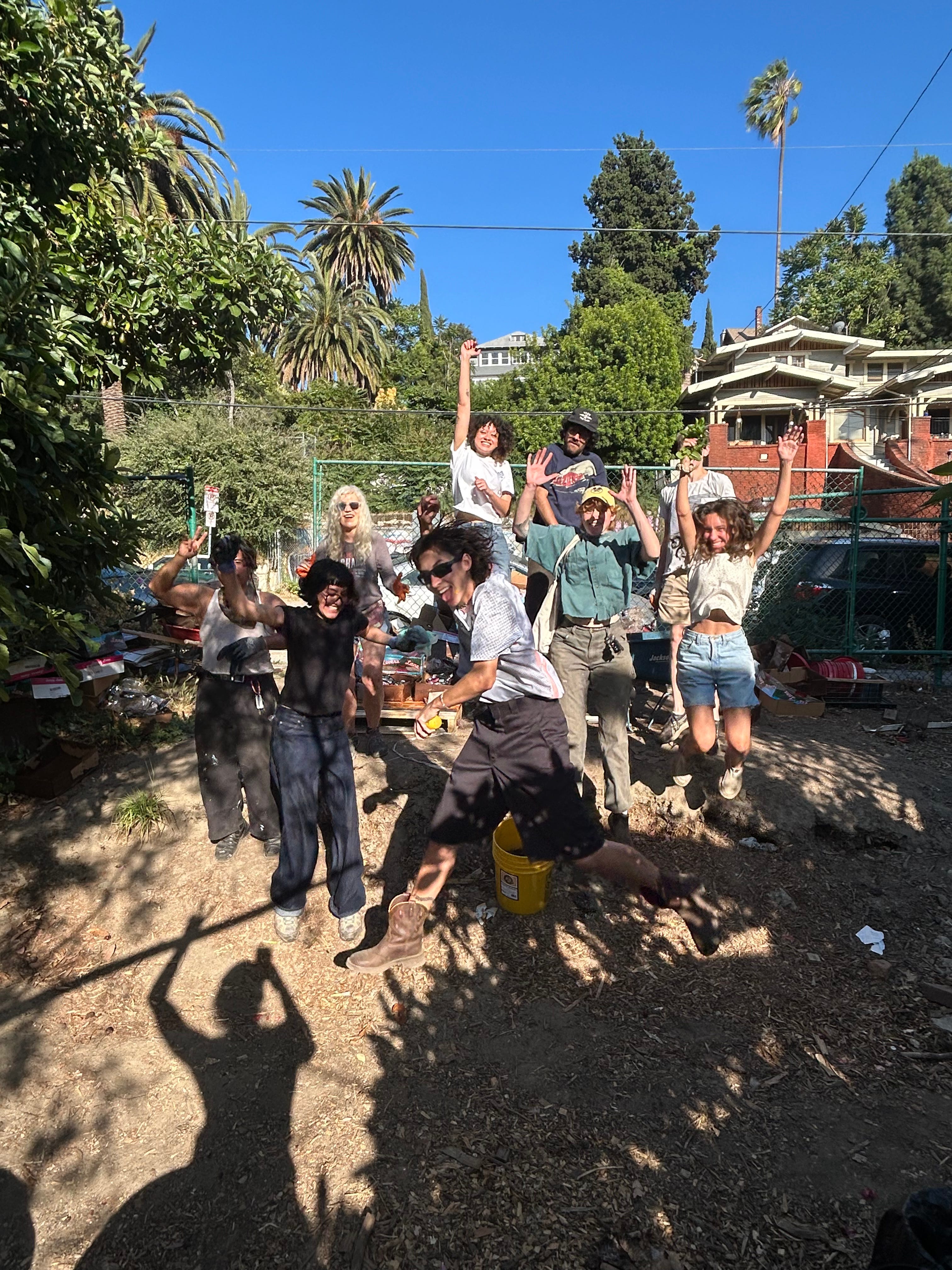
I have helped run a community compost where I live in Los Angeles for the last six years now, and it’s so wonderful.. I’m constantly stunned that so many people want to show up and compost every week, how cool they are, and how much fun we have.
We make compost, help grow food, and give everything away for free. The vibes are impeccable. Don’t tell the capitalists, but it turns out joy can be completely free and involves just supporting and caring for other people and the earth!
In the smaller and more personal sense, it has definitely made me a better person. I have learned so much from the practice of composting, it’s genuinely been a kind of needed therapy for me. Nothing will get you out of your own head and ego faster than working with death and decay all day long, and realizing we’re all destined for ashes. It’s a straight shot of perspective.
My microbe shirts are a recent favorite! I tell the whole story and explain the process in a recent newsletter.
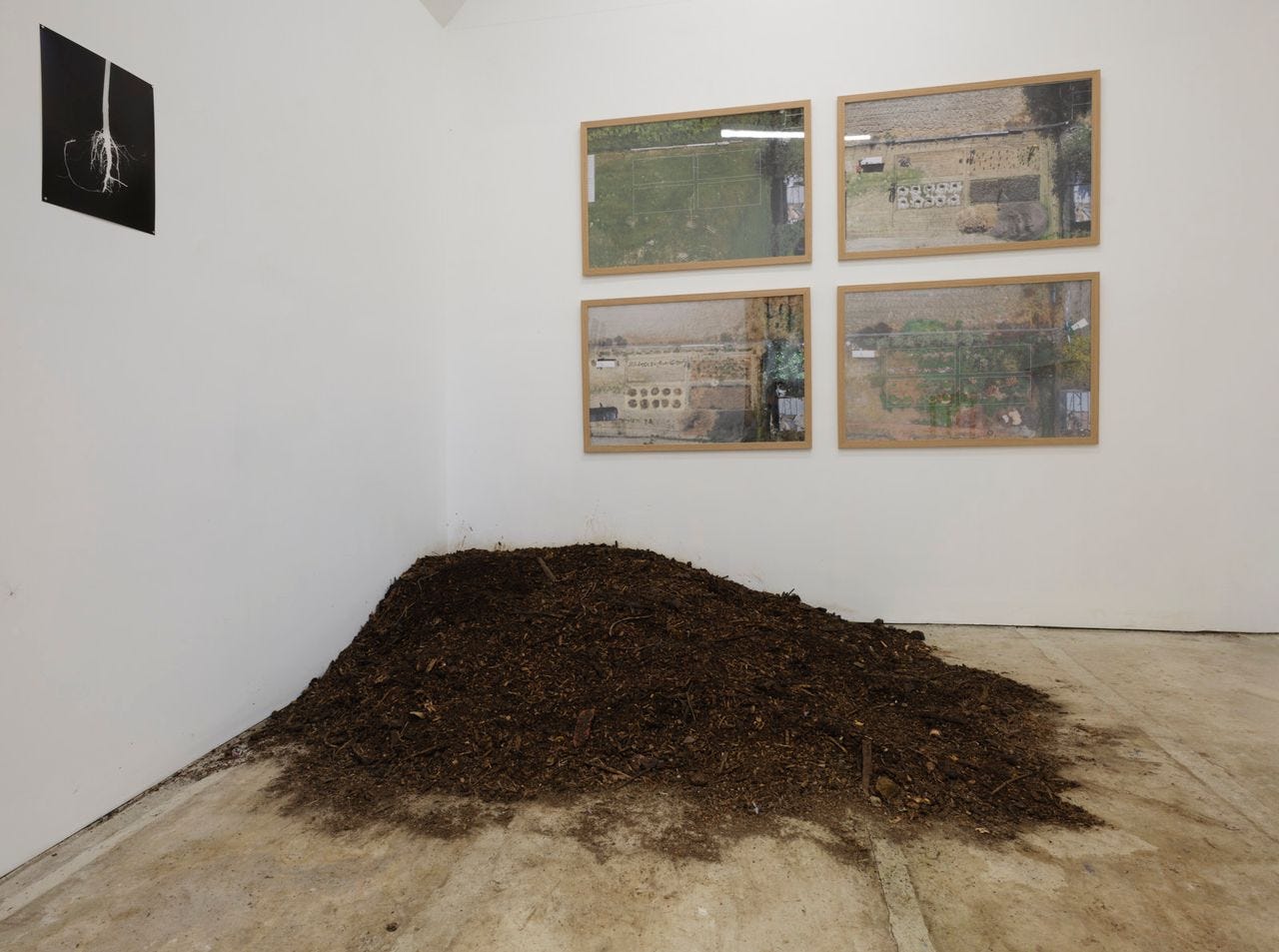
I’ve otherwise made composts for a number of museums, including for PST with The Getty, MoCA Boulder, and Probably Gallery in Los Angeles. The show with Probably Gallery is probably (no pun intended) my favorite. I just piled a huge amount of compost in a corner of the gallery and said it was a sculpture called “FREE COMPOST.” Viewers were invited to take home the compost. By the end of the show’s run, there was nothing left. Perfect.
(e.g. the nerdy composter who monitors everything very closely, the chaotic composter who throws everything in one pile and barely manages it, the compost steward who lets observation & intuition lead the way, etc.)
COMPOST STEWARD, all the way. My whole approach is very, very much based in intuitive and interactive learning from your pile: What do you see? What do you smell? What changes over time and in response to what?
Not all people, and especially not me, are “traditional” science learners — and it’s a shame that science was only taught one, very specific way when I was in school (Numbers! Memorization! Rigid facts!). There is actually a place for so much awe, exploration, joy, and play in learning science. And when that learning can be interactive and touch-based, I find that it opens the door to knowledge for a much wider range of people.
For that reason, I like teaching people compost in a very hands-on, intuitive way. I also like DOING compost in that way. I am never going to be the person who tracks ratios and temperatures, and tries to optimize the pile. I am always going to be a person that looks, sees, adjusts, and accepts mistakes as part of the cycle of learning (and life).
Your book, despite being a piece of text, certainly reads as a guide to this hands-on, intuitive path of learning!
Truthfully, I think simple acceptance was the big one for me.
When I started out composting, it just felt like there was one, very specific and complex way to do compost “right.” It took a second for me to realize that there was really not any way to get compost “wrong.”
All biological materials are destined for decomposition, with or without your intervention as the composter. So no matter what you do (or don’t do), they’re headed that way. That perspective really took the pressure off.
There are, of course, ways to make decomposition faster, less smell-y, a million ways to make compost intentionally, and I embrace those completely! But letting go of the idea that there was one “correct” way and opening my mind up to accept mistakes as part of the process really, really, really helped.
One of the many things I admire about Cass is her ability to surrender to the process of being shaped by her experiences. Much of her work in composting is volunteer-based outside of a full-time job. And yet, by consistently tending to her evolving interests in composting and soil health, she’s been able to have a significant impact in her community and beyond.
If you do not currently have a composting practice, it is my hope that you will allow this book to impact and shape your journey! Or considering seeding that experience within someone else by gifting them a copy.
If you want to learn more about the creative journey behind Compost After Reading, check out this post over on The Rot.
With wry and brilliant writing, Cassandra Marketos brings the culture, beauty, community, and philosophy of compost to life in this one-of-a-kind, inventive work of narrative nonfiction that brings compost out of the dark ages and into the contemporary moment. Delightfully philosophical and inviting, it is an accessible guide to everything you need to know about compost, with actionable advice for beginners and experienced composters. You will learn why compost works, where to put your compost, how to pick your compost set up, the basics of decomposition, what to put in a compost pile, where to source your compost materials, and how to build a pile. With insights on what tools to consider, how to deal with odors, insects, and other critters, and transitioning your compost pile for colder weather, find easy-to-follow compost pile designs, tips on composting in small spaces, composting with worms, and how to compost things you’re always told you can’t (you just need to know how).
You can easily purchase here on Bookshop.org
No posts
Comments
Nothing yet. Say the first thing.
Sign in to join the conversation.