
As a person who cooks professionally, I spend only some of my time cooking, more time shopping (because too many Instacart deliveries have let me down), and most of my time cleaning. I clean before cooking, during cooking, and after cooking. Some of this is because of my professional restaurant experience, where we’d start and end every shift with a scrub train: all the cooks would line up, the first guy with a soapy bucket scrubbing it all down, a few behind him drying, followed by team sanitizer, and finished with the stainless steel polishers. This only existed in the most fancy kitchens I’d worked at, even though there were porters who deep cleaned every night, because it gets you in the right mindset to work tight all shift. When I tried to employ this method at a grimey little spot in Brooklyn, no one wanted to sit with me during family meal anymore. But I also live in the East Village, where fighting pests is part of the charm. Plus, maybe I am a touch neurotic. (Who, me? Never!)
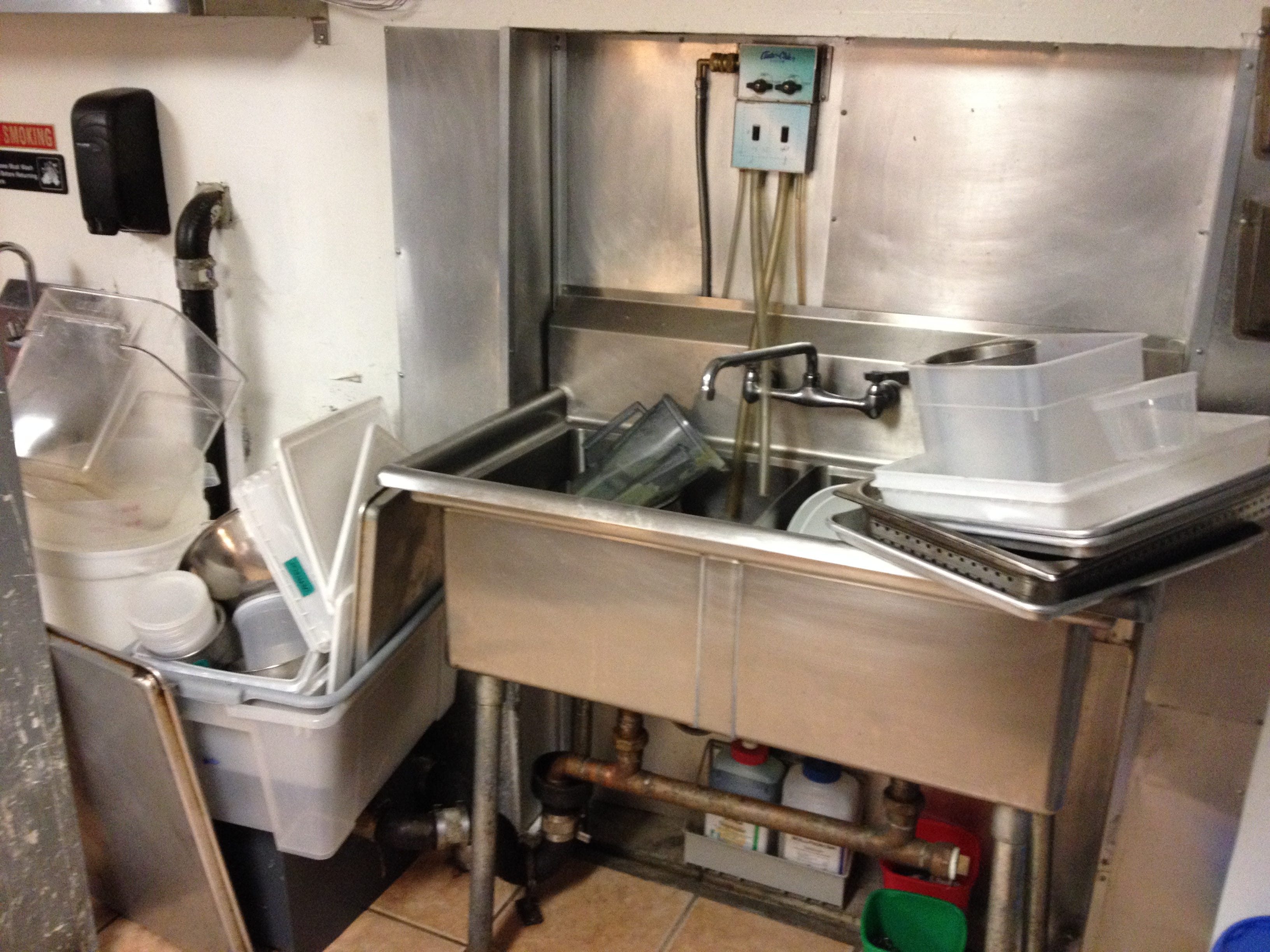
Side note: Once I had dinner with a food critic who was genuinely in awe that the establishment’s chef started as a dishwasher. I didn’t have the heart to tell her she was currently dining with another former dishwasher, or that the dishwasher-to-chef pipeline is less an “inspiring origin story” and more one of the main ways to get into the industry. Anyways, I’ll complain about restaurant reviewers another time. For now, let me share what I know from those years helming the triple sink (well, I guess the one below was just a double).
The real reason your kitchen is a mess: you’re both overthinking and underthinking it. Let me explain. One of the main questions I’m asked is, “How do I clean X?” Fill in X with anything you can imagine, like a wire rack, sheet pan, Dutch oven, stove top, cutting board, cast iron, the list goes on. But you are worried about the wrong thing. All those items, plus whatever else your imagination filled in the blank with, are most likely cleaned with just a sponge, soap, and water. Cleaning is not complicated. There’s rarely a special secret to cleaning individual items. What really matters is having a system that keeps the kitchen from getting too messy in the first place.
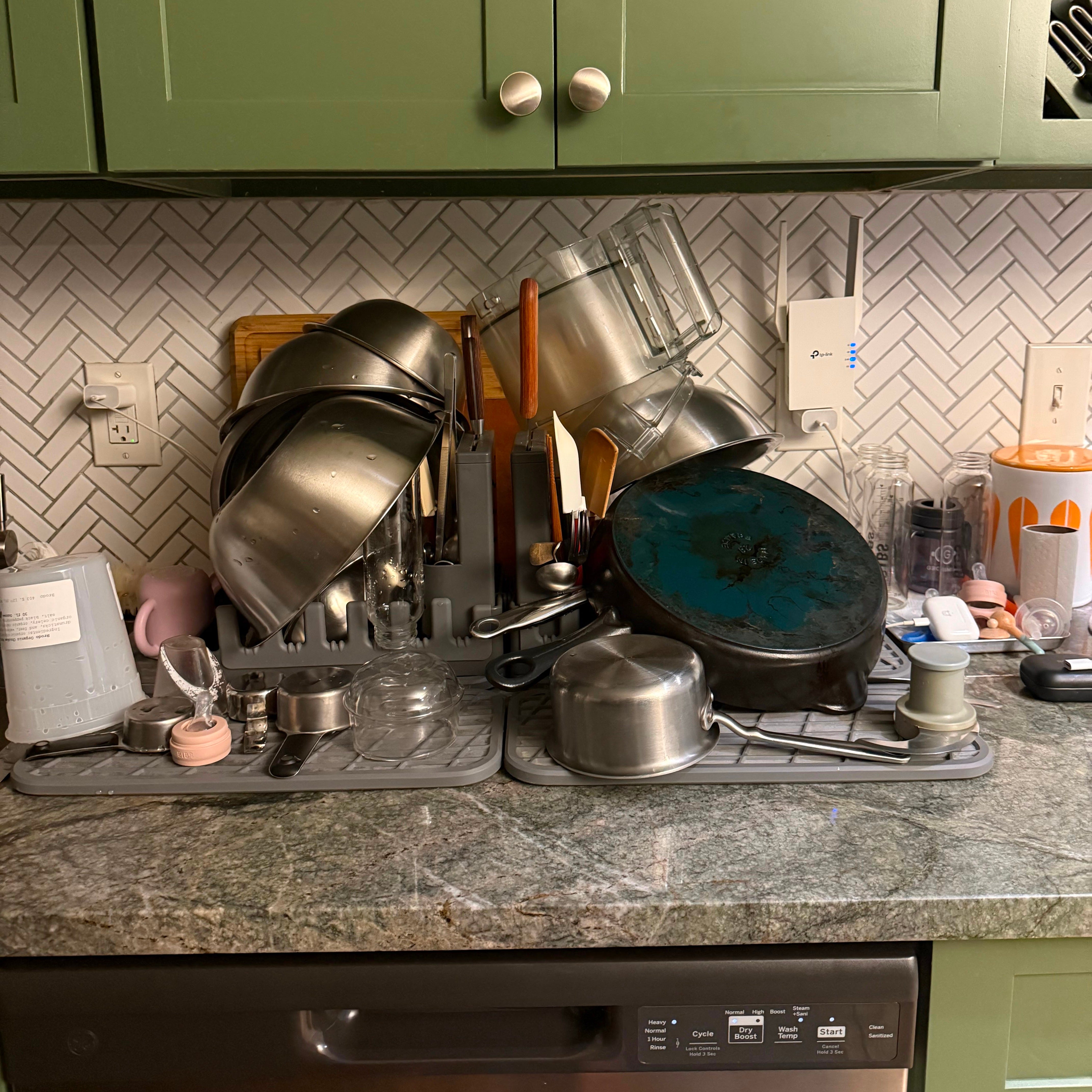
Before I even think about cooking, I get my landing zones ready by emptying my dishwasher and dish racks. Typically, Ham or I will do this as soon as we wake up, and just like the scrub train, it sets the tone for the entire day. Since it’s a mindless activity, it’s a meditative, gentle way to get your brain online. More importantly, it sets you up to clean as you go once you start cooking, since the dirties have a place to go instead of piling up in your sink. (PS: If you cook as much as we do, get two dish racks.)
This is where the cleaning magic really happens (Mr Clean’s got nothing on me), as you finish using something, clean it right away. I don’t clog up my dishwasher with easy-to-wash items, like mixing bowls and sheet trays, or small tools I’ll likely need to use again, like offset or fish spatulas. Those get washed right away and placed in the dish rack. Plates, spoons, and deli containers, are immediately rinsed and loaded into the dishwasher. Try to wash skillets, pots, wire racks, and casserole dishes while they are still warm, before food starts to crust onto it. The truth is, unless you’ve heinously burned something, a pot rarely needs to soak. Scrub your cutting board before any smells or stains can set in. As a professional procrastinator, let me tell you, this is not the time.
If you’ve done all of the above, all that’s left to do is load up the dishwasher with whatever plates, cutlery, cups, and platters you dined from. Whoever cooked shouldn’t do this part. Leave this to your partner, kids, or even your guests. Use a cleaning spray to quickly wipe down your stove top, counters, and trashcan. Right before bedtime (because post dinner snacking always happens) hit the kitchen with the cordless vacuum to pick up any crumbs, wipe down the sink, and turn on the dishwasher.
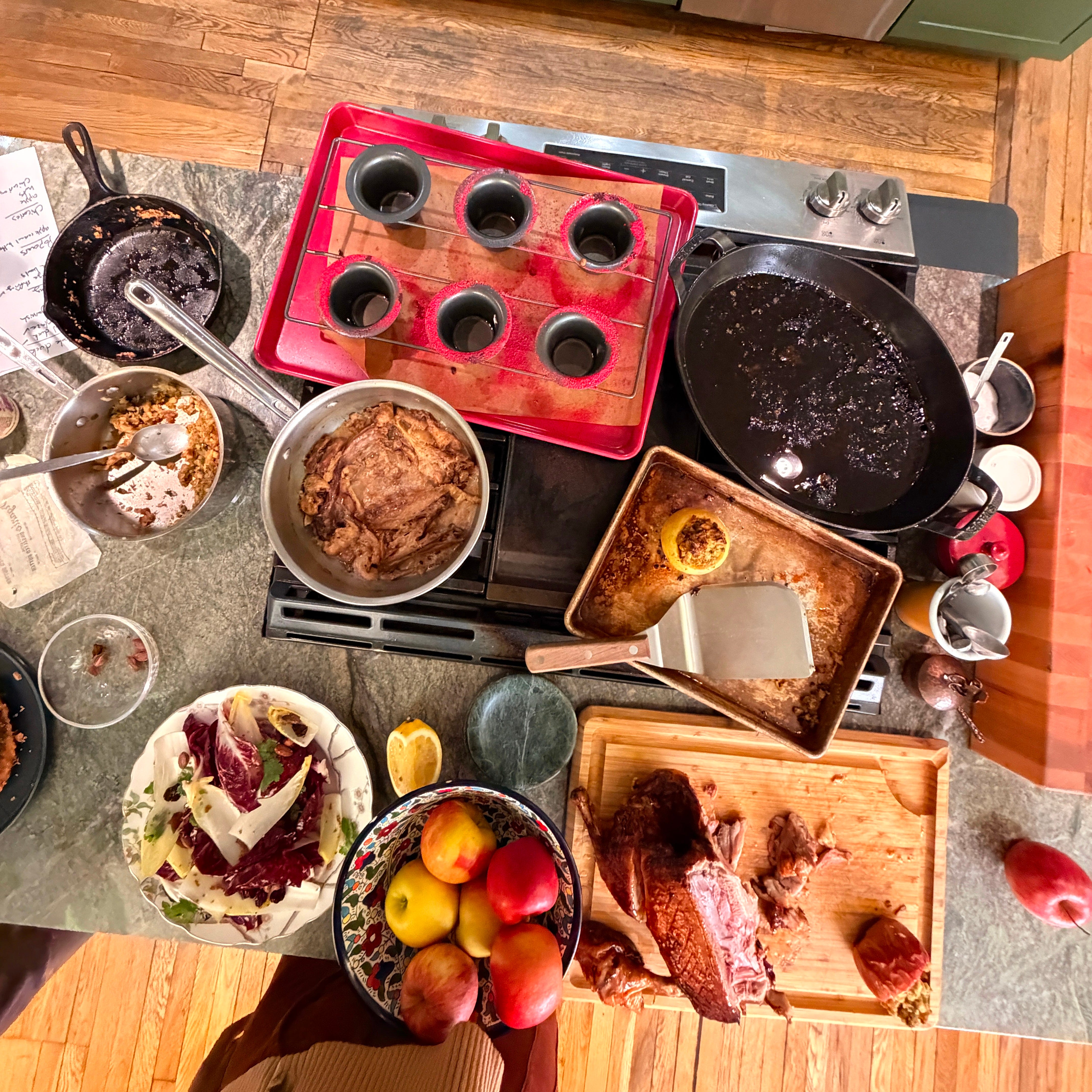
The daily routine does 90% of the heavy lifting, and once a week we go deep. And when I say “we,” I mean this is a group activity: we have a cleaner who does a big chunk of this, then Ham and I do the rest together. I’m not about to pretend I’m doing it all alone. The best advice I can give you for a happy marriage—get the weekly cleaner, even if you have to skip a date night to afford it.
Scrub down the stovetop, knobs, counters, and backsplash with soapy water, dry with a towel, then spray and wipe with sanitizer or bleach.
Wipe down the cabinets with a damp towel.
Wipe down all the appliances with a cleansing spray.
Vacuum with the big vacuum, then steam clean the floors.
Clean out the fridge
Clean the insides of the trash cans
Run the cleaning cycle on the dishwasher
Empty and scrub your spoon bains (they get gross in there)
I know it looks like a lot, but many of these steps take only a few minutes, plus the daily maintenance will make the weekly one so much easier.
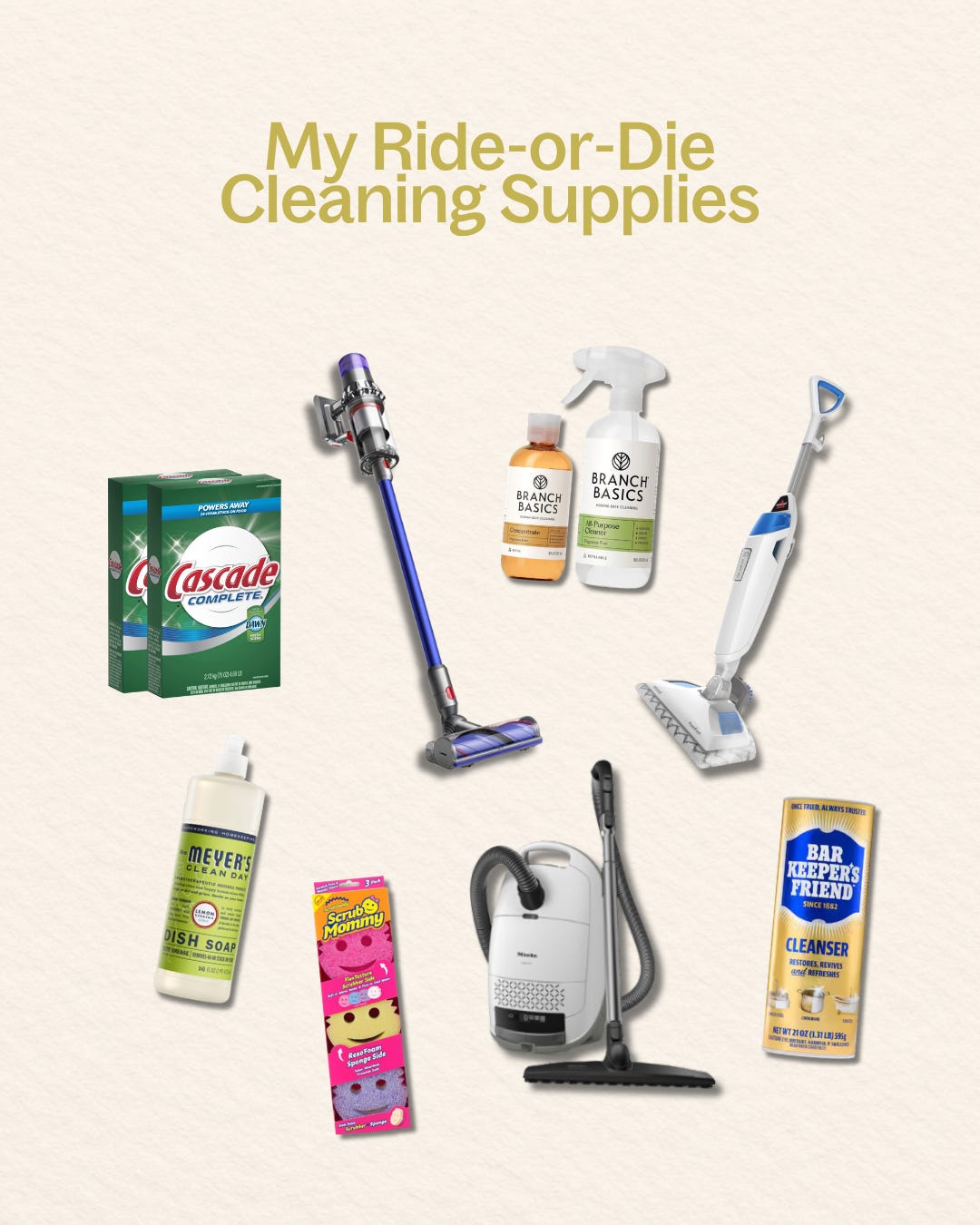
Miele Guard M1 Parquet XL Vacuum - The price tag scared me too. Ham pushed for it because we were burning out a new vacuum every year with all the pet hair. Have to give this to him though, he was totally right. Ours is going on 6 years with no issues. It sucks everything up, from the crumbs between the floorboards to the pet hair smashed into the fibers on the couch. Plus, we don’t Swiffer or sweep anymore; the vacuum does it all.
Bissell Steam Mop - We bought this right after having our kid, worried about whatever the dogs were tracking in and a baby crawling all over it. It’s amazing! It heats up super fast, is lightweight and easy to use, and leaves the floors sparkling and sanitized. So much cleaner and easier than mopping or Swiffer Wet.
Dyson Cordless Vacuum - This is a total splurge we probably don’t need, but it’s nice not to have to lug out the Miele for quick zips between cooks. We keep this in the pantry for easy access.
Cascade Complete Powder Dishwasher Detergent - I have tried them all and this is the cheapest and best. The pods and tablets charge you for a convenience you don’t really need (it’s not that hard to put soap in a dishwasher) while liquid detergents charge for water.
Mrs Meyer’s Dish Soap - Yes, the scents are incredible. But this soap is my go-to because I can wash my dishes without gloves, and it doesn’t dry out my skin.
Scrub Mommy Sponges - An as-seen-on-tv product that’s actually amazing. Go for the mommy over the daddy, which has a coarse and soft side, making it work on everything. Use the coarse side for wire racks, stove tops, and stuck on grime, and the soft side for everything else.
Bar Keepers Friend Powder Cleanser - Bust this out when you’ve got pots, pans, and sheet trays with grease so baked on it’s become one with the pan. I prefer the powder to the paste because it is more concentrated. Use gloves! Shake it onto the surface and scrub away. For tough stains, make a paste and let the mixture sit before scrubbing.
Branch Basics All Purpose Cleaner - My everyday, everything cleaner made without harmful ingredients because my kid licks every surface of the house.
Do You Actually Need to Bleach Anything?
Cleaning and sanitizing are different, and most days you just need the first.
Soap works because each molecule has two personalities: one side is polar, which means it loves water, and the other end is non-polar and prefers to bond to fats. When you wash a greasy pan, those fat-loving ends burrow into the grease while the water-loving ends face outward. This way the soap surrounds each glob until it is wrapped in a water-soluble bubble that rinses right down the drain. And here’s the best part, bacteria are basically wrapped in fat, too. Their outer membranes are made of fatty stuff that soap loves to grab onto. So soap doesn’t kill bacteria, but it does evict them from your kitchen and straight down the sink. That’s why all you need most of the time is soap, water, and a little elbow grease.
Bleach is a different beast entirely. It doesn’t remove anything; instead, it chemically shreds whatever it touches, ripping apart the proteins bacteria need to function. We’re taking death here. It’s powerful but indiscriminate. Always clean, then sanitize, because using bleach solo will leave grime behind.
Serves 4 | Ready in 30 minutes
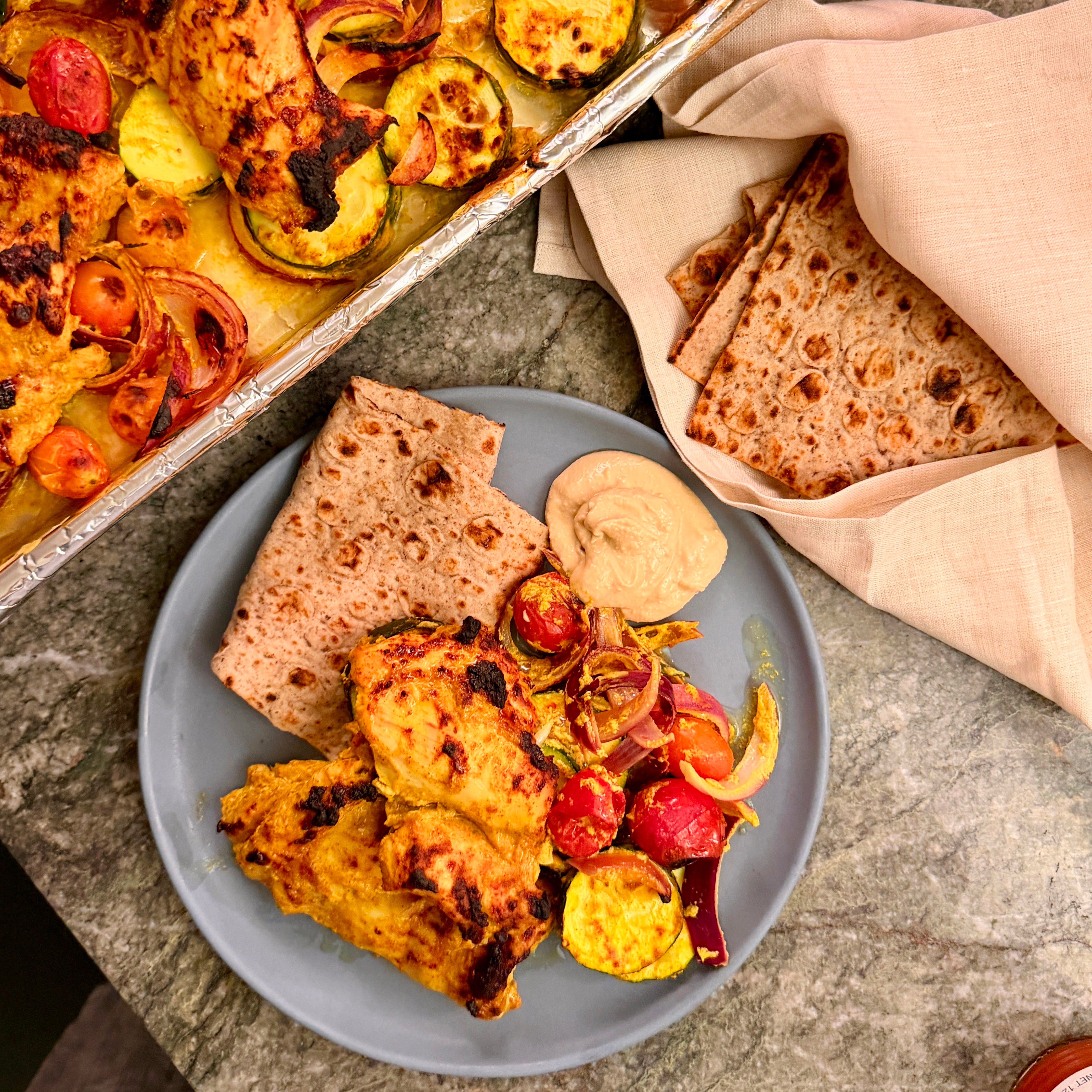
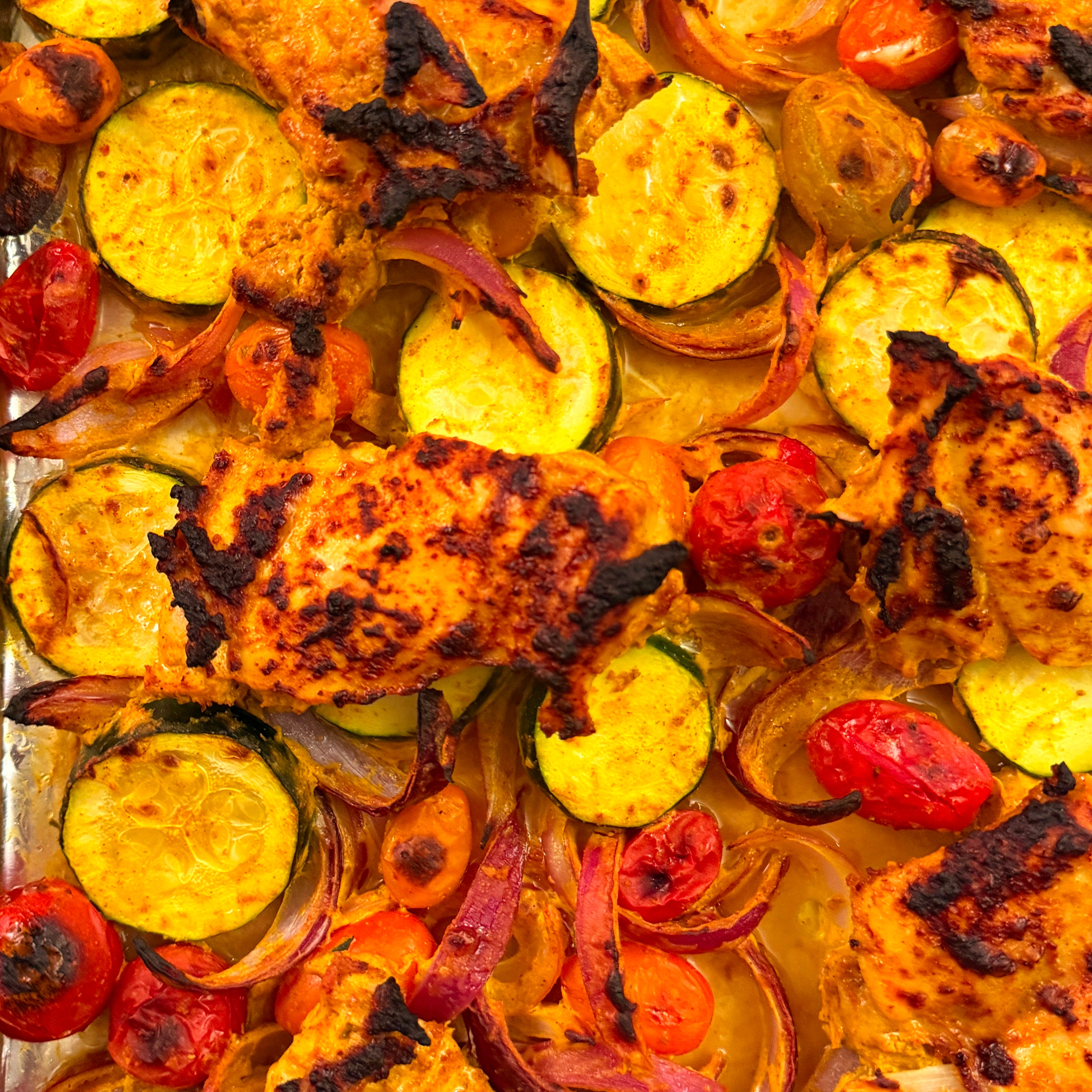
This recipe barely makes a mess, on those days where even a 10-minute clean is too much. Mix everything together in one big bowl, then spread out onto a foil-lined sheet tray and broil. It’s a super-fast, totally complete meal (a peek into what to expect from my next cookbook…).
For the chicken:
1 cup thick yogurt
3 garlic cloves, finely grated
1 tablespoon ground coriander
1 tablespoon ground cumin
1 teaspoon ground turmeric
½ teaspoon chili flake
½ teaspoon ground cinnamon
1 teaspoon chicken bouillon powder (optional, but great if you have it!)
1 tablespoon apple cider vinegar
Salt, to taste
1 ½ pounds boneless skinless chicken thighs (see swaps below)
For the veggies:
2 medium zucchini, thickly sliced
1 medium red onion, thickly sliced
1 pint cherry tomatoes
olive oil
salt
To serve:
Mix the marinade: In a large bowl, stir together the yogurt, garlic, vinegar, spices, and bouillon. Season to taste with salt (it should be very salty to season the chicken. If you have time: marinate at room temperature for up to 2 hours or in the fridge for up to 24 hours. (Or cook right away; it’ll be great!)
To cook: Heat the broiler to high and line a sheet tray with foil. Add the zucchini, onion, and tomatoes to the bowl with the chicken. Drizzle with oil and season with salt, then toss to coat everything in the marinade (use your hands). Spread onto a sheet tray in an even layer, arranging the chicken thighs on top, then broil until the thighs are lighlty charred, about 10 minutes. Flip the thighs and broil again until the other side is lightly charred, about 8 minutes.
To serve: Divide the chicken and veggies among plates and serve with hummus and flatbread alongside.
Swaps!
Thighs are an even thickness and have some fat, making them ideal for this high-heat situation. If you want to swap in chicken breast, use thin-sliced cutlets and broil them only on one side to prevent overcooking. Or skip the chicken for slabs of halloumi instead.
Comments
Nothing yet. Say the first thing.
Sign in to join the conversation.