
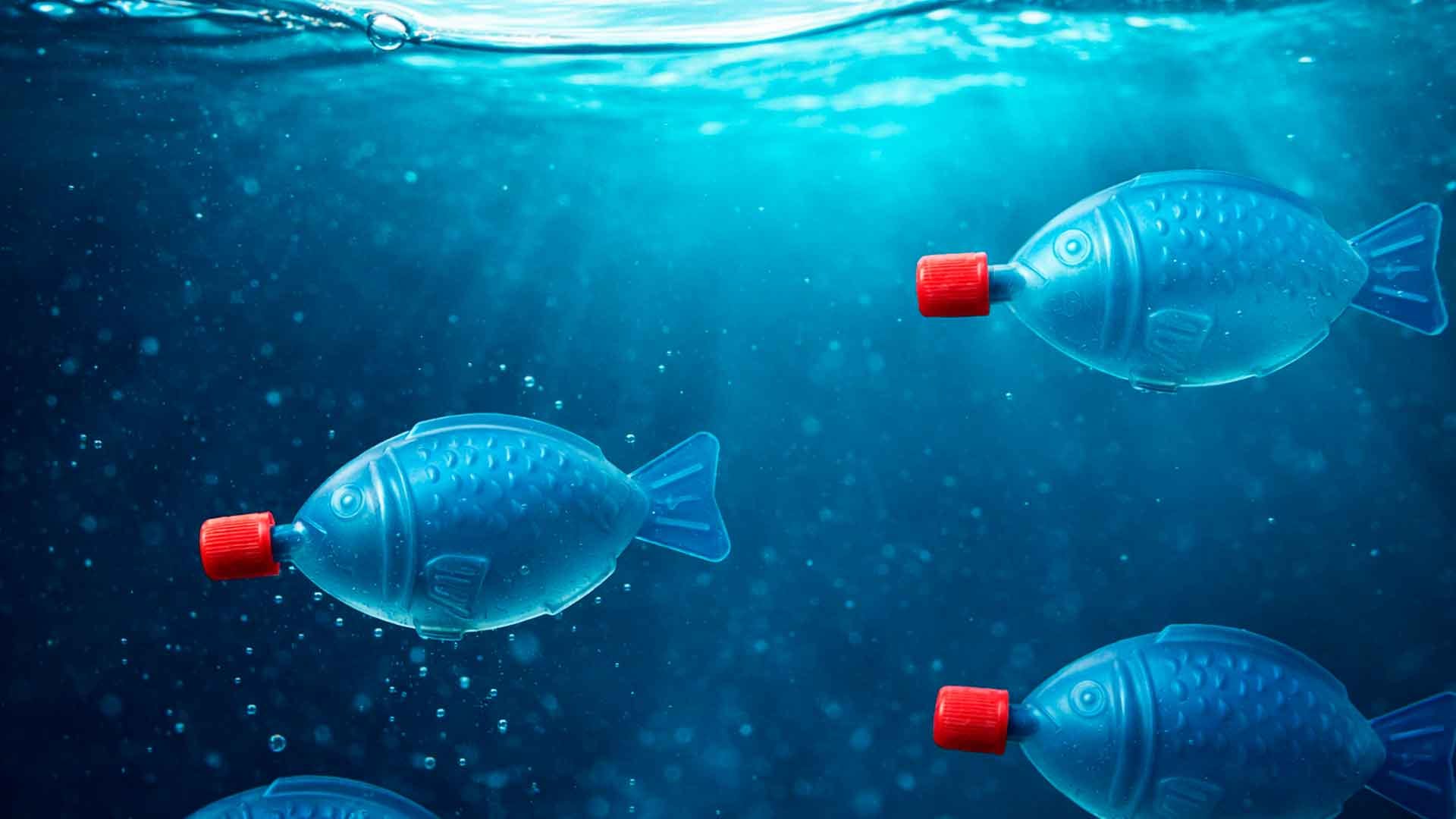
More than seventy percent of Earth’s surface is covered by water. This vast, connected ocean system regulates climate, cycles nutrients, and sustains life on a planetary scale. It also feeds us. Over a billion people rely on seafood as their primary source of animal protein, and more than half of humanity depends on fish for a significant portion of dietary nutrition.
That same ocean system now carries something else with equal reliability: plastic.
Plastic pollution is not confined to shorelines or surface debris. It is dispersed, fragmented, and embedded throughout marine ecosystems, from coastal sediments to polar ice. What makes it especially dangerous is not its visibility, but its invisibility. By the time it reaches us, it no longer looks like rubbish. It looks like food.
The world’s oceans are not static bodies of water. They are dynamic, circulating systems driven by wind, temperature gradients, and Earth’s rotation. These currents form large-scale loops known as gyres. There are five major ocean gyres, and together they act as planetary conveyor belts, redistributing heat, nutrients, organisms, and increasingly, waste.
Anything light enough to float or remain suspended can be captured by these currents. This includes plastics discarded on land, blown into waterways, washed through stormwater systems, or lost from ships at sea. Once in the ocean, plastic does not remain local. It travels.
The North Pacific Gyre, often referred to as the Great Pacific Garbage Patch, is the most studied example. It is not a solid island of trash, but a diffuse soup of plastic fragments spread across an enormous area. Similar accumulations are now documented in every major gyre. Plastic has been found from the deep sea to Arctic ice, confirming that this is not a regional issue, but a global one.
Plastic is often described as breaking down, but this is misleading. It does not biodegrade in the way organic material does. Instead, sunlight and mechanical abrasion cause it to fragment into smaller and smaller pieces, eventually becoming microplastics and nanoplastics. At every stage, it remains plastic.
These particles are small enough to be consumed by organisms at the base of the marine food web. Zooplankton, crustaceans, and filter feeders ingest them directly, mistaking them for food. Larger species then consume those organisms, transferring plastic and associated chemicals up the food chain.
Corals have also been shown to ingest microplastics. This is particularly alarming. Coral reefs occupy only a small fraction of the ocean floor, yet they provide habitat for roughly a quarter of all marine species and support the livelihoods of hundreds of millions of people, predominantly in lower-income regions. Any stressor that compromises reef health has cascading ecological and social consequences.
Plastic pollution is not merely a physical problem. It is a chemical one.
Many plastics are derived from petroleum, and their surfaces readily attract and bind toxic compounds already present in seawater. These include pesticides, industrial chemicals, and a class of substances known as persistent organic pollutants, or POPs. These chemicals resist degradation, accumulate in living tissue, and are linked to endocrine disruption, immune suppression, reproductive harm, and cancer.
Plastic particles act as mobile chemical sponges. As they drift through the ocean, they absorb pollutants from surrounding water at concentrations far higher than the ambient environment. When ingested, these toxins can desorb into the tissues of marine organisms.
Agricultural runoff, urban waste, and industrial discharge ensure a steady supply of these contaminants. Nutrient pollution from fertilisers drives eutrophication, creating dead zones where oxygen depletion suffocates marine life. Oil pollution, while visually dramatic during spills, is more commonly introduced through everyday runoff and waste streams. Together, these inputs create a chemically active environment in which plastic becomes a delivery mechanism for harm.
As plastic-associated toxins move up the food chain, they become more concentrated. This process, known as bioaccumulation, is well documented for many pollutants. Humans sit at the top of this chain.
When we eat fish and seafood, we are not only consuming protein. We are consuming the environmental history of those organisms: what they have eaten, what they have absorbed, and what has accumulated in their tissues over time. Evidence continues to mount linking plastic-associated chemicals to adverse human health outcomes, including hormonal disorders, neurological effects, and cardiovascular impacts.
This is not a distant or abstract risk. It is a feedback loop between how we produce, discard, and consume, and the biological systems that sustain us.
Efforts to remove plastic from the ocean are not misguided. Projects designed to intercept floating debris before it fragments further are valuable. Initiatives proposed by figures such as Boyan Slat represent an attempt to mitigate damage already done.
But clean-up alone cannot solve the problem. At best, it treats a symptom.
The underlying cause is a production and consumption system that externalises waste by design. Plastic is cheap, durable, and convenient precisely because its end-of-life costs are not accounted for at the point of manufacture or sale. Most plastic items are used briefly and persist for centuries.
Shifting to biodegradable materials, redesigning packaging, reducing reliance on toxic agricultural chemicals, and rethinking how much disposable material we consider normal are not lifestyle choices. They are structural necessities. A system that produces more waste than it can safely absorb will always export that waste somewhere else. In this case, it exports it into the ocean, into ecosystems, and ultimately back into us.
Cleaning the plastic soup matters. Stopping its production matters more.
No posts
Comments
Nothing yet. Say the first thing.
Sign in to join the conversation.