
By Dan Bacher
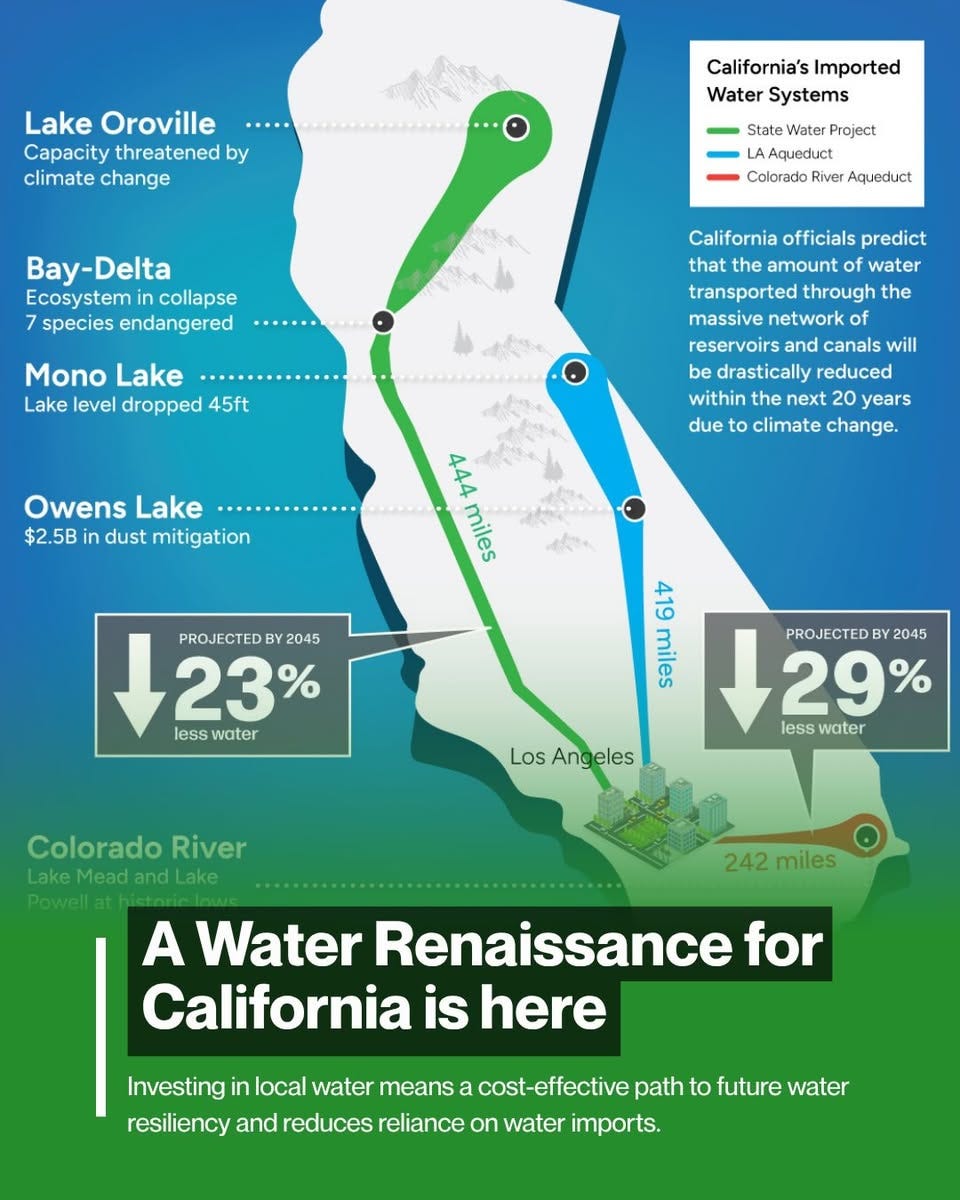
Bay-Delta Region and Los Angeles, Calif. – In an online press conference today, leaders from conservation groups and Tribes unveiled a Water Renaissance Plan for California that rules out the salmon-killing Delta Conveyance Project, AKA Delta Tunnel, being pushed by the Gavin Newsom administration and California Department of Water Resources (DWR).
The testimony of DWR engineer Amardeep Singh last year revealed that the DCP will increase water deliveries from the Delta by 22% at a time when the estuary is in its biggest-ever ecological crisis. Moreover, during drought periods when fish are already strained by low flows and high temperatures, the Delta Tunnel would increase deliveries by 24%: static1.squarespace.com/…
In contrast with Newsom’s proposal that aims to divert more water from a collapsing ecosystem at time we are seeing increasing climate disasters in California and elsewhere, “Water Rennaisance Plan” lays out a vision, including specific goals and metrics, for prioritizing local water resilience in California’s urban areas – especially in Southern California – to “support a pivot away from the state’s overreliance on unreliable imported water,” according to a press statement from the coalition.
The press conference featured moderator Ashley Overhouse, Defenders of Wildlife; Frankie Myers, Fix the World Consulting and Former Yurok Tribe Vice-Chair; Benjamin Bass, Ph.D., UCLA Center for Climate Science; Bruce Resznik, Los Angeles Waterkeeper; Barbara Barrigan Parrilla, Restore the Delta; and Barry Nelson, Golden State Salmon Association. A recording of the press conference is available for viewing here.
Among other findings, the plan identifies the opportunity to secure 1.8-2 million acre-feet of drought-proof water supplies in Southern California by 2045 through sustainable technologies including stormwater capture, wastewater recycling, conservation, and groundwater cleanup. The total cost for such investments would be approximately $44 billion.
In comparison, the proposed Delta Conveyance Project is only projected to yield 0.4 million acre-feet of water annually at a likely cost upwards of $60 billion, the coalition stated.
“Southern California water agencies are already turning toward projects that can provide reliable local water,” said Bruce Reznik, executive director of LA Waterkeeper. “These types of investments make our region more resilient. We should direct ratepayer and taxpayer dollars to securing water supplies that are available year in and year out, rain or shine.”
The release of the plan takes place at a critical time when California salmon and Delta fish populations have collapsed, due to the export of water south to corporate agribusiness and water agencies. Commercial salmon fishing on California ocean waters was closed for three years because of the collapse of the Sacramento River and Klamath River fall-run Chinook salmon populations – and was reopened this year under strict quotas.
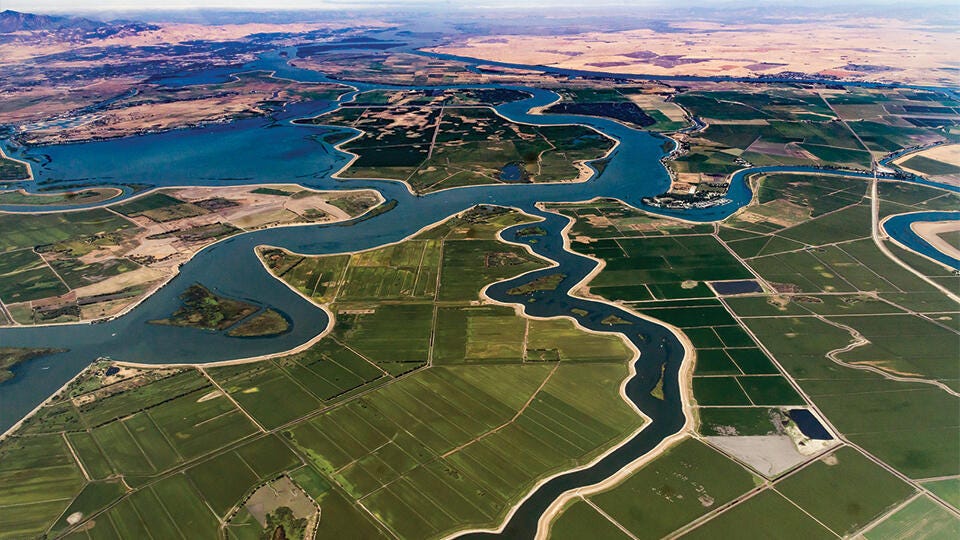
“The Sacramento River has experienced in the last 20 years a 95 percent decline in wild spawning salmon, the salmon that are actually the backbone of salmon fishing. It’s the most important salmon river in California. That crash is because of excessive water diversions,” said Nelson.
Meanwhile, the amount of water available for export from two of Southern California’s main sources of fresh water – the Bay-Delta and the Colorado River – is projected to drop by 23% and 29% respectively in the coming years, compared to available water in recent decades, as revealed in this fact sheet, The report argues that “continuing to over-invest in infrastructure designed to pipe water over hundreds of miles is a risky strategy, especially as snowpack and rainfall patterns become less predictable due to climate change.”
“Water exporting regions are also feeling the strain of changing weather patterns. As has been widely reported, the Colorado River is at an all-time low since water exports began in the early 1900s. The Bay-Delta is on the verge of ecosystem collapse due to extensive water exports that support both Central Valley agriculture and urban uses in Southern California and Silicon Valley. In the Eastern Sierras, Mono Lake and Owens Lake are similarly struggling due to excessive exports to Los Angeles,” the coalition reported.
“Proposed projects like the Delta Tunnel would decimate ecosystems and communities throughout California,” concluded Restore the Delta executive director Barbara Barrigan-Parilla. “It’s past time to focus our limited dollars on water infrastructure investments that are sustainable for both urban and rural farming communities, respect Tribal water and land uses, and will allow keystone species like salmon to recover. We can create improved water supplies and restore the largest estuary on the West Coast.”
The Water Renaissance Plan includes eight priority recommendations:
Direct state agencies to end planning and advocacy for the Delta Tunnel and instead adopt and enforce science-based instream flow protections for the Bay-Delta and its Tributaries.
Consider pursuing an ambitious general obligation water bond that focuses on modern local water supplies and does not include wasteful or environmentally damaging spending.
Develop best management practices and regulatory standards to address harmful algal blooms.
Require the adoption of tribal beneficial uses so that tribal uses are recognized and protected in permitting decisions.
Direct state officials to ensure Colorado River diversions are appropriately reduced as part of a basin-wide plan to ensure long-term sustainability and protect the environment, tribes, and urban water users.
Create a framework for local businesses to fund green infrastructure for stormwater capture.
Remove the cap on large water recycling projects for receiving loans from the State Revolving Fund and allocate sufficient funds to the SRF to meaningfully support large-scale projects.
Reform Proposition 218 to allow for local water rate assistance programs and ensure aggressive conservation rates can be implemented.
The Plan also includes analysis and sources to support its vision. It was drafted jointly by the California Sportfishing Protection Alliance, Defenders of Wildlife, Friends of the River,Golden State Salmon Association, LA Waterkeeper, Resource Renewal Institute, Restore the Delta, San Francisco Baykeeper, Sierra Club California, Winnemem Wintu Tribe, and Yosemite Rivers Alliance. As of May 19, 2026, 18 additional groups have endorsed the plan.
For a full list of endorsers and additional information about the Water Renaissance Plan, see www.cawaterrenaissance.org.
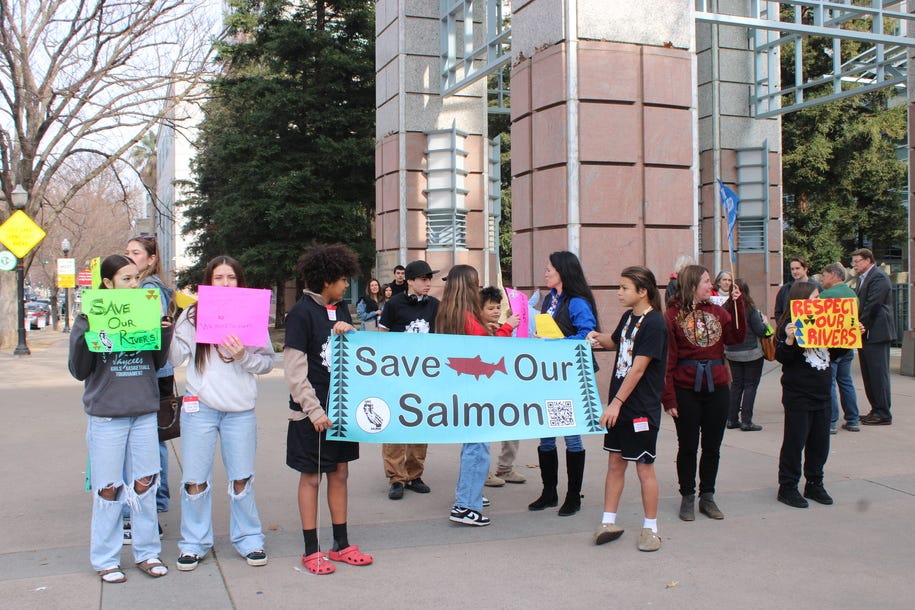
Department of Water Resources dismisses its second ‘validation action’ for Delta Tunnel funding
Meanwhile, score another victory for the opponents of the Delta Tunnel. “Following its failed attempt to obtain judicial approval of its first Delta Tunnel bond financing plan, the California Department of Water Resources (DWR) has now dismissed its second ‘Validation Action,’ by which it had sought judicial approval of its second Tunnel financing scheme,” according to a press release from attorneys Roger Moor and Thomas Keeling:
“DWR’s first attempt began with its 2020 bond resolutions and a Validation Action to secure judicial approval for those resolutions. Delta Counties, cities, and public agencies, as well as public interest groups, opposed DWR’s first Validation Action, warning of major adverse economic and environmental consequences should the financing scheme be validated.
“Ruling against DWR in the first Validation Action, the trial court found that DWR had exceeded its delegated authority. DWR and its allies among the State Water Contractors appealed. In a unanimous Decision, the Court of Appeal later affirmed the judgment against DWR. (Department of Water Resources v. Metropolitan Water District of So. Calif., et al. (2025) 117 Cal.App.5th 751.)
“DWR then petitioned the California Supreme Court in an effort to overturn the Court of Appeal’s Decision. Last month, the Supreme Court, sitting en banc, denied DWR’s petition for review and its alternative request for depublication of the Decision.
“On May 19, 2026, DWR dismissed its second Validation Action, which had been filed during DWR’s appeal in its first Validation Action.
“DWR did not give a reason for dismissing the second Validation Action, but attorneys for prevailing counties and public agencies in the first Validation Action think the reason is clear.”
According to Thomas Keeling and Roger Moore, counsel for many of the Counties and agencies challenging DWR: “Dismissal of the second Validation Action reflects a recognition that the Court of Appeal’s Decision in the first Validation Action is most likely fatal to the second action. Dismissing the second action at this early juncture makes sense and, we hope, will avoid a further waste of public monies.”
“Failure to validate its bond financing schemes is just the latest in a long line of setbacks for the ill-fated proposed Delta Tunnel project – perhaps the largest rate-payer boondoggle in California history. We hope proponents of this project, the cost of which some studies show will approach $100 billion and which would not be operational until at least the mid-2040s if all goes to plan, will now seriously consider more readily available and less costly solutions to California’s water supply challenges,” Keeling and Moore added.
Dan Bacher is a veteran California journalist and environmental watchdog known for his investigative reporting on fisheries, water policy, and conservation. He documented the 2002 slaughter of 70,000 adult salmon in the Klamath River in Northern California, has exposed the influence of agribusiness and oil companies on state environmental policies for decades, and is editor of Fish Sniffer magazine. He also serves on the board of the California Water Impact Network (C-WIN) as an advocate for equitable and sustainable water management policies.
Comments
Nothing yet. Say the first thing.
Sign in to join the conversation.