
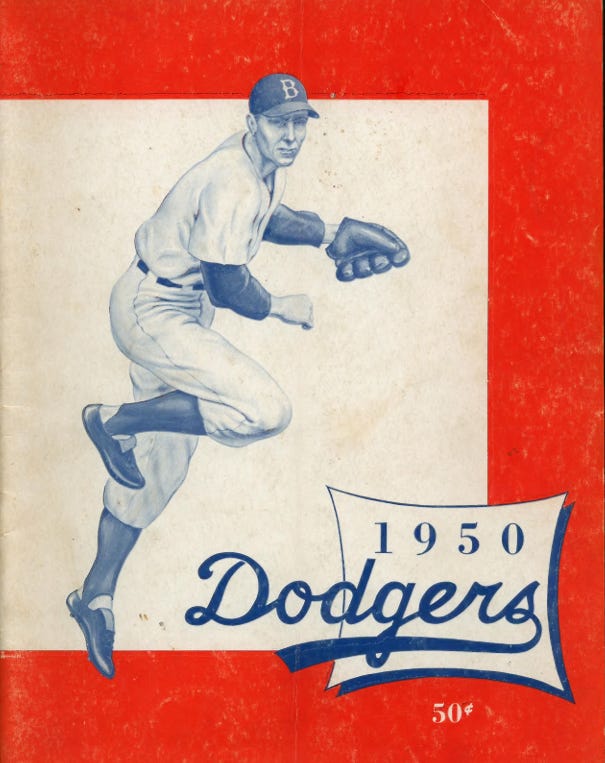
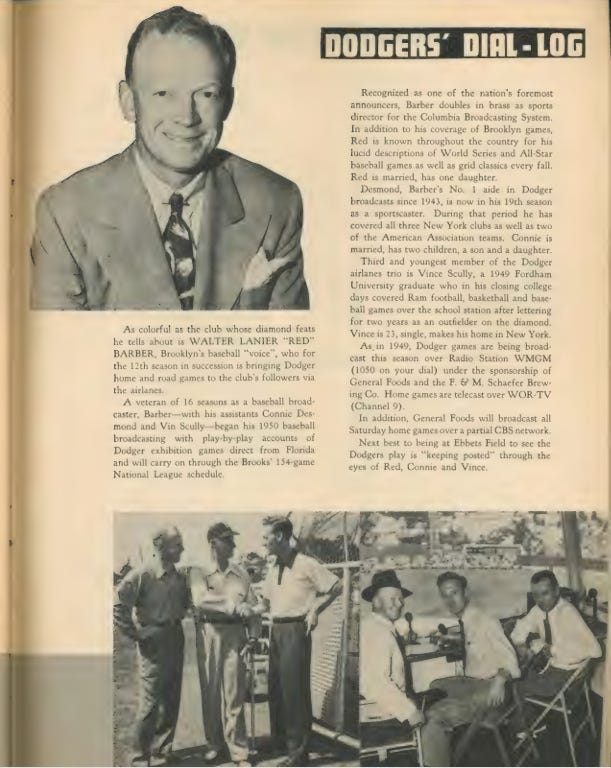
One of the great things about living in the present is that you can access media like a radio broadcast from the April 22, 1950 contest between the New York Giants and Brooklyn Dodgers. Spotify recommended Retro Sports Radio in my feed, and I decided to listen because I have been fascinated by announcer Red Barber for some time. Barber would end up mentoring a kid from Fordham University named Vin Scully who would end up as one of the most beloved announcers in sports history. Barber was a big name in his day as well, earning $50,000 in 1953 money before he switched from covering the Dodgers to commentating for the Yankees.
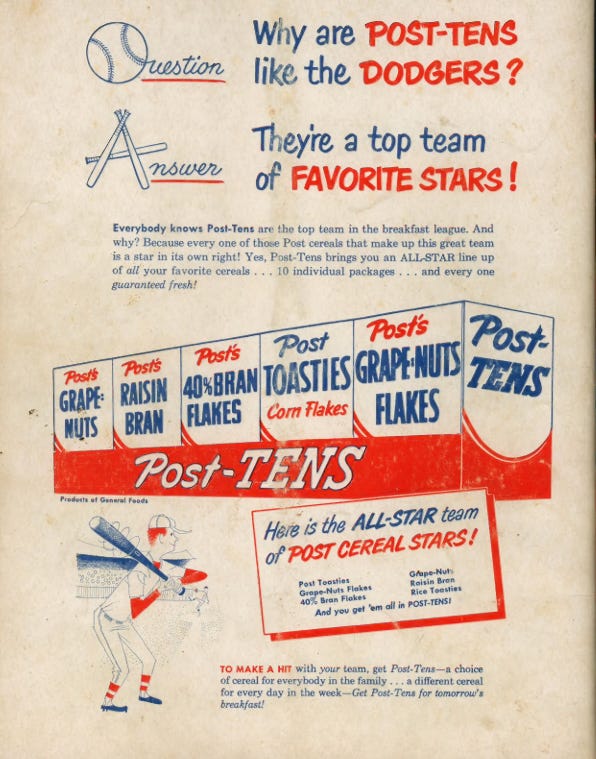
Saturday, April 22 was just the fourth game of the season for both clubs, with Brooklyn entering at 2-1 and the Manhattan team winless at 0-3. The game was held at Ebbets Field in Brooklyn, and the radio broadcast was sponsored by Post Cereal. In fact, Post’s funding allowed it to be transmitted across the country. Both Barber and his longtime radio partner Connie Desmond wouldn’t let you forget it, either. Post came up dozens of times, both between innings and during the action. Post even sponsored the out-of-town scores segment. After the Yankees scored five in an inning against Washington, Desmond opined: “Boy, those Yankees have really been knocking in runs, haven’t they?”
Thanks to old fashioned ad copy, what I would have considered crass commercialism today felt a little endearing. Fans could send a quarter along with a cereal box top in the mail and receive a Dodgers yearbook that normally cost double. I participated in similar promotions as a child in the early ‘90s! Thanks to the Internet Archive, I managed to get a glimpse of the yearbook.
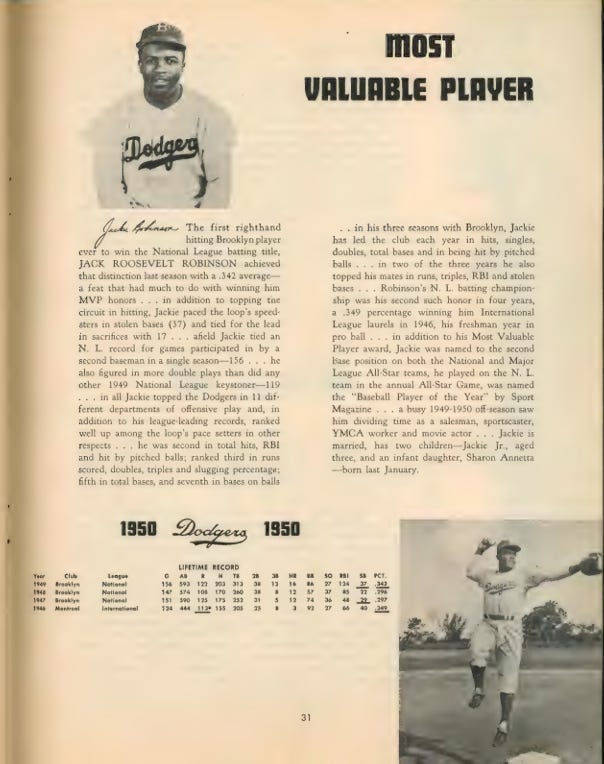
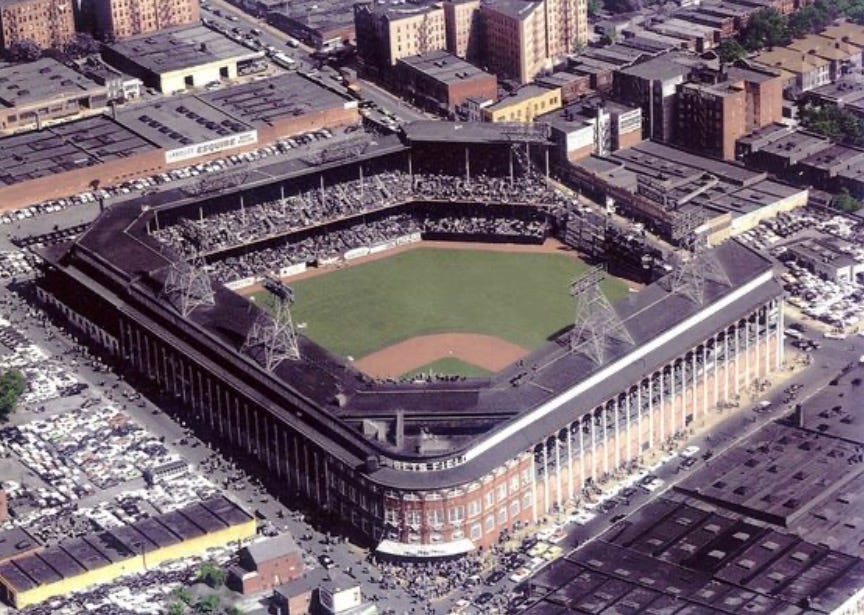
This was an era when three teams played in the boroughs of New York including the Yankees of the American League. There were only 16 franchises in the majors at the time, so the Big Apple was the center of the universe as far as the sport was concerned. Ebbets was truly a part of the neighborhood and seemed like a more organic creation than the horseshoe-shaped Polo Grounds in Manhattan where the Giants played their home slate. Pioneering second baseman Jackie Robinson had just won the 1949 MVP Award after winning the National League batting title with a .342 average including 203 hits, 38 doubles, 12 triples, 16 home runs, 124 RBI, and 37 stolen bases. According to the yearbook: “The Dodgers’ first place finish marked the 10th time in the past eleven seasons that the club has ended the campaign up among the top three.” However, the 1949 Dodgers fell to the Yankees in the Fall Classic and the team wouldn’t win the ultimate prize until 1955.
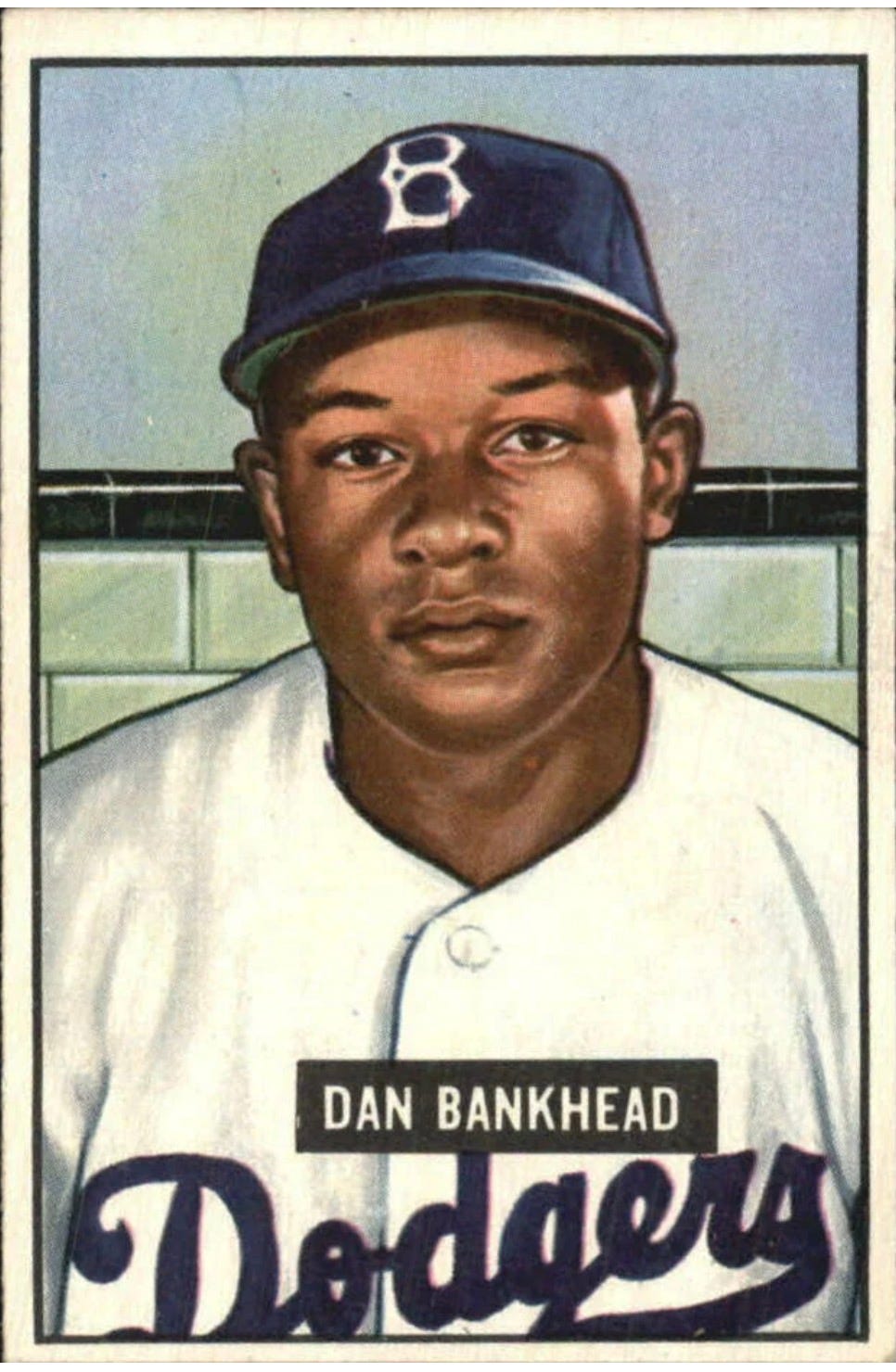
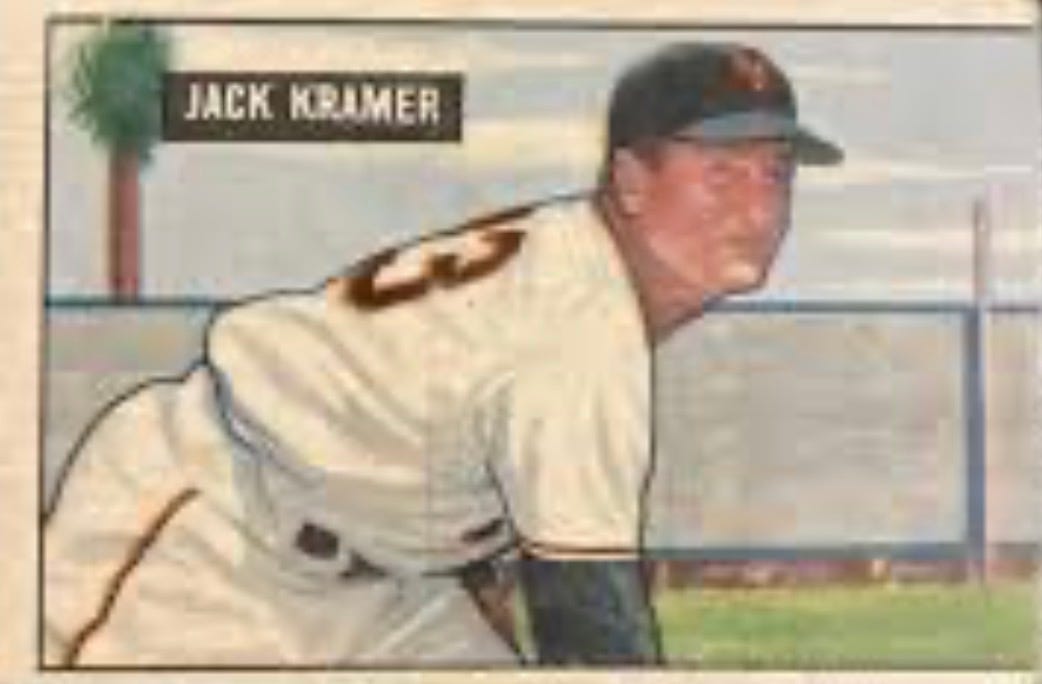
One thing I noticed about the broadcast is how deafening the crowd sounded. The attendance was 19,067, but the stadium was intimate and fans were known for being raucous especially when it involved what Barber called “baseball’s most heated rivalry.” Even strike one by a Dodger pitcher could lead to loud cheers. When Gil Hodges hit a solo homer in the bottom of the second against Jack Kramer, it was pandemonium at 55 Sullivan Place. In the first, the visitors had struck first against Dan Bankhead, the first black pitcher in the majors. A walk to Eddie Stanky, followed by singles by Whitey Lockman and Hank Thompson, resulted in an early 2-0 lead for the Giants. In the fourth Alvin Dark walked, Wes Westrum doubled, and Kramer hit a rare home run by a pitcher to make it 5-1 New York.
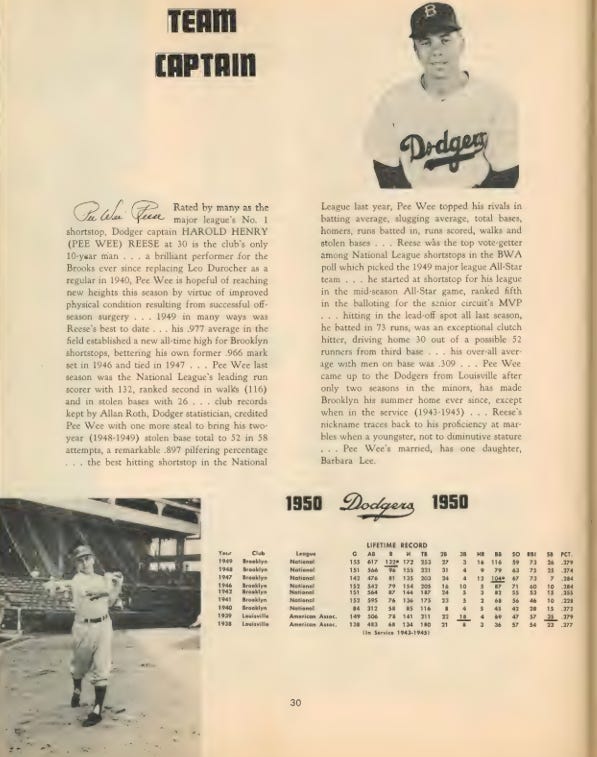
Desmond took over for Barber in the fourth inning, with Barber providing a glowing introduction: “I don’t know of a finer broadcaster, and more important a finer man.” I smiled when Desmond used time-honored expressions like “the Dodgers will take them any way they can get them” during their comeback. With runners on base and a 3-2 count, he went with the familiar “now the merry go round will start.”
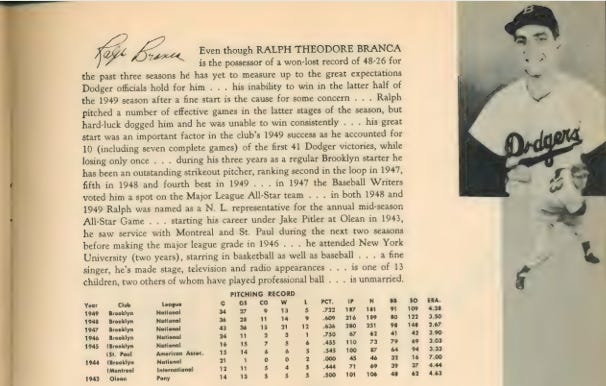
In the fifth, Ralph Branca relieved Bankhead. This was over a year before the “Shot Heard ‘Round The World” when Branca surrendered a walk-off home run to Bobby Thomson during the decisive contest of a three-game playoff on October 3, 1951. Fair or not, it was a moment that would come to define Branca’s career.
Burt Shotton’s Dodgers trailed by four as they came up in the fifth, but Bobby Morgan singled and Roy Campanella reached on an error. Suddenly, Kramer was on the ropes and his manager Leo Durocher did not want to go to the bullpen. Pee Wee Reese and Jim Russell both walked, forcing in a run. With two out, Robinson plated two with a single and Carl Furillo tied the game at five after a base hit of his own. The Brooklyn faithful was loving it. Desmond reacted by speaking directly to the listeners: “Aren’t you glad you came along?”
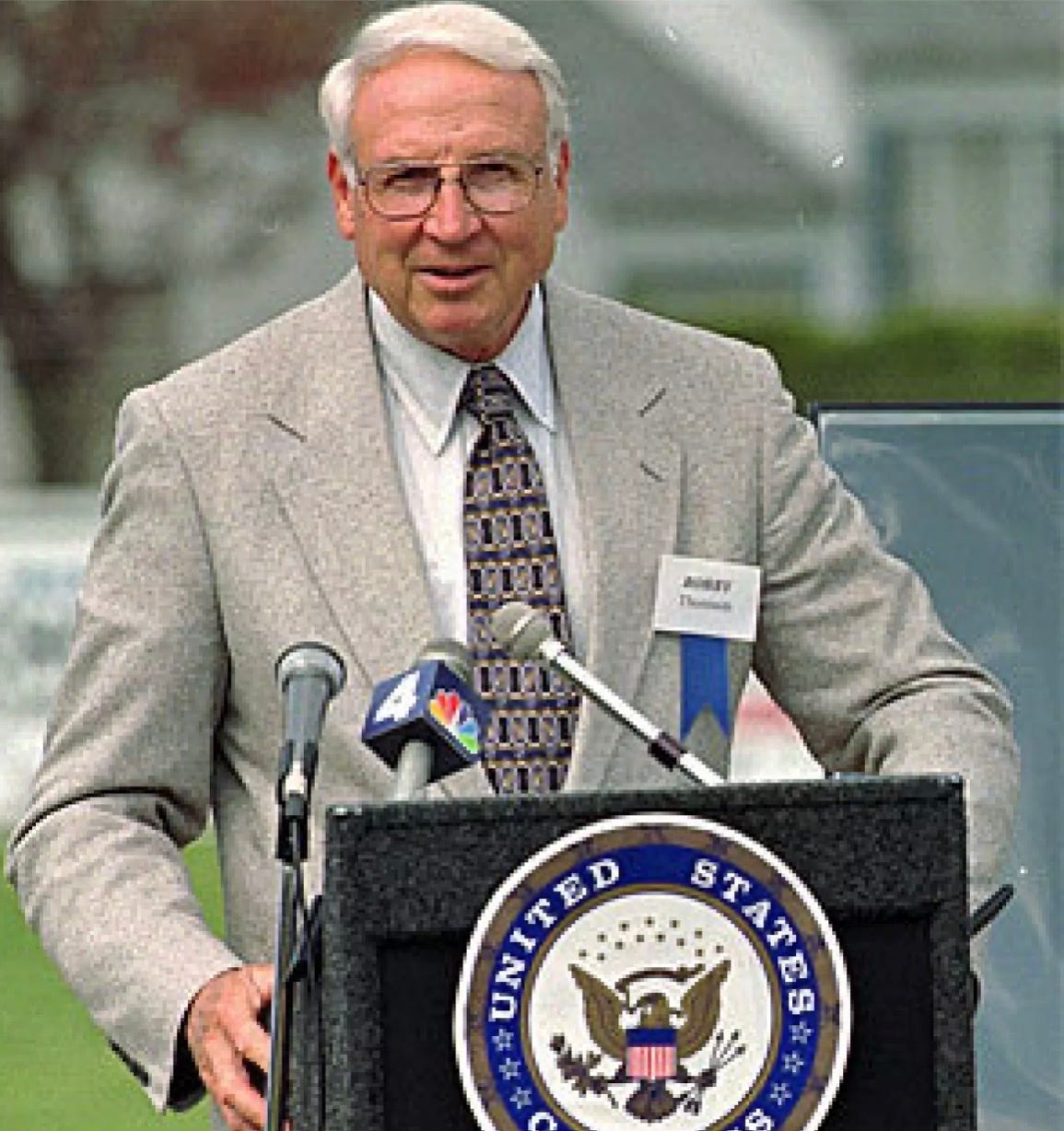
Barber resumed his play-by-play duties, announcing: “These ballgames have been just as tough as taxes.” In the bottom of the sixth, Bobby Morgan walked and Reese doubled to give the Dodgers a 6-5 edge. Undeterred, the above-pictured Thomson hit a solo homer in the top of the seventh against Jack Banta.
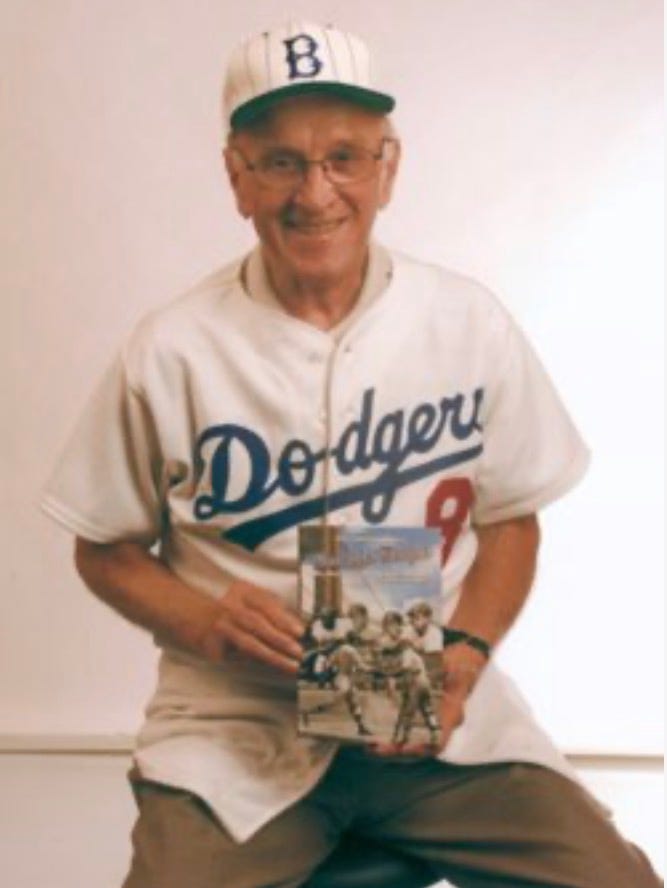
With Sheldon Jones on the hill in the eighth, Banta reached on an error. With two down, George Shuba (pictured above) came to the plate in a critical spot. As Barber put it: “George has not been hitting and if he’s not careful he’s going to be ‘Shoo Shoo Shoo’ Shuba back to the bench.” He opined that the game was “coming to a rather dramatic denouement.” I love the use of vocabulary, and the entire country got to hear it in real time. To add to the drama, Shuba ripped a two-out double and the Dodgers jumped out in front 7-6. Banta pitched a 1-2-3 ninth to seal the Brooklyn victory.
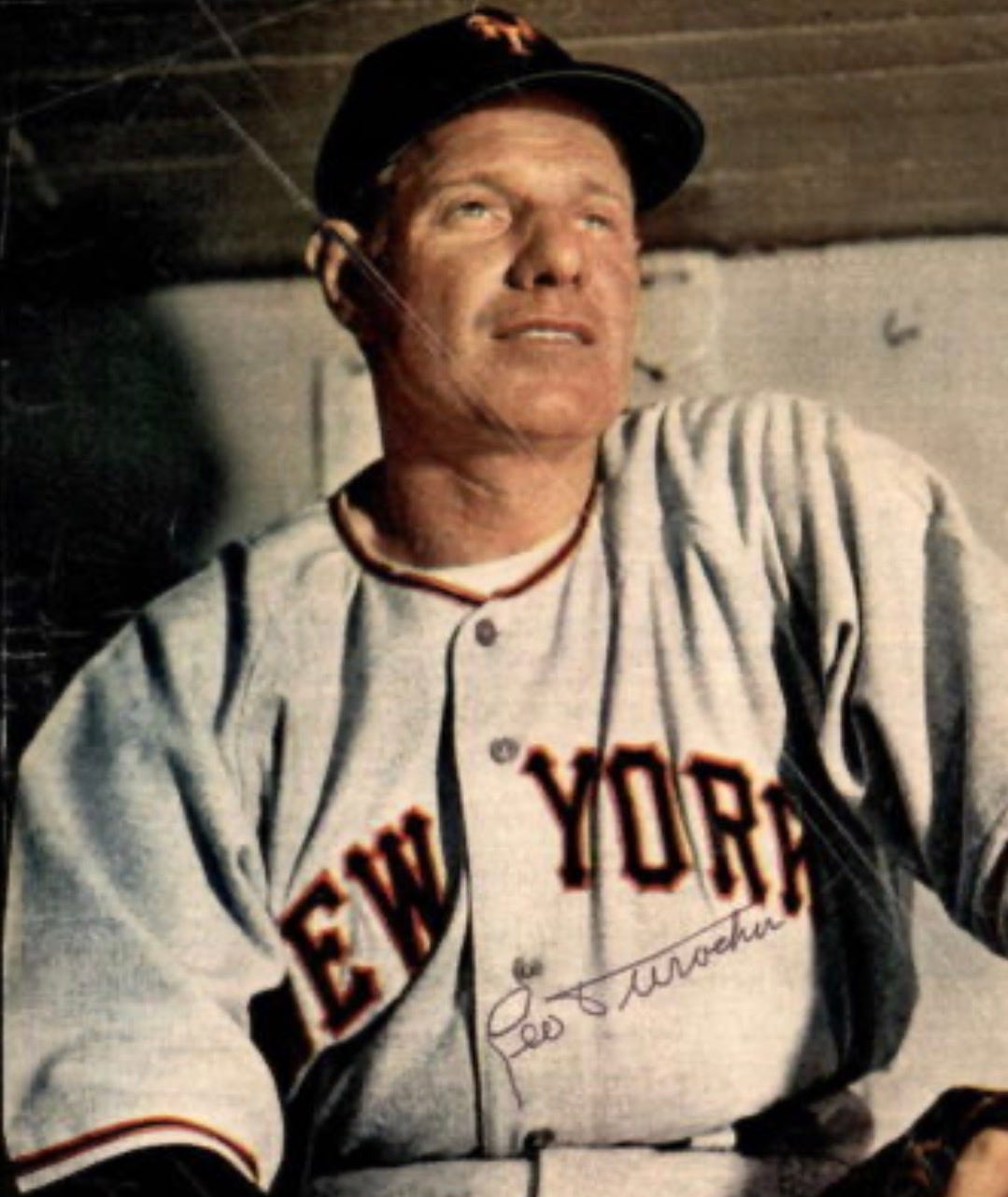
This site may well not exist without the relocation of the Dodgers to Los Angeles prior to the 1958 season. The Giants simultaneously shifted their home city to San Francisco, meaning that the Yankees were the only remaining New York team until the Mets were formed in 1962. Brooklyn would not get to host a top-level sports team again until 2012, when the Nets headed there after playing basketball in New Jersey since 1967. There may never be three Major League franchises based in New York in the future. Nevertheless, I sometimes find myself wishing to be transported to a time in which the Big Apple was the unquestioned center of the baseball universe.
No posts
Comments
Nothing yet. Say the first thing.
Sign in to join the conversation.