
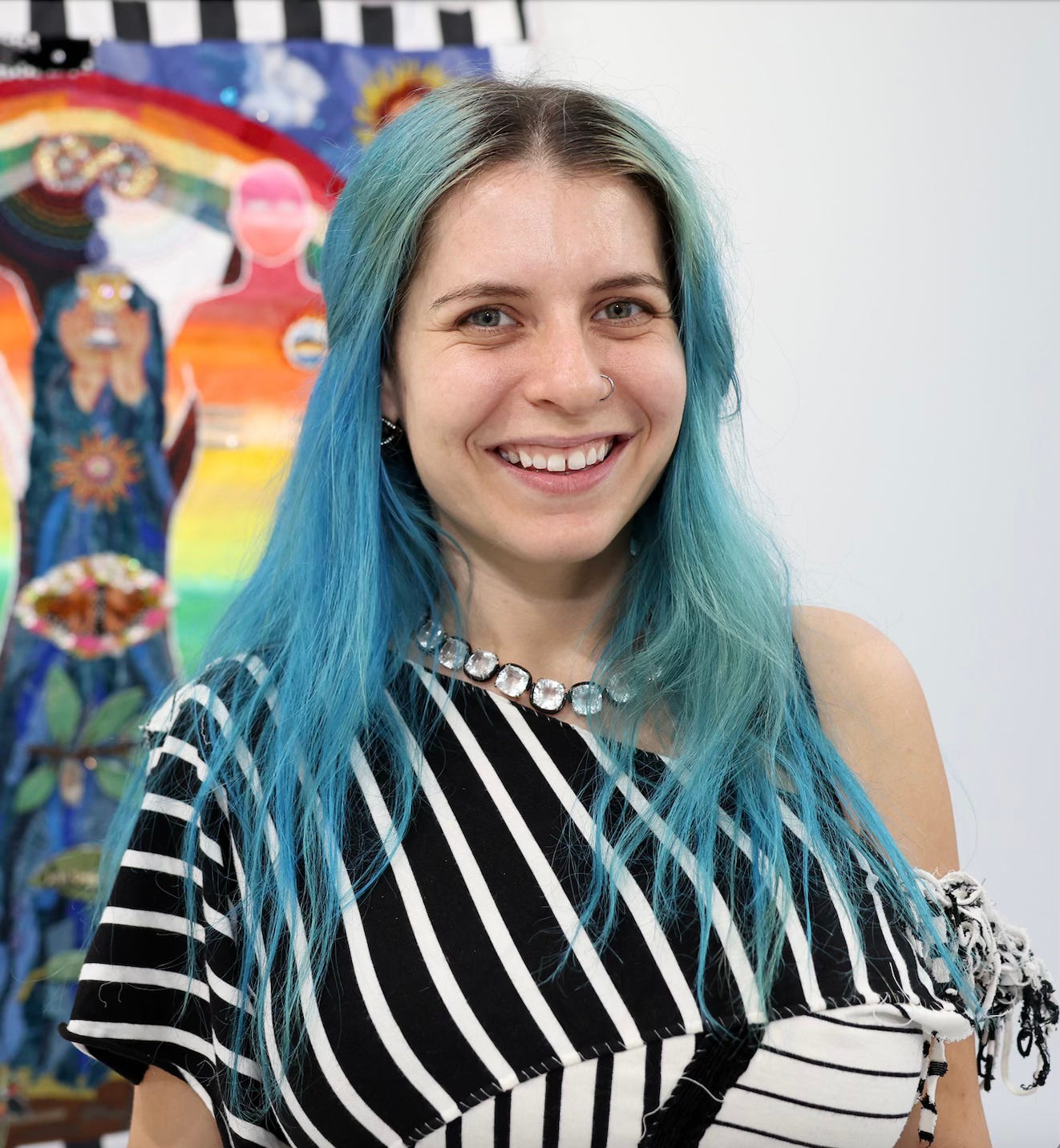
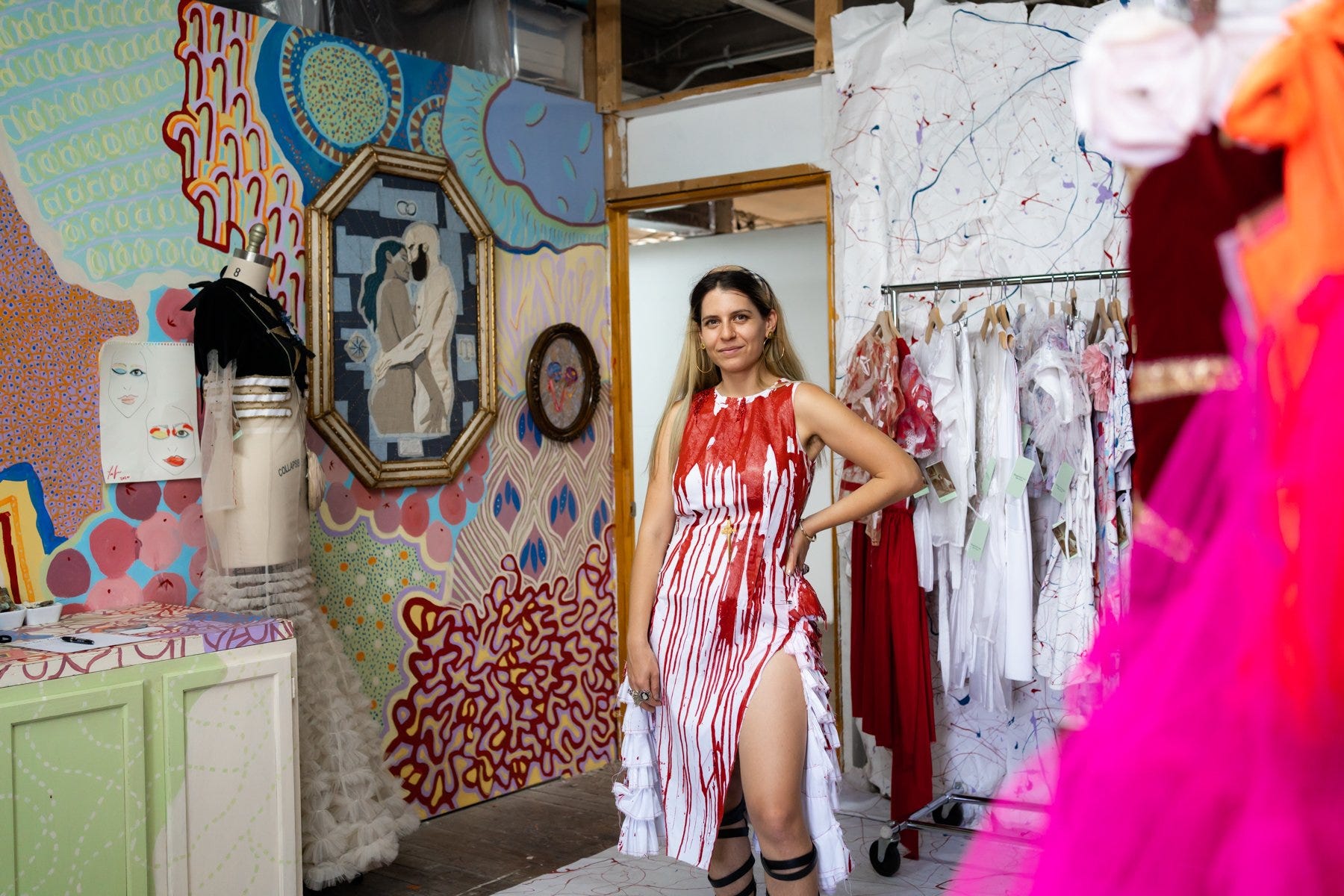
For Miami-based artist and designer Pangea Kali Virga, fabric isn’t simply a material, it’s a living archive. Her work stitches together community, ecology, and memory, transforming discarded fibers into new forms of beauty and belonging. From wearable art and large-scale textile installations to eco-education and public sewing circles, Pangea’s practice is as much about process as it is about connection.
A former fashion designer turned sustainability advocate, she brings an activist’s urgency and a poet’s tenderness to every thread. “Everything I use has had a life before,” she tells me. “The lifespan of our clothing and textiles can often be longer than our own.”
In this conversation, we talk about her ongoing Ecotopia project, the performative possibilities of fashion, and how community-making can be an act of resistance, and of love.
What made you pick up that first thread?
I started really young. I knew that I loved fabric at a super tiny age, my grandmother mended things regularly and was extremely supportive of any kind of art practice that I wanted to have as a child, and my grandfather was an actor and middle school principal. I loved dance—the costumes and moving my body—we were a very creative and dramatic family!
I started with fashion and really fell in love with clothing, mainly because of my dance recital costumes. I started teaching myself how to sew and making my own clothes around the time I was 12 and eventually went to college for fashion design in New York at FIT.
So you really were born to sew! You describe your work as ‘communicating urgent, difficult messages in beautiful and fun ways.’ How did you first discover that fiber and fashion could be the language for those conversations?
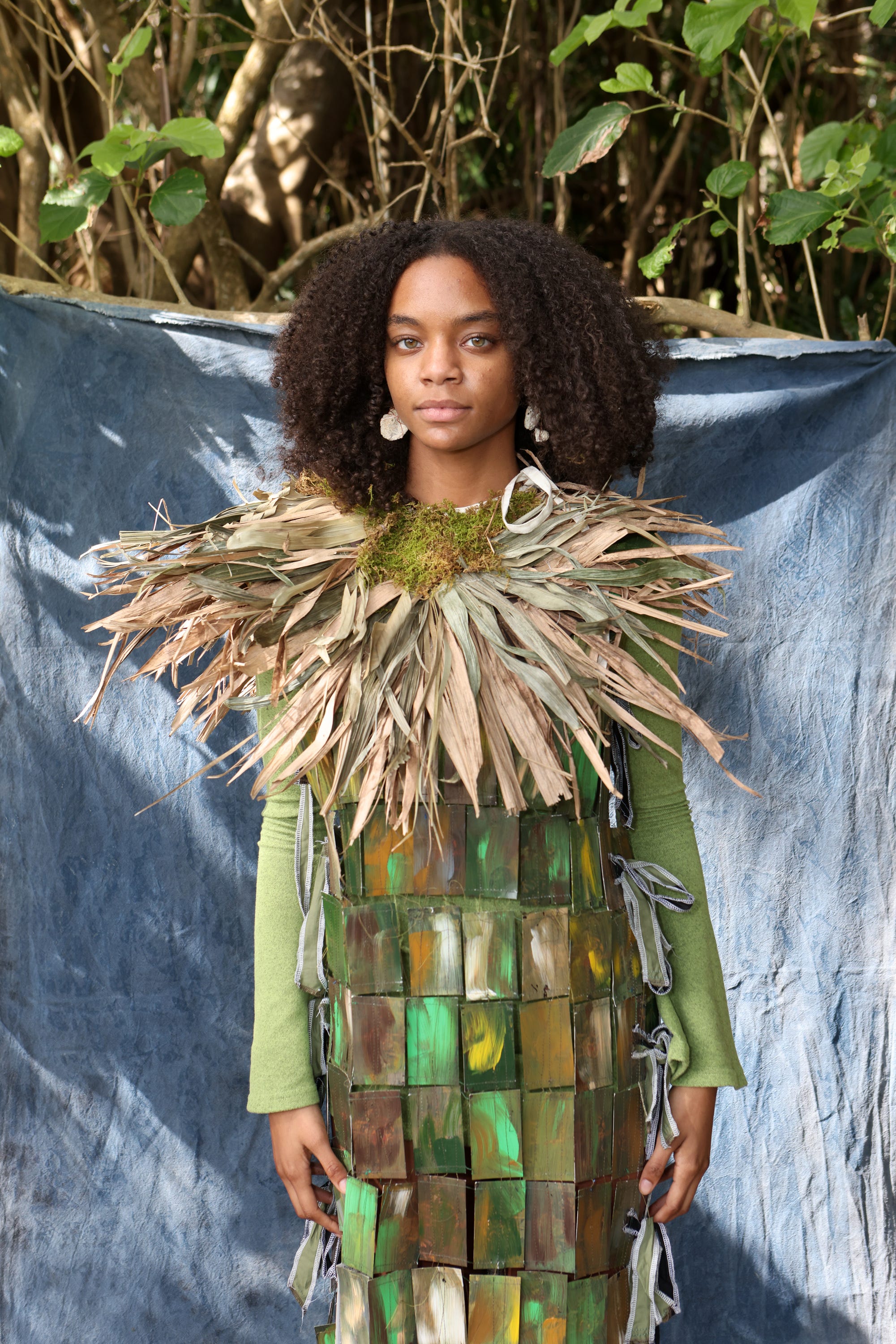
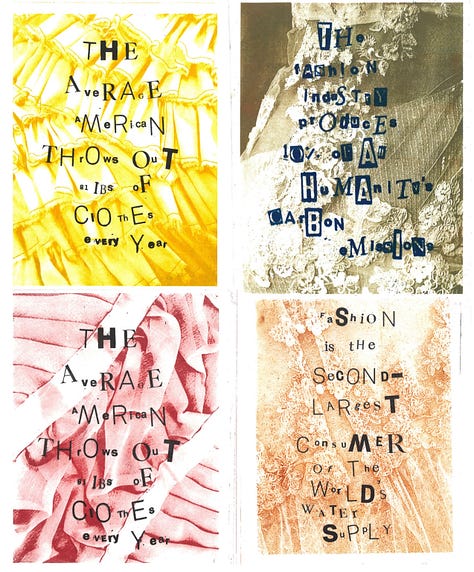
I enjoy the performative nature of fashion—you have a runway and the spectacle of the fashion show, which is an opportunity to convey a message by transmuting it into something that somebody can wear. I loved fashion but it was just such an unsustainable career along with the wide array of abuses in that industry: towards the environment, towards labor, towards the planet’s resources and towards the waste stream. The more I learned about it the more I just felt like I couldn’t participate in it anymore, so I transitioned to making art in 2021.
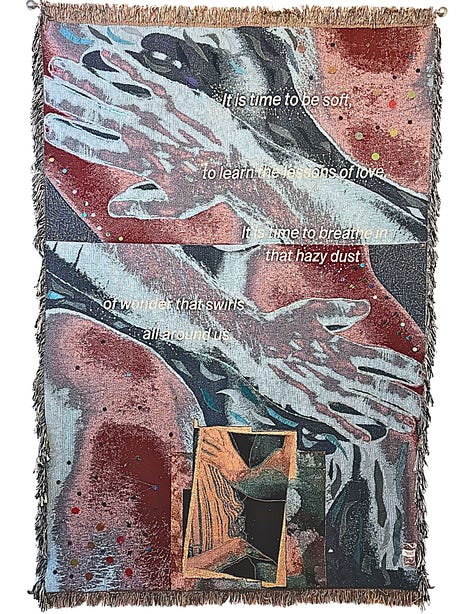
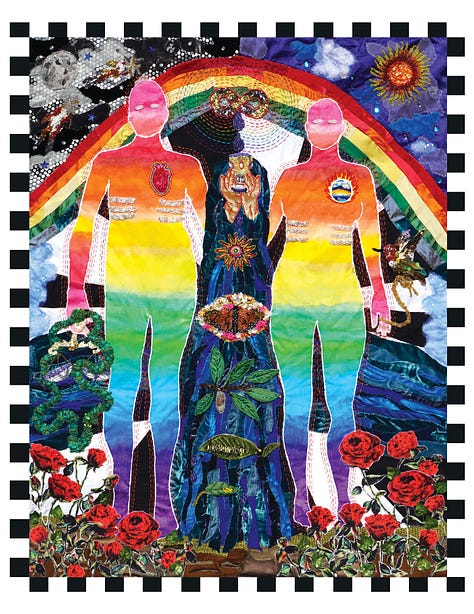
Now I’d say I’m an artist because I work with upcycled fiber in wall hangings and installations and in costume design and original wearable art. But I also recently made a documentary on my eco-utopia project, Ecotopia, and I do a ton of arts-based public programming, so I feel like those things all kind of swirl together under the thematic umbrella of sustainability and sustainability advocacy.
Can you talk about how your relationship with materials evolved? What draws you to upcycled or natural fibers, and how does their history shape the stories you tell through them?
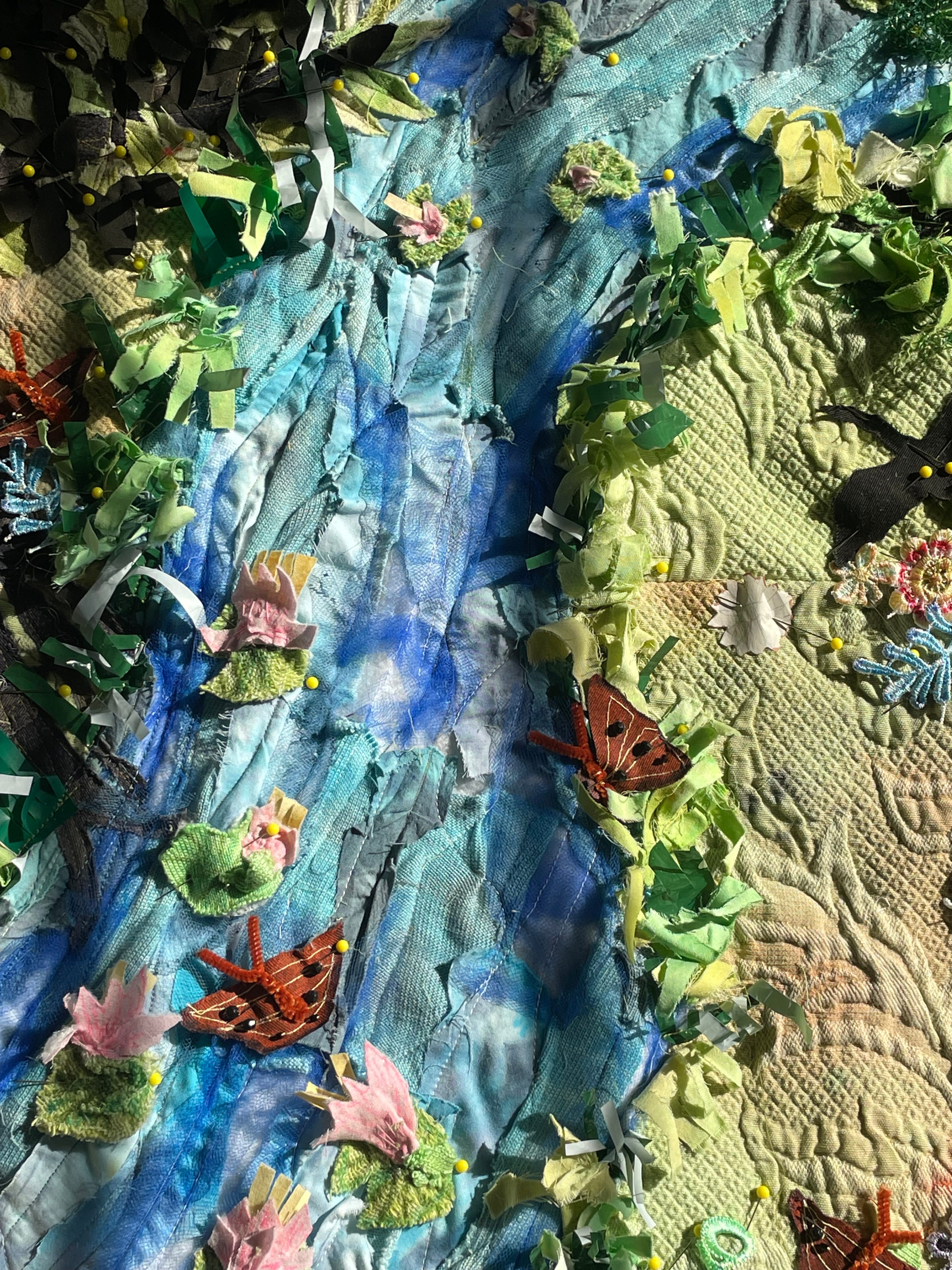
My clothes are like the diary of my life—when I open my closet, I have things that I still wear from when I was 12 and things from many members of my family and close friends. I remember I wore that maroon tiered mini skirt for my first day of 9th grade, for example. Everything represents a moment in my life. Everything I’m using in the studio is sourced from the community. Like a shirt from my best friend who moved to Paris, a pair of pants from a photographer who I’ve worked with, there’s hundreds of garments and yarns and zippers and they’ve all come from somebody from the community so I’m always trying to honor the history of the textiles in the process of my work by creatively extending their life span.
So do you see part of your work as documenting the history of these ?
I think it’s less about documenting, it’s more about showing people how everything that surrounds you, including your clothes and the textiles in your life, have had a life before you even touch them. Even if you buy it, brand new with a tag from a store, it still had a life and has touched dozens, if not hundreds of hands before it even got to you. So I pose the question, “How do you want to continue that story and that legacy?” I think that’s very important to me—objects have a lifespan in the same way that we all have a lifespan. The lifespan of our clothing and textiles can often be longer than our own.
There’s a performative and often communal aspect to your work, how important is audience participation or public engagement to the message you’re trying to convey?
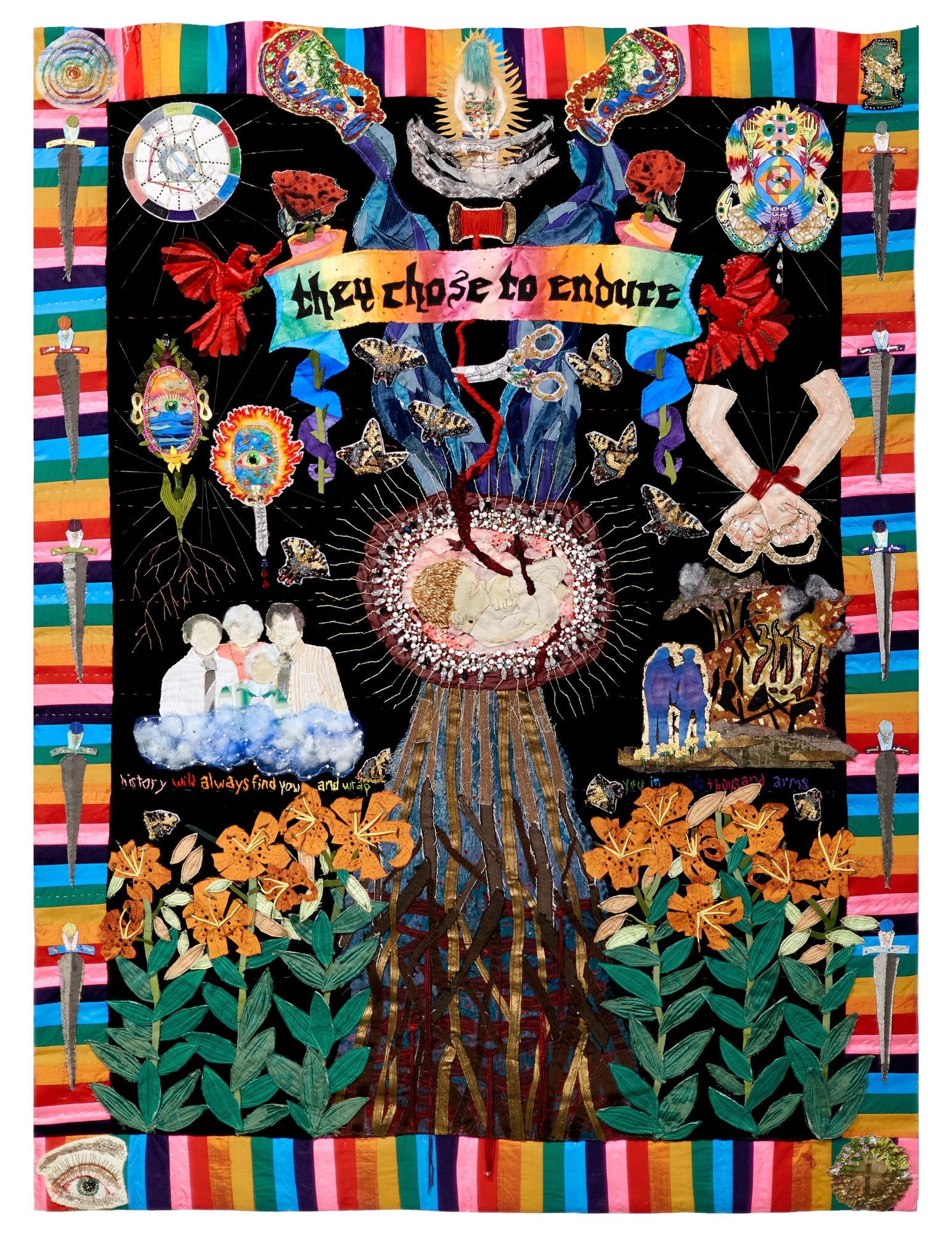
It’s important and sometimes I even have the public help me make the work. I try to create a space of peace and rest and also a space of action. For example, I did a six-month sewing circle series where over 60 people came together. They dyed the fabrics, cut, patterned, sewed and made two landscape quilts now on view at the library. While we were sewing with upcycled materials to make these quilts, I was also teaching people about South Florida native ecosystems and indigenous patchworking practices.
Would you say that activism is your driving force?
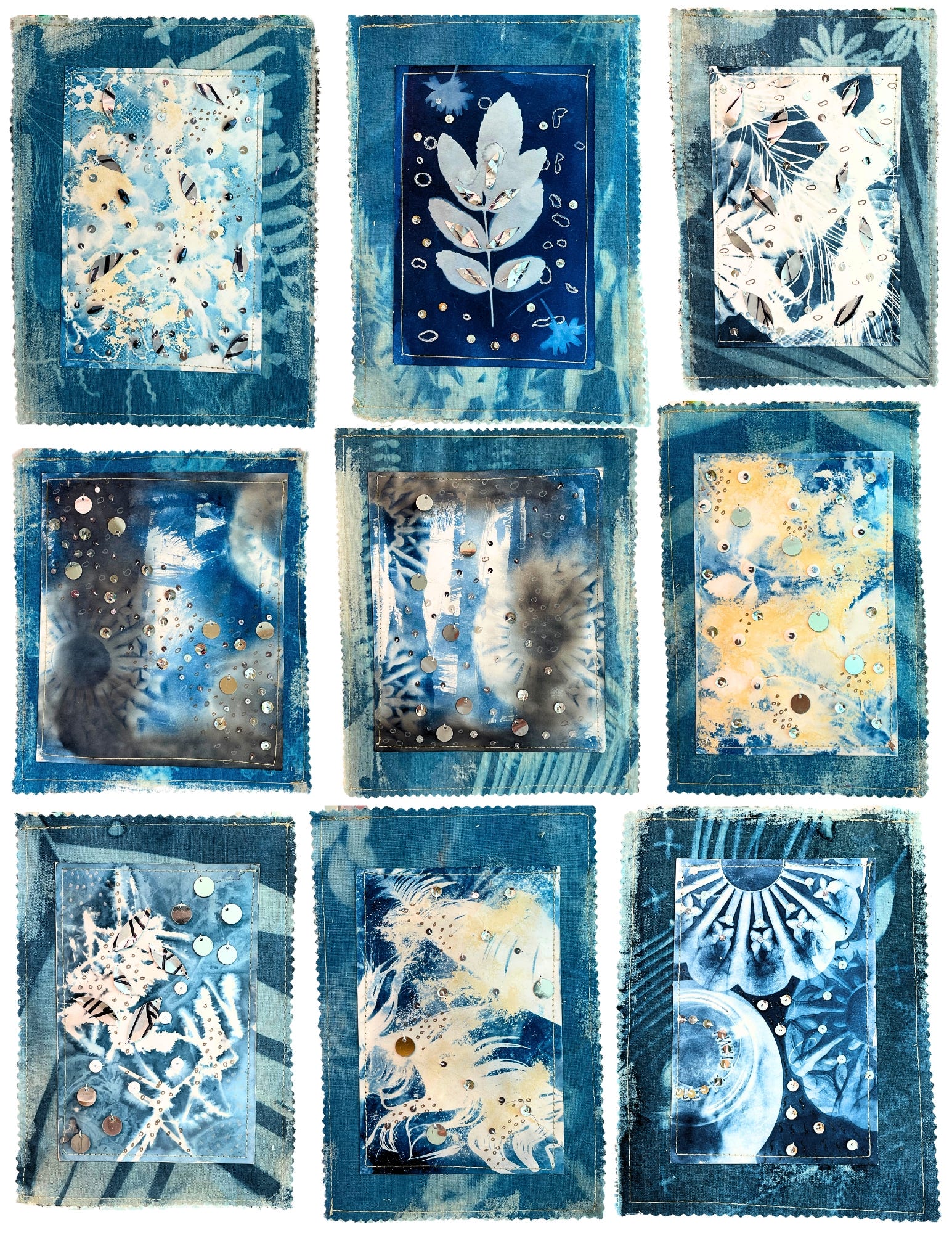
A lot of my work has to do with nature, love, and the passage of time. I want people to be inspired to spend more time observing and being within nature, so I hope that through my art, people get that experience, start to be curious. I recently had a solo exhibition with the Deering Estate of embroidered photographs depicting the ecosystems within the Estate on silk and cotton banners.
I created a corresponding scavenger hunt map and nature study guide of the property which pinpointed the exact trees and spots where certain pictures from my solo show had been taken. It urged you to go out and walk through the entire nature preserve to see the physical location in which the photo was taken for the artworks.
I also created nature study guides with poetry prompts for the exhibition as well. You could go with your map and with your nature guide and you could also write a poem! So I’m trying to not only make art that people can look at, but something that people can interpret in their own way, interact with and form their own ideas or art from.
What does sustainability mean to you beyond the environmental in a social and cultural sense?
I want people to be able to look or participate in my art in a way that helps them feel more connected to each other and more connected to the world in general. That often happens through friendships created over the course of an activation or through supplementary materials I provide.
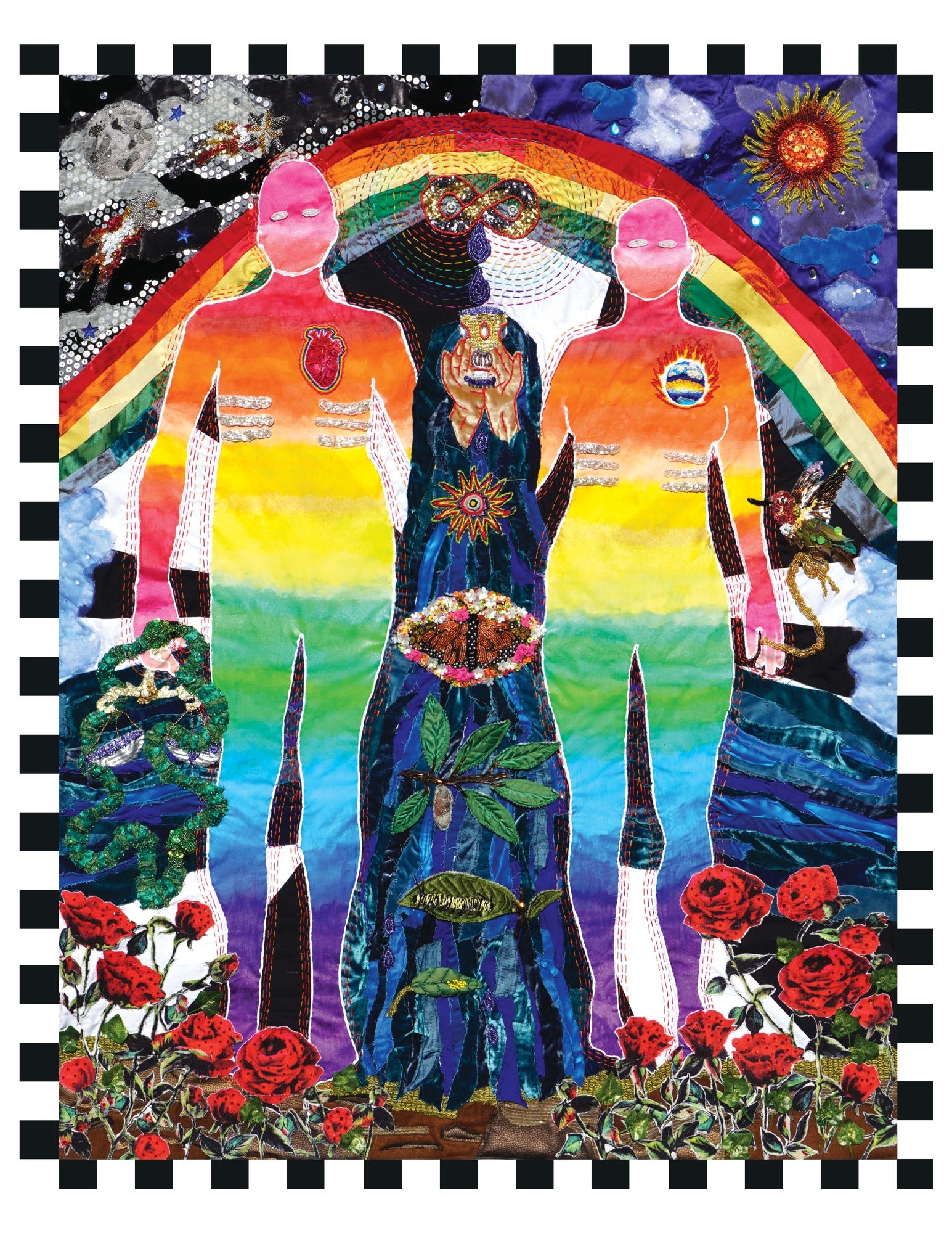
Firstly, I want people to be more connected to nature and think about how they can preserve, tend to, and shape their life with nature in mind. Secondly, I want people to understand the production process of materials, the dyeing process, where clothing fibers comes from, the labor required to produce our textiles.
Is it possible to have a truly zero waste and zero impact practice as an artist?
It’s tricky. I don’t know if you can be 100%. When it comes to the fiber stuff, that can be zero waste but anything beyond is really tough. Like, am I going to recycle all of my paper and make my own paper? Even for the programming element of my work where most of the materials are upcycled or discarded/waste materials, there are some things I have to source new. But I also think that’s why education is such an important part of what I do, because personally I have very little impact, but if a ton of people do it, then there’s more of a difference.
You’ve been recognized for both your advocacy and your artistry - from the Zero Waste Miami Coalition Award to multiple Miami-Dade Artist Grants. How do these affirmations influence your sense of responsibility as a public voice on sustainability?
Yeah, I just got a new one too! They just sent the emails out, it’s the Miami Individual Artists Award.
Congratulations! Do you find that these give you a platform through which you can talk about, and advocate for environmental issues?
This is so idealistic, utopian of me but just we’re all one big family, we’re all sharing this planet and we don’t all have to be in agreement either, but I think we can just try to continue to do our best and then keep pushing each other to do even better. I mean, I’ve had the opportunity to have these amazing residencies and work with people who have similar beliefs concerning their work and sustainable environmental practice. Even though I think these things are just such a drop in the bucket, I do feel like I have a platform, and that if I suggest something or try to spearhead something, it is considered and encouraged.
What comes first for you: the story, the texture, or the gesture of making?
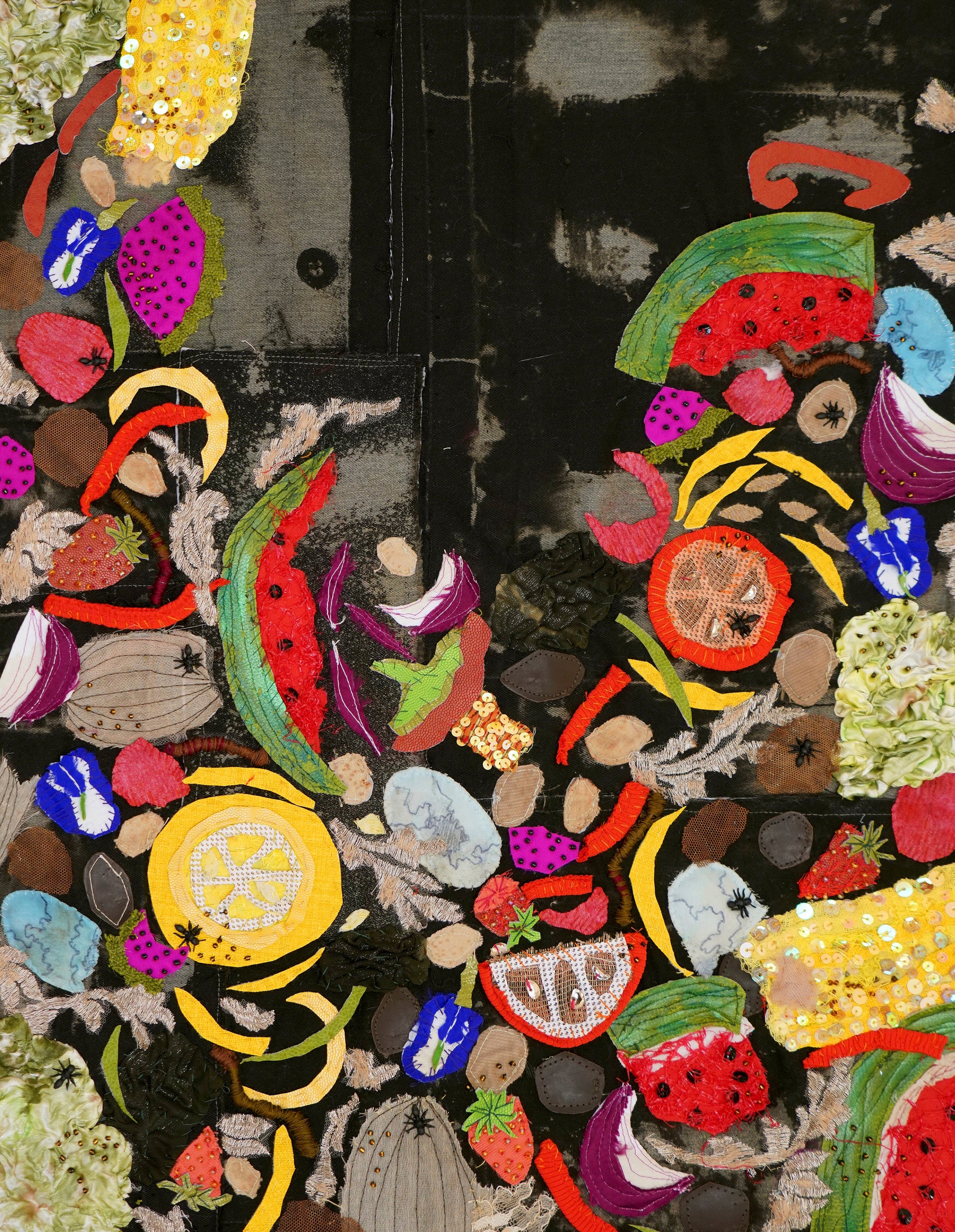
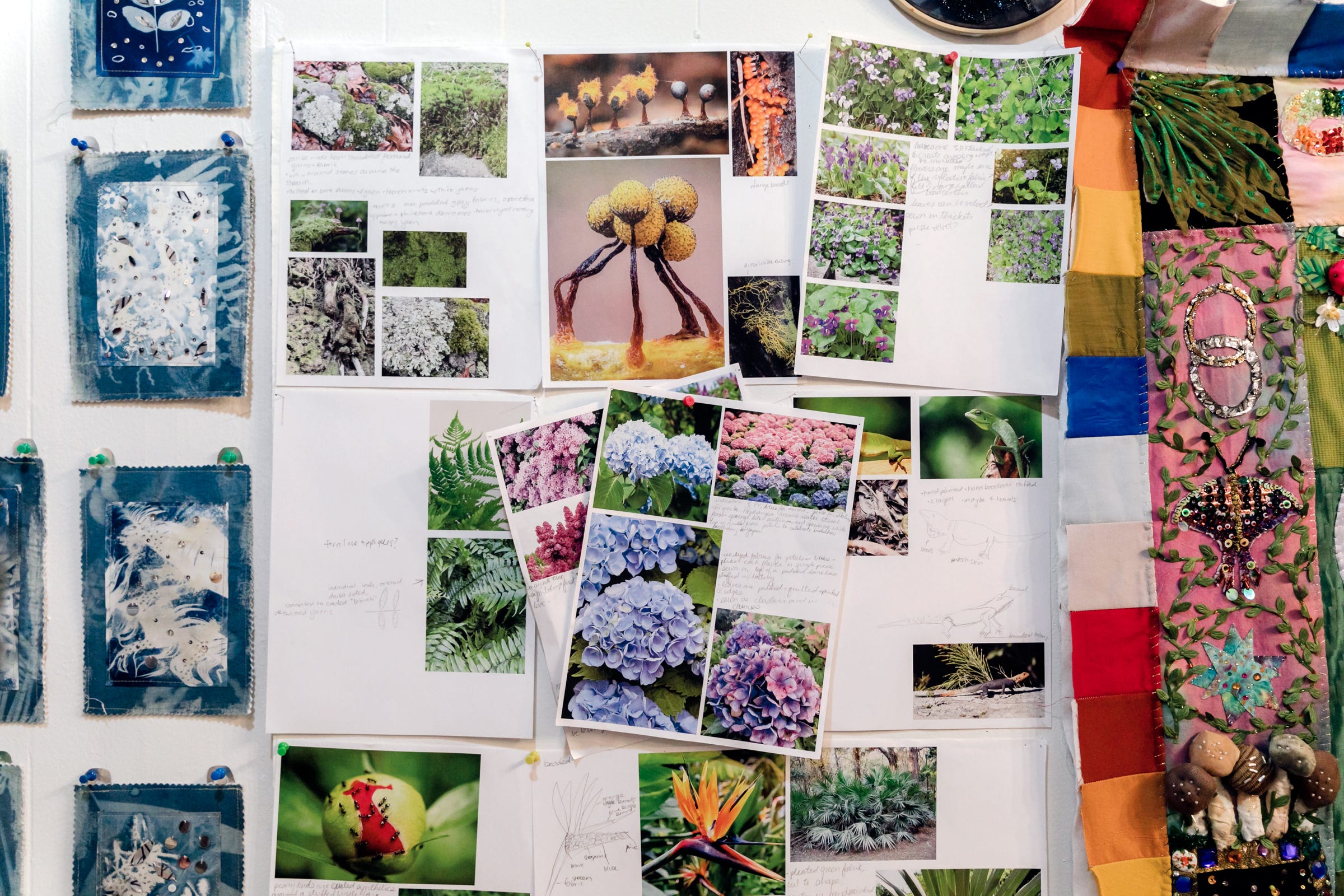
Oh, I love that. It usually starts with a bunch of note-taking based on whatever I’m going through at the time. I love list making, multiple lists going on simultaneously. I have so many and am embarrassed to show you—I probably look like a murderer or something.
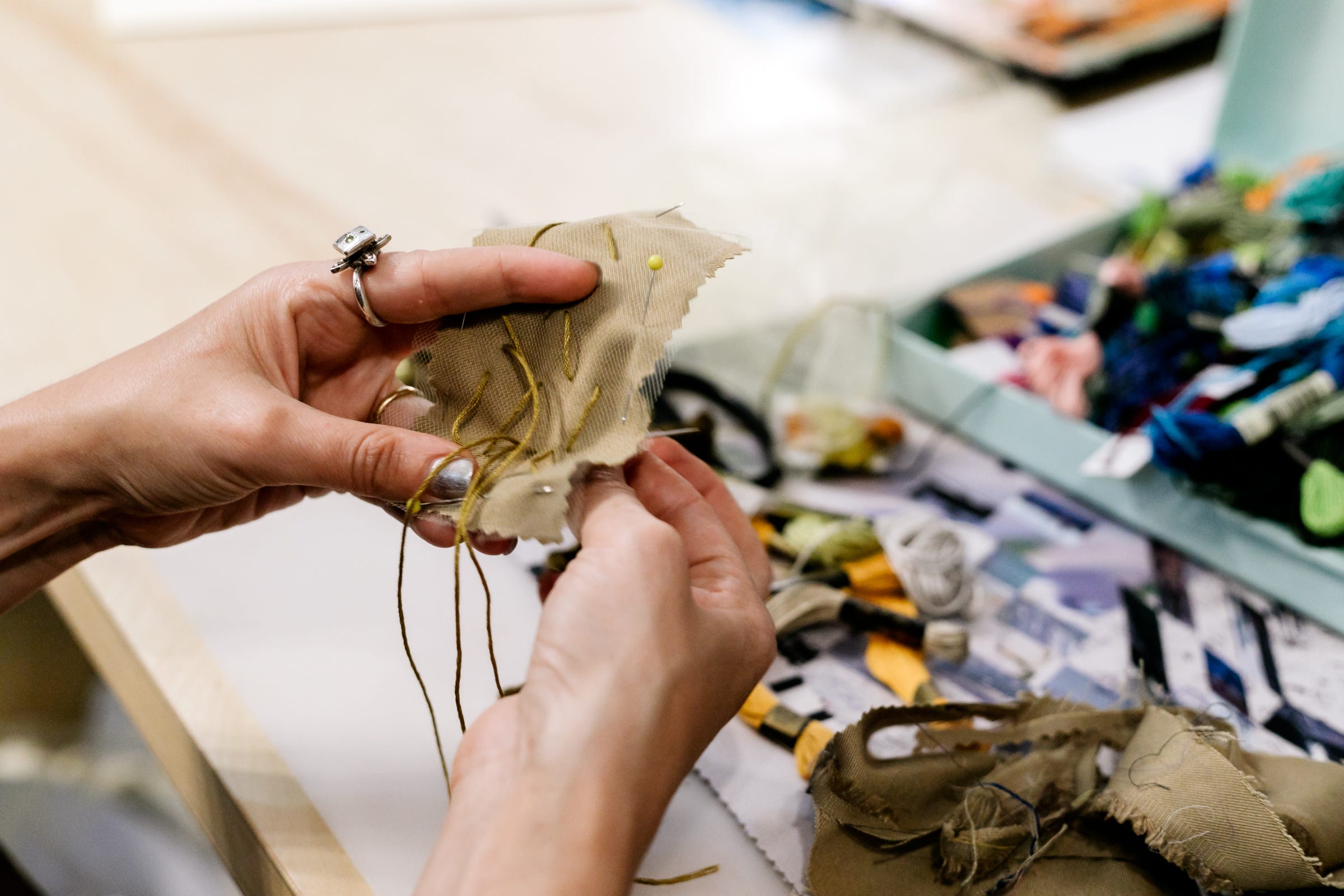
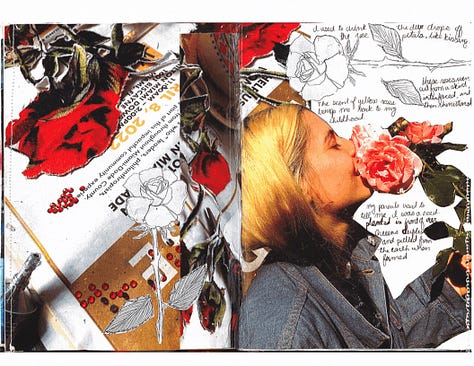
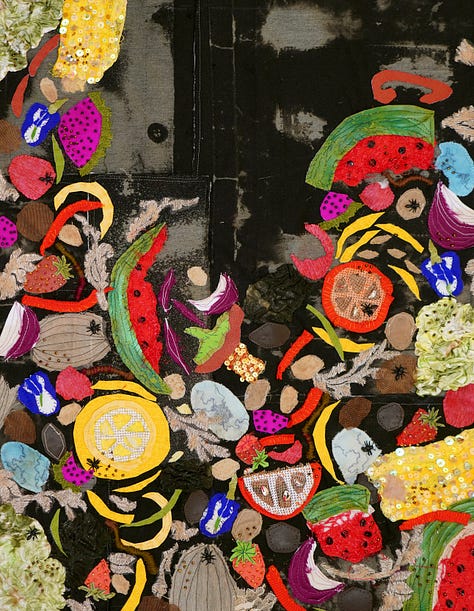
Then I’ll start thinking about the images that symbolize the sentiment of my lists and notes followed by pulling together reference images and at that point I’ll make original sketches on paper and after that I’ll start choosing the materials. I’ll be like, ‘Oh, this bird is made in this suede, this leather, this velvet, with these sequin eyes, this beading for the legs, I’m going to use these techniques for it. These are the order of steps in which I think I need to do it.’ So, it’s very detailed and mapped out before I even start to cut and sew.
What’s one message you most want your students to internalize about sustainability and creative agency?
It is hard to pick just one. People regularly equate being sustainable with having limitations, but having limitations creates the space when your creativity can really soar.
Care for the things around you and find creative ways to repurpose them when they have come to the end of their specific use. Challenge yourself to create with your recyclables and other waste, it is more fun than you’d expect.'
And lastly, share your excess with artists and your neighbors and make sure to share your opinion on the environment with your local politicians!
You’ve collaborated widely, with institutions like Oolite Arts and Vizcaya, as well as independent organizations. What have you learned about collaboration that helps you shape your solo practice?
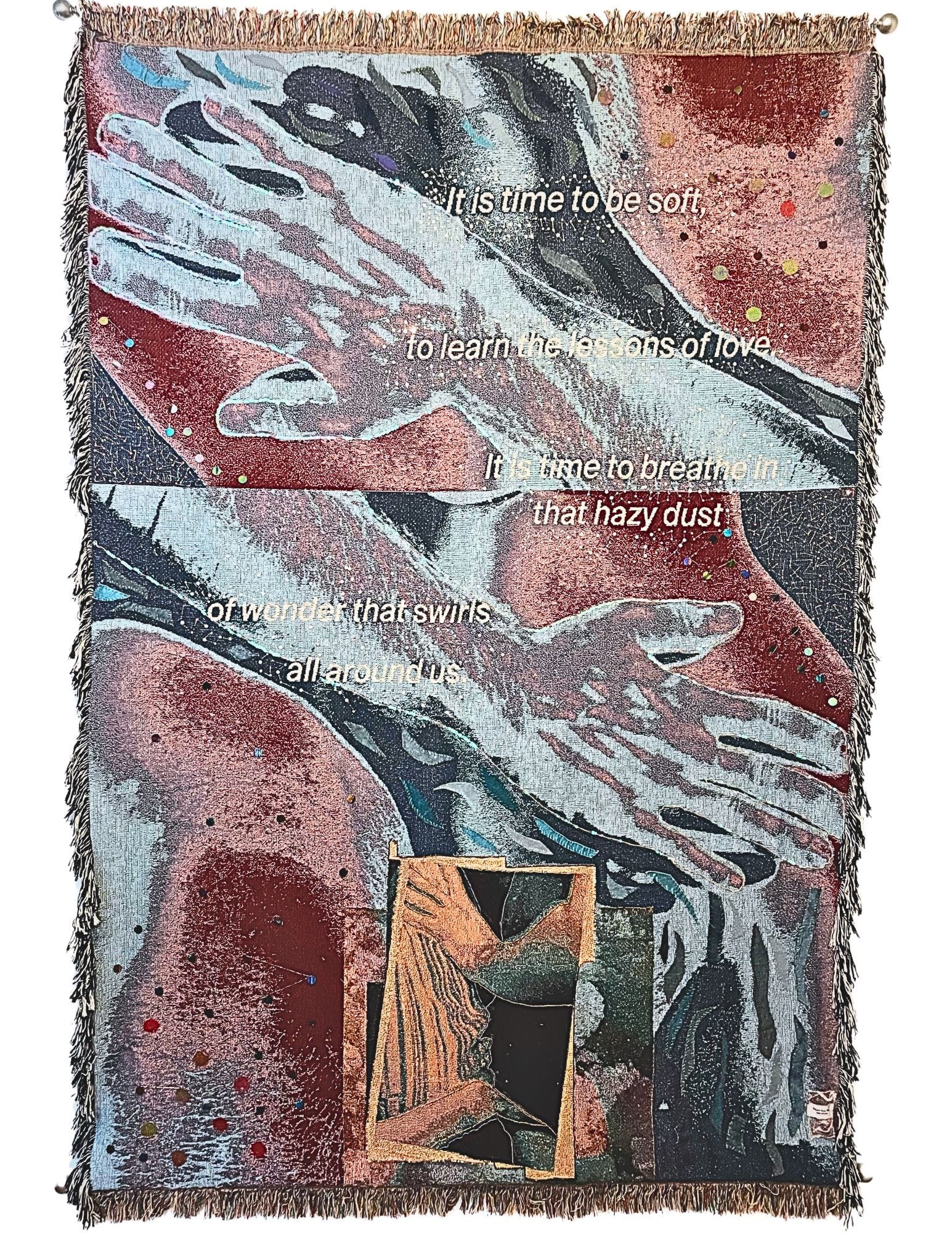
I’m an introvert and extrovert. Because my work is so labor intensive, I do get a lot of time to myself but I also love working with people and making work with the public. A mix of the two helps shape my practice: working with institutions means I have access to resources which I don’t have in my studio and I can discuss ideas with curators and other artists and have access to wider networks, buyers and collectors etc. Working by myself gives me the space and time to reflect, center myself, and think about what is meaningful in my art practice which also guides my collaborative work.
How do you sustain your own optimism in the face of environmental and social crises?
I root myself in love, which is such a hippie thing to say, but it’s true. I think that really gives me strength. My relationship with my husband and my family and friends. But it’s really challenging to maintain hope and faith when you are aware of the systems in play to prevent even the transition to clean energy for example. Let alone our consumerist attitudes and global production, racism, sexism…but that’s where I also get an opportunity to be creative.
One example is, I’m giving a lecture on the Movement of Art in World War II - about art work that was plundered by the Nazis and its recovery and repatriation. I have the chance to tell that story which I hope will have an impact on how we view our present moment and the ongoing censorship, destruction of iconic historical works through current warfare, and the rise of facism. It might seem to be outside of my traditional art practice but these parallel creative avenues allow me a way of expressing my ideas and thoughts that cannot be captured in a wall hanging or fashion design.
Looking ahead, what does a ’sustainable future of art and fashion’ look like to you? What’s one structural change you believe would make the biggest difference?
Recycling and upcycling materials is a big one and that’s something that’s been really steadfast in the arts from the beginning. I think a lot about the lifecycle of art. Can we make art maybe that’s biodegradable or that dissolves? I’ve recently been working with dissolvable material to make garments and art motifs. Just this month I sewed some spider webs on top of a dissolvable material so that the sewing becomes the web and the base dissolves. Perhaps art can be repurposed into something utilitarian.
There’s also the issue of storage. Where do we put all this stuff when we are finished making it? The Nelson Atkins Museum in Kansas City and other arts institutions (and even Nazi’s), have used caves for storage because they have the perfect humidity and the perfect temperature. Maybe caves are part of the answer!
If you could collaborate with any artist, designer, or activist, living or dead, who would it be? And what would you make together?
Oh my god, there’s so many amazing artists. Okay, first thought, it would be so wonderful to hang out with [Yayoi] Kusama and make a huge warehouse sized infinity net out of textiles. To interpret her infinity rooms as a massive textile. To create an Infinity Web!
That would be fun! And what’s next on your creative horizon?
So the informal answer to start with is every month, my husband and I come up with a theme, and we’ll eat things and watch movies and listen to music and go to physical locations based around that theme. This month is Goth month!
Then formally, I have the group show that I’m co-curating with contemporary quilts, Piecework Legacies, that includes 7 Miami artists. I have the lecture I’m co-hosting on December 18th, The Great Art Rescue - World War II at 80. I also have works in an exhibition opening in St. Louis at the Dragon Crab Turtle Gallery, the exhibition is called Cross Dissolve and goes from Nov 8 - Jan 3, 2026.
And all my commissions! I’m making somebody’s wedding outfit right now out of their mom’s old wedding dress, as well as all the dance costumes for A World Gone Fabulous by the Adele Myers Collective, and so much more. I’ll be teaching all ages workshops at the Miami Book Fair November 22nd - 23rd and will also host a Swap and Upcycling Workshop at Artisans Playhouse on November 20th.
How do people buy your work?
My work is on view in the current and upcoming exhibition at ARRAE Gallery in Coconut Grove. You can also buy my work online on my website at www.pangeakalivirga.com—there’s a Shop tab and I regularly add work to it. You can always come to my studios, the one in Little River or the one in Miami Beach at Oolite Arts to view my work and purchase it directly.
What’s the entry-level price?
I have small paper works that start at $75 and then my most expensive fiber piece is $26,000. The things that are really high up there are the pieces that have taken me a year or two to make. You can buy a medium-sized wall hanging from me for $400 - $2000 depending on how complex it is.
CONTACT
Website: pangeakalivirga.com
Social: @pangeakalivirga
Email: pangeakalivirga@gmail.com
EXHIBITIONS
Arrae Gallery (Coconut Grove), Volume II, Opens late November
Dragon Crab Turtle Gallery (St. Louis) - Cross Dissolve, November 8, 2025- January 3, 2026
Piecework Legacies: Experimental Quilting: Main Library Branch, Miami. April 10 - July 2, 2026, co-curated by Pangea Kali Virga and Nico Hough
STUDIOS
Oolite Arts, studio 201
Little River, Pangea Kali Virga Studios
Available to visit by appointment Monday through Saturday.
LECTURES & WORKSHOPS
Miami Book Fair , two family friendly art workshops, downtown Miami, November 22, 4:30pm and November 23, 1:30pm
Public Lecture at the Miami Beach Regional Auditorium, The Great Art Rescue - World War II at 80. Pangea Kali Virga and Nico Hough will be lecturing on Nazi art plunder and the rescue, movement, and restoration of these pillaged artworks, monuments, and historical buildings. December 18, 2025 5pm
Artisans Playhouse, Clothing Swap and Upcycling Workshop, November 20, 2025, tickets available here
INSTALLATIONS
See the South Florida community landscape quilts at the Miami Beach Regional Library.
COMMISSIONS
Artwork made from recycled materials for the recent cover of Edible South Florida available at the Pangea Kali Virga webshop.
Adele Myers Collective, costume design for the new original feature length performance, A World Gone Fabulous, debuting April 2026 at the Moss Center.
Commission inquiries for wall hanging and wearables can be made here.
BEHIND THE SCENES
See the Deering Estate Scavenger Hunt Map and Nature Study Guide along with the works here.
Watch the Ecotopia documentary trailer here.
See the Ecotopia Sustainability Handbook here.
See a process book of one of Pangea’s quilts at here.



ABOUT SNAPS ART AND ARTISTS
Clare Elson is a writer, interviewer, and art blogger based between London and Miami having previously spent three years in Singapore. Through @snapsartandartists, a platform dedicated to thoughtful conversations with contemporary artists around the world, she writes about art, place, and creative process, focusing on the stories that connect personal experience to artistic vision. Her writing looks for the human pulse behind creative practice — the quiet motivations, obsessions, and moments of wonder that shape an artist’s world.
No posts
Comments
Nothing yet. Say the first thing.
Sign in to join the conversation.