
This story by The Story Maximalist hit hard tonight. My older, beloved little dog Mooch just had dental surgery earlier this year. I’ve taken her to the vet four times in the past six months.
Thankfully, I could afford to pay her vet bills. I couldn’t imagine not having enough money to provide life-saving surgery for her. So this story choked me up. I hope you enjoy it as much as I did. Thank you for reading it.
I was holding a price tag for a heartbeat. The fluorescent lights of the 24-hour laundromat hummed above me, buzzing like a dying fly. It was 2:14 AM. In my hand, I crumpled a piece of paper that told me exactly what my best friend’s life was worth.
The math was cruel, and it was simple. Option A: Life-saving surgery. Cost: $3,200. Option B: “Humane” Euthanasia. Cost: $215.
I had $240 in my checking account. That had to last me until my next Social Security check, which was still twelve days away.
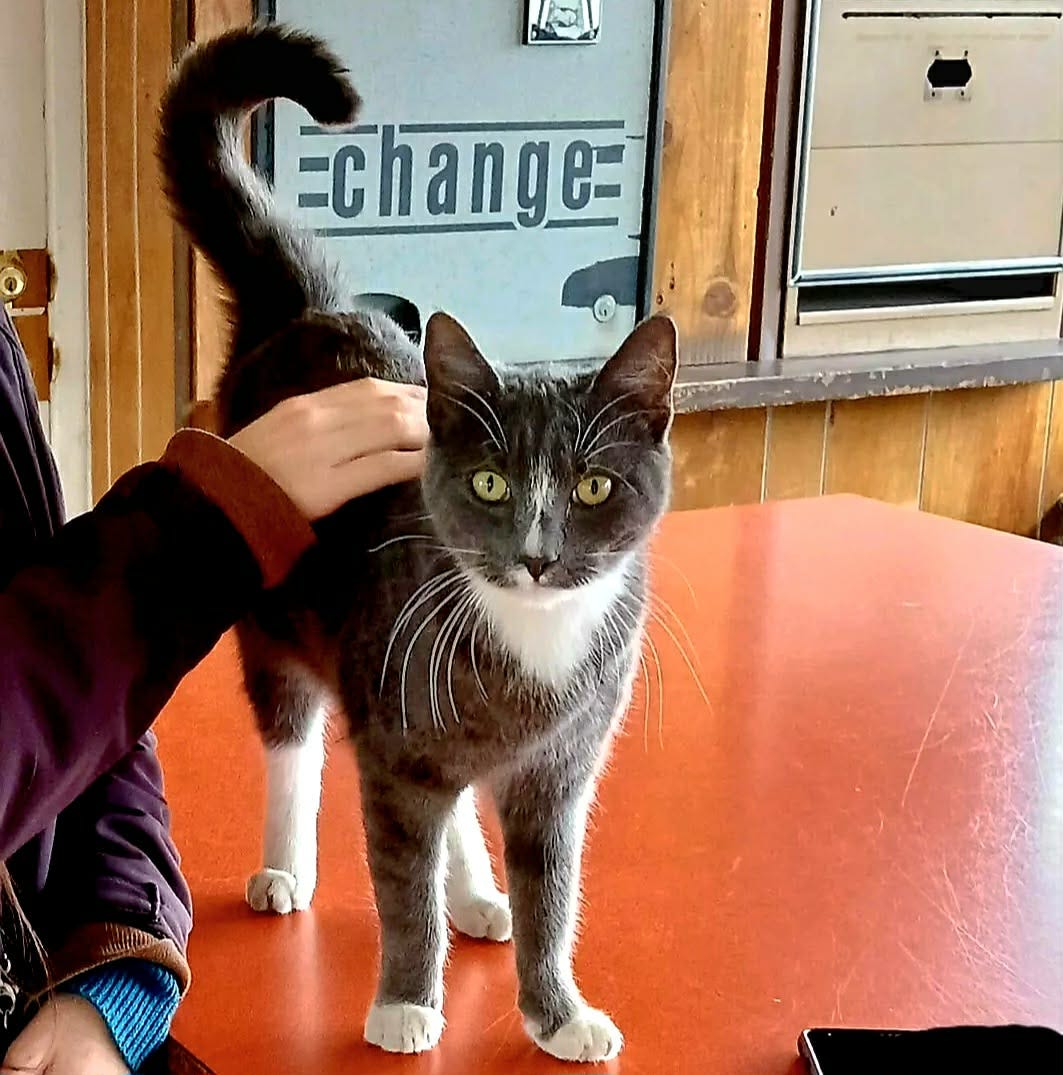
I sat on a cracked plastic chair, staring at the plastic carrier on the folding table in front of me. Inside was Barnaby. He’s a rescue, a beat-up tuxedo cat with a crooked tail and a meow that sounds like a rusted gate hinge. I found him three years ago shivering under my porch during a snowstorm. Since my wife passed, Barnaby has been the only living soul who cares if I wake up in the morning.
Yesterday, he stopped eating. Then came the howling—a sound of pure, confused agony that made my own stomach turn. I took an Uber I couldn’t afford to the emergency vet clinic. The diagnosis was quick: A urinary blockage. “It’s very common in male cats,” the vet said, looking at her clipboard instead of my eyes. “It is fatal if untreated. His bladder will rupture within 24 hours.”
Then came the estimate.
I’m 76 years old. I worked in a canning factory for forty years. I did everything right. But in this economy, “doing everything right” doesn’t account for inflation, rent hikes, and the cost of being old in America. I looked at the young vet. She looked tired. She wasn’t the enemy; she was just an employee. “I don’t have three thousand dollars,” I whispered, shame burning my face hotter than a fever. “I don’t have credit cards. I don’t have family.” “We can give him pain meds for the night,” she said softly. “But you have to make a decision by 6:00 AM. I’m so sorry, sir.”
So, I ran. I took Barnaby, and I ran to the only place that was open, warm, and bright. The “Spin City” Laundromat. My apartment was too quiet. I couldn’t sit in the silence and wait for the sun to rise, knowing that sunrise meant goodbye.
I opened the carrier door. Barnaby was sedated, his breathing shallow. I stroked his head. “I’m sorry, buddy,” I choked out. “I failed you. I’m just an old man with empty pockets.”
“Mr. Elias?”
The voice startled me. I wiped my eyes quickly, trying to put on my brave face. It was Sarah. I almost didn’t recognize her. Six months ago, she was sleeping in her car in this very parking lot, working double shifts at the diner, trying to save for nursing school deposits. Back then, she looked like a ghost. Tonight, she looked tired, but clean. She was wearing scrubs.
She walked over, holding a laundry basket. She saw my face. She saw the carrier. She saw the crumpled paper. She sat down across from me, ignoring the pile of towels she needed to fold. “Is he sick?” she asked.
I nodded. I slid the estimate across the table. She read it. Her eyes went wide. She knows the reality. Everyone who washes their clothes at 2:00 AM knows the reality. It’s the difference between buying groceries and keeping the lights on. “Urinary blockage,” she murmured, reading the medical notes. “I learned about this in school. It’s fixable, Elias. It’s just plumbing.” “It’s three thousand dollars, Sarah,” I said, my voice cracking. “I have two hundred.”
She looked at the “Community Shelf” in the corner of the room. It was a cardboard box I had started two years ago. Take what you need, leave what you can. I used to put my extra canned goods or spare soap in there. Last winter, when Sarah was freezing in her car, I put my late wife’s heavy wool coat in there. I never told her it was me. But she knew.
Sarah stood up. Her jaw set tight. “No,” she said. “Sarah, it’s okay. He’s... he’s just a cat.” “He is not just a cat,” she snapped, her voice fierce. “He’s the one who kept you from fading away last year. And you...” She pointed a finger at me. “You didn’t let me freeze in that parking lot. We aren’t letting him die on a folding table.”
She pulled out her phone. She didn’t call a bank. She took a photo of Barnaby, asleep and helpless. Then she took a photo of the bill. She stood in the center of the laundromat. It was the “graveyard shift” crew. Marcus, a security guard still in uniform, was nursing a lukewarm coffee. Mrs. Alvarez, a grandmother washing bedding for her three grandkids. A young guy with headphones, probably a student.
“Hey! Everyone, listen up!” Sarah’s voice rang out over the rumble of the dryers. The room went quiet. “This is Elias. He’s the one who leaves the good soup cans in the box. His cat needs surgery by sunrise, or he has to put him down. We need money. Now.
Marcus stood up slowly. He’s a big guy, looks scary to some people, but he has the kindest eyes I’ve ever seen. He walked over, his heavy boots squeaking on the linoleum. He looked into the carrier. “Is that the cat that sits in your window and watches the street?” Marcus asked. “Yeah,” I whispered. “That cat makes my rounds less lonely. I wave at him every night.” Marcus reached into his pocket. He pulled out a folded wad of cash. Tips? Overtime? I didn’t ask. “I was saving for a new PlayStation. It can wait. Here’s a hundred.
Mrs. Alvarez came over. She didn’t have cash. She looked at the bill. “My daughter works in billing at the clinic on Main Street. Not the emergency one, the regular one. They open at 5.” She pulled out her phone. “I’m waking her up. She can’t do it for free, but she can get you the ‘Employee Family’ rate. And she can set up a payment plan. That cuts this bill in half, easy.” She started dialing, speaking rapid-fire Spanish, demanding a favor for all the times she babysat.
The math was changing. But we were still short. Then the automatic doors swooshed open. A blast of cold wind hit us. It was Mr. Henderson, the owner. He’s a grump. He drives a truck that costs more than my life’s earnings. He usually only comes in to yell about people loitering or using too much soap. He saw the crowd around my table. He saw the cash. “What is this?” he barked. “I’m running a business, not a charity ward! No soliciting!”
Sarah stepped in front of me like a shield. “Elias’s cat is dying. We’re fixing it.” Mr. Henderson looked at me. He looked at the carrier. Then he looked at the Community Box in the corner—the box he threatened to throw out ten times, but never actually did. He stared at me for a long, uncomfortable minute. “The tuxedo cat? The one with the wonky ear?” I nodded. He sighed. A long, annoyed, rattling sigh. “That cat kills the mice behind my dumpster. Best pest control I ever had.”
He walked past us to the back of the store, toward the change machines. He unlocked the service panel. He pulled out the heavy, gray plastic bins. The ones that catch the quarters from the machines. The entire weekend’s haul. He walked back to my table and upended the bin. CRASH.
It sounded like heavy rain on a tin roof. Hundreds, maybe thousands of quarters spilled over the table, rolling onto the floor, spinning and pinging against the metal legs of the chairs. A mountain of silver. “I hate counting these,” he muttered, avoiding eye contact. “Bank charges me a fee to deposit coins anyway. Get that animal out of my shop before he sheds on the clean laundry. And tell the vet I want a receipt.” He turned and walked out before I could say a word.
We spent the next forty-five minutes counting. It was a beautiful chaos. Sarah, Marcus, Mrs. Alvarez, and even the kid with the headphones—we were all stacking quarters into ten-dollar towers. Between Marcus’s cash, the quarters, and the discount Mrs. Alvarez’s daughter secured over the phone, we didn’t just hit the number. We passed it.
I took Barnaby to the clinic at 5:15 AM. They operated at 6:00 AM.
I’m writing this from my living room. It’s three days later. The sun is shining through the window. Barnaby is high on pain meds, wearing a plastic cone that makes him look like a ridiculous lamp, but he is here. He is eating. And right now, he is purring against my leg—a sound like a diesel engine, strong and steady.
They call it “Economic Euthanasia.” It’s a fancy term for a brutal reality: having to kill a family member because you can’t afford the cure. It is a silent plague in this country. It breaks the hearts of the poor every single day in sterile white rooms. But not today. Not this cat.
I used to think I was saving the neighborhood with my little box of leftover soup cans. I was wrong. The box was just the training wheels. We were building a safety net for when the real fall happened. If you have a pet, hold them tight tonight. And if you have a neighbor, learn their name.
Because when the world charges you a price you can’t pay, the only currency that works is each other.
© 2026 Smiling Through the Tears. All rights reserved.
I want to offer you our paid subscription for just $2.49 monthly or $24.99 per year. That’s 50% off our normal rate. I’m trying to grow this page, and that rate is good for life.
Thank you for considering it. I greatly appreciate your support!
This Substack is reader-supported. To receive new posts and support my work, consider becoming a free or paid subscriber.

No posts
Comments
Nothing yet. Say the first thing.
Sign in to join the conversation.