
Happy May Day! It’s Friday, so I’ll keep this on the light side.
Inside: a few updates about new writing, some book recommendations, and in the middle a short essay about the group chat, which is actually also an essay about interaction ritual chains.1
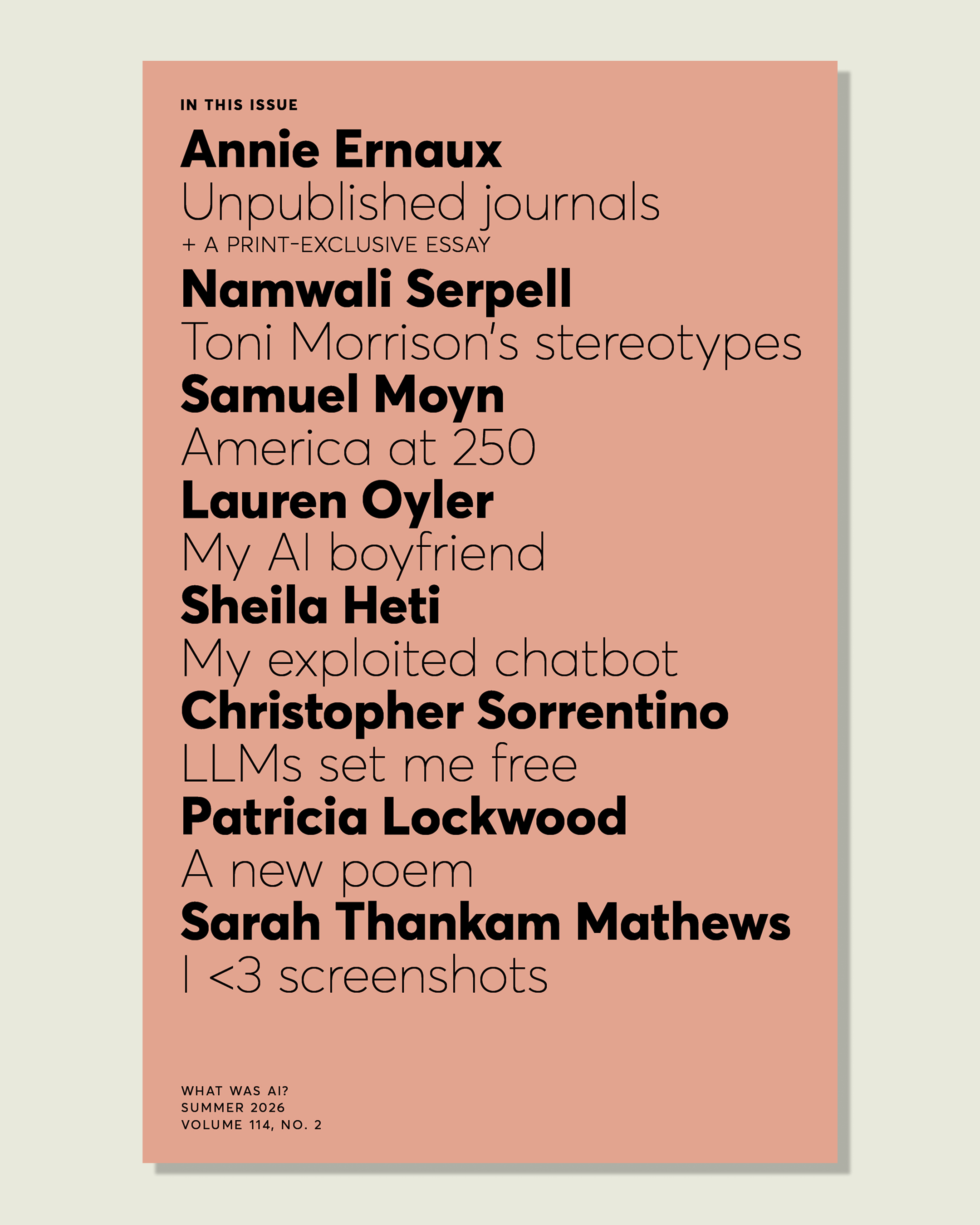
I have a new essay in the summer issue of my longtime fave The Yale Review. You can subscribe here by May 11 and get the print issue in the mail, or get this issue as a standalone when it comes out.
I wrote about a mundane object that haunts me even as I enjoy it: the screenshot.
In honor of writing about everyday technological objects that Rule Everything Around Me, a series I guess I did not know I was partaking in, next up is some throwback writing also in this vein…

The history of the world is, you could argue, the history of advances in the technologies of organizing the collective to various ends: the nomadic tribe, the citadel, the infantry battalion, the joint-stock corporation, the group text. The latter may be loved, feared, lurked within, or eschewed altogether. What it has not been: sufficiently theorized. Which is to say: respected. This is unfortunate because group texts are, at this point, historical forces in their own right. Used by white supremacists planning insurrections at the Capitol, billionaires coordinating anti-Palestinian agitprop, homies making weekend plans, and creatives sharing industry-melting gossip alike.
The first group chat, named Talkomatic, was developed in 1973 by Doug Brown and David R. Woolley at the University of Illinois. It operated on PLATO (Programmed Logic for Automatic Teaching Operations), which was the first comprehensive computer-assisted instruction system. It could allow for up to five participants at a time; it had a designated area on the screen, similar to a sectioned bulletin board, and messages were displayed letter-by-letter as they were typed.
More than 30 years later, in 2008, Apple introduced the ability to send SMS messages to multiple recipients simultaneously. This feature, added in iOS version 1.1.3, unified “texting” and “messaging” into a single thread of organized conversations. Since then, the mainstreamed form of the group chat has remained static, though the ways we speak in them have evolved as the internet has, and as new features have been brought into being. Some of the features are useful; some of them, like the thumbs-up react, are demonic instruments of ambiguity and chaos. (On this particular subject, I agree with the writer Nafissa Thompson-Spires, who once said to me that “anything less than a heart is so cruel.”)
Talkomatic was synchronous, and its heirs, from WhatsApp to iMessage, are generally asynchronous. People tap in when they can and want to; group chats are not required to conduct their business in real time. But the root, the essential strangeness at the heart of how group texts function, has remained constant: the enormity of information they obscure. Who is to say what a couple of “!” tapbacks really mean? What are we to make of a formerly engaged, chatty, locked-all-the-way-in group chat member’s current silences, their nonreactivity?
I should not have been, personally, an intuitive target for group chats, being, as I was once, an intense serial monogamist in friendships, and being, as I am now, easily overwhelmed by the great garbage deluge of digital signal and noise that crashes over me daily. Most of the group texts I’m added to are seasonal, ephemeral, weak flames soon quenched in my phone’s womb. Some persist. Some are large and freewheeling purveyors of chaos and news-you-can-use, like my extended family WhatsApp or 10-plus-person groups that exist primarily to coordinate nightlife or bike rides. But with love for the wonderful denizens of the unspeakably named “million $ listings BK,” “bitcoin bathers,” “🚽🕺🚽🕺🚽🕺,” “freak matchers llc,” and “do the right thing 😤,” my personal One Group Text to Rule Them All is simply titled “the grext 🕳️.”
The grext 🕳️ is three people strong and I text it nearly every day. Into its benevolent void go internet scrapings, emotional confessions, logistical squaring-up, idiot patter, collective problem-solving, breaking news, homosexual and bisexual gossip, and occasional genuinely breathtaking intellectual analysis. My friends are, of course, a great part of why I enjoy the grext 🕳️, but I think it’s important to create some demarcation between my love for my friends and my feelings about a technological entity. The fact is that the grext 🕳️ itself, in all its iMessage-enabled high jinks and meaning, brings something important and joyful and ineffable into my life.
Many people I know have versions of what I do, citing these group chats as ways for them to have stayed meaningfully connected to far-flung family, to have gotten through divorces and postpartum blues, to have found their way back into a creative or spiritual practice. Sometimes the group chat is a group chat and sometimes the group chat is a prayer circle, you know?
In seriousness, my theory is that a certain kind of group text is a modern form of the interaction ritual chain, a concept developed by sociologist Randall Collins. Collins understood humans as seekers of emotional energy, and believed that the unintrospected objective of most social interaction was to acquire and spread emotional energy. He envisioned a kind of perpetual marketplace of cultural, social, and emotional exchange that in turn creates a “microfoundation” for what we understand as class, race, gender, scene, subculture, and, simply put, group life.
The interaction ritual chain could be any sequence of social interactions that produce emotional energy and reinforce group solidarity; it could be a standing weekly gathering of old friends or that transition between meeting and hanging out that creates a friendship over time. Successful interaction rituals generate or deepen a sense of connection, confidence, validation, affirmation, enthusiasm, or initiative. Failed interaction rituals degrade, erode, or reduce emotional energy. Individuals, Collins theorized, are motivated to repeat interactions that result in high emotional energy, and to avoid those that reduce their emotional energy.
I come to the group texts I love because present within both their culture and their technological mechanism is the opportunity to quietly, and in light-touch ways, replenish the well of my emotional energy. Friendship and love are many things, and one of them is a quiet commitment to taking on and meeting each other’s bids for connection, support, and reprieve from the strange lonelinesses of existing as a single self.
The self. That vast and churning ocean, that shimmering soap bubble wafting through the air. Perhaps our exchanges, our communions, our formations with other people, are rain and river and factory runoff, are dish soap and water and small bright-colored plastic hoop. Fundamental to Collins’s theory, after all, is the idea that interactions generate the individual, not the other way around.
The sustained group text creates a sense of belonging and mutual understanding among participants that is no less meaningful for its digitality. Its shared moments, its failed or successful interaction rituals, contribute to the group’s identity and cohesion, much like traditional face-to-face interactions. The group text is a place of unserious seriousnesses, of information exchange, of shared webs of reference, of bids for coordination and connection met again and again. At a specific and difficult moment in my life, thinking of a particular group chat of my kin, I once joke-tweeted: very slowly healing my familial trauma through daily wordle score sharing; I received a flurry of messages saying some version of “real” and “if you know you know.”
It is in the lightness of most of what is shared in the group chat that many of us find ballast for the heaviness of life.
None of this changes, for me, the fact that group chats are fragile and potentially ephemeral, as all digital constructions are. There have been periods of silence and inactivity and disinvestment in any and all of mine. But in an age of a certain kind of co-optation and blind adulation of Community in the abstract, I am grateful to the group text for its reinforcement of certain truths: that community intimacies function best with some degree of boundary, that collective culture is a tenuous and shifting thing, that privacy and containment are crucial wellsprings of the self, and that any community is only as good as the people who make it up.
That we, those people, are continually, slowly being formed, through interaction, through ritual, through practice with each other.
(This was originally published in a series of short essays on the subject from a bunch of great writers put together by The Los Angeles Review of Books.)
I’ve heard from multiple people who said they haven’t been getting newsletter emails?? It could be a sign of Substack enshittification. But also, if you haven’t, I would go to your account settings, and make sure your delivery preference (Substack app vs. email) is configured to your satisfaction.

Last year I wrote a little about the mechanisms of the new American job search and was sent (and then enthusiastically blurbed) a great anthology called SEARCH WORK: A Collective Inquiry Into the Job Hunt (edited by Rachel Meade Smith and out from alt press O/R Books). SEARCH WORK is filled with “personal essays, archival job ads, labor research, and even a playscript” from its varied cast of contributors. I felt moved by this candid, surprising, intelligent book. Maybe you or someone you know would benefit from reading it too.

I’d also like to draw the people’s attention to a couple of books that are just out or about to be:
Patrick Cottrell’s great, absurd, devastating, and wholly original Afternoon Hours of A Hermit. A detective story, a familial autopsy, a Milwaukee suburban grief odyssey…
Dure e Aziz Amna’s absolutely incredible portrait of a Pakistani village girl in the big city, dark and suspenseful and furious memorable: A Splintering
Bobuq Sayed’s No God But Us. Impish yet deadly serious, this novel gives us raucous laughs and strutting truths, intimate portraiture of Afghan diaspora, anti-imperial clarity, fun, fearlessness.
I also wanted to put the word out about some writing classes for those of you in the market for them. Kyle Dillon Hertz is teaching a really affordable class about how to apply to MFAs and writing residencies. Bushra Rehman and Isle McElroy are both teaching classes about using the real in writing, with Bushra’s class open to writers of color. Fariha Roisin is teaching a course centred around writing with vulnerability.
My first short story in a long time, possibly since Rubberdust, is out in the latest special issue of CAKE ZINE. CAKE ZINE, for the uninitiated, is a lushly beautiful indie magazine with consistently fantastic writing, founded by the great Aliza Abarbanel and Tanya Bush. The short story’s called The Last Cow. Here’s a sample:
Soon before I was due to visit my grandmother for the first time in fourteen years, I heard that the ports might close. Sea not air. No one I knew who was not an operative of the state had traveled by air since the Break. Soon enough, I would learn of my grandmother’s disinterest in her only living relative, hear what she cared about instead. But the day I heard the news that made me scramble to move up my journey, it was New Year’s Eve, night service, and our restaurant was full.
My fellow sub-chef, who listened to Radio Free Queens all the livelong day, was generally determined to pass his edification on to me: here’s what is happening Elsewhere. He was dismayed at how much I acceded to state media, how much I did not know. Typically I smiled and nodded, smiled and nodded, said oh wow. I liked to watch the e-ink computation over the kitchen director’s dash tick upwards through the night. Money was flowing. This despite the state of things. We provided something rare anywhere in the Federation: a warm replica of the way things used to be, and in this city the people who could would always pay for that.
Together we stirred risotto, delicately massaged the shells off goose eggs. I fired slabs of processed amino that had fermented in kelp koji for weeks. Every time someone ordered one, the dash jumped up many digits; part of the simulation of a steak was paying its cost.
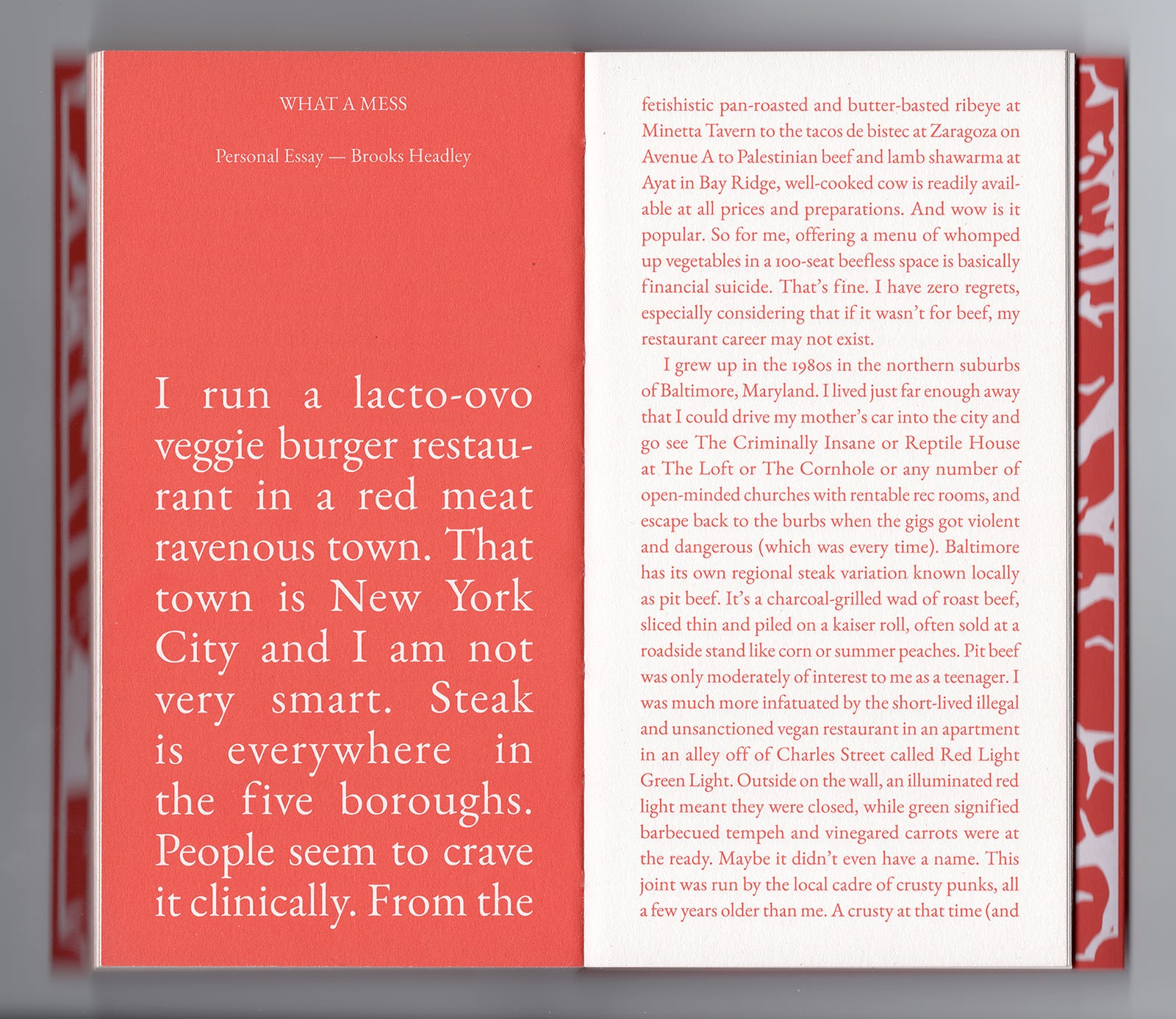
Also if you enjoy luscious party photography and possibly FOMO, here’s the launch party for the issue in NYT Styles.
Okay, signing off. I’ll leave you with this little poem from James Tate that has been in my head this week.2
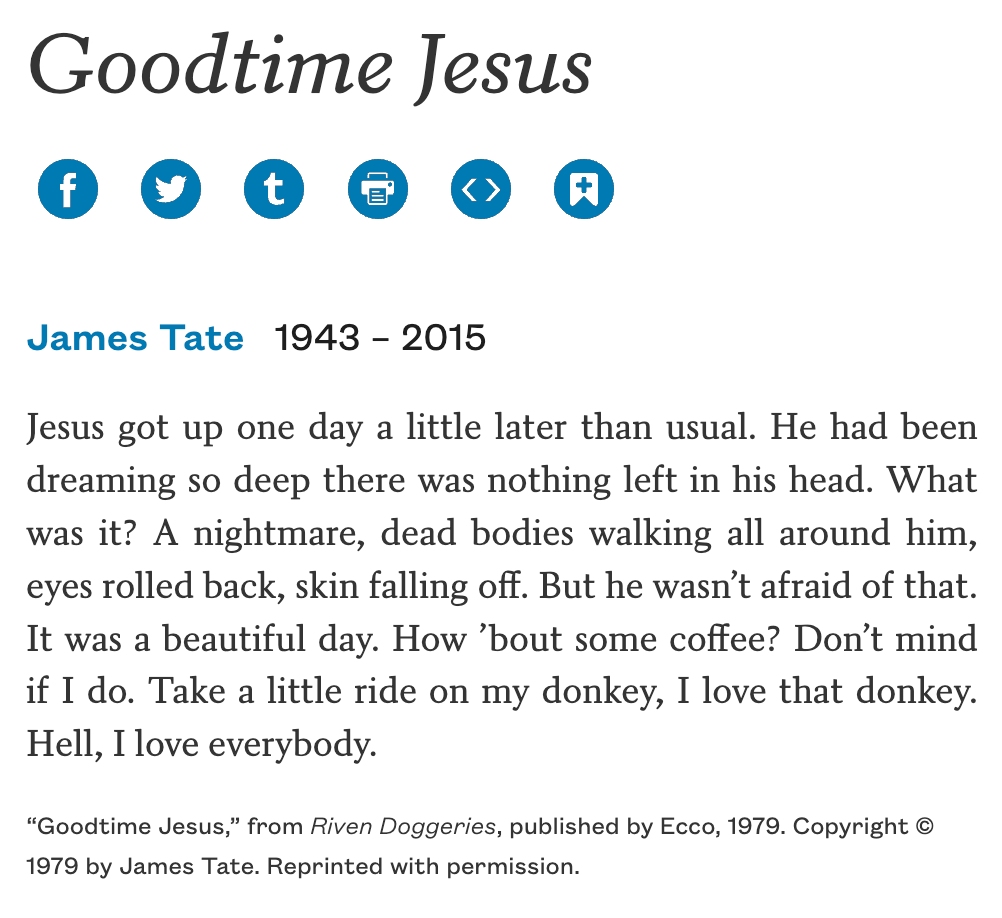
I was reading an interview with Tate, and he said: “I love my funny poems, but I’d rather break your heart. If I can do both in the same poem, that’s the best. If you laughed earlier in the poem, and I bring you close to tears in the end, that’s the best.” Same, tbh…
Comments
Nothing yet. Say the first thing.
Sign in to join the conversation.