
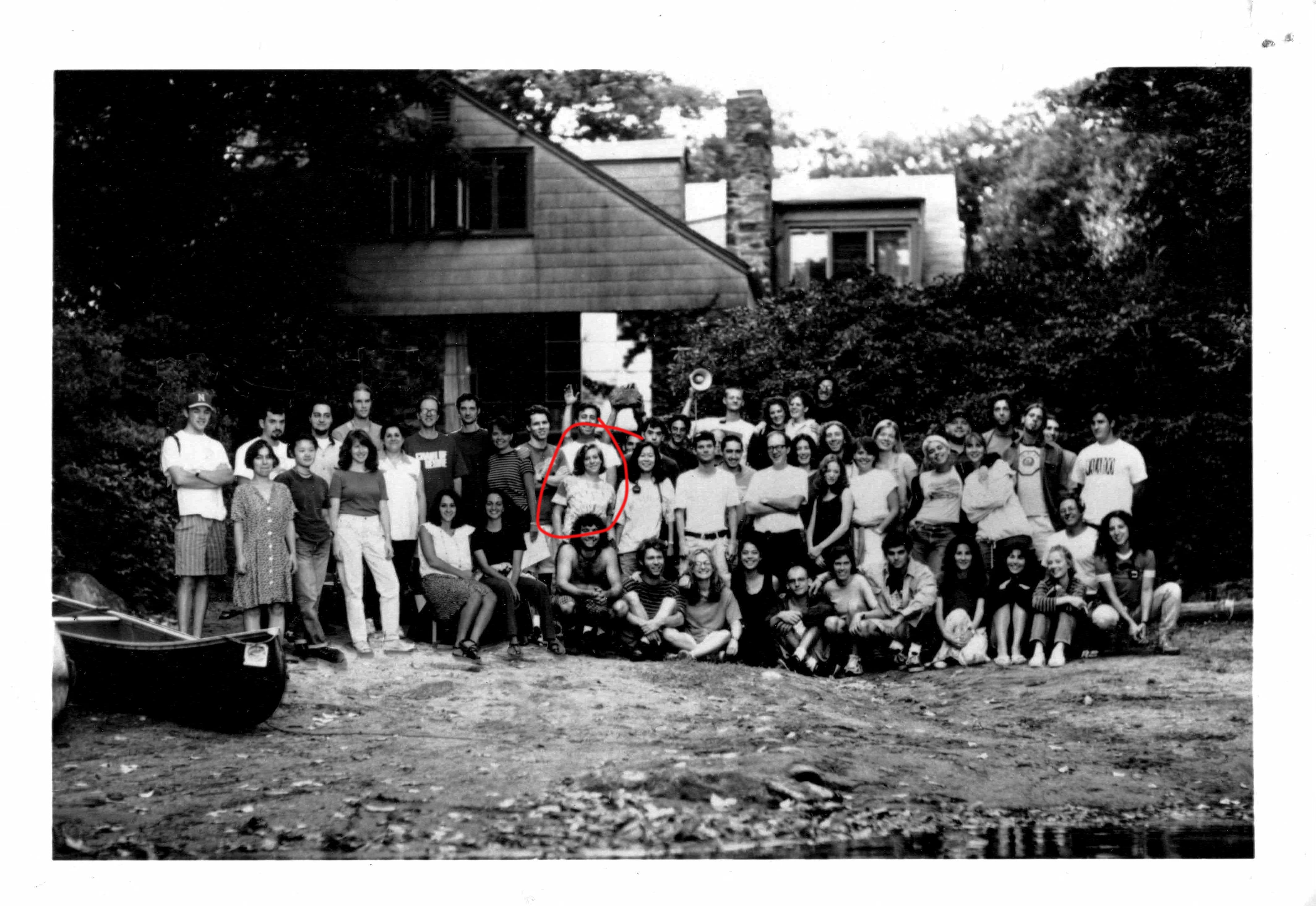
Different job, same camaraderie. And OMG same tie-dye shirt. What was I thinking?
My first paying job on set was actually a student film made by one of my classmates. Tom (all the names have been changed or bleeped as per usual) was 34, married, and had basically had a whole life before he came to the Grad Film Program. His wife, Laurie, of a similar age, was the person who taught me to use moisturizer every day. They were adults compared to the rest of us 20-somethings in the program, who were regularly coupling and uncoupling with each other (not me, because I had a boyfriend, but that didn’t stop me from thinking about it) and making films about basic shit like dating and helping the homeless (guilty). Tom wanted to make a real calling card for his second year film, so he put $75K of his savings into a 35-minute short that was designed to feel edgy and Tarantino-esque. I wasn’t a huge fan of the film, which was basically about a nice guy who gets involved with bad guy so he can save (steal?) the guy’s hot girlfriend, whose main personality trait is that she doesn’t wear underwear, but I did appreciate that Tom wanted his shoot to be professional. He decided to hire two graduates of our program who were already out working in the professional world as cinematographer and sound mixer on independent films, and he decided to pay all of us who worked for him. My rate as boom op was a flat $400/week, which wasn’t too far off from what I was making at my part-time office job in financial management — except that it was a flat rate and the days were likely to be twelve hours or more, so not at all. But I was working on set! This was what I wanted to do! And I’d be getting connections instead of paper cuts!
The sound guy I met on the job was named Darren. He’d only been out of NYU for a couple of years, but he did seem to know what he was doing. We relied on the boom for everything, because wireless technology was in its infancy and extremely unreliable in 1993, and NYU’s equipment package for second-year grad students didn’t even include wireless mics.
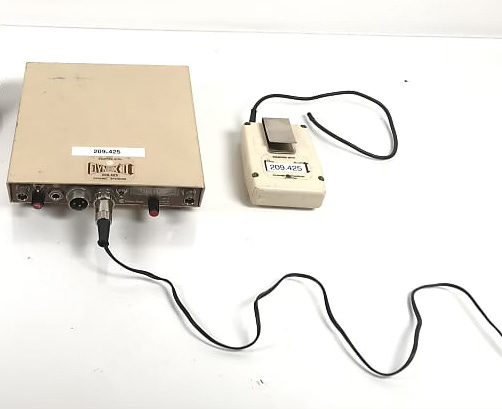
They were that big and had those stupid long antennas *and* they didn’t work.
It actually made the process a lot more collaborative, because if directors wanted good sound, they had to communicate, and make their DPs make the shots with dialogue boomable. But it also meant that if Darren thought a scene was complicated, he’d rather boom it and have me “mix,” which, with only a boom mic plugged into the Nagra, just meant keeping the levels from distorting, something an alert chimp could do. Still, overall, I felt good about the work we did, and the film gave me some more professional experience. Not that I knew what that was at the time, but I would soon learn that, yes, even the drunk DP trying to make out with me at the wrap party was spot-on for what I’d be experiencing in the indie film world.
A few weeks after we finished, I got a message on my answering machine from Darren.
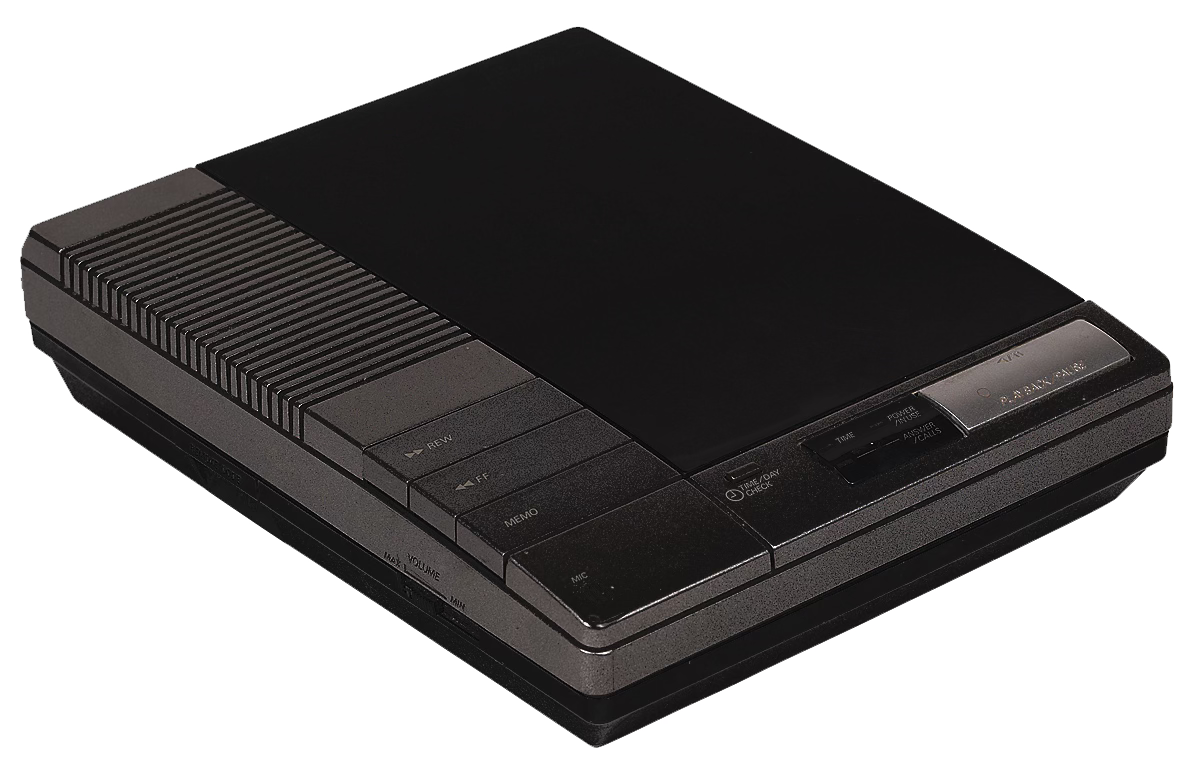
Remember these?
I’d told him I wanted to get work on real-world sets if he needed me, and sure enough, he was on a movie and wanted me to boom for him. “It’s an independent feature, with ___ and ____ (two stars I’d never heard of but you’d probably recognize now), so this is your chance at the big time! Come on board, baby!”
He neglected to mention that my rate for “the big time” meant $250 a week. Aside from Tom’s film, my set labor had thus far paid zero (on student films, and as a sound “intern” who did all the work of a utility on a low-budget union job when they couldn’t afford to hire one) or “deferment,” which was nicer way of saying “zero,” so getting paid something was, well, something. But my office job still paid more, and I didn’t want to lose it, so I told Darren I could only sign on for two weeks. He was fine with that, as were most people, because, as I soon realized, I was a bargain for the price. And though any warm body with arms probably would have been, I was a warm body with arms and booming experience and a sense of humor, so essentially the whole package.
Thanks for reading Smartypants! And I’m public so please like and share me!
I remember the first day I showed up for work on this, the first professional film I was actually getting paid to work on. A tall guy that I’d soon find out was Mark, the first AD, looked me up and down (as men unabashedly did back then in the workplace) and commented, “Oh, I see you dressed in your best booming clothes.” Well, yeah, I thought: I was in my favorite tie-dye t-shirt, which I’d worn to camouflage how sweaty I knew I was going to be from both nerves and exertion. Now, today, having now worked with actors for whom anything — movement, breathing, holding your breath but still existing — in their eyeline, which somehow manages to cover the full 360 degrees except for where the camera is, is a distraction, I know better than to wear a t-shirt splattered in all the colors of the rainbow. But at the time, it was just one of many bewildering things I would learn through fucking it up. And getting shit for it, because in the culture of the indie film set, which was not that dissimilar from that of a boys’ junior high locker room, being given shit by your co-workers was the way that you were socialized into the group. It was definitely Mark’s MO, as I would learn over the course of doing multiple low-budget films together, along with flirting with every woman in a fifty foot radius and saying wildly inappropriate shit, like this joke: “You like apples? How about my dick in your mouth, you like them apples?” But he did tell it to both women and men, and as everyone said in those days, “It’s just a joke!” Surviving on a set meant letting things like that roll right off and not make you uncomfortable, and crafting a retort when necessary, often involving profanity. I’d already spent 3+ years doing that in film school, so at least I had a head start. Mark, the son of a New York City cop, took my comfort with profanity to a whole new level. He also knew how to wield power, which is important for a first AD, and inspired loyalty in his team. Until he stopped enjoying his job a couple years later, and it became more about the power of being able to treat people like shit in a way that was very cop-like. As was his “I make the rules so I can break them and so can you as long as we make our day” ethos, which, on that first film, set a not-quite-professional tone of irreverent fun. Like when we filmed in a nightclub, where he was the first one to light up a cigarette and say, “What? It’s a nightclub.”
You won’t be surprised to learn that he was the one who gave me the nickname “BoomBoom” when I hit one of the actors in the head with the mic on one of my first days. It happened during a walk-and-talk where the characters did dialogue while they walked briskly down an office hallway, West Wing-style. I will point out that it was really more of a run-and-talk, because nobody was experienced enough to tell the actors to slow down, and I was booming with an outdoor mic, which was longer and heavier than an indoor mic, because it was the only decent mic Darren owned. All of his equipment was bought used or “borrowed” from the sound desk on the 11th floor of Tisch, which was so disorganized that you could easily check stuff out and never bring it back. I’ve said previously that you didn’t need much more than a mic, a recorder and some barely-soldered-together cables to be a sound person in those days, but I haven’t so much talked about how that typically turned out for the boom op. Often I’d be trying to figure out how to hold in place or silently move a boom that was in some way wrong (mic too directional, mic not directional enough, mount that doesn’t fit, no mount, windscreen too short, windscreen too long, broken zeppelin windscreen, big heavy zeppelin which is the only windscreen, no outdoor windscreen at all, pole is too short, long heavy steel pole that you can’t life when fully extended is the only pole, etc etc), especially when it was all held together with gaffer tape and those hair ties with the little balls on them.
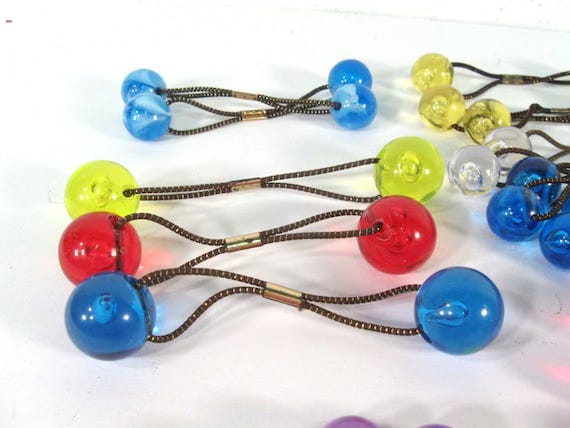
Remember those?
And in this particular case, I was running backward down a hallway with my longer-than-necessary boom mic as part of a pack of people made up of the DP/operator, the AC (we didn’t have the wireless focus-pulling that we have now), a grip who was spotting them, an electrician holding a light, and me. And I was attached to the mixer by a cable, and didn’t have anyone pulling it or spotting me, so when somebody tripped, we all ended up in a pile of arms and legs, and the mic ended up on the actor’s nose. It was the kind of thing that, in the present day, we’d probably just let the wires handle, because that’s just too many people trying to run backwards in a narrow space for safety, and the sound of a herd of elephants doesn’t really belong in the scene anyway. Luckily, no damage was done, and the nickname didn’t stick, but the experience did teach me something important about both doing a walk-and-talk and life in general: give yourself the best chance you can of doing the job right by asserting yourself, saying what you need, and taking up space — in this case, literally.
Darren was also a jokester. Until the double-whammy of covid and #MeToo, hugging your crewmates hello was expected of women on set, and one of his favorite jokes was, when you gave him a hug, doing his impression of Jack Tripper from Three’s Company, squeezing you tighter and moaning your name. Again, Haha, Just a joke! but the whole eeew of that brand of what today we would definitely call sexual harassment has probably contributed to me being even less of a hugger than I was before. Another one of Darren’s favorite jokes, which I did think was funny, was reminding people to turn down the volume on the video monitor to which sound was connected (once we got on big enough jobs that they could afford a video monitor for the director to watch playback after the take was over), by putting on a deep voice and saying into his slate mic, “I AM THE VIDEO MONITOR. TURN ME DOWN.” He also liked to record his own foley on cutaway shots that weren’t worth doing sound on for real, by pointing the boom at his feet and trying to walk in time with the actor’s footsteps. You kind of needed something to distract you when you were only making $250 for a six-14-hour-day week.
But that was also what kind of bonded us all into something like a family, albeit a very dysfunctional and incestuous one. At the end of every week, we’d go to Blue and Gold, the bar that was the film crew hangout at the time. It would eventually move to Lucy’s, then Ace Bar, all in the East Village, and since I was living on 6th Street and Avenue A for those first couple years, drinking with my crewmates was extremely convenient. I don’t remember everyone who was there the first Saturday we all went out (it was a six-day week, so Saturday was our Friday), but it included my boss Darren, Glenn the gaffer, a few grips, including Larry (who would later get into a serious relationship with and then cheat on a close friend of mine), Ray the hot first AC, and Helen, the talent PA. Larry was complaining about how all the women on the job were in relationships, when Helen piped up and said, “I’m single.” I was too, but my instinct was to say nothing — which was validated by the fact that Larry immediately started hitting on Helen. Apparently the grips just kind of decided amongst themselves that she was Larry’s because he was the first one to express interest, as if what she wanted had nothing to do with it, but it didn’t go anywhere. Later that night, she revealed to me that she was sleeping with the lead actor. He’d always buy her dinner at the end of the day, and then say, “Well, I’m heading back to my hotel…” And she would just…follow him. But that wasn’t why she didn’t hook up with Larry, because, by the next week, she was dating hot Ray.
This turned out to be my first view of a “just for the job” relationship — though I only realized that when Helen and I were on our next job together a few months later, and I asked about Ray. Helen brushed it off with, “He was just a good-looking guy,” like she had never expected it to be anything but a temporary hook-up. But when she got seriously involved with the Glenn the gaffer, who actually wanted a girlfriend, it seemed clear that she, too, wanted something that was going to last more than 4-6 weeks. And over time, I realized that was what most of the women I met on set wanted from their set flings, but pretending otherwise was what “got” them the hot guys. Sure enough, when I saw her a few years later on a different set, Helen was single again and sitting on the lap of the hot lead actor, and I was still trying and failing to hook up with any of my set crushes. I envied her and women like her for what I saw as their success with guys, and couldn’t figure out what I was doing wrong. I only finally got it when I became friends with a make-up woman who, when I revealed I had a crush on the lead actor of the film that we were doing together, told me that she’d just assumed I was gay — not just because we’d met on a job with a posse of cool lesbians on it, but because, she said, “You’re serious about your job, and you don’t flirt on set.” And even while her assumptions made no sense, clearly, on some level, I had also internalized the concept: either you were a working professional and/or lesbian, or you were a slut. With that being the dominant culture of the nearly-all-male sets that were pretty much all the sets in those days, it was no wonder all of us women were finding it impossible to figure out how to be ourselves, be respected, and find some kind of romance with the people with whom we were spending the 75 hours a week that we were actually awake. There was just no way for us to win in that situation. Meanwhile, I watched Mark happily hook up with someone on every job: the key make-up woman, the product placement rep, a lead actress — which his 2nd AD told me had been on his bucket list. Once I think it could’ve been me, when we took a drunken cab home from a wrap party together. But I’ve been in that drunken-cab-home-from-a-wrap-party situation a few times, and I’ve always managed to be just sober enough to know that the person I was in the cab with would be 1) substituting for the person on the job I was actually into, and 2) was probably someone I’d be seeing on set again way too soon. And considering word-of-mouth was also how we all got all of our jobs, I very quickly learned the term “Don’t shit where you live.” Mark was the one who recommended me and Evan, the sound mixer I worked with on The Daytrippers, for the next job he and I did together, and when Mark’s second AD on both of those jobs became the first AD on the film I worked on that ended in murder, he recommended me and Evan for that. With a community that small and tight-knit, screwing around could easily turn into screwing yourself.
Which brings me back to the only thing I miss about those days. Today, I make an actual living wage for New York City. My workweeks tend to be three days instead of six. I have health insurance, and a life, and thank GOD for #metoo and those laws banning smoking indoors. But back then, the whole indie film world was as young and hopeful and stupid as we were. Our little community was making movies for the experience and the experiences, the stories and the friendships — basically for everything but the money. And right now, with the industry in the retrenchment era of retreads and franchises and prior-IP-or-bust, I can’t help but feel that what we do has become more and more about — and only about — the dollars. But time and time again in our business, crisis has led to creativity. Let’s hope we’re on that track again — just with better technology and without all the eeew.
No posts
Comments
Nothing yet. Say the first thing.
Sign in to join the conversation.