


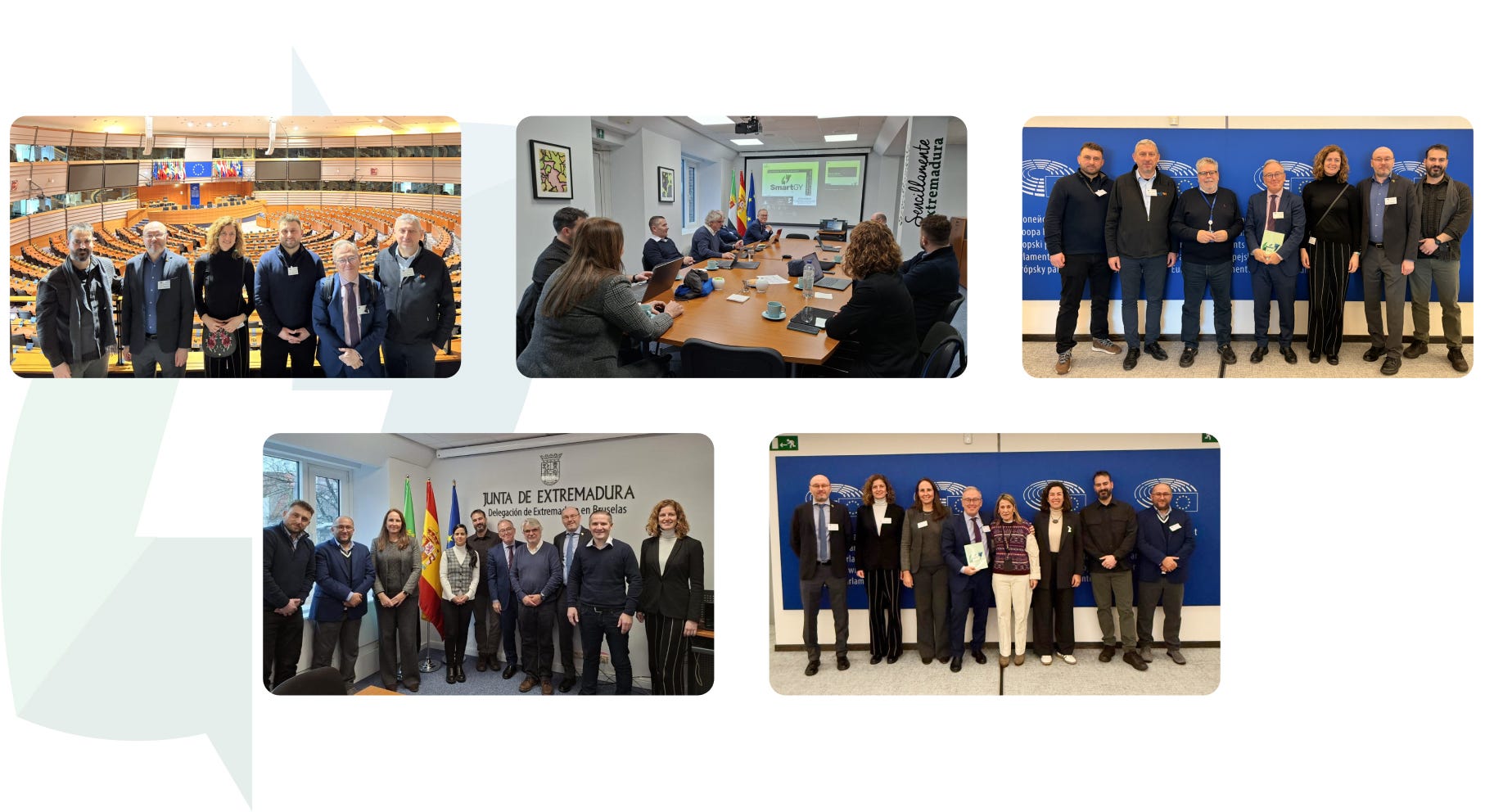
On 15–16 January 2026, the SmartgySUM consortium met in Brussels for a series of strategic meetings aimed at promoting project results, reinforcing dialogue with European stakeholders, and coordinating the final phase of the project.
Hosted in part by the Delegación de Extremadura en Bruselas, the meetings provided a platform to exchange perspectives on how research, digitalisation, and innovation can contribute to accelerating Europe’s energy transition.
The programme included presentations of scientific results, discussions on implementation challenges, and reflections on doctoral training and mobility within the project. Executive Committee meetings also addressed future actions, dissemination activities, and preparations for the final SmartgySUM event in Badajoz.
The study proposes a two-stage hybrid optimization framework designed to coordinate:
Electric vehicle (EV) charging
Energy storage systems (ESS)
Household consumption
In the first stage, a Genetic Algorithm (GA) explores multiple operational scenarios, addressing uncertainty in energy demand and supply.
In the second stage, MATLAB’s Fmincon solver refines the solution, ensuring precision and computational efficiency.
The framework was validated through a detailed real-world case study including power electronic converters and advanced control systems.
Key results demonstrate:
Up to 50.2% reduction in electricity costs
More than 95% decrease in simulation time (optimal solution in 65 iterations)
Full compliance with operational constraints
As distributed energy resources expand across Europe, residential VPPs are emerging as strategic assets for demand-side flexibility.
This research strengthens SMARTGYsum’s legacy by:
Providing scalable optimization tools
Supporting grid flexibility
Creating cost-saving opportunities for households and energy communities
Contributing to decarbonization goals
The work positions residential VPPs as viable contributors to a smarter, more resilient European energy system.


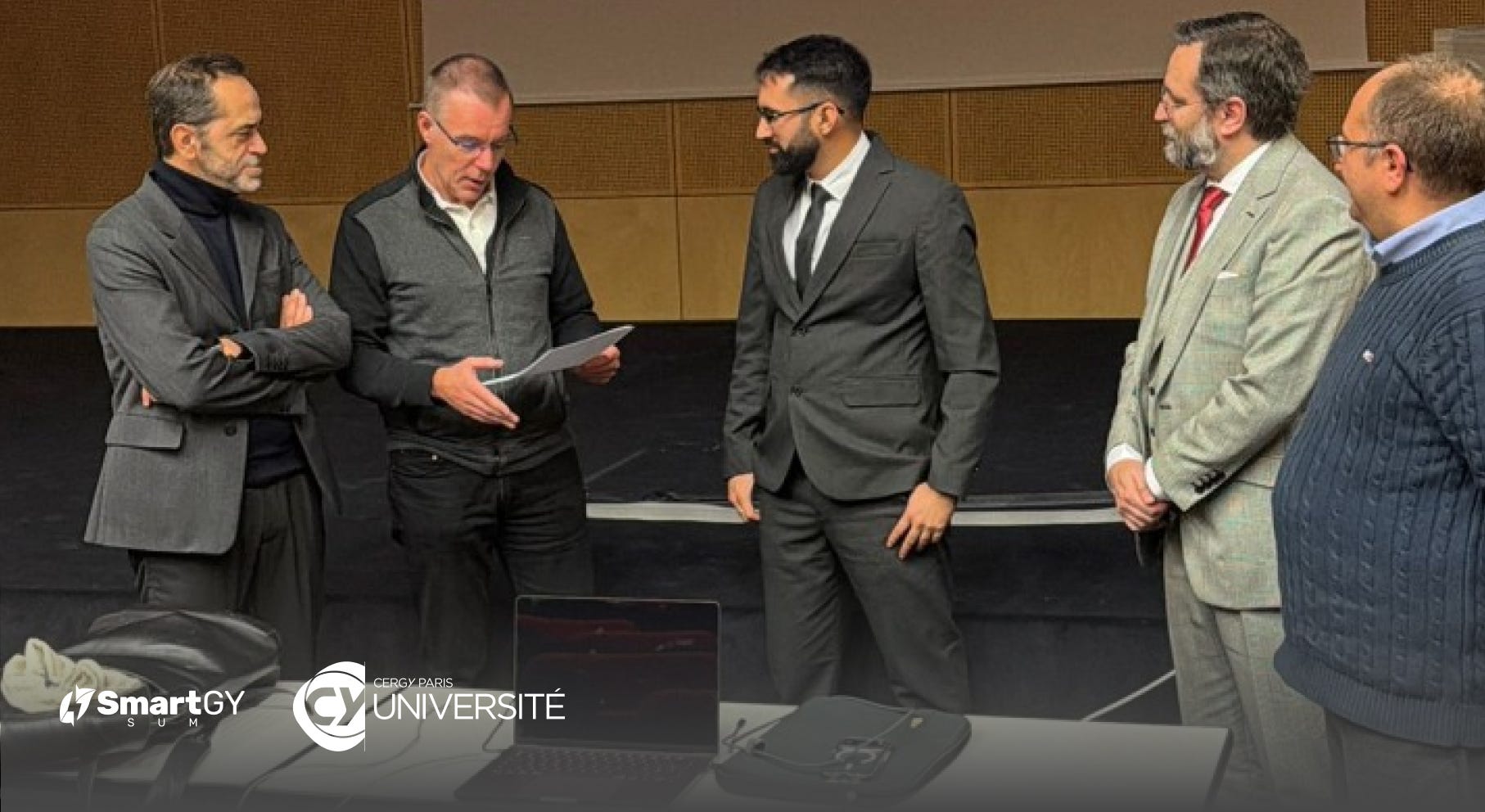
The SMARTGYsum community celebrates the successful PhD defense of Luis Enrique García Marrero, completed within the EU research and training program.
📍 December 10, 2025
CY Cergy Paris University
Thesis: On-line Diagnosis and Optimization of Energy Management Systems for Smart Buildings
His research developed an edge-computing framework integrating Non-Intrusive Load Monitoring (NILM) and photovoltaic diagnostics to enhance efficiency, resilience, and real-time deployment of smart building energy systems while ensuring low latency and data privacy.
👏 A strong contribution to scalable, intelligent energy management solutions.
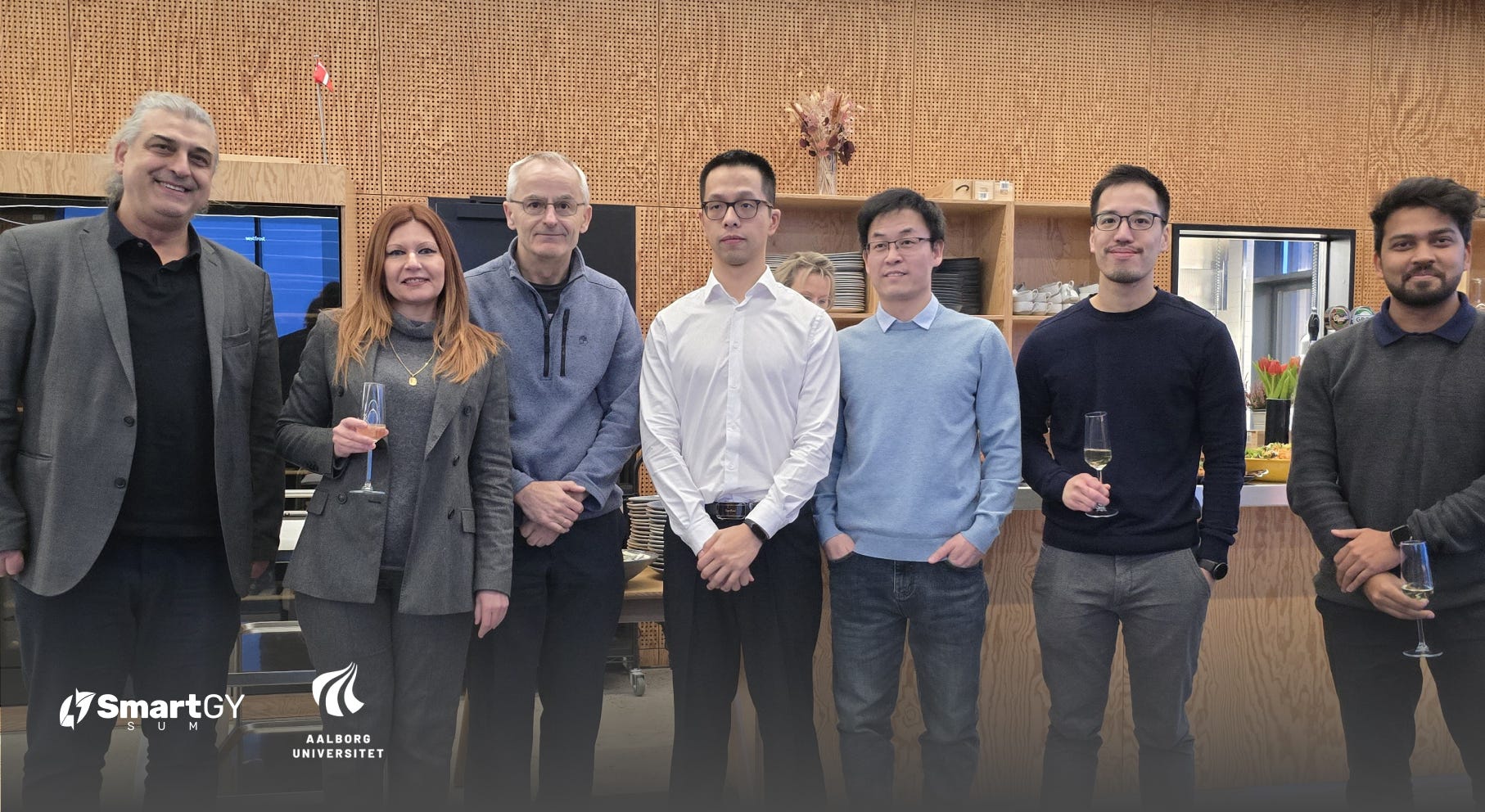
Congratulations to Shuyu Ou on the successful defense of the PhD thesis:
Data-Driven Condition Monitoring for Power Electronic Systems
Developed at Aalborg University (AAU Energy) within SMARTGYsum.
The research advances data-driven monitoring methods that assess the health of power electronic systems using measured signals, improving estimation accuracy, enabling noninvasive online monitoring, and supporting practical implementation.
👏 A valuable contribution to more resilient and reliable power electronic infrastructures.

SMARTGYsum’s impact extends beyond individual milestones. The project has generated concrete scientific outputs with long-term exploitation potential.
Luis Enrique García Marrero (ESR11)
Published in Applied Energy
This research presents a real-time, edge-deployable Non-Intrusive Load Monitoring (NILM) framework that:
Operates at ~1 Hz
Requires only aggregated active power
Updates appliance state probabilities sequentially
Uses a modified PBIL algorithm for power estimation
The framework was successfully integrated into a Home Automation system running on constrained edge devices and demonstrated strong robustness against unknown appliances.
Exploitation potential:
Smart home platforms
Energy service companies
Privacy-preserving monitoring systems
Edge-AI energy applications
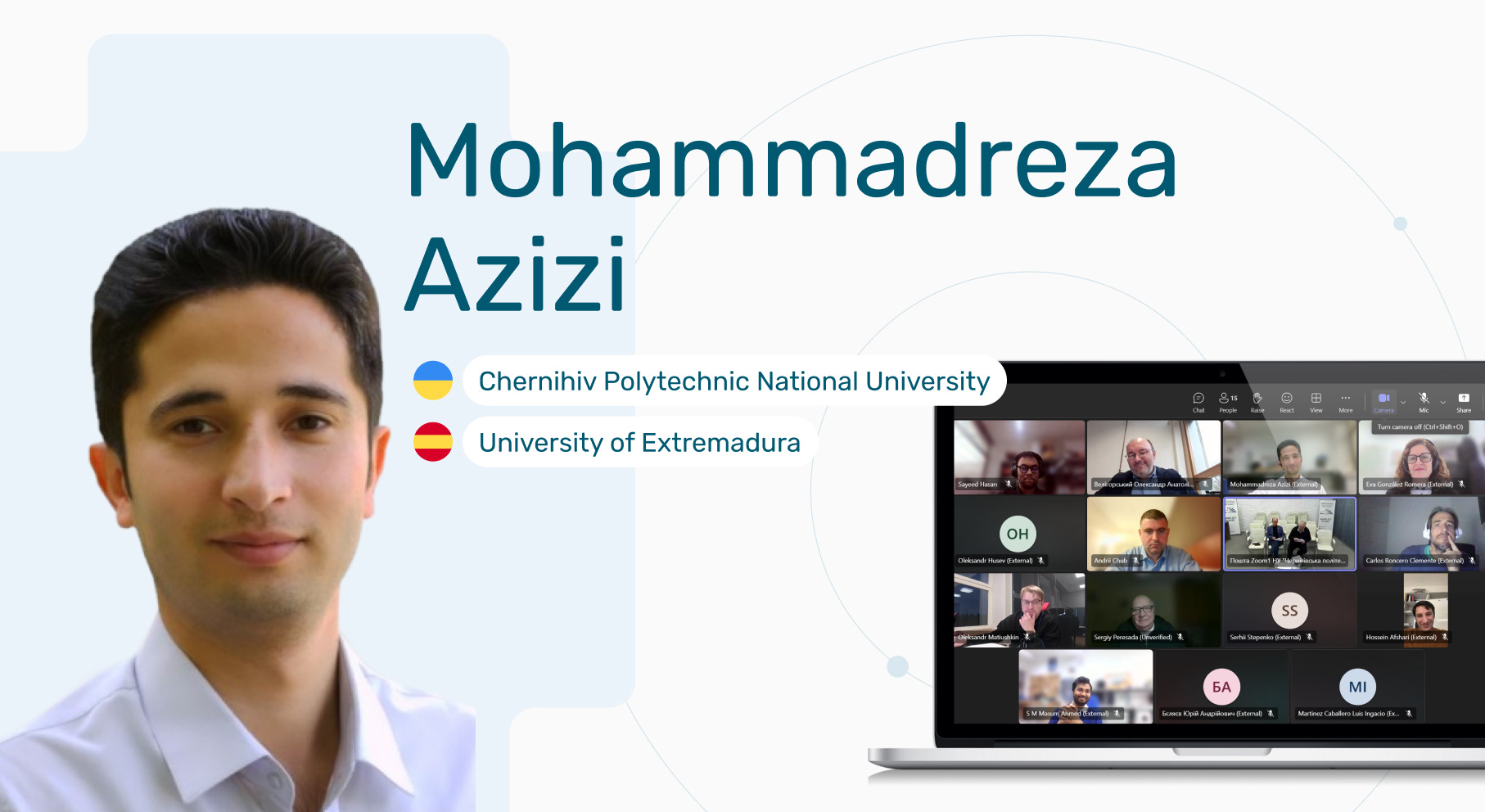
Mohammadreza Azizi (ESR05)
Published in IEEE
This work reviews and advances power electronics solutions for Zero-Emission Buildings (ZEBs), focusing on:
Low-voltage DC (LVDC) systems
Hybrid AC/DC architectures
Energy Router (ER) integration
Smart EMS digitalization (cloud + edge platforms)
The research provides strategies to address protection, grounding, and efficiency challenges while comparing grid connection scenarios.
Exploitation potential:
Residential PV system manufacturers
Power electronics industry
Smart building developers
Digital energy management platforms
Konstantinos Pantazis (ESR15)
Published in Oxford Open Energy
This study explores energy community (EC) experiences across Europe, analyzing:
Governance structures
Citizen engagement
Policy barriers
National support mechanisms
The findings highlight the importance of:
Strengthening local anchoring
Advancing multi-level policy coordination
Building inclusive participation models
Legacy contribution:
Policy recommendations for EU and national authorities
Support for a just energy transition
Frameworks for community-driven renewable deployment
Comments
Nothing yet. Say the first thing.
Sign in to join the conversation.