
Article by Jerry Montgomery
Last month at the January Birthday Regatta at Lake Pleasant Arizona, when I watched the boats in the last half of the fleet, I was aware of two problems that slowed them down: they have sails that are over the hill, and their baggy sails do not have telltales.
When it comes to sails, you’re stuck with what you’ve got until you decide to spring for some new ones. So you’re left with trying to make your old ones as efficient as possible. Telltales allow you to get the best out of your sails whether old or new, and I’d feel severely handicapped without them. I hope most of you know what they are; they usually take the form of strips of spinnaker cloth, about 1/2”- wide and about 9 inches long, taped permanently to the sails. I put three sets on all my sails, and try to divide the sail into fourths with them. I put them about 9 or 10 inches from the luff on a headsail, and about a foot on the main. The difference is the considerable disruption of the airflow caused by the mast on the main, which causes much more turbulence than at the luff of the headsail. Put the telltales on one side of the sail a couple of inches higher than the other so you can see both sides, and be consistent from one sail to the next! This is important because when sailing on the wind you steer by the telltales on the lee side and you need to be able to see them. More on this later.
Upwind, telltales are used as follows. If you are sailing too high you’ll be aware of it because the sails will be luffing, so you bear off a bit. Say you’re on a starboard tack. If you bear off too much the telltales on the lee side (port) will stall and point about straight up. If this happens, come up a bit until you find the fine line between luffing and stalling. At this point, the sail will not be luffing and the telltails will be streaming straight back and the sail will be at its most efficient set. A pointer here is that if this line between luffing and stalling seems really fine, you are probably sheeted too hard. Try easing the sheets a bit. You may not point as high but you’ll go enough faster to more than make up for it.
Another comment: Many boats sail better on the wind with a bit of luff in the main (a “bubble”), especially with a genoa. Steer on the jib, and set the main by feel, making sure the telltails on the main are flying straight back and glued to the sail. The bubble will not effect the flow in the all-important slot between the main and the headsail, and if you’re having a tough time getting the telltales on the lee side of the main to behave, you’re probably sheeted too hard. The important thing upwind is to get the sails set correctly and then steer by the headsail, keeping your eyes glued to the lee-side telltales.
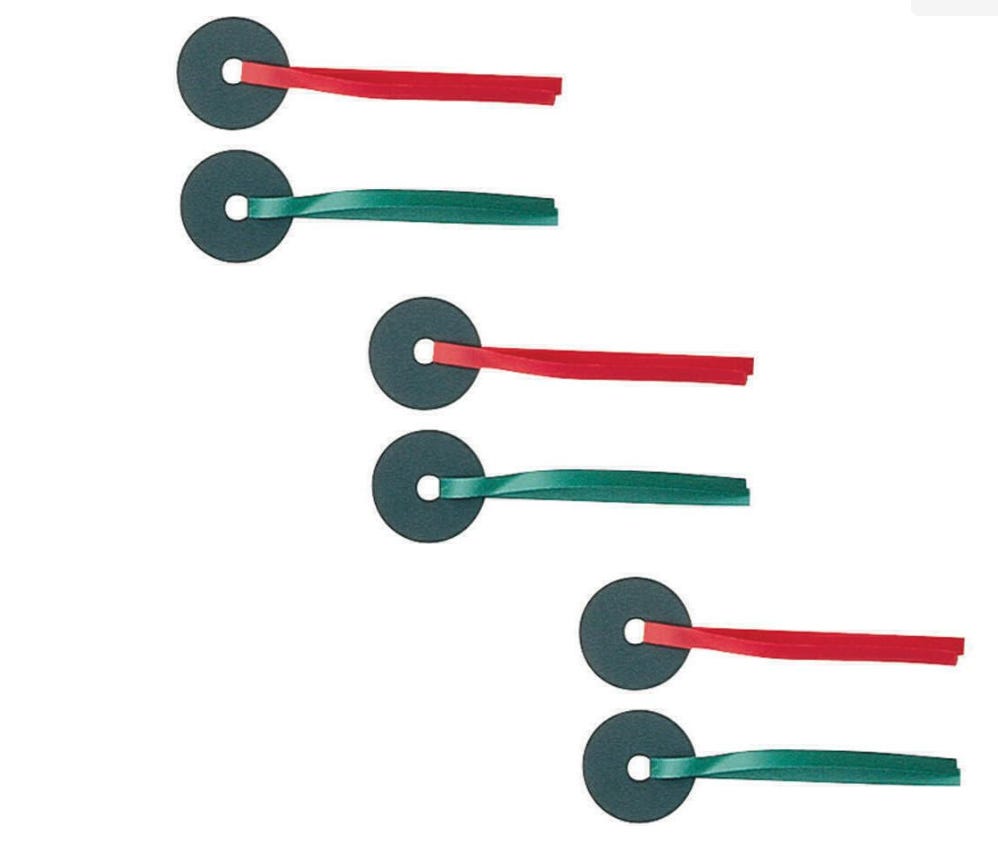
Why three sets per sail? So you can fine-tune the twist in the sails. If the top of the sail stalls or luffs first, you need to adjust the sheet blocks on a headsail or the traveler on the main. The twist is very important, especially in light air. In a good breeze it kind of takes care of itself but not so in a drifter. We probably all know about twist, which is necessary because of the difference in apparent wind angle caused by the gradient in wind velocity, the velocity being higher the farther it gets from the water because of friction. It’s a simple vector, with the two factors being the speed of the boat and velocity of the wind at whichever height we’re measuring it.
Things are just a little different on a reach. The slot between the headsail and main opens up and we treat the two sails more independently. Instead of getting the sails set properly and steering by the sails as we do upwind, we set a proper course to wherever we’re going and adjust the sails by the telltales. The wind is always changing, both in direction and velocity, and we obviously need to respond to these changes. Whether you’re on a reaching leg in a race or simply like the feeling of going fast, you’ll want to change your course to respond to wind changes, which means coming up in the lulls and bearing off in the puffs. We head up in the lulls because the boat will go faster on a close reach than on a broad reach in light air, and in the puffs we bear off because it won’t affect the speed as much, and what goes up must come down!
When the boat is on a run or a very broad reach, and the wind is no longer drawing the boat forward but instead is pushing it, then telltales are of little value. The exception here is if you have a spinnaker, which really livens a boat up on a light-air reach. Unless you are on a dead run, the apparent wind swings so far forward that once again the telltales will tell you how to set your main.
Many sailors put telltales on the leech of the main and they are an interesting study, but I find myself pretty much ignoring them during a race. They’re difficult to keep streaming smoothly, and sometimes for no apparent reason. I’d put leech telltales in the category of ultra-fine tuning and usually have enough to occupy my little mind. On a run, however, they do tell you when you are sailing by the lee.
In areas where you have consistently heavy air, like San Francisco Bay, sailcloth telltales will get chewed up pretty fast and many sailors prefer yarn. Either way, a dark color is best, so it makes an obvious contrast with the white sail. Remember that most of the time you’re looking at the telltales on the other side, through the sail. Any marine hardware store that caters to sailors will have telltales in a plastic folder, complete with little round plastic adhesive patches that work very well. If you paid your last bill at your friendly local sailmaker, stick your head in his trash can after he makes a 1/2 oz spinnaker and pull out a wad of scraps in a dark color. If you’re lucky enough to find black, grab some for me too! •SCA•
First appeared in issue #57
No posts
Comments
Nothing yet. Say the first thing.
Sign in to join the conversation.