
What would later become the Hirondelle originated in 1967 with designer Chris Hammond as a cold-molded, 20-foot family cruising catamaran called Meon. The prototype was purchased by Brian Carvill in 1969, modified, renamed Hirondelle, and produced in glass by Robert Ives Boatbuilders in Christchurch, England.
Remarkably, virtues such as performance, accommodation and seaworthiness—often antagonistic design goals—seem to coalesce more readily in multihull designs. The phenomenon of multihull speed, which can be two or more times faster than a similar monohull, is well known. Then there’s the multi’s resistance to heeling which aids comfort and eliminates many physical and emotional stresses. But it might be the accommodations potential that’s most striking.
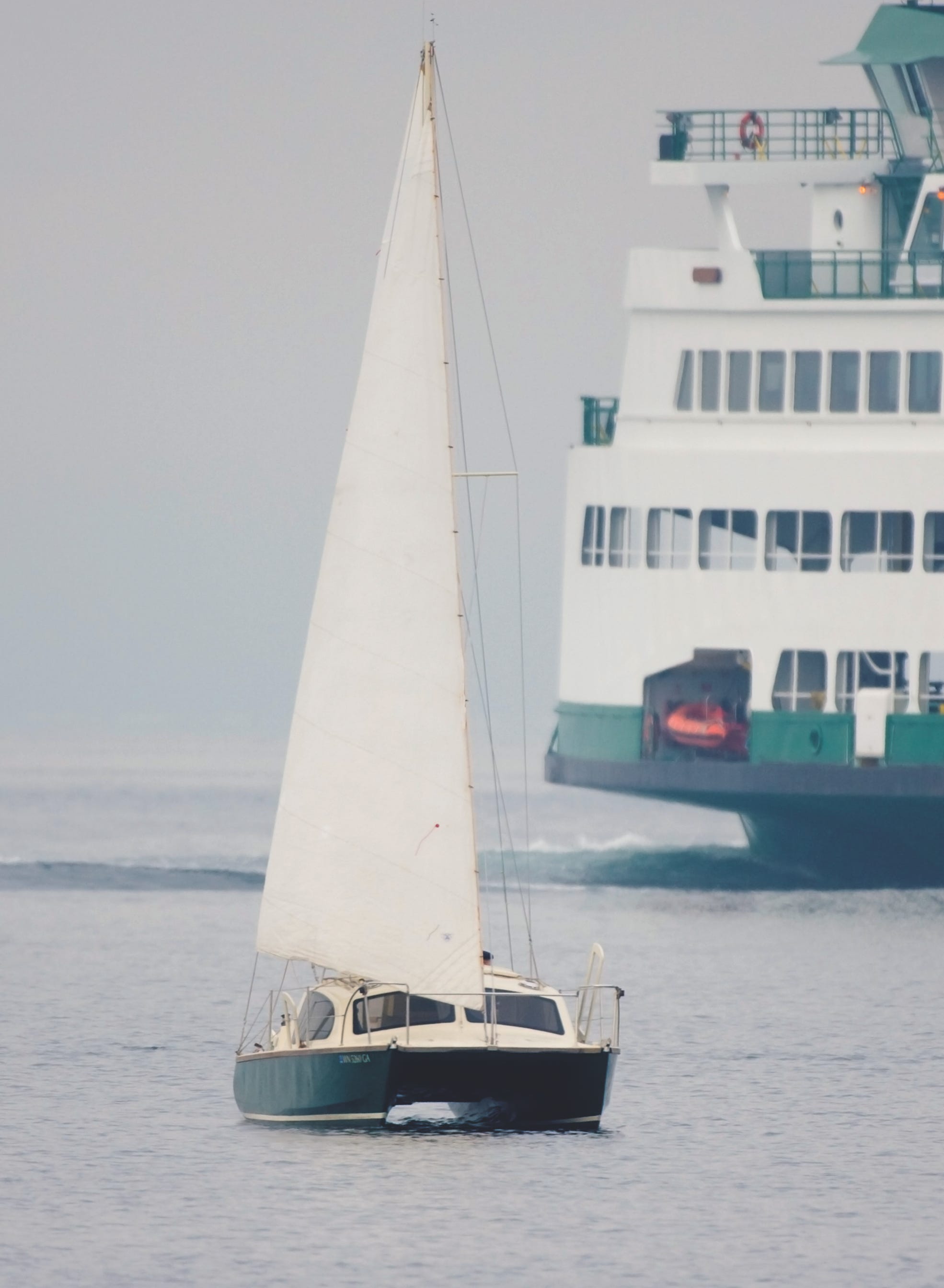
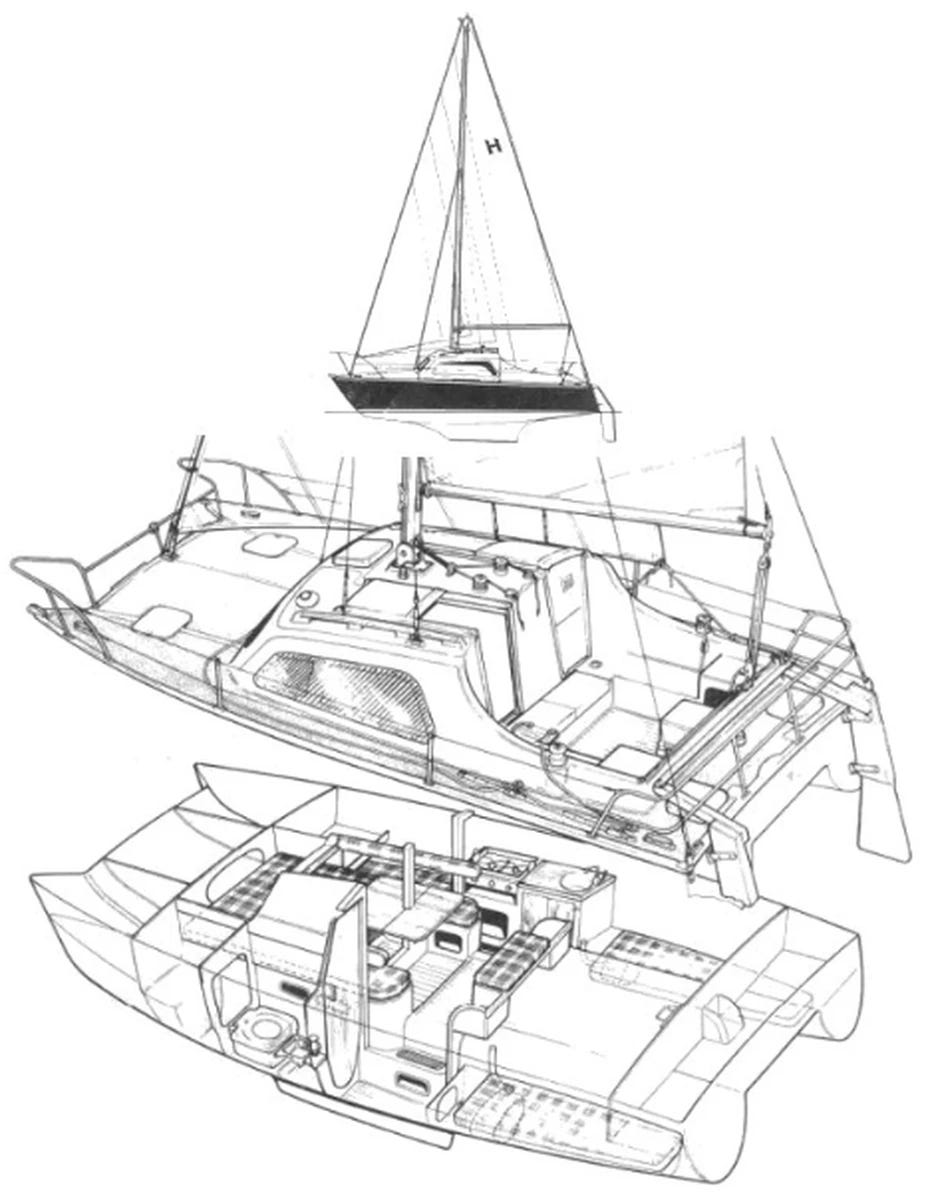
Case in point: Hirondelle. At less than 23 feet and 2300 pounds, she boasts 5 usable berths, a functional galley, a dinette table, nearly six feet of standing headroom and a private head. The addition of a swimming pool might have put the cruise lines out of business. Of the 57 boats we’ve reviewed, only those in the class of the 26-foot Kent Ranger, with its 4750 pound displacement, offer comparable accommodations.
For its speed advantages and roominess, one might think the Hirondelle would pay a price in terms of seaworthiness. But in fact, few boats 1,000 pounds heavier have gained anything like the Hirondelle’s reputation for seakindliness and offshore capability.
For our part, we didn’t need much convincing, as the more we’re around multis the more we wonder why we don’t own one. Indeed our only real objections have been in the area of aesthetics, and the Hirondelle, with typical British styling, mostly overcomes those as well.
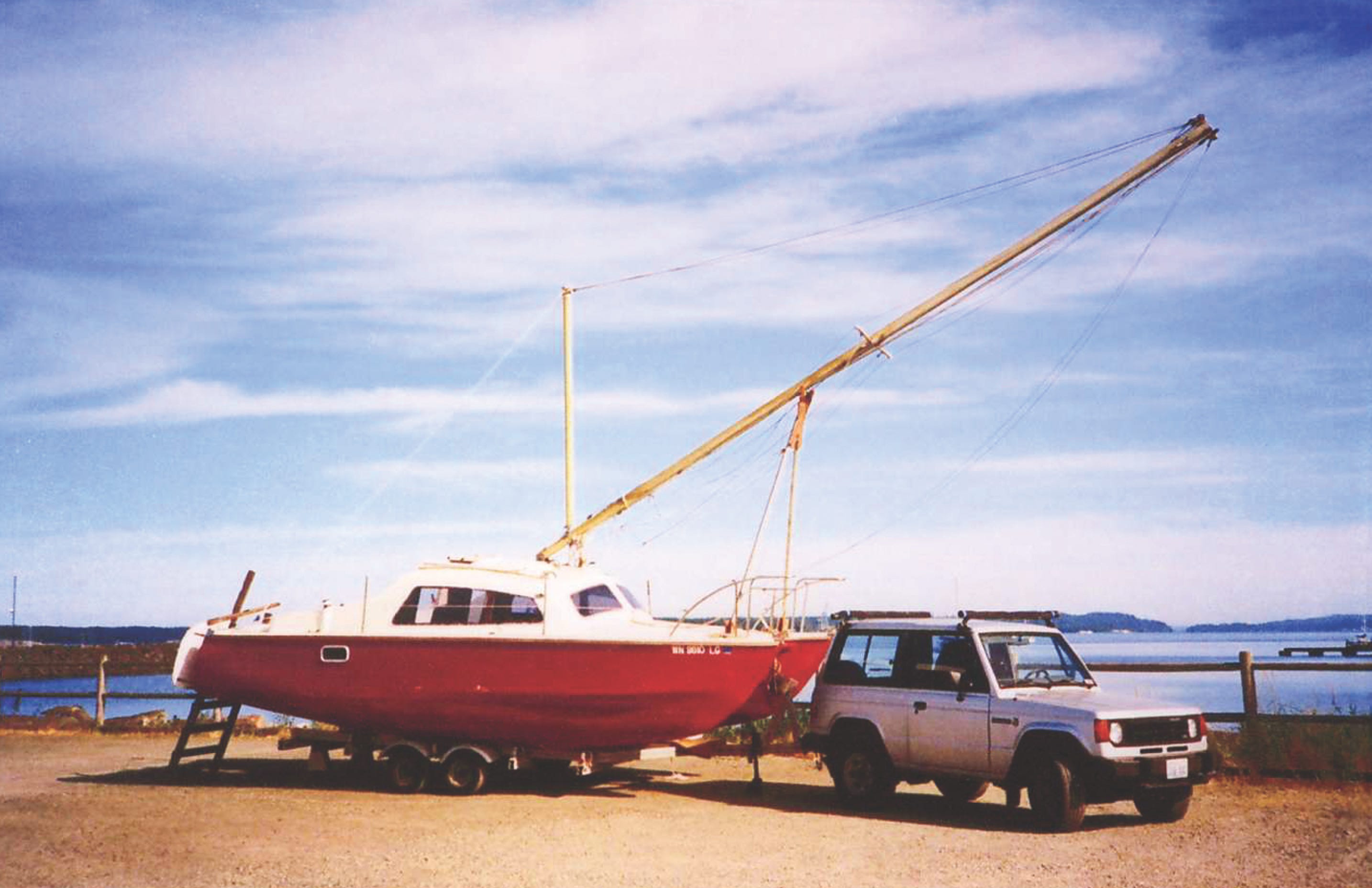
It appears that 237 Hirondelles were sold in four different series or “marks,” but since boats we’re produced by multiple manufacturers, features varied even amongst the same mark.
• The MKI models had the tall rig’s 30-plus foot mast, twin daggerboards and lifting rudders. Many were completed by home builders.
• The MKII model had a significantly shorter mast, some interior layout changes and several small, mostly cosmetic modifications.
• The MKIII model introduced fixed keels, which added draft but are said to have made the boat stiffer under sail. This model also featured a slightly more spacious cabin with additional amenities.
• The fourth mark was called the Hirondelle Family. This design was a joint effort of Hirondelle owner David Trotter and original designer Chris Hammond, who together modified the MKIII molds. The most significant changes were: a wider beam, more freeboard (and associated interior volume), an increase in galley functionality at the cost of one berth, a larger head with shower, rudders slung to keels allowing “sugar scoop” transoms, and windows installed over quarterberths.
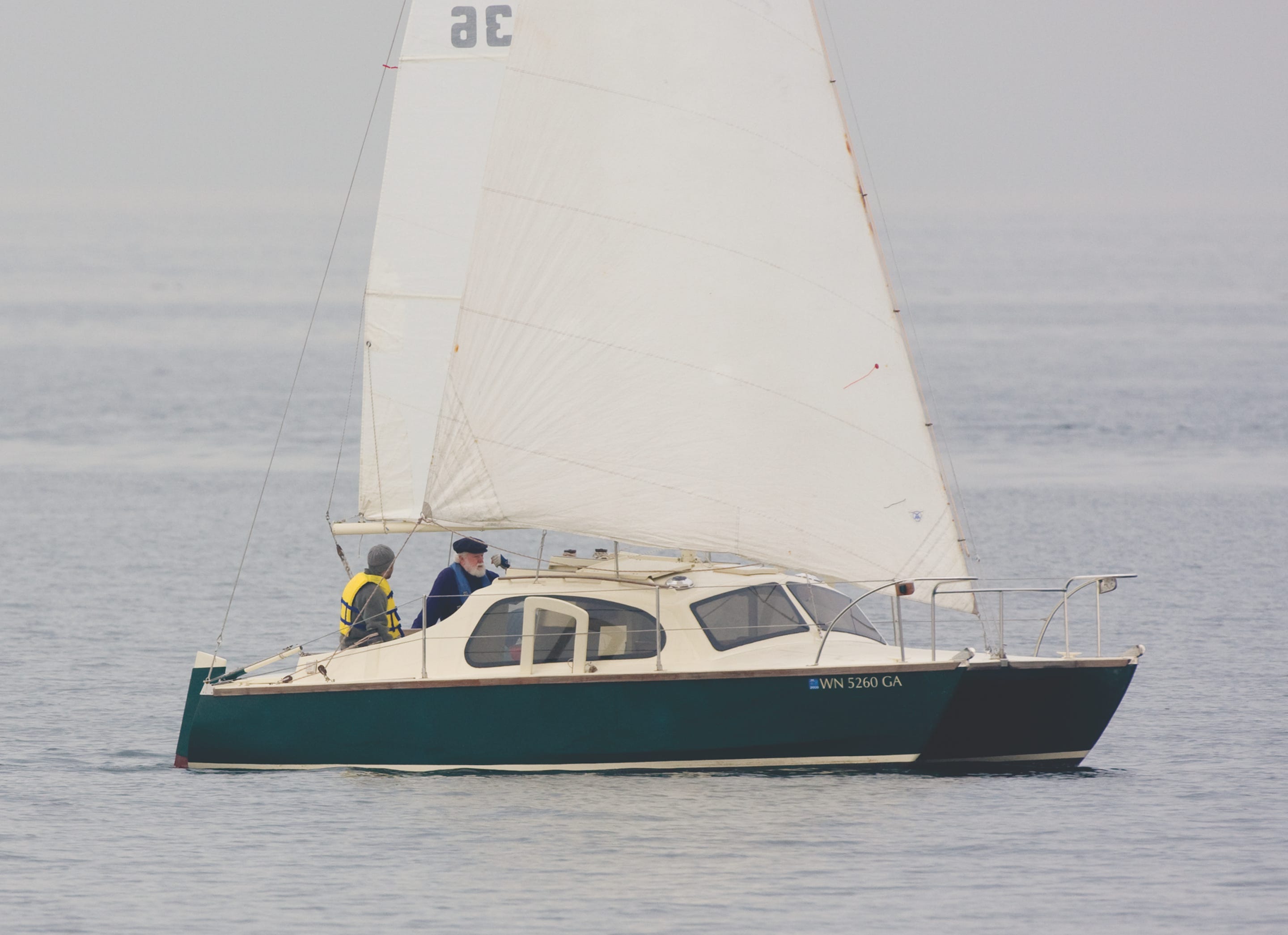
We were pleased to find MKI model owner Gene Buchholz willing to take us out for a sail one brisk Pacific Northwest January morning.
PERFORMANCE:
“Not in her element going to weather in light air. That being said, if you can reach off a bit she will sail with any other boat in her size range, and many larger ones. Downwind she can sail on a whisper. Going to weather she really comes into her own at 10 knots.” Herb Olson, 1973 hull #72 Barrel of Monkeys
“They motor and motor-sail well too, which is a big plus in British Columbia and SE Alaska, where the many fjords and inland passages are often windless or the winds are very light over large areas in the summer.” Mike Griffin Teal and Loon, 1976 and 1977 MK IIs.
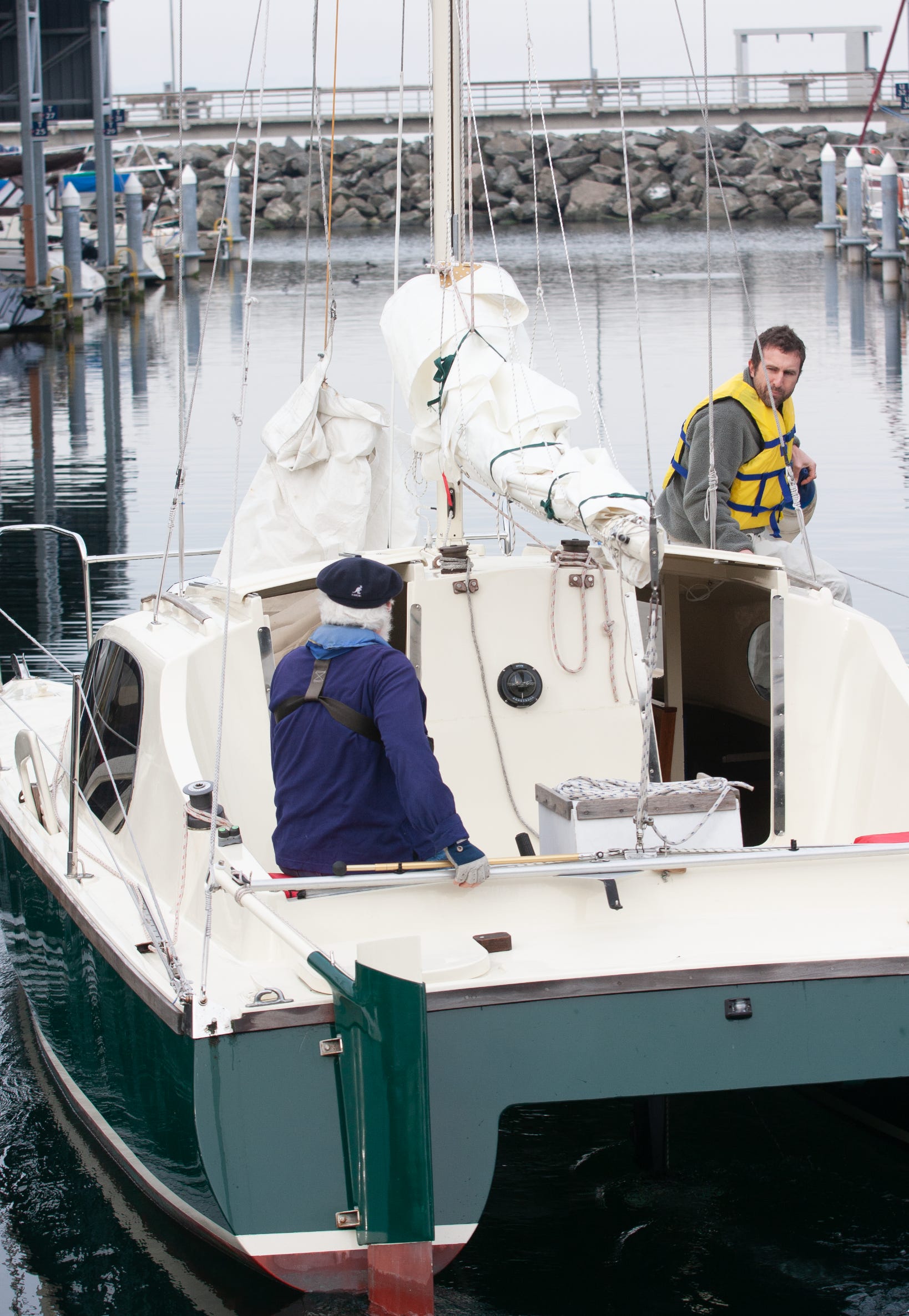
We wondered how the 10-foot-wide Hirondelle would respond when asked to back out of her snug slip, make a hard turn and come to a full stop. It might have been owner Gene Buchholz’ deft handling, but it looked easy.
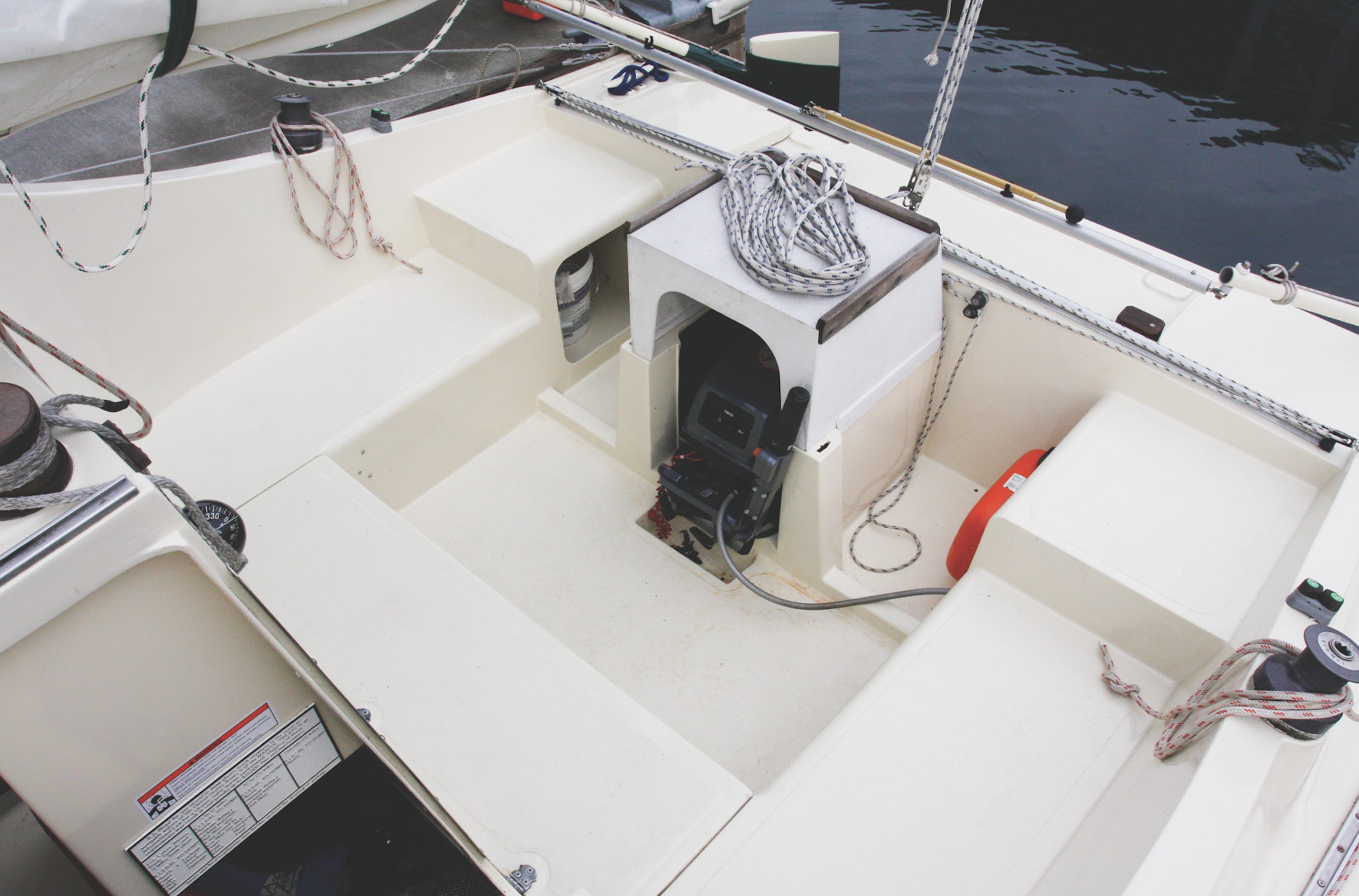
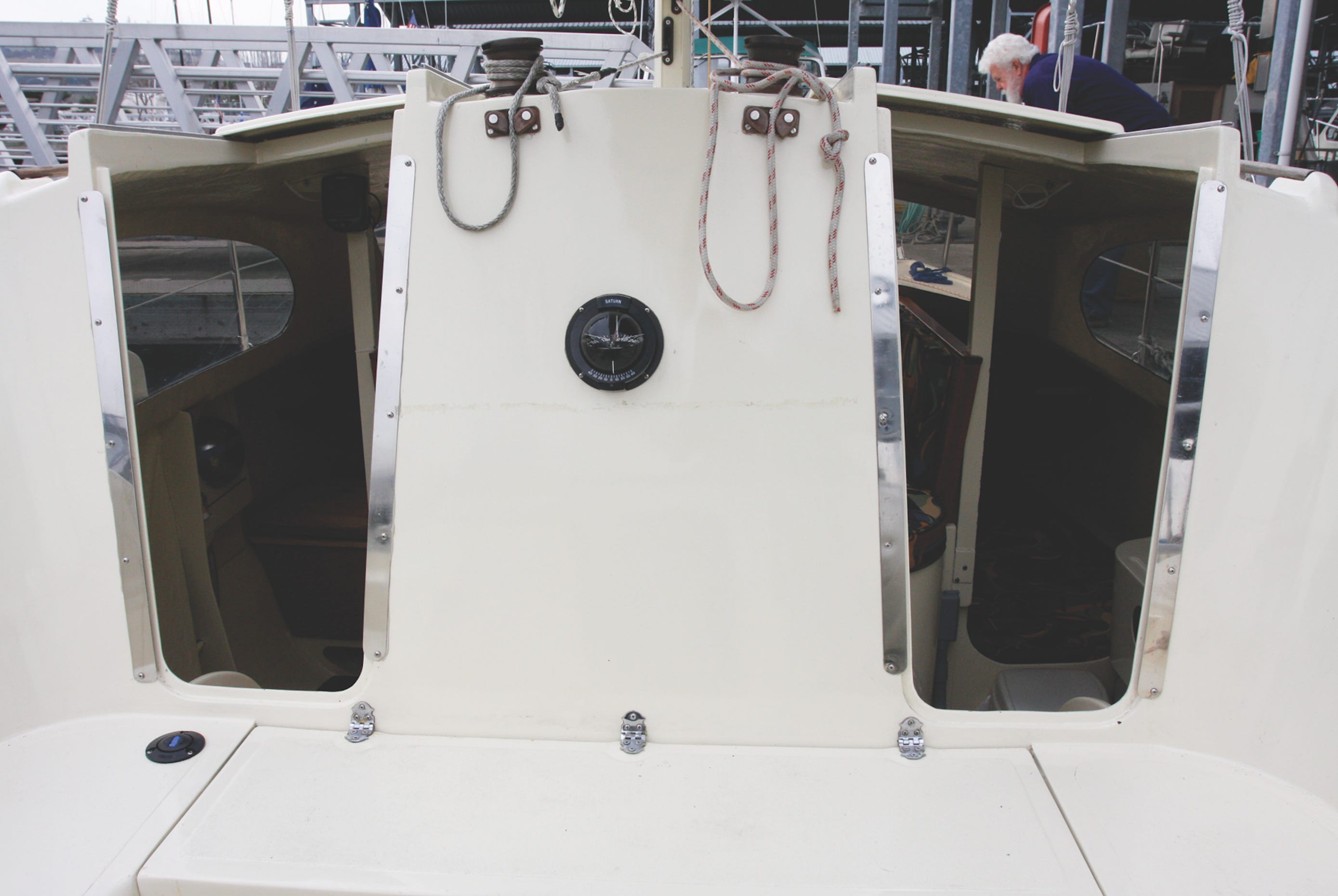
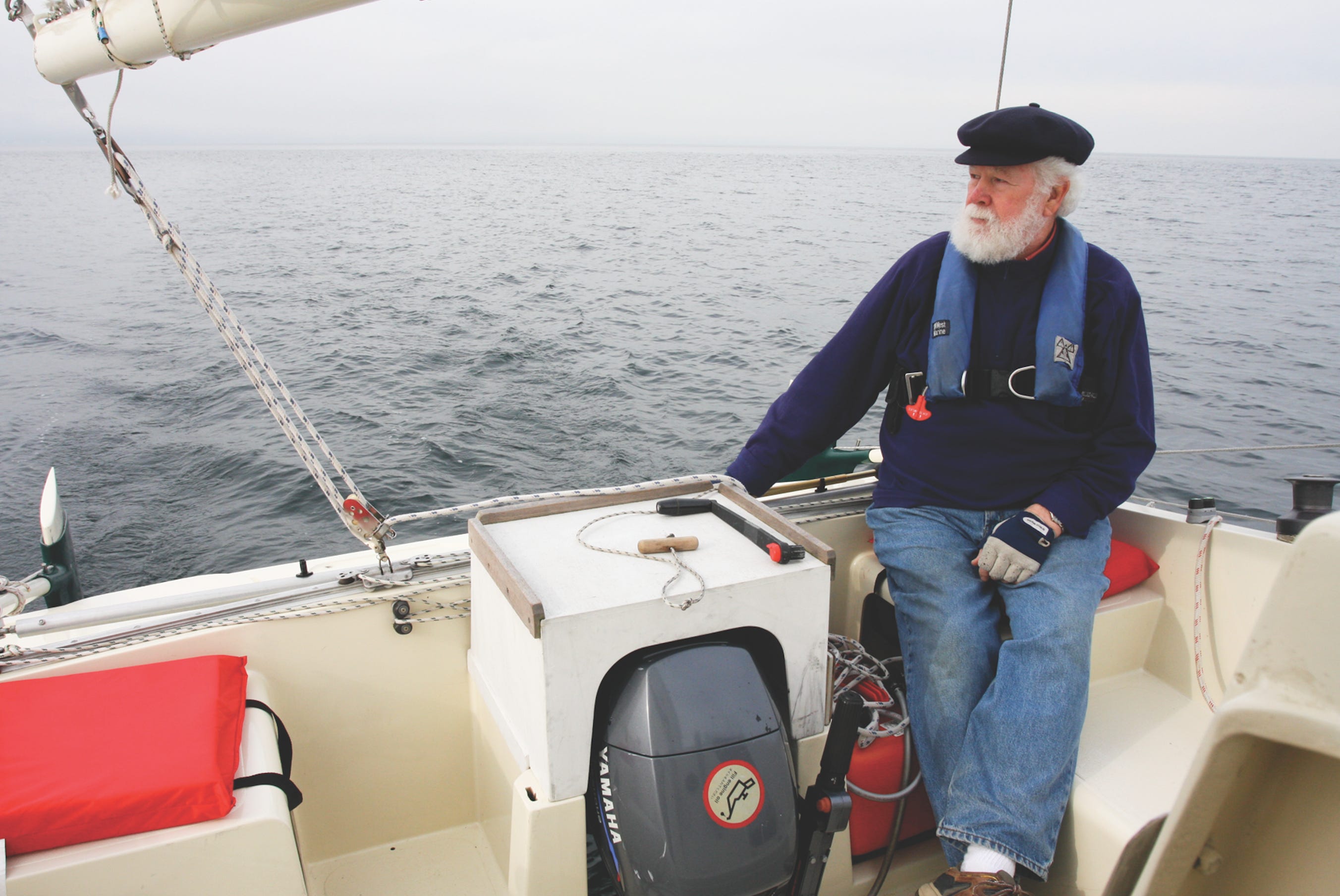
There’s no escaping the fact she’s a very beamy boat, but with the twin rudder connecting-bar accessible from any position aft, the outboard controls right at hand in the motor well, and assistance from the deep daggerboards, close-quarter maneuvering isn’t as daunting as it might appear. With her substantial windage, breezy conditions could make negotiating more challenging, and with the motor in a well there isn’t the option of turning the outboard and rudders simultaneously for an especially tight turn.
The boat motored along nicely and Gene told us his Yamaha 9.9 burns only about a 1/2 gallon per hour at 6 knots. Although apparently engines from 4-25 hp have been tried, the manufacturer and most owners seem to agree that an engine of about 10 horsepower works best.
We continued out into Puget Sound where we raised main and jib in what would charitably be called light air. After mostly drifting for a few minutes, we motored out to where the wind had textured the surface of the water, and shut off the outboard. The Hirondelle responded by slowly accelerating and voicing a contented, bubbly sound from the dual hulls.
The Hirondelle employs two lifting daggerboards for lateral resistance. Some skippers tweak the draft of one or both depending on the point of sail, while others leave them completely down always. The manufacturer mostly advised the latter.
The stock Hirondelle features twin rudders with lifting blades. Rudders are kept all the way down except when sailing in shallow water or at times during high speeds to avoid vibration.
She was nimble enough and responded to the helm like a small boat, but she still tacked like a multihull, which is to say she might need to be coaxed a bit—especially in light air. She pointed remarkably well, as several owners had told us, “on par with cruising monohulls.”
The boat moved easily, but it was apparent that even our tall-rigged MKI probably wouldn’t separate herself from the monohulls until the wind strengthened a bit. Even though she’s designed for cruising, the Hirondelle will foot along at 6-8 knots in a decent breeze, and we’re told low teens are possible planing in stronger winds.
Helm balance was light and neutral on all points, and the Hirondelle hove-to comfortably when asked.
TRAILERING AND LAUNCHING:
The 2300-2700 pound (boat only) weight makes the Hirondelle practicably trailerable behind larger tow vehicles, but her 10 feet of fixed beam adds a layer of complication. In addition to requiring a special wide-load permit, trailering demands careful attention—especially considering many of the nation’s roads are 9.5 feet wide or even narrower.
Because of her beam, we don’t consider the Hirondelle a “trailerable” in the conventional sense, but owners do have the option of moving the boat long distances one or twice a year, and hauling out is simple enough.
Owners tell us mast raising requires a gin pole or some other mechanical advantage, and most suggest the process requires an assistant or two. It’s no wonder, as the Hirondelle we were aboard featured two backstays, two forestays, upper and lower shrouds and spreaders, and a special fractional inner forestay that attaches on the after part of the foredeck.
Launching and retrieving the Hirondelle requires a wide enough ramp, but doesn’t appear to present any other special difficulties.
SEAWORTHINESS:
“Extremely cooperative. Predictable motion and no violent rolling.” Mike Griffin Teal and Loon, 1976 and 1977 MK IIs.
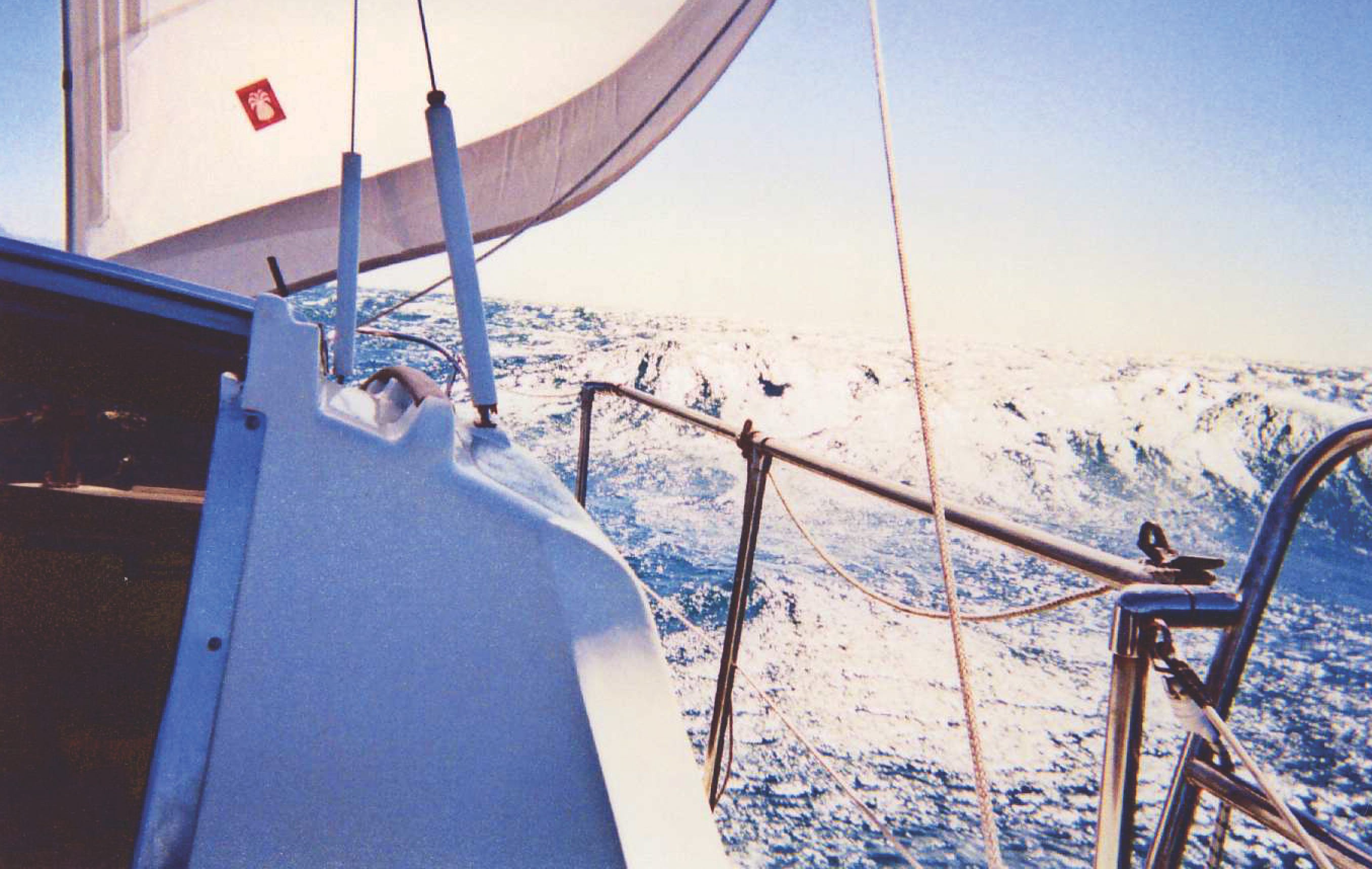
“Despite heavy seas, strong winds, and all the usual open ocean roughness, she did not pound, did not hobbyhorse, had no tendency to bury her bows or display any of the other alleged cruising boat bad habits.” Charles E. Kanter, AMS from his book Cruising Catamaran Communiqué.
“...in 30 knots with a double reef and small jib, she just squats in the water and moves to weather at 6 knots or more. I feel (ultimate stability) is quite good and I have never had a reason to worry about it. I have read about others that have lifted a hull but I have not been able to, yet.” Herb Olson, 1973 hull #72 Barrel of Monkeys
As we suggested in the introduction, the Hirondelle is one of the most seaworthy designs in her weight class. Extreme initial stability, high quality construction, and positive flotation are just some of the boat’s virtues. Probably her most important seaworthiness attribute is her motion and handling characteristics in rough conditions.
Owners were unanimous in calling the Hirondelle confidence inspiring, and one has only to look at the many remarkable ocean passages made on these boats to see evidence of her exceptional capability. (see sidebar).
by Mike Griffin
I’ve owned a Hirondelle MK II (TEAL, Hull # 233) catamaran since 1985. I first sailed on San Francisco Bay, then towed her to Seattle in 1986 and singlehanded to Glacier Bay, returning via the Queen Charlotte Islands. Then back to San Francisco for more Bay sailing until 1988 when we relocated to Port Townsend. Since that time I’ve made three solo circumnavigations of Vancouver Island and two return trips to the Charlottes, as well as numerous extended trips with my wife throughout all of the cruising grounds between Port Townsend and Queen Charlotte Sound.
I’d really intended the Hirondelle be a “first boat” before moving up to a larger catamaran, but I’ve found her such an exceptionally capable and comfortable small craft that I’m happy to say that plan does not need to be carried out.
With her relatively modest sloop rig and stable demeanor she is easily handled in a very wide range of conditions and sails well on all points. In addition to using standard heaving-to techniques, I’ve found that when stowing all sail and lying ahull with both daggerboards and rudder blades fully raised, the MK II will quarter the wind and ride with a motion much gentler than the sea conditions would suggest possible. Also, the ability to raise both daggerboards and rudder blades reduces draft to 15” which allows anchoring (or even drying out) in shallow coves, rivers or bays, and opens up many areas for exploration and shelter.
Under power, 6 knots (.5 gal/hr) can easily be maintained with an eight-horse Yamaha 4 stroke mounted in the cockpit, with a good boost possible by raising the jib in even very light winds.
Conning from below is possible as her cabin design permits effective 360 degree visibility from the comfort of the bridge deck—after simple modifications to the head compartment (removal of head door and a portion of the bulkhead between central cabin and head). While sitting on the bridge deck the galley to starboard is fully functional. Navigation can be carried out in either the central cabin or port hull, and naps taken lying on the bridge deck with your feet on the galley counter.
The two generous single quarterberths in the stern sections of both hulls, can be occupied with out compromising either galley use or navigation areas. Her dual companionways allow movement into and out of the cabin if the galley or head are in use when sailing with crew, and when running solo all areas can be maintained ready for use. This functional cabin arrangement greatly supports a solo sailor, as rest, food and shelter are easily available without interfering with the management of the boat. It also makes sailing as a couple more enjoyable as neither person finds the other “in the way.”
While careful attention to loading (as to both quantity and placement) is required, there is ample space for all the gear needed for extended coastal cruising.
Perhaps the best evidence of how capable I think the Hirondelle is would be to note that in 2007 I purchased a second MK II (LOON, Hull #252) in the Northwest and sailed her down to San Francisco that fall. Family responsibilities have meant that I’ve been spending extended periods near San Francisco each year. I missed TEAL and wanted to enjoy the great sailing opportunities in the Bay Area. The trip down gave me the opportunity to explore the coastal rivers and bays and test myself and the Hirondelle. And it was a great adventure. •SCA•
The Hirondelle doesn’t behave like a monohull. She has her own specific tendencies, and so despite her reputation for heavy-weather prowess, a skipper needs to learn how to sail her first.
Shortly after the boat’s introduction, the manufacturer published 10 pages of “Owners Notes.” The notes described things like the Hirondelle’s ability to sail well on headsail alone in good weather and bad and, conversely, mostly recommended against sailing on mainsail alone (In close quarters the boat might luff up and lose steerage, and in heavy weather there’s potential off the wind to broach-to).
The notes also address, among many other things, specific behaviors at anchor (windage usually means the boat lies to wind rather than tide), and the proper distribution of loads, etc. (keep weight out of the bows).
Although her capability mostly belies her size, it’s worth noting that the manufacturer installed quick-release cleats for all sheets and recommended hand holding in stronger winds. They considered any lifting of the weather hull cause to ease sheets immediately. Fortunately reports of capsizes are extremely rare and the boat performs so well that she can be sailed more conservatively in any case.
Another of the Hirondelle’s strengths in terms of seaworthiness is her flat sailing, which allows safe, efficient movement about her roomy, self-bailing cockpit, shielded by high coamings and a prominent cabin. When we went forward we found (just) adequate sidedecks, cabintop grab rails, lifelines, and a molded, scuppered toerail.
Our SCA Seaworthiness Test wasn’t designed specifically to factor in multihull strengths and weaknesses, but with some adjustments we estimate the Hirondelle at 184 points.
ACCOMMODATIONS:
“For daysails the most I want on board is seven adults; could hold more but it really loads this light boat down. Overnight I have had five on board. For extended periods three to four is about it.” Herb Olson, 1973 hull #72 Barrel of Monkeys
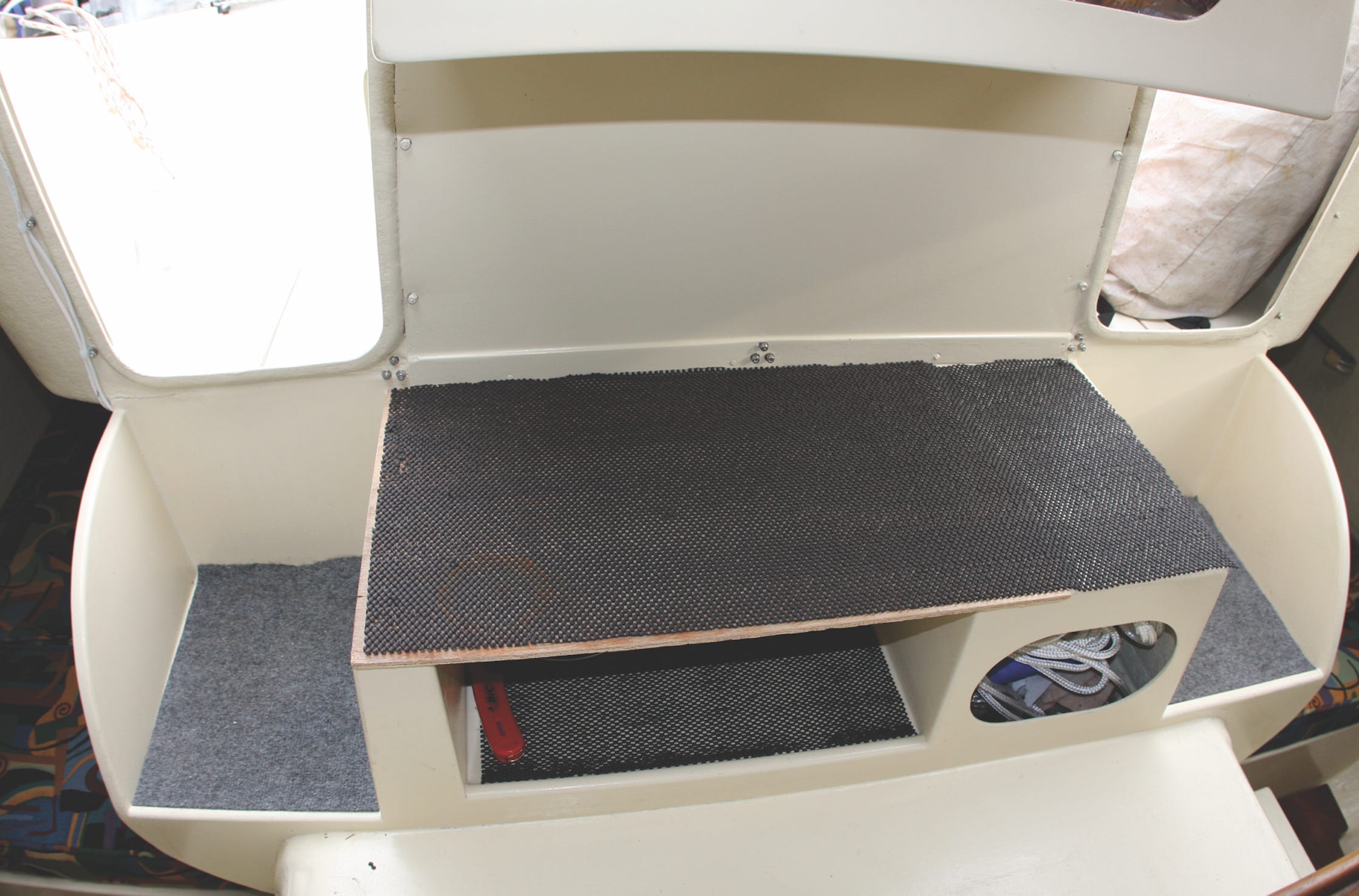
The roomy 59” x 76” cockpit features numerous stowage lockers. All the way aft is a lazarette or so-called sail locker that runs the entire beam, with a 21.5” hatch port and starboard. Just forward are a pair of 16” x 21.5” stowage wells designed to accommodate fuel and water. Beneath the bridge deck is another 47” x 15.5” x 11-inch deep locker.
One enters the cabin through either of a pair of 17.5” wide companionways. The advantages of this arrangement are manifold, including that more than one crew can enter or exit at one time—not a small thing on a boat designed to cruise a family of five—and all halyards and reefing can be handled standing in either companionway.
The Hirondelle is one of the few boats we’ve reviewed in which one can step down into the cabin without ducking. After landing on a wide step in the cabin, you can continue down another level into the hulls. On the port side in the forward portion of the ama is a remarkably roomy head with pump sink. The stock design included a partial bulkhead and door on the head, but many owners have removed both to save weight and improve visibility. Forward the head is more locker space.
All the way aft in both hulls are 6’ 6” quarterberths. Even though “quarterberth” is typically one name for many crimes, that’s not at all true on the Hirondelle. At 34” wide, with a minimum of 23 inches overhead room (substantially more around occupant’s head and shoulders), these berths are really more like bunks or even tiny discrete rooms. The berth length can be extended to 8 feet with longer cushions (like on our review boat).
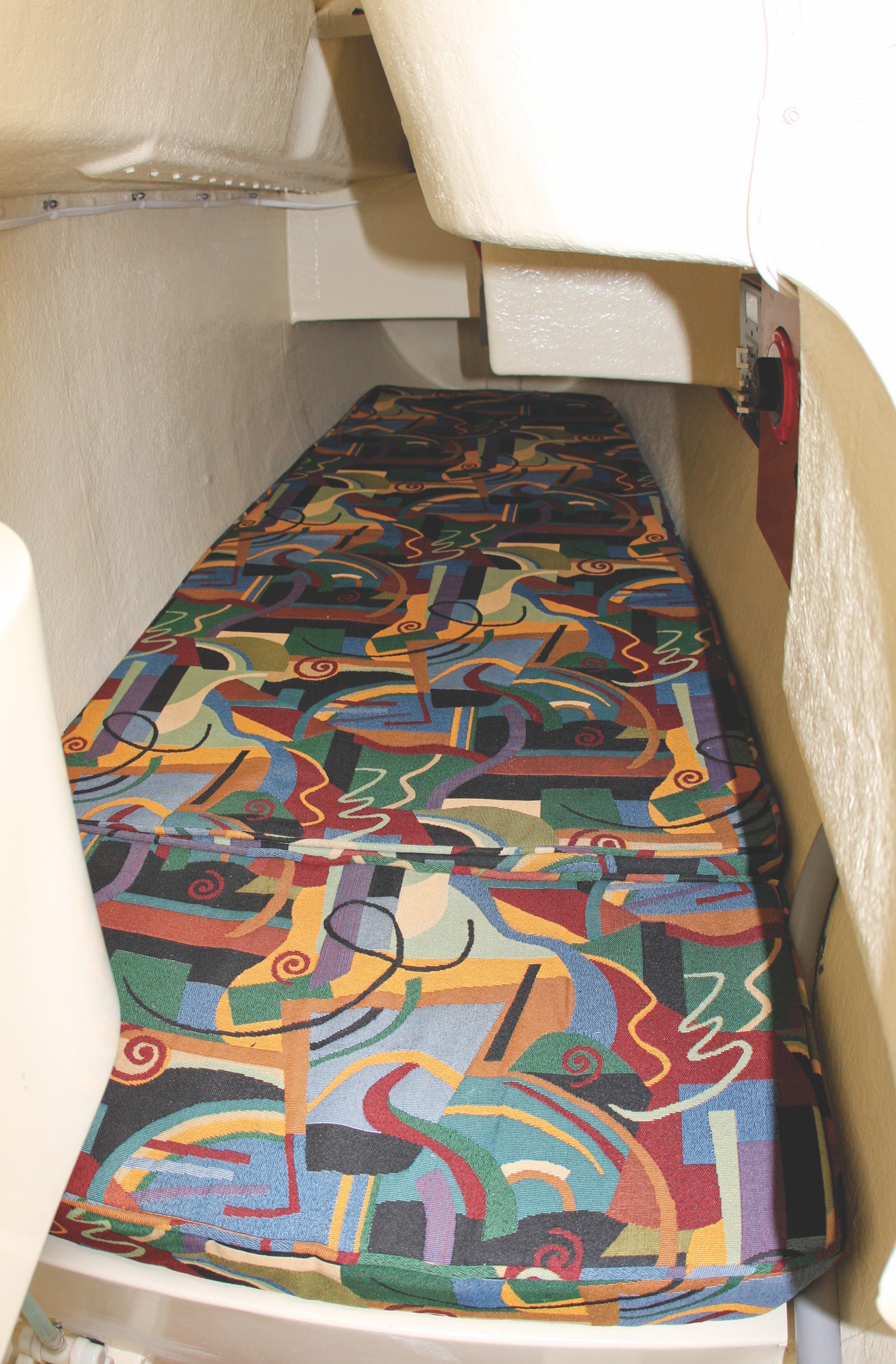
A lack of quarterberth windows is certainly a shortcoming, and one must back their way into the bunks, what owner Mike Griffin calls, “breech loading.” But, the natural shape of the hulls and cabin are such that there is more privacy on a Hirondelle—with its sort of multilevel living arrangement aboard—than there would be on a similar-sized mono.
The forward portion of the starboard quarterberth was originally designed to hold a 5 gallon jerry can of water. Gene Buchholz replaced the can with a 13-gallon soft bladder and added a foot pump to the molded galley sink just forward.
Farther forward to starboard is another, smaller, 6’ x 31.5” berth with more than enough overhead room. Farther forward is an anchor locker.
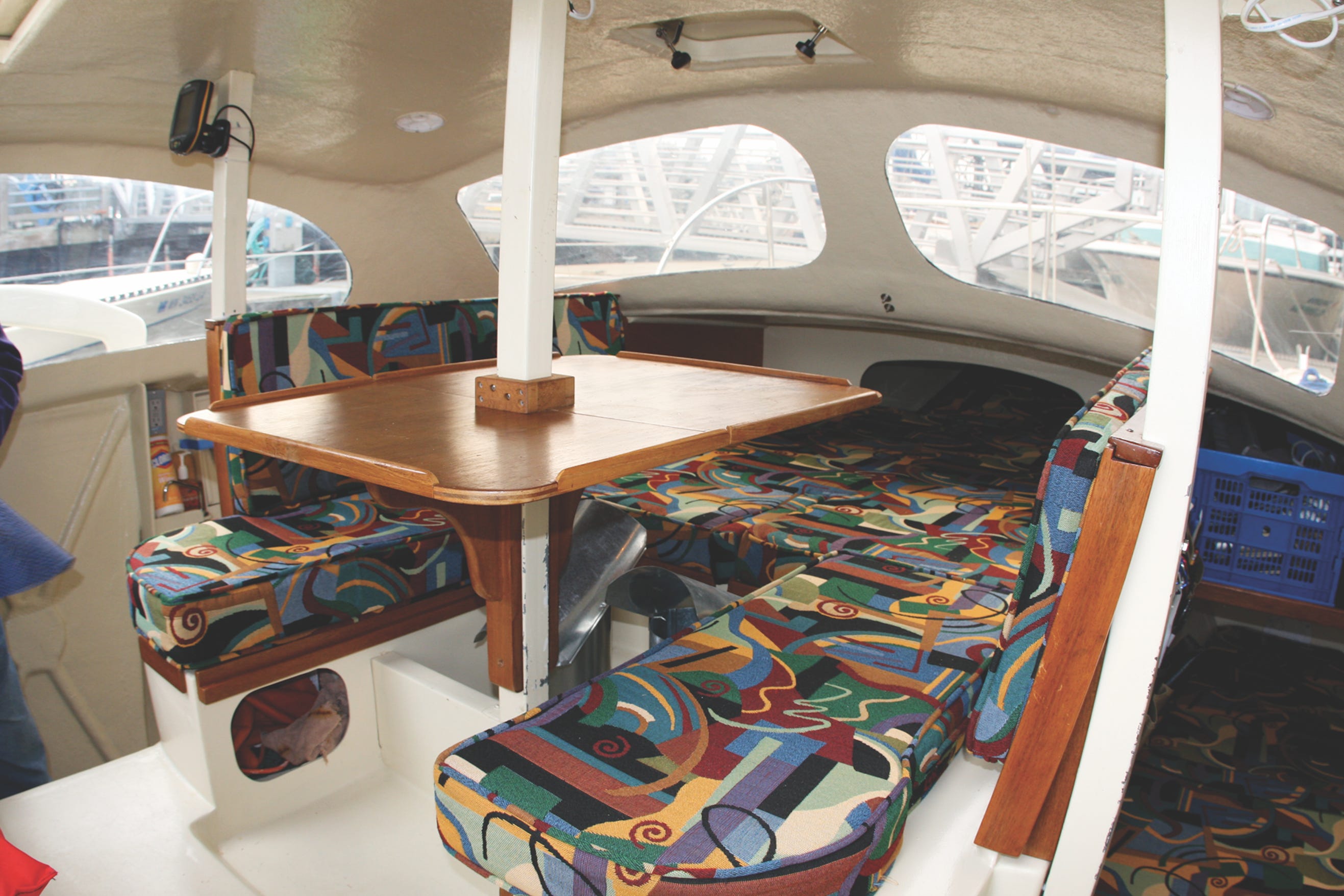
In the middle of the “upstairs” cabin is the convertible dining table/double berth. Its function as a dining table is only just adequate. It’s conceivable, we suppose, that you could sit 5 people, but legroom would be cramped and the slightly less than 3 feet of sitting headroom won’t satisfy taller crew. Still, it’s a testament to the design that we’re even talking about a family of five dining together in the main saloon on a 2300-pound boat.
In its double berth configuration, the dinette functions quite well. The old Hirondelle brochure conservatively measures the berth at 6 feet, but we call it 7’ 4” x 53”. There is a single compression post to contend with if you use all of the berth.
Ventilation from the overhead hatch and companionways is probably adequate, and light from the 4 massive windows is fantastic. Meals at the dinette table in a quiet anchorage would be more romantic than a four-star restaurant.
Amidships, between the companionways, is the designated galley area, with room for a two-burner stove and accessories, and an overhead cupboard.
QUALITY:
Owners were unanimously pleased with overall quality, although each has had to repair or replace some systems or parts on their 30-plus-year-old boats.
We thought hull and decks felt solid, and the original components have held up well. The robust construction was reassuring, with three beefy, galvanized steel compression posts or pillars located on a 2” laminated mahogany beam running athwartships from hull to hull to take mast loads.
One potential weakness to watch for is delamination and softening of the balsa-cored decks and cabintop. Two owners we spoke with mentioned having to make repairs as a result of previous owners failing to properly seal the core while mounting hardware. Core repairs can be ugly, expensive, time-consuming jobs.
Additional potential trouble spots are the backstay chainplates, which one owner said should be reinforced “before sailing in the San Francisco Bay or coastal seas.”
COMPROMISES:
Like most multis, the Hirondelle is sensitive to fore-and-aft-trim and shouldn’t be sailed with her bows weighted down, therefore some consideration needs to be given to load distribution.
We’ve highlighted the trailering-related compromises, but in terms of comfortably and efficiently sailing from place to place, few boats near this size match the Hirondelle.
MODIFICATIONS:
Review-boat owner Gene Buchholz, Herb Olson, and presumably other owners have retrofitted their boats with all synthetic standing rigging. Using synthetic line like Amsteel, Gene estimates his new standing rigging weighs less than five pounds—quite a weight reduction from the original 1/4” 1 X 19 stainless wire and chrome plated bronze turnbuckles.
Buchholz has also made several factory-quality modifications and upgrades, even going so far as to make his own molds for new rudders. After building new rudder blades to a proper NACA foil, Buchholz used one as a male mold and with rubber floor mats and Visquine, he produced a set of vacuum-bagged rudder-blade sheaths (like cheek plates).
He also replaced his wooden daggerboards with new boards made of Divinycell, cutting weight from about 56 pounds to 23 pounds.
Herb Olson also made some very ambitious modifications, including the addition of plumb bow sections that he says cut through chop better, add a level of safety should he hit something, and add 10% to the waterline. He also moved his backstays forward to make room for a full-battened main.
Owners also mention adding ports to quarterberths and adding vents for airflow. Generally, the Hirondelles seem to have been personalized more than most boats we’ve reviewed.
VALUE:
“In the years of ocean sailing, I have had my Hirondelle in Fire Island Inlet and Jones Inlet on the south shore of Long Island, New York; the Shark River Inlet, Manasquan Inlet and Barnegat Inlet, on the New Jersey shore and some other notoriously boisterous inlets in Florida. Only in Barnegat did we take any water across the decks. This boat handled all these rough inlets in grand style. I sold my lovely Hirondelle three years later to buy a larger boat.
...I have resurveyed several for different owners and cannot help but marvel at the way that diminutive vessel has kept its popularity and increased its financial worth. So much for history.” Charles E. Kanter, AMS from his book Cruising Catamaran Communiqué.
Most of the used boats we found were priced between $10,000 and $20,00 U.S. which makes her a little more expensive than many boats her size, but we think she’s less expensive than most boats offering her level of comfort and capability. It’s no wonder, then, that her owners call her a bargain.
The small cruising catamaran was an idea ahead of its time, and even 40 years later seems to be a concept still awaiting discovery by the sailing public at large.
References and resources:
www.hirondelle-association.org
•SCA•
First appeared in issue #57
No posts
Comments
Nothing yet. Say the first thing.
Sign in to join the conversation.