
Small Bites is a reader-supported publication. To receive new posts and support my work, consider becoming a paid subscriber.
Hey Small Biters,
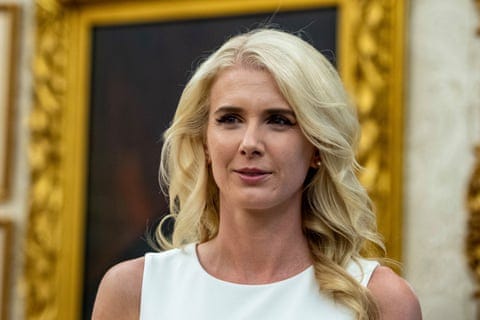
The Trump White House is facing another question that should have a fairly uncomplicated answer: who gets access to sensitive information, and when are they properly vetted? This time the controversy centers on Natalie Harp, one of Donald Trump’s closest aides, who reportedly worked inside the White House for roughly a year before receiving a security clearance.
According to the reporting, Harp serves as Trump’s executive assistant and spent that year without completing the routine clearance process. Two unnamed sources said she had declined to submit the necessary paperwork, although the reason for that alleged refusal remains unclear. Eventually, the White House counsel’s office reportedly raised the matter, Trump became involved, Harp submitted the forms, underwent a federal background investigation and received clearance.
That sequence is what makes this more than an obscure personnel story. The issue is not simply whether Harp has a clearance today; the White House says she does. The real question is what access she had during the preceding year, what information she might have encountered and why someone operating so close to the president was reportedly permitted to postpone a process designed to protect national security.
Former White House ethics official Norm Eisen called the situation “shocking,” arguing that someone potentially exposed to highly sensitive government information should not be allowed to treat security procedures casually. His criticism goes directly to the heart of the controversy: clearance rules become considerably less reassuring if proximity to the president allows someone to function first and complete the safeguards later.
The White House has pushed back without offering much detail about the timeline. Press secretary Karoline Leavitt said Harp has a security clearance and described her as a loyal and hardworking member of Trump’s team. That answers the question of Harp’s current status, but it does not resolve the central allegation that she spent a lengthy period working closely with the president before obtaining it.
Harp is hardly a peripheral employee buried somewhere deep inside the federal bureaucracy. She reportedly helps Trump prepare social media posts, supplies him with printed copies of favorable news coverage and spends considerable time around him. Her habit of feeding the president printouts has even earned her the nickname “the human printer,” which sounds harmless enough until the conversation turns from paper clips to classified conversations.
Former Obama adviser David Axelrod argued that, if the report is accurate, the matter is extremely serious precisely because Harp is so close to Trump and his daily thinking. The concern is not necessarily that an executive assistant automatically handles classified documents. The concern is that physical proximity to a president creates countless opportunities to hear, see or encounter information that was never intended for an uncleared audience.
Former Bush administration ethics lawyer Richard Painter offered a more cautious assessment. He noted that not every White House employee requires the same additional clearance because requirements depend partly on the information a person accesses. Much of Harp’s apparent work, he said, may have nothing whatsoever to do with classified material.
Yet Painter also identified the obvious problem with that defense. If Harp travels with Trump aboard Air Force One, remains nearby while he conducts presidential business or can overhear telephone calls involving military operations and foreign policy, the distinction between an administrative aide and someone exposed to national-security information becomes awfully thin. You do not have to be writing the Iran strategy to hear the Iran strategy.
That possibility is particularly significant because Harp appears to occupy an unusually close place in Trump’s orbit. She travels with him and has reportedly remained alongside him during sensitive moments. Last month, when Trump secretly changed aircraft in Turkey following an alleged Iranian assassination threat, Harp was reportedly among the small group accompanying him aboard a military aircraft while other officials and journalists remained on a decoy Air Force One.
If accurate, that episode illustrates why this story cannot simply be brushed aside with the statement that Harp now possesses clearance. Someone trusted enough to accompany the president during an extraordinary security maneuver is plainly not functioning like an ordinary clerical employee. The public deserves a clear explanation of when her clearance was granted and what protections were in place beforehand.
Critics also see echoes of Trump’s first administration. David K. Sherman of Citizens for Responsibility and Ethics in Washington pointed to Jared Kushner, Trump’s son-in-law, whose security clearance became controversial after concerns raised during the vetting process. For watchdogs, Harp’s case feeds a broader suspicion that conventional security procedures can become flexible when they collide with the president’s preference for particular loyalists.
That is where this story becomes bigger than Natalie Harp. Security clearances are not medals for loyalty, rewards for friendship or backstage passes handed to favored members of a presidential entourage. They exist because presidents and their closest aides operate inside an environment saturated with intelligence, military planning, diplomatic conversations and information that foreign governments would spend fortunes trying to obtain.
Harp’s extraordinary devotion to Trump has become part of the public fascination surrounding her. A cancer survivor, she gained national attention as an enthusiastic Trump supporter at the 2020 Republican National Convention, later worked at One America News Network and joined Trump’s political operation in 2022. Since then, she has become an increasingly visible fixture at his side.
One reported episode from 2023 captures just how determined Harp was to remain near Trump. When there was reportedly no available seat for her in his motorcade ahead of a New York court appearance, she climbed into the trunk area of an SUV because she believed Trump had personally asked her to attend. Whatever one thinks of that degree of dedication, subtle it certainly is not.
The scrutiny intensified after Democratic senator Jon Ossoff invoked Harp during a campaign speech criticizing Trump. His reference triggered an unusually forceful White House response and a frenzy of online speculation about Harp’s relationship with the president. Speculation, however, is not evidence, and there is little value in turning a legitimate national-security question into gossip about two people’s personal relationship.
New York Times reporters Maggie Haberman and Jonathan Swan reported in their book Regime Change that Harp wrote intensely admiring letters to Trump, including one telling him that he was all that mattered to her. That level of personal loyalty helps explain why her influence attracts attention, but loyalty itself is not the security issue.
The important question is whether the normal safeguards followed the normal sequence. If Harp did not need clearance during the period in question because she lacked access to classified information, the White House should be able to explain that. If she did need one but was nevertheless permitted to operate without it, then the administration should explain who authorized that arrangement and why.
Presidential administrations inevitably rely on people their presidents trust. Trust, however, is not a substitute for vetting. In fact, the closer someone gets to the president, the stronger the argument becomes for rigorous security procedures rather than weaker ones. National secrets do not become less sensitive because the person standing beside the president happens to be exceptionally loyal.
This controversy ultimately comes down to a simple principle: national security procedures are supposed to protect the country from human vulnerability, not politely disappear around politically favored humans. Harp may ultimately have done absolutely nothing improper with classified information but that does not make the reported year-long clearance gap irrelevant. It makes getting a straight explanation of it even more important.
Close to the throne, close to the flame,
loyalty whispers the president’s name.
But secrets belong to a country, not men,
and rules mean little if they bend now and then.Trust may open the office door,
but trust alone should grant no more.
When power decides which safeguards apply,
the unanswered question is always: why?
The White House says Natalie Harp currently has a security clearance, but that does not answer reports that she spent roughly a year working closely with Trump before completing the process. The timeline and her level of access during that period deserve a clear explanation.
There is no evidence presented here that Harp leaked classified information or deliberately mishandled government secrets. The legitimate concern is whether established security procedures were followed for someone operating unusually close to the president.
Loyalty may explain why presidents surround themselves with certain people, but it cannot replace security protocols. The closer an aide is to presidential conversations, travel and decision-making, the more important rigorous vetting becomes—not less.
Google packs Search and Gemini with new AI study tools.
CareCloud confirms 3.7M patients had their medical records stolen in data breach
T-Mobile ‘chopped a cable’ to expel Chinese hackers from its network.
eBay’s first-ever sale was a broken laser pointer in 1995.
Comments
Nothing yet. Say the first thing.
Sign in to join the conversation.