
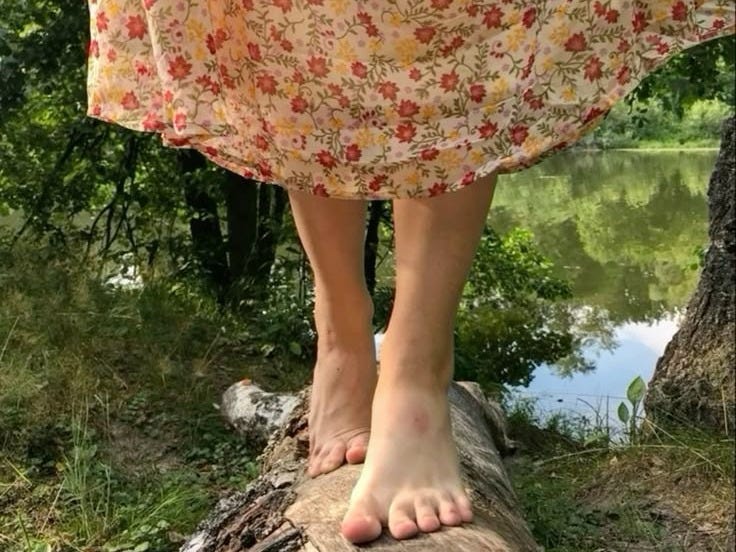
Nature is the foundation of my slow life.
I adore observing the gradual shifts in the seasons and regularly connecting with my local wildlife helps ground me within the Scottish Highland landscape I so adore.
As I write in my upcoming book (The Scottish Art of Living Slowly - due to be published in spring 2027), I’m a firm believer that the peace that comes from watching nature can be harnessed anywhere, even in the most urban of environments. We just need to remember to notice.
For this purpose, I’ve shared five prompts you can use to connect with your local nature on a deeper level this week, adding in my own observations from my Scottish Highland home. We will tap into our senses to ground us in the now, and I’ve suggested some simple activities that add a touch of childlike whimsey to our week.
So, let’s get started.
Nature’s colour palette alters over time, varying between the seasons, months, weeks and even days, depending on the weather. As visual creatures, colour is one of the simplest ways we can notice the seasonal shifts in our local landscape.
My answer: we are in mid-August at the time of writing and there is already a hint of autumn in the air. The fields have shifted from green to amber and hedgerows are fading to brown, with a deep green undertone of tree canopies still in full leaf.
Optional activity - capture your local palette with colouring pencils, felt tips or paints. You can do this on scrap paper, a canvas or even something you’ve brought in from outside e.g., stones or sticks can work well.
Have you ever had the experience of a scent triggering a vivid memory? That’s because our olfactory glands are directly connected to areas of our brains that process memory and emotion. This prompt is about trying to notice the smells that you are encountering this week, as well as remaining aware of any recollections these may evoke.
My answer: living on a farm means I’m currently surrounded by the musty, warm scent of hay, reminding me of the plethora of guinea pigs and rabbits we had as children. The acidic sweet scent of apples in our fruit bowl evoke memories of the apple crumble my dad used to bake as an autumnal treat.
Optional activity - write your memory as a story you would tell a stranger. A few sentences will suffice but try and include specific details to help bring your memory to life.
Like scent, I find that touch is often an underutilised sense, but feeling the natural world with our bodies can bring us closer to nature at a deeper level, allowing us to step away from our racing minds, even for a few moments.
My answer: the hard curvature of pinecones under my crossed legs as I pause for a sandwich break during our weekend hike. The soft tickle of grass on bare toes in my friend’s back garden.
Optional activity - make a bark rubbing of a tree. You can do this by holding a piece of paper against a trunk and use the edge of a crayon (you could also use charcoal or even colouring pencils) and rub it over the paper to capture the tree’s pattern.
The more we notice nature, the more questions are likely to arise. As I write in my book, nature is a fantastic gentle prompt to nurture our curiosity without the fear of judgement, so take note of anything that ignites some inquisitiveness this week. Remember, there is no such thing as a stupid question.
My answer: an interesting beetle perched on a thistle that looked very similar to a bumblebee. Turns out it was a bee beetle, a scarce insect in the UK, so quite a fascinating encounter!
Optional activity - complete a mini research project centred around your question/s. This can be as simple as trying to find the name of a plant or creature you’ve observed, or you can delve deeper and learn some fun facts that you can then share with other people in your life.
This prompt both encourages us to enjoy the nature that’s around us right now whilst helping us reflect on any small ways we can make the lives of our local wildlife that little bit easier. These can be spontaneous acts, like helping a trapped moth safely back outside, or something that takes a little more planning, like setting up a bird feeder ready for the autumn months.
My answer: ensure our fridge is stocked with fresh berries whilst they are in season. Share my beetle record on iNaturalist to inform conservation work.
Optional activity - create a mind map to answer this prompt. You can make this as decorative as you’d like and this is a nice activity that you can repeat every month, helping us remain aligned with the changing seasons.
Upcoming nature-themed articles on this publication:
Tiny ways to nurture your local nature
How wildlife will help you spend less time online
Frugal nature activities
Until next time,
Molly xx
About the author
Hello, I’m Molly, a Substack bestseller, almost author and YouTuber, living in a Tiny Home in the Scottish Highlands. I’m passionate about all things slow living and aim to gently empower readers to curate their own version of a slow life. Find out more about this publication HERE.
Comments
Nothing yet. Say the first thing.
Sign in to join the conversation.